Somewhere in the pile next to your laser cutter, there’s a sheet that will hurt you. Not might, will. Cut the wrong material and the beam doesn’t just mark it, it decomposes it, and what comes out can be toxic gas, a corroded machine, a fire, or injury or death. The nasty part is that the worst offenders give you nothing to go on visually.
An unmarked sheet of vinyl is a dead ringer for acrylic. A free scrap of pressure-treated deck board looks exactly like the wood you cut last week. I went looking for a clean answer to what materials cannot be laser cut and came back with something better: the chemistry of why each material fails, a ten-second field test that catches the biggest offender, and a verification routine that works on anything unmarked. Once you see why the danger list looks the way it does, you stop needing the list.
Key Takeaways
PVC, vinyl, pleather, and artificial leather decompose into hydrogen chloride when lasered, a gas that damages your lungs and corrodes the machine’s own electronics; they never go under a laser.
ABS releases toxic fumes including cyanide gas when engraved, and epoxy hidden inside fiberglass, carbon fiber, or finished woodwork emits highly toxic fumes too.
A red-hot copper wire flame test (the Beilstein test) detects chlorine in seconds, and a CAS number lookup plus SDS sections 2, 5, and 10 verifies everything the flame test can’t.
Table of Contents
Why laser cutting is chemically unpredictable
Cut the wrong material and one of three things happens: you breathe something toxic, the fumes corrode the machine’s electronics and plastics, or the material ignites. The reason is chemistry, not heat. Russ Sadler’s explanation from session 33 of the Concise RD Works Learning Lab is the best mental model I’ve found: a laser adds light energy to molecules that are already vibrating with heat, which makes them vibrate faster. Shake them hard enough and they break apart into individual atoms, which then recombine with whatever atoms are nearby.
What they recombine into might be dangerous chemicals or harmless ones, and there’s no way to know without knowing what the material is made of. Honestly, it’s kind of elegant. It also explains the trap: laser cutting is chemically different from burning or melting the same material, so the scrap you burned in a fire pit safely proves nothing about the laser. Composition determines the hazard, not appearance. That’s the GeekExtreme instinct applied to safety warnings, mechanism over hype: learn why the list exists and the list starts making sense.
What materials cannot be laser cut? The short answer
Materials containing chlorine, acrylonitrile, or reactive adhesives cannot be laser cut safely, because a laser decomposes them into hazardous gases that poison the operator and destroy the machine. The flagship example is PVC, which decomposes into hydrogen chloride the moment the beam hits it, a corrosive gas that damages lungs and circuit boards with equal enthusiasm. Everything else on the danger list follows one of three failure modes, and the split matters because each mode has a different fix:
Toxic gas emitters (the hazard is in the composition):
- PVC and vinyl, plus pleather and PVC-based artificial leather, release hydrogen chloride
- ABS releases toxic fumes including cyanide gas
- Epoxy-bonded composites like fiberglass and carbon fiber, and anything with an epoxy coating, emit highly toxic fumes
- Chromium-tanned leather carries chromium risk
- Neoprene and other chlorine-bearing synthetic rubber release highly toxic fumes
Fire and melt risks (the hazard is in the behavior):
- HDPE, the milk-jug plastic, melts badly and can catch fire
- Polystyrene does the same
- Polypropylene foam rounds out the trio
Conditional gray areas (the hazard is a tradeoff):
- Treated lumber is a flat no; the campfire rule below explains why
- Phenolic-glued plywood releases formaldehyde but is workable with serious extraction
- Coated metals are safe only if you know what’s in the coating
Notice the pattern in the first group: none of these materials advertise what they contain, which is why “looks like acrylic” is not a safety check. One honest caveat: this is the highlight reel, the most common or most dangerous offenders, not the full roster. Other hazards exist, which is exactly why the verification sections below exist. Internalize the organizing idea and the whole piece snaps into focus: gas hazards come from what a material is made of, fire hazards come from how it behaves, and gray areas are tradeoffs you choose knowingly.
PVC and vinyl: never laser cut chlorine plastics
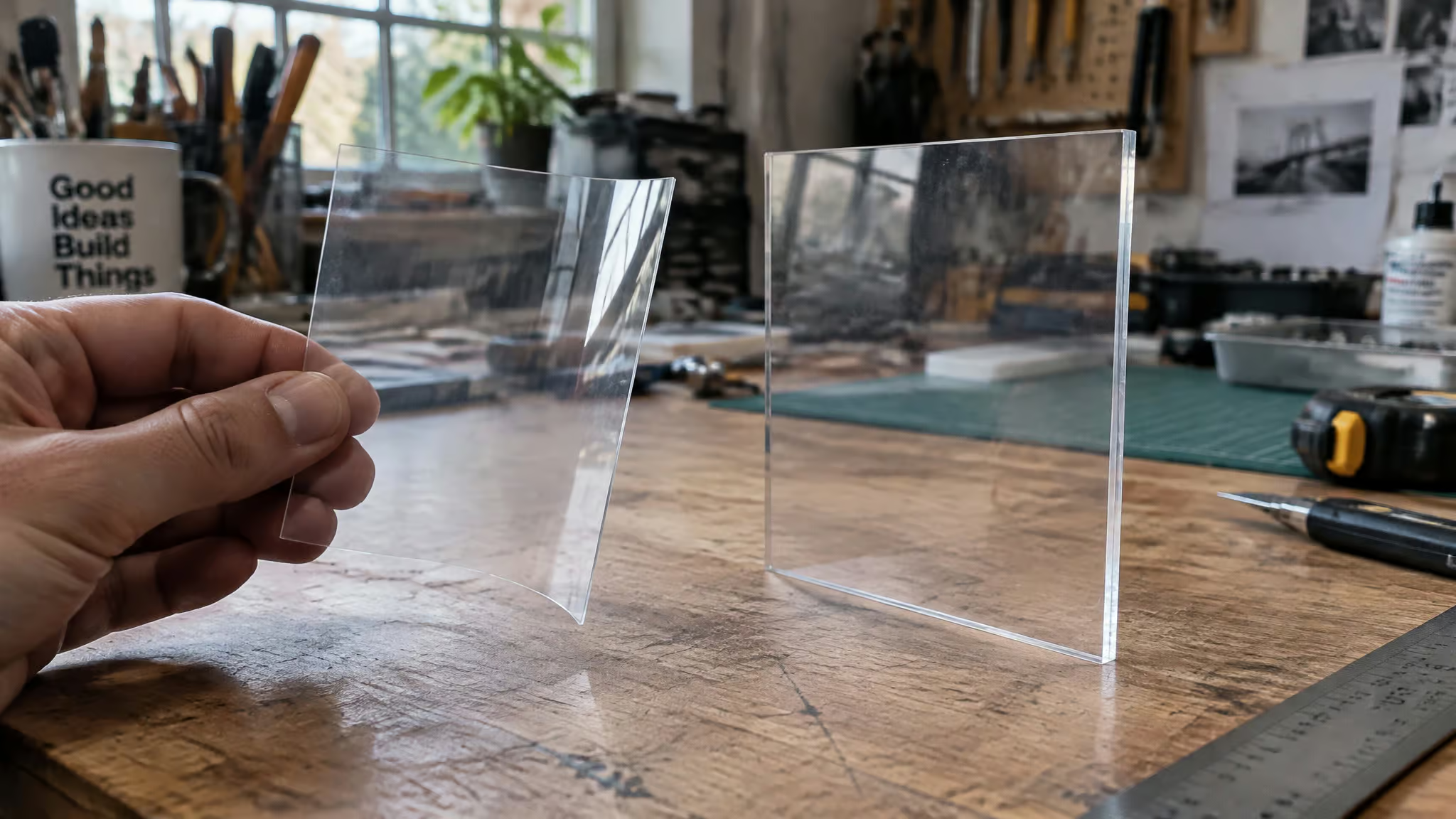
No. PVC must never go under a laser: polyvinyl chloride decomposes into hydrogen chloride gas when the beam hits it. PVC’s own SDS, section 10, lists hydrogen chloride, carbon monoxide, and sometimes dioxins as decomposition products, which is about as clear a verdict as safety documentation ever gives. The same hazard applies to the whole chlorine family: vinyl, pleather, and PVC-based artificial leather are PVC in craft-friendly disguises, the stuff hiding in the cosplay materials bin.
Hydrogen chloride, not just “chlorine gas”
The actual decomposition product is hydrogen chloride, HCl. “Chlorine gas” is the colloquial shorthand the community uses, and it’s close enough for workshop purposes, but hydrogen chloride is the name the SDS uses, so it’s the name to search for. For a sense of scale: chlorine-based gases saw use as weapons on battlefields before World War One. Grim, but it makes the point that this is not an ordinary workshop smell.
What hydrogen chloride does to the body
Per ATSDR, hydrogen chloride is irritating and corrosive to any tissue it contacts, and that phrase does a lot of work. A brief low-level exposure irritates the throat. Higher levels escalate fast: rapid breathing, narrowing of the bronchioles, bluish skin coloring, fluid accumulating in the lungs, death. Even higher exposure causes the throat to swell, which suffocates.
Some people develop reactive airways dysfunction syndrome, RADS, lasting airway damage from a single bad exposure. Chronic low-level exposure brings respiratory problems, eye and skin irritation, and, oddly, tooth discoloration. It’s a ladder you never want to climb a single rung of.
Neoprene, rubber, and the machine that pays too
Chlorine-bearing synthetic rubber, neoprene included, is the same hazard in rubber form, and the fumes are really toxic. Bluntly: don’t. And the fumes don’t just come for you. Chlorine fumes corrode and melt a laser cutter’s internal electronics and plastics.
The fumes eat your laser from the inside. Two victims, one cut. The near-miss to watch for: an unknown black or colored sheet plastic looks nearly identical to acrylic, and a recycling code or the smell when heated is often the only tell.
Epoxy, fiberglass, and carbon fiber: the hidden binder
Epoxy-bound and epoxy-coated materials, including fiberglass, carbon fiber, and finished woodworking projects, emit highly toxic fumes when engraved, so they’re off the laser menu. The interesting part is where the hazard lives: in a component you can’t see. Fiberglass sometimes contains epoxy. Carbon fiber might.
A finished wood project can carry an epoxy coating that looks completely innocent. The “sometimes” is the point. If you can’t establish what’s binding or coating a material, uncertainty means skip it. This is also the rule that saves thrift-store finds and offcut-bin rescues: ask what an object is made of, not what it looks like. A glossy case and a matte wooden sign get the same question, and until the answer is “no epoxy,” the answer to the laser is no.
ABS plastic: cyanide fumes and the Lego problem
ABS is a laser no-go: it emits toxic fumes including cyanide gas when engraved. Cyanide is the word that makes people stop and listen, and it should. Here’s the anchor everyone remembers: Lego bricks are made of ABS. Yes, that means don’t engrave your Lego. No lore wiki required, the example carries itself.
The useful part is the pattern behind it: acrylonitrile-based plastics like ABS release toxic vapors when lasered. That means the rule transfers beyond ABS to other acrylonitrile plastics, so you don’t have to memorize a list, you have to recognize a pattern. Read the name of the plastic, and if acrylonitrile is in it, treat the fumes as hostile until an SDS says otherwise. It’s the same skill that catches PVC’s cousins, applied to a different chemical family.
Chromium-tanned leather and the safe alternative
Avoid leather containing chromium, which sometimes shows up in the staining process. The sneaky variable is that most makers have no idea how their leather was tanned, which is exactly why a thrift-store hide deserves a double-check before it goes under the beam, and it’s worth remembering that laser engraving has disadvantages beyond materials, too. Vegetable-tanned leather is the safest option for laser work, so leathercraft on a laser is absolutely still possible. You just need the right leather.
Treated lumber and plywood: the campfire test
Treated lumber is never safe to laser cut, and plywood safety depends entirely on its adhesive. Those are two different problems wearing the same wood-grain costume, so they get separate rules.
Treated lumber: the campfire test
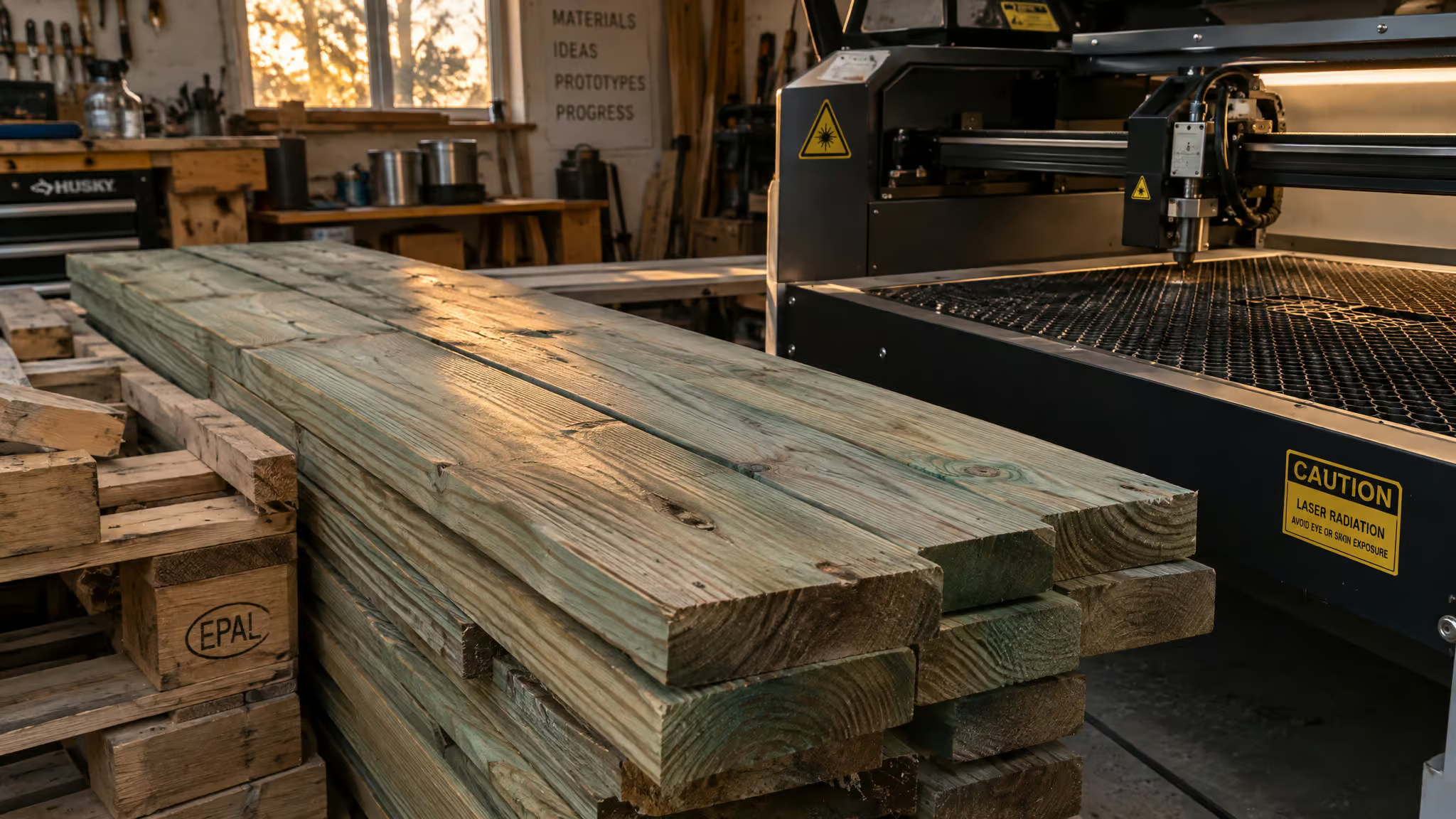
Treated lumber releases chemicals when engraved, and the heuristic that sticks is beautifully simple: if a wood wouldn’t be safe on a campfire, it isn’t safe on a laser. It’s the kind of rule you actually remember at 11pm when someone offers you free scrap deck boards, which is exactly the trap this catches. Free pallet wood and leftover decking look like free laser stock, and they’re anything but laser engraving on wood works, but only when the species, power, and wavelength are on your side. If the job is marking rather than cutting, a rotary tool sidesteps the fume question entirely; there’s a whole guide to engraving wood with a Dremel if you go that route.
Plywood, formaldehyde, and the adhesive question
With plywood, the glue is the problem, not the wood. Wood bonded with phenolic resin releases formaldehyde when lasered. Per xometry, this one’s a gray area: doable with good extraction and a carbon filter mask. Technically possible, know what you’re signing up for.
One honesty beat while we’re here: a widely shared source conflates cyanoacrylate and phenolic resin, which are chemically distinct adhesives. Both release formaldehyde-type fumes, but don’t treat them as the same glue. The same adhesive question applies to MDF and any engineered board, and the tell people keep rediscovering is a sharp chemical odor from hardware-store plywood that doesn’t smell like plain wood smoke. That’s the adhesive announcing itself.
On the safe side: most natural unfinished wood is laser safe, and wood bonded with polyvinyl acetate, PVA, is safe per xometry. If you want a named buy, Columbia Forest Products PureBond plywood, sold via Home Depot, uses a food-grade soy-based adhesive that doesn’t emit toxic air contaminants. The ChalkWatts creator runs it in their own laser business, which is a stronger endorsement than anything I could write here. Wood is just one of many laser engraving materials, and for how the beam actually interacts with wood at the cellulose level, that’s its own rabbit hole.
HDPE, polystyrene, and polypropylene foam: fire and melt risks
No. HDPE, polystyrene, and polypropylene foam melt badly and can catch fire on a laser bed. This is a mechanically different failure mode from the gas emitters: these plastics fail by melting and igniting rather than primarily poisoning, so the danger is to your machine and your evening, not just your lungs. HDPE is the milk-jug plastic everyone has lying around, and everyone tries to laser it once. Polystyrene and polypropylene foam share the same failure mode, so group them mentally as the melts-into-a-bad-time category.
Which laser you own doesn’t change the verdict, even in 10W laser engraver material settings guides, a material that melts and ignites does that under any beam. One honest bridge: even laser-safe materials like paper carry fire risk, so “safe to breathe” and “safe to cut” are separate questions, and paper’s caveat lands in the safe list below.
The Beilstein test: a 10-second chlorine check
A red-hot copper wire, a melted sample, and a flame will tell you in seconds whether a material contains chlorine. That’s the Beilstein test, the classic old-school lab trick that feels like tiny wizardry, and it’s the fastest way to catch the worst offender in your scrap bin.
How to run the copper wire flame test
Heat a length of copper wire until it glows red hot with a torch. Carefully melt a small sample of the mystery material onto the hot wire. Return the wire to the flame. Green flame means chlorine is present.
No color change means no chlorine detected. That’s the entire procedure. The gear list is copper wire, a torch, and a sample, which is delightfully low-tech and costs almost nothing. The test has been used for hundreds of years; it predates your laser by centuries. Credit where it’s due: I picked this up from Gil Posnanski’s Laser Livestream, the way you’d credit a forum post that saved you a bad afternoon.
Quick test: Glow the copper wire, melt a sample onto it, return it to the flame. Green means chlorine, and chlorine means never cut it.
What a green flame (and a negative result) actually tell you
A green flame confirms a chlorine-bearing material, PVC, vinyl, pleather, artificial leather, and the answer is never cut it. But the test only screens for chlorine. A negative result does not rule out toxic additives or non-chlorine toxic polymers like ABS or epoxy, so passing this test is not a free pass. You’ll see “no color change means safe” elsewhere; the honest position is a two-layer protocol, the Beilstein screen first, then an SDS review.
One cheap check stacked on another. Very maker-brain.
How to verify any material with a CAS number and SDS
The prerequisite is a CAS number. Every chemical has a unique registry number, like a fingerprint, and from that number you can pull a Safety Data Sheet that lists exactly what the material releases when heated. The walkthrough is fast: find the number, read sections 2, 5, and 10, skip the rest for now.
Find the CAS number
The CAS registry site is free and public, which is the delightful part. PVC’s number is 9002-86-2. Plug it into free SDS databases like chemicalsafety.com or MSDSdigital, or just a search engine, the lazy-but-effective path. Results span physical forms: PVC pellets, film, medical tubing, even a USP reference sample.
One chemical, many products. One wrinkle that saves you from false confidence: CAS numbers point to the base substance, not additives, so pick the SDS matching the physical form you’re actually working with.
Read sections 2, 5, and 10
SDS documents have 16 sections, and laser folks need three. Section 2 is hazards identification, the quick-glance toxic, corrosive, flammable labels. Section 5 is firefighting measures, and here’s the clever bit: the gases released when a material burns also release in a laser. Section 10 is stability and reactivity, hazardous decomposition products when heated, and it’s the gold standard section for laser users.
PVC vs acrylic, a worked example
PVC’s section 10 lists hydrogen chloride, carbon monoxide, and sometimes dioxins, so the verdict writes itself: PVC never goes in the laser. Acrylic, PMMA, lists methyl methacrylate vapors in section 10, flammable and irritating, but not chlorine gas. Same lookup, wildly different results, and the contrast teaches the method better than any rule of thumb.
When the SDS says “no data available”
Blanks mean untested or undisclosed, not safe. That reframe is the whole point. Additives like plasticizers and pigments may not be listed at all, and government agency sites often just point back to manufacturer SDS documents, a mildly annoying loop worth knowing about. An SDS is a starting point for verification, not the last stop: cross-check the NIOSH Pocket Guide and PubMed, both searchable by CAS number, plus NIH, ATSDR, and the National Toxicology Program.
More agreeing sources on decomposition hazards means closer to scientific fact. Converging evidence, maker-style. makerarmy.io also hosts a material safety database that works as a starting point, not the end-all.
Matching respirators and extraction to the fume hazard
Gas hazards require chemical cartridges, not particulate masks. The common mistake, seen across plenty of shops: makers buy a particulate mask and assume it protects against laser fumes generally, when particulate filters capture smoke particles but not the gases that are the actual acute hazard from PVC or ABS. The tiered spec, with model numbers exact:
- KN95: filters 95%+ of particles 0.3 microns or larger. Fine for general shop work.
- 3M half-face respirator with P100 2097 filters: removes 99.9% of particulates and is oilproof. Better for metals like zinc.
- 3M 60926 cartridge: pairs a pink P100 particulate filter with an olive chemical cartridge covering organic vapors, acid gases, ammonia, and formaldehyde. This is the one for nasty fumes.
Two engineering layers do the rest of the work: fume extractors and exhaust systems protect the room’s atmosphere, respirators protect the operator. Respiratory danger is the silent danger in the laser workspace; you don’t smell the problem until it’s a problem. And the rule that matters most: PPE is mitigation, never permission. No respirator makes PVC acceptable to cut. Protection is a backstop for gray-area materials like phenolic-glued wood, while chlorine-bearing materials stay flat prohibitions regardless of what you’re wearing.
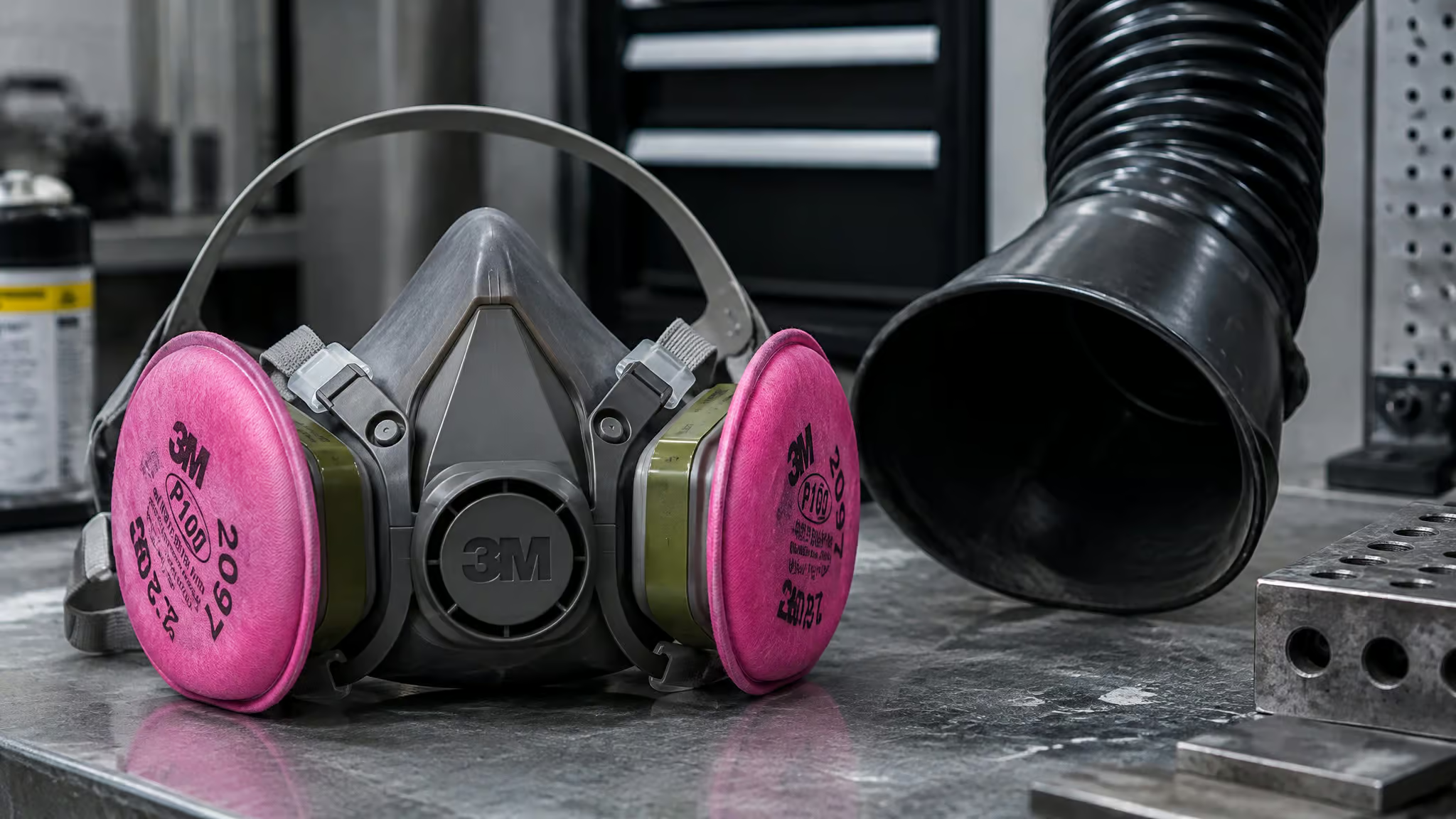
Buyer rule: Match the cartridge to the gas, not the mask to the shop. Particulate filters stop smoke; only chemical cartridges stop PVC and ABS fumes.
Safe plastics: acrylic instead of PVC and ABS
Acrylic is the laser-safe plastic to use instead of PVC and ABS. The proof is the same SDS section 10 we used to convict PVC: acrylic’s lists methyl methacrylate vapors, which are flammable and irritating, but not chlorine gas. That’s the decisive difference, straight from the decomposition chemistry: irritating vapors versus lethal gas.
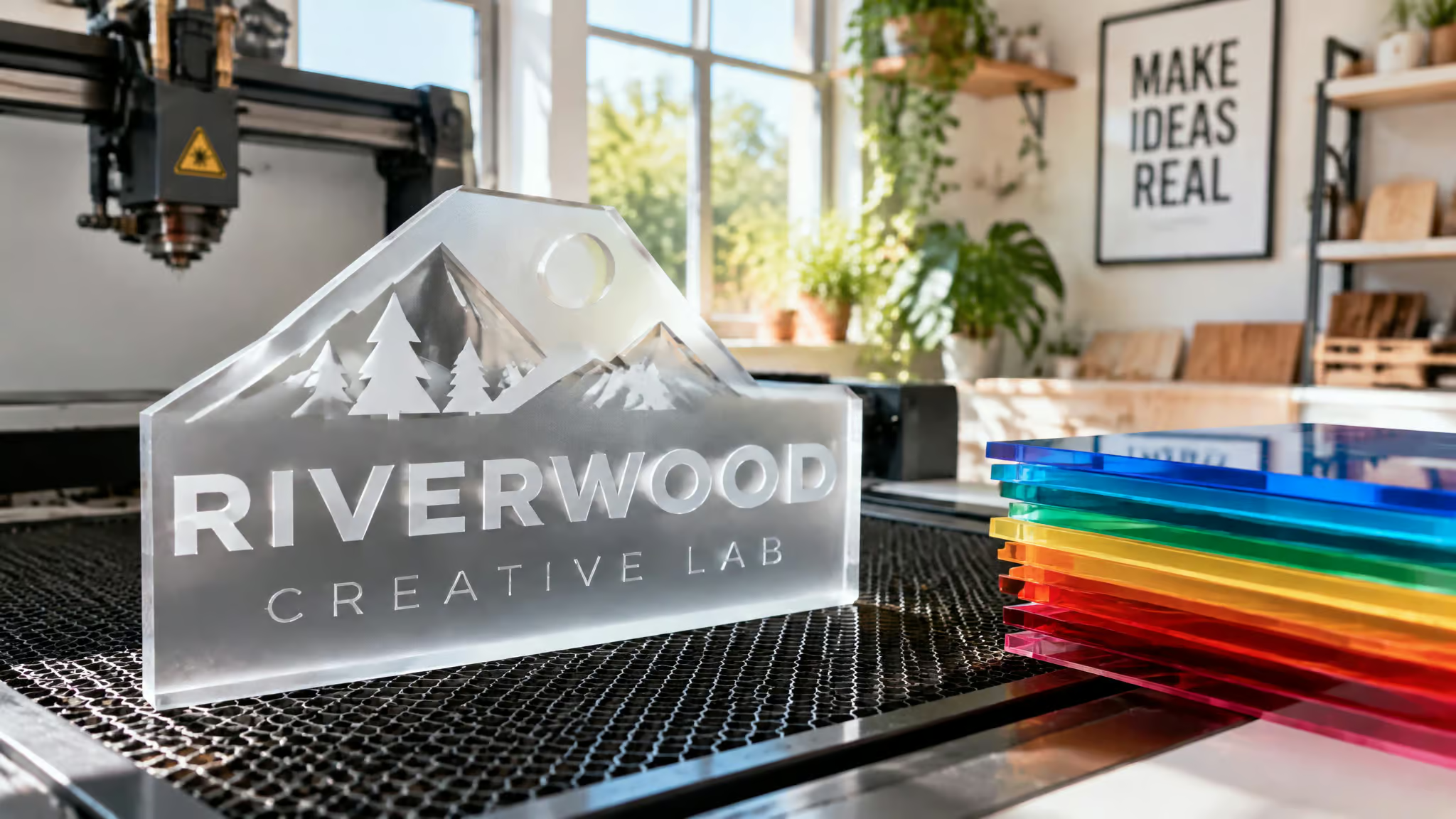
Acrylic, PMMA if you want the formal name, is the most popular laser-safe plastic, and that’s community consensus rather than marketing. It cuts cleanly, engraves crisply, comes in a small nation’s worth of colors and thicknesses, and it’s the material I’d hand any beginner first. The honest gear caveat: some acrylics don’t work perfectly on diode lasers, while CO2 lasers handle them well. Set your expectations around your setup rather than the material’s reputation; frosted edges on a diode are the wavelength talking, not your technique failing. Supplier note, shared the way you’d share a good repo link: Houston Acrylic is the ChalkWatts presenter’s preferred supplier.
The bigger lesson is the substitution pattern. The safe list isn’t a flat counterlist, it’s a map of swaps:
| Instead of | Use this | Why the swap works |
|---|---|---|
| PVC, vinyl, pleather | Acrylic | Decomposes to irritating methyl methacrylate vapors, not hydrogen chloride |
| ABS | Acrylic | No acrylonitrile, so no cyanide-bearing fumes |
| Chromium-tanned leather | Vegetable-tanned leather | No chromium in the tanning or staining |
| Phenolic-glued plywood | PureBond plywood | Food-grade soy adhesive, no toxic air contaminants |
| Plastic-coated cloth | Natural cotton | No PVC or plastic impregnation |
Once you read the safe list this way, material selection stops being memorization and becomes pattern-matching. You see a chlorine plastic, you reach for acrylic. You see an acrylonitrile plastic, same move. The safe list isn’t a wall, it’s a detour sign.
The laser-safe list: 12 materials with conditions
Twelve materials are laser safe at least sometimes, and every entry carries a condition:
- Slate and natural stone engrave beautifully, especially high-detail photo work. You can engrave ROCKS.
- Glass, yes, really.
- Plain paper, card stock, cardboard: unstained, uncoated, unprinted, and a fire risk, so stay close and never walk away.
- Cork is safe per the Cleveland Public Library resource, though adhesive-backed manufactured cork may carry plywood-like glue concerns.
- Vegetable-tanned leather is the safest pick, more versatile than slate per some recommendations.
- Natural cotton is fine; skip faux leather, PVC-containing cloth, and plastic-coated fabric.
- Natural and silicone rubber are safe per bason laser; chlorine-bearing and neoprene types are not. One family, split verdict.
- Anodized aluminum: the laser vaporizes the anodization, not the metal; Johnson Plastics Plus sells pre-made blanks like business cards.
- Coated stainless steel: engraving vaporizes the coating, think powder-coated tumblers. Either understand the paint thoroughly or buy items marketed as laserable; Johnson Plastics Plus tumblers carry a laser-safe-for-CO2 icon. Raw stainless can be engraved after applying a Thermark or cmark-type spray coating.
- The beginner trio: natural wood and plywood (laser engraving on wood deserves its own deep dive), acrylic, and slate, with genuine leather as a versatile alternative some others recommend.
Sourcing note in one light line: the ChalkWatts crash course based its safety info on Cleveland Public Library and zety.com resources.
Polycarbonate, PTFE, and polyester: common follow-up questions
Polycarbonate is widely reported as unsafe to laser cut: it melts, discolors, and burns rather than cutting cleanly. PTFE, Teflon, is similarly cited as unsafe because it releases fluorine-containing gases when heated. Full honesty flag: neither material is detailed in the sources behind this article, so treat those answers as established general knowledge rather than verified decomposition chemistry. Polyester film and fabric questions come up constantly in craft contexts, and the honest answer there is the same: run the verification method. The CAS number and SDS workflow above settles any material the lists don’t cover, which is the entire point of having a method instead of a list.
Makerspace policy: testing as standard practice
Shared laser spaces can institutionalize material safety for the cost of copper wire and a torch at every station. Gil Posnanski of Laser Livestream recommends exactly that: keep the testing gear available so users can Beilstein-test materials before cutting. Some makerspaces already require material testing before allowing laser use, and the logic scales with sharing, because one person’s unknown material endangers everyone in the room and the shared machine everyone paid for. makerarmy.io’s material safety database works as a starting point for shared-space substrate choices, with the same caveat it carries everywhere: a starting point, not the end-all. If you’re setting up or lobbying your local space, the ask is small, a spool of copper wire and a cheap torch per station, and it converts “please don’t cut weird stuff” from a poster into a procedure.
Frequently Asked Questions
What can a laser not cut?
Materials containing chlorine, acrylonitrile, or reactive adhesives are the core no-go list: PVC, vinyl, pleather, artificial leather, ABS, neoprene, epoxy-bonded composites like fiberglass and carbon fiber, and chromium-tanned leather. Treated lumber is a flat no, and HDPE, polystyrene, and polypropylene foam melt and can catch fire. The organizing rule: gas hazards come from what a material is made of, fire hazards from how it behaves.
What are the downsides of laser cutting?
The big one is chemical unpredictability: a laser decomposes materials into whatever atoms recombine nearby, which can be toxic gas, and the worst offenders look identical to safe ones. Fumes can also corrode the machine’s own electronics, and some materials simply melt and ignite on the bed. Composition determines the hazard, not appearance, so verification is part of the workflow.
What materials are laser resistant?
If you mean laser-safe, the reliable picks include acrylic (PMMA), slate and natural stone, glass, unstained paper and cardboard, cork, vegetable-tanned leather, natural cotton, natural and silicone rubber, anodized aluminum, and coated stainless steel. Every entry carries a condition, so verify coatings and adhesives. Acrylic is the go-to swap for PVC and ABS.
Why is PVC dangerous to laser cut and what fumes does it release?
PVC decomposes into hydrogen chloride the moment the beam hits it, a corrosive gas that damages lungs and the laser cutter’s internal electronics with equal enthusiasm. Its own SDS section 10 lists hydrogen chloride, carbon monoxide, and sometimes dioxins as decomposition products. The same hazard applies to vinyl, pleather, and PVC-based artificial leather, so none of them ever go under a laser.
Can you laser cut ABS plastic or is it toxic?
ABS is a no-go: it emits toxic fumes including cyanide gas when engraved. The pattern behind it is that acrylonitrile-based plastics release toxic vapors when lasered, so the rule transfers to any plastic with acrylonitrile in the name. Reach for acrylic instead, which has no acrylonitrile and cuts cleanly.
How do you read an SDS safety data sheet to check if a material is laser safe?
Find the material’s CAS number, plug it into a free SDS database, and read three of the 16 sections: section 2 for hazard identification, section 5 for firefighting measures (gases released when a material burns also release in a laser), and section 10 for stability and reactivity, which lists hazardous decomposition products when heated. Blanks mean untested or undisclosed, not safe, so cross-check sources like the NIOSH Pocket Guide when the sheet comes up empty.
Is treated wood or plywood safe to laser cut?
Treated lumber is never safe, and the campfire rule sticks: if a wood wouldn’t be safe on a campfire, it isn’t safe on a laser. Plywood is a separate question, because the glue is the problem, not the wood. Phenolic resin releases formaldehyde but is workable with serious extraction, while wood bonded with PVA is safe, and options like PureBond plywood use a food-grade soy-based adhesive with no toxic air contaminants.