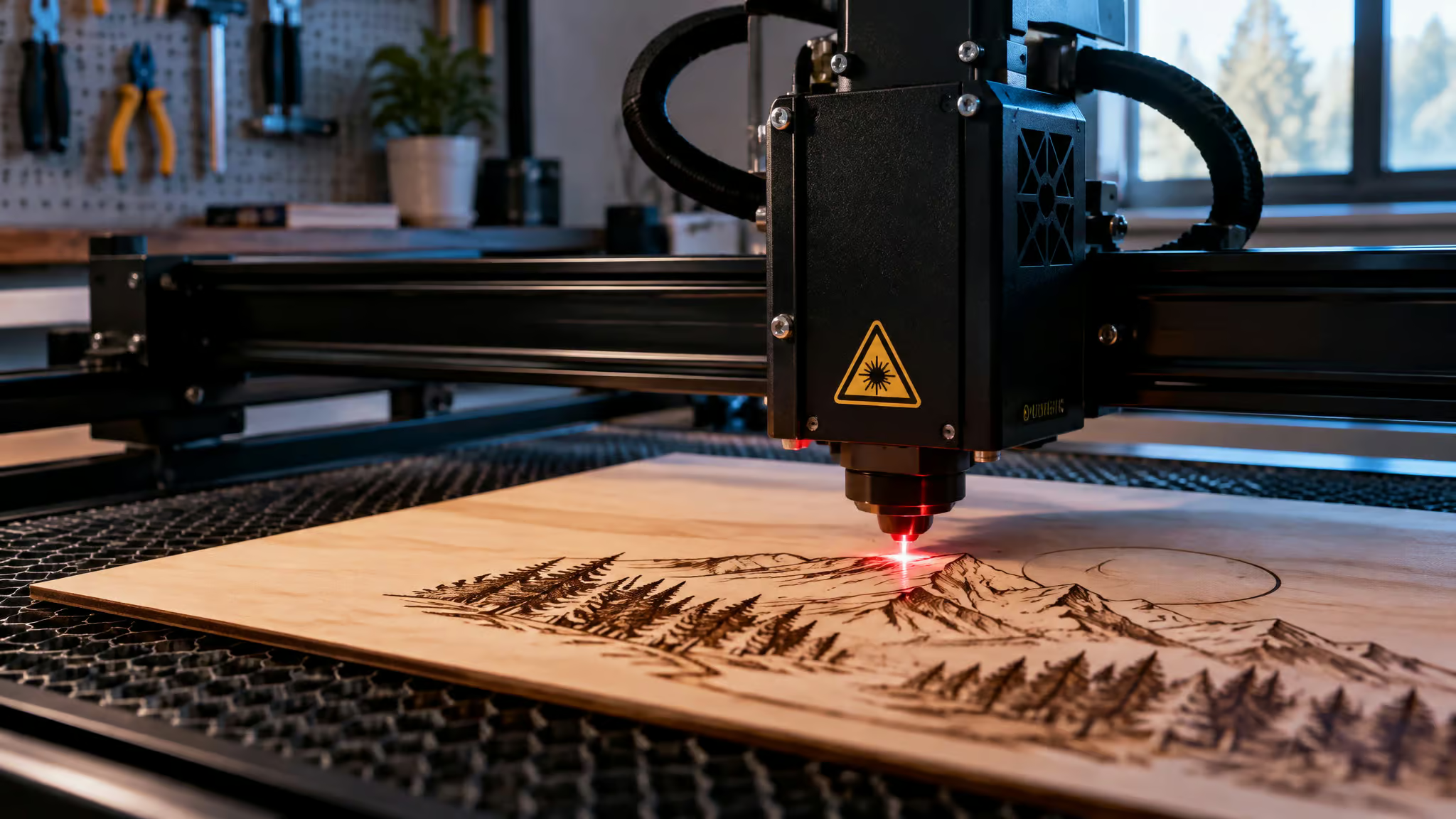
The laser’s unboxed, the software’s updated, and your cart is full of wood you found by searching “craft plywood” at 1 a.m. There are three ways to lose money on your first wood order. You can buy stock your machine physically can’t cut, you can buy cheap plywood with a hidden glue gap that kills a two-hour engraving at minute 90, or you can buy from a supplier nobody in the community can vouch for. So the real question of where to buy wood for laser engraving isn’t “what’s the best wood.”
It’s a compatibility problem, and the decision order is inverted from every “best wood” guide you’ve read: your machine’s wattage sets the thickness ceiling, the thickness you need picks the supplier tier, and species comes in third. There are four sourcing tiers worth knowing: big-box and craft retail, specialty laser suppliers, local lumberyards and cabinet shops, and machine-brand material stores. Here’s how each one works, and which one your money should go to first.
Key Takeaways
Hobby lasers can’t cut 2x4s or 3/4-inch plywood; the realistic shopping list is 1/16, 1/8, and 1/4-inch sheet stock, with 1/4 inch the ceiling for 40-45W machines like Glowforge and diode lasers often limited to 1/8 or 1/16 inch.
Specialty laser suppliers earn their premium: Smoky Hill Laser Designs runs a misfit section at $1.50 off, Craft Closet pays craft coins at a 1.3 earn rate with free shipping over $99, Lasered by the Creek mills its own wood, and Creative Cut Supply sells prefinished ply that skips sanding entirely.
Home Depot’s PureBond plywood is pre-cut to Glowforge sizes and cheaper, but a documented community failure involves a two-hour engraving ruined by a glue gap, so hold the sheet to a light and check the edge lamination before you buy.
Table of Contents
Where to buy wood for laser engraving: the quick sourcing map
Craft stores (Michaels, Joann), home-improvement stores (Home Depot, Lowe’s), Amazon, and specialty laser-material suppliers all sell laser-safe wood, and each tier fits a different need. The trick is matching the tier to what you’re actually trying to do this week, because the tier that’s perfect for testing earring designs is the wrong one for a 24-inch sign.
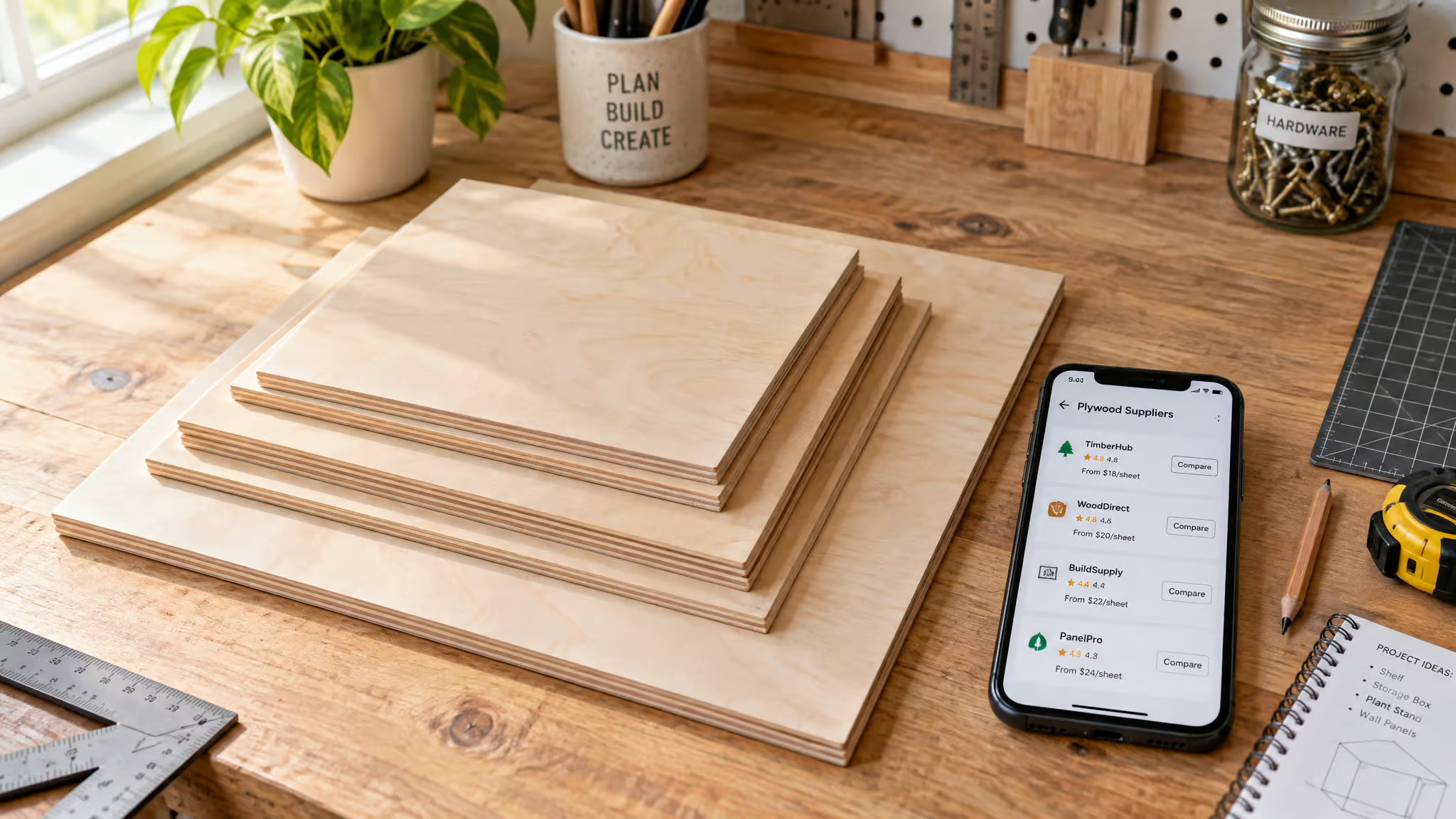
Here’s the map I’d hand a friend with a new laser:
| Supplier tier | Best for | Price | Reliability |
|---|---|---|---|
| Retail and craft stores (Michaels, Joann, Home Depot, Lowe’s) | Sampling and one-offs | Low | Partial (stock unpredictable) |
| Specialty laser suppliers (Smoky Hill Laser Designs, Craft Closet, Laser Wood Supplies, Lasered by the Creek, Creative Cut Supply) | Cut-to-size sheets and pattern ply | Mid | Yes |
| Local lumberyards and cabinet shops | Large or non-standard sheets | Partial (cheapest if you’re lucky) | Partial (varies by region) |
| Machine-brand stores (Glowforge Proofgrade, Trotec) | Certainty and QR-coded convenience | High | Yes |
| Amazon, then AliExpress/Alibaba | Demand-testing and bulk blanks | Low per unit at volume | Partial (sample first, always) |
The retail tier is your sampling bench. It’s where you figure out what 1/8-inch birch actually looks like before committing to a case of it. The specialty laser suppliers are the core of this article: they cut and grade stock for lasers, full stop, and each one has a differentiator worth knowing (misfit discounts, rewards math, self-milled wood, prefinished ply), which I’ll break down below. Local lumberyards and cabinet shops solve the size problem the online tiers can’t, because freight on a big sheet often costs more than the wood itself.
Brand stores sell certainty at a premium, which is worth paying for in exactly one scenario. And Amazon sits at the front of the bulk pipeline: test demand with a small order there, then move to AliExpress or Alibaba for hundreds of units once sales are proven. The deep dives on each tier follow.
What thickness wood can a laser cutter actually cut
Lasers can’t cut 2x4s or 3/4-inch plywood; the realistic shopping list is 1/16, 1/8, and 1/4-inch sheet stock, and 1/4 inch is the ceiling for 40-45W machines like the Glowforge, while diode lasers often top out at 1/8 or even 1/16 inch. That’s the whole constraint, and it’s why your wattage sets your thickness ceiling before anything else in the store matters.
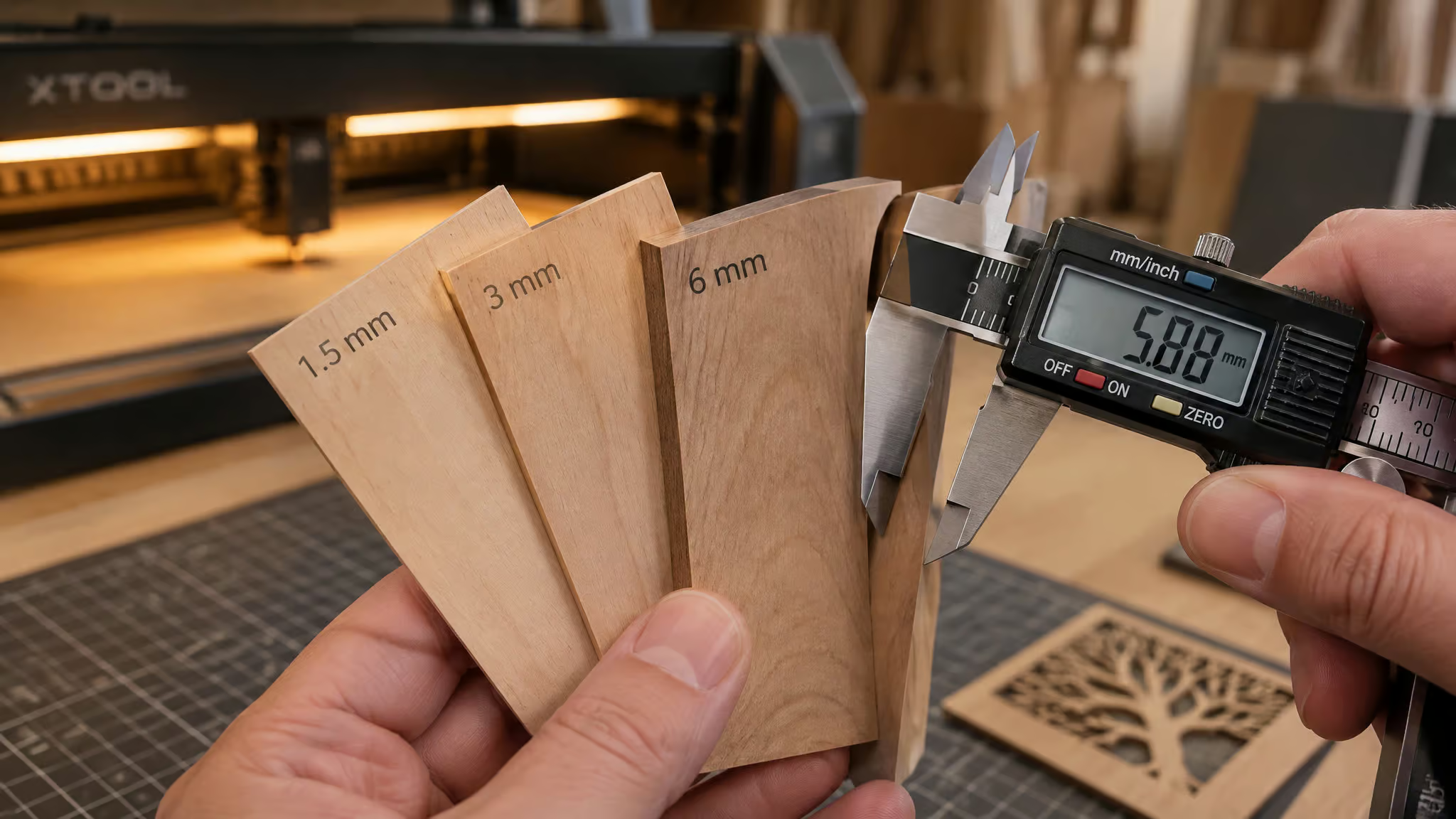
The logic is simple. Low-wattage lasers are cheaper and suited to engraving and thin materials; higher wattage cuts thicker stock in one pass. Machine class sets what you can mark at all: diode lasers only etch organics, CO2 lasers cut organics plus blue and clear acrylic, and fiber lasers are metal-focused. (If you’re still choosing between those classes, our laser engraving machine buyer’s guide walks through the tradeoffs.)
The conclusion that flips your shopping trip: dimensional lumber from a hardware store is wasted money before price even enters the picture. Your machine can’t process it, so there’s no version of that purchase that works. It’s why every supplier later in this article sells sheet stock, not boards. For grounding, when Tom’s Hardware ran its laser testing, the materials were basswood sheets, bamboo cutting boards, and thick pine boards, which is a pretty honest picture of what laser people actually buy and burn.
Best wood for laser engraving, matched to the project
Basswood, Baltic birch plywood, maple, cherry, and walnut all engrave well, and light, even-grain woods give you the highest contrast. Species is the third decision, not the first: by the time you’re picking between maple and walnut, your wattage and your supplier tier should already be locked.
Light, even-grain woods: basswood, birch, maple, alder
These are the high-contrast workhorses. 1/16-inch birch is the go-to for earrings and stud blanks, and basswood is the community’s default test blank, the wood you run your first settings jobs on. Light, even-grain wood wins for photo-engraving contrast. I’d love to give you measured contrast numbers per species, but the available sourcing names the species and supplier inventories without including measured photo-engraving data, so photo-work guidance stays general rather than pretending to bench-test results. (We’ve also got a dedicated piece asking is basswood good for laser cutting if that’s your starting blank.)
Dark hardwoods: cherry, walnut, and grain-forward work
Cherry and walnut are the woods where the grain becomes part of the finished piece, which is exactly what you want for signs, keepsakes, and anything meant to look finished rather than crafty. Two quirks worth knowing: maple and bamboo sometimes need a defocus trick to engrave dark, which sounds fiddly but is really a neat hack once you’ve done it twice. And aromatic cedar’s entire selling point is the smell, which makes it the obvious pick for Christmas ornaments. Your customers will open the box and immediately know what’s inside.
Sealed wood, bamboo, and finish tradeoffs
Sealed wood is the lazy-smart option, and I mean that as a compliment: laser-cut sealed stock leaves wipeable residue, no sanding required. Bamboo cutting boards are the most common blank in the category, and thin veneers suit wood stickers. On the basswood-versus-Baltic-birch question: basswood engraves cleanly as a blank, while Baltic birch cuts well but carries a veneer-depth caveat I’ll cover in the avoid section, because it’s a failure mode, not a feature.
Quick pairings if you want the short version:
- Earrings ? 1/16-inch birch
- Scented ornaments ? aromatic cedar
- Maximum contrast ? basswood, maple, or alder
- Grain-forward finished signs ? cherry or walnut
Specialty laser-wood suppliers and what actually differentiates them
These sellers cut and grade wood specifically for lasers, so pick by need rather than search rank. Prices may vary, but the differentiators below are what each shop is actually known for.
Smoky Hill Laser Designs
Sells 1/4, 1/8, and 1/16-inch woods and veneers, plus 500-1000 printed MDF designs and colored solids that skip painting entirely, which is the pattern-ply category you’re probably searching for. Exotic lineup includes aromatic cedar, white birch, white and red oak, maple, hickory, mahogany, and sapele. It’s run by married couple Casey and Angela Cruz, and the misfit section at $1.50 off is genuinely fun: the sheets I’ve seen people buy from it showed no findable defects.
Craft Closet
Quality is interchangeable with Smoky Hill, so the differentiators are the math: craft coins rewards at a 1.3 earn rate with tiered levels, and free shipping over $99. Carries bamboo, hickory, knotty pine, and lace wood, offers earnable 4-6-piece acrylic variety packs, and sells sample packs, which are the smart first move before a full order.
Laser Wood Supplies
Started on Etsy, and owner Alex is a Tennessee veteran who’s active in the Facebook laser groups, so this is a real person you can actually reach. Sells MDF, Baltic birch, and a printed line called Fancy AF, which is exactly the kind of product name that earns a permanent spot in your bookmarks.
Lasered by the Creek
Lasered by the Creek is generationally owned and US-made, and it mills its own wood, controlling the whole chain from log to sheet. Stock runs 1/16 and 1/8-inch birch plus 1/8-inch alder, red oak, maple, cherry, walnut, hickory, mahogany, and cedar, with sealed walnut finished two-sided in clear coat. Owner Chance also runs the Custom Grains hat business, so these are makers who actually make.
Creative Cut Supply
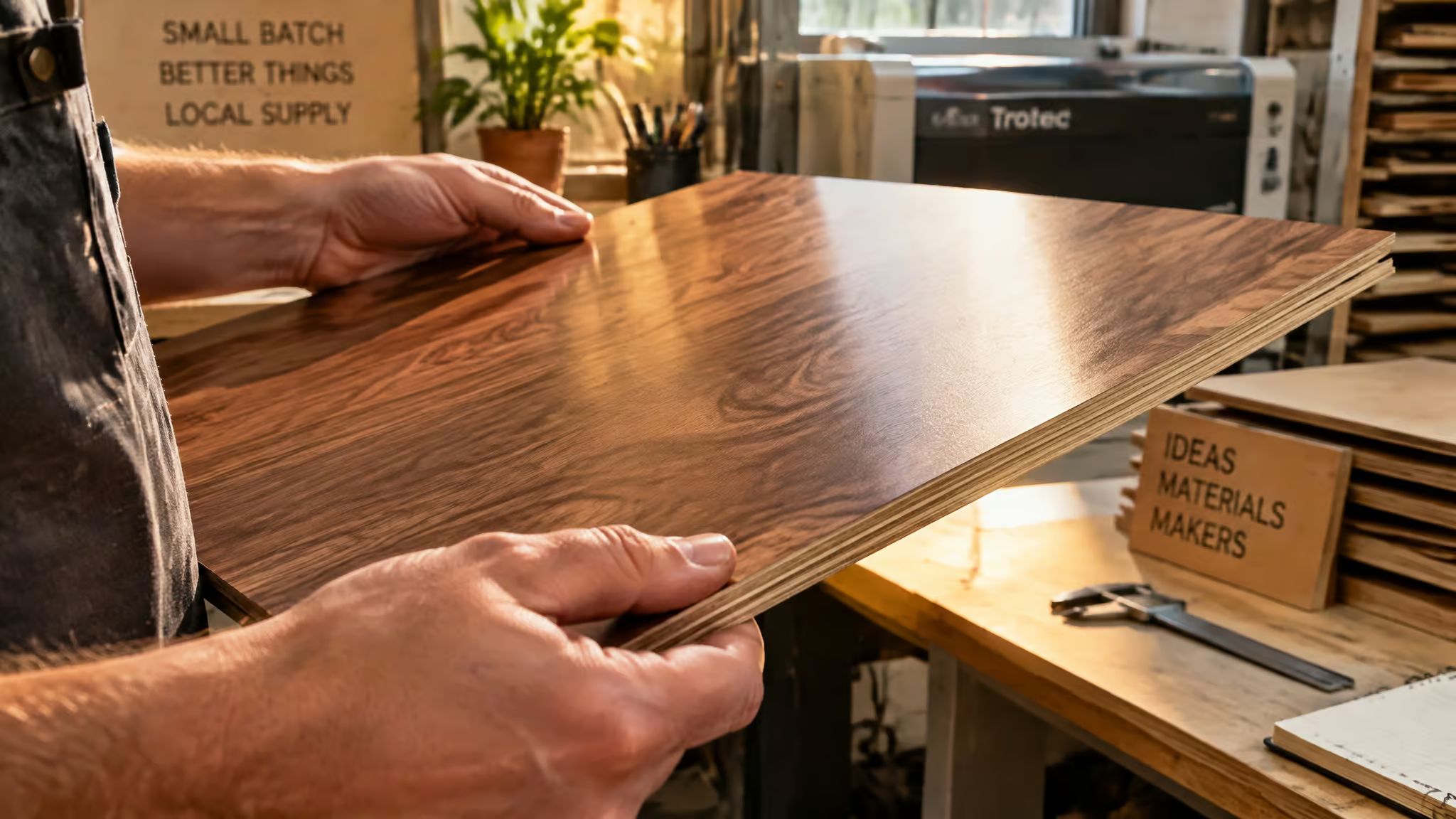
Prefinished walnut, cherry, maple, sapeli (sapele), and Baltic birch, with aromatic cedar launching soon as of the sourcing material behind this guide. The clear coat eliminates sanding and makes the grain pop, and it enables a workflow trick: engrave the whole sheet, then wipe the residue off in the bed before cutting. If you’re dialing in your power and speed for each species, a solid starting point for wood engraving settings runs 20-60% power at 100-300 mm/s. All but the Baltic birch are US-made with a basswood core that cuts cleaner and faster than MDF-core imports. On the is-prefinished-worth-it question: the sticker price is higher, but per finished unit it’s cheaper once you price your sanding labor in.
Dual Tite adhesive
The side quest worth knowing: double-sided pressure-sensitive adhesive in 12 in x 180 ft rolls and 12×19 sheets, works on wood and acrylic, indoor use only. A roll yields roughly 113 sheets, which works out to about 5 cents of adhesive per ornament at 15 per sheet. The origin story is perfect: the owner hand-glued around 1,000 “2020” ornaments his first year, and finished signs made with the roll are indistinguishable from hand-glued layers.
Johnson Plastics Plus
The top engraving-supply site, carrying plaques, acrylic, thin alder, and stamps, and they mail free thin wood samples, which is the easiest yes in this whole section. Priced on the high side but convenient with fast shipping, and the sourcing community behind this guide has used them since about 2016.
Home Depot plywood for laser engraving: the cheap option’s hidden cost
Big-box plywood is the tempting middle path: cheaper than the specialty suppliers above and already cut to sizes that fit your machine. But the discount comes with a catch that only shows up mid-job, which is why this tier needs its own inspection habit before you trust it with anything long.
PureBond (Columbia Forest Products): cheap, pre-cut, and risky
Home Depot’s PureBond plywood, made by Columbia Forest Products, is the big-box pick laser folks gravitate to: pre-cut to Glowforge and mailable sizes, cheaper than laser-specific suppliers, custom cut to your dimensions with free delivery. The catch is that the sheets run lighter and thinner, and they can carry glue patches or internal gaps. This isn’t hypothetical. A documented example in the laser community involves a two-hour Glowforge engraving ruined by a glue gap in a PureBond sheet, and it’s a common failure pattern among hobbyists, not a one-off.
The price has crept from roughly $29 in 2020 to $42, which narrows the discount over specialty suppliers. The habit generic guides skip: hold the sheet up to a light and check the edge lamination before buying, and price your failure rate into that “cheap” sticker. So is Home Depot plywood good enough, or is specialty laser wood worth it? Fine for quick, low-stakes jobs. Not for a two-hour engraving without inspection.
Quick test: Backlight any big-box ply sheet and inspect the edge lamination before committing it to a long engraving job.
Lowe’s, Menards, Michaels, and Joann: the convenience tier
Home Depot, Lowe’s, and Menards are the big-box stores worth knowing for the pinch moment, the mid-project, store-closes-in-an-hour scenario where you need a sheet today. Michaels and Joann cover the craft-store side, but stock is unpredictable, great when it works and maddening when it doesn’t. One honest limitation: whether Michaels offers engraving services isn’t answered by the sourcing behind this guide. The verified answer covers buying wood there, not what services the store counter provides.
Wood for laser cutting near me: lumberyards and cabinet shops
If you need non-Glowforge sizes, skip the search bar and go local, because shipping large wood costs more than the wood itself; in practice, ordering big sheets online means freight often exceeds the wood’s price. The path is unglamorous and effective: Google lumber yards in your area, then call or visit in person, which is the fastest way to find out what they actually stock. When you’re at the counter, ask for finished plywood between 1/8 and 1/4 inch. That exact phrasing is insider-useful; it tells them you know what you’re after and skips the “what’s it for” dance.
Be straight with yourself about the limits: thinner and specialty stock is harder to find locally, and local sourcing saves real money if you’re lucky. Treat it as a happy surprise, not a guarantee. The example channel worth knowing: Midwest cabinet supplier DSI sells 4×8-foot plywood sheets that can be cut down on the spot, which makes cabinet shops function as cut-to-size plywood warehouses if there’s one near you.
Proofgrade, Trotec, and machine-brand material stores
Brand material stores sell certainty, and it’s worth paying for in exactly one scenario: your early projects, when you don’t want settings guesswork or duds. Glowforge Proofgrade is consistently high quality (the sourced verdict from the community: never disappointed with an ordered sheet) but acknowledged as a little overpriced, and the QR-coded scan-and-go ecosystem is the mechanism behind the premium; it’s the same system on the entry-level Glowforge Aura, a 6-watt diode that works on thin wood, leather, faux vinyl, and paper. Trotec offers custom cuts and is more available outside the US, making it the international option. Once you’re past the beginner stage, the PureBond-plus-inspection route is the middle path.
Woods to avoid: fumes, charring, and mid-job failures
Skip pressure-treated and vinyl or PVC-coated wood entirely because of dangerous fumes, and treat resin-heavy pine and glue-filled interior plywood as project-ruiners. That’s the decisive rule; everything below is the why and the prevention habit.
Fume hazards: treated, coated, and high-resin wood
Pressure-treated and vinyl-coated wood are hard exclusions, not preferences; the fumes are dangerous, full stop. Resin-heavy pine is the subtler offender: it chars instead of cutting cleanly, which is why it shows up in laser testing as a stress case rather than a recommendation. And MDF cuts fine but carries a resin load with ventilation implications most hobby guides skip. The same habit covers all of them: ventilation before you hit start, every time.
Red flag: Charring instead of a clean cut usually means high-resin wood — stop and reassess the stock before the smell becomes a ventilation problem.
Failure modes: glue-filled plywood and the basswood core reveal
Glue-filled interior plywood fails the same way the PureBond sheet above did, so inspect before buying, not after ruining a job. The subtler failure: engrave past the thin real-wood veneer and you expose the pale basswood core, which discolors your design. Your dark walnut engraving suddenly has pale scars. The fix is simple: engrave only within the veneer layer, and in practice run a test engraving on a scrap corner to find where the veneer ends before you commit the full sheet.
Wood blanks for laser engraving: from craft-store tests to wholesale
The ladder is: test one-offs at retail (Ross, TJ Maxx, HomeGoods, Michaels, Joann, good for testing, stock unpredictable), order 5-20 units from small laser suppliers, validate demand on Amazon, then hit AliExpress or Alibaba for hundreds of units only after sales are proven. Within that, the strongest anchors: wooden business cards at $7 for 30 (about $2 per card), keychain tags at $1.50 that resell for $10, $15, and the walnut cufflink kit at $7 with roughly $65 resale potential. The caveats that matter: bamboo pens ($2.99 for six) engrave unevenly, buy one sample before bulk because listings vanish, and wholesale has gates (JDS Industries requires an account, Naturally Med an application plus a $250 minimum, so plan registration time in). Craft Parts is the cheap small-blanks source stores like Michaels buy from; quality isn’t the best (sand the good ones, toss the bad ones), but shipping and returns are reliable, including an immediate replacement of 22-23 broken pieces.
How to test a wood supplier before a bulk order
Testing any new supplier comes down to three checks: community triangulation, business longevity, and a one-sample order. The reasoning: the laser industry attracts new suppliers daily, so reliability is genuinely hard to judge; some sellers that community creators once reviewed have quietly been dropped as shady. What actually works: Facebook laser groups, trade shows like the ISA show (where GK Grand’s cutting boards were discovered), and simply asking other laser people. Weight established businesses with years of history, the Lasered by the Creeks and Johnson Plastics Pluses and Smoky Hills of the world, over newcomers regardless of price.
Two buying habits are worth building into every order. First, Amazon raises prices on repeat orders, a pattern sellers have reported, so sample once, then buy your full quantity in a single order. Second, consolidate orders to hit free-shipping thresholds and rewards tiers on purpose instead of noticing them afterward; Craft Closet’s $99 free-shipping line and 1.3 craft-coin earn rate only work in your favor if you’re paying attention to them.
Frequently Asked Questions
What is the best wood to use for laser engraving?
Basswood, Baltic birch plywood, maple, cherry, and walnut all engrave well, with light, even-grain woods giving the highest contrast. Basswood is the community’s default test blank, 1/16-inch birch is the go-to for earrings, and cherry or walnut work best when you want the grain to be part of a finished sign or keepsake. Species is actually the third decision — your machine’s wattage and the supplier tier come first.
Where can I find wood blanks for laser engraving?
The ladder goes: test one-offs at retail stores like Michaels, Joann, Ross, TJ Maxx, and HomeGoods; order 5-20 units from small laser suppliers; validate demand on Amazon; then move to AliExpress or Alibaba for hundreds of units only after sales are proven. Craft Parts is the cheap small-blanks source that stores like Michaels buy from — quality isn’t the best, but shipping and returns are reliable. Wholesale options like JDS Industries require an account, and Naturally Med requires an application plus a $250 minimum, so plan registration time in.
What thickness wood can a laser cutter actually cut?
The realistic shopping list is 1/16, 1/8, and 1/4-inch sheet stock. 1/4 inch is the ceiling for 40-45W machines like the Glowforge, while diode lasers often top out at 1/8 or even 1/16 inch. Hobby lasers can’t cut 2x4s or 3/4-inch plywood at all, so dimensional lumber from a hardware store is wasted money before price even enters the picture.
What woods should I avoid laser engraving because of toxic fumes or resin?
Skip pressure-treated and vinyl or PVC-coated wood entirely — the fumes are dangerous, full stop. Resin-heavy pine is the subtler offender: it chars instead of cutting cleanly, and charring instead of a clean cut is your red flag to stop and reassess. MDF cuts fine but carries a resin load with ventilation implications, so ventilate before you hit start, every time.
How much does wood for laser engraving cost?
Prices vary, but the anchors: Home Depot’s PureBond has crept from roughly $29 in 2020 to $42, narrowing its discount over specialty suppliers. On the blanks side, wooden business cards run about $7 for 30, keychain tags around $1.50 with $10-15 resale potential, and a walnut cufflink kit costs $7 with roughly $65 resale potential. Prefinished ply costs more upfront but is cheaper per finished unit once you price in your sanding labor.