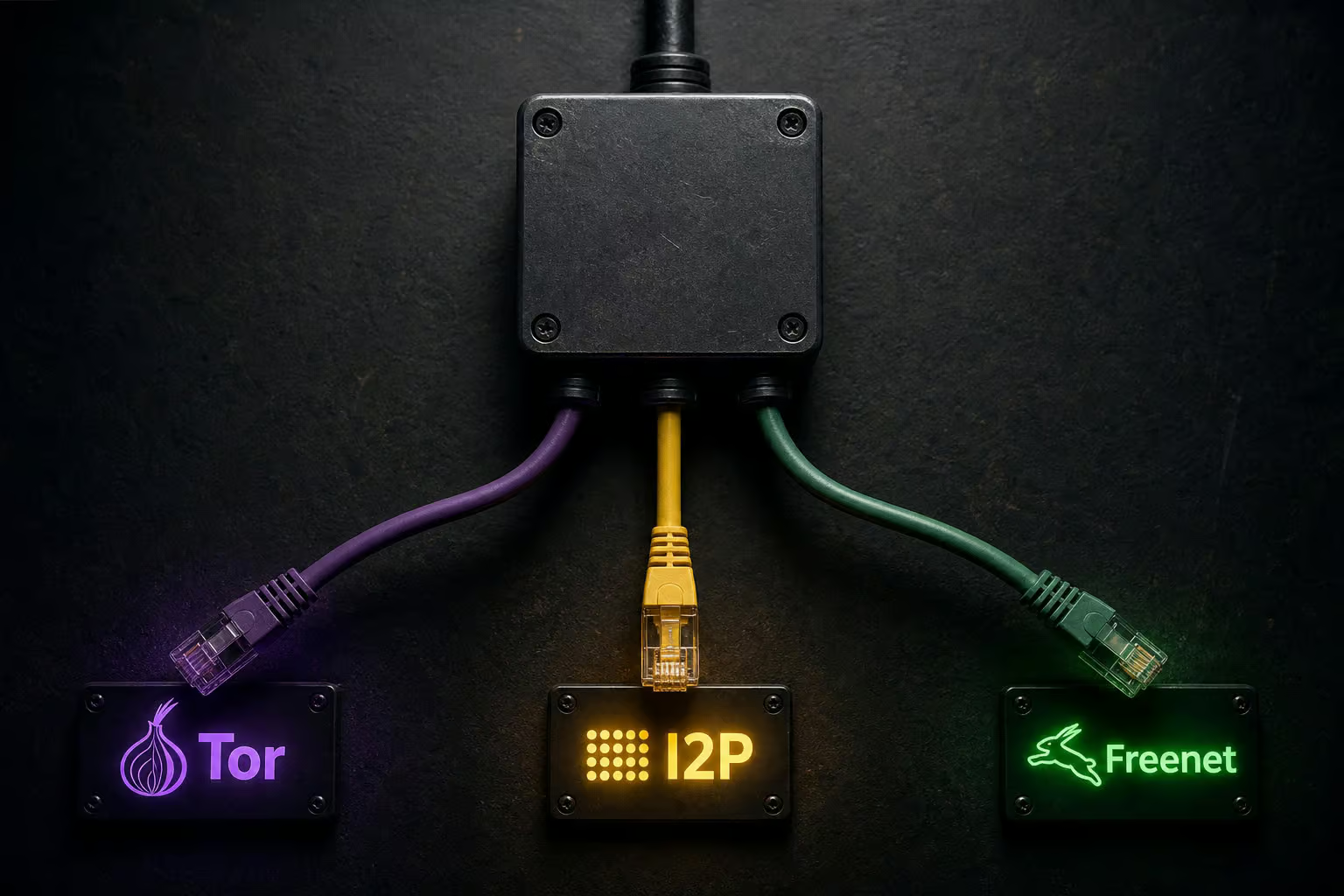
So here’s a scenario I’ve seen play out more times than I can count: someone hears about I2P, fires up the browser, types in a clearnet URL, and sits there watching the spinner. Ten seconds, thirty seconds, maybe a minute. They write it off as broken. The problem isn’t I2P — it’s that they’re using the wrong tool for the job.
I2P is not a Tor alternative. It belongs to a different network category. Tor is built to get you out to the regular internet. I2P is designed for activity inside the privacy network.
Freenet (now called Hyphanet) isn’t even a routing network — it’s a distributed hard drive. They complement each other, they don’t compete.
I’ve set up hidden services on all three. I’ve hit the latency walls. I’ve tuned the tunnels. Here’s where each one breaks and where each one shines.
Key Takeaways
I2P’s hidden services use a 12-hop round-trip (6 inbound + 6 outbound) with unidirectional tunnels — significantly harder to correlate than Tor’s 6-hop bidirectional circuits.
Tor’s roughly 200–500ms round-trip time and millions of daily users make it the clear choice for anonymous clearnet browsing, but its fixed circuits are brittle for long-running services.
Freenet stores encrypted file chunks on user hard drives with minutes of latency — not a routing network at all, but uniquely suited for persistent anonymous publishing.
Table of Contents
Routing Architecture: Packet-Switching vs. Circuit-Switching vs. DHT
The most important architectural difference isn’t about encryption or speed — it’s about how data physically moves through the network. Each network makes a fundamentally different choice here.
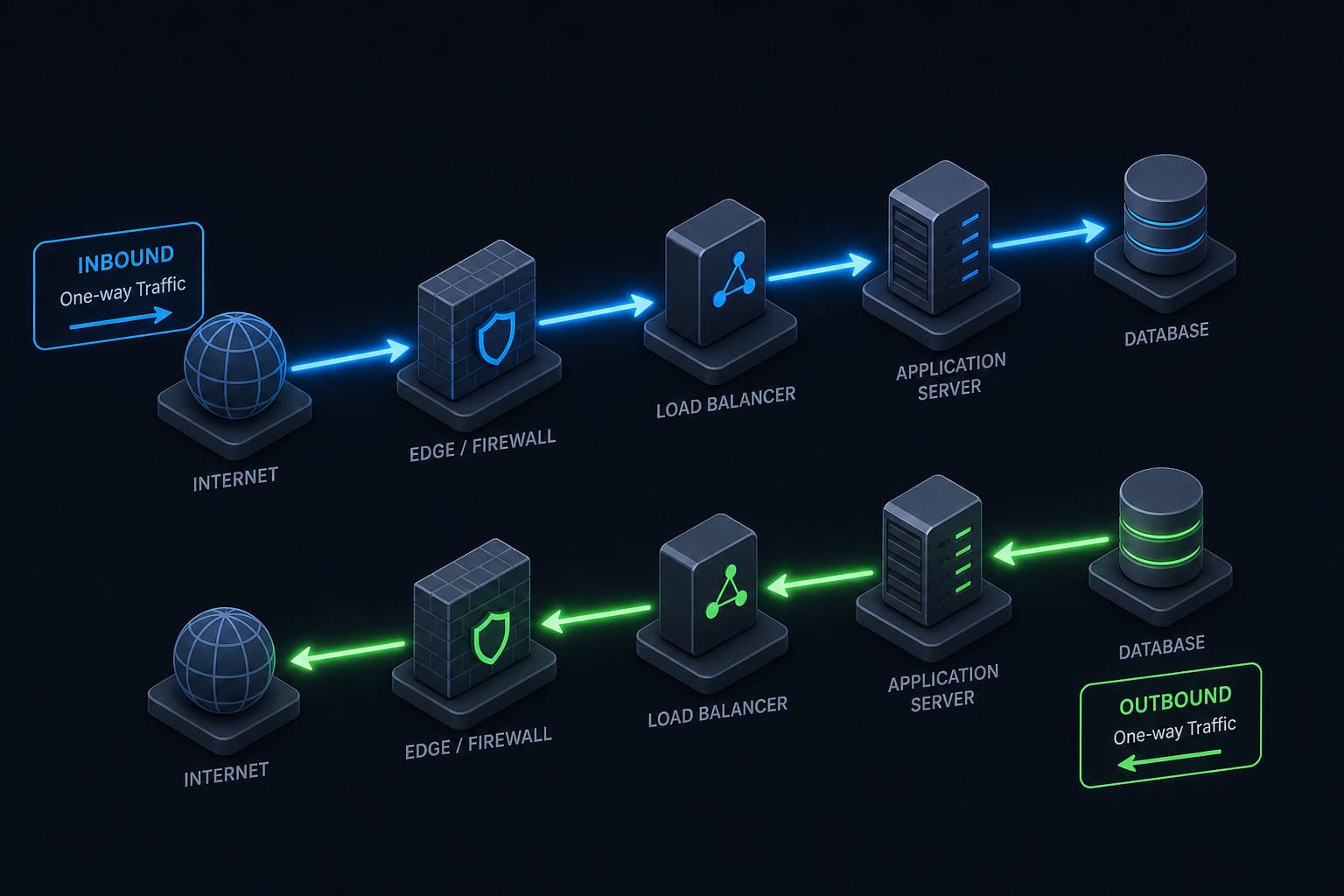
I2P’s unidirectional tunnels
I2P uses unidirectional tunnels (inbound/outbound) with packet-switched, multi-path, load-balanced traffic handling. Inbound and outbound traffic travel over completely separate paths. Think of it like having two different phone lines — one for outgoing calls, one for incoming. No single node on the network ever sees both sides of a conversation.
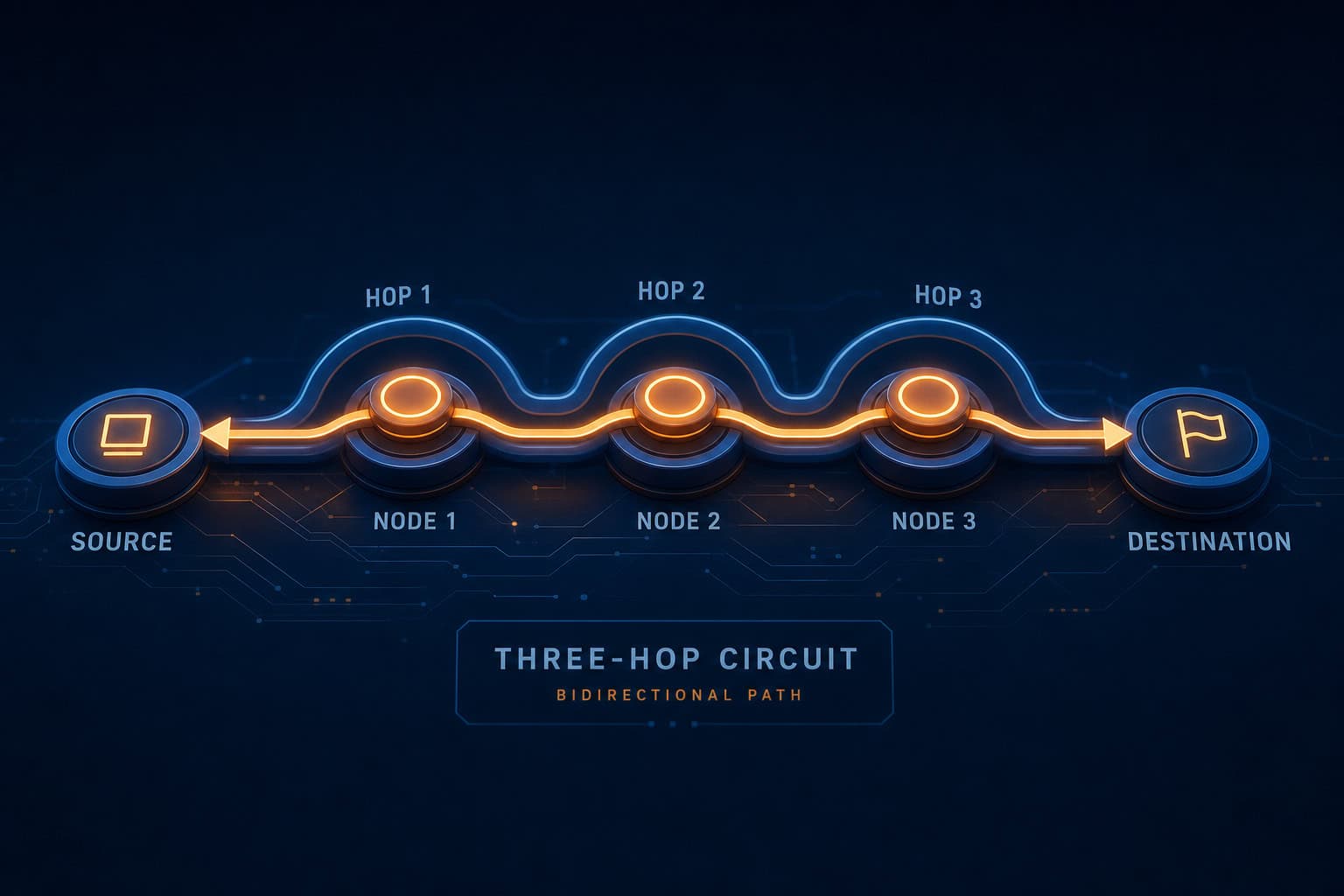
This makes timing correlation attacks significantly harder. An observer might see a packet go out and a different packet come in, but they can’t easily tie them together because the paths are different and the packets are individually routed. Traffic can also split across multiple paths simultaneously, which is a nice resilience trick — if one path drops, your service stays up.
Tor’s fixed circuits
Tor takes the simpler route: circuit-switched, bidirectional circuits. A typical circuit is a three-hop highway: you ? guard ? middle ? exit. Once that circuit is established, every request and response follows the same fixed path.
This is great for browsing. The latency is predictable, and the implementation is battle-tested. But it’s brittle for anything long-lived. If a node in your circuit fails, the whole circuit collapses. You can build a new one, but any service relying on a persistent connection (chat servers, multiplayer games, API endpoints) will feel that break.
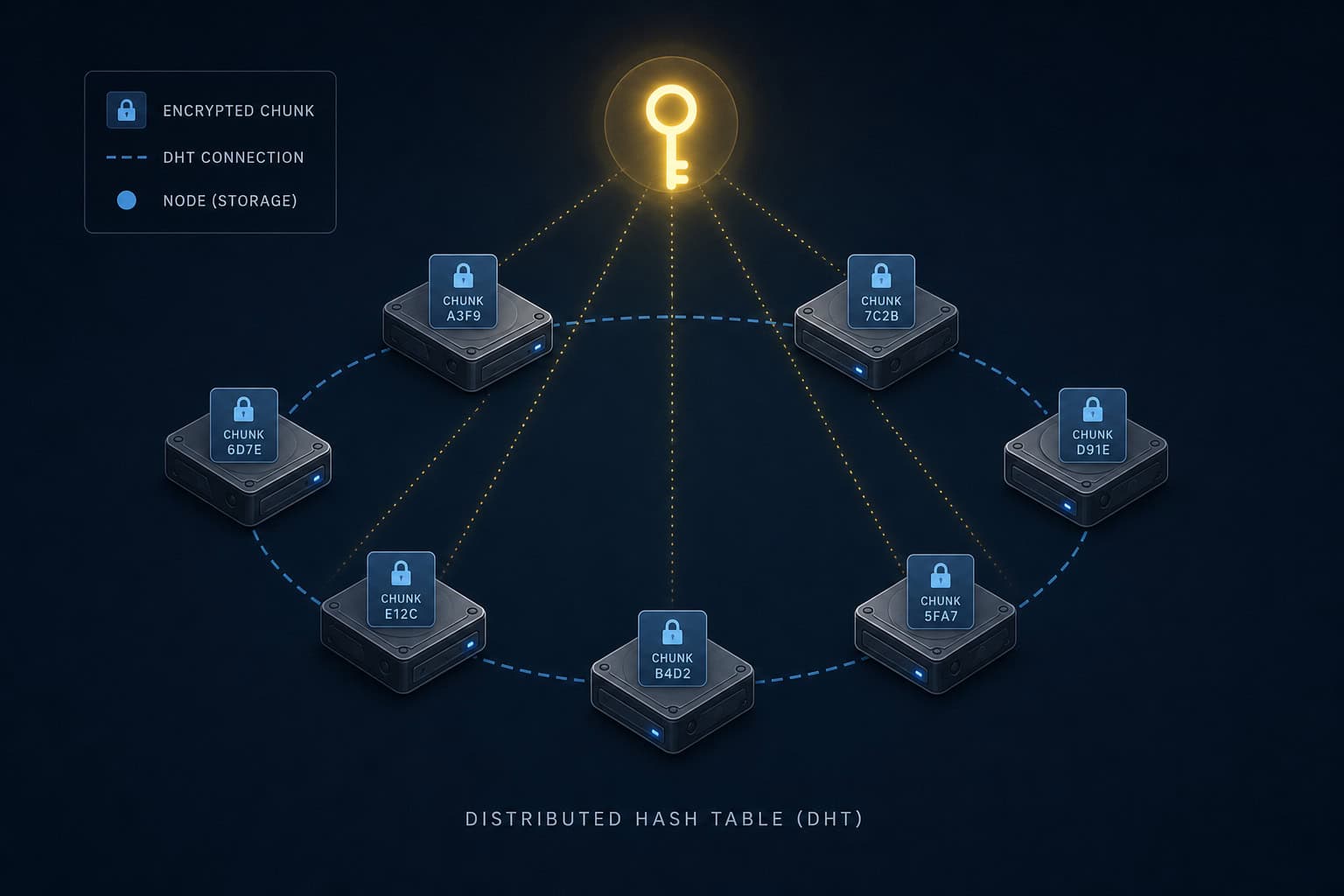
Freenet’s key-based lookup
Freenet isn’t about routing at all. It’s a distributed hash table that maps content keys to storage locations. When you request a file, the network asks “who has the data with this key?” instead of “how do I reach this IP address?” Data is split into encrypted chunks and spread across peers, so no single node holds a complete file. The tradeoff: routing is heuristic and slow — think minutes, not milliseconds.
The direct comparison
- I2P: Packet-switched, unidirectional. Harder to trace, more resilient, but higher latency.
- Tor: Circuit-switched, bidirectional. Simpler, faster, but more traceable and less fault-tolerant.
- Freenet: DHT-based content routing. Not real-time at all — designed for storage, not communication.
Lokinet adds a fourth flavor: packet-switched over a blockchain with staked nodes for quality-of-service. It’s an interesting hybrid, but the network is still small.
Anonymity Guarantees: Hop Count, Traffic Separation, and Anonymity Sets
The obvious question is “which one is more anonymous?” The less obvious answer is “it depends on what you’re doing.”
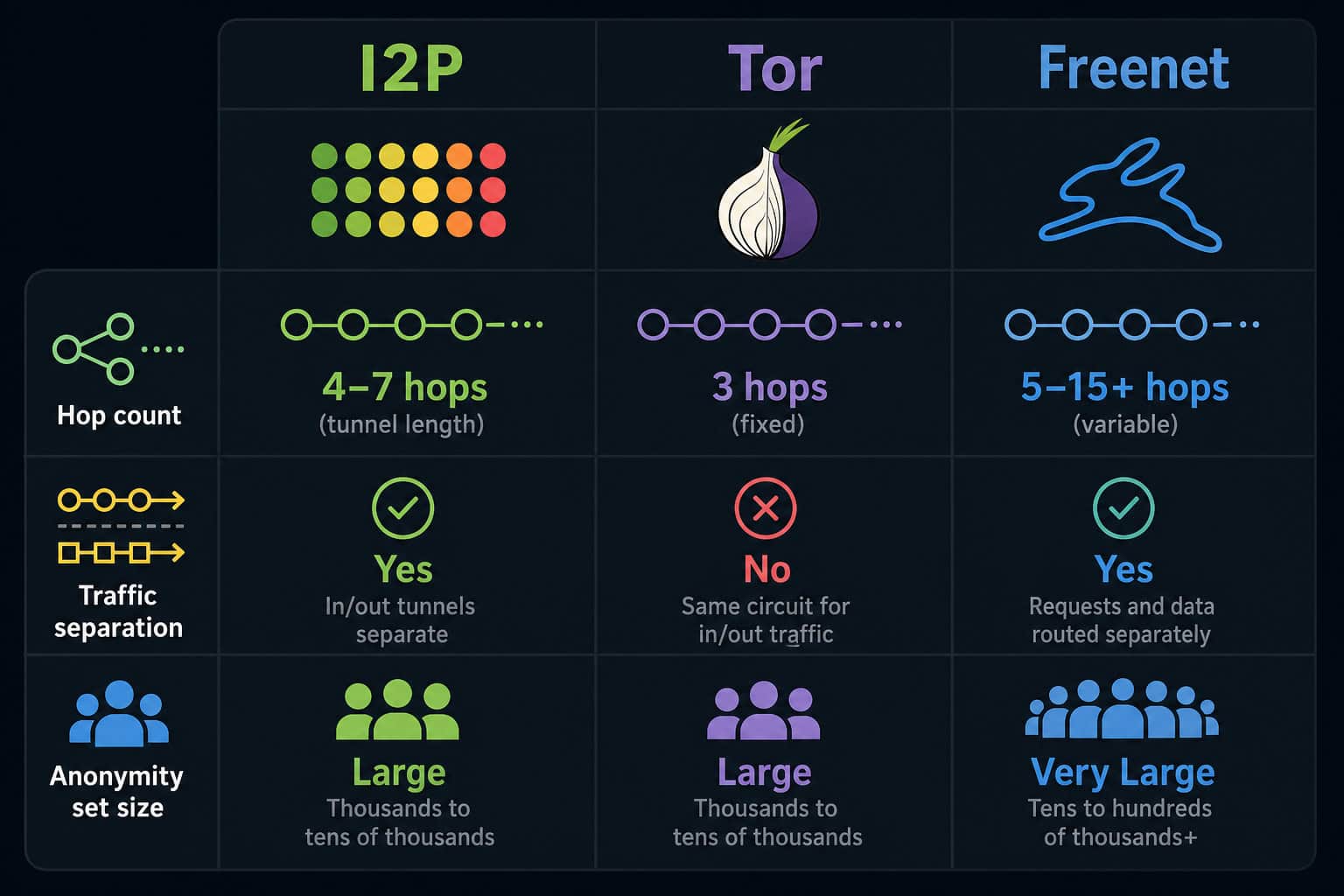
Hop counts and structural separation
I2P’s hidden services use a 12-hop round-trip: six inbound tunnels from client to service and six outbound tunnels back. Tor’s hidden services use six hops total. More hops means more possible points of failure for an attacker trying to deanonymize you, but also more latency.
But the real differentiator is traffic separation. Tor’s bidirectional circuits mean a single compromised node can see both your request and the response. That’s why the definitive geek guide to Tor Browser explains how it works under the hood, its security levels, fingerprinting risks, and best practices for staying anonymous while browsing. I2P’s unidirectional tunnels mean even a compromised node sees only half the flow — it can’t link the sender to the receiver without additional information.
Anonymity set sizes
Raw numbers matter here, but not in the way most people assume.
- Tor: Millions of daily users. The largest anonymity set of any darknet.
- I2P: About 55,000 active routers at any given time.
- Freenet: Thousands of nodes, with a small core of active participants.
You might think “more users = more anonymity,” but it’s not that simple. Tor’s millions of users are mostly clients — they download the browser and browse. They don’t relay traffic for others. The network’s routing capacity depends on a much smaller set of volunteer relays (over 7,000 at last count). I2P’s 55,000 routers all route traffic for everyone else, which is the democratic model behind the I2P browser — you get what you give.
For internal communications (hidden services, P2P apps), I2P’s architecture provides stronger unlinkability despite the smaller user base. For clearnet browsing, Tor’s sheer numbers and exit node diversity are hard to beat, so understanding this i2p vs tor deep-dive comparison can help geeks choose the right tool for their threat profile.
Participation models
- I2P: Every router routes for others. No special roles. Bandwidth and uptime define your place in the network.
- Tor: Most users are pure clients. Relays are volunteers. A small fraction of participants handle the heavy lifting.
- Freenet: You choose your connections. Friend-to-friend mode is possible. Storage contribution is the participation model.
Decentralization: Who’s in Charge?
This is where the trust models diverge.
I2P uses a Kademlia DHT that organizes itself and is maintained by rotating floodfill routers, removing any central control points or coordination servers. There’s no central registry — just a self-organizing DHT that keeps the map up to date. The floodfill roles cycle automatically, so there’s no single point of control. If a floodfill node goes down, others take over.
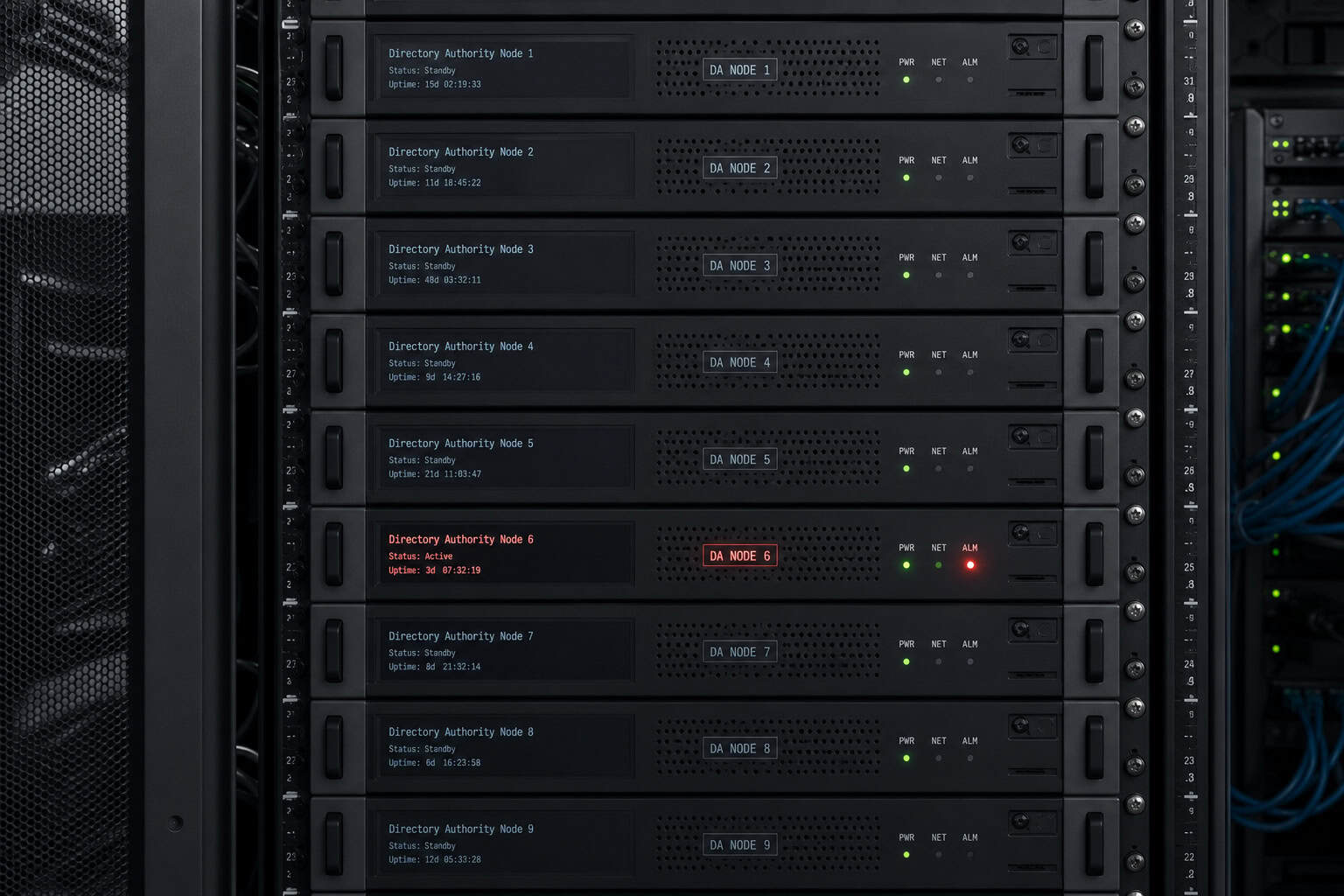
Tor’s nine directory authorities define its network topology — they decide which relays are listed and which are not. It’s a single point of trust and a potential vulnerability. If those nine servers were compromised or taken offline, the network’s ability to bootstrap would be severely disrupted. In practice, they’ve been remarkably resilient, but using a Tor over VPN setup is a design tradeoff you should understand.
Red flag: Nine directory authorities control Tor’s entire relay list. If you’re building a system that requires trustless operation, this centralization matters — I2P eliminates it entirely.
Freenet takes a different approach: no central directory, no DHT for peer discovery. The network learns about other nodes through heuristics and local connections. It’s highly decentralized but doesn’t scale well.
Lokinet uses the Oxen blockchain as its directory — you stake OXEN tokens to become a service node. Market-driven, but also a financial barrier.
Performance and Latency: Speed vs. Anonymity Trade-offs
Here are the numbers that matter for daily use:
- I2P: 1–3 seconds round-trip time for internal services.
- Tor: ~200–500 milliseconds for clearnet browsing.
- Freenet: Minutes of latency. Seriously. Not a typo.
If you try to browse the regular web through I2P, you’ll be waiting. That’s not a bug — it’s a feature. I2P’s latency comes from the 12-hop tunnel round-trip and the packet-switching overhead. It’s optimized for services that run inside the network, not for loading Google.
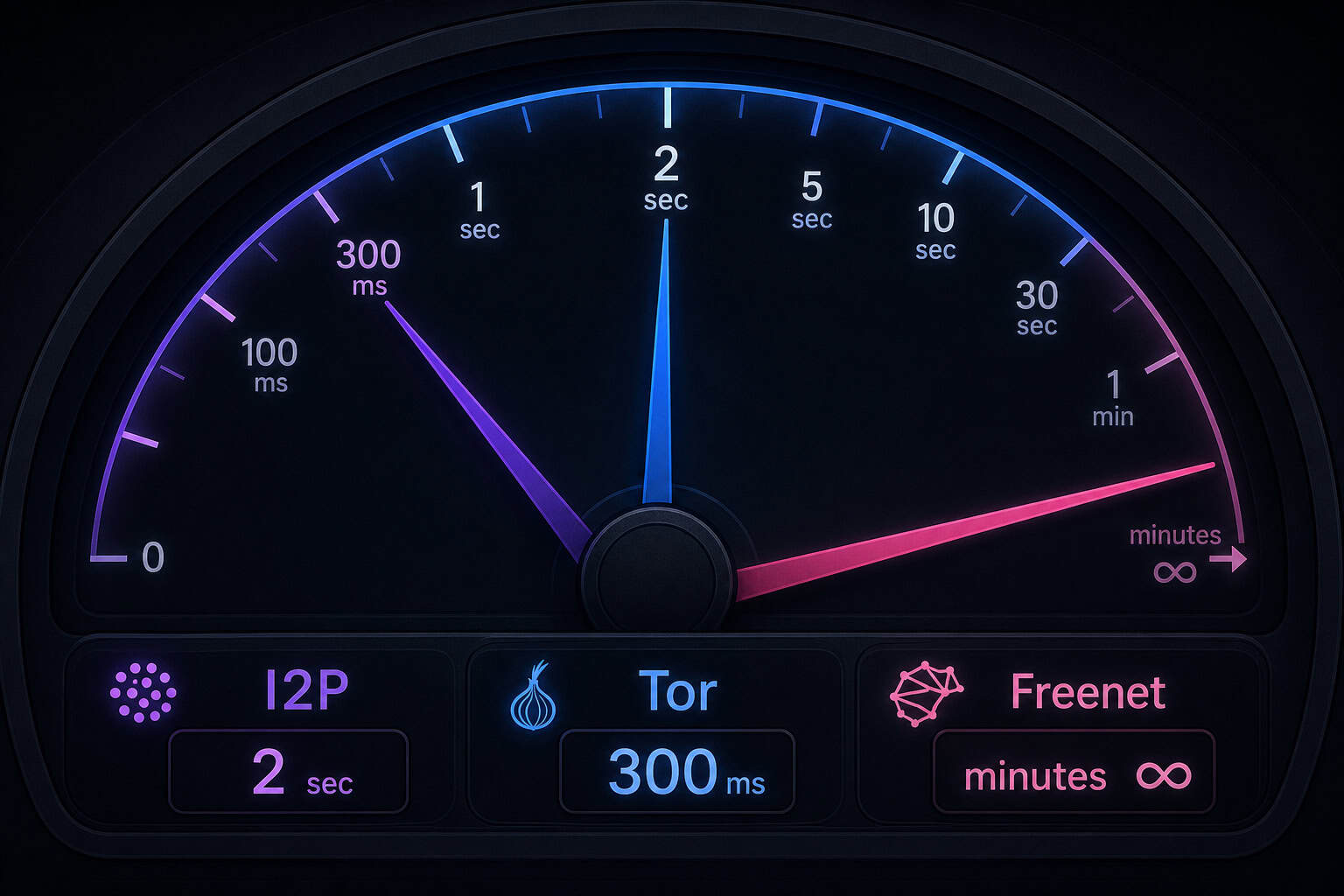
Tor’s lower latency is a core design goal. It’s built to be a usable gateway to the clearnet. The tradeoff is that its circuits are simpler and more traceable.
Freenet’s minutes of latency make it completely unsuitable for real-time communication. You use it to publish content or retrieve files days later. It’s storage, not a highway.
Use Case Selection: Which Network for Which Job?
| Job | Network | Why |
|---|---|---|
| Anonymous web browsing (clearnet) | Tor | Optimized for exits, lowest latency, largest user base |
| Anonymous hosting (eepsites, chat, P2P) | I2P | Built for internal services, unidirectional tunnels, garlic routing |
| Anonymous file publishing and storage | Freenet | Distributed datastore, content persists based on popularity |
| VPN-style private routing with staking | Lokinet | Blockchain-based directory, quality-of-service guarantees |
| Academic experimentation | GNUnet | Research sandbox, not production-ready |
For more granular guidance, here is a detailed mapping of specific use cases to recommended networks. If you need anonymous hosting for a website or chat server, I2P is the clear choice — its unidirectional tunnels and garlic routing are built for internal services. For peer-to-peer file sharing, I2P’s I2PSnark and Freenet’s distributed datastore both work, but Freenet excels when content must persist without a server. For decentralized applications (DApps) requiring low-latency communication, I2P or Lokinet (with its blockchain-based quality-of-service) are suitable.
For file publishing that must survive censorship, Freenet’s encrypted chunk storage is unmatched. For VPN-style routing where you want staking incentives, Lokinet offers a market-driven approach. And for academic research or experimentation, GNUnet provides a sandbox environment. These networks are not interchangeable. A smart privacy setup might use all three: Tor for browsing reddit, I2P for running a hidden service, and Freenet for publishing a manifesto that needs to survive without a server.
Advanced Features: Garlic Routing, Built-in Apps, and Participation Models
Beyond the core routing differences, each network offers unique features that shape how they are used in practice.

Garlic routing
I2P extends onion routing with garlic routing, bundling multiple encrypted messages into one container. This reduces metadata leakage and bandwidth overhead while improving efficiency for acknowledgment, data, and control messages.
Why does that matter? Fewer observable metadata points. An attacker sees fewer encrypted messages going by, and each message contains less shape information. It also reduces bandwidth overhead — bundling acks with data means fewer round trips.
Tor uses circuit-switched onion routing over bidirectional circuits (3 hops). Simpler implementation, but more leaky.
Built-in apps
I2P ships with I2PSnark (a BitTorrent client), I2PTunnel (for TCP and UDP tunneling), SusiMail, and I2PBote. It’s a full ecosystem out of the box.
Tor gives you Tor Browser and OnionShare. Focused, refined, and dead simple.
Freenet provides a web-based UI for browsing “freesites,” managing your node, and publishing content. It’s a software suite built around the storage model.
Participation model
Every I2P router routes for others. There are no dedicated relay operators or privileged nodes—bandwidth and reliability automatically determine how much routing a node contributes. The network grows with every new participant. More nodes = more capacity.
Tor’s client/relay split is pragmatic — most people just want to browse. But it means the network’s health depends on a volunteer minority.
The Caveats: No Network is Perfect
None of these networks are magic. They all have known attack surfaces.
Timing attacks are a universal vulnerability. An adversary with enough global visibility can correlate traffic patterns across any of these networks. I2P’s unidirectional tunnels make it harder, but not impossible.
Setup difficulty and user experience vary significantly. Tor Browser is the easiest: download, launch, and browse. I2P requires configuring tunnels and understanding its internal addressing, which has a steeper learning curve. Freenet’s web-based UI is manageable but its minutes of latency can be disorienting. Lokinet involves staking tokens and command-line setup, making it the most complex.
Censorship resistance and blocking vulnerability also differ. Tor’s bridges and pluggable transports help bypass censorship, but its directory authorities remain a centralization risk — recent research shows that deep-packet inspection can still detect Tor traffic. I2P’s DHT-based peer discovery makes it harder to block entirely, though its smaller user base means less cover. Freenet’s friend-to-friend mode offers strong resistance to blocking, but its low node count limits scalability.
No network provides “perfect” anonymity. The smart move is to use multiple tools and maintain cautious habits. Don’t assume any single network shields you from a well-funded adversary.
That said, these networks provide real protection for real people every day. The key is picking the right one for your specific job — and understanding its limitations.
The Right Tool for the Job
I2P is not a Tor alternative. It is a different class of network — built for what happens inside the privacy network, not outside of it. Tor excels at clearnet exits. Freenet excels at persistent anonymous storage. They solve different problems.
If you find yourself frustrated by I2P’s speed while browsing the web, you’re using the wrong tool. Switch to Tor. If you’re trying to host a chat server on Tor and keep losing connections, move it to I2P. If you want to publish a file that remains accessible without a server, Freenet’s got you.
Three networks. Three jobs. Now you know which one to reach for.
People Also Ask
Is I2P better than Tor?
It depends on what you’re doing. I2P is better for hosting hidden services and internal network communication because its unidirectional tunnels and 12-hop round-trip provide stronger unlinkability. Tor is better for anonymous clearnet browsing due to lower latency and a much larger user base.
Is Freenet still a thing?
Yes, Freenet (now called Hyphanet) is still active. It’s a distributed storage network, not a routing network, designed for persistent anonymous publishing with minutes of latency. It’s not suitable for real-time communication but remains unique for censorship-resistant file sharing.
Is Freenet truly untraceable?
Freenet provides strong anonymity through encrypted chunk storage and heuristic routing, but no network is perfectly untraceable. Timing attacks and global adversaries can still pose risks. Its design makes it harder to trace than typical client-server models, but it’s not infallible.
What is Freenet used for?
Freenet is used for persistent anonymous publishing and file storage. It splits files into encrypted chunks distributed across peers, allowing content to remain accessible without a central server. It’s ideal for publishing materials that need to survive censorship, but it’s not for real-time communication due to minutes of latency.