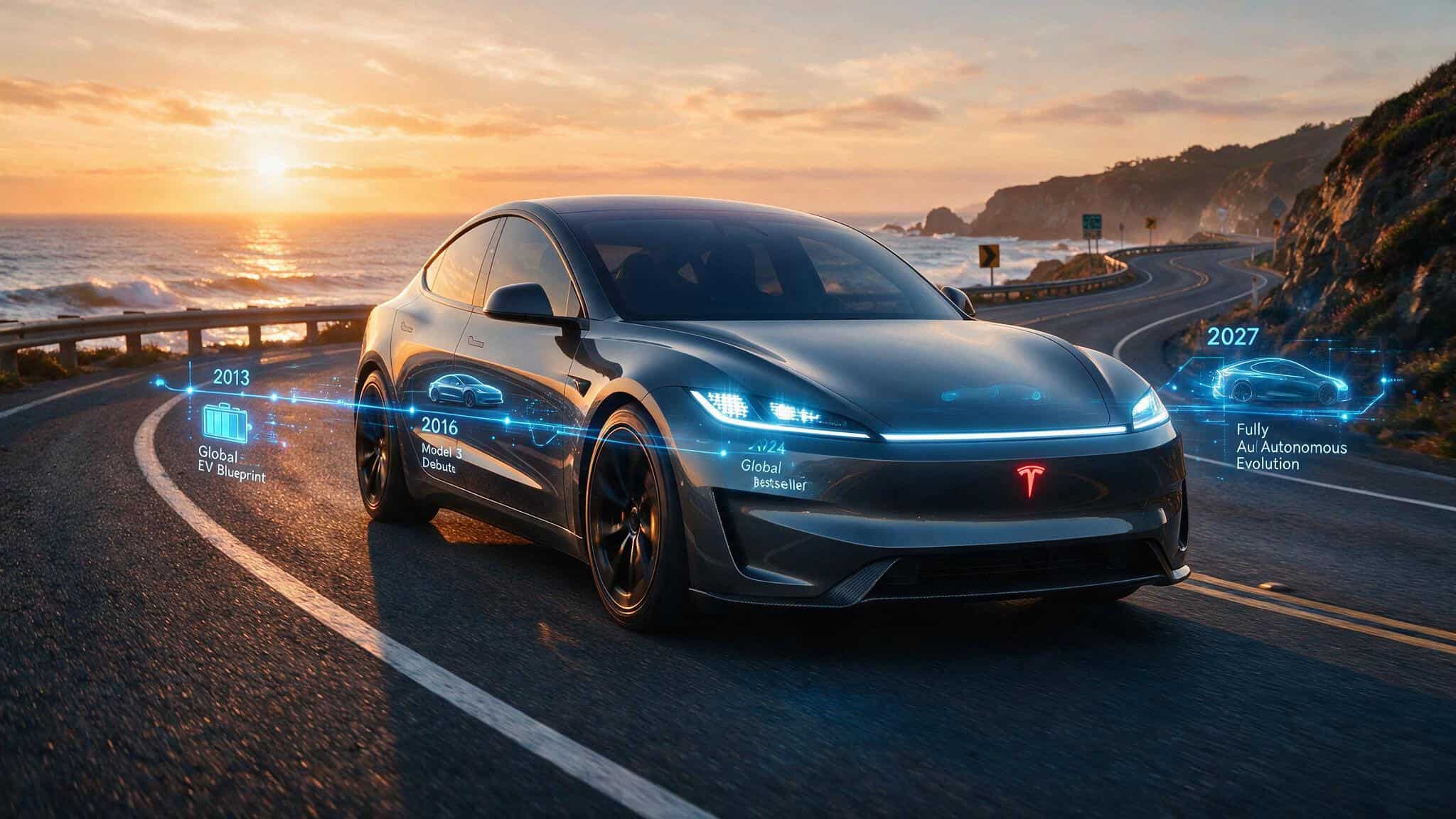
I’ve been watching the self-driving car story unfold for over a decade now, and there’s something about the pattern that’s emerged. Not the misses themselves — those are well-documented, but the persistence of the vision. The specific, measurable predictions. The timeline that keeps compressing and expanding like some kind of temporal accordion.
Let’s go through the whole thing, prediction by prediction.
Key Takeaways
Musk’s first major autonomy prediction (September 2013) claimed 90% of miles would be autonomous within three years (by 2016); as of 2024, Tesla’s system is still classified as SAE Level 2, requiring constant driver supervision
A February 2023 securities fraud lawsuit was dismissed in September 2024 after a judge ruled Musk’s statements amounted to “corporate puffery” — legally protected vague optimism rather than enforceable promises
Tesla logged zero autonomous test miles in California in 2025, and only 562 total miles since 2016, according to California DMV records
Table of Contents
The Decade of Promises: Opening the Pattern
Musk’s first prediction in 2013 set the pattern: a specific deadline, confidence, and no delivery. September 2013, IEEE Spectrum interview. Musk predicted that 90% of miles driven would be autonomous within three years. That puts the deadline at 2016.
Eleven years later, Tesla’s Full Self-Driving and Autopilot systems are classified as SAE Level 2 — an advanced driver-assistance system that requires constant human supervision. Level 5, where the car handles every driving scenario without any human intervention, hasn’t arrived.
This is the pattern in miniature. Specific, and way off. Musk has never stopped making these predictions. Each time, the timeline resets. Each time, the confidence level stays.
The gap between what was promised and what exists is the story.
The Early Predictions (2013–2016): Bold Claims, Quick Deadlines
Let’s start tracking, year by year.
2013–2014: The First Timelines
September 2013 — “We should be able to do 90 percent of miles driven [autonomously] within three years.” Deadline: 2016 (per IEEE Spectrum, Sep 18, 2013). Status: Not met.
June 2014 — Musk expressed confidence that within a year, drivers could go from highway on-ramp to exit without touching controls. Deadline: 2015. Status: Not met.
October 2014 — Musk said a Tesla car the following year would likely be 90% capable of autopilot, especially for highway travel. Deadline: 2015. Status: Not met.
October 2014 — Musk predicts true autonomous driving where you can “sleep and wake up at your destination” by 2023. Status: Not met. (This one’s interesting because it’s a longer timeline, 9 years, and it still missed.)
2015: The Timeline Shifts Again
October 2015 — “Full autonomy in about three years.” Deadline: 2018. Status: Not met.
December 2015 — “Complete autonomy in approximately two years.” Deadline: 2018. Status: Not met.
2016: Peak Confidence
January 2016 — Musk says you’ll be able to “summon a car from across the country” within two years. The car would meet you wherever your phone is… and it will just automatically charge itself along the entire journey. Deadline: 2018. Status: Not met.
June 2016 — “I consider autonomous driving to be a basically solved problem. Regulators however will take at least another year; they’ll want to see billions of miles of data.” Deadline: 2019 (with regulatory buffer). Status: Not met.
That “basically solved problem” framing is confidence. The hard part, in Musk’s view, was done.
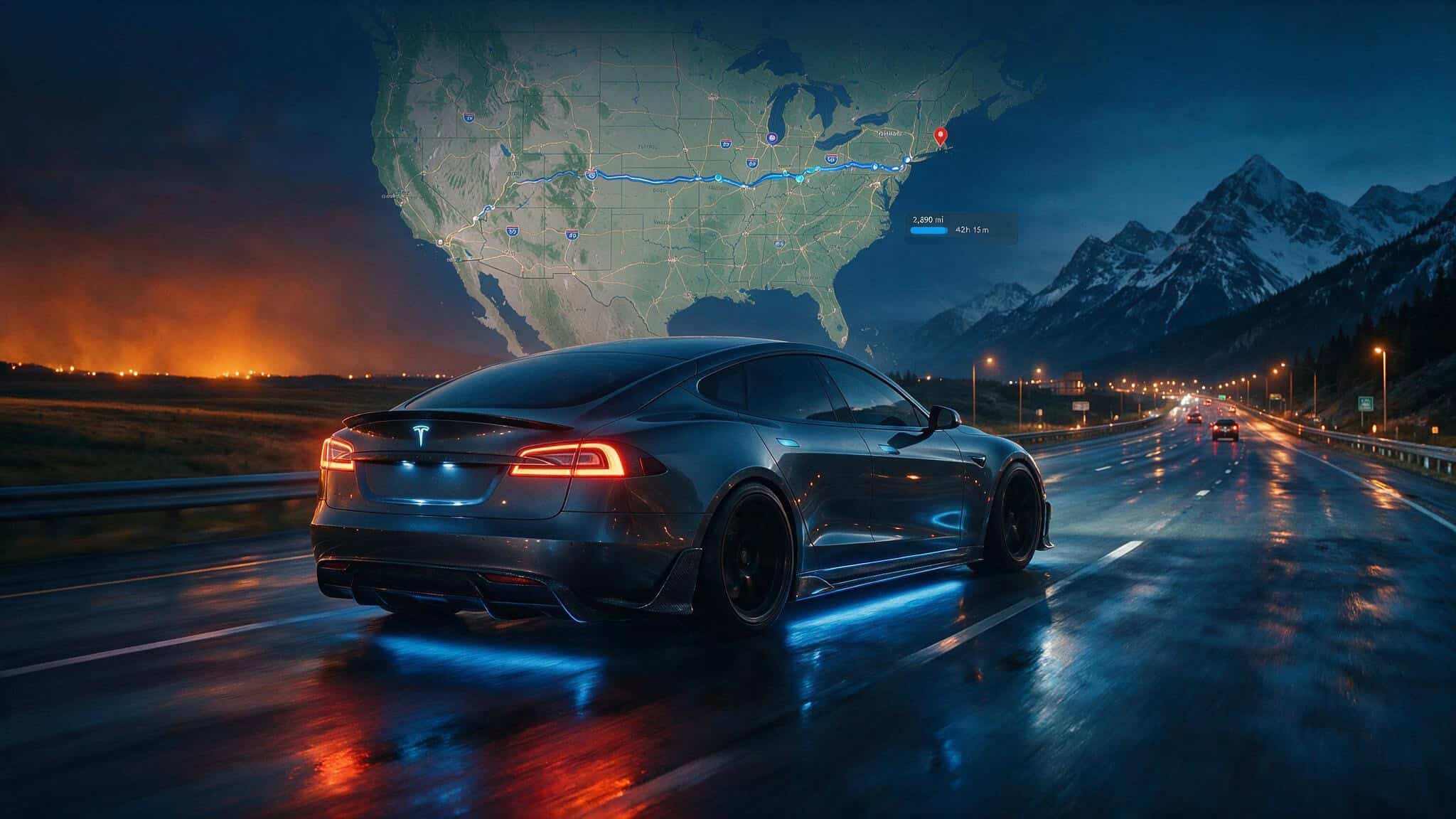
October 2016 — Coast-to-coast autonomous drive by end of 2017. Deadline: December 2017. Status: Not met.
Also in 2016: a Tesla Model X demonstration video was staged with Musk’s knowledge. A former Tesla engineer later testified they helped stage it. And the first confirmed fatality in a crash using Autopilot occurred. It was a year of ambition and sobering reality.
The Middle Years (2017–2019): Coast-to-Coast, Robotaxis, and Escalation
This is where things got interesting. The predictions became more specific, and the gap between them and reality started getting attention.
2017: TED Talk Promises
April 2017 — TED2017. Musk claimed that by November or December of that year, they could drive from a California parking lot to a New York parking lot without touching any controls. Deadline: December 2017. Status: Not met.
May 2017 — Driver can sleep at the wheel in about two years. Deadline: 2019. Status: Not met.
Meanwhile, Tesla was deep in production hell. Quality control issues, cars built in tents. The Model 3 ramp was brutal.
2018: The Timeline Keeps Compressing
February 2018 — Time-wise, Musk said a coast-to-coast drive could happen in three to six months. Deadline: August 2018. Status: Not met.
March 2018 — Self-driving all modes by end of next year. Deadline: December 2019. Status: Not met.
November 2018 — Full self-driving next year as a generalized solution. Deadline: 2019. Status: Not met.
More reports of Autopilot crashing into firetrucks and ambulances. Musk’s “funding secured” tweet led to SEC scrutiny.
2019: The Robotaxi Era
February 2019 — “Feature-complete full self-driving this year.” The car would find you, pick you up, take you to your destination without intervention. Deadline: 2019. Status: Not met.
April 2019 — Autonomy Day. Over 1 million robotaxis on the road next year. Status: Not met. As of late 2023, AI is making self-driving cars and smarter transportation a reality, but the April 2019 prediction of over one million robotaxis by 2020 remains one of the technology predictions made.
April 2020 — “Robotaxi functionality still looking good for 2020.” Status: Not met.
The Later Years (2020–2024): FSD Beta, Shifting Goalposts, and Legal Pushback
The predictions kept coming, but the landscape changed. FSD Beta launched. Regulators started pushing back. And a court gave Musk’s statements a legal shield.
2020–2021: Beta and a Major Fork
July 2020 — “Basic level five autonomy complete this year.” Status: Not met.
January 2021 — Car drives itself with reliability in excess of human this year. Status: Not met.
In 2021, Musk made a fundamental technical decision: ditch LiDAR. From then on, Tesla’s self-driving would be camera-only. Humans drive with eyes and biological neural nets, Musk argued. It makes sense that cameras and silicon neural nets are the only way to achieve a generalized solution to self-driving. This is the core strategic bet that separates Tesla from every major competitor, but the question remains: what is the problem with autonomous vehicles?
Also in 2021: NHTSA ordered a recall of 11,000 vehicles equipped with FSD Beta.
2022–2023: Wide Release and the “Acid Test”
April 2022 — Solve neural nets and cameras to exceed human capability this year. Status: Not met.
August 2022 — Self-driving wide release in the U.S. before end of year. Status: Partially met. FSD Beta wide release did happen in November 2022. But it wasn’t full autonomy. It was still Level 2.
May 2023 — “Full autonomy this year.” Status: Not met.
July 2023 — Full self-driving (level 4 or 5) later this year. Status: Not met.
July 2023 — Tesla better than human by end of this year. Status: Not met.
Musk acknowledged he had been wrong in the past. “Generalized self-driving is a hard problem,” he said in 2021. “Didn’t expect it to be so hard.” That’s a moment of candor.
2024: The “Corporate Puffery” Ruling
In February 2023, investors filed a securities fraud lawsuit over Musk’s self-driving claims. In September 2024, a judge dismissed the case. The ruling? Musk’s statements amounted to “corporate puffery” — legally protected optimistic statements that aren’t actionable as fraud.
This is the legal finding. It means Musk can keep making ambitious predictions without the risk of securities fraud liability, as long as they stay aspirational. But there’s a double edge: Tesla’s own lawyers argued in court that “self-driving” in FSD Beta is merely aspirational. The marketing claims are legally protected because they’re not meant to be taken as factual promises.
The Legal Shield: “Corporate Puffery” as a Defense
“Corporate puffery” sounds dismissive, but it’s a legal doctrine. It protects companies from liability when they make vague, optimistic statements about future products. The idea is that reasonable investors understand these are aspirations, not guarantees.
But the shield has limits. In a safety-critical context like autonomous driving, aspirational marketing could attract scrutiny from regulators such as NHTSA or the SEC. If a prediction influences consumer behavior or investor decisions and the product fails to deliver, puffery may not shield Tesla from claims of misleading the public about safety capabilities.
Here’s the interesting part: the same legal protection that lets Musk make these predictions also means they can’t be relied on as factual claims. You can’t sue Tesla because the 2017 coast-to-coast drive didn’t happen. The court said those statements were “vague optimism.”
Tesla acknowledges this itself. The company’s official position is that full autonomy depends on “billions of miles of experience” and regulatory approval, “which may take longer in some jurisdictions.” A separate deep-dive into the importance of autonomous vehicles explains why self-driving cars matter beyond the hype — from safety stats and accessibility gains to economic disruption and environmental impact, with a geek’s eye on the tech that makes it possible. That’s a very different framing from Musk’s tweets.
The Reality Check: Where Tesla Stands Now
Let’s look at where things are, not where the predictions said they’d be.
Current FSD Classification
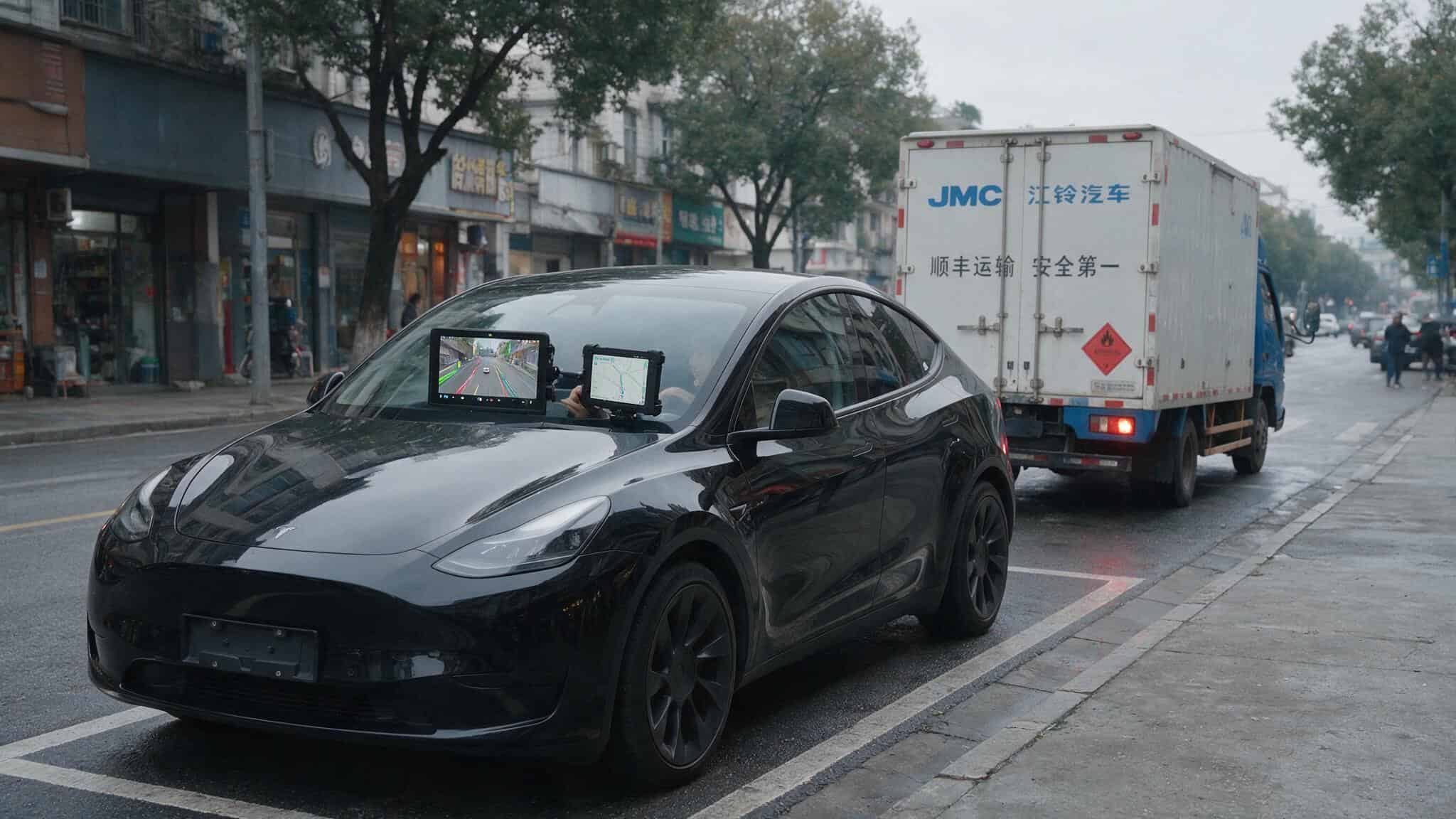
As of January 2024, Tesla’s FSD and Autopilot are classified as SAE Level 2 ADAS. Tesla doesn’t use SAE levels, but every external analyst puts it at Level 2. Consumer FSD (Supervised) has been described as “Level 2++” — driver-assist requiring constant human alertness.
The Testing Gap
Here’s a number: Tesla logged zero autonomous test miles in California in 2025. Total since 2016: 562 miles. California requires reporting for autonomous testing, and Tesla’s number is effectively nothing. Compare that to Waymo, which logs millions of test miles annually.
Tesla has not taken the steps required to launch a driverless robotaxi service in California. They did get a permit for ride-hailing in Arizona in November 2025, but that’s a different regulatory framework.
The Robotaxi Pilot
The June 22, 2025 robotaxi launch in Austin was a real milestone. But the reality is limited. Forrester analyst Paul Miller described it as a “low-key affair” — a handful of vehicles, operating in a small part of the city, with a safety monitor in the passenger seat. The service costs $4.20 flat fee, available only to handpicked riders, avoiding difficult intersections.
A Reuters video showed the safety monitor pressed a button to stop the robotaxi as a delivery truck backed up. That’s not driverless. That’s supervised testing.
Most of Tesla’s claimed robotaxi miles come from about 500 cars in the San Francisco area with human drivers. Not autonomous.
Safety Recalls and Incidents
NHTSA ordered Tesla to recall 218,868 vehicles over delayed rearview camera images in 2024. Tesla recalled roughly 200,000 vehicles in January 2024 for a nearly identical defect. Repeat issues.
Tesla robotaxi crashes: 2 since July 2025, 5 additional in January, over 14 total incidents since mid-2025. Robotaxis reportedly had no passengers on board except the safety monitor, and were being driven by remote operators under 10 mph when incidents occurred.
Competitor Comparison: How Others Are Winning
While Tesla’s approach remains camera-only and Level 2, competitors have already deployed higher levels of autonomy in commercial services.
Waymo
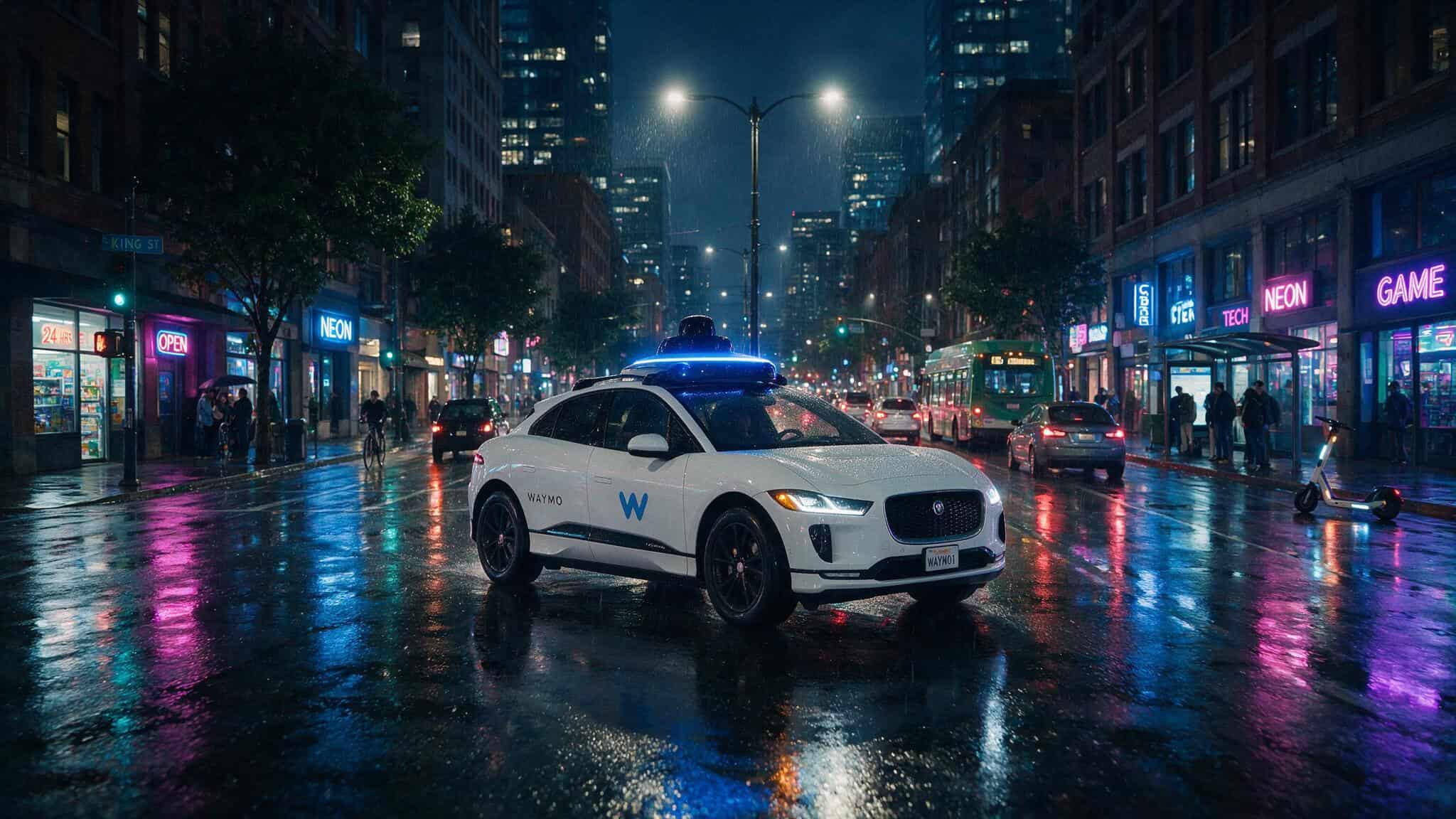
Waymo operates Level 4 robotaxis in several cities. They’ve logged millions of autonomous miles. They use LiDAR, radar, and cameras — sensor fusion. They also have safety issues: Waymo recalled approximately 3,800 robotaxis after a floodwater incident, and issued a voluntary software recall in December 2025 after vehicles illegally passed stopped school buses in Texas on 19 separate occasions.
The point isn’t that Waymo is perfect. It’s that Level 4 autonomy exists, right now, in multiple cities, carrying passengers.
Mercedes-Benz
Mercedes beat Tesla to market with Level 3 Drive Pilot. It’s limited to specific conditions (highway, under 40 mph, good weather), but it’s legally approved. The driver can take their eyes off the road. That’s a regulatory milestone Tesla hasn’t achieved.
The Strategic Divergence
Tesla’s camera-only approach is more scalable in theory — no expensive LiDAR, no high-def maps needed. But it’s riskier and less proven. Waymo’s sensor fusion is more reliable but costs more per vehicle. Both approaches have produced recalls.
Yet the camera-only bet may pay off long-term. If Tesla solves generalized autonomy with vision alone, it will have a cost and deployment advantage that competitors with expensive sensor suites cannot match. The approach is harder to perfect but, if successful, easier to scale across millions of vehicles worldwide.
Both have limitations. But one of them is carrying passengers without a human behind the wheel.
The Latest Predictions (2025–2027): The Pattern Continues
The pattern hasn’t changed. Each year since 2013, “next year” is the breakthrough.
Predictions
January 2025 — Unsupervised FSD paid service launch in Austin in June 2025. Status: Partial. The service launched, but it’s supervised.
April 2025 — Sleep in car and wake up at destination in many US cities by end of 2025. Status: TBD.
June 28, 2025 — First Tesla drives itself from factory end of line to customer house. Status: Met, but the software was immediately rolled back.
July 2025 — Autonomous ride-hailing in half the US population by end of 2025. Status: TBD.
July 2025 — FSD available for unsupervised personal use by end of 2025 in certain geographies. Status: TBD.
September 2025 — Robotaxi with no safety driver by end of 2025. Status: TBD.
2026–2027 Predictions
January 2026 — CyberCab production start April 2026 at very slow rate. Without steering wheel or pedals. Status: TBD.
January 2026 — Fully autonomous in quarter to half of United States by end of 2026. Status: TBD.
January 2026 — Dozens of major cities by end of 2026. Status: TBD.
December 2026 — Millions of Teslas operating fully autonomously in second half of 2027. Status: TBD.
The Broader Vision
Musk has also made long-term predictions: 90% of all distance driven by AI within a decade. Human-driven cars becoming “quite a niche thing.” Owning a manually-driven car equated to riding a horse while using a flip phone.
These aren’t deadlines. They’re worldview statements. But they show the scale of the ambition.
The Pattern: Why It Keeps Happening
A few things are happening simultaneously:
The problem is hard. Musk admitted as much in 2021: “Didn’t expect it to be so hard.” Generalized self-driving — the kind that works everywhere, in all weather, without geofencing, is one of the hardest engineering challenges ever attempted.
Market incentives reward optimism. Each new prediction pushes the stock. Each missed deadline is forgotten in the next news cycle. The system rewards the pattern.
The legal shield works. “Corporate puffery” lets Musk make these statements without consequences. The same protection that lets him predict moon bases also covers self-driving timelines.
Tesla has made progress. FSD Beta works, imperfectly, in many situations. The robotaxi pilot exists. The June 28 factory-to-house drive happened.
It’s not nothing. It’s just not what was promised.
What the Record Shows
Over 30 major predictions spanning from 2013 to 2026. A decade of Level 5 claims that haven’t materialized. FSD remains Level 2. The robotaxi pilot is supervised.
Zero autonomous test miles in California in 2025. “Corporate puffery” protects Musk legally but erodes trust with anyone paying attention.
The next time you hear “next year will be the breakthrough,” you know what to look for: the specific claim, the deadline, and whether it actually arrives.
The ambition is real. The persistence is real. The gap between them is the story.
People Also Ask
Can a cop pull over a Waymo car?
Yes, a police officer can pull over a Waymo vehicle. Waymo’s autonomous system is programmed to respond to emergency vehicles and traffic stops by pulling over safely when signaled. However, since there’s no human driver, the officer would interact with the vehicle’s support team remotely or approach the car once it has stopped.
What is a famous quote about self-driving cars?
One of the most famous quotes about self-driving cars comes from Elon Musk, who said in 2016 that autonomous driving is ‘a basically solved problem.’ He also predicted that drivers would be able to ‘sleep and wake up at your destination’ by 2023, though that hasn’t happened yet. These quotes capture the mix of confidence and missed timelines that define the self-driving car conversation.
Why does Tesla keep missing its self-driving deadlines?
Generalized self-driving is genuinely one of the hardest engineering challenges ever attempted, as Musk himself acknowledged in 2021. Market incentives also reward optimistic predictions, and the legal doctrine of ‘corporate puffery’ protects Musk from liability for missed timelines. The pattern persists because each new prediction generates attention and stock movement, while missed deadlines fade from the news cycle.
How much does Tesla’s robotaxi service cost?
Tesla’s robotaxi pilot in Austin, launched in June 2025, charges a flat fee of $4.20 per ride. However, the service is limited to a small area of the city, available only to handpicked riders, and still requires a safety monitor in the passenger seat. It’s not yet a fully driverless commercial service.