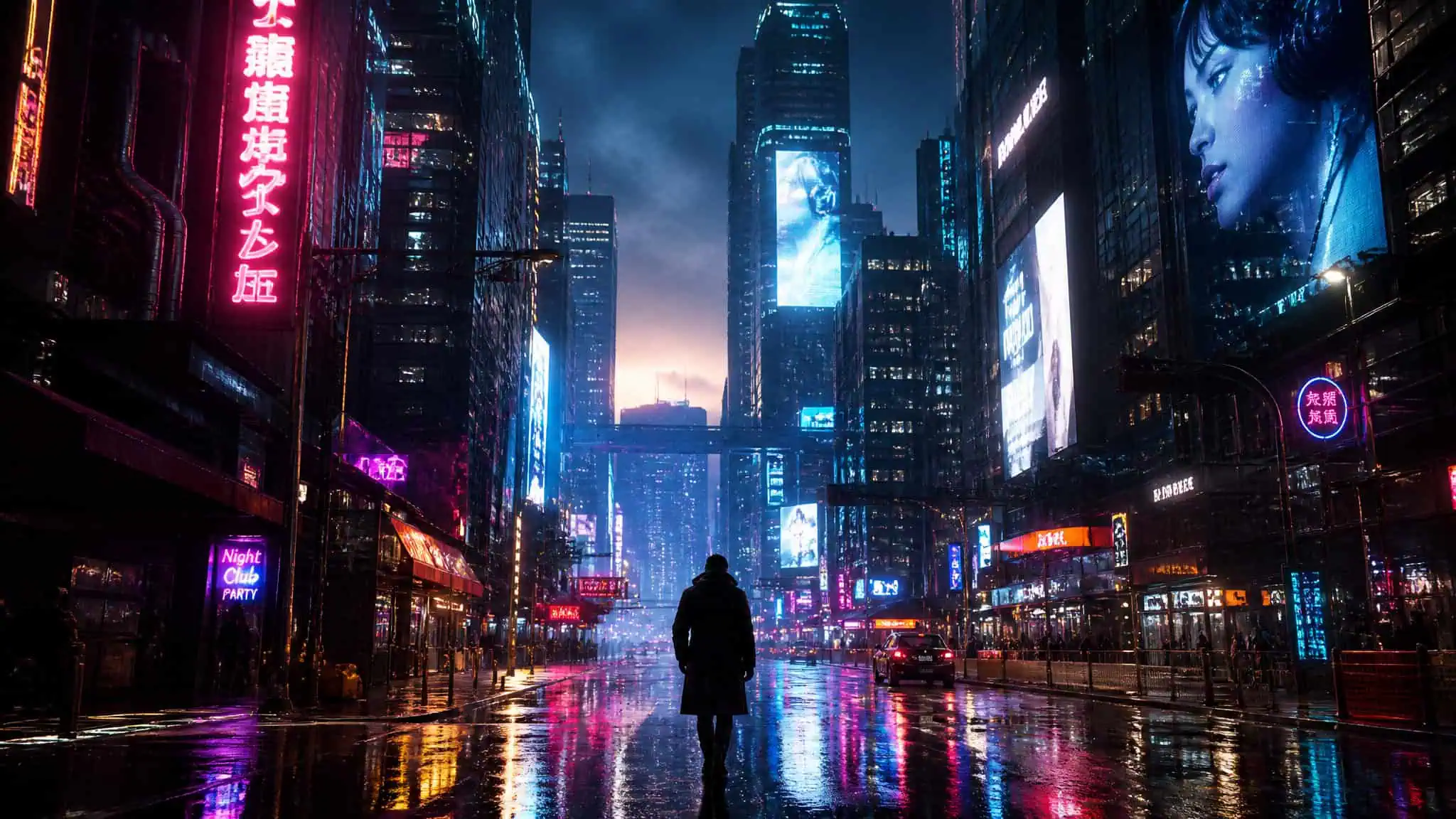
Widely regarded as a defining work of the cyberpunk genre, Neuromancer has carried a curse that most books would kill for—or maybe die from. Considered a landmark of the genre, it remains highly influential within sci-fi. James Anthony of The Guardian declared it “unfilmable” in 2008. Ben Child backed him up in 2010. William Gibson himself once told a group interview that the book is basically “un-movieable” because every reader has such a specific mental image that any film version would feel like a violation.
Multiple directors tried to crack it—Chris Cunningham got close with Hayden Christensen in the lead, then clashed with the studio. Chuck Russell tried. Tim Miller tried. Vincenzo Natali tried. Nothing stuck.
Now Apple TV+ is going to try. Ten episodes, a serious budget, Gibson on board as executive producer and creative consultant, and a showrunner whose résumé includes Lost and Fringe. The first teaser dropped at Comic-Con this July, and the whole thing lands on January 22, 2027.
So what actually changed? Was the “unfilmable” label always a bit overblown, or has the landscape shifted enough that a series can do what a movie never could? Let’s walk through the specific barriers—visual, narrative, tonal, historical—and see where the new attempt stands.
Key Takeaways
The “unfilmable” label was formalized by James Anthony in a 2008 Guardian article, reinforced by Ben Child in 2010, and endorsed by William Gibson himself, who called the novel “un-movieable” because readers’ personal mental images make any adaptation feel unsatisfying.
The primary obstacles were cyberspace’s abstract visual language (predating the internet), dense internal monologue and nonlinear heist structure, and a tonal split between gritty noir and intentional absurdist humor that previous adaptations sidestepped.
Apple TV+’s 10-episode series ordered in February 2024, with showrunner Graham Roland (Lost, Fringe) and Gibson as active consultant, plus modern VFX and audience appetite for complex storytelling, give it the best shot any adaptation has ever had.
Table of Contents
The “unfilmable” label and why it stuck
Most books that get called “unfilmable” are just tricky—Dune was “unfilmable” until it wasn’t. But Neuromancer‘s curse has a paper trail. James Anthony formally applied the label in The Guardian in 2008, and Ben Child doubled down in 2010. That alone wouldn’t be enough, except that Gibson himself agreed.
I was in a group interview years ago when someone asked him about film adaptations, and he said something like: every reader sees a different version in their head. Any movie will violate those images, so you’ll never please anyone. He called it “un-movieable,” which is about as definitive an authorial statement as you can get.
That’s unusual. Authors usually say the right adaptation just hasn’t found the right team. Gibson essentially said the problem is structural: the book’s power comes from the specific images it plants in each reader’s brain. No single visual rendering can honor all of them.
The cyberspace visualization problem
Neuromancer was published in 1984, before the modern internet existed. Gibson’s cyberspace isn’t a network of tubes or a 3D chat room—it’s a “consensual hallucination,” an abstract, sensory matrix that feels more like a drug trip than a data center. Early filmmakers had no visual language for that. The best they could do was neon grids and glowing polygons, which is what Tron gave us in 1982. That’s not the same thing.
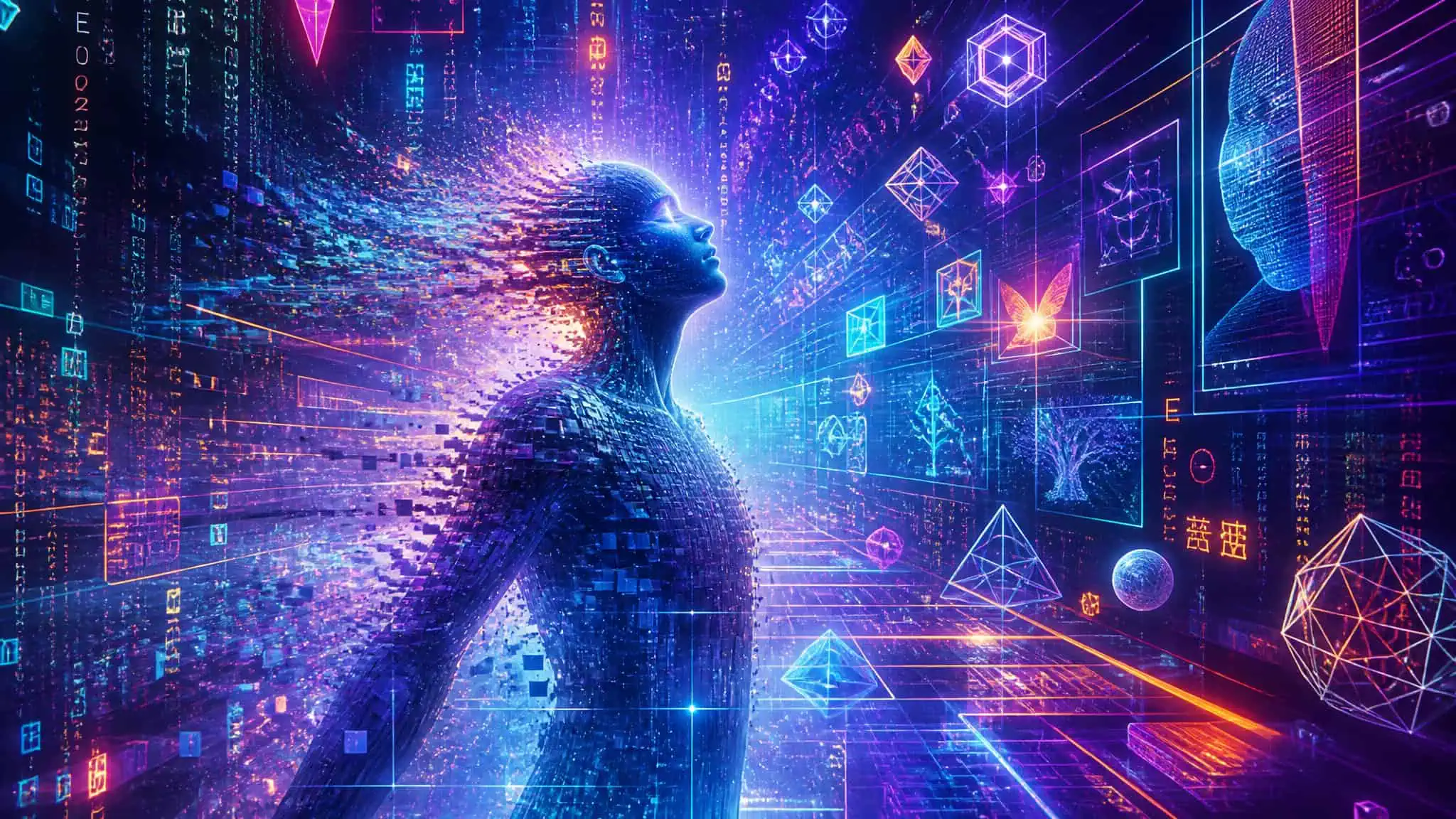
The challenge wasn’t just “CGI wasn’t good enough.” It was conceptual. Filmmakers in the 1990s had no frame of reference for an abstract digital world that felt immersive without looking like a video game. Today, advances in CGI and filmmaking technologies have removed practical barriers to adapting Neuromancer.
The Matrix gave us a coherent vision of cyberspace in 1999, but even that was a relatively literal representation. Modern VFX can do things like The Expanse realistically depicting scenes set in space—complex, realistic, and deeply strange. Audiences have spent decades staring at digital interfaces, VR environments, and procedurally generated worlds. The gap between what Gibson described and what a VFX team can produce has essentially closed.
Modern tools can now render the “consensual hallucination” in a way that feels abstract, subjective, and beautiful—exactly what the book demands. The practical barrier is gone.
Field note: The key conceptual shift is that audiences now intuitively understand abstract digital spaces, so filmmakers don’t have to over-explain cyberspace to keep viewers oriented.
The narrative density and internal monologue problem
The visual barrier was the headline, but the deeper challenge is structural. Neuromancer throws you into a world of AI, corporate espionage, and fragmented identities without hand-holding. You’re meant to feel disoriented. Case’s internal monologue carries much of the meaning—his quiet observations, his memories, his grudges. That’s hard to translate to a two-hour film without resorting to clunky voice-over.
The novel also has a nonlinear heist structure that’s intertwined with social critiques about identity, technology, and corporate power. It’s not just a heist; it’s a meditation on what it means to be human when your brain can be hacked. A film has to compress and simplify that into a tight plot. A series can let the density be part of the experience. Ten episodes means room for slow exposition, for characters to sit in silence and think, for the story to breathe.
Graham Roland’s experience on Lost and Fringe is directly relevant here. Both shows handled nonlinear narratives and complex world-building without losing the audience. Lost was famous for withholding information and making viewers work to connect pieces. Neuromancer demands exactly that kind of engagement.
The tone problem: grimdark vs. comic relief
Here’s a detail that most discussions skip: the book is funnier than people remember. I re-read it recently and kept catching things I’d glossed over before. The space station full of Rastafarians. The dolphin with a SQUID interface.
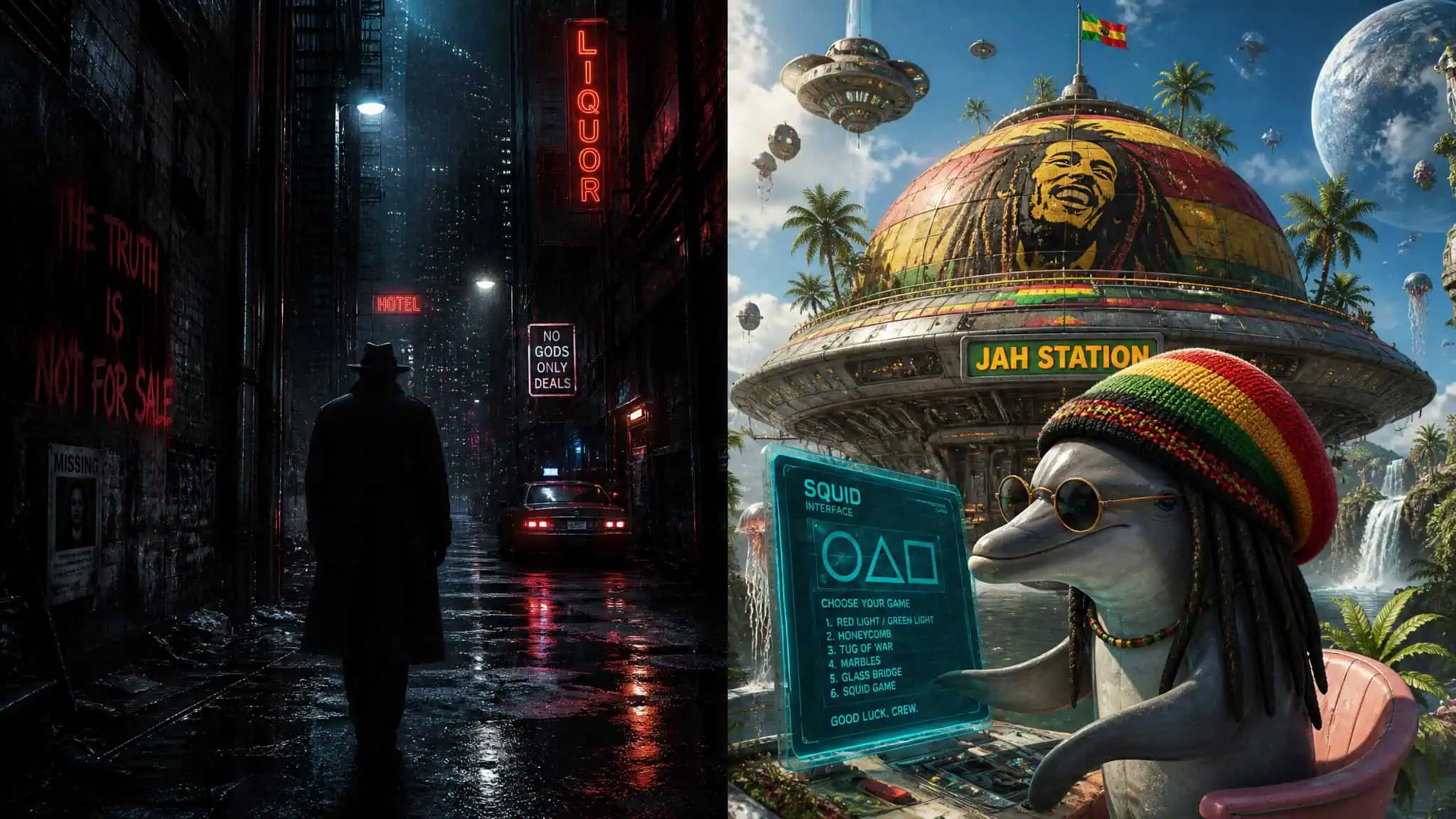
Case running out of tanning lotion in Japan. An “Aryan reggae band.” These are real, and they’re intentionally absurd.
Many fans, including me, picture Neuromancer as a gritty, Blade Runner–esque noir—angular dark geometry highlighted in neon. But Gibson’s own adaptations lean the other way. The Neuromancer computer game is campy. Johnny Mnemonic is borderline self-parody.
His X-Files episodes have a light touch. This pattern suggests Gibson never saw his work as purely grim, a sentiment reinforced by the definitive guide to Neuromancer rumors.
The new series faces a polarizing choice: lean into the deadpan humor or play it straight. Either way, some fans will be disappointed. The teaser’s neon-soaked aesthetic suggests a more serious tone, but the official plot description is straightforward: A hacker and an assassin are thrust into a web of high-stakes crime as they take aim at a corporate dynasty. That’s a heist story with teeth. Whether the absurdist notes survive the adaptation is one of the most interesting open questions.
A graveyard of failed adaptations
It’s not like nobody tried. Here’s the roll call:
- Chris Cunningham developed a film adaptation with Hayden Christensen rumored for Case. Cunningham is a visual genius (think Björk’s “All Is Full of Love” video), but he clashed with the studio over how to handle the material and walked.
- Chuck Russell (director of The Mask) gave it a shot.
- Tim Miller (Deadpool) tried.
- Vincenzo Natali (Cube) tried—probably the most tonally appropriate candidate, given Cube‘s dense, claustrophobic sci-fi.
All had genuine passion. None succeeded. That’s the pattern: talented directors who understood the material but couldn’t get past the combination of visual, narrative, and tonal barriers. The failures weren’t random; they were systemic. The rights history is also complex—the property has bounced between studios for decades, with various options lapsing before Apple secured the rights for a series.
Why Apple TV+ might succeed where others failed
Several things have changed, and most of them line up in Apple’s favor. The series will also need to tackle iconic locations like Straylight and Freeside, as well as the AI entities Wintermute and Neuromancer—elements that previous adaptations struggled to visualize.
Format advantage
A 10-episode series ordered in February 2024 is a fundamentally different beast from a two-hour movie. Serialized storytelling gives room for character interiority, withheld exposition, and slow-burn world-building. Neuromancer‘s dense prose and nonlinear heist structure would suffocate in a movie; a series like the Neuromancer trilogy can let it breathe.
Author involvement
William Gibson is executive producer and creative consultant. He’s been reviewing drafts and offering suggestions. This isn’t a rights grab; he’s actively shaping the adaptation. That’s something previous attempts lacked—they had Gibson’s blessing but not his daily input, which raises the question: did Neuromancer predict the internet? The novel’s vision of cyberspace, hacking, AI, and corporate power still echoes today.
Apple’s track record with “unadaptable” sci-fi
Apple TV+ already adapted Isaac Asimov’s Foundation, a series that had been considered unadaptable for decades. The show managed to retain the scope and intellectual weight of the source material while making it work for television. Foundation has faced criticism from purists for diverging from Asimov’s source material, a risk Neuromancer fans may also worry about. That’s the blueprint: identify ambitious, challenging sci-fi and give it the resources it needs.
Cultural moment
Modern audiences have demonstrated an appetite for complex storytelling. Severance (Apple TV+), Dark (Netflix), 3 Body Problem (Netflix)—all of these proved viewers will engage with dense, idea-driven narratives. The commercial risk of a challenging adaptation is lower now than it was in the 1990s or 2000s.
The creative team and showrunner pedigree
Graham Roland (showrunner) and J.D. Dillard (pilot director) have been friends for nearly a decade and co-created the project. Roland’s work on Lost and Fringe is exactly the kind of nonlinear, character-driven, complex narrative experience Neuromancer needs. Dillard directed Devotion and The Outsider—he’s got range. That’s not just a list of credits; it’s a specific skill set for handling the book’s structural challenges.
The cast as a signal of ambition
The casting reads like Apple is treating this as a flagship:
- Callum Turner as Henry Case: a rising British star, hotly tipped for James Bond, recently married Dua Lipa. Mainstream pull.
- Briana Middleton as Molly: best known for A24’s Sharper.
- Mark Strong as Armitage: a veteran who can do gravitas or menace.
- Supporting cast includes Clémence Poésy (Harry Potter), Peter Sarsgaard (playing John Ashpool), Emma Laird, Joseph Lee (playing Hideo), Dane DeHaan (playing Peter Riviera), Max Irons, André De Shields, Marc Menchaca as Dixie Flatline.
This is not a niche experiment. It’s a serious production with name recognition and acting depth.
What the teaser reveals about the adaptation’s approach
The first teaser, released at Comic-Con on July 26, is short on footage but long on signals. The opening shot shows a computer monitor displaying the novel’s iconic first sentence: “The sky above the port was the color of television, tuned to a dead channel.” That’s a direct nod to fans—a promise of fidelity.
The tagline reads: 42 years ago, William Gibson introduced the world to Neuromancer. Now, the next chapter is loading. That “next chapter” phrase is the most telling detail. It suggests the series might not stop at Neuromancer—the whole Sprawl trilogy (Count Zero, Mona Lisa Overdrive) could follow if this works. The teaser’s visual aesthetic is neon-soaked and atmospheric, leaning serious rather than campy.
Filming locations include Tokyo, London, Canada, and Istanbul. The official plot description sticks to the book: a hacker and an assassin taking on a corporate dynasty. That’s the heist core. Industry speculation points to a premiere in late 2026, though the announced release date is January 22, 2027.
Release date: January 22, 2027.
The ripple effect: what a successful adaptation could unlock
Neuromancer shares its “unfilmable” DNA with books like Asimov’s Foundation, Frank Herbert’s Dune, and Liu Cixin’s The Three-Body Problem—all adapted successfully (or at least ambitiously) in the last decade. If Apple’s series succeeds, it could open the door to adapting the rest of Gibson’s Sprawl trilogy—stream the entire trilogy as a cohesive saga. Each had abstract concepts, dense lore, and high reader expectations. Each overcame those barriers through a combination of format choice, visual innovation, and sheer commitment.
If Apple’s Neuromancer succeeds, it does more than bring one book to life. It proves that no story is truly unadaptable—it just needs the right format and the right team. Projects like Hyperion by Dan Simmons and I Have No Mouth, and I Must Scream by Harlan Ellison have been discussed for years but never greenlit. A successful Neuromancer would embolden studios to take those risks.
Apple TV+ could cement itself as the home of ambitious, literary sci-fi—the place where difficult books get their fair shot. That’s not a guarantee. The series could still fall into the same traps as its predecessors. But for the first time in forty years, the conditions are right. The curse might finally break.
Frequently Asked Questions
Why has Neuromancer never been made into a movie?
The book was considered ‘unfilmable’ due to its abstract cyberspace visuals, dense internal monologue, nonlinear heist structure, and a tonal split between gritty noir and absurdist humor. Multiple talented directors tried and failed because the combination of visual, narrative, and tonal barriers proved too much for a two-hour film format.
Did cyberpunk copy Neuromancer?
Neuromancer is widely regarded as the defining work that established the cyberpunk genre’s visual and thematic language. While earlier works like Blade Runner influenced the aesthetic, Gibson’s novel codified the tropes—cyberspace, hacking, AI, and corporate dystopia—that later cyberpunk stories built upon.
Will there ever be a Neuromancer movie?
Not a movie—Apple TV+ is adapting it as a 10-episode series premiering January 22, 2027, with William Gibson as executive producer and creative consultant. The series format solves the structural problems that doomed film adaptations, giving room for the dense narrative, slow-burn world-building, and character interiority that a two-hour movie couldn’t accommodate.
What makes Neuromancer so hard to adapt?
Three core barriers: cyberspace’s abstract visual language that predated the internet and had no cinematic reference point, the heavy reliance on internal monologue and nonlinear storytelling that doesn’t translate to film, and a tonal split between gritty noir and intentional absurdist humor that previous adaptations couldn’t reconcile.
Is Neuromancer actually funny?
Yes—the book is intentionally funnier than most people remember, with absurd details like a space station full of Rastafarians, a dolphin with a SQUID interface, and an ‘Aryan reggae band.’ This tonal split between gritty noir and deadpan humor is one of the biggest challenges the adaptation faces, and the teaser suggests the series is leaning toward a more serious, neon-soaked aesthetic.
