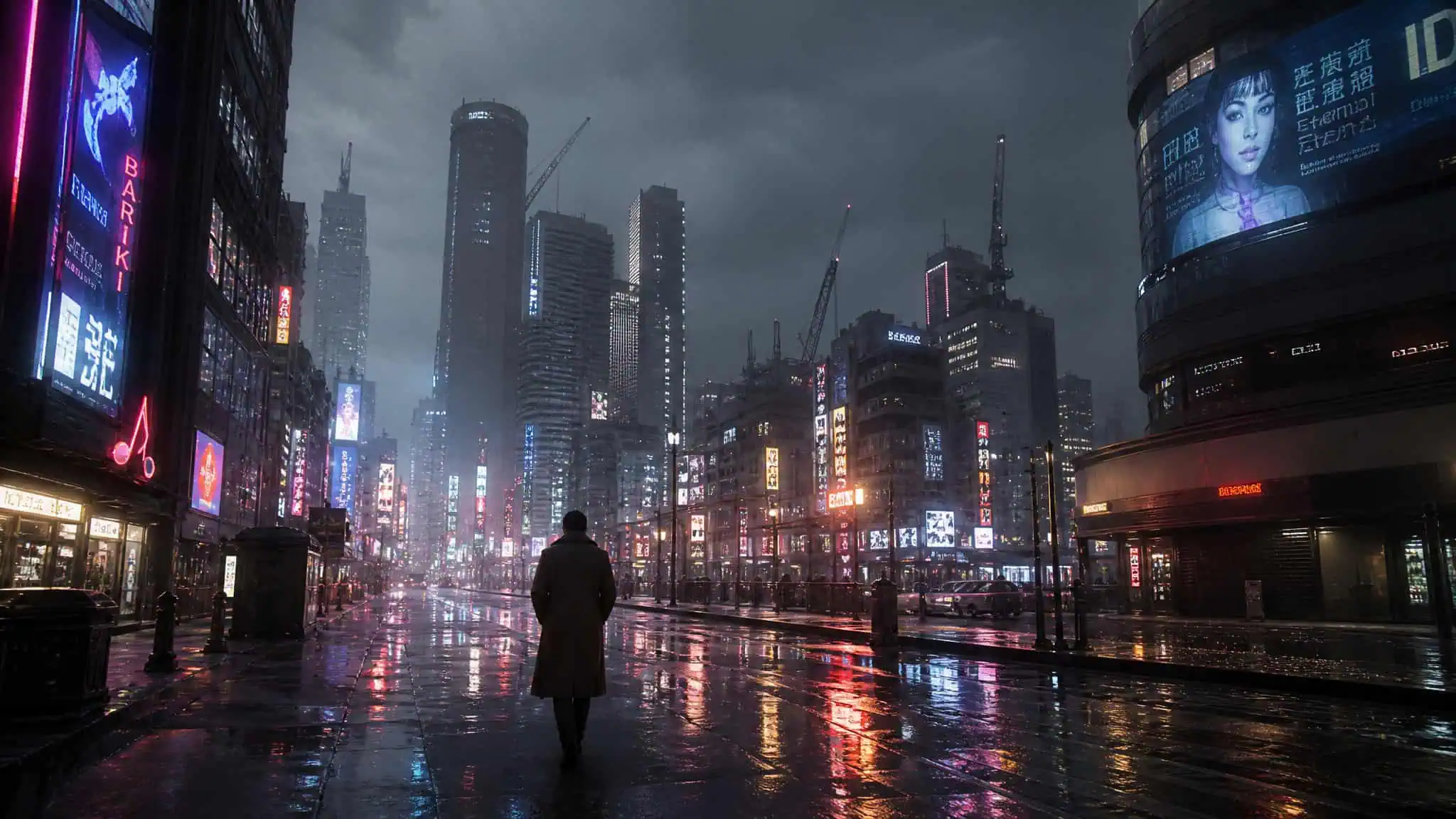
The sky above the port was the color of a television tuned to a dead channel.
That sentence has been haunting readers for four decades. It’s the opening line of Neuromancer, a book that didn’t just describe a future—it basically handed us the cyberpunk genre on a platter. And now, that book is getting a TV show. Apple TV+ is adapting Neuromancer into a 10-episode series premiering January 22, 2027, with weekly episodes through March 19. If you’ve been hearing about the “Sprawl trilogy” or “Neuromancer trilogy” and wondering what the fuss is about—or whether you should read the books before the show lands—you’re in the right place.
This isn’t a dusty “classic books” retrospective. The trilogy is alive right now because the ideas still feel weirdly prescient. William Gibson wrote three novels between 1984 and 1988—Neuromancer, Count Zero, and Mona Lisa Overdrive—all set in the same shared future, the Sprawl trilogy. Each book is self-contained, but together they build a world that’s richer than any single story.
The narrative structure itself gets more ambitious as it goes: a single heist plot in the first book, three protagonist threads in the second, and four in the third. That’s the kind of detail that rewards a curious reader.
So let’s walk through the trilogy—what it is, why it matters, and how the upcoming show might connect to the larger story. Spoiler alert: you’ll want to start reading before January 2027.
Key Takeaways
Three novels (1984, 1986, 1988) share a single future but have self-contained plots; the narrative structure expands from one thread in Neuromancer to three in Count Zero to four in Mona Lisa Overdrive.
Apple TV+ is adapting Neuromancer into a 10-episode series premiering January 22, 2027, with Callum Turner as Case and Briana Middleton as Molly; William Gibson is an executive producer and has said he’s happy with the adaptation.
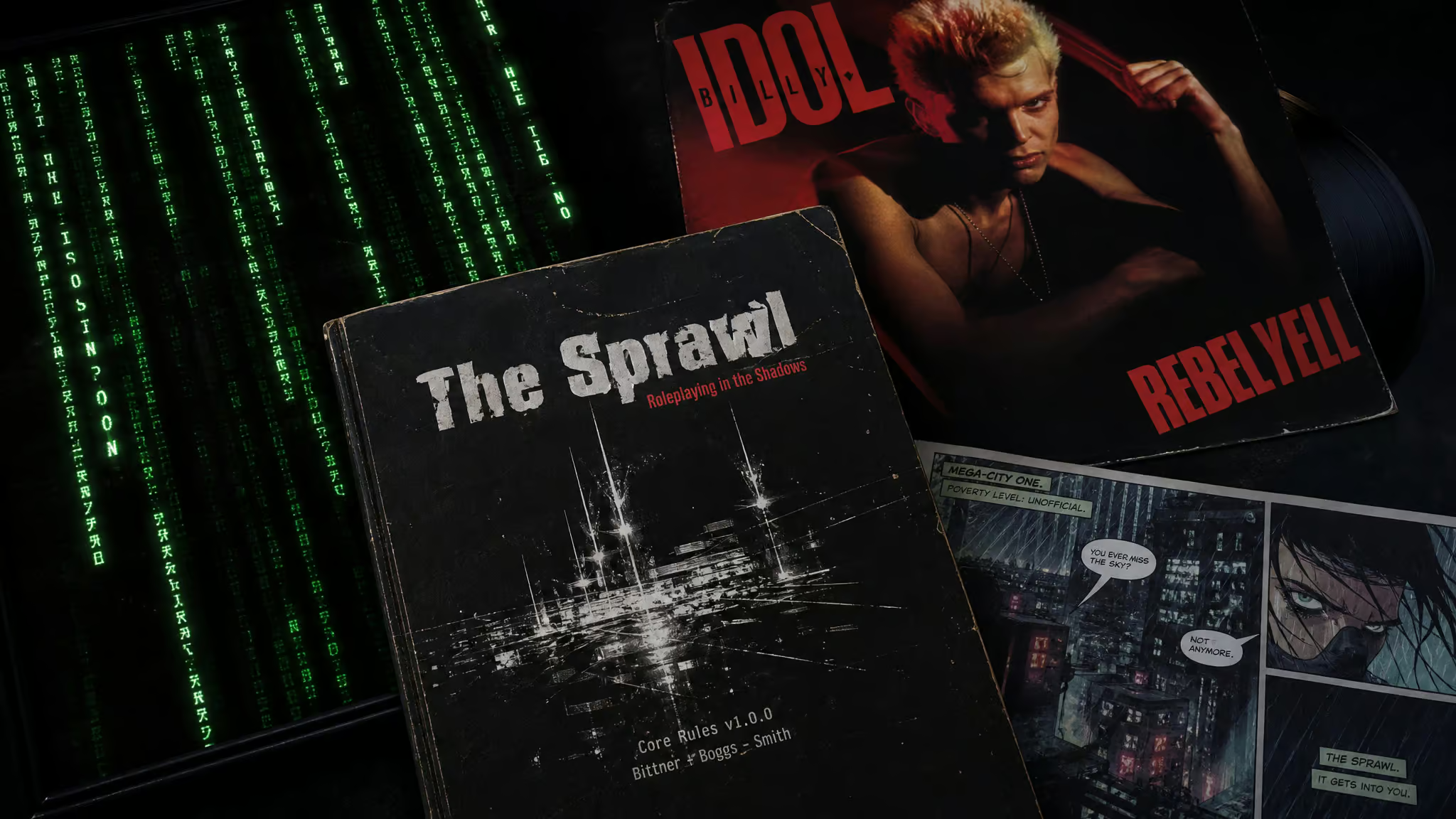
The trilogy’s ideas about AI, cyberspace, and technology’s unintended consequences still feel relevant today. Its influence shows up in The Matrix, tabletop RPGs, and Billy Idol’s album Neuromancer.
Table of Contents
What exactly is the Neuromancer trilogy?
The Sprawl trilogy—also called the Neuromancer trilogy because the first book is the most famous—is three novels by William Gibson set in the same near-future world. The whole thing spans 16 in-universe years, with a 7-8 year gap between Neuromancer and Count Zero, and another 7 years between Count Zero and Mona Lisa Overdrive. That’s enough time for the world to change between books, and Gibson uses those gaps to introduce new characters and new corners of the setting.
Here’s the cool structural detail: Neuromancer is a single, tight heist plot. Count Zero splits into three narrative threads. Mona Lisa Overdrive has four. Gibson wasn’t just telling separate stories—he was expanding the scope of the world as he went.
Steven Poole, writing in The Guardian, described the trilogy as a fertile holy trinity, a sort of Chrome Koran of ideas inviting endless reworkings. That’s the best one-line description I’ve found.
Neuromancer (1984)
The book that started it all. The protagonist is Case, a washed-up cyberspace cowboy whose nervous system was fried by a mycotoxin. He can’t jack in anymore—until he’s hired by a mysterious fixer named Armitage to pull a heist on the Tessier-Ashpool clan, an insanely wealthy family living on a space station called Straylight. The crew includes Molly Millions, a razorgirl with retractable blade nails and sped-up reflexes; Dixie Flatline, a personality construct (think a ghost in the machine) of a legendary hacker; and Peter Riviera, a performer addicted to heroin with implanted holoprojectors that let him manifest his dreams. Oh, and the Panther Moderns, a chaotic youth subculture that shows up to cause mayhem.
The plot is a single, fast-paced heist. But it’s layered with ideas about AI, corporate power, and what it means to be human when your consciousness can be uploaded to a server. The opening line sets the tone perfectly: grimy, neon-lit, and deeply weird.
Count Zero (1986)
Gibson’s favorite of the three, and the one where the world starts to feel mythological. The story is told through three perspectives:
- Turner, an ex-military mercenary hired to extract a biochip researcher from a rival corporation. Think corporate espionage with a body count.
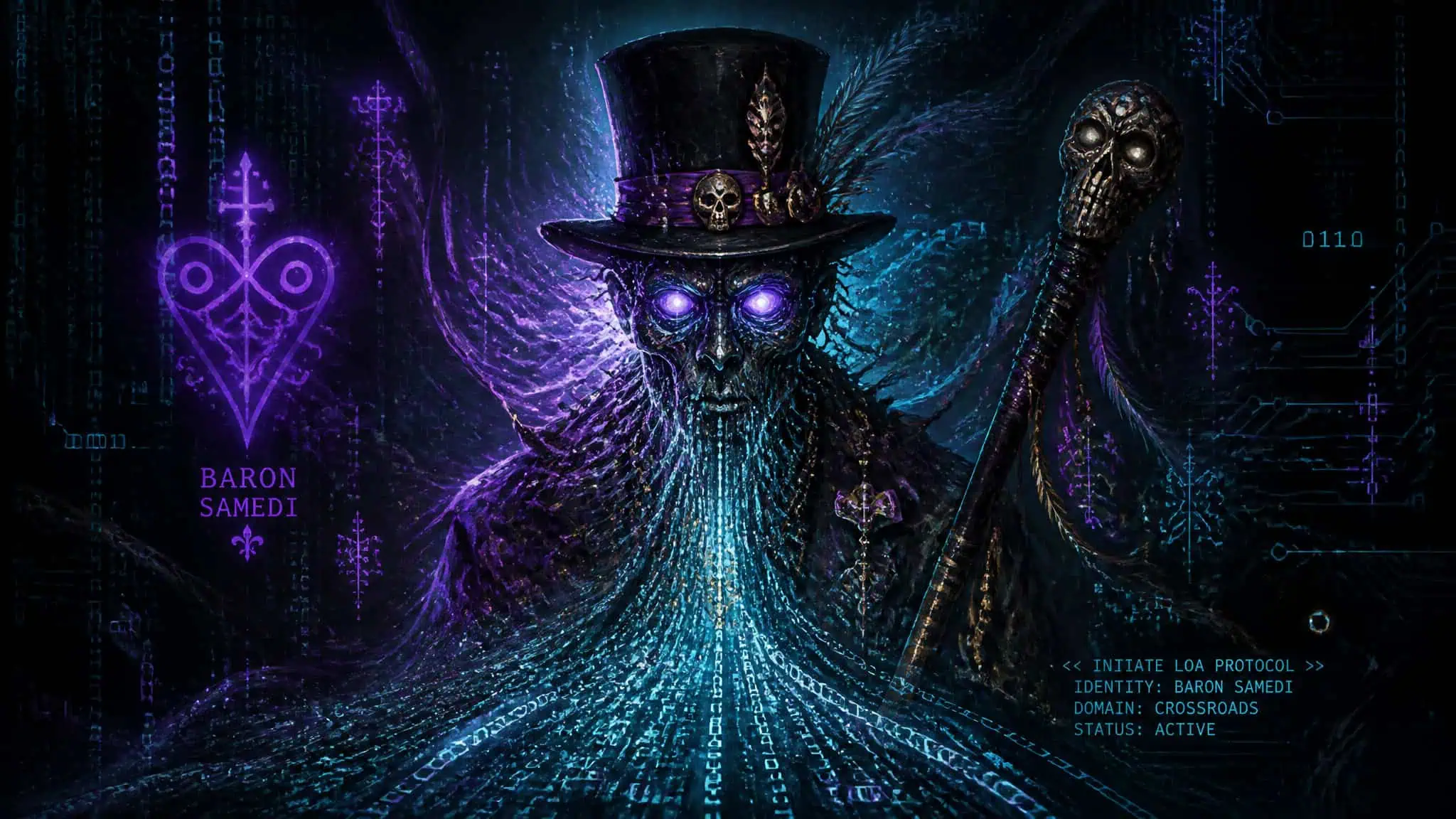
- Bobby Newmark, a teenage hacker whose alias is “Count Zero Interrupt.” He nearly dies during a failed cyberspace run but is revived by something that feels like a voodoo god—specifically, the Loa Baron Samedi and Papa Legba.
- Marly Krushkova, a disgraced art curator hired by the mysterious Josef Virek, the richest person in the world, who exists only as avatars and projections. She’s tracking down a mysterious artist.
The voodoo Loa aren’t actually gods—they’re emergent machine intelligences that humans interpret as spirits. That’s the core of the trilogy: cyberspace becomes a realm where ghosts and gods interact with data. It’s a brilliant move that turns a tech thriller into a mythic story.
Mona Lisa Overdrive (1988)
The closing chapter, with four narrative threads that converge:
- Kumiko, the teenage daughter of a Yakuza boss, sent to London for safety.
- Slick Henry, a scrap-metal artist building robots in a derelict factory.
- Mona, a prostitute with an abusive pimp, living in the grimy underbelly.
- Angie Mitchell, a simstim (virtual sensory movie) actress who can access cyberspace with her brain—no deck needed. That’s a huge leap forward from the wired interface of the first book.
Molly Millions returns from Neuromancer, and the threads all tie together in a way that feels earned, not forced. The title comes from the Mona Lisa and the act of “overdrive” in cyberspace—a gorgeous phrase that captures the blend of art and technology.
The Sprawl: a world that lives and breathes
The setting is the Boston-Atlanta Metropolitan Axis, or BAMA. The Boston-Atlanta Metropolitan Axis (BAMA) is a massive urban corridor stretching from Boston to Atlanta, covered in places by geodesic Fuller domes, along with arcologies that house thousands under the domes. Residents can’t see the sky clearly—the domes obscure everything, and on the East side, dome overlap causes freak winds. The light of the geodesics glows gray and pink before dawn. It’s claustrophobic and lived-in.
Every citizen has a BAMA Single Identification Number, and the main transit is the trans-BAMA local train. The busiest data exchange rates are in Midtown Manhattan and old Atlanta industrial parks—a tiny but telling detail that shows Gibson thought about the geography of information.
Youth subcultures flare up and die fast in the Sprawl, lasting only a few weeks. The Panther Moderns from Neuromancer are one example; the Lo-Teks and Big Scientists appear in other stories. This ephemeral quality makes the world feel dynamic, like a real place where trends burn hot and vanish.
Key characters: who drives the story in each book
Each book has its own set of protagonists, but a few characters recur:
- Molly Millions appears in all three novels, though more peripherally in the sequels. She’s the razorgirl with blade nails, a cyborg bodyguard who set the template for every cyberpunk badass that followed.
- Angie Mitchell appears in Count Zero and Mona Lisa Overdrive. Her ability to mentally access cyberspace is a major plot point in the third book.
- Dixie Flatline (the personality construct) is only in Neuromancer, but the concept of backed-up human consciousness echoes through the trilogy.
- Turner, Bobby Newmark, and Marly Krushkova are the leads of Count Zero; none of them return in Mona Lisa Overdrive, but the world changes in ways that affect their stories.
- Kumiko, Slick Henry, Mona, and Angie Mitchell are the four leads of Mona Lisa Overdrive.
The recurring characters are the glue that makes it a trilogy rather than three separate stories set in the same universe. Molly’s reappearance in the third book feels like a reward for readers who’ve been paying attention.
Themes and technology: from cyberspace to voodoo gods
The trilogy works on two levels: as a tech thriller and as a mythic story. Gibson layers the two together seamlessly, which raises the question: why is Neuromancer unfilmable?
Technology: cyberspace, AI, and personality constructs
The core tech concepts: “jacking in” to a global information space called cyberspace, emerging machine intelligences, and personality constructs—templates of living people owned by corporations like Sense/Net. Dixie Flatline is a personality construct, essentially a ghost in the machine that can still code. AIs are full entities with agency, acting for corporations. The hardware is rough and present: direct mind-machine links, simulated reality, and the constant threat of your nervous system being fried. This is why Neuromancer made the list of top 10 best books for geeks.
Mythology: cyberspace as a realm of voodoo gods
Here’s where it gets wild. The AI “ghosts” of Neuromancer evolve into the voodoo Loa of Count Zero. Cyberspace becomes a realm where spirits interact with data. Bobby Newmark is literally revived by a Loa.
Marly’s search for a mysterious artist leads her to something that feels like a deity. Strip away the tech and you find ghosts, demons, gods, and zombies. The trilogy is a mythic story wrapped in technology—and that’s what makes it so durable.
Reception and awards: a Chrome Koran of ideas
The trilogy’s cultural credentials are solid. Neuromancer won the Hugo, Nebula, Philip K. Dick, Seiun, and Ditmar awards—a clean sweep that’s rare for any novel. The sequels were nominated for major awards (Hugo, Nebula, Locus, British Science Fiction Award) but didn’t win, which is interesting context. Count Zero and Mona Lisa Overdrive still have strong readership—Goodreads shows about 62k and 50k ratings respectively, compared to the Neuromancer book’s 377k.
Gibson himself has said Count Zero is his favorite, which is a fun contrarian note. And Steven Poole’s “Chrome Koran of ideas” line from The Guardian is the best capsule review you’ll find.
Cultural impact and influence: how the trilogy shaped cyberpunk
You’ve seen The Matrix, right? Yeah, that’s where this DNA comes from. The Wachowskis cited Gibson’s work as a major influence. Beyond that, the trilogy’s fingerprints are everywhere:
- Comics: Transmetropolitan (Warren Ellis), The Invisibles (Grant Morrison), and Shade, the Changing Man (Peter Milligan) all draw from Gibson’s ideas.
- Literature: Neal Stephenson (Snow Crash), Bruce Sterling, and Rudy Rucker built on the foundation Gibson laid.
- Music: Billy Idol released an entire album called Neuromancer in 1990, featuring a cover of “Heroin.” That’s a weird and wonderful piece of pop culture cross-pollination.
- Games: At least three tabletop RPG companies produced cyberpunk products directly influenced by the trilogy.
The trilogy didn’t just predict the future—it helped shape the aesthetic of an entire generation of creators. Decades later, concepts like cyberspace, biochips, and direct neural interfaces have seen real-world prototypes or named developments, from virtual reality to brain-computer interfaces.
Related works and the expanded universe
If you finish the trilogy and want more Sprawl, there are three short stories set in the same universe: “Johnny Mnemonic” (1981), “Burning Chrome” (1982), and “New Rose Hotel” (1984). They’re companion pieces, not required reading, but they enrich the world. “Johnny Mnemonic” even got a movie adaptation (though that’s a separate conversation).
There’s also a graphic novel adaptation of Neuromancer with art by Bruce Jensen, and a German collected edition called Die Neuromancer Trilogie with 1,000 ratings on Goodreads—a small but telling sign of international reach.
The Apple TV+ adaptation: what we know so far
The upcoming Apple TV+ series is the main reason this article exists. Here are the concrete facts:
- 10 episodes, premiering January 22, 2027, with weekly drops through March 19, 2027.
- Cast: Callum Turner as Case, Briana Middleton as Molly, plus Mark Strong, Joseph Lee, Peter Sarsgaard, and Clémence Poésy.
- Production: Paramount Television Studios and Anonymous Content.
- Author involvement: William Gibson is an executive producer and has expressed satisfaction with the adaptation via social media.
Cast and production details
The ensemble is solid. Briana Middleton as Molly is a key casting choice—she’s got the presence to carry the razorgirl role. Mark Strong and Peter Sarsgaard add heavyweight credibility. The 10-episode format gives room for the dense worldbuilding without rushing.
How the adaptation connects to the larger trilogy
Right now, this is a Neuromancer adaptation. But look at how the trilogy is built—each book is its own story in the same world. That’s basically a TV season structure waiting to happen. A successful first season could easily lead to Count Zero and Mona Lisa Overdrive adaptations.
The threads are already there: the Tessier-Ashpool legacy, the AIs, the voodoo Loa elements that could be seeded in season one. Speculation is fair, but don’t expect confirmation of multiple seasons until the first one lands.
Reading order and accessibility guide
Here’s how to approach the trilogy, whether you’re a first-time reader or a returning fan.
Should you read the books in order?
Yes, but it’s not mandatory. The books are self-contained, so you could start with any of them. But you’ll get more from the experience if you read them in publication order. The recurring characters, thematic evolution from tech thriller to mythic story, and expanding narrative structure all reward reading in order. The 7-8 year gaps between books make the world feel lived-in—you’ll notice how things have changed.
Why Neuromancer is hard (and how to get through it)
Field note: The trick is to stop trying to parse every jargon term. Gibson’s prose rewards momentum over precision on a first pass—let the slang wash over you and the plot will still land.
Neuromancer is dense. Gibson uses thick cyberpunk jargon without explaining it. The prose is lean and doesn’t hold your hand. The plot structure (single heist) is actually the most straightforward of the three, but the style is the barrier. Here’s what I’ve seen work for readers:
- Accept the flow. Don’t try to understand every detail on the first pass. Gibson’s prose is like a river—you’ll catch the important stuff if you stay in the current.
- The second reading is dramatically better. Once you know the plot, you can appreciate the craft. Many readers find the trilogy improves with each reread.
- Use chapter summaries if needed. There’s no shame in looking up a quick synopsis to keep track of characters.
Don’t let the density scare you off. The book is 40 years old and still feels like a punch to the face. That’s rare.
why the Sprawl trilogy still matters
The sky above the port was the color of a television tuned to a dead channel. That sentence launched a genre and a cultural conversation that’s still running. The trilogy’s ideas about AI, cyberspace, and technology’s unintended consequences feel more relevant than ever. The adaptation is coming. Now is a great time to read (or reread) these books.
Start with that famous opening line, and see where it takes you.