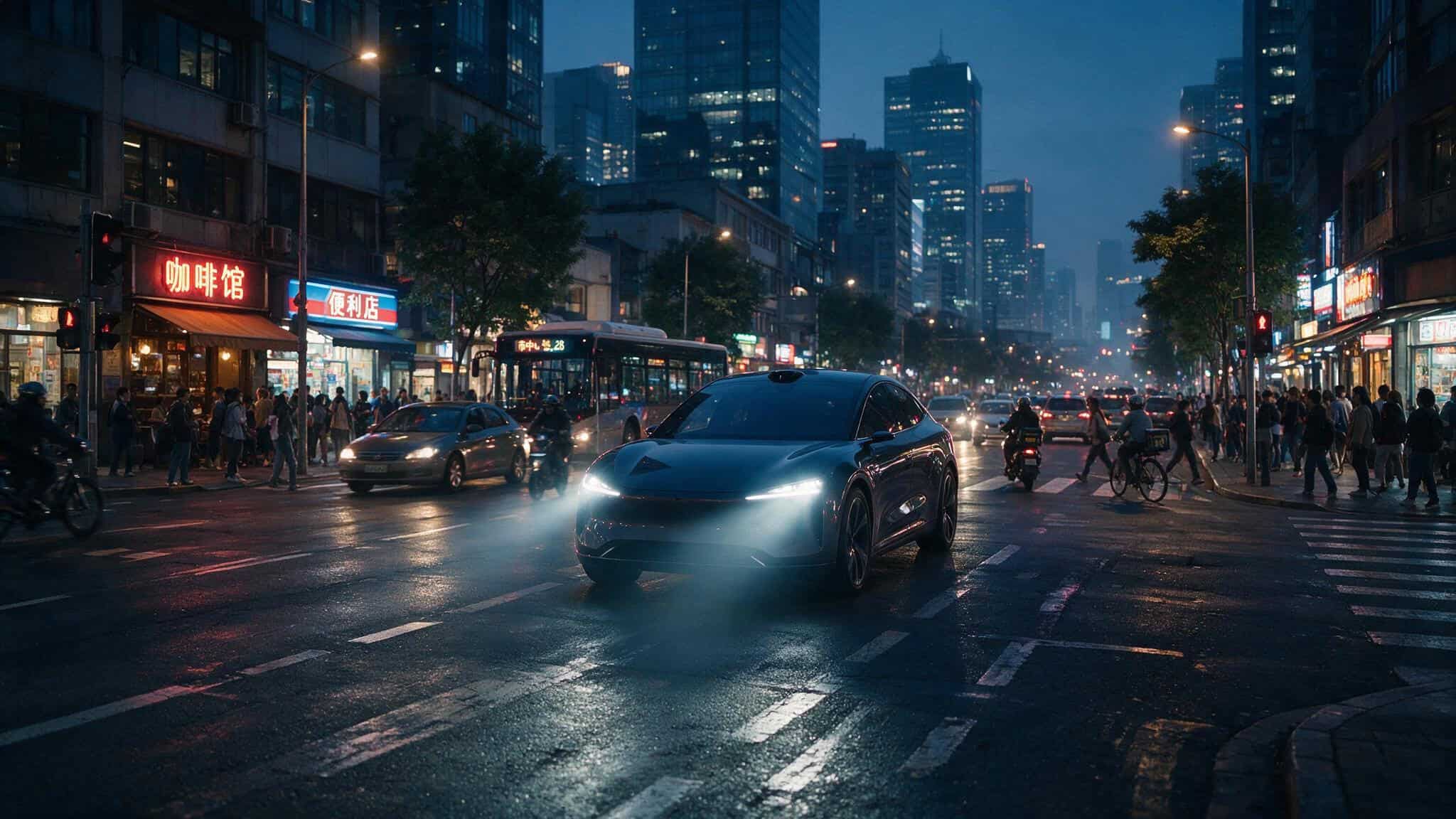
You can hail a driverless taxi in San Francisco. Pull up the Waymo app, and a car with nobody in the driver’s seat will roll up and take you where you need to go. Phoenix has them. Los Angeles has them.
This isn’t a hypothetical future technology. Waymo is the only U.S. company with regulatory approval to run a commercial fleet of self-driving cars without safety drivers, but uses remote operators. The U.S. autonomous vehicle market is projected to reach $75 billion by 2030 — a 350% increase from current levels, underscoring the economic stakes behind the technology.
And yet, the cities where these vehicles operate are scrambling to catch up. The United States has no national safety standards for autonomous vehicles; states determine their own. NHTSA regulates vehicle safety; states regulate vehicle operation including driver licensing, creating regulatory uncertainty when software is the driver. The companies building the tech are moving faster than the laws that govern it, and the result is a tangle of problems that most discussions gloss over.
I’ve been watching this space since the DARPA challenges, and the situation is more complicated than the marketing suggests. The obstacles — drawn from the Driverless Seattle report, NHTSA investigations, and expert analysis — are what cities, regulators, insurers, and residents face as AVs move from demos to deployment.
Key Takeaways
Seattle gets 2.6% of its operating fund from traffic fines — a revenue stream that disappears when AVs stop running red lights, speeding, or overstaying parking meters.
In 2022, 42,795 people died in U.S. crashes, with 94% attributed to human error, but the ACM warned policymakers in 2024 not to assume AVs will automatically reduce injuries and fatalities.
Public fear of self-driving cars jumped from 55% to 68% in 2023 and has stayed high — AAA surveys show trust in the technology dropped from 15% in 2021 to just 9% in 2024.
Table of Contents
The Traffic Paradox: Why AVs Could Make Congestion Worse
AV evangelists refer to traffic flow efficiency from self-driving vehicles that communicate and travel closely together. Robin Chase describes the world of autonomous vehicles as presenting either a heaven or hell scenario.
Now here’s the problem with autonomous vehicles as a congestion solution: that scenario assumes everything goes right.
Seattle, for context, is the fourth most congested city in the U.S., according to the TomTom Traffic Index. It has traffic problems that people deal with every day. And the counterintuitive risk with AVs is that they could make that congestion worse, not better.
AVs could lead to longer commutes because riders could use their time for reading or perusing social media on a smartphone. That’s how vehicle miles traveled (VMT) increase. Longer commutes become tolerable — even desirable, because the time isn’t wasted. AVs could increase personal vehicle use and disincentivize public transit.
Robin Chase, the Zipcar co-founder, put it in terms that have stuck with me: the “heaven vs. hell” framing. Heaven is shared AVs that reduce car ownership, free up parking spaces for housing and parks, and limit sprawl. Hell is zombie robot cars circling the block while their owners grab coffee, empty AVs clogging streets, and a system so cheap it kills public transit entirely.
The rollout will be slow and steady. But which direction we drift toward depends on whether cities and states plan for the hell scenario before it arrives.
The Infrastructure Readiness Gap: What AVs Need That We Don’t Have
Autonomous vehicles are picky about their environment. AVs require clear lane striping, data storage, and robust charging networks. AVs need clear lane striping, places to store data collected by driving, and if they run on electricity, a more robust charging network. And if they’re electric (most of them are), they need a charging network that doesn’t suck.
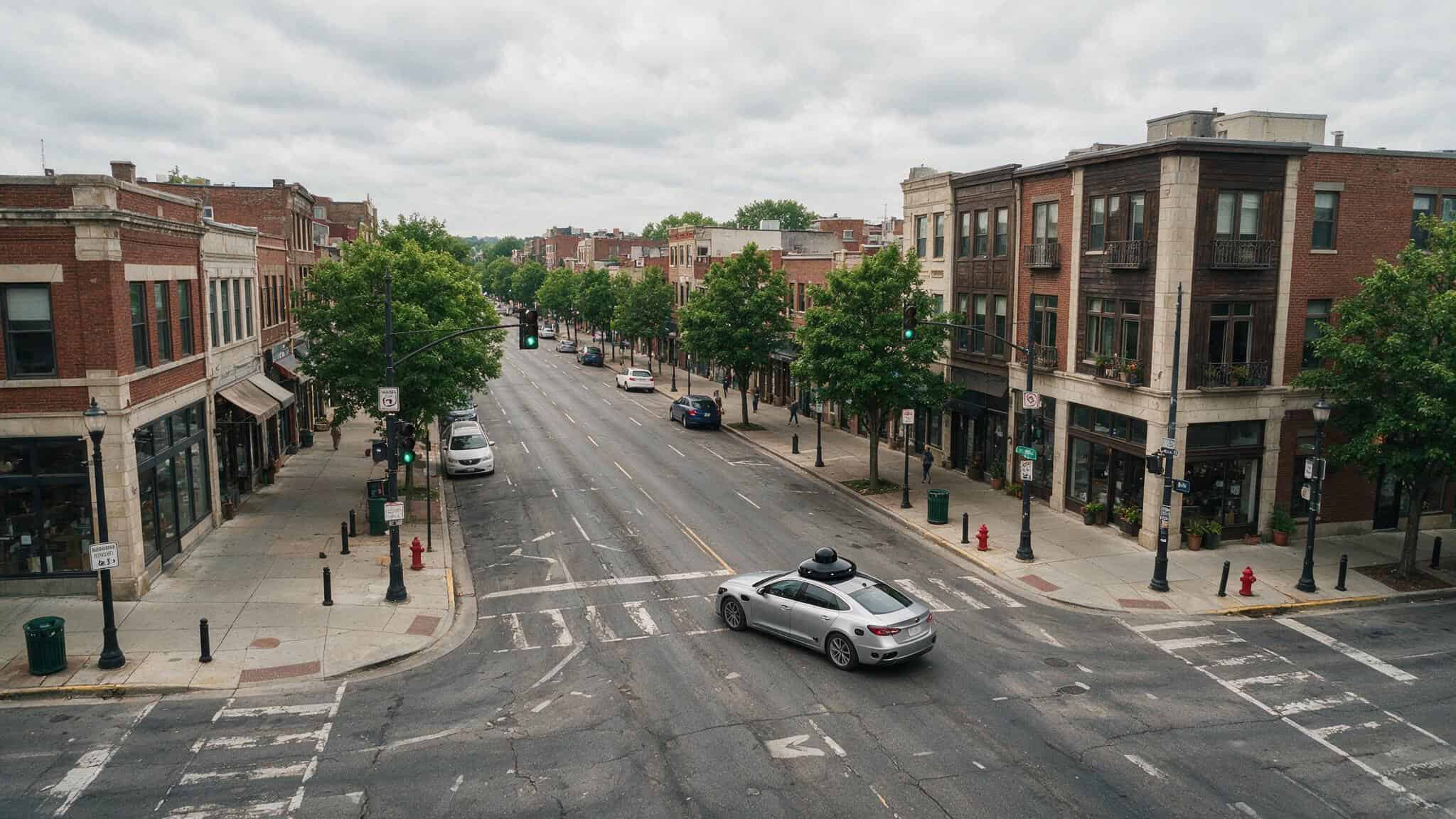
The report recommends opening dialog now to prioritize public investments in infrastructure.
There’s also the mapping problem. AVs currently operate in geofenced areas because building detailed maps is time-consuming and expensive. The training process involves driving the same streets over and over again, building up a digital model that the vehicle’s AI can reference. That doesn’t scale quickly.
Seattle’s existing Advanced Traffic Management System (ATMS) already collects traffic data. Transmitting AV data to ATMS could optimize traffic patterns through signal manipulation or direct communication. That’s a smart city integration that’s plausible. But it requires planning and investment that most cities haven’t started yet.
When Robots Don’t Break the Law: The Municipal Revenue Problem
Perfect robot drivers don’t get tickets.
In its ultimate form, AVs will not run red lights, speed, or overstay metered parking, impacting city budgets. That’s great for safety. But it’s a direct hit to city budgets that count on those fines for revenue.
Seattle gets 2.6% of its operating fund from traffic fines. That’s not pocket change — that’s money that disappears if AVs stop breaking the rules. And it’s not just Seattle. Cities across the country rely on speeding tickets, red-light violations, and parking fines to fund basic services.
Cost check: A mileage tax or AV registration tax could replace lost ticket revenue, but these are policy proposals, not settled solutions — and most city planners haven’t started the math yet.
The question becomes: what replaces that revenue? Seattle will need new revenue streams; one suggestion is a mileage tax or an AV registration tax. You’d pay per mile or per car instead of per ticket. But those are policy proposals, not settled solutions. AV adoption creates a budget headache that most city planners haven’t started thinking about.
Traffic enforcement has equity issues — lower-income residents are more likely to get tickets. But the question remains: if cities lose a significant revenue stream, they need to find a replacement.
Liability and Insurance Ambiguity: Who Pays When the Software Crashes?
Picture this: you’re sitting in your Level 3 autonomous vehicle, reading a book, when it gets into a fender bender. Who’s at fault? If Waymo vehicles constantly ask for remote guidance, the cost savings from not needing a driver may be negated, as tech reporter Timothy Lee notes.
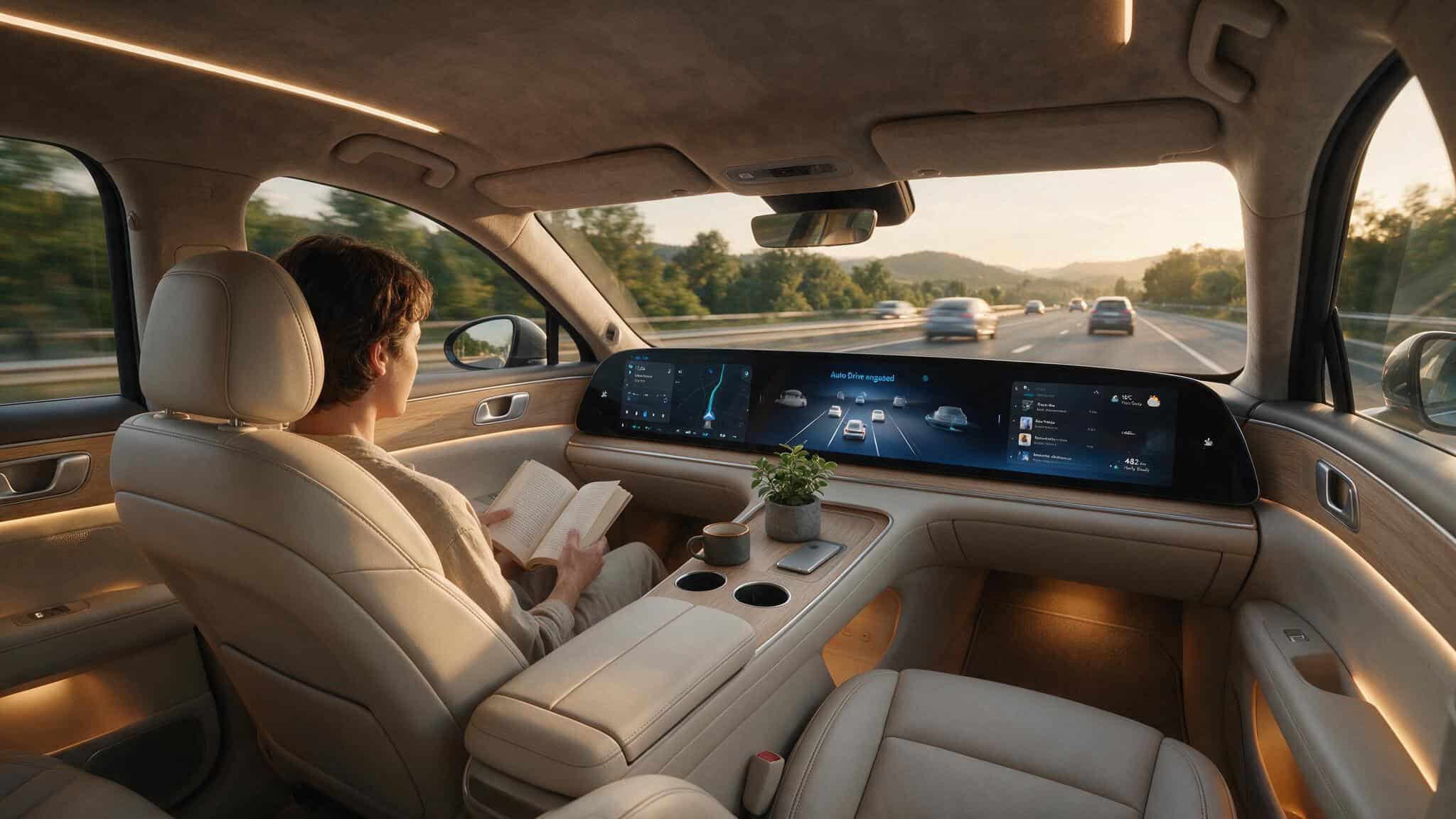
Liability and insurance are murky: how will insurance handle fender benders while a driver was reading?
The 2016 Tesla Model S fatality was the wake-up call. A driver using Autopilot died when the system failed to recognize a tractor-trailer crossing the highway. The case highlighted that we need clear laws about who’s at fault when an AV crashes — and what did Elon Musk say about self-driving cars? His promises against actual FSD progress reveal the regulatory gap we still face.
The liability question gets weirder at different levels of autonomy. Level 3 is the awkward middle child: the car drives, but you have to be ready to take over at any moment. That handoff creates a liability question. Level Level 3 autonomy creates a liability transfer from driver to automaker, slowing industry adoption. That’s a shift from “driver is always responsible,” and it’s making companies cautious.
At Level 4, there’s no human driver at all. The operator and developer bear responsibility. That simplifies liability in some ways — the sensors on board provide detailed post-crash data. You can reconstruct exactly what happened. But it also means the company is exposed.
Who constitutes the ‘driver’ and who has ‘control’? Insurance companies are still figuring this out, and most of it is above a city’s pay grade. But cities should be paying attention, because a January 2025 report noted that many states still lack clear laws about who’s at fault if a self-driving car crashes, and the liability framework that emerges will shape how AVs operate on their streets.
Policing and Emergency Response: Unprepared for the Robot Traffic Stop
How do you pull over a car with no driver?
The Driverless Seattle report flags this as a concern. Police need protocols for identifying AVs in traffic, handling pull-overs, and dealing with situations where there’s no human to roll down the window. How will police recognize if a tailgating car is a series of connected AVs? They need to be able to tell the difference.
Short term: develop specific training procedures for police and emergency services interactions with AVs. That’s a step that cities can take now.
Long-term, things get complicated. Long run: law enforcement may want a ‘kill switch’ to disable an AV suspected of transporting illegal cargo. That involves security, privacy, and civil liberties. Medium term: emergency services could coordinate with AVs to automate some police surveillance or ambulance dispatch. Smart integration, but it needs to be secure.
None of these protocols exist yet.
Social Justice and Equity: Will AVs Only Benefit the Wealthy?
Autonomous vehicles are expensive to develop, and if they’re sold like regular cars, they’ll be expensive to buy. That means they’ll be owned by wealthy people, even though the importance of autonomous vehicles extends beyond personal luxury.
If AVs follow typical ownership models, the technology will be owned by the upper class. Lower-income community members will inadvertently bear the brunt of traffic fines.
There’s also an employment angle. If you can work during your AV commute, that’s a productivity boost. But if you can’t afford an AV, your commute is lost time. Those without AVs may be disadvantaged in employment, as those with AVs could work and answer emails while commuting.
Seattle should proactively consider both positive and negative impacts of AV technologies and policy responses on disadvantaged groups during every stage of regulation development and infrastructure funding. That should be part of the process from the start. Without proactive policy, AVs could widen the mobility gap rather than close it.
Regulatory Fragmentation: No National Standards, Just a Patchwork
The United States has no national safety standards for autonomous vehicles; states determine their own. Each state makes its own rules. That means what’s legal in California might not be in Texas, and companies trying to build a single product for the whole country face a regulatory nightmare.
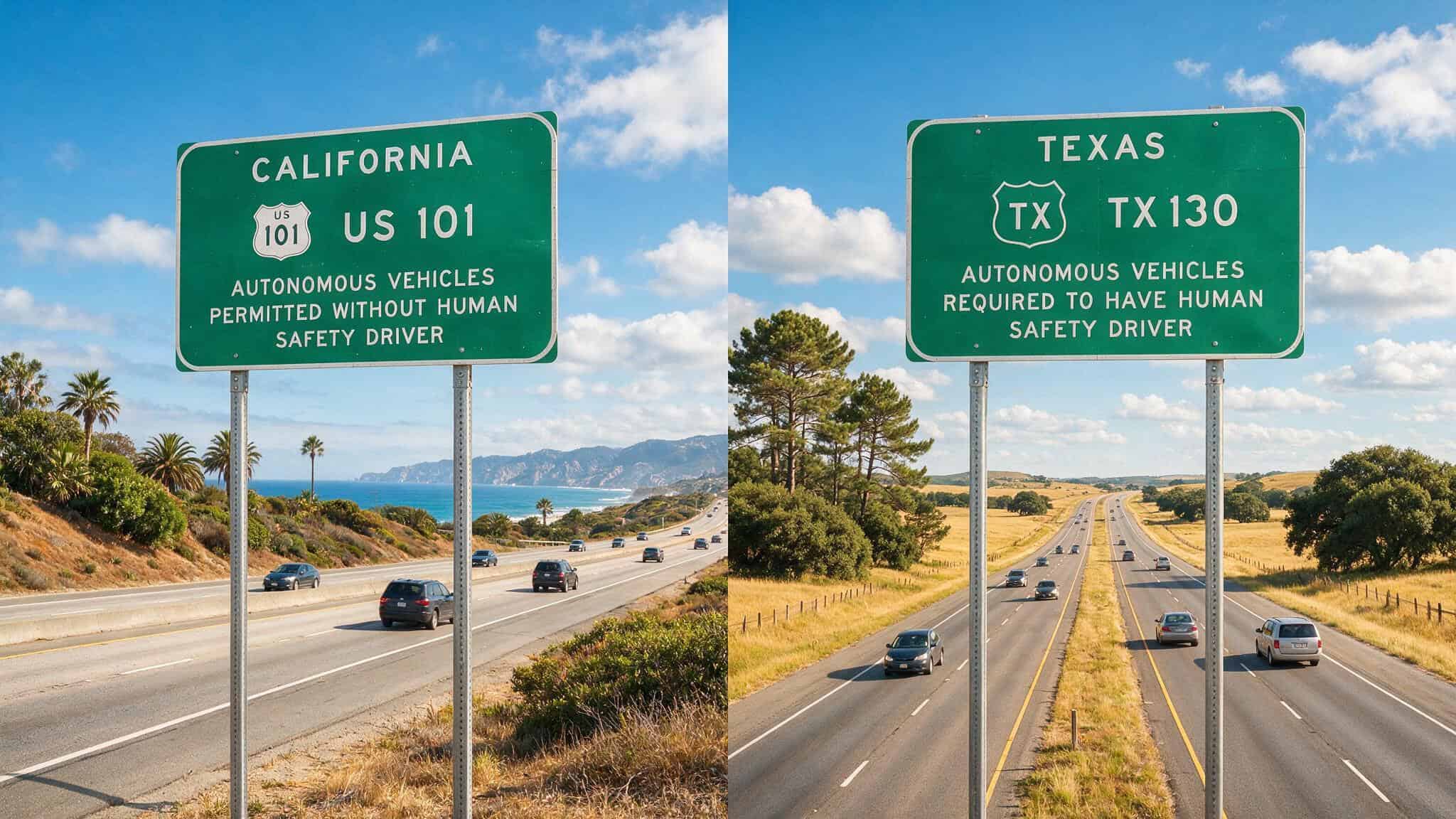
Consider California as a case study. The California Public Utilities Commission (PUC) approved Waymo and Cruise to operate commercial driverless services. Then the California DMV pulled Cruise‘s license after a pedestrian-dragging incident. Then the state legislature introduced SB 915 to restore local control. Three different bodies, three different approaches, all simultaneously.
By February 2020, 29 states and D.C. had enacted AV legislation. That’s a lot of different rulebooks for one technology.
Federal efforts to create a unified framework have stalled. The AV START Act, introduced in 2018, aimed to establish national testing and deployment standards. It didn’t pass. A 2017 House bill went nowhere. NHTSA currently relies on after-the-fact recalls rather than pre-approval — the same approach it uses for regular cars, which doesn’t fit a technology where the “driver” is software.
In 2025, the U.S. DOT unveiled a new framework for commercial AVs, including safety reporting requirements and some deregulation. It’s a step forward, but it’s not a done deal. Mark Fagan of Harvard has suggested the federal government should define safety requirements while states oversee day-to-day operations. That split makes sense conceptually. Implementing it has proven much harder.
Safety Uncertainty: Why Self-Driving Cars Might Not Be Safer
42,795 people died in crashes in 2022, and 94% of those were due to human error. Remove the human, the argument goes, and you remove the errors.
It’s a case, but it’s not that simple.
The Association for Computing Machinery warned policymakers in April 2024 not to assume that fully automated vehicles will inevitably reduce road injuries and fatalities.
Philip Koopman at Carnegie Mellon put it bluntly: “Computers make mistakes too.” Matthew Wansley, a professor at the Cardozo School of Law, notes that AVs will make errors that human drivers would not make. Mary Cummings at Duke says self-driving cars might replace human driving errors with “human coding errors.” Same idea — different mistakes, not no mistakes.
The evidence is mixed. Waymo‘s own data shows 88% fewer serious injury crashes and 93% fewer pedestrian crashes compared to human drivers. Tesla reports 85% fewer accidents on Autopilot. But these are self-reported numbers, and critics point out that Waymo operates in carefully selected geofenced areas with good weather.
Then there are the high-profile failures. The 2018 Uber fatal crash in Tempe, Arizona, where the perception system misclassified a pedestrian crossing the street. A 2021 software glitch in California. Stop sign misperception incidents. The National Highway Traffic Safety Administration estimates that autonomous vehicle crash reduction could save $190 billion annually — a figure that underscores the potential payoff if the technology can overcome its current limitations.
These are edge cases — rare but high-consequence events. Proving safety requires hundreds of millions of miles of data, as a RAND Corporation study concluded. We’re not there yet.
It’s not obvious self-driving cars will be safer. They might replace human errors with a different set of errors, and it’s unclear which set is worse.
Public Trust: Why Fear of Self-Driving Cars Is Rising
As AVs become more visible, public fear is going up, not down.
AAA surveys show fear of self-driving cars jumped from 55% in 2022 to 68% in 2023, and it hasn’t declined in 2024. Trust in the technology plunged from 15% in 2021 to 9%. A 2022 YouGov poll showed 19% of U.S. public looks forward to buying autonomous vehicles, 44% do not; in China, 51% look forward, 11% do not. The cultural contrast with China is revealing — there, 51% look forward to AVs and only 11% don’t.
Why the distrust? Media coverage of crashes doesn’t help. A Cruise AV dragged a pedestrian 20 feet after a crash. A Waymo car crashed into a bicycle in February 2024.
In San Francisco, a mob set a self-driving car on fire during a street festival. Even the best AVs have bad days, and those bad days get national attention.
The “Rule of 3” — three rides in an AV and you’ll get comfortable, works for people who try the technology. But most people never get that far. Consumer adoption is slow because the emotional barrier is real, regardless of how good the tech gets.
The Road Ahead Is Slow, Messy, and Uncertain
Where does that leave us?
The rollout will be slow and steady, giving communities time to respond. The key question isn’t whether autonomous vehicles will arrive — they’re already here. It’s whether cities, states, and the federal government prepare for them intelligently.
Smart regulation can leverage AV assets to optimize urban mobility. Potential for self-driving trucks in platooning (big rigs in caravans) and self-driving shuttles for first mile/last mile. Coordinated traffic systems that reduce congestion rather than making it worse.
The heaven scenario — shared, efficient, accessible AVs that reduce car ownership and free up urban space, is possible. So is the hell scenario, zombie robot cars clogging streets, killing public transit, and widening the mobility gap. Which one we get depends on the choices we make now.
At GeekExtreme, we’re watching this space closely. Not because we’re sold on the hype, but because the engineering and policy challenges are fascinating. The problems with autonomous vehicles aren’t reasons to give up on the technology. They’re reasons to pay attention, ask hard questions, and build a regulatory framework that works.
People Also Ask
Why are autonomous vehicles bad?
Autonomous vehicles aren’t inherently bad, but they come with serious trade-offs. They could make traffic congestion worse by making longer commutes tolerable, and they threaten municipal budgets by eliminating traffic fine revenue. There’s also no guarantee they’ll be safer than human drivers — they might just replace human errors with different kinds of software errors.
Who is at fault if a driverless car crashes?
It depends on the level of autonomy. At Level 3, the human driver must be ready to take over, creating a murky liability handoff. At Level 4, where there’s no driver at all, the operator and developer bear full responsibility. Many states still lack clear laws on this, and insurance companies are still figuring out how to handle it.
