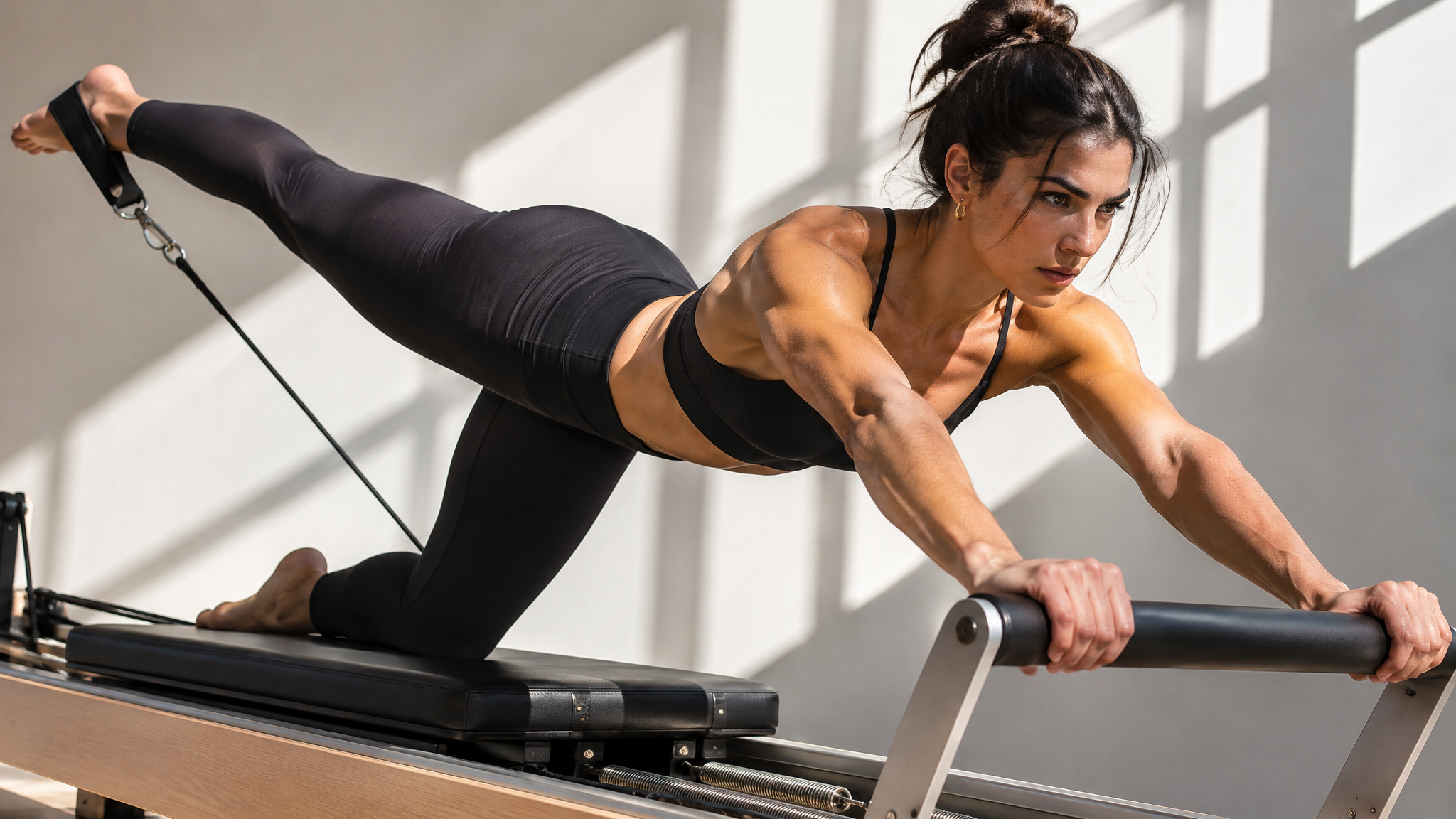
If you spend eight hours a day folded over a keyboard, you probably know the specific humiliation of being able to deadlift heavy weight or pull through a V4 overhang while still struggling to touch your toes. Mobility work gets deferred because it produces no measurable personal records, no split times, and no obvious dopamine hit. Over the past few months, I’ve been practicing Pilates alongside regular rock climbing, Crossfit (which I’ve covered here on GeekExtreme before), and yoga, having started with poor flexibility and hoping the combination would finally unlock my hips and upper back.
Before committing hours and studio fees, I wanted answers to a few questions. Is Pilates addressing desk-work stiffness, rounded posture, and low back pain, or is it just overhyped studio marketing? Answering that requires looking past the boutique branding at the mechanics of the method, what clinical trials measure, how it slots into an existing strength stack, and what separates a real studio from a generic nameplate.
Key Takeaways
Clinical trials show Pilates beats doing nothing for chronic low back pain and muscle conditioning in healthy adults, including a 4-week equipment program by Rydeard et al. that maintained lower pain and disability at 12 months, though it’s no more effective than other forms of exercise.
The method trains deep spinal stabilizers through five core essentials and quantified muscle recruitment, with Reformer Pilates producing 10-20% maximal voluntary contraction (MVC) in the multifidi and external obliques and side bridges reaching up to ~50% MVC in the quadratus lumborum.
In a thread asking practitioners about their personal weekly schedules, 5 of 10 posters who reported say two sessions a week, 3 say three or more, and 2 say one or fewer, matching the twice-weekly cadence used in posture trials.
Table of contents
Table of Contents
What Pilates is: Contrology and the powerhouse
Joseph Pilates created this mind-body exercise system in the early 20th century, originally naming it “Contrology” in his 1945 book Return to Life through Contrology. Practiced worldwide today, especially in Australia, Canada, the US, and the UK, the method reached 11 million practitioners and 14,000 instructors in the United States as of 2005, and it’s usually written with a capital P because it derives from its founder’s surname (Favilla, 2017).
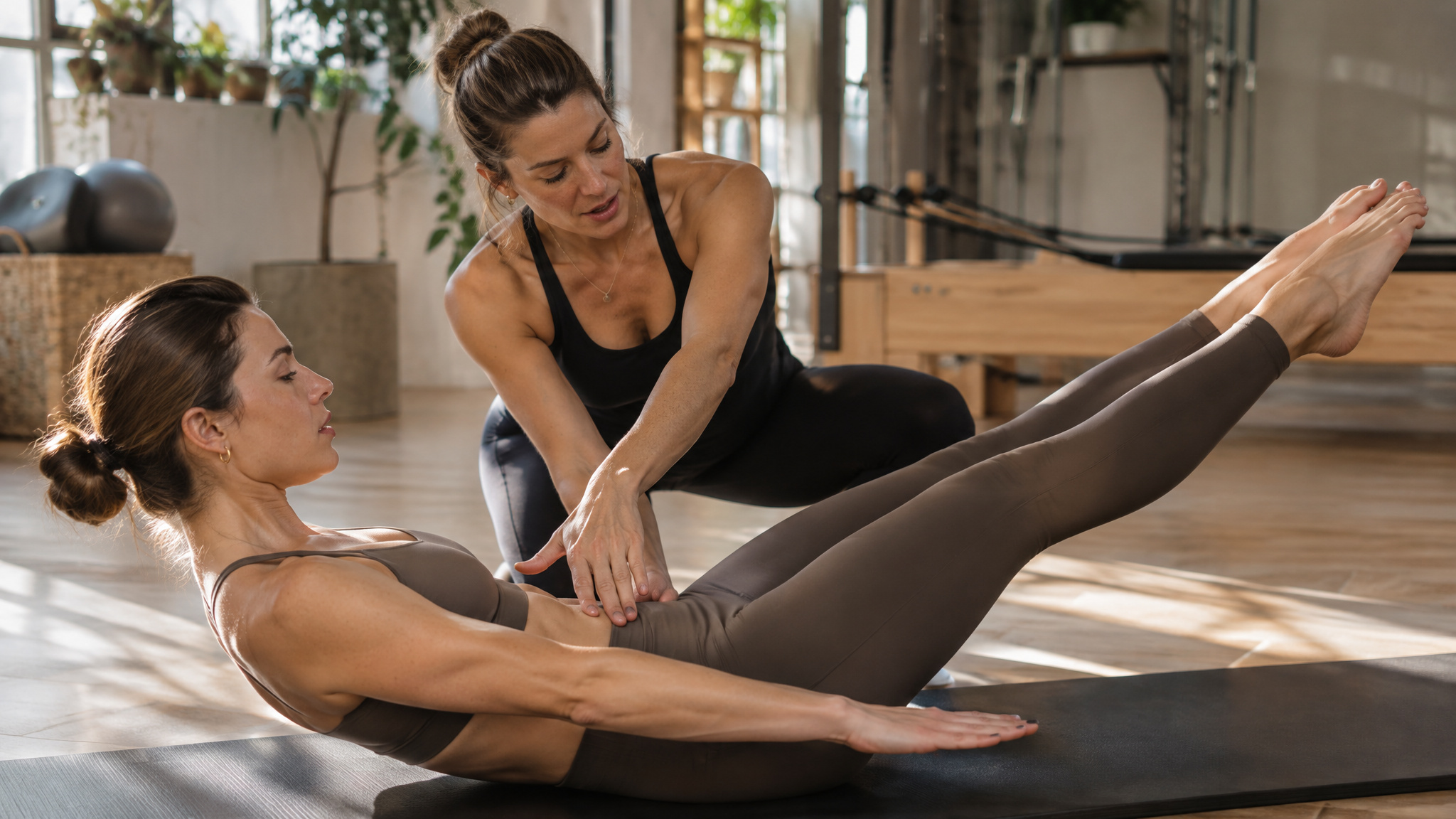
Rather than chasing hypertrophy or max-effort lifts, the system centers on what it calls the “powerhouse” (the abdomen, low back, and hips) as the anchor for stability. Its mechanics map cleanly onto the physical bottlenecks of sitting at a desk all day:
- It demands core stability, muscle control, posture, and breathing all at once, forcing awareness back into muscles that go dormant in an office chair.
- It structures sessions around roughly 50 simple, repetitive exercises, each repeated 3-5 times and rarely more, creating constant new muscular and kinesthetic challenges instead of grinding out high-rep fatigue.
- It generates difficulty through the precision of motor unit recruitment and energy efficiency rather than external load or volume, which is why it complements rather than duplicates barbell or bodyweight strength training.
- It feels like a real workout, and the exercises scale from gentle rehab to strenuous sessions for skilled athletes.
A corrective system born in forced immobility
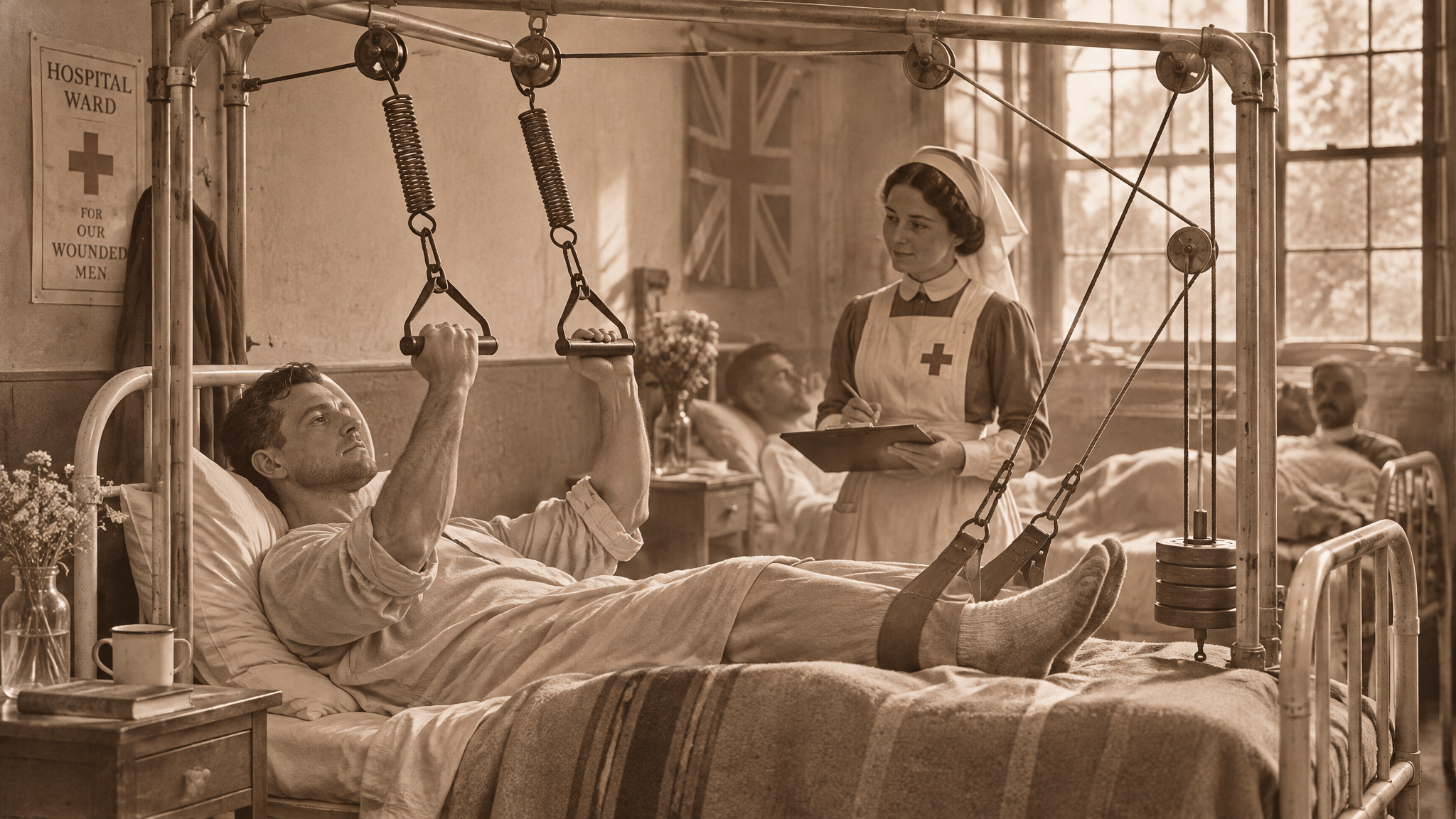
Joseph Pilates built his system for bodies trapped in stillness. Born in Mönchengladbach, Germany, to a gymnast father and a naturopath mother, he suffered from asthma and rickets as a child and spent his youth practicing Greek and Roman exercises alongside Zen meditation, martial arts, and yoga. During World War I, while interned as an enemy national at Knockaloe internment camp on the Isle of Man, he spent four years developing his method on fellow internees. Working as a hospital orderly, he attached springs to hospital beds to move non-ambulatory patients’ limbs against resistance, and camp doctors noticed those patients seemed to recover more rapidly.
That origin fits into late 19th-century physical culture and somatic movement, especially the corrective exercise and medical gymnastics tradition typified by Pehr Henrik Ling. It also connects to broader movement currents during the Battle of the Systems, including Turners and Sokol. Figures from that wider world include Johann Christoph Friedrich GutsMuths, Friedrich Ludwig Jahn, Georges Hébert, Eugen Sandow, Bernarr Macfadden, Maxalding, Krishnamacharya, and Kuvalayananda.
Pilates spent two decades developing the method and brought it to the United States in 1923. He later codified it in two books: Your Health: A Corrective System of Exercising That Revolutionizes the Entire Field of Physical Education (1934) and Return to Life Through Contrology (1945, reprinted in 1998). A system engineered for interned men and bedridden patients addresses the same structural immobility a desk-bound programmer faces every weekday.
What core strength means in Pilates
For anyone who tunes out vague studio cues like “engage your core,” Pilates actually runs on a concrete mechanical specification. Every movement follows five essentials: breathing, pelvic mobility, engaging the transversus abdominis, cervical alignment, and stabilizing the ribs and scapulae. Every exercise begins by stabilizing the core musculature before moving the limbs through a controlled range of motion, prioritizing efficient motor unit recruitment without wasting energy.
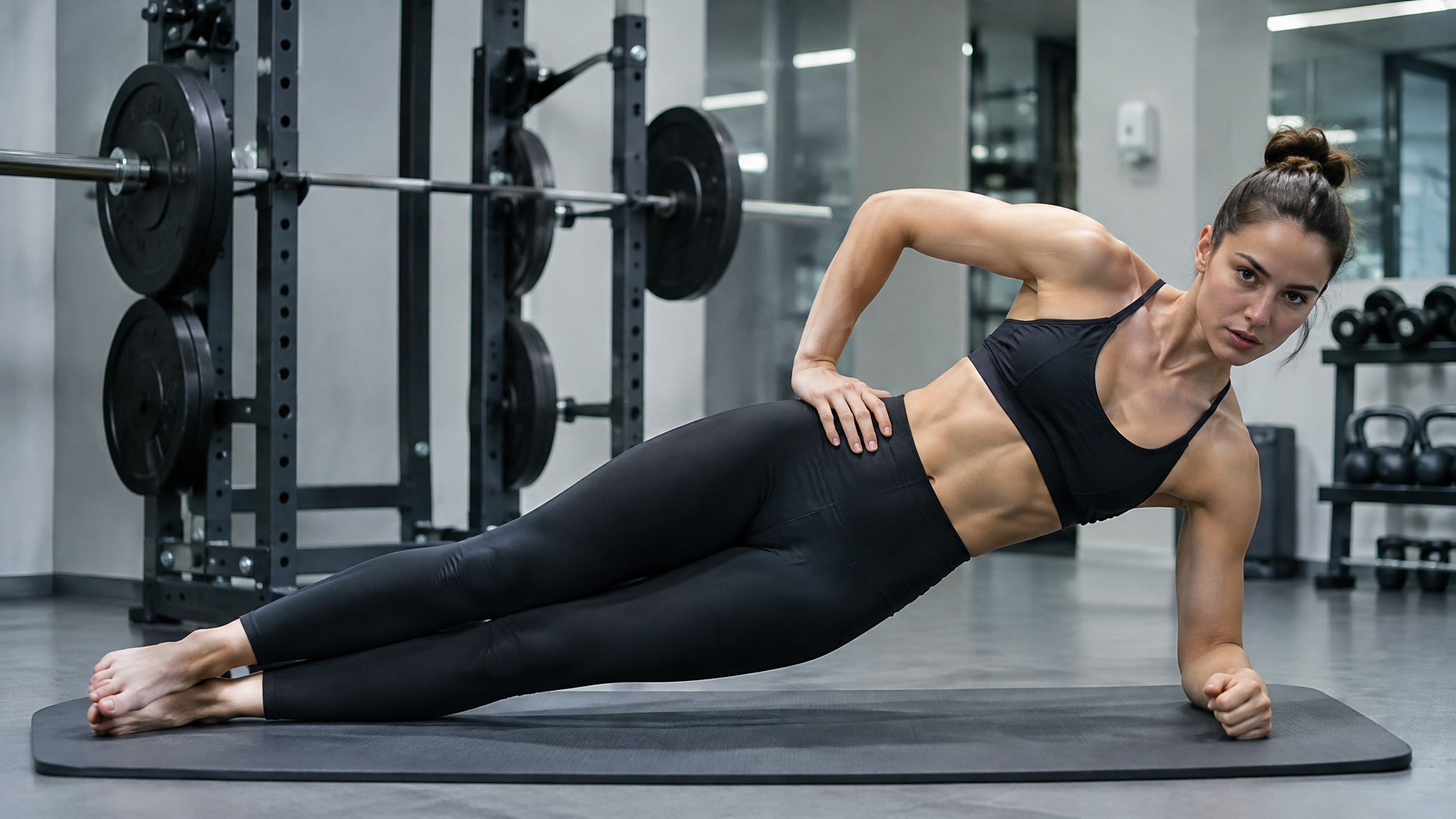
That stability starts with the transversus abdominis. It fires before any other muscle when you move a limb, stiffening the trunk before your arms or legs even start to travel. Because it stays inactive during relaxed breathing, Pilates uses deliberate forced-expiration breathing to recruit it, driving a co-contraction with the lumbar multifidus, pelvic floor muscles, and diaphragm to maintain intra-abdominal pressure for spinal support. Meanwhile, cervical alignment and rib and scapular stabilization directly train the exact upper-back and neck capacities degraded by a head-forward, keyboard-slumped posture.
Electromyography (EMG) measurements back up what the movements target. Reformer Pilates produces 10-20% maximal voluntary contraction (MVC) in the multifidi and external obliques, while a side bridge activates the quadratus lumborum nearest the floor up to ~50% MVC. Earlier lab work by Guimaraes et al. (1991) tested 20 students across 12 abdominal exercises and found that the standard curl-up produced the lowest muscle action potential (MAP) of the bunch, which explains why traditional crunches do so little for spinal support compared with stabilization work.
Pilates and back pain: what the research shows
- The verdict: Pilates helps reduce chronic low back pain compared with doing nothing, though it’s no more effective than other structured exercise and existing studies tested general, chronic-pain, or older-adult cohorts rather than desk workers specifically.
- Rydeard RCT: A 4-week Pilates equipment program for chronic low back pain led to significantly lower functional disability and pain, with benefits maintained over a 12-month follow-up.
- Lim (2011) meta-analysis: Pooled results showed Pilates was superior to minimal intervention for low back pain.
- La Touche (2008) review: Found positive effects for non-specific chronic low back pain, though only 3 studies met inclusion criteria.
- Donzelli (2006) trial: Across 43 patients with nonspecific low back pain, Pilates delivered similar overall results to usual treatment alongside better compliance and subjective response.
- Evidence caveat: Overall support remains limited by few studies and a lack of sound methodology, even though smaller trials like Emery et al. (19 subjects, two 1-hour sessions a week for 12 weeks) also show gains in abdominal strength, upper-spine posture, and postural stability.
Pilates and low back pain: the trial record
Pilates helps chronic low back pain more than doing nothing, but no more than other exercise. Most trials compared Pilates against minimal intervention or no exercise rather than against another structured training program, so claiming “Pilates fixes back pain” without checking the comparison condition misstates what was tested.
- Overall evidence remains limited by small sample sizes and weak methodology, offering cautious support for improved flexibility, muscular activity, and abdominal and lumbo-pelvic stability.
- Rydeard et al. ran a randomized controlled trial using a 4-week Pilates equipment program for chronic low back pain (CLBP) and found significantly lower functional disability and pain, with those gains maintained at a 12-month follow-up.
- Donzelli et al. (2006) tested 43 patients with nonspecific low back pain comparing Pilates to Back School, finding better compliance and subjective response in the Pilates group with clinical results similar to usual treatment.
- La Touche (2008) reviewed non-specific CLBP trials and found positive effects, though only 3 studies met inclusion criteria, while a meta-analysis by Lim et al. (2011), alongside systematic-review context from the Cochrane Database of Systematic Reviews, found Pilates superior to minimal intervention for low back pain.
- da Fonseca et al. measured vertical ground reaction force during gait and found that 15 Pilates sessions improved weight discharge and reduced pain.
Posture and stability: what the trials measured
Pilates can improve posture in small, non-developer trial groups, though none of the measured cohorts were office workers.
- Emery et al. ran 19 subjects (9 controls, 10 experimental) through two 1-hour sessions per week, assessed 12 weeks apart, and documented improved abdominal strength, upper-spine posture, and postural stability.
- Kuo, Tully, and Galea studied 34 adults aged 60 and older and found feasible improvements in sagittal spinal posture.
Balance, clinical populations, and safety
Outside of muscle conditioning for healthy adults (when compared against no exercise at all), Pilates has not been proven to effectively treat any medical condition. Elderly balance trials show mixed results. Ten sessions improved dynamic balance (functional reach), 24 subjects aged 65-81 improved static and postural balance over 10 weeks, and a twice-weekly 8-week pilot in ages 66-71 showed safe participation and possible stability improvements. Even so, there’s still no good evidence that Pilates improves balance in elderly people generally.
Outside of general fitness, clinical studies have explored targeted applications with promising early signals. Trials noted increased functional capacity in NYHA class I-II heart failure patients compared with standard cardiac rehab, a 4-week program reduced BMI percentile in girls aged 10-12, and 8 weeks of mat Pilates in 9 adult novices improved flexibility and body composition. Over the twenty years up to 2011, Pilates was also increasingly adopted for rehabilitation, including postoperative rehab after total hip or knee arthroplasty (Levine et al., 2007), with the exercises generally regarded as safe and showing strong compliance.
The Australian insurance timeline
The regulatory saga in Australia shows how sensitive Pilates’ evidence base looks under strict policy review. In 2015, the Australian Government’s Department of Health published the Baggoley meta-review, which found Pilates’ effectiveness uncertain due to too few methodologically limited studies. Based on that finding, Pilates was excluded from private health insurance subsidies in 2017. That exclusion held until 27 March 2025, when the Michael Kidd review recommended reinstatement, and insurance coverage was reinstated.
Pilates vs yoga vs the training stack you have
Pilates emphasizes controlled core strength where yoga emphasizes flexibility. Both focus on breath and alignment as mind-body disciplines; yoga classes just address spiritual aspects more explicitly. On the mat, the movement vocabularies overlap more than most lifters expect:
- Open leg balance resembles Navasana (boat pose).
- Roll over resembles Halasana (plough).
- Swan and push-up map closely to Bhujangasana (cobra) and Chaturanga Dandasana (low plank).
In my own training stack over the past few months, combining Pilates with regular rock climbing, Crossfit, and yoga has made the division of labor clear. Yoga targets the end-range flexibility I’ve been missing, while Pilates acts as the control-and-alignment layer that climbing and high-output Crossfit workouts tend to skip. For people who already train hard, Pilates is strictly complementary rather than proven superior; research evidence for its benefits as an add-on for trained athletes is weak. Still, strength-training desk workers routinely find flexibility lagging far behind raw strength because mobility work produces no measurable personal records and gets pushed to the bottom of the backlog.
What the studio industry looks like from inside
Look under the hood of a Pilates studio and you’ll find a business problem that any software engineer will recognize immediately: high fixed capacity, thin margins, and a surprising amount of web-infrastructure debt.
The studio website as a 24/7 employee
Lisa Brooks, who writes at profitablepilates.com, features web strategist Michael Brandt (StripedRhino), who calls a studio website a “24/7 employee” because it houses all content in one place, controls the brand, and processes transactions that social channels (which studios don’t own) can’t handle. Brooks also features Lesli Lindren (PilatesWebDesign), who compares DIY studio websites to a web designer teaching a mat class after watching YouTube videos: cookie-cutter, limited in under-the-hood customization, and weaker in search rankings. Studios should expect to put $1,500-$5,000 and 40+ developer hours into even a basic professional site, alongside developer advice from Brad Crowell.
That site needs contact info, social links, photos, reviews or testimonials, clear calls-to-action to convert visitors into bookings, and a blog that signals “open for business” to search engines. Mobile readiness isn’t optional either: 84% of readers on Brooks’s site arrived via mobile in the prior month, non-mobile-friendly sites get penalized in search rankings, and Google Analytics data informs paid ad demographics.
Equipment-capped economics and booking software
Unlike a big-box gym or a yoga room where you can always squeeze in one more mat, Pilates class capacity is capped by physical equipment like reformers and chairs. Ma-Keba Frye, writing at mindbodyonline.com, points out that this hardware ceiling makes every late cancellation unrecoverable revenue, especially when clients care deeply about a specific reformer spot or instructor and manual booking triggers double bookings or empty slots.
Modern studio software treats those constraints like a seat-inventory system. Mindbody Pick-a-Spot lets clients reserve a specific reformer or room position using visual room layouts, blocked spots, and real-time availability, while automated waitlists auto-promote the next client with instant notifications, configurable cutoffs, and visible queue positions. Embeddable, mobile-first booking widgets let clients view live schedules and pay on-site (with Mindbody Customized Websites launching in 3-5 business days after intake), and unified scheduling manages private appointments alongside group or duet classes with distinct pricing, instructor pay tracking, and double-booking prevention.
When a studio can’t open at all
Even with 200 customers ready to book, physical infrastructure can still brick a launch. Amanda Roberts, reporting at newschannel5.com (WTVF), covered a Spring Hill, Tennessee sewer moratorium whose framework passed in January to bring the city system into state compliance by allocating capacity to nine developers.
A Club Pilates location in development since the prior September was denied sewer taps by its developer despite expecting grandfathering, leaving manager Chasity Ingalls with ~200 pre-sold members at a studio that remained just a sign. Vice Mayor Trent Linville opposed dipping into city sewer reserves for an already-allocated project, Hunter Harrison of CHM cited an obligation to tenants to “stop the bleeding,” and at least two other small businesses in the same complex were caught in the same bottleneck.
How to start Pilates: mat vs Reformer
Beginning Pilates comes down to picking between body-weight mat classes and spring-loaded Reformer machines, and then vetting the instructor running the room.
Mat Pilates vs Reformer Pilates
Mat Pilates suits a home, body-weight start; Reformer Pilates adds spring resistance and is what the strongest back-pain trial used.
- Mat Pilates uses your own body weight as resistance while gravity stabilizes the core, scaling difficulty by changing limb lever lengths and body position, which makes it easy to practice at home.
- Reformer Pilates uses a sliding horizontal platform inside a box-like frame fitted with springs and pulleys, originally called the Universal Reformer for “universally reforming the body,” and it’s the exact modality behind the Rydeard chronic low back pain trial and the 10-20% MVC multifidi and oblique EMG findings.
- Lifters accustomed to heavy barbells are often surprised when slow, precisely cued movements on either surface leave their deep core sore the next day because the demand is motor control rather than raw load.
The apparatus, from Cadillac to Pedi-Pole
Beyond the Reformer, studios use a full lineup of spring- and gravity-based hardware to accelerate the stretching, strengthening, alignment, and core work started on the mat. That roster includes the Cadillac, Wunda Chair, High “Electric” Chair, Spine Corrector, Ladder Barrel, and Pedi-Pole. You can scale both mat and apparatus exercises from beginner or gentle rehab work up to strenuous sessions for skilled athletes.
Vetting an instructor when the name is generic
Because the word “Pilates” is a generic term with no legal quality guarantee behind the label, your real buying decision comes down to the instructor’s training and lineage. In October 2000, the U.S. District Court for the Southern District of New York (Opinion 96 civ. 43 (MGC)) ruled “Pilates” a generic term free for unrestricted use in the US. The Pilates Method Alliance formed afterward as a professional association, but Pilates remains professionally unregulated.
That leaves two main camps when you’re checking credentials. Classical or Traditional Pilates aims to preserve Joseph Pilates’ original work as taught, while Modern Pilates derives partly from first-generation students, including Romana Kryzanowska, Kathy Grant, Jay Grimes, Ron Fletcher, Mary Bowen, Carola Treir, Bob Seed, Eve Gentry, Bruce King, Lolita San Miguel, and Mary Pilates, with contemporary versions built around up to nine principles. Ask where an instructor trained and how they handle modifications before you commit to a package.
Is 20 minutes a day enough?
No clinical study directly tests 20-minute daily Pilates sessions. Judging by the method’s structure of roughly 50 exercises at 3-5 reps each and documented trial dosages like Emery et al.’s two 1-hour sessions per week, 20 minutes a day easily beats doing nothing for muscle conditioning, though it isn’t a complete fitness prescription on its own.
When 10 practitioners were asked how many Pilates sessions per week they personally do, 5 of 10 posters who reported say two, 3 say three or more, and 2 say one or fewer, with one poster noting they stick to twice-weekly 1:1 sessions by rotating two teachers so vacations don’t break the streak. That twice-weekly cadence matches the frequency used in posture trials and works as a realistic baseline if you’re already balancing climbing, lifting, or coding all week.
Frequently Asked Questions
What is Pilates and why does it matter for people who sit and code all day?
Originally called Contrology when Joseph Pilates developed it for immobilized hospital patients and camp internees, this system anchors every movement in the “powerhouse”—your abdomen, low back, and hips. Instead of chasing heavy weights or high-rep fatigue, it forces dormant, chair-bound muscles to coordinate breathing, posture, and stability all at once. Because difficulty comes from precise motor control rather than raw external load, it targets the exact structural stiffness that eight hours at a keyboard builds up without duplicating your regular strength training.
Is Pilates good for lower back pain from sitting at a desk?
No clinical trial has tested software developers or desk workers specifically, so any answer comes from general and chronic low back pain cohorts. In those trials, Pilates consistently beats doing nothing—including a 4-week equipment program by Rydeard et al. that kept pain and disability lower at a 12-month follow-up—though it performs about the same as other structured exercise programs. Overall study sizes are small, so it’s a solid, evidence-backed option for managing back pain, just not a magic fix that outperforms every other workout.
Can Pilates improve posture for someone working at a computer all day?
Mechanically, the method directly drills cervical alignment alongside rib and scapular stabilization—the exact upper-back and neck controls that degrade when you slump over a keyboard. Small trials back up those posture gains, with Emery et al. documenting improved upper-spine posture and stability after 12 weeks of twice-weekly sessions, and Kuo, Tully, and Galea finding sagittal spinal posture improvements in adults aged 60 and older. Neither study tracked office workers specifically, so while the mechanics fit desk posture, the clinical proof comes from other groups.
Mat Pilates vs Reformer Pilates: which is better for desk workers with back pain?
If you want a zero-equipment start at home, mat Pilates uses your own body weight and gravity to challenge core stability by altering limb lever lengths. For chronic low back pain specifically, however, Reformer Pilates has the stronger trial backing: its spring-and-pulley sliding platform is the exact modality used in the Rydeard et al. back-pain trial and produces 10–20% maximal voluntary contraction in the multifidi and external obliques. Both will leave your deep core sore from motor-control work, so the practical choice comes down to home convenience versus studio hardware.
How do I start Pilates as a developer with no fitness background?
You don’t need an athletic base to begin, because both mat and apparatus exercises scale all the way down to gentle rehabilitation work. Start with bodyweight mat sessions at home or book an introductory Reformer class, knowing that slow, controlled movements will still challenge your deep stabilizers without requiring heavy lifting. Before buying a studio package, ask where the instructor trained and how they handle modifications—”Pilates” has been a legally generic, unregulated term in the US since an October 2000 court ruling, so teacher quality varies widely between Classical and Modern lineages.
Is 20 minutes of Pilates a day enough exercise for someone with a sedentary job?
No clinical study has tested 20-minute daily sessions, but given that a routine only runs 3 to 5 reps per exercise, 20 minutes a day easily beats sitting still for basic muscle conditioning. It won’t cover your entire fitness needs on its own, though, especially if you want cardiovascular work or heavy strength training. In a practitioner thread on weekly schedules, 5 of the 10 posters who reported stick to two sessions a week—matching the twice-weekly cadence used in posture trials—which is a realistic baseline alongside other movement.
Pilates vs yoga for developers: which one helps more with flexibility and core strength?
In my own training stack over the past few months alongside rock climbing and Crossfit, the division of labor has been clear: yoga unlocks the end-range flexibility I’ve been missing, while Pilates builds the controlled core strength and alignment that high-output workouts gloss over. Both are mind-body practices built around breath and alignment—sharing movements like boat pose and open leg balance—though yoga leans more explicitly into spiritual elements. If your main bottleneck is tight hips and hamstrings, yoga hits that harder; if you want deep spinal stability, Pilates wins.
What are the health benefits of Pilates according to actual research?
Clinical research supports Pilates for muscle conditioning in healthy adults and reducing chronic low back pain when compared against doing nothing, along with small-trial gains in flexibility, abdominal strength, and posture. Outside of general conditioning, however, it hasn’t been proven to treat medical conditions, and evidence for things like elderly balance remains mixed. That uneven evidence base is why Australia excluded Pilates from private health insurance subsidies in 2017 after the Baggoley review, before reinstating coverage on 27 March 2025 following the Michael Kidd review.