Eight hours in an office chair leaves your hips locked at ninety degrees, your shoulders rolled toward the monitor, and your lower back complaining the second you stand up to grab coffee. When you spend your days debugging code and your evenings trying not to stiffen into the shape of your desk, it’s fair to wonder whether coached, broad-spectrum training like CrossFit can actually unwind a sedentary body, how you start without wrecking yourself on day one, and what gear you genuinely need to walk through the door.
I’ve been training CrossFit for about two years as a working software developer, building on a background in Olympic lifting since young adulthood. CrossFit pairs constantly varied functional movements with live coaching in a group setting, and over those two years it’s given me a ton of energy and a real sense of community. Getting those upsides as a desk worker, though, comes down to understanding what sitting actually breaks, how midline stabilization targets it, and how to spot a gym that scales volume before your ego writes a check your core can’t cash.
Key Takeaways
Prolonged sitting and device use make tight hip flexors the number one tech-related physical issue, weakening the lower abs in a way crunches can’t fix.
CrossFit targets desk-bound deficits through isometric midline stabilization on movements like the glute-ham developer (GHD) sit-up, L-sit, and overhead squat, rather than high-rep crunches.
Safe entry for sedentary beginners depends on coached onboarding, including spotting to parallel on the GHD, AbMat regressions for weak cores, and balanced posterior-chain work.
Table of contents
Table of Contents
What a desk-bound body looks like
Spend your workday hunched over a keyboard and your breaks scrolling on a phone, and your hip flexors stay shortened for hours while your trunk does almost nothing. That’s why tight hip flexors are the number one physical issue tied to prolonged tech use, feeding into running problems alongside neck and thumb strain.

You can test the damage right now without any equipment. Stand on one leg, pull your other knee up toward your chest, and press down on that raised thigh with two fingers while trying to hold it in place. If it’s easy to push your knee down, your hip-flexion strength is lacking. Most modern athletes fail this standing single-knee-hold test, and that deficit drags down nearly every athletic movement.
Weak hip flexors go hand in hand with weak abs, especially the lower abs, and no volume of crunches fixes the gap. Even a visibly ripped abs-class instructor sporting a prominent lower-belly pooch can fail a two-finger push test.
Why CrossFit trains the core differently: midline stabilization
CrossFit targets the desk-bound body’s specific deficits, weak hip flexion and an untrained midline, through isometric trunk work, provided the training is coached and balanced. CrossFit pairs structured, measurable workouts with progressive overload and full-body movement, making it a natural fit for programmers who spend their workdays in a chair. Instead of wandering around a commercial gym guessing at sets, you walk into a time-boxed session that runs roughly an hour, gives you clear inputs and outputs, and contrasts sharply with sitting still. Several mechanics explain why developers gravitate toward this setup:
- Measurable outputs: every workout tracks concrete variables like time, weight, reps, and rounds.
- Built-in progression: progressive overload gives you a clear weekly feedback loop.
- Full-body contrast: compound movements wake up joints and muscle groups that sit idle during a coding sprint.
- Time-boxed sessions: roughly one-hour classes fit cleanly around a workday without turning fitness into a second job.
- Built-in community: training alongside the same group turns solo effort into a shared habit.
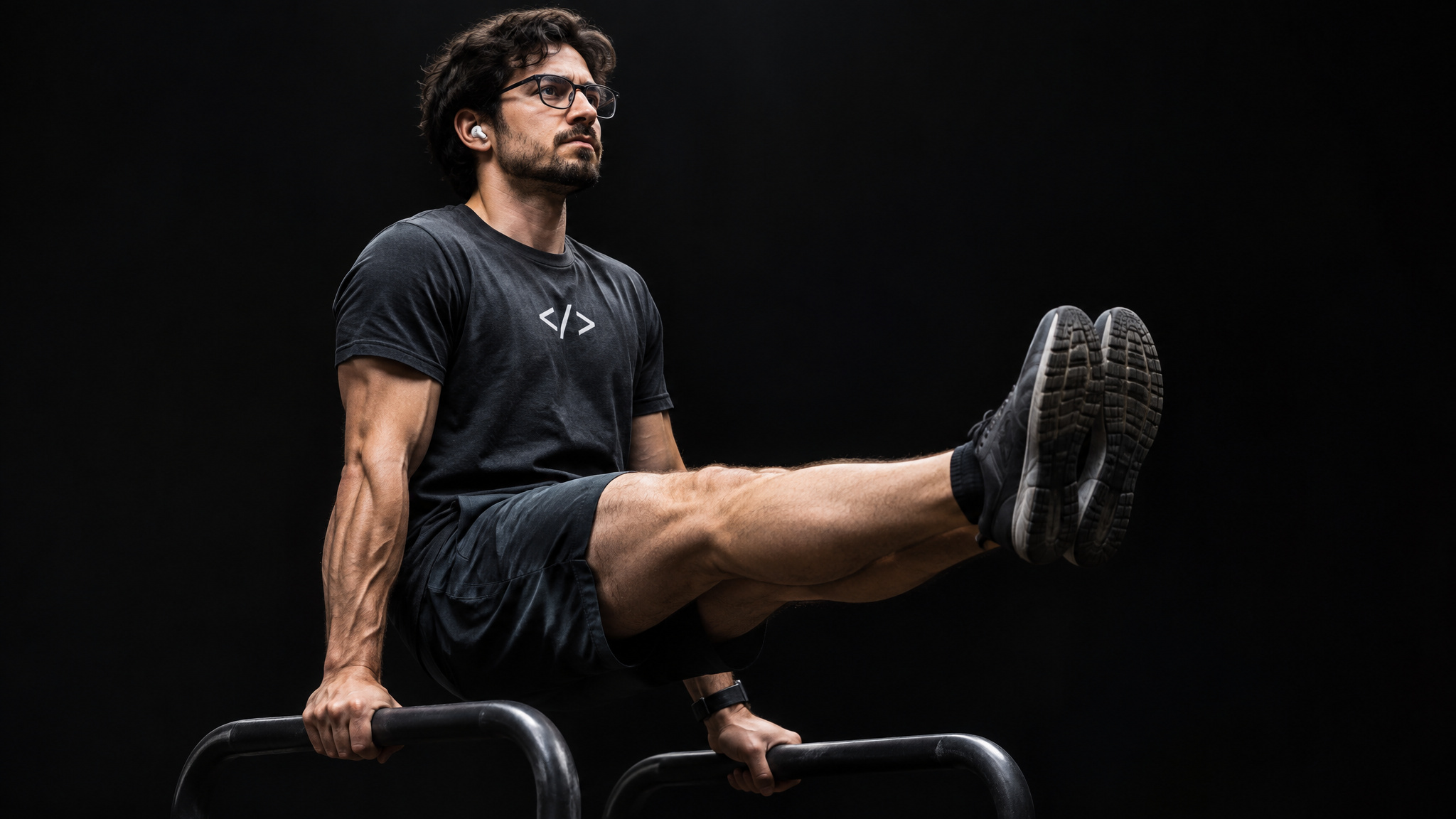
In my own two years of CrossFit, that structure has translated into a ton of energy and feeling like part of a community. On the movement side, the CrossFit Journal notes that the system’s favorite core drills, including the overhead squat, L-sit, and glute-ham developer (GHD) sit-up, look deceptive to outsiders because there’s little or no visible trunk flexion. When you watch someone hold an L-sit or stabilize a barbell overhead, it looks static, yet the abs are firing hard to keep the spine from collapsing.
CrossFit’s stated position in the CrossFit Journal is that the most powerful, functional, developmental trunk contractions are isometric rather than isokinetic. One uncited expert cited in those training notes calculated that the hip flexors can generate many times the force the abs can produce. If you skip static contraction and stabilization work, your abs never learn their most critical job: midline stabilization, the exact skill a collapsed desk posture never practices.
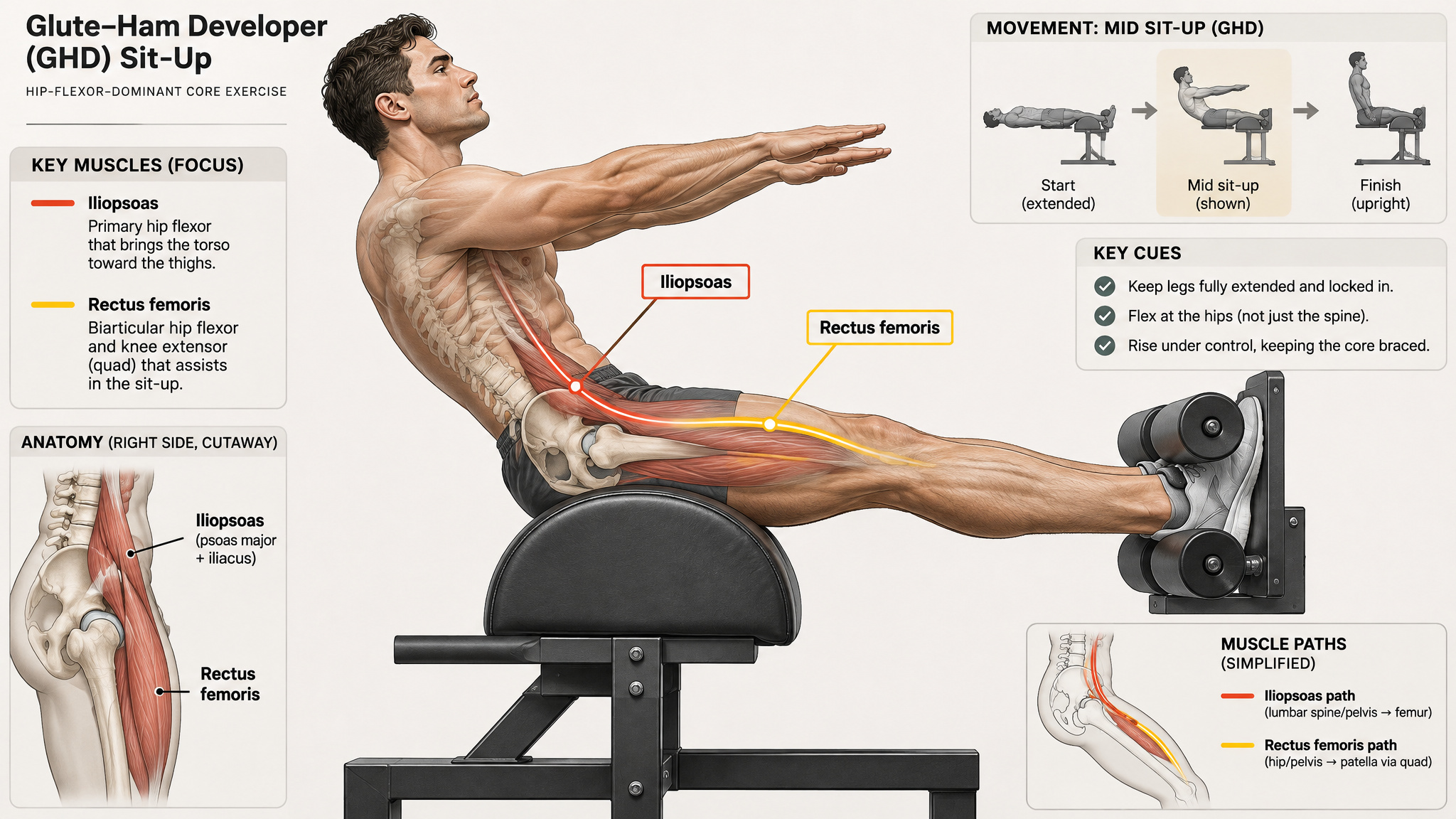
For beginners learning the ropes, foundational movements like the squat, deadlift, press, L-sit, overhead squat, and scaled sit-up variations build that bracing capacity from the ground up. The GHD sit-up is a clear example of how CrossFit loads the trunk differently. It recruits the abs in two ways at once: the torso swings from hyperextension into full flexion under negligible load, a range of motion no floor crunch comes close to matching, while the abs work powerfully and largely isometrically to stabilize the torso against unwanted extension. Keep in mind that this analysis reflects CrossFit’s training philosophy and coaching observation rather than a medical cure for back pain.
Where sit-up back pain comes from
CrossFit’s sit-up and hip-flexor work carries back-injury risk when training is uncoached and imbalanced, because actual injuries trace to iliopsoas-only pulling technique and one-directional programming rather than the movements themselves. If you sit at a computer all day, hearing that a gym uses dynamic sit-ups on an apparatus might trigger every ergonomic alarm bell you have. The biomechanical reality, though, separates media warnings from what actually loads the lumbar spine. The CrossFit Journal authors report they haven’t caused or seen lower-back damage from strong hip-flexor work; they blame poor leg mechanics and neglected posterior-chain training instead.
How the crunch displaced the sit-up
The GHD sit-up, once widely known as the roman chair sit-up, used to be a standard fixture in gyms before the floor crunch took over. Its decline happened right alongside popular-media warnings claiming sit-ups wreck your back. Critics argued that the hip flexors, not the abs, were doing the heavy lifting, and that loading the hip flexors would destroy the lumbar spine.
Iliopsoas vs rectus femoris: the mechanics of lumbar shear
The feet-anchored, knees-bent military or law-enforcement sit-up explains part of that reputation. Based on Koch, Blom, and Jacob’s AbMat analysis, it runs as a biphasic movement: the upper abs start the pull, then toss the load onto the hip flexors. At peak middle-rectus contraction, the spine is neutral, leaving the middle abs under almost no load while that abrupt handoff may cause unhealthy lumbar wear.
The anatomy explains why technique decides whether a sit-up hurts. The iliopsoas originates on the lumbar spine and attaches to the femur, so pulling yourself upright through the iliopsoas alone tugs directly on the lumbar spine and creates potential shear forces. The rectus femoris, sitting at the top of the quadriceps, anchors at the pelvis and connects to the patella through the patellar tendon; when engaged, it pulls from the pelvis and iliac spine, adding force and speed while cutting lumbar shear.
The coaching fix is a simple cue: sharply extend your legs as you come up. Athletes who blame GHD or feet-anchored sit-ups for low-back pain appear to be pulling with the iliopsoas alone, and learning to recruit the full hip-flexor system typically brings considerable relief.
The imbalance risk: flexion without extension
Even clean sit-up mechanics run into trouble when a program trains only the front of the torso. Communities that prize high-rep sit-ups often have zero squats, deadlifts, good mornings, stiff-legged deadlifts, or back and hip extension work in their routines, leaving the posterior chain to absorb nothing but running or burpees. That flexion-without-extension imbalance is judged harmful, even though its full long-term injury consequences remain unknown, which is why GHD back and hip extension drills are treated as indispensable for lower-back health.
Dosage: even elite athletes get humbled
How much you do in those first weeks decides whether you build up or get sidelined, credentials won’t save you. Sedentary newcomers often discover unexpected soreness and movement gaps when they jump into full-range trunk work too quickly, and even elite endurance or bodyweight athletes aren’t immune when they ignore volume limits.
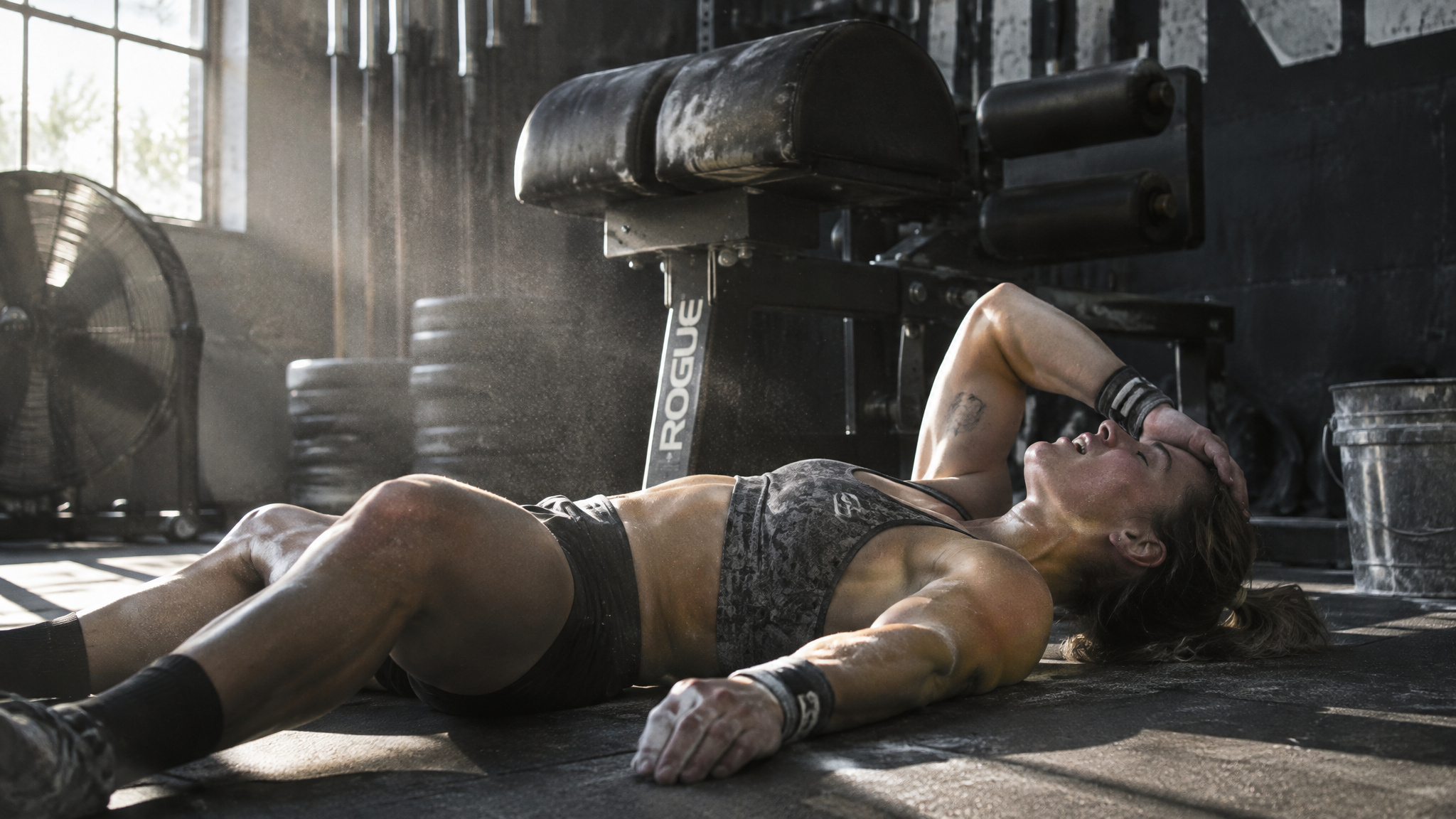
At CrossFit Santa Cruz, coaches sometimes ask visiting exercise physiologists who claim the GHD sit-up has poor ab recruitment to perform 30 reps. The next day, those physiologists report being almost too sore to sit upright, with the soreness sitting squarely in their abs. A steeper warning comes from Matt Weaver, an athlete who reportedly hit 85 mph on a bike and earned the title King Sit-Up for knocking out 100 perfect-form, body-slapping sit-ups in a single minute.
When Weaver tackled just 21 full-range GHD sit-ups inside a veteran circuit, it wrecked him: he couldn’t sit up the next morning, needed roughly a week to recover, and watched his swollen abs drain fluid into his inguinal canal until his scrotum swelled to the size of a small, very ugly cantaloupe, a diagnosis his father John, an ER doctor, laughed at. That CrossFit Journal anecdote isn’t a typical outcome, of course, but it’s a blunt reminder that early soreness is a dosage signal rather than a badge of honor.
How to start: coached onboarding and how to judge a box
CrossFit beginners with sedentary desk jobs start safely with coached classes at an affiliate to learn movement mechanics before scaling intensity. Trying to replicate main-site workouts or public programming alone in a commercial gym skips the live spotting, form cues, and volume caps that keep desk-bound newcomers out of trouble. In a coached group setting, a trainer watches how you hinge, brace, and recover, stepping in with regressions before fatigue turns into bad lumbar mechanics. The concrete onboarding protocol on apparatus like the GHD shows how that gatekeeping works in practice: newcomers are spotted until they can descend to parallel without collapsing, and very weak athletes start on the AbMat before ever touching the elevated apparatus.
The onboarding protocol for a desk-job body
When you walk into a well-run gym with tight hips and an untrained core, the first goal is controlled range of motion, not max reps. Coaches spot newcomers on the GHD until they can lower to horizontal without losing torso control, and anyone who lacks baseline trunk strength stays on the floor with an AbMat until they earn their way back to the GHD sit-up. Coaches cap early volume strictly, too, since unbridled GHD bouts have sidelined dozens of otherwise strong athletes for days or up to a week.
What good coaching looks like from the outside
Past credentials or time spent on stability gadgets don’t guarantee readiness for full-range midline work. One Stanford University coach who specialized in Swiss ball core training fell backward off the horizon on his first GHD attempt and had to be deadlifted back to horizontal, showing exactly why weak-core athletes start on the AbMat regardless of their resume. When you evaluate a box from the outside, look for four concrete coaching markers:
- Spotting newcomers to parallel before allowing unassisted reps.
- Using AbMat regressions when an athlete’s midline collapses.
- Enforcing honest dosage caps on high-leverage movements.
- Pairing flexion drills with posterior-chain extension work like squats, deadlifts, and back extensions.
Safety records from established coaching systems back up what happens when progression comes first. Brand X, the program behind CrossFit Kids, reports 90,000 contact hours with zero injuries requiring intervention. Brand X identifies failing to teach a bracing strategy first as the biggest coaching mistake, pointing to an anti-pattern where an 8-year-old was snatching after one month while still unable to squat, brace, or deadlift. Using explore, express, and excel stages alongside primal movement patterns to build broad physical literacy, Brand X shows that the methodology scales cleanly from complete beginners upward when a coach actually teaches mechanics in order.
Fitting sessions around a developer’s schedule
I don’t recommend a specific box, coach, or beginner program; I simply train hard and follow my coaches’ instructions. Exact class times and weekly session counts vary by gym and by your own work or on-call schedule, so no single weekly template fits every developer. Treating a one-hour class like a fixed calendar block on your workday makes it far easier to stay consistent than waiting for free time to magically appear after a deploy.
Gear and cost: the minimalist answer
CrossFit requires almost no personal gear to start because the affiliate supplies the specialized equipment, while membership pricing varies by location. CrossFit Santa Cruz keeps four GHDs from makers like Sorinex on the floor for back extensions and sit-ups, plus the bars, racks, and AbMats you’ll use in class. You don’t need to outfit a home gym or show up with a duffel bag full of straps and wraps.
In my own training, the only gear purchase I’ve made is a pair of new shoes, and I’m not into branded shirts and hoodies. New members often over-buy apparel and accessories before finishing their first month, yet clothing purchases usually follow a sense of community belonging rather than physical need. Shoes are the single early purchase worth getting right. Membership rates vary by city, so there’s no universal monthly price.
Two years in: energy, community, and staying with it
Belonging to a community and following coaching are what sustain training when your desk and your work Slack are always one tab away. After two years of CrossFit as a developer, building on years of Olympic lifting since young adulthood, the clearest payoffs I’ve felt are a ton of energy and feeling like part of a community.
Sticking with it has had very little to do with box-hopping or hunting for an optimized spreadsheet program. Showing up, trusting the coaches’ programming, and working alongside the same familiar faces is what turns training into a durable habit.
When CrossFit is the wrong choice
CrossFit is the wrong choice when a gym lacks technique coaching, beginner scaling, and balanced programming. Because the methodology isn’t self-administering, uncoached and unbridled bouts of high-leverage movements can sideline even conditioned athletes for days.
Injury risk traces back to poor technique, such as pulling sit-ups with the iliopsoas alone, and to one-directional programming that skips posterior-chain work. Remember too that the safety claims from the CrossFit Journal are observational rather than clinical guarantees, and the long-term injury consequences of flexion-without-extension imbalance remain unknown. Before you sign a membership, sit in on a trial class and watch how the coach runs the room for those four markers: spotting to parallel, scaling weak midlines to an AbMat, capping early volume, and balancing front-side work with posterior-chain extensions. If the coach lets newcomers flail through max reps without a word, walk out and find a different gym.
Frequently Asked Questions
What is CrossFit and why is it popular with programmers and developers?
CrossFit combines constantly varied, full-body functional movements with live coaching in roughly one-hour group classes. For developers, the appeal comes from the structure: every session logs concrete metrics like time, weight, reps, and rounds, giving you a clear weekly feedback loop through progressive overload. Instead of sitting still, you wake up idle joints in a time-boxed hour that fits around a workday and builds a shared community.
How do I start CrossFit as a complete beginner with a sedentary desk job?
Skip trying to copy public workouts alone at a standard gym and start with coached classes at an affiliate. A competent coach will spot you to horizontal on the GHD until your torso stays controlled, keep weak cores on a floor AbMat at first, and strictly cap your early reps. Look for a box that also pairs front-side core work with posterior-chain lifts like squats, deadlifts, and back extensions so you build bracing mechanics before chasing intensity.
Is CrossFit dangerous for people who sit all day at a computer?
It can be if you train without coaching, ignore volume limits, or let your programming neglect the back of your body. Pulling sit-ups with the iliopsoas alone tugs directly on the lumbar spine, and jumping into high-rep trunk work too fast can wreck even elite athletes for days. With proper spotting, AbMat regressions, and leg-extension cues that recruit the rectus femoris, coached CrossFit manages those risks—though its safety track record rests on coaching observations rather than clinical guarantees.
CrossFit vs regular gym for desk workers: which gets better results?
For someone who sits all day, CrossFit’s main advantage over a commercial gym is structured accountability rather than guessing at sets on your own. Going solo in a regular gym leaves out the live spotting, form cues, and volume caps that keep tight-hipped beginners from overloading their lower backs. You also get built-in progression and a consistent group setting, which in my two years of training as a developer has translated into far more energy and a habit I actually stick with.
Can CrossFit fix back pain and poor posture from sitting at a desk all day?
CrossFit’s training philosophy isn’t a medical cure for back pain, so don’t treat it like physical therapy. What it does is target the specific deficits sitting creates—tight hip flexors and an untrained midline—using isometric bracing drills like L-sits and overhead squats alongside posterior-chain extensions. Just make sure your gym balances front-side flexion with squats, deadlifts, and back extensions, because one-directional sit-up routines can cause lumbar trouble instead of relieving it.
How much does a CrossFit membership cost per month?
Monthly membership rates vary by city, so there is no single standard price to budget for. The upside is that you barely need to spend anything on personal gear to get started, because the gym supplies the barbells, racks, AbMats, and GHDs. In my own training, the only early purchase I’ve bothered with is a pair of shoes—skip the branded hoodies until you know you’re sticking around.
How do developers fit CrossFit workouts around long work hours and on-call schedules?
Class schedules and weekly frequency depend on your local gym and how chaotic your on-call rotation gets, so no single template works for everyone. Because most classes are time-boxed to about an hour, the easiest way to stay consistent is to put a session on your calendar like a non-negotiable meeting. Waiting for spare time to magically open up after a deploy is a reliable way to skip training altogether.
Is CrossFit for everyone?
The methodology scales from complete beginners upward when coaches teach bracing and primal movement patterns in order—programs like Brand X have even logged 90,000 contact hours with kids without an injury requiring intervention. That said, CrossFit is the wrong fit if a gym skips technique coaching, lets newcomers flail through max reps, or ignores posterior-chain work. Sit in on a trial class first, and walk out if the coach isn’t actively spotting and scaling.
Why does CrossFit use GHD sit-ups and L-sits instead of floor crunches?
Floor crunches don’t fix the weak lower abs and tight hip flexors caused by sitting all day, and they fail to train your trunk’s main job: isometric midline stabilization. Movements like L-sits, overhead squats, and GHD sit-ups force your abs to fire hard to prevent your spine from collapsing, even when there’s little visible crunching motion. The GHD also takes your torso from hyperextension into full flexion, recruiting the abs through a range of motion no floor crunch can match.