
You came here looking for news about a macOS 26.7 leak and a new MacBook Pro. I get it. That’s the search query, that’s the rumor you heard, that’s the headline that sounded like it had the goods. So let me tell you what I found when I actually started digging into the logs and cross-referencing the sources: macOS 26.7 doesn’t exist. Not in AppleInsider‘s reporting, not in Macworld‘s analysis, not in any credible leak I can find.
The version strings that are actually out there are 26.0.2, 26.2, 26.3, and 26.4, and they tell a much more interesting story than any phantom point-release ever could. Here’s what the real numbers reveal about Apple’s staggered M5 rollout, the chip architecture changes that matter more than the spec sheet, and what it means for your next Mac purchase.
Key Takeaways
The supposed macOS 26.7 leak doesn’t appear in any credible source. The actual leaked versions are 26.0.2 (base M5 MacBook Pro, identifier J704), 26.2 (M5 MacBook Air, J813/J815), and 26.3 (M5 Pro/Max MacBook Pro, J714/J716), each tied to specific hardware.
Base M5 MacBook Pro ships late 2025, with M5 MacBook Air and M5 Pro/Max models following in early 2026. M4 Pro/Max stock is constrained at retail and the FCC accidentally leaked a new model number, both classic refresh signals.
M5 Pro and M5 Ultra chips use a completely new server-grade modular design with horizontal chip arrangement, cutting space by 30-50% and improving heat dissipation. The M5 base chip is a more modest 5% performance gain on TSMC’s N3P node.
Table of Contents
What the actual macOS version numbers reveal
Let’s get straight to it. There is no macOS 26.7. The version strings that leaked in AppleInsider‘s reporting map directly to specific machines, and once you see the pattern, it’s obvious what Apple is doing.
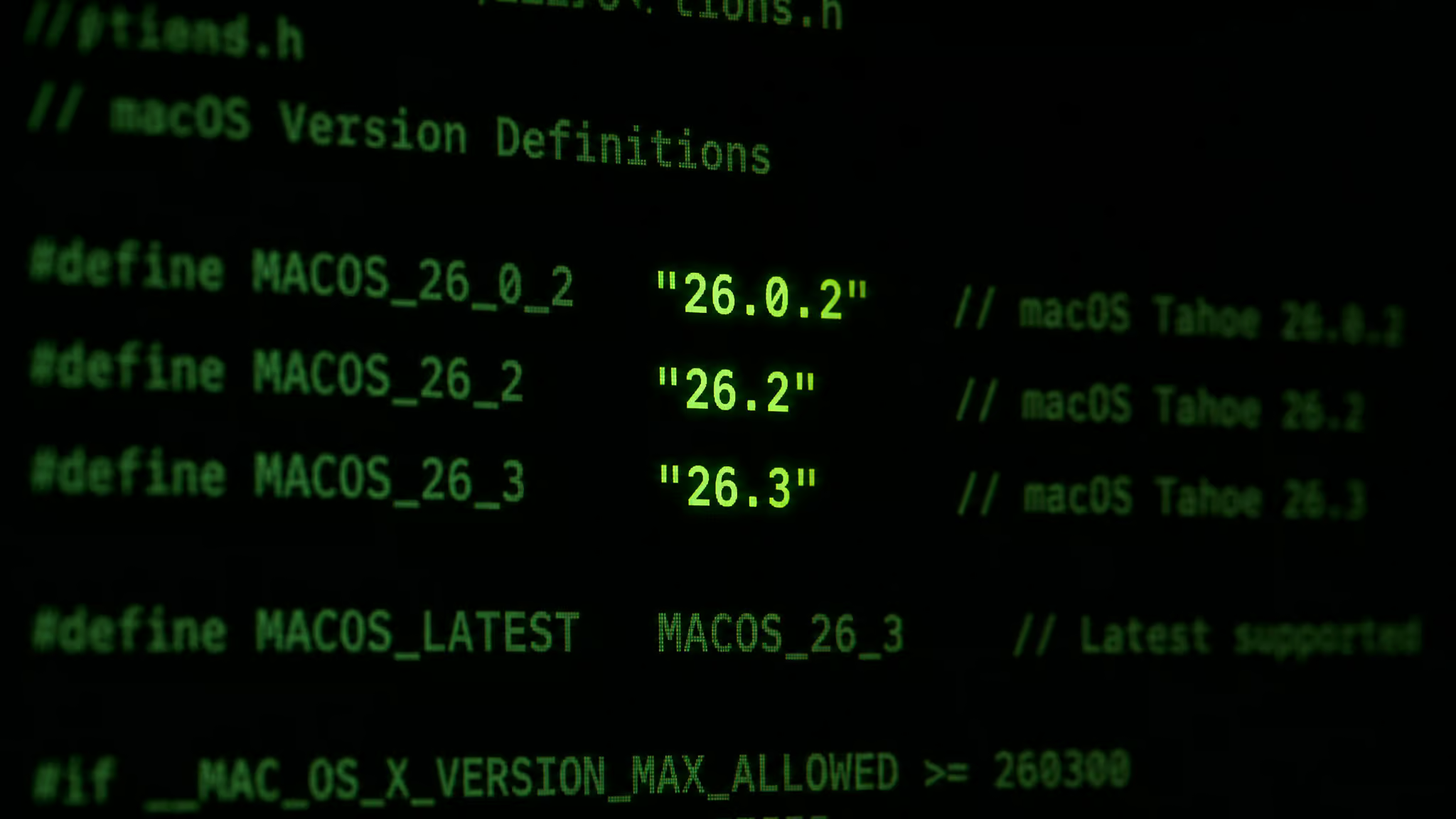
The concrete anchor here is identifier J704, which appeared in testing logs running macOS Tahoe 26.0.2. AppleInsider‘s sources confirmed this machine is nearing release, and the identifier sequence is the tell: J604 was the M4 base MacBook Pro, so J704 being the M5 base model is the most logical read. That’s macOS 26.0.2, a post-release build of Tahoe that shipped September 15, 2025, after the public beta dropped July 24. The hardware testing happened on a stable OS, which means this machine is basically done.
Then things get staggered. The M5 MacBook Air, identifiers J813 and J815, is expected to ship with macOS 26.2 in early 2026. The M5 Pro and M5 Max MacBook Pro, identifiers J714 and J716, are pegged to macOS 26.3, also early 2026. There’s even a mystery J700 identifier that 26.3 supports, purpose unclear, and macOS 26.4 contains files for J804, possibly a successor to J704.
This isn’t random. Apple has historically tested hardware with specific point releases that ship weeks before a product announcement. The M4 Air, for example, was tested with macOS 15.2 via an IPSW leak in December 2024 before shipping with 15.3 in March 2025. The M2 Pro and Max launched January 2023 bundled with macOS 13.2. The pattern holds: each OS version number is a clock ticking toward a launch.
The staggered 2025-2026 launch plan
If you’re asking when you can actually buy one of these, here’s the timeline in plain terms. The base M5 MacBook Pro arrives late 2025. The higher-end models and the M5 Air follow in early 2026. Apple is staggering the rollout deliberately, and there are three concrete signals telling us the base model is imminent.
Base M5 MacBook Pro (J704), late 2025
Three things lining up here. First, supplies of the current M4 MacBook Pro are constrained at retail, and that’s the classic sign a refresh is coming. Second, the FCC inadvertently leaked a model number for an unreleased MacBook Pro, which is basically an accidental regulatory press release. The identifier progression from J604 to J704, which AppleInsider‘s analysis confirms as the base M5 model, seals it. The first M5 series reportedly launched October 2025 per Macworld, and that lines up with everything else we’re seeing.
M5 MacBook Air (J813/J815), early 2026
The Air sticks with the same 13 and 15-inch sizes, and it’s expected to ship with macOS 26.2. The M4 Air launched in March 2025 with macOS 15.3, so an early 2026 window for the M5 Air fits Apple’s rhythm. If you’re on an older Intel Air, this is your target upgrade.
M5 Pro/Max MacBook Pro (J714/J716), early 2026
These are the 14 and 16-inch machines that power users actually care about. The historical launch patterns support early 2026 timing. The M2 Pro and Max launched January 2023 with macOS 13.2. The M3 Pro and Max bucked the pattern with a November 2023 release, but that fall window was the exception. Early 2026 with macOS 26.3 feels like the steady state here.
Why the M5 chip architecture matters more than the specs
A lot of coverage will focus on the raw numbers, but the real story is under the hood. The base M5 is an iterative update on TSMC’s N3P node, and the numbers are modest: a 5% CPU performance gain and up to 10% power reduction over M4. Direct benchmarks comparing M4 Max to the M5 base chip are not yet available from any source. That’s fine.
That’s an efficiency play. The interesting stuff happens with the Pro and Ultra chips.
Base M5, evolutionary improvement on N3P
Mass production started in the first half of 2025 per Ming-Chi Kuo, which checks out with a late 2025 laptop launch. The N3P node is a refined 3nm process, not a full node jump, so the performance uplift is about what you’d expect. The efficiency gain is actually the bigger deal for laptop users who care about battery life more than synthetic benchmarks.
M5 Pro and M5 Ultra, new modular architecture
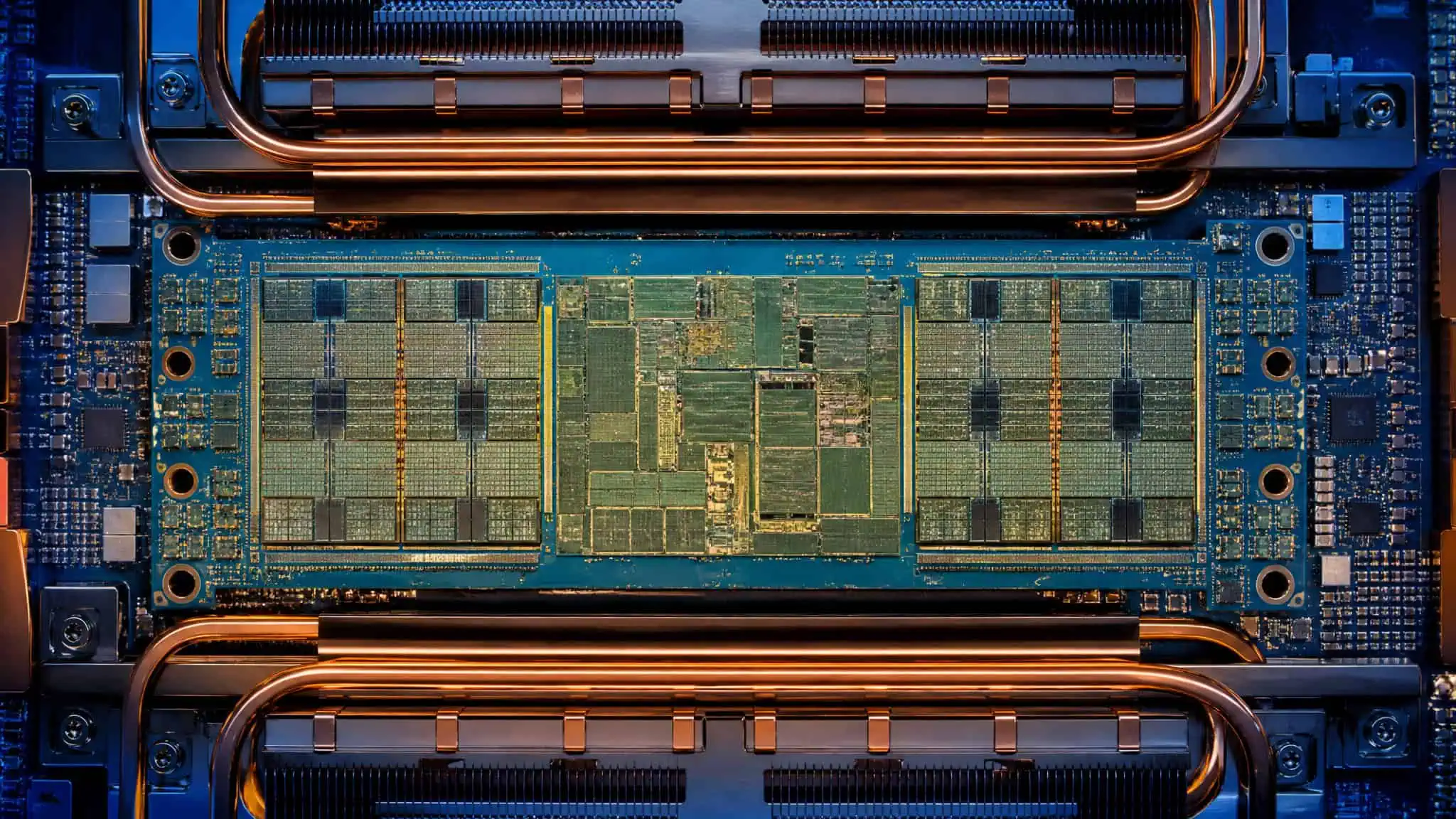
This is where it gets wild. Kuo’s manufacturing report reveals that the M5 Pro and M5 Ultra use a server-grade integrated chips molding design with chips arranged horizontally instead of the stacked approach Apple has used before. The result is a 30 to 50 percent space reduction compared to the M4 Pro and Max design. That’s not a minor shrink. That’s a complete rethinking of how the dies fit together.
The horizontal arrangement also improves heat dissipation, which has been a subtle pain point on the M4 Pro and Max under sustained loads. And here’s the part most coverage misses: the CPU and GPU could become separate modules rather than being fused on the same die. That opens up better optimization possibilities because each module gets its own thermal and power management. It’s a modular approach that Apple has never used in a consumer chip before.
The timeline for these higher-end chips is M5 Pro fabrication in the second half of 2025 and M5 Max fabrication in early 2026, which maps cleanly onto the staggered laptop launches.
M4 MacBook Pro as baseline
If you’re wondering whether the M5 MacBook Pro will support Thunderbolt 5, the answer is yes, and it’s because the M4 Pro and Max already have it. Thunderbolt 5 doubles bi-directional bandwidth to 80Gbps and can push up to 120Gbps uni-directional for video, which is enough for 8K displays or multiple high-res monitors. The M4 generation already ships with DisplayPort 2.1 support over that connection.
M4 chip family from base to Max
The current M4 MacBook Pro starts with a 10-core CPU (4 performance cores, 6 efficiency cores) and a 10-core GPU. Apple claims it’s 1.8 times faster than the M1 in photo editing and 3.4 times faster in Blender rendering, which for creative professionals translates directly to time saved. Base RAM jumped from 8GB to 16GB, with support up to 32GB.
The M4 Pro bumps to a 14-core CPU with 20 GPU cores and 75% more memory bandwidth than the M3 Pro. Apple says that’s double the bandwidth of competing Windows AI chips. The M4 Max tops out at a 16-core CPU, 40 GPU cores, 500GB/s memory bandwidth, and support for up to 128GB of RAM, details confirmed by the Apple silicon M4 Ultra leak macOS 26.7. It’s 3.5 times faster than the M1 Max.
Thunderbolt 5 and connectivity
The real-world example that makes Thunderbolt 5 click is the OWC Envoy Ultra, a bus-powered external SSD that hits over 6,000 MB/s. That’s faster than internal SSDs from a few years ago, and it runs off the laptop’s power with no wall plug. Capacities go up to 4TB. That’s the kind of workflow Thunderbolt 5 unlocks, and the M5 will absolutely inherit it from the M4 generation.
Display, camera, and battery life
The M4 MacBook Pro display hits 1,000 nits for SDR content and peaks at 1,600 nits for HDR. The Nano-Texture option is available on all M4 Pros, which is a godsend if you work in bright environments. The 12MP Center Stage camera tracks you during calls, and Desk View switches from your face to your desktop. Battery life hits 24 hours, which is a 140% boost from the Intel Macs that managed 10 hours. If you’re still on Intel, that’s the upgrade that changes how you work.
Pricing for the current generation starts at $1,599 for the 14-inch base, $1,999 for the M4 Pro, and $3,199 for the M4 Max. M5 pricing will likely land in the same ballpark.
The Mac Pro conundrum
The Mac Pro situation is genuinely confusing, because the evidence points in two directions at once. Here’s what we know.
Field note: Different teams inside Apple appear to be working on conflicting timelines for the Mac Pro, so don’t treat any single report about the macOS 26.7 codename leak as a definitive roadmap.
On one side, AppleInsider and Macworld both report that the Mac Pro was discontinued on March 26, 2026. Mark Gurman reported in November 2025 that Apple has largely written off the Mac Pro and considers the Mac Studio its high-end workstation. The Mac Studio, with M3 Ultra and M4 Max options, is currently the fastest Mac, which officially usurps the Mac Pro’s position. Geekbench 6 tests show the M4 Max beating the M2 Ultra in the Mac Pro. Apple also canceled a high-performance chip that John Gruber believes was a would-be Extreme chip faster than Ultra, reportedly to focus on AI server chip development.
On the other side, internal code confirms Apple is testing an M4 Ultra Mac Pro with up to 512GB of unified memory and Thunderbolt 5. The current M2 Ultra maxes out at 192GB, so that’s a meaningful spec bump. Macworld‘s discovery of that testing code is more than a rumor, and an Apple macOS 26.7 leak new products provides a deep-dive analysis of every hidden hardware hint. Gurman himself previously reported that an M4 Mac Pro could come in the second half of 2025.
So one side says it’s dead, the other side says it’s in active testing. My read is that different teams within Apple are probably working on different timelines, and the Mac Pro’s future depends on whether the modular M5 Ultra architecture pans out for a workstation form factor. Don’t buy or skip one based on a definitive claim either way.
macOS Tahoe features and the Intel phase-out
macOS Tahoe brings a Phone app with Call Screening, an updated Spotlight, and Apple Intelligence features like Live Translation and Genmoji, but all AI features require Apple Silicon.
Liquid Glass and the visual redesign
The Liquid Glass design language brings back translucent interface elements that reflect and refract the background. EveryMac.com compared it to early Mac OS X Aqua but noted it’s less whimsical and complicated. It’s a welcome return to visual depth after years of flat design. It looks good. It doesn’t change how you work.
Apple Intelligence on Mac and the Phone app
The standout practical feature is the Phone app that lets you make and receive calls directly on your Mac, complete with Recents, Contacts, Voicemails, Call Screening, and Hold Assist. EveryMac.com calls Call Screening a standout upgrade-worthy feature, and I’m inclined to agree. There’s also Live Activities from iPhone now showing on your Mac.
Spotlight got its biggest update ever and can now execute actions directly, like sending an email or creating a note, basically a mini command palette. Apple Intelligence expands with Live Translation, Genmoji, Image Playground, and improved Shortcuts with intelligent actions. EveryMac.com notes that Apple Intelligence “makes the Mac more capable, productive, and intelligent than ever.” But here’s the catch: all those AI features are limited to Apple Silicon Macs from M1 onward. Intel Macs get none of it.
Intel Mac phase-out
macOS Tahoe drops support for the 2019 iMac (both 4K and 5K), the 2017 iMac Pro, the 2020 Intel MacBook Air, and the 2018 and 2019 Touch Bar MacBook Pros. If you’re on one of those, you’re stuck on Sequoia. And macOS 27 in autumn 2026 will drop all Intel Macs entirely. Intel users get one final year of OS updates, but no new features, no Apple Intelligence, no security patches after that.
EveryMac.com recommends waiting to wait through at least two or three bug fix releases after the final version before upgrading on mission-critical machines, which is solid advice. Skip the public beta unless you enjoy living dangerously.
Beyond M5. OLED, thinner chassis, and the desktop roadmap
If you’ve been holding out for an OLED MacBook Pro with a thinner chassis, here’s the bad news: that’s an M6 feature, not M5. The M6 Pro and Max MacBook Pro identifiers are already in the pipeline as K114 and K116, and AppleInsider‘s sources confirm they’ll bring the thinner design and OLED display that many have been waiting for.
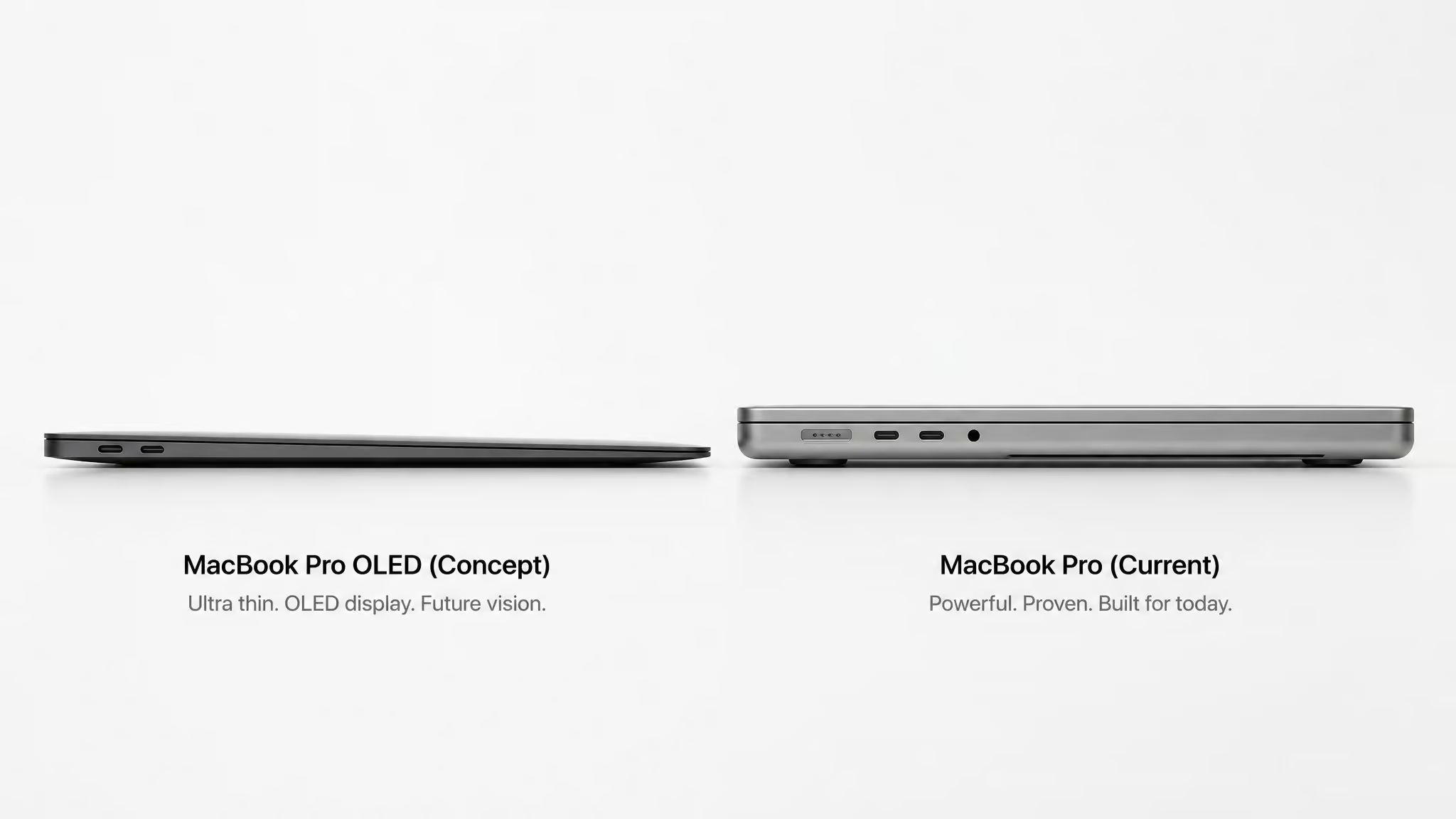
The M5 generation is about internal architecture. The M6 generation is about form factor. If you care about thinness and screen quality above all else, your wait is longer than the M5 cycle.
Desktop users have a clearer timeline. Mac mini identifiers J873s and J873g are in development, along with next-gen Mac Studio identifiers J775c and J775d. The M2 Ultra Mac Studio was announced in June 2023 with macOS 13.4, and AppleInsider‘s analysis suggests the next round of desktops could debut in summer 2026 with macOS 26.4 following that same pattern. There’s also J833ct, possibly an iMac, supported by 26.4. So after the M5 laptop wave finishes in early 2026, Apple looks to coordinate a desktop refresh.
This article is part of a series on the macOS 26.7 leak. Check out the deep-dive analysis of every hidden codename and hardware hint, the breakdown of Apple’s internal version numbering conventions, and the confirmed M4 Ultra and M4 Max configurations being extracted from the leak.
What this leak actually means for your next Mac purchase
So where does that leave you? Here’s the practical framework. Note that no insider reports have provided specific pricing or configuration options for the M5 MacBook Pro yet; the above is based on M4 pricing and typical Apple patterns.
If you’re on an Intel Mac and want Apple Intelligence features, the M5 MacBook Pro is your natural upgrade path. It arrives late 2025, it’s the base model, and the efficiency gains from the N3P node plus Thunderbolt 5 make it a solid generational leap from anything Intel-era. If you need a laptop now, the M4 MacBook Pro is still excellent with Thunderbolt 5 already shipping and performance that blows past any Intel Mac. There’s no shame in buying one today.
If you need more than the base chip and you can wait, the M5 Pro and Max models in early 2026 bring the modular architecture that genuinely changes the thermal and space equation. That’s the interesting upgrade. If you care about OLED and thinness above all else, you’re waiting for M6, which is probably late 2026 or early 2027.
The macOS Tahoe compatibility list covers everything from M1 through M5, plus a few late Intel models that you probably already know whether you’re on. EveryMac.com‘s advice to wait for two or three bug fix releases before upgrading mission-critical machines applies to both the OS and the new hardware. The base M5 MacBook Pro is basically done. The rest follows in sequence. The versions tell the story if you know where to look.
Frequently Asked Questions
Are there any leaks about the 2026 MacBook Pro?
Yes, but not the one you’ve heard about. The supposed macOS 26.7 leak doesn’t exist in any credible source. The real leaks show staggered M5 MacBook Pro models: a base M5 model (J704) shipping late 2025, and M5 Pro/Max models (J714/J716) arriving early 2026, each tied to specific macOS version numbers like 26.0.2 and 26.3.
Why is the Mac Pro being discontinued?
The evidence is conflicting. Some reports say the Mac Pro was discontinued in March 2026, with Apple considering the Mac Studio its high-end workstation. But internal code shows Apple is testing an M4 Ultra Mac Pro with up to 512GB of memory. Different teams inside Apple appear to be working on conflicting timelines, so the Mac Pro’s future depends on whether the modular M5 Ultra architecture works for a workstation form factor.