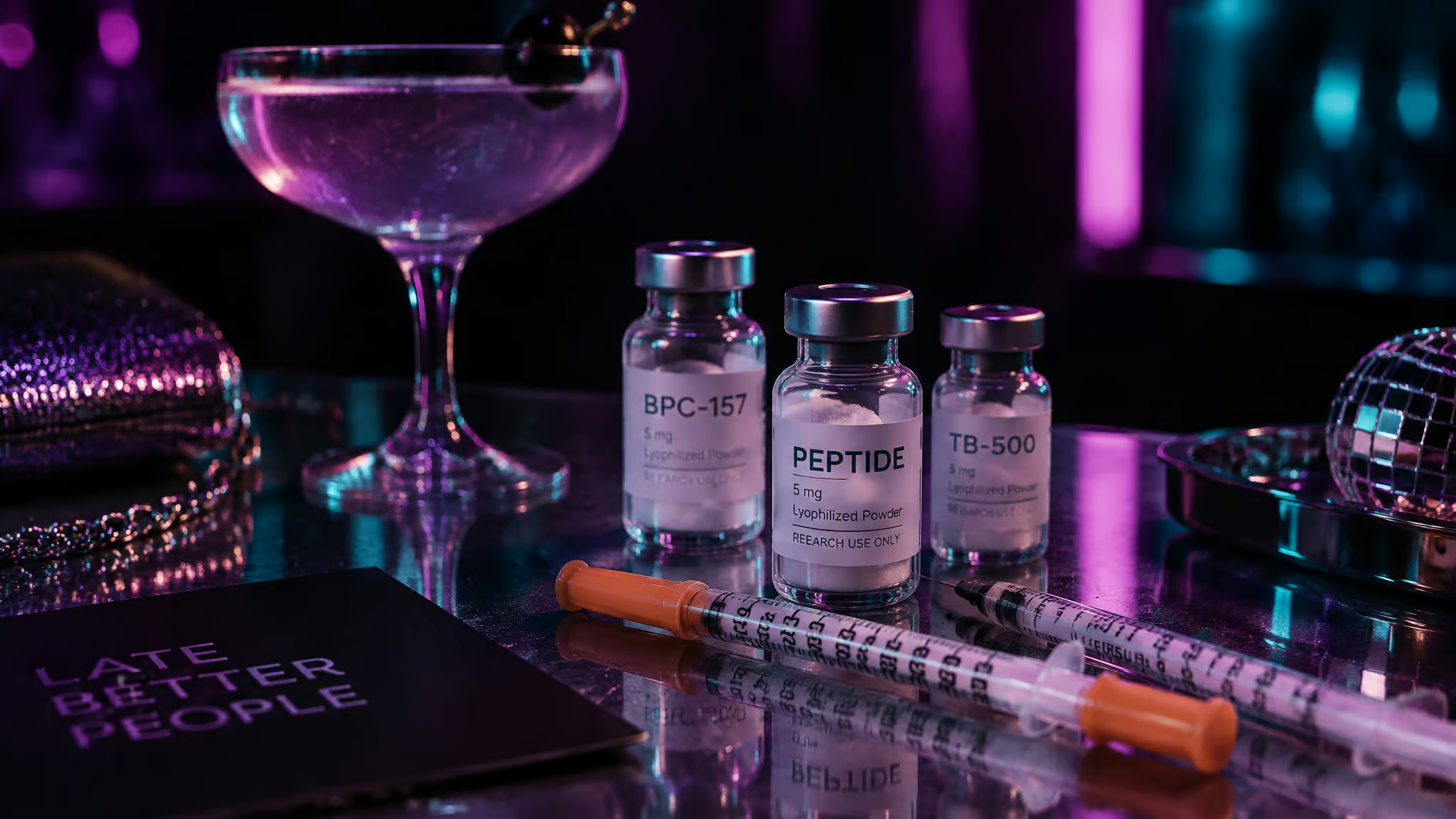
A typical tech mixer gives you warm sparkling water, a QR-code badge, and somebody pitching an AI wrapper by the snack table. Peptide parties swap the bar cart for insulin syringes and vials of gray-market powder. Reported across Forbes India, the Times of India, and The Infographics Show, these invite-only gatherings cap their guest lists and pair music, food, games, and networking with “peptide tastings,” “peptide mocktails,” and live self-injection of experimental compounds passed around like dinner-party recipes. The format grew out of San Francisco tech and longevity circles, where biohacking gets treated like a competitive lifestyle sport pitched on promises of better skin, faster recovery, weight loss, and longer life.
Two documented events show how fast the scene escaped its initial bubble: a cyberpunk peptide rave at San Francisco’s Frontier Tower and an August 29 event in Bengaluru promoted by Upsurge Labs LLP that regulators shut down before the doors opened. What actually happens inside these rooms, why people bypass doctors to inject unapproved molecules, and whether any of it is safe or legal comes down to biology, gray-market supply chains, and patent math.
Key Takeaways
Peptide parties are invite-only biohacking mixers that pair music, networking, and “peptide tastings” with the live self-injection of unregulated compounds, ranging from San Francisco’s Frontier Tower rave to a cancelled August 29 event in Koramangala, Bengaluru.
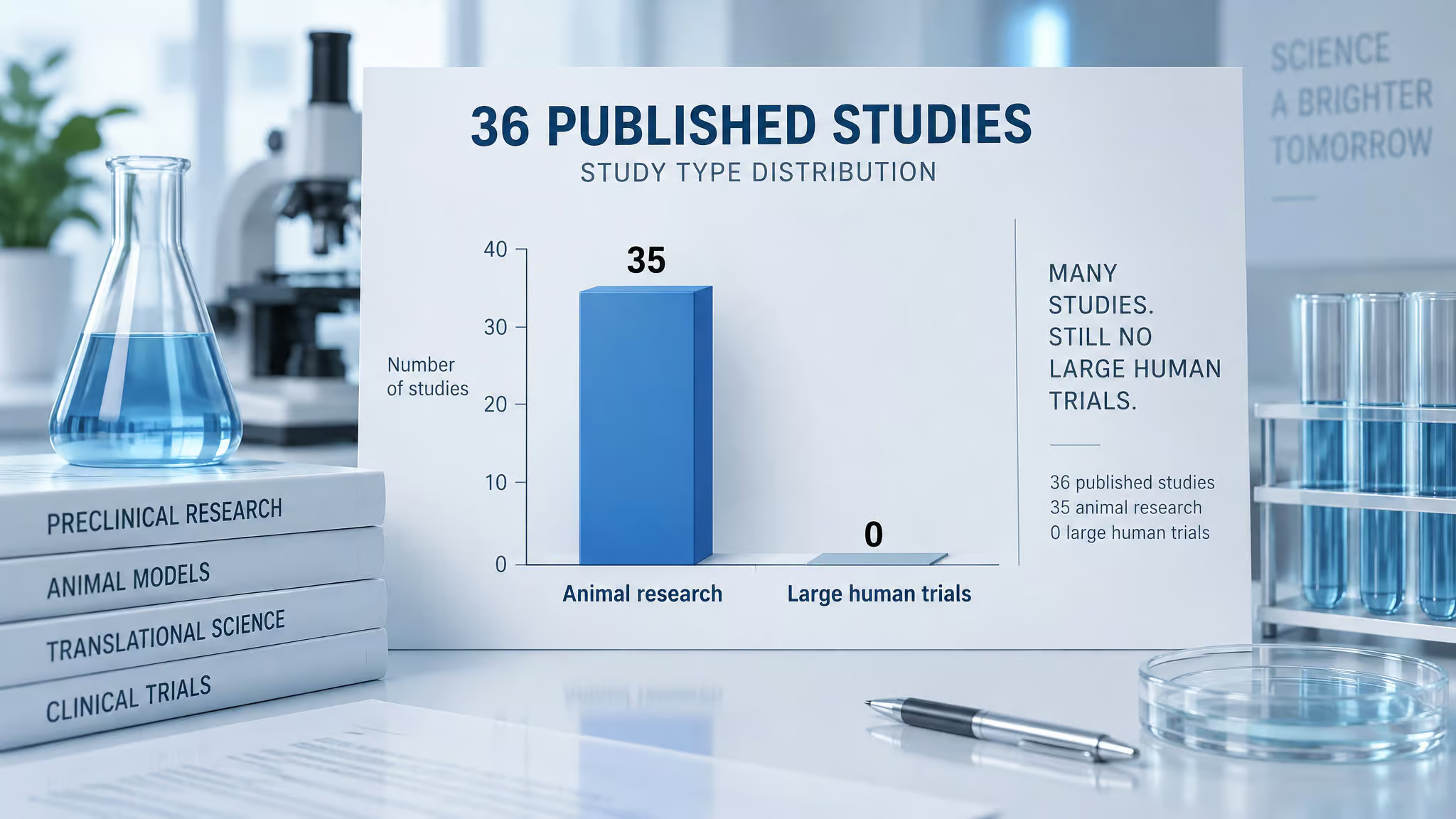
Clinical data doesn’t back the scene’s favorite healing stack: a review of BPC-157 research through 2024 found that 35 of 36 published studies were conducted in animals, with only three small human pilot studies, while lab tests of gray-market vials found 20% to 60% contained incorrect amino acid sequences.
Following the Food and Drug Administration’s late-2023 compounding ban on 19 peptides and a February 27, 2026 proposal by HHS Secretary Robert F. Kennedy, Jr. to re-legalize 14 of them, buyers mostly rely on “Research Use Only” disclaimers and a Chinese supply chain that reached $328 million in U.S. imports during the first three quarters of 2025.
Table of Contents
What are peptide parties?
Peptide parties, also known as peptide raves, are invite-only social wellness and biohacking gatherings centered on peptides rather than cocktails, where capped guest lists pair music, food, games, and networking with peptide tastings, peptide mocktails, and the self-injection of unregulated gray-market compounds passed around like dinner-party recipes. Born in San Francisco tech and longevity circles where biohacking is a lifestyle sport, these events blend the mechanics of a standard mixer with experimental dosing protocols pitched on better skin, faster recovery, weight loss, and longevity. When Upsurge Labs LLP promoted India’s first Peptide Party for August 29 in Koramangala, Bengaluru with advertised peptide tastings, the Karnataka Food Safety and Drug Administration (FSDA) stepped in, demanding details on the preparations’ contents, origin, legal approval, claims, and whether they’d be administered to participants, and forced its cancellation.
- Format: Invite-only guest lists combining food, music, and networking with “peptide tastings” and “peptide mocktails.”
- Pitch: Faster injury recovery, fat loss, sharper skin texture, and longevity.
- Backroom mechanics: Unsupervised self-injection of gray-market vials swapped among guests.
That regulatory collision highlights the split inside the format. On the surface, hosts pitch a polished wellness lounge with mocktails and longevity talk. In informal, unregulated pockets of the scene, guests pull out syringes, self-inject gray-market compounds in group settings, and swap new molecular finds like recipes at a dinner party. Instead of trading tasting notes on a Pinot Noir, attendees trade reconstitution ratios after the Karnataka FSDA demanded to know the Bengaluru preparations’ exact contents, origin, legal approval, health claims, and whether they would be injected into guests.
What is a peptide, and which ones are actual medicine
As Scientific American detailed in an April 18, 2026 report, a peptide is a short chain of two or more amino acids (the building blocks of proteins) that occurs naturally in the human body to act as a signaling molecule in hormone signaling, metabolism, tissue repair, and immune responses. At GeekExtreme, we usually look past marketing buzzwords to inspect the underlying architecture, and the architecture here splits cleanly between proven prescription drugs and mystery vials.
Legitimate, FDA-approved peptide medicines include insulin, human growth hormone, and semaglutide, the active ingredient in GLP-1 drugs like Ozempic and Wegovy approved for type 2 diabetes and weight loss. Dermatologists also rely on tested topical peptide formulations to stimulate collagen and elastin for fine lines and skin texture, while Indian pharmaceutical companies have begun building dedicated peptide research facilities to meet global clinical demand.
As Dr. Nidhi Malhotra, Director of Endocrinology and Diabetes at Medanta Noida, points out, “peptide” is a broad biological category rather than a single drug. Having established uses in diabetes, obesity, and hormonal disorders doesn’t validate experimental or inadequately studied compounds like BPC-157, TB-500, and KPV when they’re packaged as lifestyle upgrades for anti-aging, rapid fat loss, muscle gain, or longevity; the real hazard is injecting a substance to alter hormones, metabolism, or muscle growth without knowing if it’s approved, properly manufactured, accurately dosed, or clinically proven.
Inside a peptide rave: what actually happens
A peptide rave is an underground biohacking event where attendees mix standard nightlife with live DIY pharmacology, ranging from hands-on vial reconstitution to group self-injection. Rather than just handing out promotional drink tickets, these gatherings walk guests through preparing and administering unregulated compounds alongside music and socializing. According to the Kovagen research peptide shop, “Research peptides are supplied as lyophilized powder; accessories are described on their product pages.” At a peptide rave held inside San Francisco’s Frontier Tower, organizers paired a techno DJ and chemistry structures projected on the walls with a mix-your-own-peptides workshop and live instruction showing attendees how to draw their own blood.
The Frontier Tower format
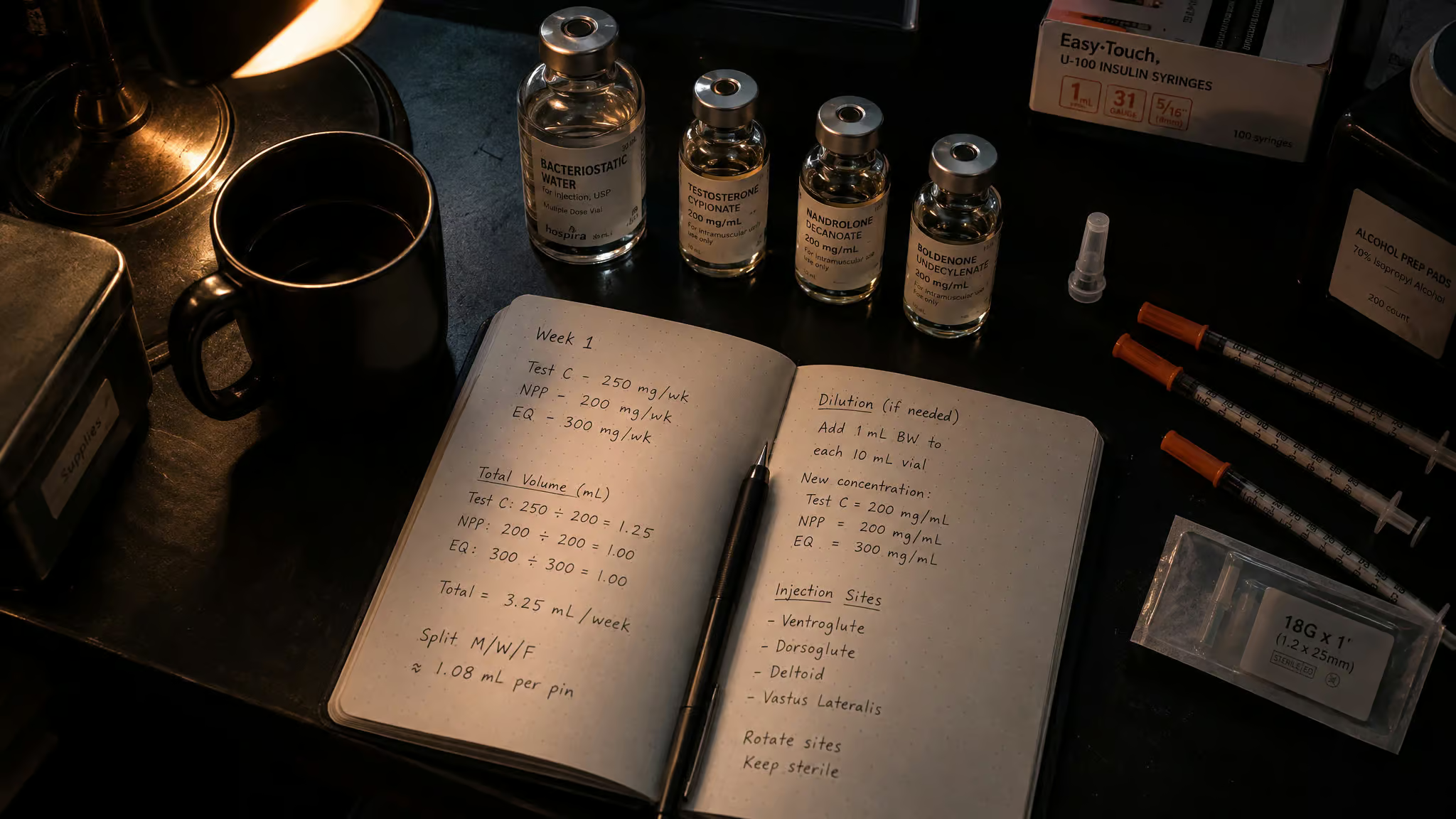
The Frontier Tower event enforced a “crazy futuristic cyberpunk attire” dress code, turning self-experimentation into a spectator sport. Some of these raves are directly sponsored by peptide suppliers. Instead of a bartender pouring shots, a typical mid-party table setup holds lyophilized (freeze-dried) peptide vials, bottles of bacteriostatic water, and insulin syringes so veterans can walk newcomers through reconstituting powder into injectable liquid.
Group injections and stack talk
Once the vials are mixed, attendees dose together while comparing stacks and recent bloodwork panels. Users log their shots in the Peptide Tracker app like a daily habit tracker and coordinate protocols across Reddit threads and Discord servers without medical oversight. At a Manhattan biohacker meetup, a tech investor who had been microdosing peptides since 2018 described the weekly group injection ritual:
“Each week someone will bring something new, and everyone will inject it… it looks like a bunch of heroin addicts”
Outside the raves, the same casual sourcing shows up in clinics. One Washington, D.C. patient brought a Trader Joe’s fridge bag stuffed with syringes to her medical appointment. Her doctor initially assumed they were prescription GLP-1s, but the bag held a three-month supply of a “Wolverine Stack” she had ordered online for “oodles of money” to treat a torn rotator cuff, injecting it daily because, as she told her physician, her trainer swore by it and everyone was using them.
Where the format came from: Cold War labs to Ozempic
Peptide parties originated in San Francisco tech and longevity circles after the mainstream breakthrough of GLP-1 weight-loss drugs around 2022 normalized self-injection and turned Cold War and gym-floor compounds into a status symbol. What started as state-sponsored military research and underground bodybuilding experimentation crossed into software and venture-capital social life once weekly shots became routine. By the time attendee Jayden Clark left a San Francisco party on July 4, 2025, he posted virally on X that the elites all had a Chinese peptide dealer.
Khavinson and the bodybuilding prehistory
The molecular paper trail goes back to 1973, when the USSR Ministry of Defence tasked military physician Vladimir Khavinson with treating prematurely aging soldiers, including submariners, missile operators, and fighter pilots. According to The Infographics Show, Khavinson published 775 papers, filed 196 patents, treated cosmonauts and Chernobyl survivors, and later served as Vladimir Putin’s personal anti-aging doctor before dying in 2024 at age 77, though Cold War isolation meant his work was rarely replicated in the West. In the 1990s, Western bodybuilders picked up peptides to trigger the pituitary gland and manipulate growth hormone, relying on gym-floor word of mouth as their peer review.
The 2022 GLP-1 tipping point
University of Lincoln researcher Luke Turnock places the cultural tipping point around 2022, when GLP-1 receptor agonists like Ozempic blew up for weight loss. Because semaglutide is itself a peptide, its success created a massive halo effect: it normalized needles at home and convinced biohackers that dozens of untested peptides could work similar magic for sleep, recovery, libido, or aging. Online infrastructure scaled the trend fast. The r/peptides subreddit draws more than 70,000 weekly visitors, r/biohackers has more than 600,000 members, and TikTok is packed with creators sharing combinations of injections people take to meet their personal goals, from muscle-building and exercise recovery to increased brainpower or a better tan.
Why parties instead of doctors
Anyone tempted to inject peptides at parties or through gray-market networks should pause and get a proper medical assessment instead, even though people skip seeing a doctor because conventional treatments for slow-healing injuries are expensive and painful and a growing “health autonomy” mindset frames cautious physicians as gatekeepers. University of Utah sports medicine specialist Dan Cushman notes that tendon injuries heal frustratingly slowly under standard clinical care, pushing impatient patients to experiment with underground vials. Turnock connects this behavior to a broader cultural shift where users believe “that doctors, if they’re not prescribing what you ask for or they’re not offering you these solutions, are acting as a barrier to your good health.” Linguistic rebranding makes the jump easier.
As Turnock and researcher Flynn McGuire explain, buyers strongly prefer the word “peptides” over “drugs” because “drug” carries the stigma of banned bodybuilding steroids, whereas “peptides” sounds body-native and benign. McGuire points out that users assume a natural origin makes a substance safer or different, even though they’re just drugs, turning “peptide” into a cozy catchall for any chemical taken for energy, recovery, or longevity. Dr. Himika Chawla at PSRI Hospital warns that pitching biologically active substances as quick fixes blurs the boundary between lifestyle wellness and medicine, and Dr. Malhotra adds that influencer or athlete popularity proves nothing about safety when partygoers treat compounds that alter hormones, metabolism, or appetite like casual supplements.
What’s in the vials: stacks and the party menu
Attendees at peptide parties typically inject unstudied combinations called “stacks,” layering multiple unregulated healing, cosmetic, growth-hormone, or metabolic peptides that target different biological systems at anecdotal doses. Instead of running a single compound, users chain vials together like software dependencies without knowing how the molecules interact.
The Wolverine stack
The signature injury protocol is the “Wolverine” stack, named after the rapidly healing X-Men mutant. It pairs BPC-157 with TB-500 injections to target torn tendons and sore joints. While BPC-157 dominates forum talk, TB-500 is an immune-compound mimic claimed to promote tissue repair that has even less published research behind it.
The glow/KLOW stack and the GHK-Cu irony
For cosmetic and anti-inflammatory upgrades, users run the “glow” or “KLOW” stack, which layers GHK-Cu and KPV right on top of the Wolverine stack. KPV is derived from a naturally occurring hormone and is claimed (though not clinically proven) to reduce inflammation. GHK-Cu, a copper peptide found in human blood plasma and profiled in Vogue for wound healing, decreased scarring, and collagen regeneration, shows how fast the scene crosses regulatory lines: the FDA approves GHK-Cu as a topical anti-aging cosmetic ingredient in face creams, yet bans it as an injectable over safety risks including immune reactions triggered by manufacturing impurities.
Growth hormone and the exotic end of the menu
Other popular vials include ipamorelin and CJC-1295, advertised as growth hormone releasers despite thin clinical evidence; some users stack ipamorelin with GLP-1 drugs to burn fat while building muscle, an unstudied combination. The broader menu gets weirder: biohackers circulate Epitalon for sleep, gray-market retatrutide (a weight-loss drug that remained in Phase 3 clinical trials in 2026), and microdosed oxytocin, which an OpenAI researcher publicly dubbed “Ozempic for autism” while Silicon Valley engineers inject it hoping to make better eye contact.
The evidence problem, quantified
No, BPC-157 doesn’t have solid clinical evidence showing it works in humans, because the overwhelming majority of published research consists of rodent experiments rather than human clinical trials. While forum anecdotes treat the compound like a guaranteed tendon patch, the peer-reviewed literature is paper-thin and heavily concentrated in a single European research group. In a comprehensive review of BPC-157 literature published through 2024, Flynn McGuire, Dan Cushman, and their colleagues audited every available study and found almost no human data.
- Total published BPC-157 studies through 2024: 36
- Animal-only studies (primarily rodents): 35 (mostly produced by the single Croatian lab that discovered the molecule)
- Small human pilot studies: 3
- Completed, published large-scale human clinical trials: 0 (a human trial initiated in 2015 was quietly canceled in 2016 without publishing results)
The molecule’s backstory explains why those numbers look so lopsided. In the early 1990s, Croatian researcher Predrag Sikiric at the University of Zagreb isolated a 15-amino-acid chain from human gastric juice and named it Body Protection Compound 157 (BPC-157). Sikiric’s rat studies reported complete healing of severed tendons, ligaments, gut tissue, and muscle, inspiring biohackers to dub it the “Wolverine Peptide.” Yet when a formal human clinical trial finally launched in 2015, it was quietly scrapped in 2016 and the data never saw daylight.
That vacuum got filled by celebrity testimonials rather than clinical trials, most notably when podcaster Joe Rogan claimed on his show that BPC-157 cleared tendonitis in two weeks, telling millions of listeners, “I had tendonitis in my elbow, I started using BPC-157, and it was gone in two weeks.”
Gwyneth Paltrow similarly praised peptide shots as one of her biggest wellness tools, while Hailey Bieber built an entire skincare brand around topical peptides. Dr. Eric Topol, director of the Scripps Research Translational Institute, called the broader peptide craze “unfounded,” and medical misinformation researchers point out that enthusiasts are extrapolating from one genuinely proven class (GLP-1s) to dozens of untested compounds while mistaking podcast anecdotes for controlled data.
Worse, the proposed biological mechanism carries a built-in catch. BPC-157 and TB-500 are promoted for cell growth, muscle repair, inflammation pathways, and blood vessel formation. If they work at all in humans, they appear to do so by driving angiogenesis, the growth of new blood vessels. Angiogenesis is the exact same physiological mechanism that feeds and accelerates tumor growth, creating a plausible, completely unstudied cancer risk every time someone injects a healing stack.
Are peptide parties safe? What could actually go wrong
No, peptide parties aren’t safe, because attendees are injecting unapproved gray-market compounds that frequently fail basic molecular quality control and carry severe contamination, dosing, and biological hazards in unsupervised settings. No public base-rate data tracks how often peptide party attendees are injured, so the clearest risk picture comes from laboratory audits of gray-market vials generally and documented individual cases. Across multiple studies of tested gray-market peptides, between 20% and 60% of vials contained the wrong amino acid sequences, alongside samples that violated endotoxin safety thresholds.
- Wrong molecular build: 20% to 60% of tested gray-market peptide vials contained incorrect amino acid sequences.
- Bacterial endotoxins: Tested samples exceeded safety thresholds for endotoxins, which can trigger severe fever and immune shock even when chemical purity looks high.
- Heavy metal byproducts: Laboratory analyses uncovered lead, arsenic, and mercury left behind from sloppy synthesis.
- Unsupervised injection hazards: Clinicians Dr. Nidhi Malhotra, Dr. Himika Chawla, Dr. Richa Chaturvedi (Indraprastha Apollo Hospital, Delhi), and Dr. Glory Khankar warn that casual non-medical injection risks skin and systemic infections, allergic reactions, drug interactions, and organ stress, noting that peptides should never replace proven treatments or be used casually for anti-aging, weight loss, muscle building, or recovery.
- Reconstitution math errors: Because vials ship as freeze-dried powder, users have to mix bacteriostatic water and calculate microgram concentrations by hand.
Contamination and the purity trap
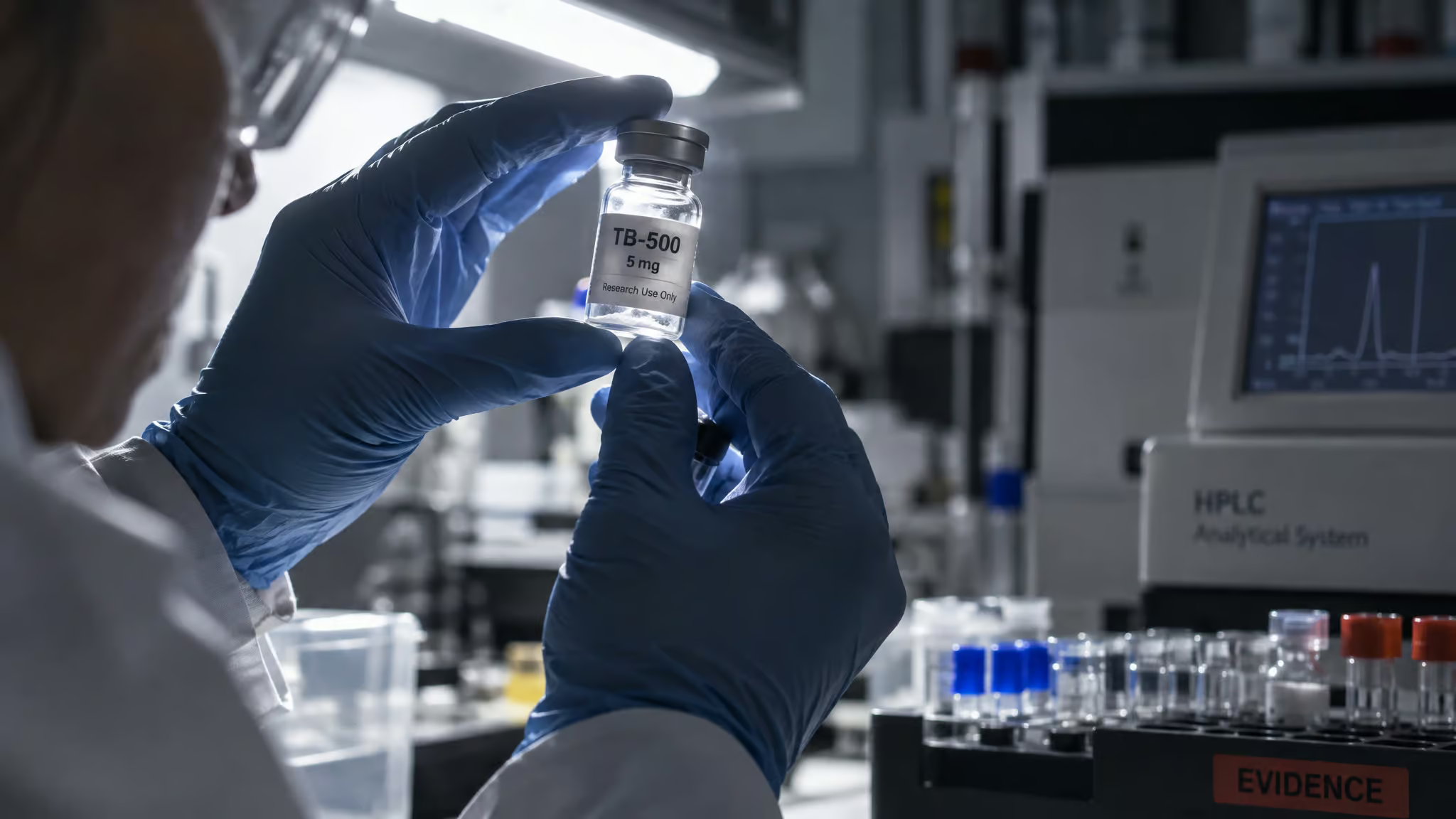
Orthopedic surgeon Omar Rahman at Pacific Coast Sports Medicine in Los Angeles, who has fielded a surge of patient peptide questions driven by longevity trends, warns that sourcing across online vendors, wellness clinics, and compounding pharmacies creates massive swings in purity, dosing consistency, and quality control. Even a lab sheet claiming “99% purity” is a trap: chemical purity only measures how much of the peptide powder matches the target molecule, meaning a 99%-pure vial can still be biologically unsafe because of bacterial endotoxins, non-sterile handling, or heat degradation during shipping.
The model-citizen failure: Brooke Bowman
Even meticulous harm-reduction protocols fail when the underlying supply and math are DIY. Take Brooke Bowman, the 38-year-old CEO of Vibecamp, who got clean from heroin in 2020 and approached biohacking like a disciplined systems engineer. She logged every shot in the Peptide Tracker app, tracked her sleep and heart rate on wearables, ran regular bloodwork panels, took BPC-157 and TB-500 for chronic fatigue, and added Phase 3 pipeline drug retatrutide for cognitive benefits and to quit vaping.
While reconstituting a vial, Bowman accidentally doubled her dose. Her resting heart rate jumped by 10 beats per minute and her hair started falling out within a month. Even after that scare, she planned to keep going, with another shipment from China already in transit.
The gray market’s shadow FDA: crowdfunded lab testing
To dodge bad batches, online peptide buyer communities run their own shadow quality-control network by crowdfunding independent laboratory tests at Janoshik Analytical in the Czech Republic and Finnrick in Texas. Instead of trusting a seller’s PDF, forum and Discord groups pool money, mail blind vials to Prague or Texas, and post the assay readouts publicly; vendors that pass get recommended on community spreadsheets, while vendors that fail get publicly “dragged.”
The workaround exists because vendor-supplied Certificates of Analysis (CoAs) are trivially easy to photoshop and routinely faked. Yet even legitimate crowdfunded lab tests have a massive structural blind spot. Standard chemical assays verify the amino acid identity and mass of a single sample vial, but they tell buyers nothing about whether the rest of the batch is sterile, whether bacterial endotoxins are lurking in the powder, or whether the vials degraded inside a hot shipping container on the way to the user’s fridge.
The legal gray zone: Research Use Only, the 2023 ban, and the 2026 reversal
Yes, under U.S. federal law, selling BPC-157 is technically legal as long as it’s marketed for laboratory research, even though the Food and Drug Administration banned compounding pharmacies from making it and 18 other popular peptides in late 2023 before federal leadership proposed reversing course on 14 of them in early 2026. That regulatory whiplash explains why gray-market storefronts operate in plain sight while licensed pharmacies were locked out. After putting 19 peptides on its Category 2 bulk drug substances list in late 2023 over safety risks, the government pivoted on February 27, 2026, when Health and Human Services (HHS) Secretary Robert F. Kennedy, Jr. appeared on The Joe Rogan Experience and proposed re-legalizing compounding for 14 of those restricted molecules.
The Research Use Only liability shield
Online peptide shops survive by plastering “Research Use Only,” “Not for human use,” and “Not intended to diagnose, treat, cure, or prevent any disease” right next to the checkout button. Both vendor and buyer understand this is a legal fiction. The disclaimer functions as a liability shield that transfers 100% of the legal and medical risk onto the customer the moment they load a syringe.
The ban-then-reversal whiplash
When the FDA moved 19 peptides (including BPC-157, GHK-Cu, KPV, ipamorelin, and TB-500) to Category 2 in late 2023, it cited insufficient safety data, immunogenicity concerns, and manufacturing quality issues. Critics argue that the ban backfired by shutting down the one supervised channel, licensed U.S. compounding pharmacies with sterility testing and doctor oversight, and pushing buyers into WhatsApp groups and factories in Guangdong Province, China.
Arguing that domestically compounded peptides would be safer than foreign imports, Kennedy proposed moving 14 peptides back toward Category 1, and the FDA released plans for a July 2026 meeting with independent advisers to evaluate whether U.S. pharmacies should manufacture peptides including BPC-157, TB-500, and KPV. Still, the FDA doesn’t approve or review compounded drugs; it only monitors the active ingredients facilities use. As an HHS spokesperson told Scientific American, Americans deserve proven-safe drugs and the agency’s goal remains FDA-approved medicines or licensed U.S. pharmacy products when approved drugs don’t exist, meaning easier compounding never equals clinical proof.
The supply chain behind the vials
Buying gray-market peptides from China exposes users to uninspected factory synthesis and two-week unrefrigerated cargo transit, driven by an roughly 800% price markup between Chinese wholesalers and U.S. pharmacies or wellness clinics. U.S. Customs data shows that U.S. imports of hormone and peptide compounds from China doubled to $328 million in the first three quarters of 2025, up from $164 million in the same period a year earlier, with true volume likely higher due to misdeclared parcels.
To slip past checks, vendors disguise vials in cosmetics packaging or bulk-ship boxes to U.S. addresses where reshippers slap on domestic USPS labels. Because U.S. Customs and Border Protection (CBP) enforcement on personal-quantity imports is essentially nonexistent, a buyer’s real risk is injecting degraded or contaminated powder rather than getting arrested.
The price spread explains the gamble. An undercover journalist found a seller on RedNote showing off refrigerators of color-coded peptide vials who moved the chat to WhatsApp with a ten-vial minimum order: ten vials of tirzepatide cost about $48 plus $60 shipping, compared to Eli Lilly’s $399-per-month U.S. pharmacy price for Zepbound. Asked if they knew Western buyers were injecting the research powders, a Chinese factory operator answered, “Yes.”
Domestic wellness clinics charge $350 to $600 per peptide protocol per session, and retail pharmacies charge $399 a month for Eli Lilly’s Zepbound, roughly an 800% markup over buying ten vials of tirzepatide online from Chinese sellers for about $48 plus $60 shipping, while influencer Gary Brecka (the self-styled “Ultimate Human”) sells a “$350 CJC-1295 and Ipamorelin stack” on his website pitched at “Individuals incorporating peptide support into structured recovery, training, or wellness protocols who want a synergistic dual-peptide option that supports hormone signaling pathways and tissue maintenance.” San Francisco concierge physician Dr. Paul Abramson summed up the offshore procurement reality: wiring money to an unregistered overseas seller based on a slick pitch is nothing like funding a scrappy startup.
When a party meets the regulator: the Bengaluru case
Treat the cancelled August 29 Bengaluru “Peptide Party” promoted by Upsurge Labs LLP as a cautionary tale before hosting or attending unlicensed peptide events: a probe by the Karnataka Food Safety and Drug Administration (FSDA) shut the Koramangala gathering down and uncovered Rs 1.43 crore in expired food, misbranded goods, and unlicensed drugs across five retail dark stores and warehouses, including Amazon facilities storing over Rs 4 lakh in unlicensed drugs. After prominent podcasters and biohackers turned peptide stacks into dinner-table talk among tech founders, Bengaluru, India’s optimization-obsessed tech hub, became the natural first international stop for the San Francisco party format. When Upsurge Labs advertised its invite-only Koramangala mixer featuring “peptide tastings,” the FSDA demanded documentation on the preparations’ contents, origin, legal approval, claims, and administration routes, killing the event.
Paperwork from that inquiry led investigators straight into the local quick-commerce supply chain. Acting under food safety laws and the Drugs and Cosmetics Act, 1940, officials raided five dark stores, warehouses, and retail units across Bengaluru Urban and Rural districts.
Health minister U. T. Khader confirmed that the party organizers had tried to source pharmaceuticals and nutrients from Amazon dark stores. At a single Devanahalli Amazon facility, inspectors found Rs 14 lakh in misbranded items, Rs 10 lakh in expired stock, and over Rs 2 lakh in unlicensed drugs (with over Rs 4 lakh in unlicensed drugs uncovered across Amazon facilities in total), alongside mislabelled goods at an Anekal taluk Amazon warehouse and an unhygienic Hoskote dark store that authorities shut down completely.
Who’s in the room: from CEOs to teenage bedrooms
Peptide adoption has diffused from Silicon Valley executives down to service workers and teenagers, prompting New York and New Jersey to ban the sale of peptides and performance-enhancing compounds to minors. While a San Francisco supplier noted that adoption moves from CEOs to CTOs to COOs (with biopharma workers staying reserved out of deference to the FDA) until his average customer looked closer to a Starbucks barista, peptide use is growing especially popular among youngsters and teenagers, who were already buying them freely, at scale, from vendors who asked zero questions, largely because peptides are much cheaper than other longevity products on the market. On the forum looksmaxxing.com, a thread asking “Would you guys recommend peptides for someone 17?” drew a reply from a power user with over 2,000 posts and 4,000 reputation points saying they were 16, on peptides, and would recommend them, a trend dermatologist Dr. Glory Khankar warns can disrupt teenagers’ already-high natural growth hormone production and cause long-term metabolic harm.
Why these molecules sit in limbo, and where it ends
Naturally occurring peptides like BPC-157 and TB-500 sit in permanent legal purgatory because body-native molecules can’t be patented, leaving pharmaceutical companies no financial incentive to fund FDA trials until they can patent modified synthetic analogs. Drug approval costs tens of millions to several billion dollars, an investment companies recoup through a 20-year patent exclusivity window that doesn’t apply to a natural stomach-protein fragment, leaving law-abiding patients with fewer legal options than online buyers. With the legal global peptide therapeutics market projected to double to $294.6 billion by 2033, pharma companies are expected to patent modified analogs and new delivery formulations priced around $400 a month for 20 years, turning millions of underground self-experimenters into an unpaid, uncontrolled clinical trial system.
The bottom line: proven medicine vs. party vial
Choosing between a legitimate peptide therapy and a peptide party vial comes down to whether the specific molecule in the syringe is FDA-approved, manufactured under pharmaceutical quality controls, accurately dosed, and backed by human clinical trials rather than whether it carries the word “peptide” on the label. Proven peptide medicines like insulin and prescription GLP-1s clear all four bars: they have known human efficacy, sterile production pipelines, exact microgram dosing, and physician oversight.
Attending a peptide party is a bad idea because while legitimate peptide medicines exist for diabetes, obesity, and hormonal disorders, a gray-market party vial fails all four bars, carrying a 20% to 60% risk of wrong amino acid sequences, potential endotoxin or heavy-metal contamination, and zero completed large-scale human trials for staples like BPC-157. As physicians Dr. Himika Chawla and Dr. Nidhi Malhotra warn, packaging inadequately studied compounds as lifestyle upgrades blurs the line between wellness and medicine: injecting pharmacologically active substances to alter hormones, metabolism, appetite, or muscle growth is a medical intervention, not a casual wellness choice, and as Brooke Bowman’s doubled-dose injury proved, logging shots in a habit tracker and running personal bloodwork can’t turn an unverified powder from a WhatsApp vendor into a supervised medical treatment.
Still, cultural momentum rarely waits for peer review. As University of Utah specialist Dan Cushman predicts, if peptides become easier to access in the U.S., people will simply start trying them regardless of the clinical data, meaning the public will experience both the real-world benefits and the biological perils long before scientists finish quantifying either in the clinic.
Frequently Asked Questions
What are peptide parties?
Peptide parties are invite-only biohacking mixers where a capped guest list pairs food, music, and networking with “peptide tastings,” mocktails, and the unsupervised self-injection of experimental compounds. Attendees treat gray-market powders like dinner-party recipes, swapping vials and dosing ratios in hopes of faster injury recovery, fat loss, better skin, and longevity. While hosts pitch a polished wellness lounge on the surface, the backroom reality involves group injections of unapproved molecules.
What happens at a peptide party injection meetup?
Instead of lining up at an open bar, guests gather around tables stocked with freeze-dried peptide vials, bacteriostatic water, and insulin syringes so experienced users can teach newcomers how to mix injectable liquids by hand. At events like the cyberpunk-themed rave at San Francisco’s Frontier Tower, organizers paired a techno DJ with DIY peptide-mixing workshops and live lessons on drawing your own blood. Attendees inject together, compare bloodwork panels, and log their shots in the Peptide Tracker app without a doctor in sight.
Where did peptide parties start in San Francisco biohacking?
The meetup format took shape in San Francisco tech, venture-capital, and longevity circles after the 2022 boom in GLP-1 weight-loss drugs like Ozempic made at-home needle injections feel normal. Biohackers took compounds with roots in 1973 Soviet military experiments and 1990s bodybuilding gyms and turned them into a Silicon Valley status symbol. From there, the scene spread to Manhattan meetups and an August 29 event in Koramangala, Bengaluru that local regulators shut down before it could open.
Is it legal to inject gray market peptides like BPC-157?
Under U.S. federal law, vendors can legally sell unapproved peptides like BPC-157 only by labeling them “Research Use Only” and “Not for human use.” That checkout disclaimer is a legal fiction designed to shift 100% of the medical and legal liability onto the buyer the second they load a syringe. U.S. Customs rarely polices personal-quantity shipments from overseas, meaning your biggest immediate risk is injecting degraded or contaminated powder rather than getting arrested.
