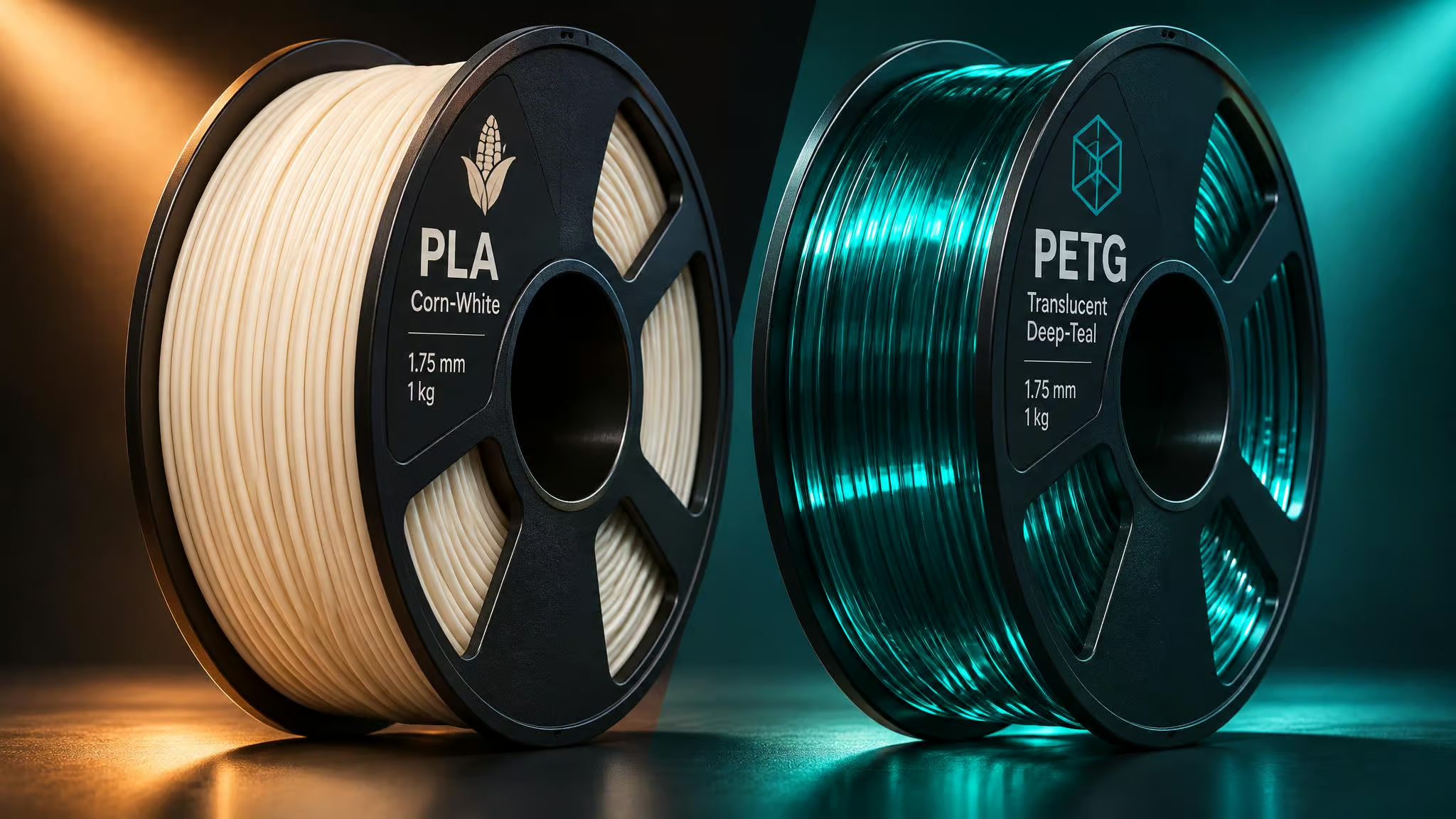
Two spools sit in your shopping cart, one labeled PLA and the other PETG, and the browser tabs open behind them can’t agree on which one belongs on your printer first. Half the forum threads insist PETG is the tougher, more grown-up plastic that makes PLA obsolete, while the other half warn that starting with PETG is a fast track to a week spent scraping stringy blobs off a chewed-up build plate. Even the spec tables on filament product pages contradict each other, listing tensile numbers that flip the winner depending on whose chart you read.
Getting that first spool right decides whether your first week with a 3D printer builds momentum or turns into a troubleshooting marathon. Same-printer mechanical testing, oven heat trials, and stock-hotend print profiles cut through the folklore, and they reveal a surprise right at the start: the most repeated claim in beginner threads, that PETG is simply stronger than PLA, fails when both filaments are printed and pulled on the exact same machine.
Key Takeaways
PLA beats PETG in controlled same-printer tensile testing at 59.9 MPa versus 54.9 MPa and prints more reliably on stock hardware, making PLA the better first spool for beginners before stepping up to PETG for heat, sun, or flexing parts.
All 14 guides and comparisons we checked that give a yes-or-no verdict say PETG is more impact-resistant than PLA, yet among 11 forum posters reporting their own experience, 6 say PETG prints broke more easily on them because PETG’s toughness drops under sudden shock loads.
Standard PLA softens at 60°C and fails at 65°C in oven testing compared to PETG’s 80°C softening point and 85°C failure point, though annealed glass-fiber high-temp PLA pushes heat deflection to 114.7°C while losing flame resistance.
Table of contents
Table of Contents
PLA vs PETG at a glance: the beginner verdict
PLA is the better starting filament for beginners because it prints cleanly at lower temperatures, resists warping on open-frame machines, and lets newcomers dial in slicing and bed leveling before tackling PETG’s tighter thermal tuning for heat, sun, or mechanical stress. Across maker guides and material comparisons, the consensus is that PETG blends the ease of printing of PLA with enhanced durability and temperature resistance, being less brittle and thermally more resistant, though stock hotends still demand slower speeds, reduced cooling, and dry storage to keep PETG from stringing. When Demir, Duygun, Bedelo?lu, and Porima tested both filaments on identical hardware at Bursa Technical University in 2024, printed neat PLA reached 59.9 ± 2.9 MPa in tensile strength compared to 54.9 ± 2.6 MPa for neat PETG. PLA wins on stiffness, rigidity, dimensional accuracy, and density-adjusted spool cost at 7.5¢ per meter (€25 per kilogram for Prusament) versus 9¢ per meter (€30 per kilogram, prices may vary) for PETG, while snapping abruptly under overload where PETG bends first.
That split shows up even more starkly once parts leave the printer and face heat or real-world loads. In CNC Kitchen’s thermocouple oven test, PLA softened at 60°C and failed at 65°C, whereas PETG held until softening at 80°C and failing at 85°C. Nominal filament datasheets reflect that same trade-off: PETG carries a glass transition temperature (Tg) of 81 to 85°C, an impact strength of 5 to 7 kJ/m², 21% elongation at break, and a 230 to 250°C melting range, compared to PLA’s 52 to 60°C Tg, 2 to 3 kJ/m² impact rating, 4% elongation, and 180 to 220°C melting range. On a stock printer, PLA runs comfortably around 215 to 220°C at the nozzle with a 60°C bed and 100% part-cooling fan, suiting decorative models, indoor organizers, and rigid prototypes, while PETG asks for a 250 to 260°C nozzle, 70°C bed, and 30 to 50% fan to build durable brackets, enclosures, and outdoor hardware.
| Property or requirement | PLA | PETG |
|---|---|---|
| Best beginner starting spool | Yes (forgiving print tuning) | Partial (better saved for heat or flex) |
| Printed tensile strength (2024 same-printer study) | 59.9 ± 2.9 MPa | 54.9 ± 2.6 MPa |
| Oven softening / failure (CNC Kitchen test) | 60°C / 65°C | 80°C / 85°C |
| Nominal glass transition (Tg) | 52 to 60°C | 81 to 85°C |
| Nominal impact / elongation | 2 to 3 kJ/m² / 4% | 5 to 7 kJ/m² / 21% |
| Nominal melting range | 180 to 220°C | 230 to 250°C |
| Stock nozzle / bed / fan settings | 215 to 220°C / 60°C / 100% | 250 to 260°C / 70°C / 30 to 50% |
| Failure mode under overload | Snaps abruptly | Bends before breaking |
| Prusament cost (density-adjusted)* | 7.5¢/m (€25/kg) | 9¢/m (€30/kg) |
| Typical part applications | Organizers, models, rigid prototypes | Brackets, enclosures, outdoor parts |
*Prices may vary. Nominal datasheet ranges measure raw filament pellets or molded bars under ideal conditions, whereas same-printer tests measure layered parts extruded through a nozzle, which is why comparison tables across the web disagree.
What PLA and PETG actually are
PLA and PETG are both thermoplastics extruded layer by layer through a heated nozzle in fused deposition modeling (FDM), yet their molecular backbones send them in opposite directions the moment a part cools or takes a hit. You’re choosing between a plant-derived polyester that locks into rigid, brittle crystals and a petroleum-derived polyester engineered to stay amorphous and flexible, a material split that shapes every stiffness, cooling, and durability trade-off in filament-based 3D printing. Fourier transform infrared (FTIR) spectroscopy run on spools before printing (scanned across 4000 to 400 cm?¹ at 4 cm?¹ resolution on a Thermo Scientific Nicolet spectrometer) confirms that chemical divide right on the graph, catching PLA’s carbonyl peak at 1745 cm?¹ against PETG’s ester carbonyl peak at 1717 cm?¹.
PLA: rigid, plant-derived, and brittle
Polylactic acid (PLA) is synthesized from fermented plant starches like corn, wheat, and sugarcane, turning lactic acid into polymer chains through polycondensation and ring-opening polymerization. Because its chains pack tightly, PLA comes off the build plate rigid and dimensionally accurate, holding crisp corners and fine overhangs without fighting you on shrinkage. That same rigid packing leaves PLA brittle, keeping elongation at break below 10% so parts snap cleanly instead of stretching when overloaded. Outside of mechanical limits, raw PLA is nontoxic, biocompatible, biodegradable under industrial composting conditions, and recyclable, which is why it shows up in medical prototypes as often as on hobbyist desks.
PETG: glycol-modified bottle plastic
Polyethylene terephthalate glycol (PETG) starts with polyethylene terephthalate (PET), the familiar clear plastic used in water bottles, first patented in 1941 by Whinfield and Dickson at the Calico Printers’ Association in Manchester. Raw PET is semi-crystalline, hazy when cooled slowly, and notoriously stubborn to extrude cleanly on desktop printers. Modifying PET with glycol disrupts that crystal packing, yielding an amorphous, clear polymer with a cited baseline density around 1.3 g/cm³, 53 MPa ultimate tensile strength, and a Tg near 81°C. ColorFabb and Eastman brought PETG into desktop 3D printing in 2014 and 2015, giving makers a filament that prints far more easily than raw PET while delivering stronger chemical resistance, flexibility, and shock absorption than PLA.
Is PETG stronger than PLA? What same-printer testing shows
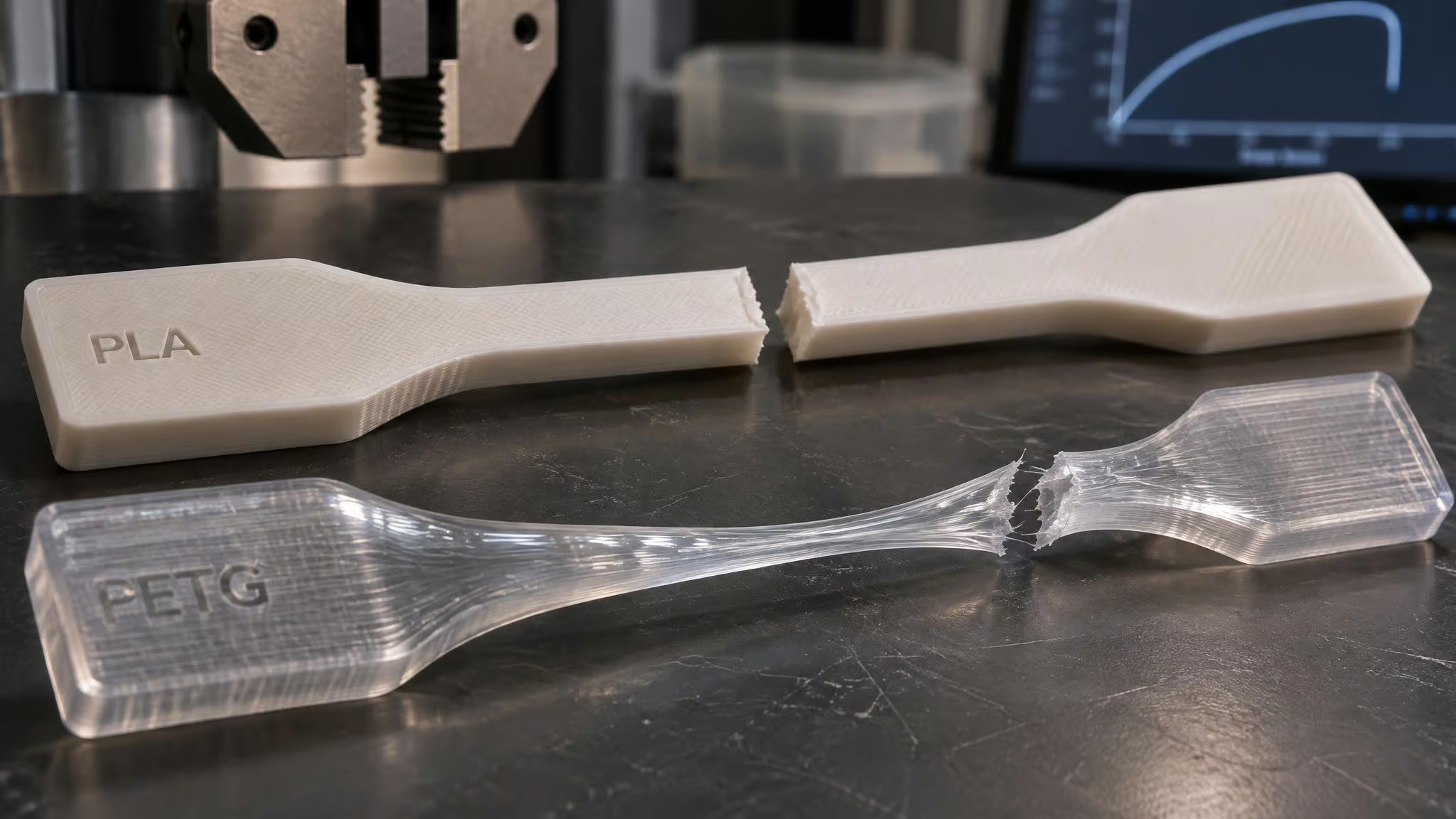
No, PETG is not stronger than PLA in controlled same-printer tensile tests, though PETG bends further before failing. When makers ask which plastic is stronger, they usually mean “which one won’t break in my hands,” and those are two different mechanical properties: ultimate tensile strength (resistance to being pulled apart) and flexural strength (resistance to bending stiffly) both favor PLA on a standard desktop printer.
What controlled same-printer testing measured
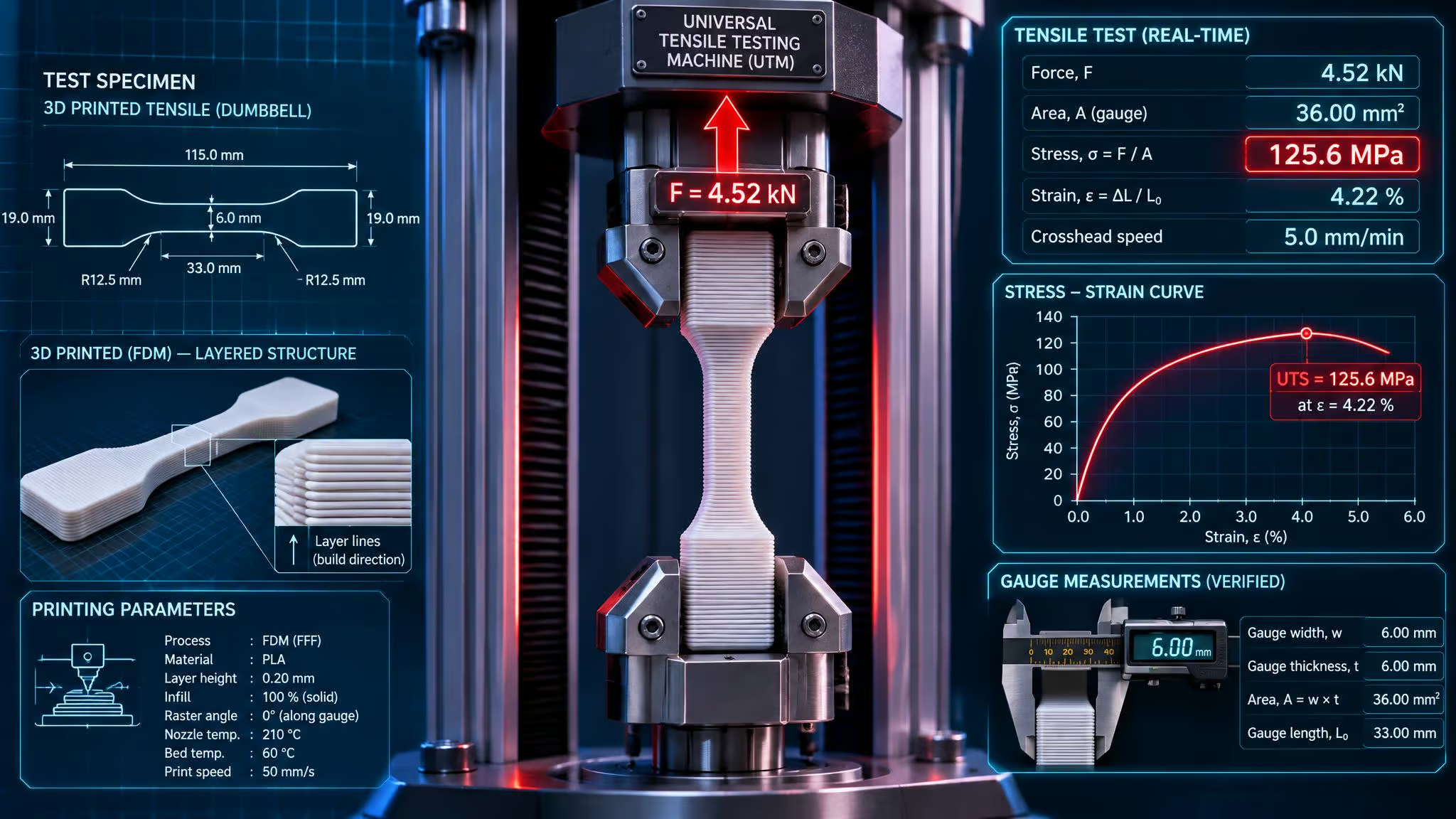
In the 2024 Bursa Technical University study published in 3D Printing, researchers Emre Demir, ?nal Kaan Duygun, and Ay?e Bedelo?lu printed neat PLA and neat PETG test bars on the same machine using a 0.2 mm nozzle, 16 layers at a 0.2 mm layer height (3.2 mm total thickness), and a ±45° raster pattern. PLA ran at 40 mm/s with a 220°C nozzle and 60°C bed, while PETG ran slower at 30 mm/s with a 260°C nozzle and 70°C bed.
Pulled on a SHIMADZU AGS-X universal testing machine under ASTM D638-4 (5 kN load cell, 5 mm/min, five specimens per configuration), neat PLA hit 59.9 ± 2.9 MPa ultimate tensile strength, a 1102.3 ± 17.8 MPa tensile modulus, and 8.1 ± 0.6% elongation at break. Neat PETG trailed at 54.9 ± 2.6 MPa tensile strength, 1008.3 ± 47.6 MPa modulus, and 7.4 ± 0.3% elongation.
Three-point bending tests under ASTM D790 (10 mm/min, three tests per configuration) widened that gap. Neat PLA posted the highest flexural strength of the entire test series at 96.9 ± 0.5 MPa with a 3033.9 ± 21.5 MPa flexural modulus and 6.2% bending strain before snapping. Neat PETG recorded the lowest flexural strength at 69.8 ± 2.1 MPa and a 1760.1 ± 53.1 MPa modulus, yet it refused to snap under the bending rig, flexing past the limit instead. Independent testing by Hsueh et al. across varying print speeds and nozzle temperatures backed up the same hierarchy, finding printed PLA outperformed printed PETG in tensile, compression, and bending loads.
Real-world functional prints echo those lab bars. Stefan at CNC Kitchen printed identical test hooks on a stock Prusa i3 MK3S using Prusament filaments and pulled them on a DIY universal test machine. Pulled horizontally along the layer lines, the PLA hook held to 73 kg before yielding slightly and snapping suddenly, beating ASA at 57 kg and PETG at 55 kg, though the PETG hook stretched without snapping. Pulled vertically to stress interlayer adhesion, PLA still led at 40 kg (55% of its horizontal strength), followed by PETG at 25 kg (46% of horizontal) and open-air ASA at 17 kg (29% of horizontal, rising 20% to 20 kg inside an enclosure).
Why strength tables disagree
If you’ve seen comparison charts claiming PETG hits 50 to 75 MPa against PLA’s 40 to 60 MPa, or even 50 MPa versus 32 MPa, you’re looking at nominal filament-level ranges mixed across incompatible test standards and resin grades. Even the manufacturer datasheets referenced alongside the 2024 study list PLA at 60 MPa tensile strength, 3600 MPa Young’s modulus, 60°C Tg, 1.25 g/cm³ density, and a ~180°C melt point versus PETG at 55 MPa tensile, 2200 MPa modulus, 80°C Tg, 1.27 g/cm³ density, and ~260°C melt. Those baseline numbers shift fast once a slicer slices a part: independent printed PETG testing shows 31.7 MPa tensile strength in the X-Y plane dropping to 29.4 MPa along the Z-axis (with elongation falling from 4.43% to 3.10%), while Fictiv’s printed PETG data lists 45.8 MPa UTS and 18% elongation. Because raster angle, brand formulation, and print orientation swing results wildly, and the 2024 study flagged raster-angle variations for future work, same-printer printed benchmarks are the honest way to rank them.
Why PLA cracks and PETG bends
Optical microscopy of the broken tensile bars from the 2024 study shows the exact physical reason PLA snaps like dry pasta while PETG yields like stiff taffy. Under magnification, fractured PLA surfaces show distinct micro-cracks opening up between individual extruded rasters, giving a crack an easy highway to zip straight across the part. Fractured PETG surfaces show no obvious interfilament cracks at all; in multi-material samples, adjacent PETG rasters fused together so cleanly they were visually indistinguishable, maintaining solid PLA-to-PETG bonding across ratios from 13PLA/3PETG through 6PLA/10PETG.
That clean raster fusion gives PETG its signature bend, but it doesn’t guarantee survival in every kind of impact. In CNC Kitchen’s Prusament testing, PETG’s bending modulus measured 1900 MPa (roughly 70% of PLA’s 3300 MPa, with ASA sitting between them at 2300 MPa), while notched IZOD pendulum impact testing rated PETG at 8.6 kJ/m² versus PLA’s 5 kJ/m² and ASA’s 18 kJ/m² (over three times PLA).
The impact-ductility caveat
All 14 guides and comparisons checked that give a yes-or-no answer say PETG is more impact-resistant than PLA, yet among 11 forum posters asked which filament’s prints broke more easily on them, 6 said PETG broke more and 5 said PLA broke more. Those two counts point in opposite directions because PETG’s ductility is strongly strain-rate dependent: it stretches gracefully under slow, steady bending loads, yet loses that ductility when struck by a sudden, sharp impact. A PETG bracket can survive a slow squeeze and still shatter under a rapid shock load, or yield permanently at 55 kg on a slow hook pull where rigid PLA holds all the way to 73 kg.
Printing PETG vs PLA on a stock printer
It’s noticeably harder to get clean first prints from PETG than PLA on an unenclosed stock printer, though both filaments produce sharp, glossy parts once tuned. The exact same thermal physics that fuse PETG’s rasters together so tightly, a higher nozzle temperature and minimal cooling fan, are what make PETG string across travel moves, weld itself to build plates, and punish sloppy slicing profiles.
Settings each filament demands
In controlled testing, PLA ran cleanly at 220°C nozzle and 60°C bed at 40 mm/s, while PETG needed 260°C and a 70°C bed at a slower 30 mm/s. On a stock Original Prusa i3 MK3S with no enclosure, Prusament profiles follow that same split: PLA prints at 215°C with 100% part-cooling fan, whereas PETG runs at 250°C with the cooling fan dialed back to 30 to 50% (just ahead of ASA’s 260°C and 20% fan).
Once dialed in on a reliable beginner printer, both PLA and PETG handle overhangs cleanly up to 55° before degrading at 65° (where ASA still holds together), though PLA wins bridging tests while PETG leaves slight wisps at fine tips. One hardware gotcha has nothing to do with plastic chemistry: spool-slot indexing cutouts on some spools can catch on cheap top-mounted spool holders and leave ringing artifacts on your walls, so swap to a smooth round rod if you see rhythmic surface glitches.
The downsides of PETG
PETG is an unforgiving filament on uncalibrated hardware because its high melt viscosity, moisture sensitivity, and aggressive adhesion turn minor slicer mistakes into messy print failures. Keeping the nozzle hot enough to fuse layers creates oozing and fine hair-like stringing across open gaps that you’ll have to trim by hand. Because PETG is hygroscopic, a spool left sitting in humid air absorbs moisture that boils into steam inside the hotend, causing popping sounds, tiny bubbles, and rough, pitted walls.
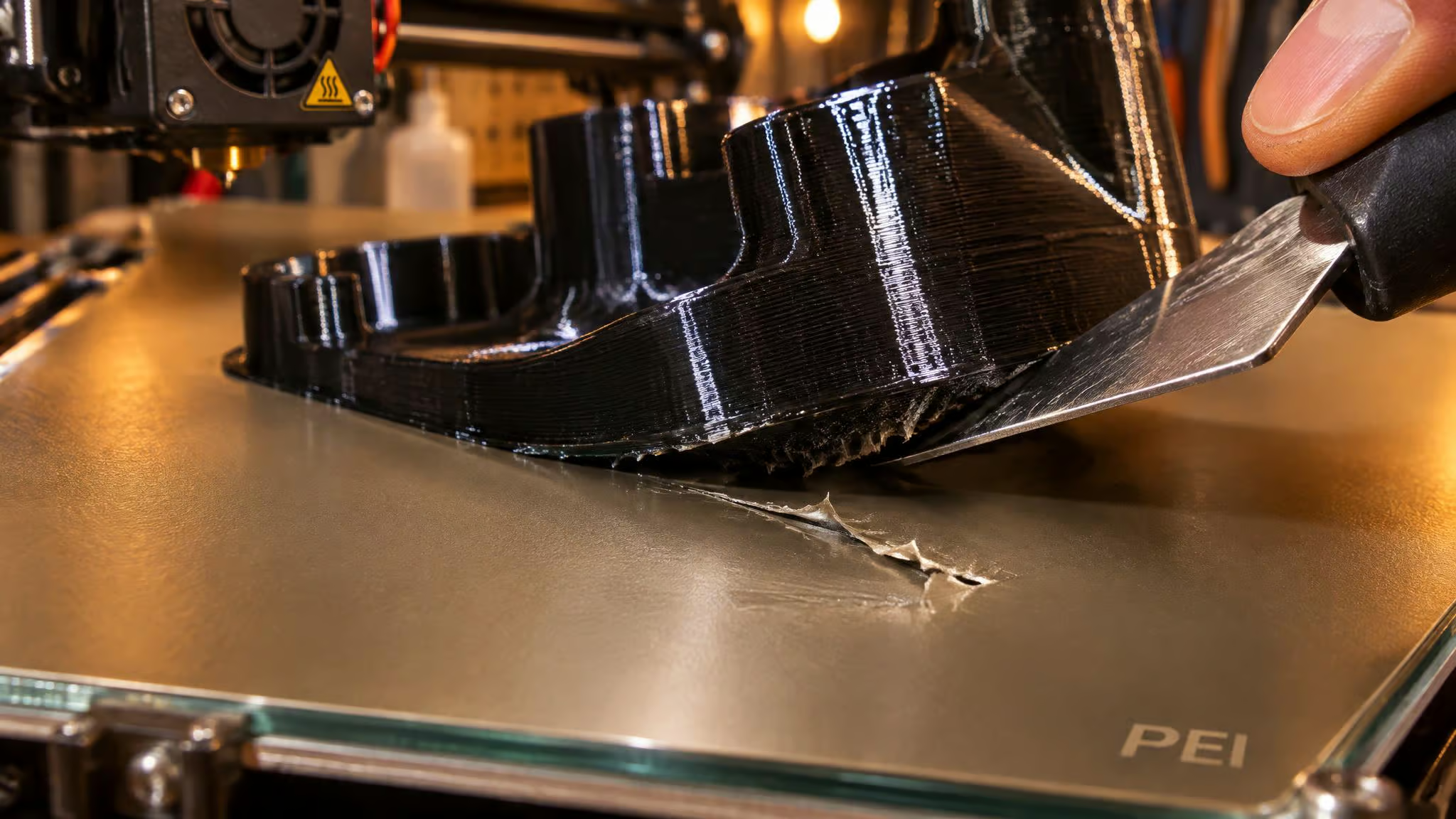
That strong interlayer and bed bonding cuts both ways once the print finishes. Supports fuse so tightly to PETG undersides that snapping them off leaves ugly scarring, and bare glass or PEI build sheets grip PETG hard enough to rip chunks straight out of the surface unless you lay down a release agent first. Turning the cooling fan on too early triggers first-layer warping, forcing you to print slower for clean surfaces that still scratch easily thanks to PETG’s glossy finish.
Heat resistance: the hot-car problem and the high-temp PLA escape hatch
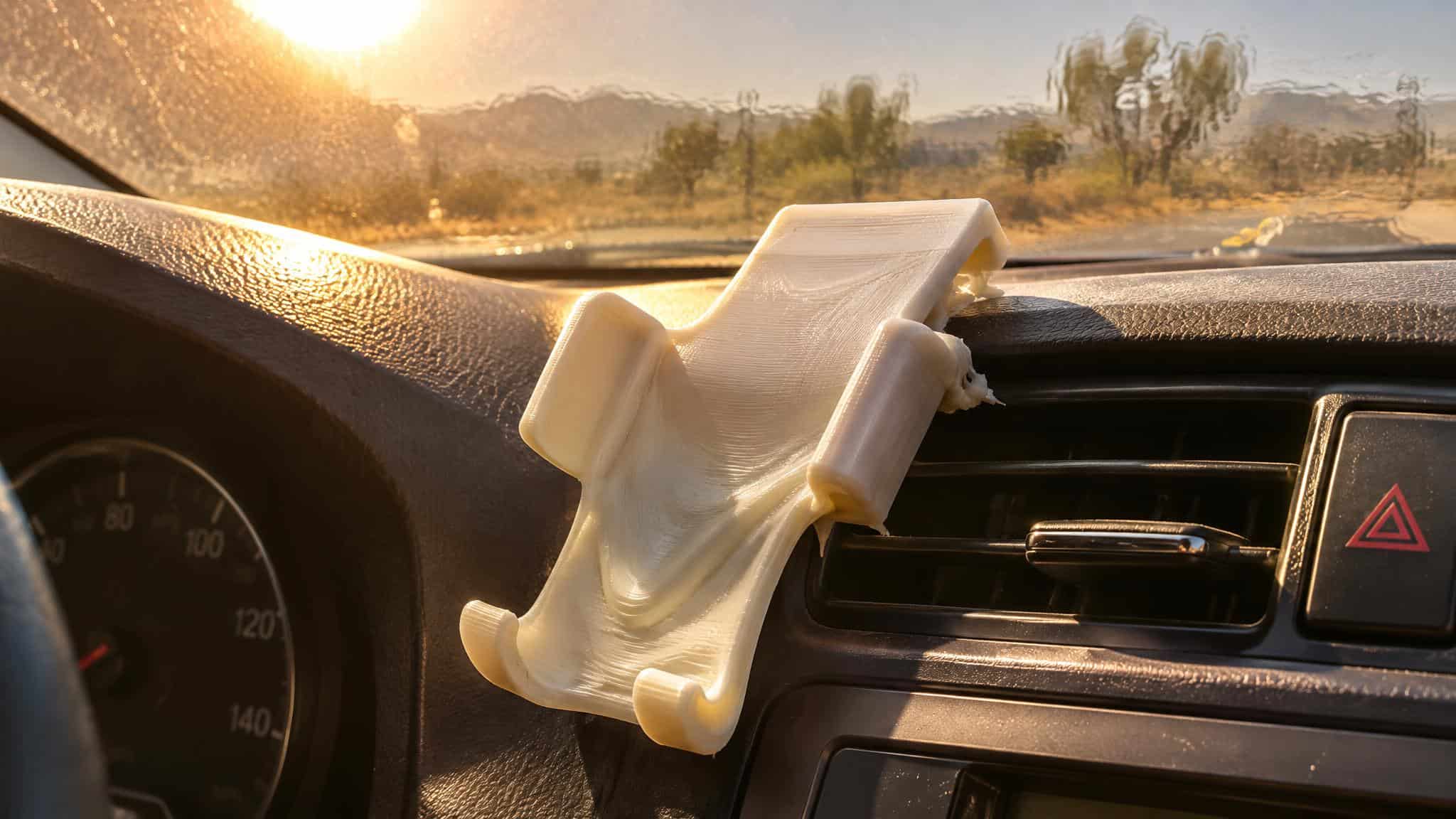
PETG melts at 230 to 250°C (reaching 260°C in study datasheets) and holds a nominal Tg of 80 to 85°C, whereas standard PLA melts at 180 to 220°C and softens much earlier, making PETG the clear winner for outdoor parts and anything left inside a hot car. Leave a standard PLA phone mount on a dashboard in July and it will sag into modern art before lunch; Megan Conniff, writing at xometry.com, notes that PLA deforms near 50 to 55°C while PETG stays dimensionally stable up to 70 to 75°C.
Oven tests, DSC peaks, and why Tg tables conflict
PLA is reported to soften from 50°C up to 64°C, while PETG holds integrity from 80°C up to 85°C. In CNC Kitchen’s thermocouple oven test, PLA softened at 60°C and failed at 65°C, PETG softened at 80°C and failed at 85°C, and ASA outlasted both by softening at 110°C and failing under load at 120°C. Real-world user reports reflect that thermal gap, with a catch: of 9 forum posters asked whether a print deformed from heat like a hot car or hot water, 6 said PLA deformed while PETG held, and 3 said PETG deformed too. PETG buys you roughly 20°C of extra thermal headroom over standard PLA, which saves car interiors and warm enclosures, yet boiling water or brutal direct summer sun against dark house numbers can still push past PETG’s ceiling.
Differential scanning calorimetry (DSC) on a TA Instruments DSC 25 (run at 3°C/min from 20 to 250°C on ~7 mg samples under nitrogen) explains why PETG’s Tg varies across spec sheets. Measured directly on filament samples, PLA showed a Tg of 55.2°C, a cold crystallization peak at 96.9°C, twin melting peaks at 144.3°C and 152.1°C (from pigments, additives, or multiple crystalline states), and 35.17 J/g of melting enthalpy. PETG measured a Tg of 69.3°C with zero crystallization or melting peaks, showing why raw filament measurements (69.3°C) sit lower than the ~80 to 85°C figures printed on generic datasheets.
Annealed high-temp PLA as the third path
Standard PLA doesn’t have to stay stuck at 60°C if you’re willing to bake your parts or switch formulations. Annealing reorganizes PLA’s polymer chains into tighter crystals that handle temperatures above 80°C, and newer high-temp blends push way past that. Alex Tyrer-Jones at 3dprintingindustry.com tested Polymaker HT-PLA and glass-fiber-reinforced Polymaker HT-PLA-GF, both of which print on standard PLA settings while targeting temperatures above 150°C. As printed, HT-PLA melts at 177.23°C and softens at 152°C for no-load jobs like heat mats, hot-climate shipping brackets, electronics housings next to 70°C components, and a desiccant drybox that survived 70°C for 24 hours.
HT-PLA-GF softens at 148°C as printed and uses glass fibers to stop parts from warping during baking, suiting power tool mounts, RC car parts, and soldering iron jigs. Across 12 identical hex parts, HT-PLA held an average deviation of 0.01 mm (0.009 mm standard deviation), and annealing HT-PLA-GF for 30 minutes at 100°C lifted its heat deflection temperature from 75°C (at 50.09 MPa tensile and 3.77% elongation) to 114.7°C (at 50.2 MPa), while annealed HT-PLA reached 106.5°C.
In Tyrer-Jones’s comparative flag heat tests, regular PLA failed in 7.81 seconds at 149°C and PETG failed in 8.17 seconds at 162°C, while ASA survived 11.01 seconds to hit the highest peak temperature at 174°C, HT-PLA lasted 20.07 seconds at 171°C, and HT-PLA-GF lasted longest at 23.45 seconds at 161°C. On a 45 mm bridge loaded with 200 g at 100°C, regular PLA lasted 59 seconds, HT-PLA lasted 72 seconds, unannealed HT-PLA-GF lasted 85 seconds, and annealed HT-PLA-GF showed zero deformation past 600 seconds (settling to roughly 3 to 4 mm deflection after cooling). There’s one major safety catch: in a candle-holder test, both HT-PLA and HT-PLA-GF ignited quickly under direct flame, whereas regular PLA and PETG resisted ignition.
Moisture, storage, and what a spool costs
PLA is cheaper than PETG both by weight and by usable filament length: on Prusament’s lineup, PLA runs €25 per kilogram (7.5¢ per meter) compared to PETG at €30 per kilogram (9¢ per meter) once density is factored in, while ASA hits €35 per kilogram effective for an 850 g spool due to its 15% lower density, still working out to 9¢ per meter across roughly 330 meters per spool (prices may vary). That small price gap narrows quickly if you forget how PETG behaves on the shelf.
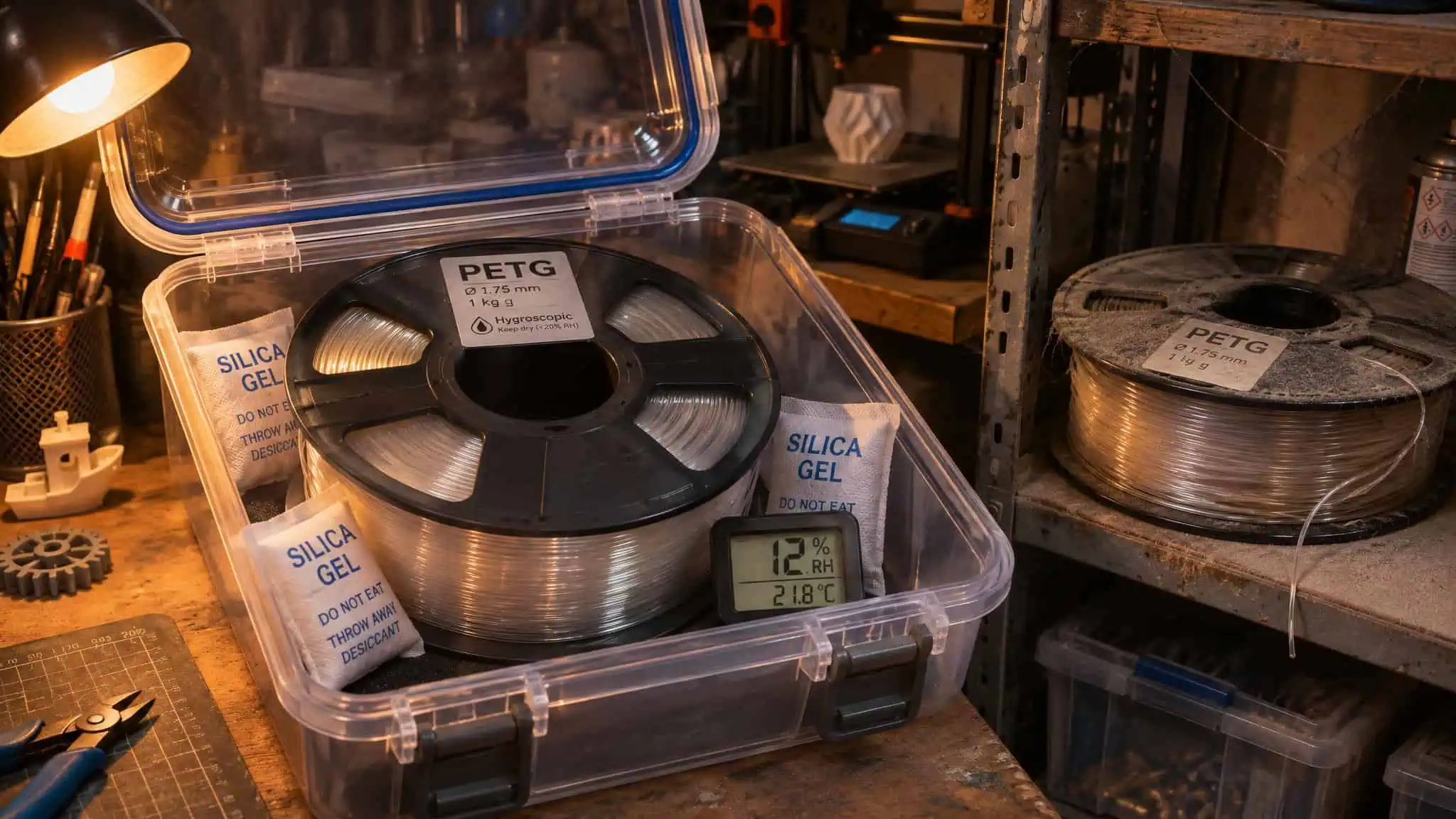
Even though finished PETG parts resist water, UV light, chemicals, and outdoor weather far better than PLA, raw PETG filament is hygroscopic and drinks in ambient humidity before printing. Leaving a PETG spool out in the open leads to steam bubbles, popping noises at the nozzle, and scarred surfaces, meaning dry-box storage matters from spool one if you want clean prints without wasting meters of plastic.
Which filament for which part: a failure-environment decision framework
PLA is the better choice over PETG whenever a part needs maximum stiffness, tight dimensional accuracy, or effortless printing on an unheated or open-frame machine. Its 96.9 MPa flexural strength and 3300 MPa bending modulus outmuscle PETG’s 69.8 MPa and 1900 MPa under static rigid loads, while minimal thermal contraction keeps gears, jigs, and multi-part enclosures snapping together without warping off the bed. You also get a massive selection of colors and matte or silk blends, long-term stability indoors, resistance to many organic solvents and oils, and a renewable crop-based polymer that stays forgiving from the very first layer.
When PLA fails and PETG takes over
The cleanest way to pick between them is to match the filament to whatever will kill your part first. If the enemy is heat above 50 to 60°C, outdoor UV and rain, cleaning chemicals like acids, alkalis, or salts, or repeated flexing and drops, PLA fails and PETG takes over. All 13 guides checked that give a yes-or-no answer say PETG is better than PLA for outdoor use, which tracks with its stability in signage, greenhouse hardware, and outdoor electrical boxes.
PETG’s ability to bend without snapping makes it the clear pick for snap-fit clips, living hinges, protective housings, machine guards, medical device enclosures, and shop tooling. Still, don’t treat PETG as an automatic upgrade for every functional build: on weight-critical rigid frames like quadcopters, PLA or ASA beats PETG on stiffness-to-density ratio. Nor does every spool with the same acronym perform identically, since a $10 bargain PLA and a $50 spool with per-spool quality tracking behave like different materials depending on raw resin, additives, and your printer’s tuning.
Is PETG just as safe as PLA?
Raw PETG is broadly comparable in baseline safety to raw PLA, though neither filament turns into a certified food-safe container straight off a desktop nozzle. Raw PLA is nontoxic and biocompatible, and PETG is intrinsically food-safe through its PET family lineage, showing up in certified medical and food packaging when sourced from compliant resin, colorants, and additives. Once extruded through a 3D printer, however, microscopic layer lines trap bacteria and brass nozzles can shed trace contaminants, meaning printed food-contact parts require manufacturer resin verification plus food-safe post-processing regardless of which spool you load. On disposal, PETG is technically recyclable, but it needs dedicated recycling streams so it doesn’t contaminate standard PET bottle batches.
Beyond PLA vs PETG: mixing the two and when to upgrade
Once you’ve mastered single-spool prints, you don’t actually have to treat PLA and PETG as an either-or choice, nor stay locked into those two plastics forever. Dual-extrusion or manual filament swaps let you combine PLA’s rigidity with PETG’s ductility in one part, while specialty filaments pick up where both hit their thermal or mechanical ceilings.
Printing PLA and PETG together
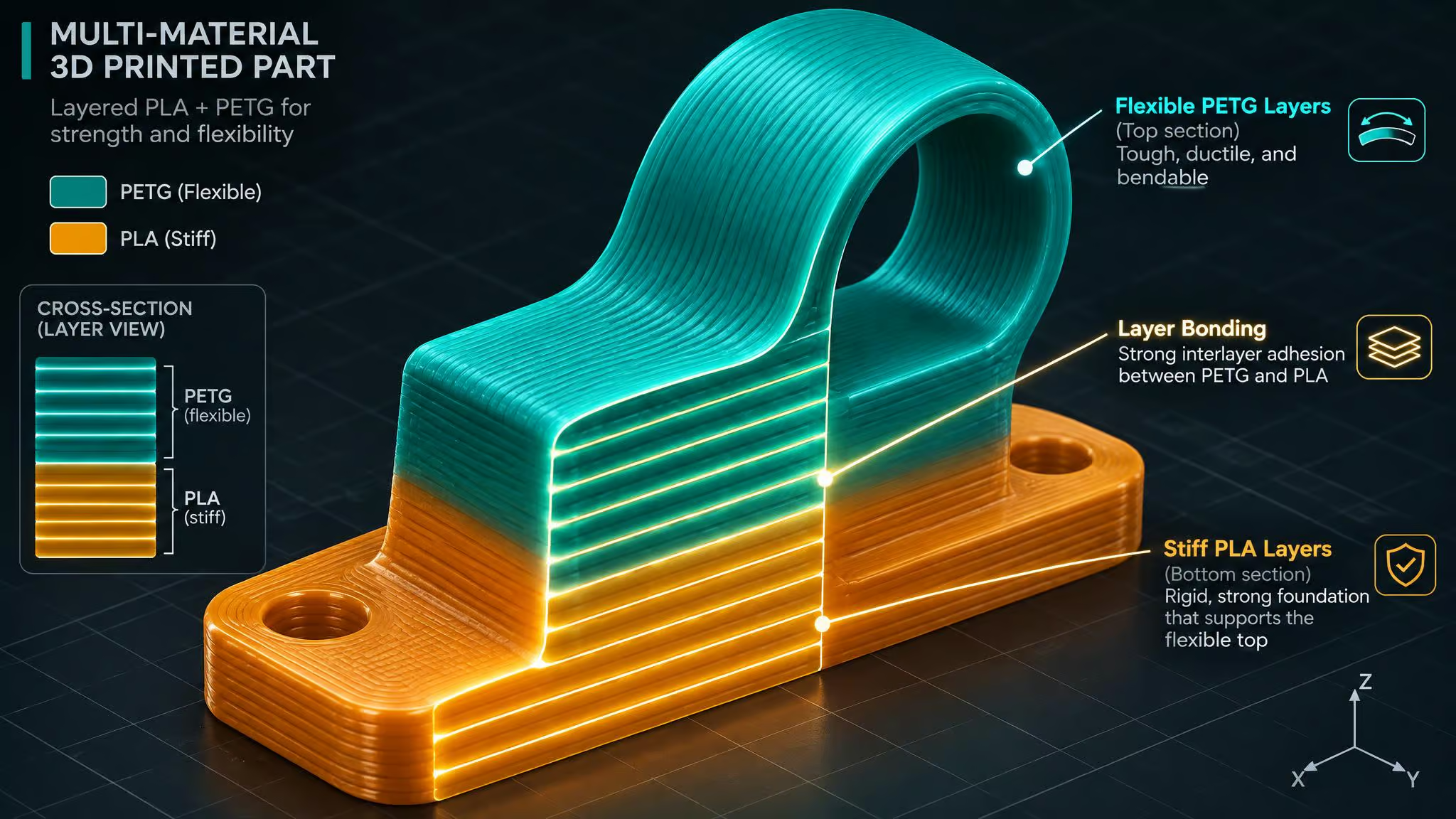
You can print PLA and PETG together in a single part using multi-material additive manufacturing (MMAM), and doing so in the right order beats both neat polymers in lab testing. Across five 16-layer configurations (0.2 mm layers, 3.2 mm thick) tested in the 2024 Bursa Technical University study, a 13PLA/3PETG layup hit the highest tensile strength of all samples at 65.4 ± 1.9 MPa (1223.8 ± 32.8 MPa modulus) alongside 91.4 ± 0.4 MPa flexural strength and 7.6 ± 0.2% elongation.
An even 8PLA/8PETG split delivered peak tensile strain at 8.9 ± 0.2% (60.3 ± 1.5 MPa tensile, 82.1 ± 0.4 MPa flexural), while adding more PETG layers steadily lowered tensile and flexural strength down to 58.4 MPa UTS and 79.0 MPa flexural at 3PLA/13PETG (7.8% peak flexural strain), echoing earlier sandwich-print benchmarks like the PLA-skin/ABS-core sandwich study by Lopez and Ahmad and PCL (polycaprolactone)/PLA hybrids. Print order decides whether those layers stay stuck: on a Two Trees Bluer, printing PETG first and laying PLA on top failed from PETG shrinkage, whereas printing PLA layers first and depositing PETG on top bonded cleanly and held together.
The upgrade ladder
When neither PLA nor standard PETG fits the job, step up to the filament built for the missing spec:
- Choose ASA (acrylonitrile styrene acrylate) over ABS (acrylonitrile butadiene styrene) for sustained outdoor heat, UV stability, lower warping, and less odor.
- Choose TPU (thermoplastic polyurethane) when parts need rubbery, elastic flex rather than PETG’s stiff bend.
- Choose Tough PLA for higher impact resistance without leaving PLA’s easy print profile.
- Choose PCTG when you want PETG-style toughness with higher optical clarity.
- Choose PETG-CF (carbon-fiber reinforced PETG) for stiff, wear-resistant, load-bearing brackets.
- Choose polycarbonate (PC) for high-demand engineering heat and strength.
Experimental self-cleaning and antibacterial PETG blends are also moving through industrial labs, though reproducible benchmark numbers for everyday desktop printing remain pending. Start your first week with a dry spool of PLA to lock in bed adhesion and tolerances, keep a sealed spool of PETG on hand for the first bracket that sees sun or heat, and let the failure environment pick the plastic from there.
Frequently Asked Questions
What is the difference between PLA and PETG?
PLA is a plant-derived polyester made from fermented starches like corn or sugarcane that cools into a rigid, brittle part and snaps abruptly under overload. PETG is a glycol-modified, petroleum-derived plastic based on PET bottle resin that stays amorphous, flexing before it breaks (around 21% nominal elongation) and resisting outdoor UV and moisture better. PETG also handles higher temperatures with a nominal glass transition of 81 to 85°C compared to PLA’s 52 to 60°C, though it demands hotter printer settings.
Should beginners use PETG or start with PLA?
Start with PLA for your first spool. It prints cleanly at lower temperatures (around 215 to 220°C at the nozzle with a 60°C bed and 100% cooling fan) and resists warping on open-frame machines, letting you nail bed leveling and slicer settings without frustration. Once your baseline profiles are dialed in, keep a dry spool of PETG on hand for parts that face sun, heat, or repeated flexing.
Why would I use PLA instead of PETG?
PLA beats PETG whenever a part needs maximum stiffness, crisp dimensional accuracy, or trouble-free printing on an unheated or open-frame machine. It also delivers higher tensile and flexural strength on the same printer, costs less per meter (7.5¢/m at €25/kg versus PETG’s 9¢/m at €30/kg on Prusament, though prices may vary), and comes in far more matte and silk color options. For indoor organizers, gears, and rigid prototypes, PLA is simply the better fit.
Is PETG stronger than PLA?
No—in controlled 2024 testing at Bursa Technical University on the same machine, neat PLA beat neat PETG in both ultimate tensile strength (59.9 MPa vs. 54.9 MPa) and flexural strength (96.9 MPa vs. 69.8 MPa), and a printed PLA hook held 73 kg against PETG’s 55 kg in CNC Kitchen pull tests. The myth persists because PETG bends and stretches under slow loads while rigid PLA snaps suddenly. PETG’s toughness also drops under sudden, sharp shock loads, so it can still shatter on impact.
Is it harder to print with PETG than PLA?
Yes, PETG is noticeably pickier on a stock unenclosed printer. Running at 250 to 260°C with a 70°C bed, slower speeds, and only 30 to 50% fan cooling makes PETG prone to stringing across travel gaps and warping if cooled too early. You also need dry storage to keep moisture out of the spool and a release agent on bare glass or PEI sheets so prints don’t tear chunks out of your build surface.
What are the downsides of PETG?
PETG is hygroscopic, meaning spools left in humid air absorb water that boils into steam bubbles and leaves rough, pitted walls at the nozzle. Its sticky melt viscosity also causes hair-like stringing, supports that fuse aggressively to undersides, and bed adhesion strong enough to damage bare glass or PEI without a release barrier. Even after a clean print, PETG’s glossy finish scratches easily and costs more per spool than PLA.
What is the melting point of PETG vs the melting temperature of PLA?
Nominal filament datasheets put PLA’s melting range at 180 to 220°C (with DSC testing catching twin melting peaks at 144.3°C and 152.1°C), while PETG melts higher at 230 to 250°C and up to 260°C on some spec sheets. For finished parts, softening temperature matters more: in oven tests, PLA sagged at 60°C and failed at 65°C, whereas PETG held until 80°C and failed at 85°C. That 20°C cushion is why PETG survives hot cars and summer sun where standard PLA droops.
Is PETG just as safe as PLA?
Raw PLA and raw PETG are broadly comparable in baseline safety—PLA is nontoxic and biocompatible, and PETG comes from the food-safe PET family used in medical and food packaging when formulated with compliant resins and colorants. Neither plastic comes off a standard desktop printer ready for food contact, however, because microscopic layer ridges trap bacteria and brass nozzles can shed trace contaminants. At end of life, PLA requires industrial composting while PETG needs dedicated recycling streams so it doesn’t contaminate regular PET bottle batches.
Can you print PLA and PETG together in the same part?
Yes, combining both in a single multi-material print can outperform either plastic alone, with a 13PLA/3PETG layup hitting 65.4 MPa tensile strength in the 2024 Bursa Technical University study. The catch is print order: you must lay down the PLA layers first and print PETG on top, because printing PLA onto PETG fails as the PETG shrinks.
Can high-temp PLA match PETG’s heat resistance?
Annealed specialty blends easily surpass standard PETG’s 80 to 85°C ceiling while still printing on normal PLA settings. Baking Polymaker HT-PLA reaches a 106.5°C heat deflection temperature, and glass-fiber-reinforced HT-PLA-GF hits 114.7°C after annealing for 30 minutes at 100°C. The trade-off is flame behavior: both HT-PLA blends ignited quickly under direct flame in testing, whereas regular PLA and PETG resisted ignition.