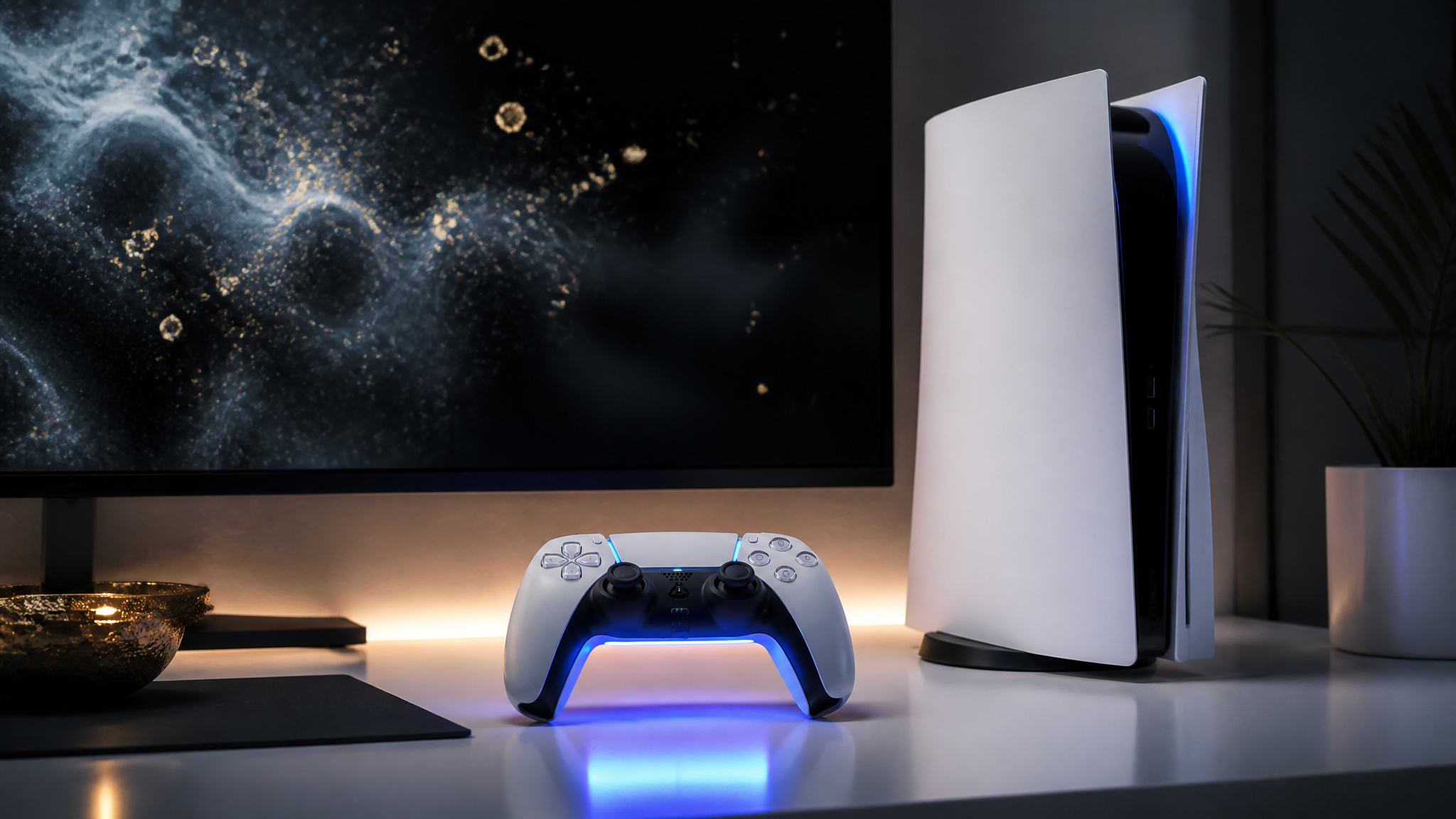
So, you want a free gaming console. Not a “basically free” after you jump through seventeen hoops and sell your old phone, but actually free. I get it. That’s the dream.
And it’s not entirely a fantasy.
Look at Citlalic C. She won a gaming system giveaway, and her email — cvich***@gmail.com, was posted publicly as proof. That’s a real person, a real win, and a public announcement. That’s the standard for legitimacy right there.
But here’s the thing about “free”: it almost always comes with a hidden price tag. It might be your time, your attention, your warranty, or your luck. Every method has a tradeoff. I’m going to lay out four specific, documented paths to a free console — and show you exactly what each one actually costs you.
Key Takeaways
The Freebie Guy’s Black Friday giveaway lets you pick between a PS5, Xbox Series X, Switch 2, or NEX Playground — no purchase necessary.
A Nintendo Switch 2 on Woot can drop to $399.99 for new customers, but you’re trading a 1-year manufacturer warranty for a 90-day Woot warranty.
Xpango’s points program will get you a real Xbox One with free worldwide delivery, but the cost is your time spent on repetitive tasks designed to serve you ads.
Table of Contents
Method 1: Enter real giveaways (and avoid the fakes)
Giveaways are the purest form of “free” — you enter, you might win, you don’t do anything else. But the internet is swimming in fakes designed to collect your data or your money. So let’s talk about one that’s legit right now.
The Freebie Guy giveaway
The Freebie Guy is running a Black Friday-themed giveaway. The winner gets to choose their system: a PlayStation 5, Xbox Series X, Nintendo Switch 2, or a NEX Playground with a one-year Playpass subscription. That covers everything from a hardcore gaming rig to a family-friendly motion-control party box.
To enter, you just need to follow along. The Freebie Guy posts updates through Instagram Broadcast, Facebook Broadcast, a Facebook Group, Telegram, and an Email Newsletter. No purchase necessary. You follow, you wait, and if your name gets pulled, you pick your console.
It’s a sweepstakes. Luck-based. You could do everything right and still not win. But it’s real, it’s active, and it costs you nothing but a few seconds to follow a channel — though if you do win, SweepsChaser teaches how to pay taxes on winnings.
How to tell a real giveaway from a scam
Here’s the single most useful test I found: Real giveaways announce their winners publicly. Scams almost never do, because they never award prizes.
Citlalic C’s win is the gold standard. The giveaway posted her name and a partial email address — cvich***@gmail.com, as proof that someone real won something real. That’s a signal you can check in about ten seconds.
If a giveaway can’t point to a past winner with identifiable details, treat it as a scam until proven otherwise. Other red flags pile on from there: requests for payment or “shipping fees,” unclear terms, no known sponsor. But the winner announcement is the fast check.
Method 2: Grind points programs (but know the real cost)
Okay, so giveaways are luck-based. But what if you could work your way to a free console? That’s the promise of points programs like Xpango.
How Xpango points work
Xpango is a gamified loyalty program. You earn points, and the key question is how to get a free Xbox console: when you’ve got enough, you trade them straight for an Xbox One. No auction, no bidding, no hidden fees. Free worldwide delivery. The Xbox One is a Microsoft console that integrates with Xbox Live for online multiplayer, digital game purchases, and media streaming.
You earn points three ways. The fastest is referrals — you share a unique link, and each signup gives you a bonus. But that relies on other people joining. The second method is missions: clicking links, playing games, watching videos, interacting with ads.
And the third is a daily points bonus you can collect every few hours by just clicking a button. Survey sites like Swagbucks also offer console redemptions, you earn points by completing surveys, watching videos, or searching the web, then cash out for a gaming system.
Here’s the honest tradeoff: this is a grind. The missions are repetitive, and they’re designed to keep you engaged with ad inventory. You’re effectively working for advertisers in exchange for a console. If you’re wondering whether you can get a PlayStation for free, the answer is more complicated—Sony’s promotions, PlayStation Stars rewards, and contest wins do exist, but the “free” Xbox One described here is a paid labor scheme where your currency is attention and time.
The Xbox One you’re working toward
But let’s be clear — what you’re earning is a real, complete console setup. The Xbox One comes with an eight-core x86 processor, over 5 billion transistors, a 500GB hard drive, a Blu-ray player, Kinect integration, and voice command (“Xbox On”). It’s a media hub as much as a gaming console.
The controller alone has over 40 design innovations: an updated d-pad, improved thumb sticks, and vibrating impulse triggers. The bundle includes the console (gloss black), a Kinect Sensor, a wireless controller, and a headset. That’s a full starter kit worth hundreds of dollars.
The question isn’t whether the console is real. It’s whether the grind is worth it to you.
Method 3: Trade-in and upgrade loopholes (the fine print)
Sometimes “free” doesn’t mean zero dollars — it means “so deeply discounted it might as well be free.” But the catch is often buried in the fine print.
The Woot deal breakdown
Woot, Amazon’s deal-a-day site, ran a Prime Day promotion on the Nintendo Switch 2. The numbers were eye-catching: $399.99 for new Woot customers, $419.99 for returning customers with the coupon code “CHEAPSWITCH2.” Free shipping for Amazon Prime members, otherwise $5. The price was set to jump to $499.99 on September 1.
That’s $100 off the September price. Genuinely a great deal. Trade-in programs at major retailers like GameStop and Best Buy can also lead to effectively free consoles — you trade in old games, accessories, or hardware for store credit that offsets the full cost.
The warranty tradeoff
But here’s what most articles skip: the warranty.
The Switch 2 from Woot comes with a 90-day Woot warranty — not the manufacturer’s standard one-year warranty. The console is brand new in box, but if it fails after three months, you’re on your own.
That’s the tradeoff in plain numbers. You save $100 upfront, but you lose nine months of coverage. For some people, that’s an easy bet. For others, it’s a dealbreaker. The key is knowing about it before you click “buy.”
The Switch 2 itself is worth the consideration. It’s got a strong launch lineup — Mario Kart World, Donkey Kong Bananza, Pokemon Legends: Z-A, Kirby Air Riders, Hyrule Warriors: Age of Imprisonment, and Pokemon Pokopia. Plus high-profile ports like Cyberpunk 2077 and Final Fantasy VII Remake Intergrade are coming. And if you grab one, Amazon dropped the 256GB Samsung P9 Micro SDXC Express Card to $39.99 with free shipping during Prime Day, a solid deal for extra storage.
Method 4: Consider alternative consoles (Nex Playground)
If you’re flexible on what “console” means, the Nex Playground offers a different kind of “free.” It’s a motion-control system that revives a genre last seen with the PlayStation 2’s EyeToy and the Xbox 360’s Kinect — but with modern tracking. Reddit’s best-kept secrets for free consoles, how to obtain a free gaming console reddit, offer subreddits, user experiences, and cautionary tales from the community.
What you get for free and what costs extra
The Playground is an all-in-one console with no controller required — your body is the controller. It supports up to four players. It’s compact and easy to move between rooms.
Out of the box, you get five pre-installed free games: Starri, Whac-a-Mole, Go Keeper, Party Fowl, and Fruit Ninja. That game alone is worth the price of admission for nostalgia.
But to access the full library of 30+ games, you need a Play Pass subscription. That’s $49 for three months or $89 for a year. The Play Pass games include a who’s-who of kids’ IP: Barbie, Teenage Mutant Ninja Turtles, How to Train Your Dragon, Peppa Pig, Care Bears, Elmo, Miraculous Ladybug, Gabby’s Dollhouse, and Kung Fu Panda.
The Playground originally retailed for $299. During Prime Day, it hit $239 — 20% off. So it’s “free” only if the pre-installed games are enough for you. Otherwise, it’s a purchase with an ongoing subscription cost.
The motion-control lineage
This isn’t a new concept. The EyeToy on PS2 and Kinect on Xbox 360 both got players off the couch and moving. The Nex Playground is a refined version of that idea — it uses better tracking and a slimmer form factor. It’s not competing with the PS5 on power or library, but it fills a specific niche: party games, family nights, and getting kids active without a controller in their hands.
How to spot a fake giveaway (and protect yourself)
Let’s pull the scam-detection thread into one clear guide.
The single most useful test: Has this giveaway ever publicly named a winner?
If yes, with identifiable details like a name and partial email — like Citlalic C with cvich***@gmail.com, that’s a strong legitimacy signal. Real giveaways proudly announce winners because they actually award prizes.
If no, treat it as a scam until proven otherwise.
Other red flags to watch for: requests for payment or “shipping fees,” unclear terms and conditions, no known sponsor, and offers that seem too good to be true. But the winner announcement is the fast check. It takes ten seconds.
The real cost of “free” — what you’re actually paying
Every method in this article has a hidden cost. Here they are at a glance:
- Giveaways (The Freebie Guy and similar): The cost is luck. You can do everything right and still not win.
- Points programs (Xpango): The cost is your time and attention. Repetitive tasks designed to serve ads.
- Trade-in deals (Woot Switch 2): The cost is warranty reduction — 90 days instead of one year.
- Alternative consoles (Nex Playground): The cost is ongoing subscription fees — $49 for three months or $89 for a year.
Understanding which tradeoff you’re willing to make is the key to choosing the right method for you. None of these are scams. None of them are effortless. But they’re all real, documented paths to a console that would otherwise cost you hundreds of dollars.
Bonus: Build your gaming setup with free tech (OFree.net)
This won’t get you a console, but it can reduce the total cost of building a gaming setup. Freebie aggregators like OFree.net list free tech items that pop up periodically. Additionally, some schools and libraries host giveaways or raffles for gaming consoles as part of reading programs or community events — it’s worth checking local announcements.
For gamers, the relevant ones I’ve seen include a D-Link Aquila PRO WiFi 6 Mesh Router (good for improving online gaming lag), a Shark Matrix Plus Robot Vacuum (keeps the gaming room clean so you don’t have to), and a Ninja Blast Portable Blender (gaming snacks on demand). There are also random items like blood glucose meters and aromatherapy diffusers — which shows you the variety of freebie platforms out there.
Check these aggregators regularly. While they rarely offer consoles, they do offer free tech you can use to improve your experience or sell to offset the cost of a console purchase. It’s not a primary method, but it’s a smart complement.
At the end of the day, remember this one thing: real giveaways name their winners. If a giveaway can’t show you a real person who won a real prize, walk away. Everything else is just a question of which tradeoff you’re willing to make.
Frequently Asked Questions
What’s the catch with free console giveaways?
The catch with legitimate giveaways is pure luck — you can enter everything correctly and still not win. Real giveaways never ask for payment or shipping fees, and they publicly name their winners with identifiable details. Scams ask for money or hide their winner history, which is why the fastest check is whether a past winner was ever announced.
How does the Nex Playground compare to a PS5 or Xbox?
It’s not a direct competitor on power or game library — think of it as a niche motion-control console for family parties and kids’ games. Out of the box you get five free games like Fruit Ninja, but access to the full library of 30+ titles costs $49 for three months. It fills a different role than a hardcore gaming rig.