What Do Police Actually Recommend for Home Security? We Read the Bulletins So You Don’t Have To
Nearly half of all residential burglaries happen through an unlocked door or window. Not a jimmied lock, not a smashed pane — an open entry. That’s the finding across multiple police department guides we dug through (Tufts, North St. Paul, Hayward, Fairfax County, Derby, and Lubbock). Meanwhile, roughly one in six homes gets broken into each year. So the most effective security measure is also the cheapest: locking the damn door.
But the police bulletins get into specific hardware specs — deadbolt throw lengths, screw gauges, strike-plate materials, that home security articles gloss over. We cross-referenced a half-dozen law enforcement guides to pull out the exact recommendations, the cheap DIY fixes, and the advice that stops break-ins.
Key Takeaways
The single effective prevention is behavioral: lock every door and window every time. Nearly half of burglars simply walk in through an unlocked opening.
A deadbolt with a one-inch throw is the minimum standard. The strike plate it slides into must be at least 16-gauge steel and secured with 3-inch screws — the stubby screws included with lock kits are useless.
The recommended low-tech security hack is a dowel or broomstick in the sliding door track, combined with a drilled-and-screwed anti-lift pin to stop the door from being lifted off the frame.
Table of Contents
Check the locks: deadbolts, sliding doors, and windows
Before diving into specific lock types, it helps to understand what police consider the baseline for any exterior door.
The deadbolt throw matters more than the brand
Police guides are unanimous: every exterior door needs a deadbolt with a one-inch throw — that’s the metal bar that slides from the lock into the strike plate. Anything shorter is decoration. Key-in-the-knob locks alone are not sufficient; every external door needs a dead bolt lock.
Key-in-the-knob locks alone are not enough; every external door needs a dead bolt lock. The deadbolt is the barrier, and it needs to reach far enough into the frame to resist a kick.
Sliding glass doors: the broomstick trick works, but add the anti-lift screw
Sliding doors are a classic weak point. Secure sliding glass doors with commercially available locks or a broomstick/dowel in the track. The cheap fix that police departments recommend: place a dowel or broomstick (sometimes called a Charley bar) in the inside track so the door can’t slide open. Place a broomstick or dowel in the inside track to jam the sliding door.
To prevent lifting off the track, drill a hole through sliding door frame and fixed frame, insert a sheet metal screw. Tufts PD has a specific DIY countermeasure for this. Create a hole through the sliding door frame and into the fixed frame, then insert a sheet metal screw. It acts as a pin that prevents lifting while letting you remove it when necessary. Takes ten minutes and costs pocket change.
Field note: A Charley bar blocks sliding, but without a drilled anti-lift pin, the door can still be lifted off its track in seconds.
Double-hung windows: vent stops are your friend
Double-hung windows are great for airflow, but they’re easy to pry open from outside. Police recommend vent stops — plastic or metal tabs that let the bottom sash open about six inches for ventilation but block it from opening further. You can disengage them when you want the window fully open. For basement windows at ground level, grills or grates are the standard recommendation.
Peepholes, spare keys, and rekeying
Every entry door should have a peephole or wide-angle viewer. A door chain adds a layer of security, letting you see who’s there without opening the door. Doggy doors should be small enough to deny human access. And please, don’t hide a spare key under the mat, in a flowerpot, or on the door ledge.
Give it to a trusted neighbor instead. Also: when you move into a new place, rekey the locks. You have no idea who else has copies.
Check the doors: materials, strike plates, and hinges
Doors themselves are only as strong as their weakest component, and police guides focus on the hardware that resists forced entry.
The kick-in physics lesson
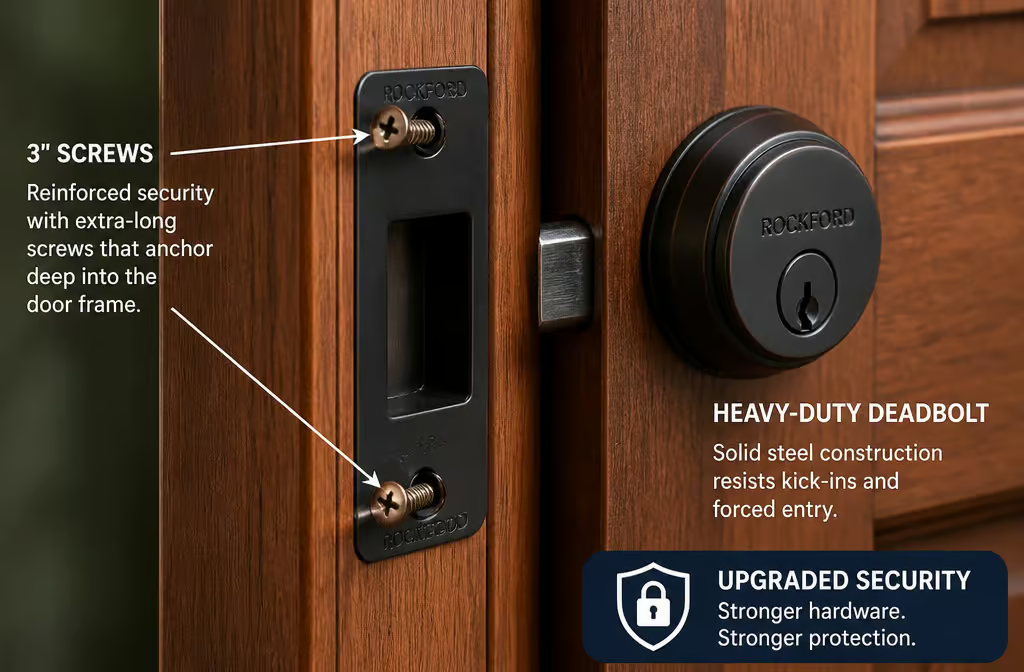
Here’s where the police specs get specific. The lock itself is the strongest part of the door system. The weak link is the strike plate — the metal piece attached to the door frame that catches the deadbolt. Off-the-shelf strike plates are held by half-inch screws that pull straight out of the soft wood of the jamb under a strong kick.
Police say the strike plate should be minimum 16-gauge steel, bronze, or brass, and it needs to be secured with at least four 3-inch screws that penetrate deep into the wall’s structural framing, not just the trim. Same goes for the door hinges: use 3-inch screws there too, anchoring them into the sub-frame. This single upgrade — about $5 for a box of screws and a decent strike plate, makes a difference in kick-in resistance.
If your exterior door swings outward, the hinge pins are exposed. Install non-removable pins (or weld a tack on the existing ones) so an intruder can’t pop the pins and lift the door off. A non-removable pin is a simple, inexpensive fix that eliminates this vulnerability.
Door material and glass near the lock
All exterior doors should be metal or solid wood. If the door has glass within 40 inches of the lock, that glass must be fully tempered or rated burglary-resistant — otherwise it’s a smash-and-grab invitation.
Check outside: lighting, landscaping, and visible signals
What happens outside your home matters as much as the locks on your doors, since burglars case a property before attempting entry.
Light is free deterrent
Criminals avoid light. Motion-activated lights at every access point — front door, back door, garage, side gates, are one of the effective low-tech upgrades. A motion detector triggers these lights automatically, startling anyone who approaches. Keep existing exterior lights on at night too. Police departments are unequivocal: a well-lit perimeter makes a house less appealing, and understanding what security system do burglars hate can guide homeowners toward the most effective deterrents.
Shrubs are hiding spots
Overgrown landscaping provides concealment for burglars. Prune shrubbery so it does not hide doors or windows. Cut back tree limbs that could be used to climb to a second story. Keep vegetation trimmed to eliminate hiding spots. This isn’t landscaping for curb appeal; it’s concealment removal.
Keep window coverings normal
Leave shades, blinds, and curtains in normal positions. A house with every shade drawn at 2 p.m. on a Tuesday is broadcasting “nobody’s here.” Leave shades, blinds, and curtains in normal positions.
Visible house numbers aren’t just for pizza delivery
Fairfax County Police point out a less obvious one: ensure your house number is readable from the street. In an emergency, response time matters, and if the ambulance or police car can’t find your house, the seconds add up.
Alarms, cameras, and the “investigation tool”
Electronic security systems add a layer of protection, but police bulletins offer a nuanced view of what they accomplish.
Alarms: deterrence plus signs
Good investment, especially with many valuables, isolated area, or history of break-ins. Consider professionally monitored systems; visible alarms and signs act as deterrents.
Cameras: they solve more crimes than they prevent
Here’s the nuance that police departments emphasize: security cameras are fantastic, but less for prevention than for evidence. Derby Police Lt. Caleb Rue put it bluntly — he can’t count how many crimes have been solved because a neighbor’s doorbell camera captured footage of someone checking car doors or casing a house. Cameras should record all entrances and exits.
Cameras should record all entrances and exits. Doorbell cameras like Ring let you check in remotely. And here’s a cost-flexibility detail from Lt. Rue’s bulletin: some camera subscriptions let you pay weekly rather than committing to a yearly contract, which removes the cost barrier for older adults on fixed incomes. The Neighbors by Ring app also lets you share footage directly with law enforcement.
Smart home security devices (doorbell cams, surveillance systems) let you monitor your home from anywhere — worth exploring, but not a silver bullet.
Daily habits that prevent most burglaries
Beyond hardware, the effective security measures are simple routines that become second nature.
The half-of-burglaries stat is your wake-up call
Nearly half of burglars entered through an unlocked door or window. That’s the single preventable vulnerability. Lock every door every time, even if you’re just running to the store for five minutes. Burglaries happen in broad daylight, and “just a minute” is plenty of time for someone to slip in.
The garage is a forgotten entry
The garage door itself should be kept shut, and the utility door from the garage into the house needs a deadbolt too — it’s overlooked. Same goes for cellar and patio doors. Do a full perimeter walk every so often and check that every exterior lock works properly. A broken lock is a false sense of security.
Make the house look lived in
Use timers so lights, radio, TV go on and off throughout the house to indicate someone is home. Use timers for interior lights, radios, or TVs. It’s the oldest trick in the book, but it works because it’s hard for a burglar to tell the difference between a human who left the light on and a timer. Keep bikes, grills, and lawnmowers locked up or out of sight — items left in the yard are a quick grab.
Going on vacation? Police security checklist
When you leave town for an extended period, the rules change — and the stakes get higher.
Don’t broadcast your empty house
Lubbock Police Lt. Brady Cross warns that a dark house with piled-up packages, and real-time vacation posts on social media are a neon sign saying “nobody’s home.” Don’t post about your trip until you’re back. Review your social media privacy settings to limit who can see your location.
The pre-trip checklist
- Stop mail and package delivery, or have a neighbor collect them daily. A pile of mail signals an empty house, so ask the post office to hold your mail.
- Ask a trusted neighbor to put out your trash barrels on collection day — a missed pickup is a dead giveaway.
- Arrange for lawn care or snow removal if you’ll be gone more than a few days. An overgrown yard or unshoveled walk screams “empty.”
- Use timers for lights, a radio, or a TV timed to match your normal routine.
- Keep blinds and curtains in their normal position — don’t close everything.
- Request extra patrols from your local police department. Lubbock residents can call 806-763-5333 specifically; many other departments offer similar services if you ask.
Neighborhood Watch and what to do in a break-in
Technology and hardware only go so far; the people around you are an essential part of home security.
The human layer
Neighbors working together with law enforcement make one of the best crime-fighting teams. A Neighborhood Watch group is free to start and has support from local PD, including District Offices staff who can provide guidance. Even without a formal group, sharing information about recent incidents with your neighbors makes the whole block more alert.
If you see signs of a break-in, do not enter
This one is counterintuitive but critical. If you arrive home and notice a broken window, a jimmied door, or the door ajar, do not go inside. The burglar might be there. Call 9-1-1 from a safe distance.
Don’t touch anything — you want the scene undisturbed for evidence. Your stuff is not worth getting hurt over.
Call 911 for suspicious activity
If you see someone acting suspiciously in your neighborhood, call. Don’t assume someone else will. Police departments stress that they rely on eyes and ears on the ground, and many share updates on platforms like Twitter and Facebook to keep residents informed. Fairfax County residents can also call the police non-emergency number at 703-691-2131 or follow @FairfaxCountyPD on social media for crime prevention information and local updates.
Valuables: making your stuff “radioactive” to thieves
Even if a burglar gets inside, you can make your belongings less appealing to steal.
The engraving protocol
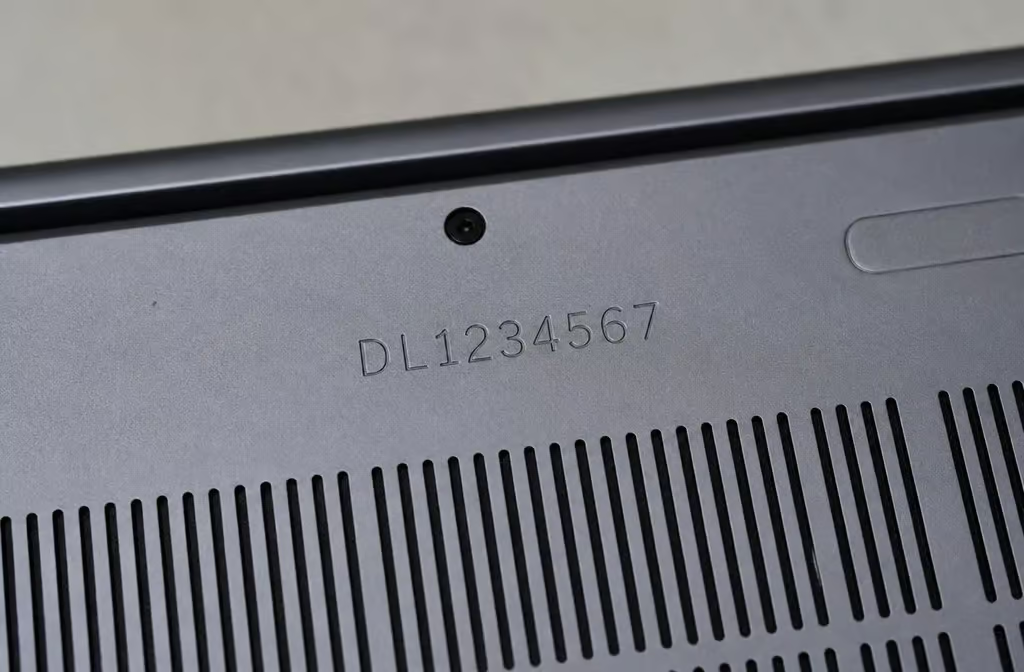
Police recommend marking valuables with your state abbreviation followed by your driver’s license number in an obscure spot (under a baseplate, inside a battery compartment, etc.). For example, a California resident would engrave “CA” followed by their license number. Burglars avoid marked merchandise because it’s hard to fence and is evidence if they’re caught. If the item is recovered, the marking makes it easier to return.
Photograph what you can’t engrave
Jewelry, silverware, antiques, and other items that can’t be engraved should be photographed. Take detailed shots that show unique markings or imperfections. These photos help with identification and insurance claims.
Cost check: You can engrave an entire electronics stack with a $15 tool from any hardware store — it’s the cheapest fence-proofing you’ll ever buy.
Gun safety and vehicle storage
Lt. Cross’s warning about firearms is specific and sobering: a teen stealing a gun from a car can turn a misdemeanor into a felony. Never leave firearms or other valuables in your vehicle. At home, store firearms in a locked safe with trigger locks.
Security for older adults and families
Derby Police Lt. Caleb Rue offers two recommendations for older adults. First, check in with older family members at least once a day — a quick call or visit that’s both a security check and a social connection. Second, consider security cameras with weekly subscription options so they’re not locked into a long-term cost. Strong locks, a doorbell camera they can manage, and that daily check-in form a simple but effective layer. The Kansas Department of Aging and Disability Services also operates a resource center for older adults seeking independence and hazard-prevention counseling.
For families with kids, especially during spring break, police remind parents to know where their children are and reinforce that small decisions can carry serious consequences.
The bottom line
The house burglars skip isn’t the one with the fanciest alarm system. It’s the one that looks lived in, has no convenient hiding spots, has a deadbolt that holds securely, and has neighbors who will call 911 if something looks off. That 3-inch screw through the strike plate is more effective than a smart lock if the frame isn’t reinforced.
We went through a stack of police bulletins expecting to find expensive gadget recommendations. What we found instead was a set of simple, logical fixes — most of which cost under $20 and take less than an hour. That’s the kind of security advice that works.
People Also ask
What do burglars hate most?
Burglars hate houses that look lived in, have no convenient hiding spots, and have neighbors who will call 911 if something seems off. They also avoid well-lit perimeters with motion-activated lights, visible alarm signage, and doors with deadbolts secured by 3-inch screws that actually anchor into the structural framing.
How to tell if police are watching your house?
There’s no reliable way to know for sure, but police departments often offer extra patrols for vacation homes if you request them. If you see increased patrol cars passing by or officers taking note of your property, it could mean they’re keeping an eye out, but most departments don’t advertise surveillance.
What are some recommendations for home security?
Start with the basics: lock every door and window every time, since nearly half of burglars just walk through an unlocked opening. Upgrade your strike plates to 16-gauge steel with 3-inch screws, install a deadbolt with a one-inch throw, add motion-activated lights at all entry points, and trim landscaping that could hide an intruder.
Can cops legally tell you to stop recording?
In most public spaces, you generally have the right to record police officers performing their duties, though specific laws vary by state. If you’re on your own property recording, the rules are even clearer in your favor. That said, it’s always smart to know your local laws and stay calm if an officer questions you.
What size screws should I use for a door strike plate?
Police recommend 3-inch screws for the strike plate, not the half-inch screws that come with most lock kits. Those long screws penetrate deep into the wall’s structural framing rather than just the soft wood of the door jamb, making a dramatic difference in kick-in resistance for about $5.
How does a Charley bar work for sliding doors?
A Charley bar is simply a dowel or broomstick placed in the inside track of a sliding glass door so it can’t slide open. It blocks the most common attack, but you should also drill an anti-lift pin through the door frame into the fixed frame to prevent someone from lifting the door straight off its track.
Is engraving valuables actually worth it?
Yes, police recommend marking valuables with your state abbreviation and driver’s license number because burglars avoid marked merchandise — it’s hard to fence and becomes evidence if they’re caught. A $15 engraving tool from any hardware store can mark an entire electronics stack, and if the items are recovered, the markings make them much easier to return to you.
What should I do if I come home and see signs of a break-in?
Do not go inside — the burglar might still be there. Call 911 from a safe distance and don’t touch anything so the scene stays undisturbed for evidence. Your stuff is not worth getting hurt over, and police need the scene intact to collect fingerprints and other evidence.
