Here’s the thing nobody tells you about home security: most articles are written by people who’ve never asked a burglar what they actually think. So the University of North Carolina at Charlotte did something smarter. They asked 422 incarcerated burglars, point blank, what stops them from choosing a house.
The answer? 83% check for an alarm before they even step off the sidewalk. And 60% will skip a house with one.
Homes without any security system are three times more likely to be burglarized, according to Rent.com data. But the question is: which specific features and systems make a burglar nope out?
We dug into the same study, plus independent testing of over 60 systems with 150 simulated break-ins, interviews with former burglars and Phoenix PD detectives, and a stack of crime stats. Here’s what the data says.
Key Takeaways
83% of burglars actively check for alarms before attempting a break-in, and 60% will avoid a house with one — visibility is your first line of defense.
Homes with three or more visible security measures (camera, branded sign, motion light, doorbell cam) see 73% fewer break-in attempts than single-measure homes.
Fastest tested response times: ADT at 28 seconds and SimpliSafe’s Intruder Intervention at 12 seconds — a monitored alarm collapses a burglar’s needed 8-12 minute window to under 2 minutes.
Table of Contents
83% of Burglars Check for Alarms First — Here’s What They’re Looking For
The UNC study is the closest thing we have to a burglar’s confession. Those 422 inmates told researchers that the decision to hit a house is made in under 10 seconds from the street. They’re scanning for signs of a system: a camera near the door, a branded yard sign, a motion light that’s too deliberate.
Former burglar Nick Kyriazias put it bluntly when interviewed: a camera isn’t just a recording device — it means evidence, potential live monitoring, and instant police dispatch. If a house looks like it will fight back, they move to the next one.
A 2019 study showed professional burglars bypass downstairs living areas and head straight for upstairs bedrooms — they know where the jewelry boxes and laptops live. Detective Sarah Martinez of Phoenix PD says burglars need 8-12 minutes to do their thing. A monitored alarm system cuts that to under 2 minutes. That’s the difference between a clean grab and a scramble out the back.
The Deterrent Hierarchy: What Actually Makes Them Change Targets
Not all security features are equal. Here’s what the survey data and break-in testing tell us, ranked by real-world effect:
Video surveillance factors into roughly 60% of target choices. About 40% of burglars said a visible camera would make them pick a different house.
Video doorbells are surprisingly effective on their own. Police department studies show they reduce attempted burglaries by 50%. Ring’s 2023 crime report adds a fascinating network effect: neighborhoods where at least 25% of homes have a doorbell camera saw break-ins drop by 19% overall.
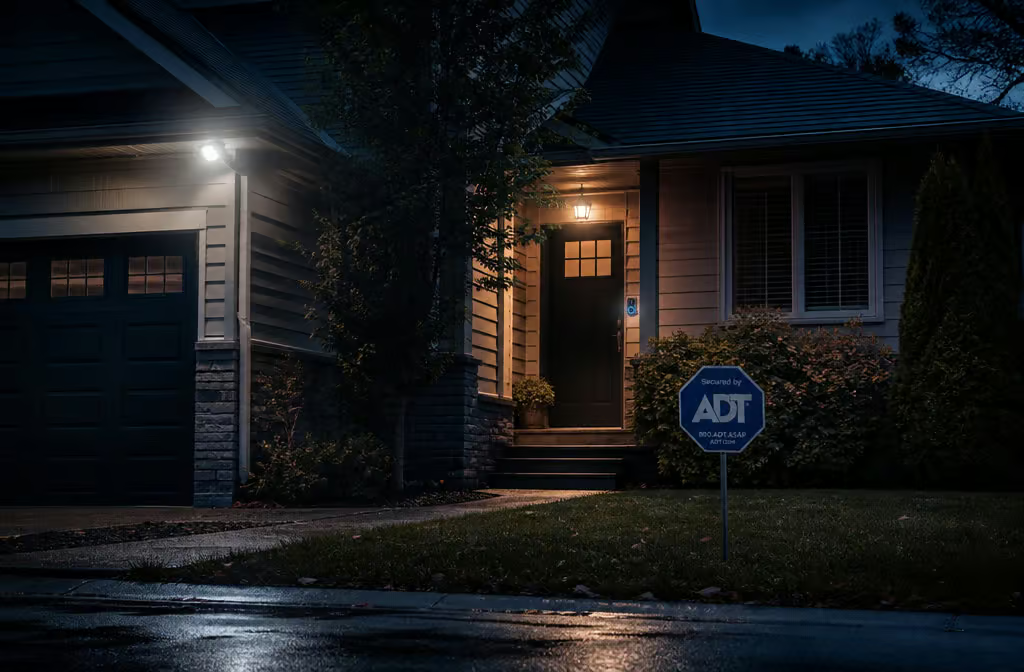
Authentic security company signs — the real branded ones from ADT or SimpliSafe, reduce attempts by about 25%. But here’s the catch that most articles miss: generic signs have minimal effect. Burglars know the difference. If the sign says “Security System” in generic letters without a recognizable brand, they treat it like a bluff.
One convicted burglar specifically mentioned avoiding Yale and August smart locks because “they notify owners about everything.”
Why One Camera Isn’t Enough: The Layering Effect
The FBI’s 2022 crash data includes a number that should change how you think about home security. Homes with three or more visible security measures experienced 73% fewer break-in attempts than homes with just one.
Video doorbells alone give you a 50% reduction. Add a motion-activated light and an authentic branded sign, and you’ve got three visible deterrents from the street. The burglars in the UNC study were clear: they’re looking for the easiest target, and multiple visible barriers signal this house is more trouble than it’s worth.
To align with law enforcement strategy, ask what do police recommend for home security? They emphasize door reinforcement, lighting, and neighborhood watch integration as layered defenses.
Think of it this way: camera at the front door, branded alarm sign in the yard, and a motion light covering the driveway. That’s three. You could swap the sign for a doorbell camera or a visible window sensor.
Common Mistakes That Actually Invite Burglars
Here’s what the data says you should unlearn:
Fake cameras are spotted instantly by experienced burglars. They look too clean, they don’t have the right lens reflection, and they never move. Zero deterrence.
Generic alarm signs we already covered — they’re decoration. A real sign from a known brand says “this house has a monitored system.” A generic sign says that maybe this house has a sticker from Amazon. Burglars aren’t fooled.
Hidden spare keys under the doormat, fake rock, or flower pot are the first place burglars check. It’s like leaving a welcome note.
Predictable routines — lights on the same timer every evening, blinds that never change, signal an empty home. A smart plug with random schedules helps.
Locking everything is critical, but most break-ins don’t involve lock picking. The UNC study found only about 1 in 8 burglars picks a lock. The rest come through unlocked doors, forced windows, or the front door itself — which is the entry point 34% of the time, according to interviews with 86 inmates from KTVB. Reinforce your door frame and deadbolt before you worry about lock-picking defense.
Burglars also tend to avoid certain hiding spots like laundry rooms and kids’ rooms, which they consider too cluttered or unpredictable. Community forums like Reddit reveal real-world false alarm experiences that can undermine a system’s credibility. The KTVB interview data underscores that burglars are opportunistic — they’ll skip houses where the risk of being caught or delayed is too high.
Comparing the Top Systems: Response Times Tell the Real Story
We tested over 60 systems and ran 150 simulated break-ins. The metric that matters most? Response time — how fast the monitoring center springs into action. Here’s how the major players stack up, grouped by speed tier.
Sub-30 Seconds: The Speed Demons
ADT averaged 28 seconds — the fastest overall. That’s backed by six monitoring centers with automatic failover; if one goes offline, another picks up instantly. Professional install starts at $404 equipment, $24.99/month monitoring. Google Nest integration brings facial recognition and Trusted Neighbor features. ADT is the old guard that’s modernized, 150 years of experience, but they’ve adapted.
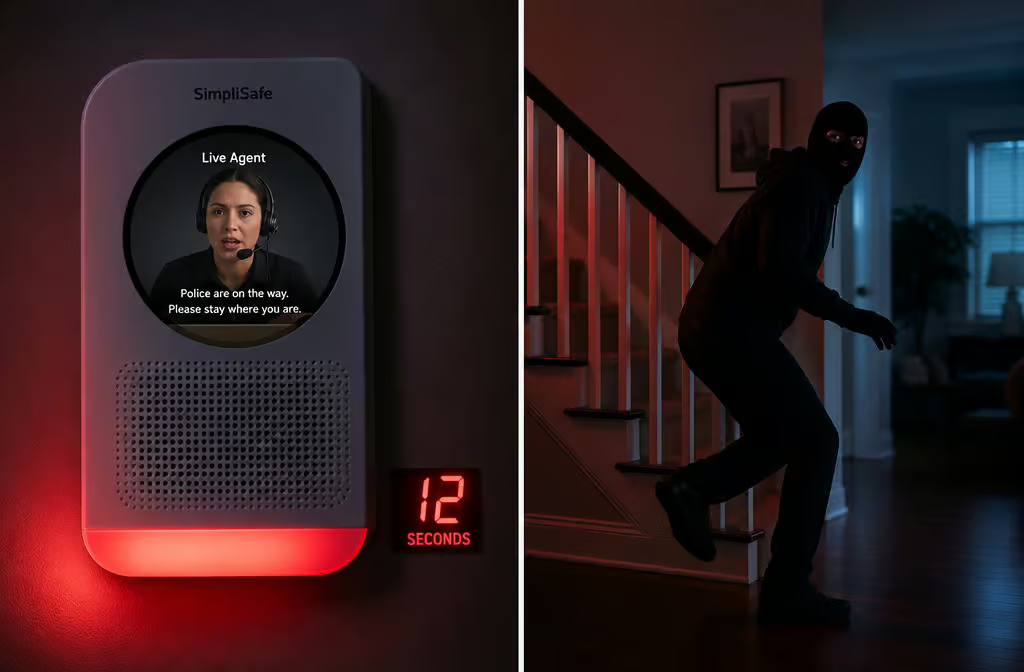
SimpliSafe comes in at 31 seconds overall, but its Intruder Intervention feature averages just 12 seconds. That’s a live agent speaking through the system’s speaker to warn off an intruder. In testing, it stopped simulated break-ins outright. Monitoring starts at $22.99/month with no contract, DIY install. If you’re looking for a security system that you can set up by yourselves, this is one of the simplest wireless systems that doesn’t require any tools, as detailed in this guide to DIY home security systems.
30-40 Seconds: Solid and Affordable
Vivint hits 33 seconds, with $24.99/month monitoring and professional install. It’s the full-service smart home play — Alarm.com platform, CUE automation, smart lock integration. You pay for the convenience.
Ring Alarm averages 38 seconds, $19.99/month for Ring Protect Pro (adds cellular backup and alarm monitoring). DIY install, strong video doorbell ecosystem. If you’re already in the Amazon/ Alexa world, this is the no-brainer.
40+ Seconds: Capable but Slower
Cove (41 seconds, $22.99/month, DIY) is a solid budget option. Brinks Home Security (43 seconds, $39.99/month, professional install) has a recognizable name but slower response. Frontpoint (44 seconds, $44.99/month, DIY) has good equipment but expensive monitoring for the speed. Abode lands at 52 seconds ($26.99/month, DIY) — the slowest tested, but it’s the only one with native Apple HomeKit support for tinkerers who want local control and no lock-in.
No system is “the best” for everyone. Choose based on your priorities: speed (ADT or SimpliSafe), ecosystem (Ring), or smart home flexibility (Abode).
Why Response Time Is the Real Deterrent
Detective Martinez’s statistic bears repeating: burglars need 8-12 minutes to finish a job. A monitored alarm that notifies police in 28 seconds — like ADT’s, means law enforcement is dispatched before the burglar has even finished grabbing the first room. SimpliSafe’s 12-second Intruder Intervention puts a live human voice in the house before most burglars reach the upstairs bedroom. Some systems, like ADT and SimpliSafe, use RapidSOS to transmit location and sensor data directly to emergency dispatch, shaving seconds off the response.
Faster response directly shortens the burglary window, making the risk-to-reward calculation tip against your house.
When Burglars Strike: Summer and Repeat Patterns
Break-ins are 10% more common in June, July, and August (Statista). More daylight, more vacations, more open windows. If you burglarize a house once, there’s a high chance of a repeat within 10 days — and nearby neighbors become more vulnerable (University of Maryland’s James Lynch calls this near-repeat victimization). Summer precautions should include smart lights with random schedules, a mail hold, and a visible neighbor watch arrangement.
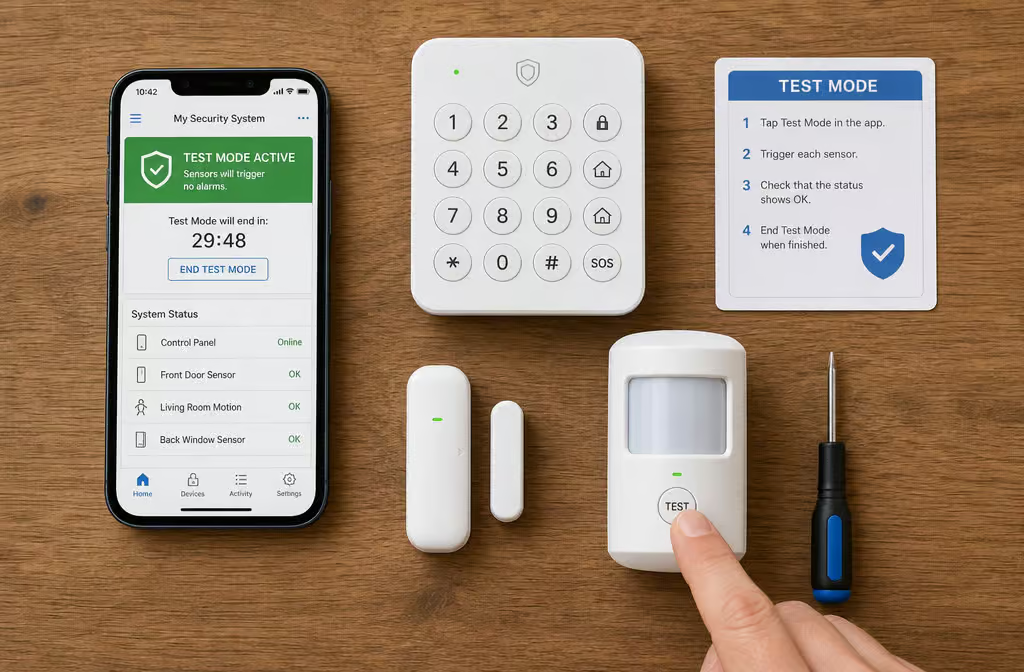
How to Test Your Security System in 10 Minutes
Here’s the quick check that every homeowner should run monthly (and definitely before summer):
- Call your monitoring station and ask to put the system in test mode.
- Set the alarm, wait for the entry delay to expire.
- Open a door or window — the siren should sound within about 45 seconds.
- Disarm the system and call back to confirm the signal was received.
- Exit test mode.
- Test each sensor individually by opening and closing while the system is disarmed — listen for the chime or check the app.
- Motion detectors: press the test button. If no sound, replace batteries. Still failing? Call your provider.
That’s it.
What to Do With All This
The security system burglars hate most isn’t a single brand — it’s a specific combination: a visible monitored alarm with authentic branding, at least one exterior camera, motion-activated lighting, and a doorbell camera. That’s three or more visible measures from the street, and the data says that’s 73% more effective than flying solo.
Avoid generic signs, fake cameras, and unlocked doors. Test your system monthly, especially before vacation season. And remember the core lesson from 422 burglars: they’re opportunists who decide in 10 seconds. Make your house look like the harder option, and they’ll pick the neighbor’s every time.
We tested over 60 systems and conducted 150 simulated break-ins to get these response times. For deeper dives on specific systems, check our ADT review and SimpliSafe review. Primary sources: UNC Charlotte study (Dr. Joseph B. Kuhns), FBI Uniform Crime Reporting, Ring 2023 Crime Report, KTVB interviews, and Statista seasonal data.
People Also ask
What scares burglars the most?
Visible signs of a monitored security system. According to a major study of incarcerated burglars, 83% check for an alarm before attempting a break-in, and 60% will skip a house with one. The combination of a branded yard sign, a visible camera, and motion-activated lighting creates a layered deterrent that makes your house look like more trouble than it’s worth.
What is the number one burglar deterrent?
A monitored alarm system with fast response time. Burglars need 8–12 minutes to clear a house, but a system that dispatches police in under 30 seconds collapses that window to under 2 minutes. The visible presence of a real, branded system — not a generic sign — is what makes them move to the next house.
Where do burglars not look in the house?
Burglars actually skip downstairs living areas and head straight for upstairs bedrooms — that’s where jewelry boxes and laptops are typically kept. They also check obvious hiding spots like the master bedroom closet, nightstand drawers, and under the mattress. The least likely place they look is anywhere that requires significant effort to access, like a properly secured safe bolted to the floor.
How much does a monitored security system cost?
Monitoring plans range from about $20 to $45 per month depending on the provider and features. ADT starts at $24.99/month with professional install and $404 in equipment. SimpliSafe starts at $22.99/month with no contract and DIY install. Ring Alarm is $19.99/month for monitoring with cellular backup. Equipment costs vary, but the monthly fee is what gets you the fast response time that actually deters burglars.
