
Queue into five consecutive matches on a Friday night and the voice channel sounds identical every time: three guys arguing over a callout, one eating chips into an open mic, and two silent icons that never light up. Flip over to Hinge or Tinder, and the few women who mention video games in their prompts either stop replying after two messages or have their guards all the way up before you finish saying hello. It’s easy to look at that pattern and conclude that single female gamers barely exist.
What you’re actually looking at is a visibility and approach problem, not a scarcity problem. Because open voice channels and dating apps punish women who broadcast their hobby, most mute their microphones, run gender-neutral profiles, and blend into the lobby wallpaper. Once you understand the mechanics of where women who play games actually hang out, how to spot those quiet profiles, how to make first contact without tripping their defenses, and what the realistic multi-year timeline for self-improvement looks like, the math changes completely.
Key Takeaways
Female gamers make up a massive share of the player base, with a March 2025 Refinery29 essay citing a figure that 72 percent of women identify as gamers, yet 59 percent hide their gender online to dodge harassment.
Meeting a gamer girlfriend works best when you skip big lobbies in favor of 0-3 viewer Twitch streams, Discord communities for female-heavy genres like The Sims and fantasy RPGs, and a three-step teammate-first approach.
Psychiatrist Dr. Alok Kanojia (Dr. K) notes that roughly 90 percent of single people misdiagnose why they are single, and genuine self-improvement for dating takes a three-to-seven-year commitment.
Table of Contents
Why gamer women hide in plain sight
Female gamers are a core gaming demographic rather than a statistical outlier, with a March 2025 Refinery29 essay citing a figure that 72 percent of women identify as gamers, even though most remain undetectable in multiplayer lobbies because they actively mask their gender. Women wrote and created landmark franchises like Uncharted and Tomb Raider, and the world’s oldest video game champion was a woman. Yet unlike in anonymous digital spaces such as the Tuffpuff online casino, women who openly share their gender in lobbies or on dating apps face blatant misogyny, which is why 59 percent mask their identity while playing online to dodge harassment.
In a YouTube guide by GamedevChoom, a creator married to a gamer for three years who grew up in a teenage female gaming community and compiled his advice with his wife, every female gamer he knows has hit casual sexism said that you suck, you’re a woman, go back to the kitchen when playing badly, or met with simping and alpha-wolf posturing when playing well. Women adapt either by becoming openly toxic (“bulletproof toxic goddesses”) or by hiding their gender to blend in. That second group is much larger, and many are introverted and single. Australian academic Mahli-Ann Butt, in an August 2017 VICE report on her 15,000-word thesis about the “gamer girlfriend” label, documented how women mute mics, press push-to-talk directly against the microphone to alter their voice, downplay femininity, and skip game talk to avoid “real gamer” trivia tests. In a silent Discord server, you can share a lobby with several women for months and never know it.
Where to find a gamer girlfriend
Finding a gamer girlfriend is a matter of joining the specific online and offline spaces where gaming happens naturally and conversation isn’t drowned out by crowd noise. Across GeekExtreme, we always look at the underlying system mechanics rather than surface hype, and the consensus venue map for meeting female gamers spans several distinct environments:
- Online multiplayer lobbies where you can team up regularly
- Discord community servers built around specific titles
- Dedicated niche platforms like LFGdating and GamerDating
- Mainstream dating apps like Tinder and Hinge, optimized with clean PC or console setup photos and favorite titles in your bio
- Local gaming conventions and neighborhood tabletop or video game stores
- Small Twitch channels with 0 to 3 viewers
- Official game social network pages filtered by location
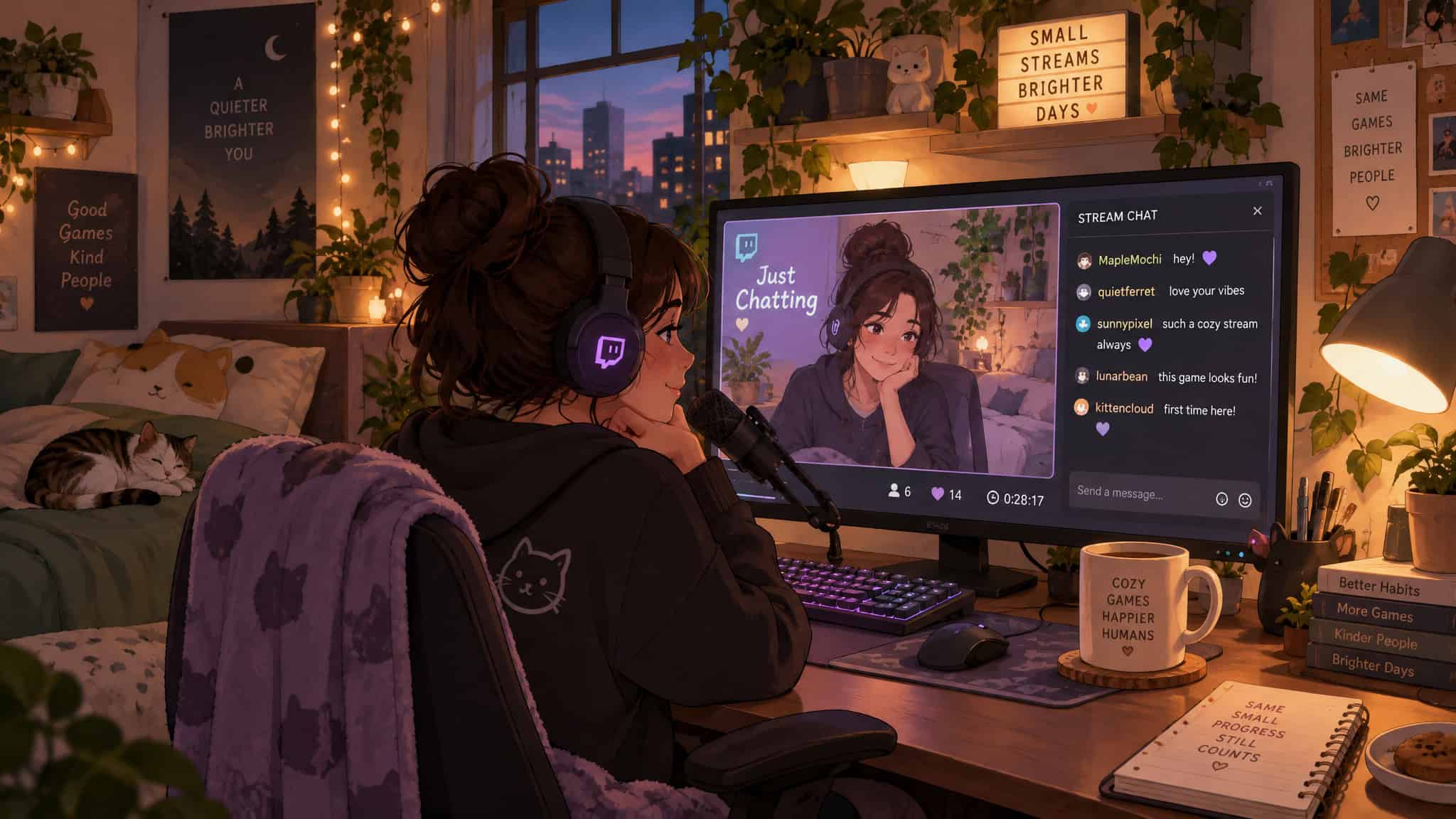
Small Twitch channels with 0-3 viewers
Instead of competing for attention in massive streams, GamedevChoom recommends scrolling past the top directories, and explicitly skipping hot tub or body paint streams, all the way down to channels with 0 to 3 viewers. Drop casual, game-related messages in the chat without asking anything personal. If the vibe is good, follow the channel and offer practical, non-pushy support like microphone quality tips or stream settings advice, without acting annoying or putting on an over-the-top alpha-male act.
Female-heavy game genres and their Discord servers
Discord servers for farming simulators and life sims are the most reliable places to meet a gamer girlfriend because those genres already draw a large female player base. Instead of hoping to connect in toxic shooter lobbies, build friendships where single female gamers actually hang out before introducing a partner to other genres later. GamedevChoom points to five reliable genres for meeting women on Discord:
- The Sims
- Farming simulators
- Dance games
- Fantasy RPGs
- World exploration games
Game official pages and social networks
GamedevChoom’s wife points out a straightforward social network filter that most guys overlook: filter community member lists by sex and location to see who lives in your city. Before sending a message, browse the game’s official page posts, comment threads, and photo albums to get a genuine read on a woman’s personality and interests.
Dating apps and in-person spaces
Mainstream dating apps like Hinge and Tinder alongside niche gamer dating platforms like LFGdating and GamerDating are practical options for players who want to state their hobby upfront, provided you handle the profile signaling carefully. On Tinder, showing a clean console or PC setup in your photos and naming specific favorite games in your bio works much better than generic labels, while local conventions and game shops offer face-to-face proximity. However, as the March 2025 Refinery29 essay shows, putting “gamer” on a dating app profile also triggers immediate stereotyping, meaning how you reply matters far more than the match itself.
How to approach a girl in a game
- Treat her like a person first: When learning how to meet female gamers without making anyone uncomfortable in a shared lobby, start with GamedevChoom’s recognition step by spotting personality cues in nicknames, in-game profiles, and character skins over a few weeks of play rather than running trivia tests.
- Be a solid teammate: Make first contact by communicating cleanly in-game, complimenting good plays, and queuing up again after matches while avoiding backhanded compliments and alpha-wolf behavior.
- Keep a balance: Maintain a life outside the screen and only ask for off-platform contact details to coordinate play times after several sessions together, opening those outside-game chats with recent match talk and humor.
- Recognition: Spot personality patterns in nicknames and character skins over a few weeks of play.
- First contact: Act as a courteous, reliable teammate who compliments good plays and queues up again without posturing.
- Moving outside the game: Ask for off-platform contact details after several sessions to coordinate play times, then open with match talk and humor.
Recognition: read nicknames, profiles, and skins
Reading nicknames, in-game profiles, and character skins lets you spot female players quietly without interrogating anyone on voice chat. Female players use every color palette, including black, red, neon, and purple, so color alone tells you nothing. Instead, look for ordered, aesthetic themes in avatars and handles, such as cats, foxes, anime girls, witchy motifs, or nature imagery. GamedevChoom estimates it takes a few weeks of regular playtime to get good at spotting these patterns naturally.
First contact: be the teammate she’d play with again
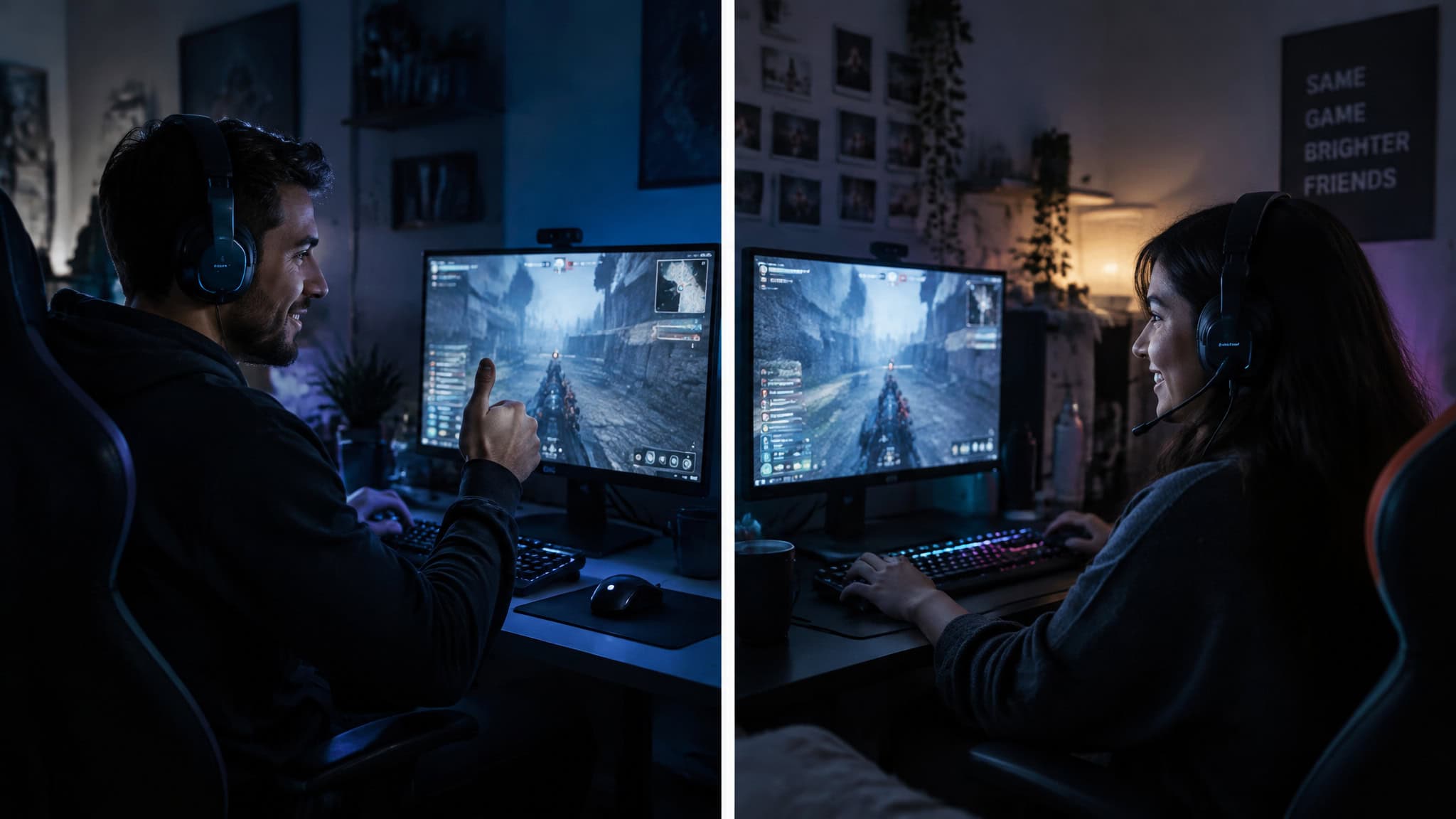
Meeting female gamers without being creepy is a matter of replacing unsolicited flirting and alpha-wolf posturing with courteous, competent teammate behavior, because women already mute their microphones and guard against casual sexism in every lobby. When you suspect a teammate is a woman, treat her like a valued squad member: say “well played” or “nice try,” and offer calm item or build suggestions without pushing if she declines. Drop backhanded compliments and pestering completely. After the match, send a plain message saying you enjoyed playing together and would be down to queue again. Across this stage, build a broad pool of social connections rather than fixating on a single player.
Moving the conversation outside the game
Once you’ve queued together across several sessions, ask for her Discord or social contact info so you can schedule future games. When you message her outside the game, open with gaming topics like dissecting a chaotic recent match, and lean on self-aware humor. GamedevChoom’s video jokes about opening with a gag referencing “Andy Rea,” imagining “reinstalling her Windows” before bed, or falling in love with Sims. Every person reacts differently, so treat occasional non-replies as normal variance and keep your social circle wide.
Why gamer women are guarded before you speak
If a woman on an app or in a lobby seems skeptical the moment gaming comes up, that reaction was built by decades of industry marketing and targeted harassment rather than anything you just said. In her 15,000-word thesis, Mahli-Ann Butt found that gaming magazines constructed a regulatory fiction that video games were meant for boys, fueling gatekeeping practices that treat first-person shooters as the only legitimate gamer titles and everything else as fake.
That attitude repeatedly surfaced in the industry itself. In 2012, the lead designer of Borderlands 2 described a playable support character built for players who “suck at first-person shooters” as the “girlfriend” mode, a remark VICE cited as emblematic of why women aren’t taken seriously in gaming. One year later, in 2013, the GamerGate harassment campaign targeted female gamers and critics, handing Milo Yiannopoulos a platform as an alt-right poster boy and cementing women’s distrust of male-dominated gaming spaces. As the Refinery29 author pointed out, men doubting her hobby follows the exact same gatekeeping script as men online refusing to believe Megan Thee Stallion actually likes anime, assuming women only fake geek interests for male validation.
Mistakes men make that repel gamer women
Men routinely sabotage their chances with gamer women when they treat a woman’s hobby with surprise, stereotype her taste, or act superior in the match or chat. After five years single across early-days Tinder and Hinge (while skipping NYC speed dating), the Refinery29 author added “being a gamer” to her Hinge prompts in 2024, a year before her March 2025 essay, expecting it to filter out incompatible matches; instead, dating got much harder.
Doubt, accusations, and the cozy-gamer assumption
Men assume girl gamers only play cozy games because print-era gatekeeping framed action titles as male territory, leading guys on dating apps to tie a woman’s femininity to gentle genres. When Hinge matches saw the Refinery29 author’s Xbox prompt, they expressed shock, accused her of lying, or asked what farming or puzzle games she played. In reality, she grew up renting the SpongeBob SquarePants Movie game and Bratz: Rock Angelz from Blockbuster with her mom and sister, browsed GameStop after school, and played on PS2, Nintendo DSi, and Xbox 360. She counts Assassin’s Creed as her favorite franchise, prefers Skyrim over Stardew Valley (which she’s never loaded up), and favors gory story games like Resident Evil alongside occasional Animal Crossing and The Sims.
Unsolicited teaching offers
Other matches responded to her Hinge profile by announcing they’d teach her Mortal Kombat, assuming a feminine woman couldn’t know fighting games. She rejected the “pick-me” accusation that liking action games is a bid to be “one of the boys,” noting she follows a man on TikTok who loves Stardew Valley and Coral Island and that weapon-heavy games don’t reduce femininity any more than cozy games reduce masculinity.
Should the ‘gamer’ label go in a profile at all
Putting “gamer” in a dating profile works as a high-contrast compatibility filter rather than an automatic magnet, because the label draws out gendered stereotypes just as quickly as shared interests. The Refinery29 author could have deleted “gamer” from Hinge to stop the sexist replies, but she wasn’t about to hide part of herself to appease mid-20s men. She kept her pink closet and Billie Eilish heartbreak ballads right alongside Assassin’s Creed Odyssey and Mortal Kombat, letting bad opening messages weed themselves out.
Court a gamer girlfriend like anyone else
Planning real dates, romance, and chivalry is mandatory for any man pursuing a gamer girlfriend, because treating shared couch co-op as a substitute for courtship makes gamer women feel less date-worthy than other matches. In her March 2025 essay, the Refinery29 author explained that after she added “gamer” to her Hinge profile, men repeatedly assumed she didn’t need actual dates or romance and would be satisfied just “chilling” and playing video games at home.
She connected that lazy courtship habit to a wider cultural moment where dating remains rigidly heteronormative and gendered, noting that society is “still at first base” on gender roles amid rising tradwife content and attacks on women’s bodily autonomy. When a woman steps outside her expected lane by owning an Xbox or liking gory RPGs, men on apps too often assume she’s doing it for male approval and waive the basic effort they’d bring to any other first date.
Dating a gamer girlfriend: dynamics that make or break it
Controlling partner behaviors, role policing, and fragile egos are the real relationship risks in gamer couples, dating a gamer is not a red flag on its own. Women gamers face blatant misogyny in dating and, as gamer girlfriends who are often introduced to gaming by their partners, a history of being viewed as a sidekick to their boyfriend’s gaming and not a player in their own right. Understanding what day-to-day life with a gamer girlfriend looks like comes down to separating controlling habits from genuine partnership.
Sidekick treatment and control
Mahli-Ann Butt began her 15,000-word thesis after her boyfriend suggested she play a healer in World of Warcraft when she wanted to play a mage or wizard. She found that boyfriends often buy and organize games for girlfriends, which can be well-intentioned but also serves to increase the boyfriend’s own gaming time. Worse, one interviewee’s partner insulted and ignored her for hours whenever she beat him, until she started losing on purpose. Every abusive gamer-partner relationship in Butt’s study was a former partner, and she emphasized that online abuse is real abuse and bystander boyfriends who stay silent during verbal harassment are complicit.
The protective partner dynamic
Meeting and dating a gamer girlfriend without being a hardcore gamer yourself is entirely workable when you build connection through shared proximity and mutual respect rather than trying to outscore her. Partners regularly introduce each other to new genres, and Butt found that playing alongside a supportive partner or friends shields women from online abuse. Standing up to verbal harassment in voice chat actively enables women to play online in welcoming spaces free of arbitrary “real gamer” rules.
Diagnose yourself before you fix your dating life
Before cycling through another round of dating tactics, you have to diagnose the actual root cause of why you’re single, because psychiatrist Dr. Alok Kanojia (Dr. K of HealthyGamerGG) notes that half or more of a medical professional’s job is diagnosis and six failed treatment attempts signal a diagnostic error. Just as humans immediately clean up a spilled glass of water, we fix problems quickly once the problem is accurately identified. In a psychotherapy lecture of about 15 residents, Dr. K’s residency professor asked what they would do if a patient asked for help finding a girlfriend, and a psychoanalytic supervisor shared how one patient broke through only after three years of four-times-weekly psychoanalysis. Having worked clinically with red-pill, black-pill, and incel patients, Dr. K estimates that 90 percent of single people’s self-diagnoses are wrong (citing Nobel laureate Daniel Kahneman on untrained human thinking), since childhood core beliefs (samskaras, like a child of divorce concluding “I’m not worth their time”), Jungian Shadow blind spots (mistaking a fear of being noticed for low self-esteem), pickup-artist/Red Pill negging masks, and labels like “alpha,” “beta,” or “incel” distort relationships and fuel chronic depression (dysthymia).
The 3-7 year timeline and what to work on
Self-improvement for dating works, but Dr. K points out that it takes roughly three to seven years (and at least five years if you’re starting with zero social skills), because the first year or two of building social skills, professional and financial independence, fitness, and mental health is “leveling up” rather than “zoning into the raid”, much like how planting a seed takes years before fruit appears. Surviving a dating app landscape where a man faces an estimated rejection ratio of 80 times before one yes (and 50 rejections on Tinder) requires focusing on controllable actions over outcomes to prevent anhedonia, processing resentment outside of dates, and overcoming emotional suppression (alexithymia) to build platonic female friendships. It also means dating securely attached partners. Given an attachment style distribution of 50% secure, 25% anxious, and 25% avoidant, Dr. K notes that his own wife tolerates his anxiety and anger incredibly well. Finally, as a supervisor once told Dr. K that his work is valuable but “it’s not therapy,” use goal-focused coaching or peer support for roadblocks while reserving clinical disorders for a psychiatrist or therapist, then pick one gaming venue that fits your routine, run the teammate-first approach, and commit to the five-year horizon.
Frequently Asked Questions
How rare is a gamer girl?
They aren’t rare at all—a March 2025 Refinery29 essay cites a figure showing 72 percent of women identify as gamers. You just don’t notice them in public lobbies because 59 percent conceal their gender online to avoid sexist harassment and unwanted attention. Instead of speaking on open mics, most run gender-neutral profiles or stick to quieter communities.
Is a gamer a red flag?
Playing video games isn’t a red flag by itself; the real relationship killers are fragile egos, role policing, and controlling behavior. Academic researcher Mahli-Ann Butt found that toxic partnerships happen when a guy treats his girlfriend like an in-game sidekick, forces her into support roles, or sulks when she outplays him. Conversely, a partner who respects her taste and backs her up when voice-chat harassment starts makes gaming together a huge plus.
how to approach a girl in a game without making her uncomfortable
Use a slow, three-step teammate approach: spend a few weeks noticing aesthetic profile or skin themes rather than interrogating people on voice chat, then prove yourself as a calm, courteous player across several matches. Say “well played,” offer build tips only without pushing, and send a plain post-match message asking to queue again. Only ask for her Discord or social info to coordinate play times once you’ve actually built trust over multiple sessions.
