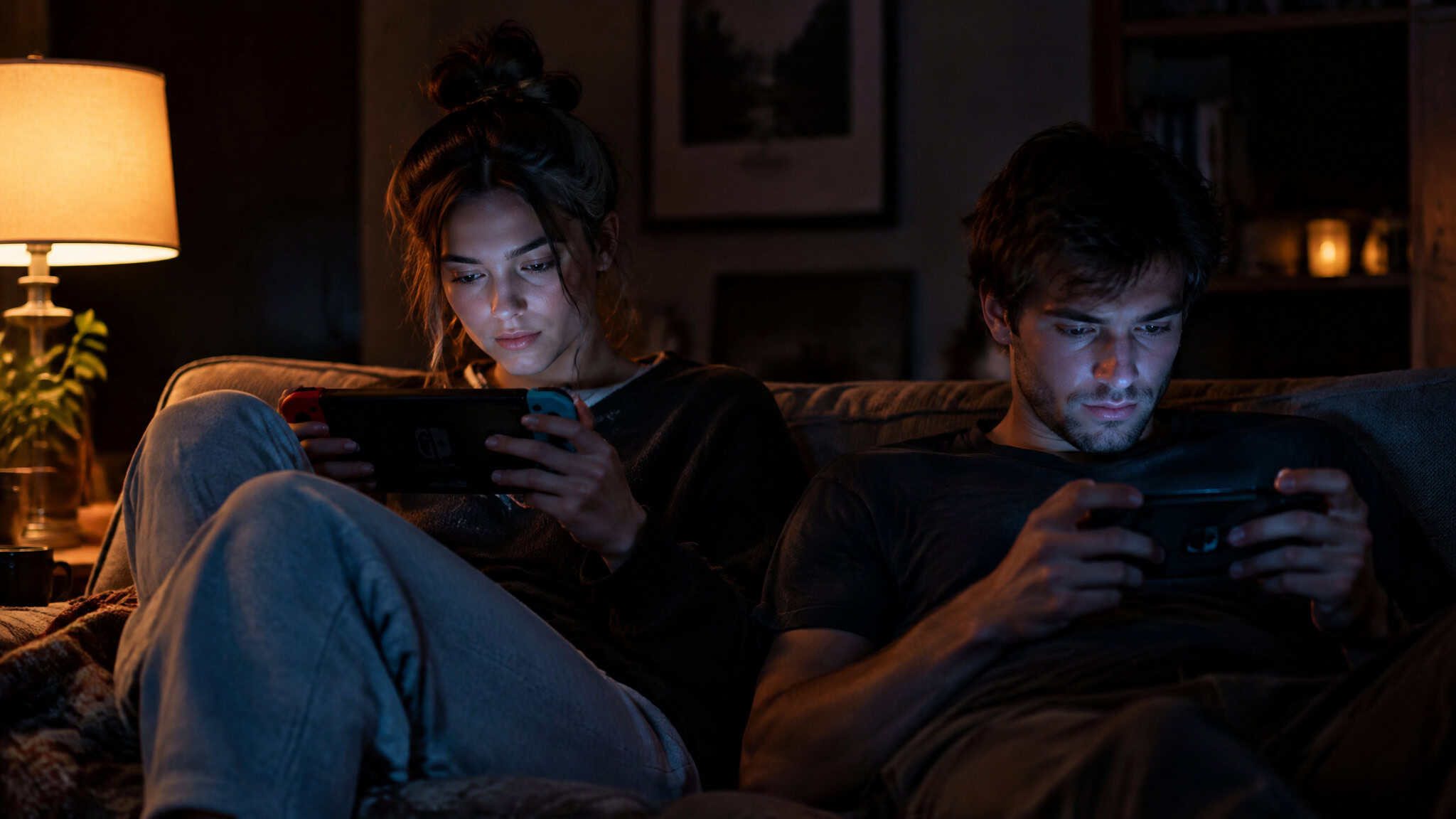
Mainstream advice on dating a woman who games stops the second you get a first date and goes completely silent on month six, when the couch-cuddle caricature gives way to separate screens, independent competitive lobbies, and real schedule architecture. If you already have a gamer girlfriend, the daily reality comes down to navigating solo play time, co-op sessions, and friction over in-game choices, which is the exact territory behind late-night searches about whether dating a gamer is lonely or what it looks like to date someone addicted to video games.
Key Takeaways
Intensity is a property of the player rather than the title, from Peggle speedruns to Chain Chomp Braden spending roughly six years building and beating the Super Mario Maker level “Trials of Death.”
Niche gamer dating apps like Kippo, GameTree UwU, LFGdating, and Covalent verify gaming habits directly, offering an alternative to mainstream apps where 364 million global users spent an average of 80 minutes a day as of 2025.
A study published in Personal Relationships interviewing six women aged 20 to 38 found that actual relationship red flags stem from Dark Triad manipulation tactics like “dread game” and love-bombing, not a partner’s Steam library.
Table of contents
Table of Contents
Gamer girl myths and the gatekeeping double standard
Common misconceptions about gamer girls are stereotypes that frame women who play video games as rare, fake, or attention-seeking hobbyists who only touch casual titles. Dating a gamer girl is rarely a cartoonish caricature of sharing one controller on a couch, and female gamers regularly navigate gatekeeping, unwanted flirting, and patronizing assumptions that they only play “cozy” games. The gap between the internet fantasy and actual household routines comes down to how women’s play gets policed compared to men’s. In a May 2020 Reddit AITA thread covered on Smosh Pit, a poster sought judgment after refusing to purchase Animal Crossing: New Horizons and accusing his friends of having a fake gaming obsession because 99% of their pandemic-isolated libraries were casual games; the panel ruled him the asshole overwhelmingly.
- Myth: Having a gamer girlfriend means spending every evening cuddling through couch co-op campaigns.
- Reality: Most nights involve playing separate single-player RPGs in the same room or watching her lock into competitive lobbies with her own friends.
- Myth: Cozy sims and puzzle games don’t count as real gaming.
- Reality: Playing any type of game makes someone a gamer, and intensity belongs to the player and community rather than the software.
- Myth: Wearing gaming or band merch without encyclopedic lore knowledge is fake attention-seeking.
- Reality: Aesthetic-first fandom is a legitimate entry point into deeper passion.
The ‘fake gamer girl’ accusation
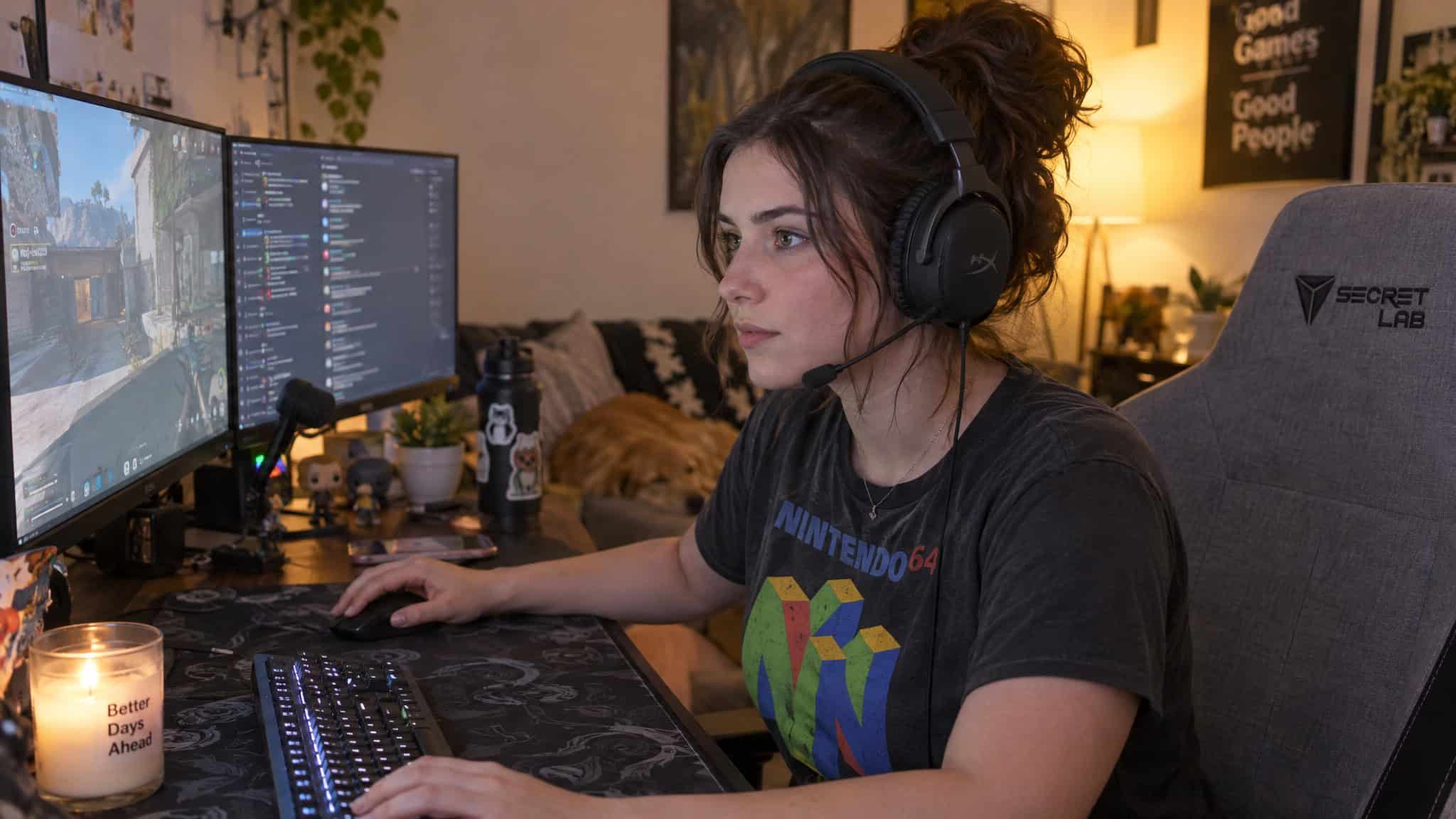
No game is inherently casual because mechanics bend to how hard a player pushes them. Peggle and Super Mario Odyssey both have competitive speedrun scenes, Mario games scale to whatever challenge a player wants, Chain Chomp Braden spent roughly six years building and beating the Super Mario Maker level “Trials of Death,” and one player burned through four Wii consoles playing nothing but Guitar Hero. Even the dismissal of life sims falls apart under basic systems analysis: Animal Crossing runs on real-world time with luck-based daily design, whereas Stardew Valley lets you grind open-endedly, and Stardew Valley solo developer Concerned Ape cited Animal Crossing as a direct inspiration. Gatekeeping aesthetic entry points makes just as little sense, whether someone wears a Sublime shirt while knowing only two songs (“Santeria” and the track Lana Del Rey sampled) or rocks an N64 shirt having never owned the console and knowing only Super Mario 64 and Ocarina of Time. Shared gaming is a major draw for men when approached as a real shared hobby, though many female players deal with stereotype fatigue from guys who fetishize the label or audit their taste.
The Sims-versus-Fortnite double standard
An August 2024 AITA post discussed on Smosh Pit showed how early this differential scrutiny starts: a father asked whether to let his 12-year-old daughter keep playing The Sims after his 38-year-old wife wanted to ban it because the daughter built dungeons imprisoning her Sims’ exes and ran a child labor workforce, while their sons, aged 9 and 15, played Fortnite and fighting games with far less parental scrutiny. The hosts called out the “boys will be boys” gender double standard that hyper-fixates on a daughter’s play, noting that sandbox cruelty like deleting pool ladders in The Sims or launching RollerCoaster Tycoon cars into space with tiny bodies flying is standard experimentation once normal goals run out, not a sign of real-life violence. Commenters compared The Sims to modern Barbies as a safe outlet that builds empathy, with one top reply joking that such chaotic sandbox play is common among women who game, telling the dad to let her have fun while adding they were really sorry his son plays Fortnite. Engaging with a kid’s hobby teaches empathy far better than banning it, especially since Fortnite carries a 13+ rating where the actual risk for a 9-year-old is voice chat with strangers rather than shooting violence.
How gamer relationships start: friendship and apps
Most relationships with women who game start along one of two paths: organic friendships built inside shared lobbies or intentional matching on dating platforms. Knowing the boundary between genuine off-platform connection and creepy behavior determines whether those starting points turn into a relationship.

The gaming-friendship path
Talking to a gamer girl without coming across as a creep requires treating her as a player first without putting her on a pedestal or fetishizing her hobby, then building a real friendship before floating any romantic overtures. In an advice column on The Mary Sue, Eric Smith, author of The Geek’s Guide to Dating (published by Quirk Books), notes that the Gamer Girl Manifesto targets “bro-dudes” harassing women who are just trying to play, meaning a respectful peer isn’t the target of that warning. Gamer bonds include friendship that exists outside the gaming world: the letter writer met his gaming friend in person three times to watch Doctor Who marathons when she was sad about family issues, and services such as GameTree include dedicated tools to connect platonic squadmates and friends. After playing PS3 games (Scott Pilgrim vs. The World, Call of Duty, and FIFA) with her for over two years, the writer passed Smith’s test for a real bond because she turned to him in a difficult spot, though asking a friend out always carries the real risk of losing the friendship even if good friends usually understand and move on (and Smith’s column ends before any romantic outcome).
Gamer dating apps worth knowing
Gamer dating apps such as Kippo and GameTree UwU are worth using when you want a concentrated pool with game-profile verification rather than mainstream apps with larger pools and heavier filtering. While online dating for gamers helps verify shared hobbies upfront, dating websites for gamers and mainstream platforms alike still reduce people to curated photo facades that encourage copy-paste messages and ghosting. A 2026 vocal.media roundup highlights how niche options counter that facade through mechanics: Kippo uses customizable “cards” for favorite games and characters inside a playable interactive world, while GameTree UwU (the dating branch of GameTree LFG) matches via personality tests on values and communication style, operating alongside a mainstream industry where over 364 million people worldwide used dating apps as of 2025 (60 million in the US), spending an average of 80 minutes a day while Tinder, Bumble, and Hinge generated $4 billion in revenue in 2025.
Other specialized and mainstream tools work like a Tinder for gamers when configured well. LFGdating links Steam or PlayStation Network accounts to verify authenticity for serious relationships, and Covalent links via direct game APIs to showcase verified in-game achievements and match on playtime or skill. On mainstream apps, Hinge prompts (“A geeky fact about me,” “My ideal co-op partner is…”) spark shared-interest chats, Bumble’s women-message-first rule creates a safer-feeling setup with video chat for virtual game-night first dates, and OkCupid uses deep questionnaires for compatibility percentages. Whether personality quizzes beat gaming-habit matching remains an open tradeoff, so pick platforms with active moderation, link Steam, Xbox, or Twitch accounts to signal legitimacy, use clear face photos plus one or two setup or convention shots (skipping blurry bathroom selfies and confusing group shots), write a specific bio (a recent achievement or asking “which game storyline is the best ever”), never share financial or address details, video chat first, and meet in public. Keep app expectations realistic: despite $25-a-month Tinder premium tiers, 64% of men aged 18 to 29 are single, over 57% of single US adults aren’t interested in dating, conversations die after three unanswered messages (making a date ask inappropriate), and filtering by height, politics, and habits trains people to min-max a partner like a Fallout: New Vegas character build while skipping real-world coffee-shop conversations because “plenty of fish” exist online.
Beyond apps: shared-interest meeting and authenticity
Meeting women who game in shared-interest spaces works when you drop closed-off habits like wearing headphones or phone scrolling and treat conversation as a normal human interaction rather than a high-stakes pitch. In coffee shops, community tables, rock climbing gyms, dog parks, or breweries, use normal openers about a dog’s breed or age, a book, or a shirt (which feels no weirder than someone complimenting a graphic tee you chose), and after 10 to 15 minutes of good conversation, ask for her number rather than sprinting 85 yards across a bar into a group of 13 or acting like an aggressive street salesperson. Asking yields three outcomes, yes, no, or a polite lie indicated by no reply within a day or so, and rejection still builds social skills. Self-improvement pursued just to attract women defeats itself like chasing butterflies with a net instead of cultivating a garden: standard dominance, gym, and Tinder-premium advice failed the vocal.media author until he quit apps for a year to pursue real interests (DJing, reading, coffee, hitchhiking rural Greece at 3:00 a.m., and visiting the Croatian filming town for King’s Landing) and practiced 10 minutes of daily journaling for healthy emotional vulnerability, meeting his girlfriend right after ditching the apps.
Gaming schedules and solo play as parallel time
Yes, dating a gamer is hard when uncommunicated session boundaries let play crowd out shared time, though solo gaming itself is healthy parallel time rather than a rejection of the relationship. Gamers tend to have built-in independence and value alone time, meaning the hobby only tips into avoidance when it replaces dates, quality time, or household responsibilities. In relationship threads aggregated by Updoot Studios, long-lasting couples credit independent routines like a spouse’s weekly Pathfinder tabletop game, going to punk shows, cooking alone, or reading in another room, paired with a 60-40 contribution heuristic where both partners try to give 60%, echoing an elderly couple’s decades-long secret of treating mutual kindness like a friendly contest.
- Healthy parallel schedule architecture: Agreeing on session end-points before a raid or ranked grind starts, alternating activities across the week, and learning to be bored together in the same room without forcing constant entertainment.
- Uncommunicated session creep: Letting a story campaign’s final act or a competitive queue stretch into “one more match” until it collides with dinner plans, sleep, or agreed date nights.
Solo play as parallel time
Respecting a girlfriend’s gaming time without feeling ignored starts with treating solo play as parallel relaxation and alternating shared activities, her hobby today, yours tomorrow, so neither person feels like a spectator. When both partners are comfortable doing their own things in the same house without anger, solo gaming works just like reading a book on the other end of the couch. Not every hour of a relationship needs to be planned or talked through, and couples who learn to be bored together avoid turning independent hobbies into a scoreboard.
Session creep and ‘one more match’
The day-to-day friction in a gaming household rarely comes from the total hours logged on a Steam profile. It comes from session creep, when a ranked grind or multiplayer raid runs past an unspoken cutoff and leaves the other partner waiting over cold takeout. Couples who last treat schedule boundaries as system architecture rather than a negotiation to be won in the middle of a match, setting clear end-points before the headset goes on.
Escapism vs. balance
Dating a gamer becomes lonely only when gaming shifts from an enthusiastic hobby into escapism that crowds out quality time, shared responsibilities, or actual dates, and the fix is a calm boundary conversation about schedule end-points rather than policing her screen time. If you find yourself thinking I don’t want to date a gamer because you feel sidelined every night, check whether the real issue is the game itself or a missing agreement on when the PC shuts down and couple time begins.
Co-op couple time and the skill-gap moment
Co-op games that work best for couples are shared-interest titles like Scott Pilgrim vs. The World, Stardew Valley, Animal Crossing, Call of Duty, and FIFA that fit pairs willing to navigate the inevitable skill-gap moment together. Overlapping gaming tastes give you a ready-made co-op partner, and in-game mechanics like teamwork and problem-solving under pressure carry directly into how a couple handles real life. Shared gaming and in-game skills carry into romantic relationships: one couple coordinates upcoming game purchases just so they can stay in the same lobbies, and co-op traits like loyalty, problem-solving, and humor are “valued in both co-op games and relationships.”
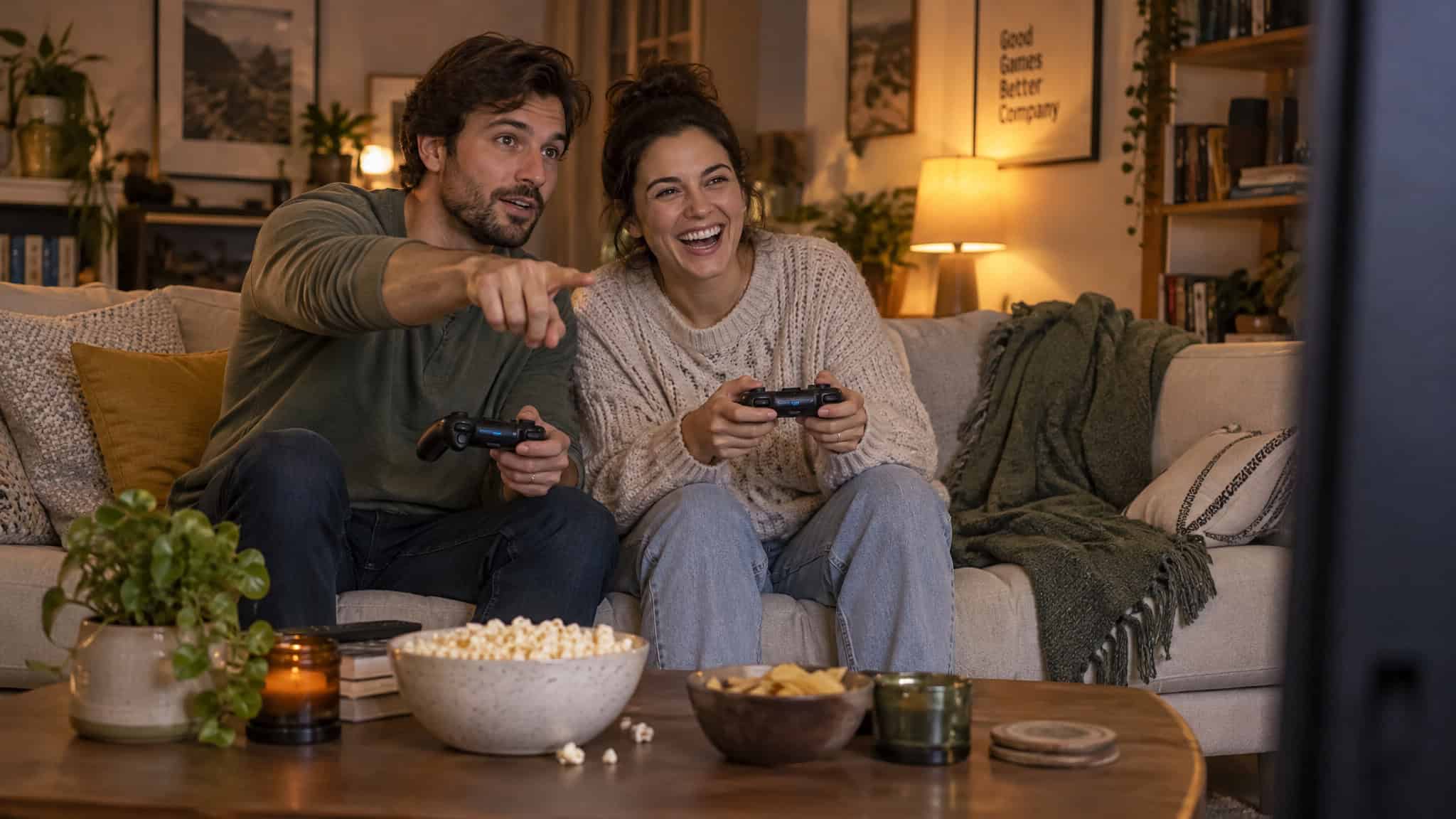
Before dating a woman who games more than you, decide whether you want to be carried, be taught, or play separate genres side by side without gatekeeping her library. When one partner has thousands of hours in tactical shooters and the other prefers strategy or life sims, gaming near each other on separate screens is just as healthy as sharing a lobby. Shared gaming challenges also build bonds through earned effort, as seen in a 2019 Reddit post on Smosh Pit where a father offered his 10-year-old son (who had saved $200 on a $10 weekly allowance) a Nintendo Switch and Breath of the Wild if he beat Ocarina of Time without Googling; the kid reached Zora’s Domain in a weekend, and the hosts ruled the dad not the asshole, jokingly excepting the Water Temple.
Friction points: in-game control and trivial fights
No, heavy gaming isn’t a relationship problem except when sessions crowd out quality time, shared responsibilities, or dates, while fights over in-game choices signal a relationship control issue wearing a gaming costume. Because online lobbies often skew male and carry voice-chat boundary questions, navigating who she plays with requires mutual trust rather than surveillance. In a 2023 Reddit AITA and Am I The Devil post, a 26-year-old man demanded his 19-year-old girlfriend “divorce her husband” in Stardew Valley, while commenters in the Updoot Studios threads noted that the worst couple blowups tap trivial triggers like a toothpaste cap left off because the real cause is accumulated dissatisfaction.
Panelists reviewing that Stardew Valley post immediately flagged that the couple’s two-plus-year relationship began when she was 17, illustrating how policing an NPC marriage reflects broader relationship control rather than a gaming dispute. Keeping minor gaming annoyances from piling up into a toothpaste-cap explosion comes down to knowing your partner’s “love map”, the small, specific signals like a quick morning safe-arrival text that mean the world to her even if they seem minor to you. When a real schedule conflict does happen, follow a clean conflict protocol: discuss one issue at a time when both of you are calm, well-fed, and well-rested, assuming good faith as a team against the problem.
Red flags in a relationship with a gamer
No, being a gamer isn’t a red flag in a relationship, except when a partner uses online personas or manipulative scripts like dread game and love-bombing to establish control. Normal passion for a hobby looks nothing like clinical relationship manipulation, which is why arguments about why not to date a gamer usually confuse screen time with personality red flags. A study published in Personal Relationships and reported by PsyPost, the first to interview women directly about dating men affiliated with the Red Pill community (loosely connected manosphere forums using The Matrix metaphor and rooted in antifeminist views), found a significant overlap between Red Pill dating behaviors and Dark Triad traits (narcissism, Machiavellianism, and psychopathy) across detailed semi-structured interviews with six self-identified heterosexual women aged 20 to 38.
What the Personal Relationships study found
Red Pill dating tactics fail in real relationships because strategies like dread game (subtly threatening abandonment to keep a partner anxious and eager to placate) and love-bombing erode trust and end in breakups, as every one of the relationships in the Personal Relationships study, lasting from a few months to over six years, had ended by the time of the interviews. Participants described their exes as self-interested, emotionally detached, and fixated on control, noting that rapid escalation and treating sex as foundational pressured some women to move in sooner than wanted and overwhelmed their boundaries.
What the study can and cannot tell you
Across those interviews, manipulation showed up through guilt-tripping over minor issues, deliberately provoking reactions, and passive-aggressive comments, including one partner who intentionally left messes for his girlfriend to clean up to establish her domestic role. Partners also obsessed over a polished “alpha” facade of fitness, wealth, or intellectual superiority, openly watched Red Pill videos for validation while urging girlfriends to watch them, and in one case spent excessive time on gaming platforms and social media prioritizing an online persona over shared time. Those findings come with a few methodological caveats: the sample consisted of six women using self-report data recruited from r/TheBluePill (an anti-Red Pill subreddit), and the researchers note that Red Pill communities likely amplify or nurture pre-existing Dark Triad tendencies as virtuous rather than creating them from scratch.
What makes gamer relationships work
Yes, gamers make strong romantic partners when both people treat love as a daily choice after the honeymoon butterflies trade into familiarity, agreeing on food, sleeping soundly, alternating activities, and doing their own things without anger. Lasting couples practice mutual accountability by calling out behaviors openly to make each other better, prioritize genuine intimacy over mere lust (which one Reddit commenter defined to his wife as caring about making your partner feel good, without which a partner might as well be a sex toy), and believe people the first time they show meanness or make you feel unworthy, treating past bad relationships not as wasted years but as data on what to seek and avoid.
Frequently Asked Questions
Dating a gamer is lonely — is that true?
It only gets lonely when gaming mutates from a regular hobby into escapism that eats up dates, household chores, and quality time. Solo play is just parallel relaxation—like reading a book on the other end of the couch—and works fine as long as you both agree on when the PC shuts down. If you feel sidelined every night, the fix is a calm conversation to set session cutoffs before a match starts rather than policing screen time mid-game.
What are common misconceptions about gamer girls?
The biggest myths frame women who game as rare, attention-seeking hobbyists who only touch casual life sims or wear merch without knowing the lore. In reality, intensity belongs to the player rather than the software—whether that is a Peggle speedrun or grinding Stardew Valley—and aesthetic-first fandom is a totally valid entry point. Another common fantasy is that you will spend every evening cuddling through couch co-op campaigns, when most nights actually involve playing separate single-player RPGs in the same room or watching her queue into competitive lobbies with her own squad.
How do you respect a girlfriend’s gaming time without feeling ignored?
Treat her solo gaming as healthy parallel time in the same room and alternate shared activities across the week—her hobby today, yours tomorrow—so neither of you feels like a permanent spectator. Couples who last don’t force constant entertainment; they learn to be comfortably bored together while doing their own things without resentment. The key is agreeing on schedule architecture and session end-points before the headset goes on.
What are the best co-op games couples can play together?
Titles like Stardew Valley, Animal Crossing, Scott Pilgrim vs. The World, Call of Duty, and FIFA work well when you share overlapping tastes and are ready to handle the skill gap together. Before jumping into a lobby with a woman who games more than you, decide upfront whether you want to be carried, be taught, or just play separate genres side by side. If one of you has thousands of hours in tactical shooters and the other prefers strategy or life sims, playing on separate screens in the same room is just as healthy as sharing a campaign.
Where can I meet gamer girls who actually play games?
You can meet women who game organically inside shared multiplayer lobbies, on niche platforms like Kippo, GameTree UwU, LFGdating, and Covalent, or in everyday shared-interest spaces like coffee shops, rock climbing gyms, dog parks, and breweries. In lobbies, treat her as a player first without fetishizing her hobby and build a genuine friendship that exists offline before floating romantic interest. In public spaces, drop closed-off habits like wearing headphones, start normal conversations about a book or graphic tee, and ask for her number after 10 to 15 minutes of good chat.
Are dating apps for gamers worth using?
Niche apps are worth trying if you want a concentrated pool with verified gaming habits instead of sifting through mainstream platforms. LFGdating links Steam or PlayStation Network accounts, Covalent uses direct game APIs to match on playtime and achievements, Kippo uses customizable game cards in an interactive world, and GameTree UwU matches via personality tests. Mainstream apps like Hinge, Bumble, and OkCupid can also work if you link Steam, Xbox, or Twitch accounts and use specific prompts to filter for co-op partners.
Do boys generally like gamer girls?
Shared gaming is a huge draw for men when approached as an actual shared hobby, giving couples a built-in partner for lobbies and coordinated game releases. The problem is that many women deal with exhausting stereotype fatigue from guys who either put them on a pedestal or audit their taste like a gatekeeper. Treating a woman who games as a normal peer rather than a rare trophy is what separates a good connection from creepy behavior.