
I went digging through game mechanics reddit threads expecting the usual “best mechanics of all time” listicle fodder, and instead found something way more interesting: actual arguments. Ask r/gamedev, r/gamedesign, or r/truegaming what a mechanic even is, and you won’t get one answer. They fight about whether catch-up mechanisms are real, whether weapon durability is good design, whether randomness is fair, whether traitor mechanics deserve to exist, and when you want to go past forum fights into the classic design documents themselves, the disagreements only get sharper. These aren’t vibes-based takes, either. The good ones come with named games and exact figures: a 6-point denial swing in 7 Wonders, a 60% crew-kill event in FTL, a Power Grid auction where being off by one electro probably loses you the game.
Here’s the part that hooked me. The most shareable artifact of this whole discourse, a video called “Reddit’s Top 10 Game Design Tips,” turns out to rest on a surprisingly thin provenance chain. It was made by Dave Doublee, a channel with 277 subscribers. Part 1 has 834 views and was posted five years ago.
Part 2 has 194 views and runs 7:20. Its transcript now 401s on the video page. And it was built from a single r/gamedev thread, game devs of reddit what are some tricks you use. One thread, one small channel, and it became canonical “top 10 wisdom” floating around the internet.
That’s not a knock on the video. It’s actually a useful window into how Reddit curation works, and it’s why this article discloses its pipeline and leans on named games and numbers instead of anonymous vibes.
So here’s the promise: I’m not going to hand you a link dump and call it research. I’m going to walk through the actual debates, synthesize the strongest positions, give you the frameworks (MDA, rules vs. mechanics vs. systems) the community uses to argue with each other, and then hand you the meta-skill of reading any thread critically. Somewhere in here you’ll learn how to win at Mario Kart on a hidden scoreboard, why Recettear is the gold standard of haggling design, and how a seating choice in El Grande quietly decides the whole game. Let’s go.
Key Takeaways
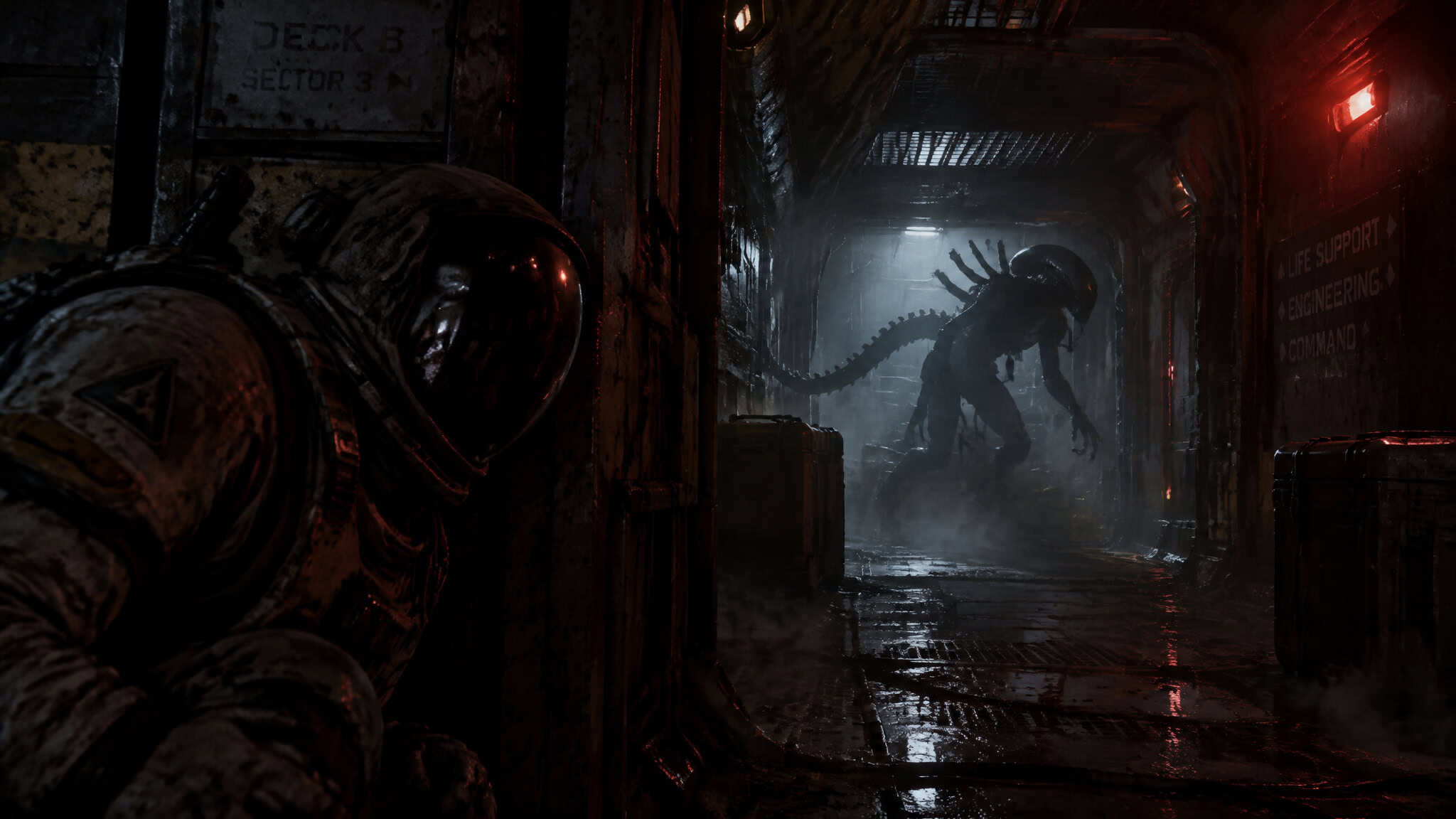
Copying a mechanic fails when you don’t understand the emotion it served: Alien: Isolation replaced invisible checkpoint autosaves with slow manual save points because checkpoints killed the terror, and MDA (the 2004 framework) explains why both camps in the Breath of the Wild durability fight are right.
The RNG argument in these threads isn’t randomness vs. no randomness, it’s hidden odds vs. telegraphed odds: FTL‘s crazy-old-man event shows you a 60% crew-kill chance up front, and that’s exactly why it feels fair.
Catch-up mechanisms are theoretically an illusion (a player who could catch up was never truly behind), but the Mario Kart blue shell proves displayed standings lie, so skilled players track a hidden real scoreboard and take extra risks when they think they’re behind.
Table of Contents
| Exact model | Decisive documented advantage |
|---|---|
| Racing mechanics | Forces efficient play; without forced endings players choose slow defensive strategies, so any point-threshold ending is a hidden race |
| Catch-up mechanisms | Practically exist via escalating risk when behind; risk mechanics serve winning chances, spectator excitement, and drama |
| Rondels | Rondels make a game’s cycle visible and enforce it |
| Surprise events | Should affect all players equally and act as pseudo catch-up by harming leaders |
| Drafting | Denial drafting is effective: a science card worth 1 point to the drafter is worth 7 to the neighbor |
| Multiplayer politics: voting, trading, chicken | Chicken mechanics curb runaway leaders, keeping multiplayer races competitive |
| Tile laying, trick taking, dexterity, alliances | Tile laying resembles drafting; trick taking is nearly a simultaneous auction subset and could blend with card-driven wargames via inverse power balancing (Grimoire, Citadels |
| Negotiation/haggling as underdeveloped mechanic | Depth comes from approach variety, time pressure (customer patience, player stress), customer AI/personality, tells, and external economics |
Model details below derive from the cited sources; check the brand pages for current pricing.
What a game mechanic actually is (the vocabulary fight)
A mechanic is a set of rules forming a mechanism that’s a piece of a larger game, and the internet cannot agree on that definition, which is honestly the fun part. Wikipedia and friends are all over the place on this, so the r/gamedesign crowd argues about vocabulary before arguing about design.

A game mechanic is a player-facing verb built from a rule set, and honestly, the distinction that clicks for me comes from Indie Game Clinic’s systems-thinking video. Rules are the underlying logic, the “when X then Y” stuff. Mechanics are the player-facing verbs built from those rule sets. Systems are bigger rule sets that contain mechanics, nesting-doll style.
So Monopoly‘s roll-then-move is a mechanic. Merely looking at a die is not, because it doesn’t touch game state. Same verb, different rules: collecting a coin by running into it, pressing a button, or grabbing it in VR feels completely different. And the scale is wild.
A single game holds hundreds to thousands of granular mechanics. Platformer Toolkit defines one character through dozens of tunable stats. Physics counts as a mechanic in Half-Life 2‘s lever puzzles, which is where the definition gets fun.
When copying a mechanic fails: MDA and emotion-driven selection
Copying a mechanic fails when you don’t understand the emotion it served in the original game.
The lens here is MDA, from a 2004 paper by three designers. It breaks games into mechanics (the code and rules), dynamics (the player behavior those produce), and aesthetics (the emotional response). Here’s the asymmetry that makes it useful: designers can only change the code, and the effects cascade down through dynamics into feelings. You only get one lever.
You push mechanics and hope the aesthetics follow, which is why mechanics-design courses focus so heavily on that single layer you can actually control. That’s also why two camps can both be right about the same mechanic, which we’ll get to in a second.
Case study one: Alien: Isolation. Designer Gary Napper has explained that the team swapped invisible checkpoint autosaves for manual, time-consuming save points, because checkpoints let players beeline recklessly through danger and that killed the terror. One mechanic changed, and the whole emotional register of the game shifted. That’s MDA in a single decision: the save rule was producing dynamics (reckless sprints) that fought the aesthetic (dread).
Case study two: Breath of the Wild‘s weapon durability. One camp on every thread says it feels bad, and they’re describing the friction honestly. The other camp says it serves the resource-tension aesthetic of the game, and they’re describing the cascade correctly. MDA explains the fight: durability feels bad at the dynamic level, and it’s doing real work at the aesthetic level at the same time.
Bottom line: Pick mechanics for the emotions they produce, and cut any mechanic that fights the feeling you’re designing for.
The pattern generalizes:
- Coherent execution works. DOOM (2016)‘s push-forward combat is a fully aligned vision where every mechanic serves the same feeling.
- Conflicting mechanics fail. The Callisto Protocol mixed ammo scarcity with stealth in ways that pulled against each other.
- Subtraction is a design act. Flower cut level-ups, spells, resource management, and time limits entirely, because they clashed with what the game was about.
- One mechanic can be load-bearing. There’s the cautionary deck-builder that lost its end-of-turn discard and broke, because nobody understood what that discard did systemically.
Game Maker’s Toolkit has the MDA explainer I’d send a friend, with quick examples across Rocket League, Hi-Fi Rush, Subnautica, Resident Evil Village, and World of Warcraft. The whole thesis underneath: pick mechanics for the emotions they produce, against a clear vision. Dead Space‘s Jason Graves soundtrack is a nice nod to how audio carries that vision, too. Choose mechanics against what you want players to feel, and cut whatever fights it.
Where the debates happen, and how to read a thread critically
r/gamedev, r/gamedesign, and r/truegaming are where these arguments live, and the practical skill is judging claims fast. Two-question test: does the claim name a specific game? Does it cite a figure? Miss both and you’re reading a confident anecdote. Top comments usually are, seasoned with survivorship bias. Be suspicious in both directions.
The pipeline matters too. Dave Doublee’s two videos compressed one r/gamedev mega-thread into a tidy top-10 list. That’s how thin the path from a single thread to “community wisdom” can be. And beyond the one thread we can trace, most of the debates in this article are recurring patterns of designer positions rather than linked quotes, so think of this as the method plus the strongest arguments, and go do your own digging from here.
Turn order: the mechanic that decides games before they start
Clockwise turn order exists purely because it’s memorable, and it quietly creates imbalance. The twist first: not every game has turns. Soccer doesn’t. D&D doesn’t, weirdly. Mouse Guard does, and at the other extreme Shocking Roulette is a game that’s almost nothing but turn order.
That imbalance is real: in El Grande, seating position becomes a genuine problem. The table-lore counter is the lefty-righty rule, put the strongest player on your left and the weak one on your right, and it genuinely feels like discovering a cheat code. Caylus goes further and lets players spend resources to change turn order, which I read as the designer flatly admitting this mechanic matters.
Modern design has mostly answered with many short turns: Puerto Rico‘s downtime runs about 10 to 20 seconds, Ticket to Ride and Eclipse keep things moving, while Risk and Axis & Allies turns can drag toward an hour and Samurai Swords (Ikusa) gets you maybe 4 turns total. Alhambra hides planning info to keep games social, and that’s the causal insight worth stealing: turn design controls whether players talk to each other.
Racing and forced endings
Without a forced ending, players turtle up behind slow defensive strategies, everyone has sat through a game that stalled like this. Racing mechanics exist to kill exactly that stall by forcing efficient play.
Formula D makes it concrete: stop in corners or crash out, so the race itself forces risk decisions. And there’s a nerdy line I love, about how a perfect race car explodes past the finish line, which frames resource attrition as risk modeling. Your engine is a budget you spend on speed.
Once you see it, races hide everywhere. Power Grid winners end their turns with either zero electros or a giant pile of them, which is the tell that the game is really an efficiency race wearing an energy-market costume. Any point-threshold ending is a hidden race too, and Vinci (or Small World) is the classic example. The skill being tested is plain efficiency calculation, and it deserves more respect than it gets.
Catch-up mechanisms are (theoretically) an illusion
If you could catch up, you were never truly behind. Sit with that for a second. Theoretically, any mechanism that lets a trailing player close the gap proves the gap was never the real scoreboard.
Mario Kart‘s blue shell is the proof case. Displayed standings misrepresent who’s actually winning, and skilled players develop positional heuristics to track a hidden “real” score the screen won’t show you. Everyone has felt that moment where first place feels like a lie. It is one.
Practically, though, catch-up exists as escalating risk when you’re behind. The football analogies land naturally here: the onside kick, the Hail Mary. These serve three things at once, winning chances, spectator excitement, and drama. So the usable table wisdom is: when you’re behind, or think you are, add randomness and take extra risks, a principle that echoes what makes a good casual game, where simple mechanics and engagement strategies drive design choices. On the related progression-balance fights, XP curves and skill trees are a genuinely recurring thread topic, but the specifics there go beyond what I can verify here, so treat fresh claims with the two-question test from earlier.
Rondels: the underused mechanic that hands players the rhythm
Rondels are tiny wizardry. The wheel diagram makes a game’s cycle visible, and it enforces that cycle at the same time. That’s the whole magic trick, and I don’t know why more designers don’t reach for it.
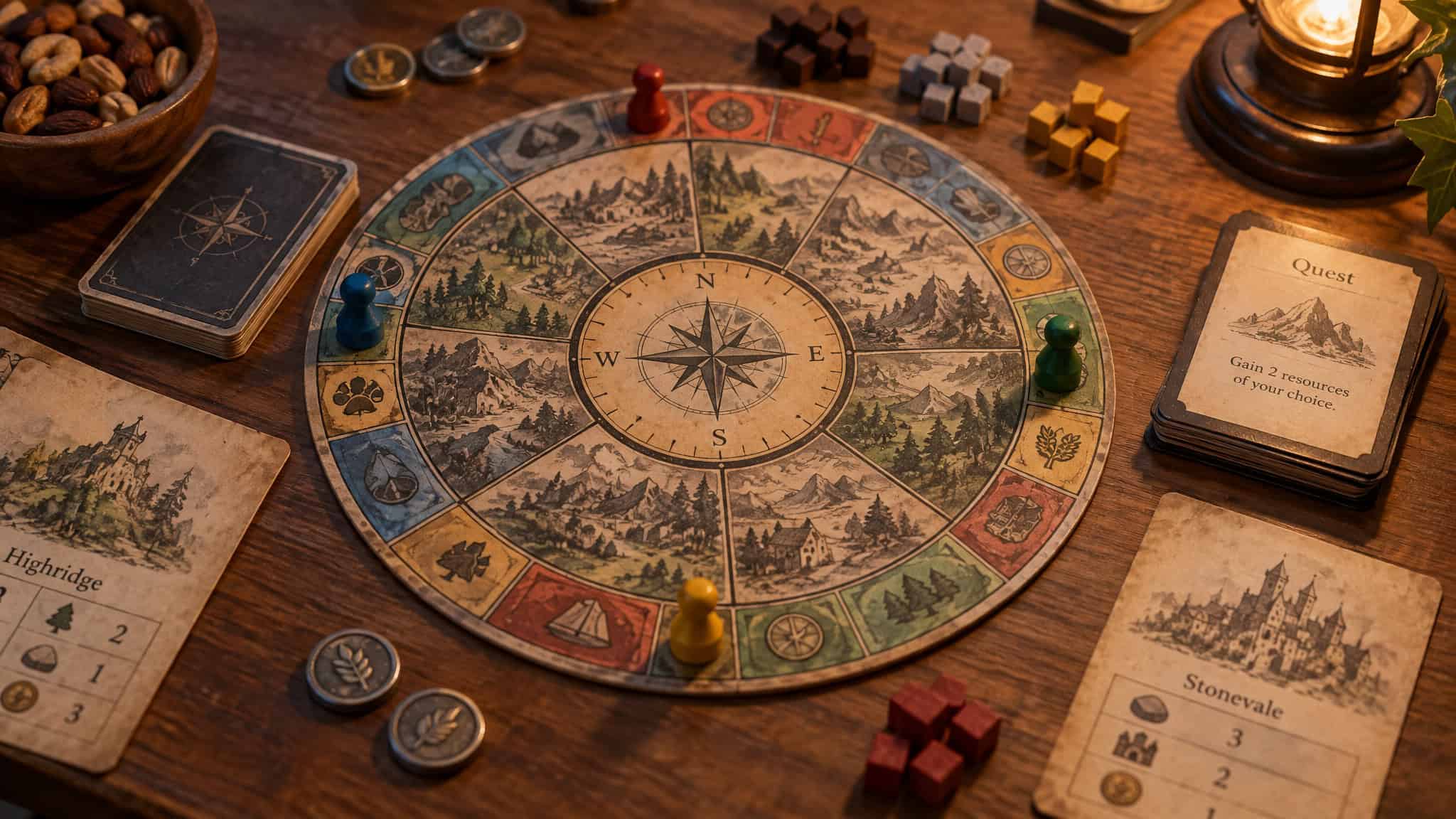
Antike gives you the parameters: you move 1 to 3 steps per turn and project 2 to 3 turns ahead. That’s the satisfying pattern-matching skill, lining up your position with the wheel. Cycles split into two kinds: player-controlled ones, like Antike or Dune‘s sandstorm, or Seasons tying its rondel to energy token rarity, versus fixed cycles like Agricola‘s harvest, which is exactly why Agricola can’t use a rondel. The cycle has to be movable for a rondel to mean anything.
So, designer-to-designer: if you want a visible, shiftable cycle, this is the underused tool.
The RNG debate: it’s not randomness, it’s telegraphing
The argument in these threads isn’t randomness versus no randomness. It’s unknown odds versus shown odds, and FTL is the canonical example.
The standard counterargument you’ll see goes like this: known odds produce degenerate optimal play. Once everyone at the table can compute the expected value, the fun dies. Gambling, meanwhile, only works when players don’t understand the probabilities, and plenty of board and video games quietly hide gambling inside themselves. Friendly warning folded into the same point: never gamble, real or in-game money, without understanding the odds.
FTL‘s crazy-old-man event is the masterclass. It shows you a 60% chance he kills your crew, up front. Because the probability is telegraphed, the outcome reads as accepted risk rather than unfairness. Shown odds convert perceived unfairness into chosen risk.
The risk-posture heuristic that follows: conservative when you’re ahead or early, high-variance when you’re behind or late. And gambling shines in light social games, where nobody’s computing anything and the table is just roaring.
Rock-paper-scissors: trivial rules, deep gameplay
The triangle is hiding everywhere. Fire Emblem‘s weapon triangle, axe beats spear beats sword beats axe, is RPS with the information visible. StarCraft matchups and Stratego‘s flag placement are the same structure wearing disguises, and the reveal that it was rock-paper-scissors all along never stops being satisfying.
The skill here is learnable, not talent: identify the type, memorize the counter chart. One caveat, execution skill bends counter effectiveness, so the triangle isn’t destiny. The real lever is information design. Show the triangle and it’s a readable counter chart; hide it and three trivial rules turn into enormous depth.
Surprise events: underused, with a freshness caveat
Surprise events are criminally underused, and I genuinely don’t know why everyone isn’t doing this. Two design rules make them work: hit all players equally, and let them double as pseudo catch-up by harming leaders. FTL‘s random events and Pandemic‘s flipped infection cards both scratch this itch.
The honest tradeoff is replay variety versus freshness decay. Starfarers of Catan players with 100 plays had memorized every event card, including the space pirate, and the surprise was gone. The mechanic earns its keep over hundreds of sessions or it doesn’t earn it at all.
Drafting, worker placement, and auctions: one family, quantified
Drafting, worker placement, and auctions are one family: allocation by claiming from a shared pool, in turn. A draft is any visible array picked in turn, and once you define it that loosely, drafts are everywhere. The core skill is valuing items for yourself and for your opponents simultaneously, and the numbers are where it gets fun:
- Denial drafting: a science card worth 1 point to you is worth 7 to your neighbor, so denying it nets a 6-point swing (7 Wonders, and the same logic powers Agricola‘s card-draft house rule and Ticket to Ride‘s 5 face-up trains).
- Worker placement is really a draft of jobs, with repeated denial. Honestly kind of elegant once you see it.
- Auctions dominate outcomes. Be off by one electro in Power Grid‘s second-round auction and you probably lose the game.
The cross-currency valuation skill is the deep part: 7 Wonders runs roughly 3 coins to 1 victory point, and Puerto Rico‘s doubloon value shifts by turn. Modern Art is everyone’s been-that-bidder moment: a painting maxes at $30, someone bids $35, and you get six or seven rounds to watch it happen. Rapid counter-bidding induces overbids, which is the psychology underneath. And this quantification, games where you can put exact numbers on the tradeoffs, is why the community treats allocation mechanics as the deepest design space.
Multiplayer politics: vote-who-wins, trading, and traitors
Any multiplayer game where players can attack each other becomes a diplomacy problem, whether the designer wanted one or not. Design the politics explicitly or it designs itself badly.
The sharpest structural claims from these threads: attack games devolve into vote-who-wins, where the table collectively decides the winner through targeting. Formal voting belongs in party games, Mafia or Werewolf and Mall of Horror, where it’s the point. Trading favors leaders unless there are strong incentives, and Settlers of Catan is the cautionary example everyone has lived through at a table. Chicken mechanics curb runaway leaders, and Chrononauts‘ timeline collapse is the delightful mutual-loss version of burning it all down.
Red flag: If your game lets players attack each other but gives them no formal way to form or break alliances, the politics will still happen — just worse.
Traitor mechanics: everyone loves them, they’re rarely elegant, and both things are true. They need communication restrictions to function, they tend to dominate whatever game they’re in (Battlestar Galactica, Shadows over Camelot), and among friends detection is trivial anyway. You know Dave’s the cylon by his face. The verdict is to avoid them, warmly. The fix, if you want alliances, is to formalize them: Eclipse‘s “Traitor!” card and Dune‘s arbitrarily large alliances both prove it works.
Tile laying, trick taking, dexterity, and the alliance formalization rule
Quick hits, rapid-fire. Tile laying resembles drafting, with Carcassonne as the classic example, one-line connection, moving on. Trick taking is nearly a simultaneous auction, and here’s a fun what-if: it could blend with card-driven wargames through inverse power balancing, with Grimoire and Citadels‘ initiative systems as the sketch of how.
Convention-floor observation I can’t stop thinking about: six people at PAX had never played a trick-taking game. Hearts, Euchre, Whist, this stuff is not universal, which punctures a lot of designer assumptions. And dexterity makes a game a sport, which suits party games perfectly. Jungle Speed and Crokinole, where the physical comedy is a feature, not a bug.
Haggling: the one mechanic that never became a genre
Haggling is the only small mechanic that never developed into a standalone genre, and the reason is simple: it needs a human counterpart. Recettear: An Item Shop’s Tale is the closest anyone’s come.
Credit where due, this thread of thinking extends an Extra Credits episode, with Getting to Yes in the background, and Mental Checkpoint’s video is where the deep-dive lives. Soft, interest-based bargaining beats hard positional tug-of-war: think about what your partner actually wants. The window open/closed scenario is the tidy version, where opening a window in the next room gives both sides what they actually wanted. In games, principled bargaining is better but costly to build, since it needs non-binary outcomes and a lot of writing.
Where haggling gets deep: approach variety, time pressure through customer patience and player stress, customer AI and personality, relationship management, tells, and external economics. The golden standard is still Recettear, released in Japan in 2007, and the practical tip is ask 30% above base price. The shelf beyond it: Potionomics does card-based soft bargaining with stress management, and Potion Craft, Moonlighter, Disco Elysium, Kingdom Come: Deliverance, and Battle Brothers are haggling-adjacent. Curated, not dumped.
Mechanics first, systems later, and protect the small stuff
Build the fun toy first, prototype before systems, clone a familiar genre with a twist, and start small. And deliberately preserve one expressive mechanic: “can I pet the cat” is what separates good games from excellent ones, the same family of small touches as pointless-feeling but delightful interactions like whacking a bobblehead, and commodity advice cuts it first. The playful-versus-rules spectrum here traces back to Roger Caillois.
When mechanics become identity: the removal decision rule
Sometimes the bug is the game, and the removal call depends on what kind of exploit it is. Mechanics ingrained long enough become identity, and pulling them triggers backlash: Quake and Counter-Strike bunny hopping, and Halo 2‘s BXR/BXB button combos, have been around roughly 15 years, and the combos were omitted from MCC Anniversary accordingly.
The line is real: hidden-input exploits are worse than organic movement tech. So removing hidden-input exploits is correct even amid backlash, as Apex Legends‘ removal of b-hop-while-healing showed, and that call deserves respect. The usable rule: classify the mechanic. Organic movement that players discovered and own is identity, keep it.
Hidden-input combos are exploits, remove them. That classification is the whole call: the same removal earns trust or starts a riot depending on which box the mechanic lands in.
| Model | Standout spec | Limitation |
|---|---|---|
| Racing mechanics | Formula D requires stopping in corners or crashing out, making resource attrition the core risk of the race | Not published |
| Catch-up mechanisms | Mario Kart blue shell: displayed standings misrepresent true standing, driving the catch-up effect | Theoretically illusory: a player who could catch up was never truly behind, and skilled players use positional heuristics to know who is really winning |
| Rondels | Antike rondel moves 1-3 steps per turn, allowing projection 2-3 turns ahead | Rondels are underused and only fit games with player-controlled cycles; fixed cycles like Agricola’s harvest rule them out |
| Surprise events | FTL crazy old man event has a 60% chance he kills your crew; Starfarers of Catan space-pirate event card; Pandemic flipped cards | Trade replay variety against freshness under frequent play: Starfarers of Catan players with 100 plays memorized every card |
| Drafting | 7 Wonders uses alternating pass direction; Settlers uses reverse-order spot drafting; Ticket to Ride shows 5 face-up train cards | Success requires valuing items both for yourself and for opponents, so drafts fit non-obvious values best |
| Multiplayer politics: voting, trading, chicken | Multiplayer games with direct or indirect attack become ‘vote who wins’ games | Not published |
| Tile laying, trick taking, dexterity, alliances | Trick taking is nearly a simultaneous auction subset and could blend with card-driven wargames via inverse power balancing (Grimoire, Citadels initiative examples) | Dexterity elements make a game a sport and suit party games, limiting fit for heavier strategy designs |
| Negotiation/haggling as underdeveloped mechanic | Recettear, released 2007 in Japan, recommends asking 30% above base price as the golden standard heuristic | Not published |
The numbers designers actually trade, and the verdict
The community’s strongest claims come with figures attached. The compact ledger:
- 7 Wonders: roughly 3 coins = 1 victory point; denial swing of 6 points on that science card
- Power Grid: off by one electro in the round-two auction, probably lose
- Puerto Rico turns run 10 to 20 seconds versus Risk at about an hour; Antike moves 1 to 3 steps per turn
- FTL: 60% crew-kill event; Recettear: +30% markup; Modern Art: $35 overbid on a $30 painting
That’s the so-what, stated once: good mechanical arguments cite named games and exact figures. Hold Reddit claims to that standard, and honestly, hold this article to it too.
Frequently Asked Questions
What are some simple game mechanics that create deep gameplay?
Rock-paper-scissors is the classic: three trivial rules become enormous depth when you hide the counter chart, and readable depth when you show it, as in Fire Emblem’s weapon triangle. Drafting, worker placement, and auctions are one simple family, allocation by claiming from a shared pool in turn, yet they’re considered the deepest design space because you can quantify every tradeoff.
Should unintended mechanics like bunny hopping be removed from a game?
Classify the mechanic first. Organic movement tech that players discovered and own, like Quake and Counter-Strike bunny hopping, has become identity over roughly 15 years, so keep it. Hidden-input exploits like Halo 2’s BXR/BXB button combos are worse, and removing them is correct even amid backlash, as Apex Legends’ removal of b-hop-while-healing showed. The same removal earns trust or starts a riot depending on which box it lands in.
Are catch-up mechanisms real or an illusion in game design?
Theoretically an illusion: if you could catch up, you were never truly behind, because any mechanism that closes the gap proves the displayed gap wasn’t the real scoreboard. Mario Kart’s blue shell is the proof case that displayed standings lie, which is why skilled players track a hidden real score and take extra risks when they think they’re behind. Practically, catch-up works as escalating risk when trailing, like an onside kick or a Hail Mary.