
Okay, so check this out: I went down a rabbit hole on game design books, expecting the usual cheerful “ten best game design books!” listicle content, and instead found a paper trail. The most-recommended book in the entire field has a documented criticism record that almost nobody mentions, one indie studio’s book list quietly skips the “Bible of game design” entirely, and there’s a legally free book that reframes the whole purchase math. Here’s the split nobody tells you up front: a game mechanics book and a game design book are two different purchases. Mechanics-focused texts teach specific patterns and systems. Adams and Dormans’ Game Mechanics: Advanced Game Design is the exact match, with Costikyan’s Uncertainty in Games as a narrower lens on one property of games.
Whole-discipline texts, like Schell’s The Art of Game Design, Fullerton’s Game Design Workshop, or Rules of Play, survey the entire craft. Buy the wrong category and you’ll be halfway through before realizing you wanted the other one, and then you buy a second book. So: honest, book-by-book reviews, including the flaws. The GeekExtreme rule here is simple: review what the book teaches, not its reputation.
Key Takeaways
If you literally want a game mechanics book, Game Mechanics: Advanced Game Design by Ernest Adams and Joris Dormans is the exact match: 16 mechanics design patterns plus the book’s own Machinations economy-modeling framework.
The Art of Game Design by Jesse Schell is canonical and genuinely useful (100+ lenses, full-process coverage), but reviewers document real problems: Chapter 9’s gender stereotyping, Chapter 23’s claim that single-player gaming was a temporary abnormality, and roughly 20 reported typos.
Robert Nystrom’s Game Programming Patterns is legally free online, and cheaper routes like Humble Bundle, libraries, and Spotify Premium audiobooks cover most of the rest.
Table of Contents
| Category | Exact model | Decisive documented advantage |
|---|---|---|
| N/A | Advanced Game Design: A Systems Approach | Recommended by the Frostpunk team in an article on their procedural systems |
| N/A | The Art of Game Design: A Book of Lenses | Commonly called the Bible of the game design world and #1 on Devtodev’s 20-book list |
| N/A | Deck of Lenses | Multiple reviewers say the deck may be more useful than the book for actual design work |
| N/A | Challenges for Game Designers | Frames design as a practiced skill: designers improve by designing lots of games, like painters making paintings |
| N/A | Game Design Workshop | A standard beginner recommendation alongside Level Up! across Devtodev and skill-level lists |
| the contested theory pick | A Theory of Fun for Game Design | By Raph Koster, lead designer of Ultima Online and creative director of Star Wars Galaxies |
| N/A | Rules of Play: Game Design Fundamentals | Serves as a unified-model textbook and reference guide covering all game types |
| N/A | Game Feel: A Game Designer’s Guide to Virtual Sensation | Treats ‘feel’ as a design language with companion-site playable examples |
Model details below derive from the cited sources; check the brand pages for current pricing.
Game Mechanics: Advanced Game Design by Adams & Dormans
If the phrase “game mechanics book” is what you actually typed, this is the exact-match answer. Ernest Adams and Joris Dormans wrote Game Mechanics: Advanced Game Design to do one thing: train you to build and model mechanics themselves. The book lays out 16 mechanics design patterns and introduces Machinations, a framework for modeling game economies that the authors built for the book. Worth flagging: Machinations is their own creation, not an industry standard, so don’t go into a job interview assuming everyone speaks it.
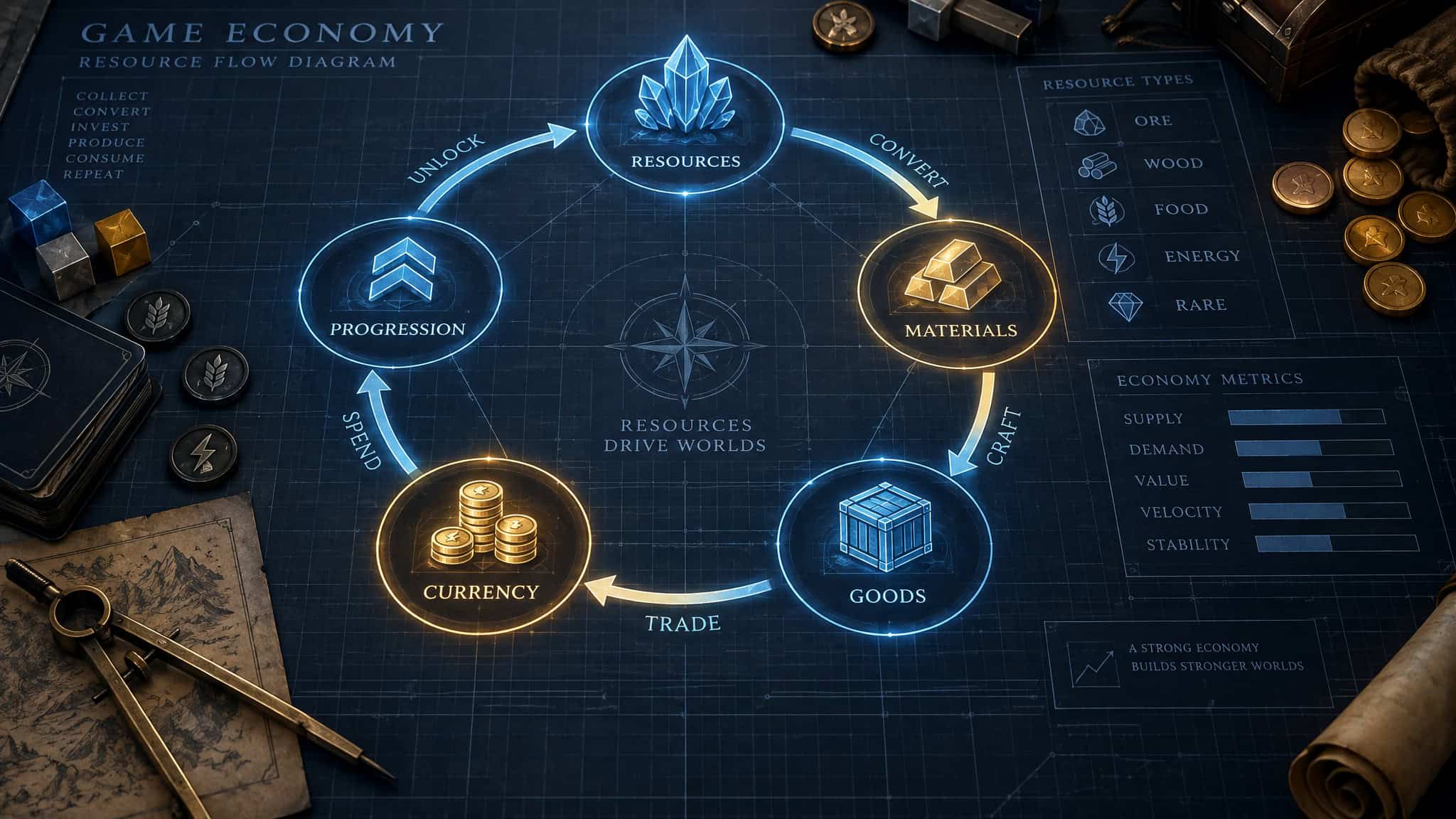
The practical difference from a general design survey is what it lets you do. You come out able to sketch an economy, prototype mechanics on paper, and reason about how systems interact, rather than holding a broad vocabulary about the craft. Where a general survey explains what game design is, this one focuses on a specific, repeatable set of moves. Anyone circling the game mechanics keyword while looking for depth on systems and economy design rather than a general overview will find this matches the search. (If you want the concept broken down further first, our game mechanics deep-dive covers the building blocks.)
Advanced Game Design: A Systems Approach by Michael Sellers
The Frostpunk team pointed to this book when writing about procedural systems, and that endorsement chain matters: when a team that shipped one of the most systems-driven games of the last decade points at a book, that’s a signal with shipped-game weight behind it. Michael Sellers frames systems as three types: Economies, Ecologies, or Engines. That taxonomy is the book’s spine, and it gives you a shared language for the different kinds of systems work.
There’s also a timeliness argument baked in. Sellers argues systemic games are growing while games built on content burn out fast and cost a fortune to produce. That tracks, think every Vampire Survivors clone, and every open-world budget balloon story of the last decade.
So how does it stack against Adams & Dormans? Sellers gives you a systems taxonomy, Adams & Dormans give you a pattern library. Match the book to the problem you actually have: if you need to classify and reason about system types, Sellers; if you need concrete mechanics patterns to build from, Adams & Dormans.
Game Mechanics vs. The Art of Game Design: the decision hinge
The decisive choice: mechanics or economy specialization points to Adams & Dormans; whole-process grounding points to Schell. That’s the whole fork.
| Game Mechanics: Advanced Game Design | The Art of Game Design | |
|---|---|---|
| Teaches specific mechanics patterns | Yes (16 patterns + Machinations) | Partial (lenses cover mechanics among everything else) |
| Covers the full development process | No (focused on mechanics/economies) | Yes (concept through pitching) |
| Works as a whole-discipline first book | No | Yes |
| Best for systems/economy depth | Yes | Partial (breadth over depth) |
If you buy Schell expecting mechanics-economy depth, you’ll likely end up buying Adams & Dormans anyway. That’s the double-purchase pattern this whole article exists to prevent.
Quick test: Name the problem you’re actually solving — building specific mechanics, or learning the whole craft. That answer alone picks the book.
The Art of Game Design: what the “Bible of game design” actually teaches
Here’s the honest framing: The Art of Game Design: A Book of Lenses is canonical and genuinely useful, and reviewers have raised documented criticisms that most recommendation lists leave out (the next sections cover those in detail).
What it actually is: 100-plus lenses, 113 per one reviewer’s count, each a set of design questions drawn from psychology, architecture, music, film, math, and anthropology. Schell’s stated rationale is that questions can’t be wrong while advice can be, echoing the warning experienced designers gave him: any advice is right for some games and wrong for others. The book covers the full process, from concept through teamwork, testing, balancing, production, and pitching. Reviewers name the balancing and production chapters as the most useful, and there are per-chapter further-reading lists.
It won a Game Developer Front Line Award and exists in Second, Third, and 10th anniversary editions, the last in full color with expanded VR/AR coverage. One reviewer finished it in under a week, and another estimated that roughly 99% of it transfers to board game design. Best fit: readers from a CS or other non-art background, which tracks with how the lenses work as structured questions rather than craft intuition.
Jesse Schell: the credentials behind the canon
The book’s authority isn’t just reputation; Schell’s resume is verifiably weird in the good way. He joined Disney as an Imagineer and VR Studio engineer in 1995, worked on early Disney Quest VR games, and had leadership roles on Toontown Online, Pirates of the Caribbean Online, and Pixie Hollow Online. Before that, a 1993 Masters thesis at Carnegie Mellon on MMO-VR server architectures, which is exactly the kind of crossover nerd credential you’d hope for. He’s now on the CMU faculty.
His studio, Schell Games, runs about 100 developers in Pittsburgh with roughly 80% of projects in VR/AR, including I Expect You To Die and Among Us 3D.
Bonus delight: his 2010 DICE talk “Beyond Facebook” argued game design is really about human motivation, years before gamified behavior structures showed up everywhere from fitness trackers to China’s Sesame Credit. The talk aged disturbingly well. Also, and this is real, he was a professional juggler. The man committed to the lenses thing early.
The documented criticisms of The Art of Game Design
Reviews on this book consistently follow a pattern, and it’s worth knowing before page 200. Every critique here is a reviewer’s position, not an established verdict, but the specificity is what makes it useful.

Chapter 9’s gender content hasn’t aged well
The book’s Gender and Demographics section claims men seek mastery, competition, and destruction while women seek emotion, nurturing, and “the real world,” including a line asserting there’s no female equivalent of a pickup game of touch football. Critics call it reductive, poorly cited stereotyping, and reviewers report the section remains in the 3rd edition’s table of contents; one reviewer alleges sexism and questions the book’s use as a university textbook. Here’s a transferable heuristic one reviewer uses: run a race-for-gender substitution test on any such claim and watch it collapse. That’s a genuinely useful critical-reading skill for design books in general.
Chapter 23 vs. solo gamers
Chapter 23 declares that the single-player phenomenon appears to have been a temporary abnormality. One solo-gamer reviewer’s rebuttal is hard to argue with: as long as introverts exist, solo games will exist.
Smaller complaints add up
One reviewer counted roughly 20 typos, cites page 237 for an empty truism, calls out unexamined Bartle player types, and notes the book dismisses theory as pedantic. Critics also call the lens method impractical. On the plus side of the same reviews: the final chapters on designer responsibility get called the most honest parts, and one reviewer applying the book to tabletop design and a non-game day job recommends the balancing and production chapters specifically.
Deck of Lenses: buy the book or the deck?
For actual design work, multiple practitioners say the deck may beat the book. Each card in the Deck of Lenses is one lens with its question set, so the book is the holistic read and the deck is the desk tool. The book teaches you the framing; the deck is what sits next to your keyboard during a playtest. It’s a real decision, not a side note: if you’re already confident in the broad process and want a daily-use artifact, the deck is the purchase fork that makes sense. The book is the right call if you want the full reasoning behind the lenses.
And the anecdote that tells you something about Schell: a reviewer submitted a typo list for the book, and Schell sent them a free deck. Charming, a little quixotic, and exactly the kind of detail commodity lists never include.
Challenges for Game Designers: five challenges, under two hours each
If you learn by doing rather than reading, this is the pick. Brenda Brathwaite (Romero) and Ian Schreiber frame design as a practiced skill, and the format makes that real: five challenges per chapter, each designed to take under two hours. The book’s own analogy, from the authors: painters improve by painting again and again, and game designers improve their skills by designing lots of games.
That’s the information gain most blurbs bury. “Hands-on” is marketing language; “five concrete exercises per chapter, each under two hours” is a time budget you can actually plan around. If your goal is reps rather than theory, pair this with The Game Design Toolbox, covered later, which takes a similarly tool-first approach. If your goal is a big conceptual framework, this isn’t it, and the theory picks further down are the better match.
Game Design Workshop and Level Up!: the beginner shelf
For a total newcomer, the smartest first pick is Tracy Fullerton’s Game Design Workshop or Scott Rogers’ Level Up! The Guide to Great Video Game Design, and which one depends on how you learn. These are the two books most often the right first purchase, and they earn that for different reasons.
Game Design Workshop (Tracy Fullerton). Fullerton’s approach is playcentric: prototype, playtest, refine, all anchored in player experience. The critical detail for beginners is that it’s non-technical, so it works for people who don’t code. Coming from a writing, art, or totally non-dev background and want design as a discipline before touching an engine?
This is the one. It treats design as a loop you practice, not a body of facts you memorize, which matters more than most first books do.
Level Up! The Guide to Great Video Game Design (Scott Rogers). The opposite flavor of beginner book: clear, accessible, visually appealing. Rogers’ credits include Pac-Man World, Maximo, and SpongeBob Squarepants, so the advice comes from shipped games.
If you want to level up your game beyond theory, his pitch-deck advice matters the day you need to sell an idea to a publisher or a skeptical friend with money. It’s also just the most fun to read of the beginner-tier options, which is not a trivial filter when the alternative is a 500-page textbook.
The third beginner-adjacent pick. Jeremy Gibson Bond’s Introduction to Game Design, Prototyping, and Development is Unity-based, built on three pillars of design theory, rapid prototyping, and hands-on programming. If you’re a CS-background reader who wants design theory and implementation under one roof, this is the right call, and it’s also the structured paid alternative if the free programming bridge later in this article isn’t enough.
Tie the trio together and you get three different beginner jobs: Fullerton gives you reps, Rogers gives you visual clarity, and Bond gives you implementation literacy. Making a game entirely by yourself? Weight toward Bond or Fullerton, the self-made path needs both design thinking and hands-on prototyping fluency. Pick by which of those you’re missing, not by which list ranked them higher.
A Theory of Fun: the contested theory pick
Raph Koster’s A Theory of Fun for Game Design is the big-idea book worth knowing, and it’s contested. The thesis: fun is pattern-learning and mastery. Koster’s credentials are real; he was lead designer of Ultima Online and creative director of Star Wars Galaxies. The book covers balance, feedback systems, and sense of achievement, and argues game mechanics are the core of successful games.
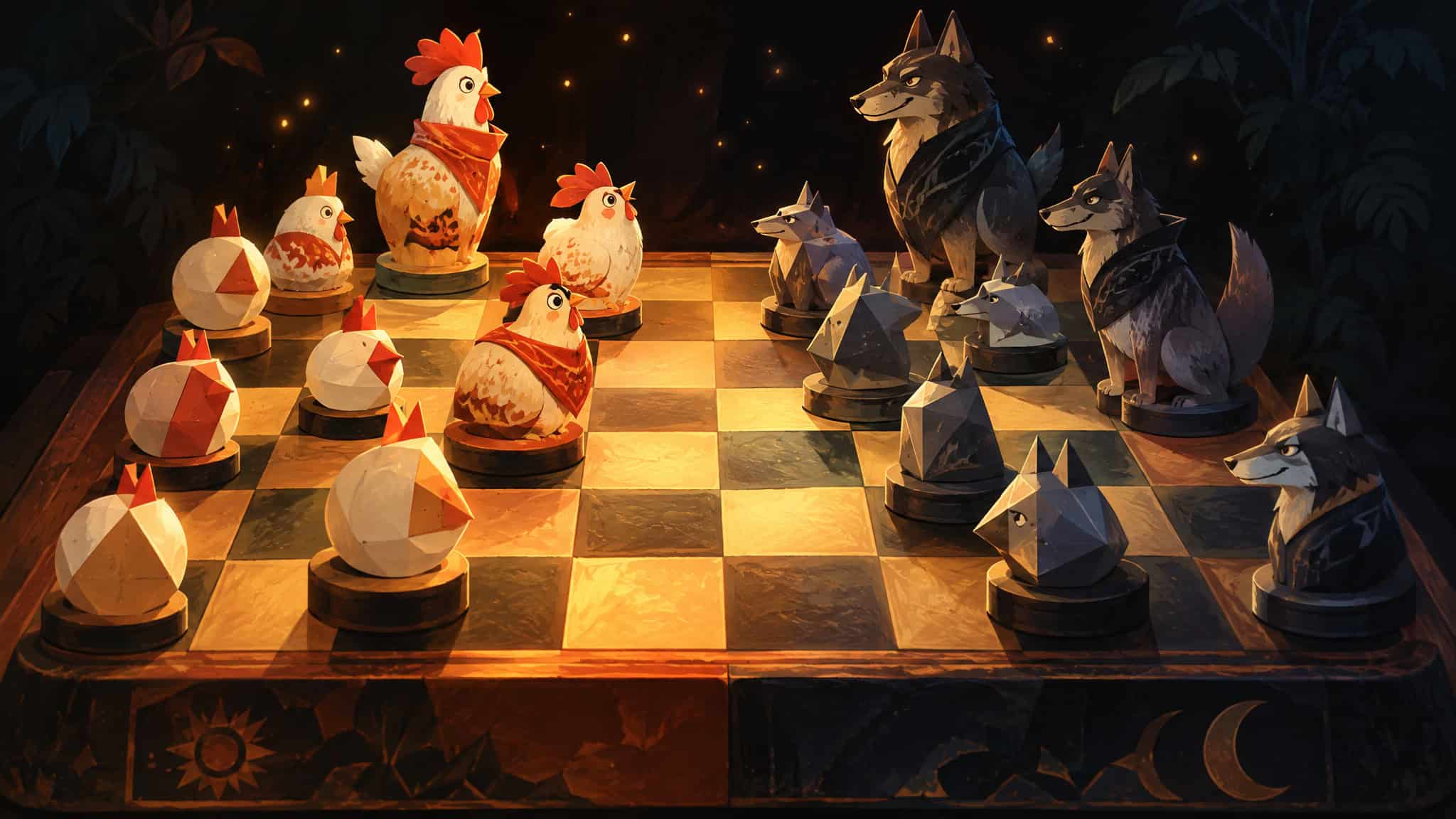
The illustrative example that sticks: checkers’ “King Me” and renamed chess pieces, like chickens and wolves, as fiction layered over abstract systems. Once you see it, you can’t unsee it in every game you play.
The honest position, per reviewers: useful but contested, a supplement without applied tools rather than a working manual. Read it to upgrade how you think, not to find a checklist for your current project. If you want applied tools, jump to Challenges or the Toolbox instead.
Rules of Play and Fundamentals of Game Design: the textbook shelf
For formal study, two titles are the proper textbooks. Salen and Zimmerman’s Rules of Play: Game Design Fundamentals proposes a unified model spanning board games through video games, and functions as textbook, reference, and theory guide in one. Ernest Adams’ Fundamentals of Game Design runs 576 pages, moving from mechanics all the way to playtesting, and pairs well with free mechanics design resources such as university course notes, GDC talks, and classic design documents.
One reviewer questioned whether a book carrying the Chapter 9 issues should serve as a university textbook at all, the same thread as the Schell section above. These two are the titles actually built for the classroom, which is exactly why the “game design textbook” search lands here. If a course is assigning Schell, know what’s in Chapter 9 before you’re tested on it. If you’re self-studying and want rigor, either of these beats a reputation pick.
Game Feel: feel as a design language
When your problem is why your game feels bad to play, this is the book. Steve Swink’s Game Feel treats feel as an unspoken design language, comparable to the elements of music, and the diagrams diagnose causes of player frustration rather than just describing them. That diagnostic framing is the differentiator; most design books describe what good feel is, Swink’s gives you a way to figure out why yours is missing.
There’s a companion site with playable examples, which for a book about interactivity is the correct move. Swink’s credits include Off-Road Velociraptor Safari, and yes, that’s a real game, a Jeep with a jetpack delivering a velociraptor, and yes, it’s relevant: it’s exactly the kind of prototype where feel carries everything.
Uncertainty in Games: thin but mind-opening
Greg Costikyan’s Uncertainty in Games is the book covering uncertainty, with randomness, competition, and hidden information as its core forms. The honest tradeoff, per reviewers: it’s a small book, and some say it lacks content, with examples that aren’t exhaustive. But the same reviewers’ consensus is that it doesn’t need more, because the taxonomy is the point. One practitioner’s framing: it opened their mind.
So the purchase math is unusual: you’re buying a lens, not a manual. If you’re designing anything with dice, hidden cards, or asymmetric information, that lens pays for itself fast.
Designing Games: dated examples, timeless language
Tynan Sylvester’s Designing Games: A Guide to Engineering Experiences first released in 2013, so some examples have aged, but the language and focus haven’t. It’s holistic and pragmatic, with a systemic-games focus, and one practitioner called it probably the best generic book on game design they’ve read.
What “dated but timeless” means for a purchase decision: the vocabulary survives, the case studies don’t feel current. If you can mentally swap a 2013 example for a modern equivalent, which the concepts support, you get a full framework for a decade-old price. If dated examples make you itchy, Sellers is the same territory with newer framing.
Game Programming Patterns: the free bridge to programming
Robert Nystrom’s Game Programming Patterns is legally readable free online, and that fact reframes the entire purchase math for this field. One of the most useful books in the space costs nothing. Designers who know how games actually get made can talk to programmers constructively instead of handing them vibes and hoping. If your answer to which game mechanics book PDF do I download is a piracy site, the honest answer is that the field’s best free book is one link away, legally, and there are more routes below.
Cost check: Before buying anything on this list, check Humble Bundle, your library, and Spotify Premium audiobooks — several titles drop to near-zero that way.
For structure, Bond’s Unity-based Introduction to Game Design, Prototyping, and Development (covered above) is the paid alternative with design theory and programming together. For more legitimate free material, our guide to game mechanics PDFs covers university course notes and classic design documents worth reading.
The Pyramid of Game Design: business models for skeptics
Design purists dismiss business books. Nicholas Lovell’s The Pyramid of Game Design makes the counterargument: turning a game into a hobby, something players return to and invest in, is the path to success beyond pure monetization mechanics. Lovell covers Free-to-Play and Games as a Service territory, and yes, people who hate both should still read it. Understanding F2P mechanics is literacy, not endorsement; you can’t design around monetization pressure you don’t understand. If you ever plan to ship anything with a store page, this is the business book with the least eye-rolling per page.
Devtodev’s analytics shelf
A wry corner of the field: analytics platform Devtodev publishes its own ebooks, How to Analyze Promotional Activities in Games and In-game Store: How to Boost your Revenue. The first is built on Devtodev’s own promotion analysis experience. The second is a free ebook framing the two F2P revenue methods, advertising and in-game stores, with a focus on the latter. The transparency point worth noting: both titles appear on the publisher’s own curated 20-book list. That’s a conflict of interest you can evaluate yourself, and it’s the kind of critical-reading detail commodity lists never surface. They’re free, they’re narrow, and they’re honest about what they are.
The Game Design Toolbox: the missing practical guide
Here’s a market story with receipts. The Playtank author argued that design theory is over-served while everyday accessible tools are under-served, and omitted The Art of Game Design from his own recommendation list for being theory-focused. Then he wrote The Game Design Toolbox himself, released by CRC Press on December 6, 2023. The self-disclosure is the fun part: he identified the gap, admitted his own book fills it, and shipped. Theory-first readers should stick with the canon; tool-first readers now have a book built for them, from someone who diagnosed exactly what was missing.
The rest of the Devtodev 20: quick verdicts
The wider shelf of video game design and development books splits into genuinely useful, narrow-purpose, and skippable. Honest triage is more useful than pretending all twenty are essential, so here’s the field guide.
Gamification of Learning and Instruction Fieldbook (Kapp, Blair, and Mesch). Game elements applied to learning contexts. Useful if you’re in education or training design; skippable for entertainment game work.
Video Game Storytelling. Storytelling fundamentals. A reasonable supplement if narrative is your gap, but it doesn’t cover design broadly.
Start Your Video Game Career (Jason W. Bay). Career path, resume, and portfolio advice. Niche by design, and good at exactly that niche. If you’re already in the industry, skip.
Designing Virtual Worlds (Richard A. Bartle). Worldbuilding, player motivation, social dynamics, and economics. Substantive, and worth the read for anyone touching multiplayer or persistent worlds. Bonus relevance: one Schell reviewer flagged that the book leaves Bartle’s player types unexamined; Bartle’s own book is where that thread actually gets examined.
Think Like a Game Designer (Justin Gary). A step-by-step mindset guide running ideation through playtesting. Good if you want process scaffolding; redundant if you’ve read a full-process book already.
The Role of a Great Game Designer. Portrays the role realistically and dispels misconceptions about the job. Narrow, but a decent pre-career reality check.
Principles of Game Design. Fundamentals with concise explanations. Fine as a survey, thin if you want depth in any one area.
Mapping back to the general demand: if you came here for books on video game design and development specifically, the digital-game-native picks are Game Feel, Game Programming Patterns, and Level Up!, with the game mechanics and systems titles (Adams & Dormans, Sellers) right behind them.
Beyond mechanics: industry, labor, and the books that shaped shipped games
For context beyond craft: David Kushner’s Masters of Doom and Jason Schreier’s Blood, Sweat, and Pixels and Press Reset cover industry and labor; Brendan Keogh’s The Video Game Industry Does Not Exist challenges the frame itself. Boss Fight Books has published roughly 40 titles, including the Bible Adventures story of Color Dreams sidestepping Nintendo’s retail pressure via Christian bookstores. The influence traces are gold: Metal Gear Solid 4’s threat ring resembles Shibumi’s hell’s proximity sense, and SimCity traces to Christopher Alexander’s A Pattern Language, a 1,100-page volume two of a series. Nearby ecosystem picks: Isbister’s How Games Move Us, Macklin and Sharp, Lemarchand, Hackett, McCloud, Nicklin.
Which game mechanics book should you buy?
The goal matrix, compact: beginner, Fullerton, Level Up!, or Bond. For mechanics patterns it’s Adams & Dormans; for systems, Sellers or Sylvester; for feel, Swink.
Want theory? Koster or Salen & Zimmerman. Business is Lovell, and for reps it’s Challenges or the Toolbox. On cost: Nystrom’s book is free online, and the rest come cheaper via Humble Bundle, libraries, or Spotify Premium audiobooks, so the mechanics book you buy first doesn’t have to be the only one you own. And if you skipped ahead to Adams & Dormans because “game mechanics book” was the whole query, the Schell section above tells you whether the general-design book you were about to double-buy is actually worth it.
Frequently Asked Questions
What is the best book to learn about game theory?
For big-idea theory, Raph Koster’s A Theory of Fun for Game Design argues that fun is pattern-learning and mastery, though reviewers treat it as a supplement without applied tools rather than a working manual. For formal rigor, Salen and Zimmerman’s Rules of Play functions as textbook, reference, and theory guide in one. If you want applied practice instead of theory, Challenges for Game Designers or The Game Design Toolbox are the better picks.
What does The Art of Game Design actually teach and what are its criticisms?
It teaches through 100-plus lenses — one reviewer counted 113 — each a set of design questions drawn from fields like psychology, architecture, and film, covering the full process from concept to pitching. Documented criticisms include Chapter 9’s gender stereotyping, Chapter 23’s claim that single-player gaming was a temporary abnormality, and roughly 20 reported typos. Reviewers still name the balancing and production chapters as the most useful, and the final chapters on designer responsibility as the most honest.
Which books teach practical game design exercises rather than just theory?
Challenges for Game Designers by Brenda Brathwaite (Romero) and Ian Schreiber gives you five concrete challenges per chapter, each designed to take under two hours. The Game Design Toolbox takes a similarly tool-first approach, written by the Playtank author who argued design theory is over-served while everyday accessible tools are under-served. Fullerton’s Game Design Workshop also treats design as a practiced loop of prototype, playtest, refine.
Why do systemic game designers recommend Advanced Game Design by Michael Sellers?
The Frostpunk team pointed to it when writing about procedural systems, and an endorsement from a team that shipped one of the most systems-driven games of the last decade carries shipped-game weight. Sellers frames systems as three types — Economies, Ecologies, or Engines — giving you a shared taxonomy for systems work. He also argues systemic games are growing while content-heavy games burn out fast and cost a fortune to produce.
Is there a free game design book I can read legally?
Yes — Robert Nystrom’s Game Programming Patterns is legally readable free online, and it’s one of the most useful books in the space. It helps designers understand how games actually get made so they can talk to programmers constructively. Beyond that, Humble Bundle, libraries, and Spotify Premium audiobooks drop several other titles to near-zero cost.
