I remember the first time I saw a Spider-Man tattoo that stopped me cold—it was a wrist piece with a mask in red and blue, the eye lenses matching Steve Ditko’s early Lee-Ditko run. It was a wrist piece—a simple mask in red and blue—but the artist had nailed the eye lenses exactly the way Steve Ditko drew them in the early Lee-Ditko run. That slightly asymmetrical tilt, the subtle almond shape that made the mask feel alive. It wasn’t a logo. It was a love letter to the character.
He’s been swinging through pop culture since 1962, and in that time, artists have rendered him in bold comic-book outlines, photorealism that looks like a movie still, watercolor splashes, and neo-traditional roses wrapped around web-shooters. He was the first full-fledged teenage superhero—that “kid who got powers” relatability is tattoo bait, and the visual language is unmistakable. The web pattern, the expressive eyes, the red-and-blue contrast. The web pattern, expressive eyes, and red-and-blue contrast work on skin in ways most characters don’t.
Spider-Man turned 59 in 2021, and No Way Home dropping that December kicked off a whole new wave of inspiration. If you’re thinking about booking an appointment, you’ve got material from 1962 onward to pull from. Let’s dig into what separates a good Spidey tattoo from a great one, from classic comic-book style to photorealistic portraits.
Key Takeaways
Classic comic-book style with Ben-Day dots and Ditko-era mask proportions ages exceptionally well because bold outlines hold their shape, and those vintage printing references act as a hidden Easter egg for readers who know their Silver Age history
Red pigment is more vulnerable to UV fading than blue, meaning any Spider-Man tattoo with the classic red suit will need sunscreen and more frequent touch-ups to keep the iconic palette intact
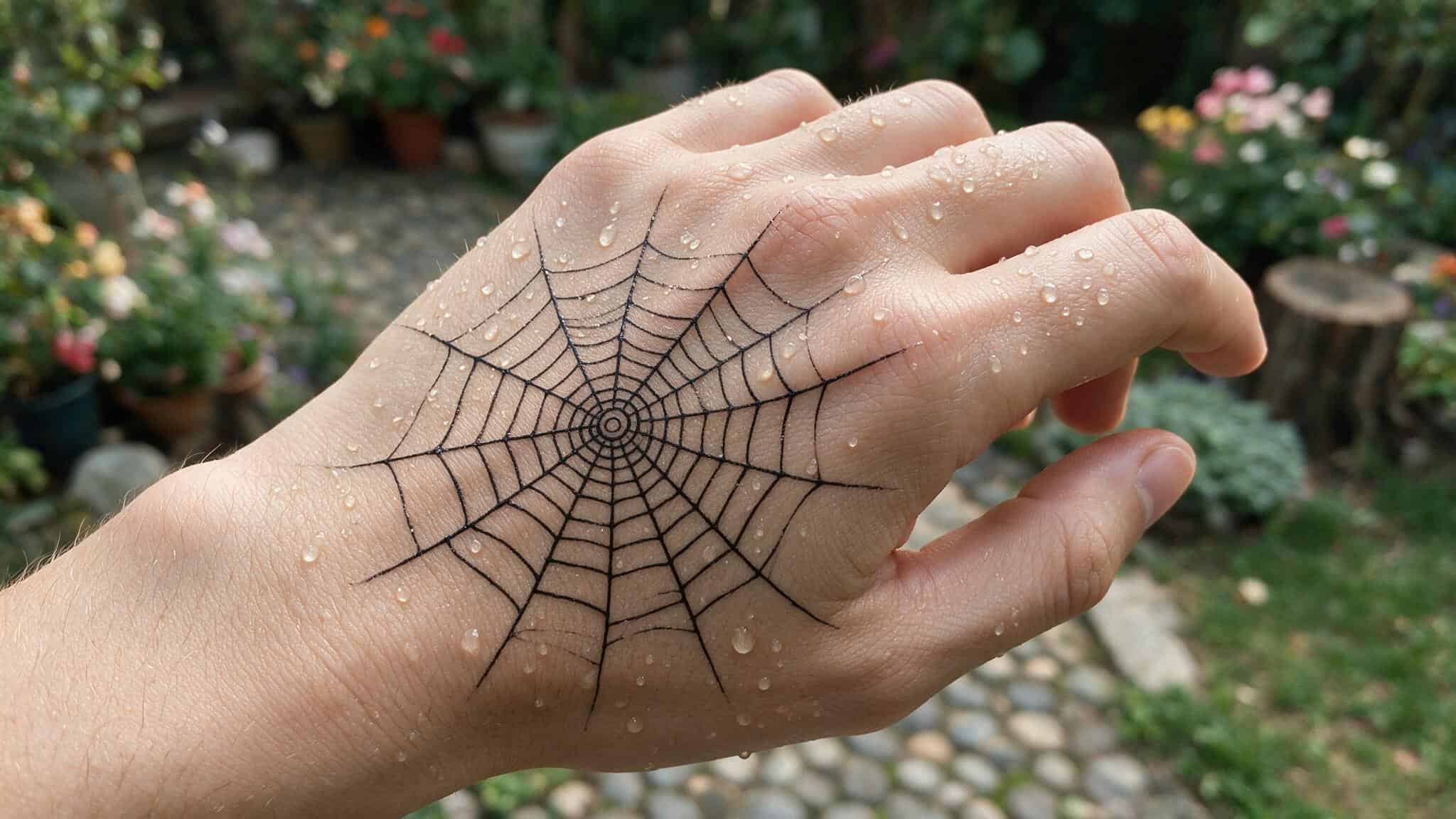
Hand tattoos featuring fine web patterns blur faster than mask-only or bold-outline designs due to friction and sun exposure, making forearm or calf placements smarter choices for intricate webbing
Table of Contents
Classic Comic Book Style: Bold Outlines, Ben-Day Dots, and Ditko Poses
The traditional comic-book look with solid primary colors, black outlines, and dynamic action poses defines Spider-Man’s visual DNA. We’re talking solid primary colors, black outlines that pop, and dynamic action poses that capture the wall-crawler mid-swing. This is the aesthetic that says “I’ve been reading since Amazing Fantasy #15.”
The key here is referencing the right artist. Steve Ditko’s original run gave Spider-Man those gangly proportions and distinctive mask eyes—slightly wider and more expressive than later interpretations. A good artist who knows Ditko’s work can replicate the webbing pattern that flows across the suit, not as a uniform grid but as an organic design that follows the character’s anatomy, as seen in Ditko’s original run. John Romita Sr. refined the look later, but Ditko’s original sketches from the early 1960s have a raw energy that translates beautifully into ink.
Hidden Easter egg: Ben-Day dots. Those tiny dots used in vintage comic printing to create color and shading. A few tattoo artists are experimenting with incorporating Ben-Day dots into the red sections of the suit as a stylistic nod to the old printing process. It’s subtle—most people won’t notice—but for a true fan, it’s a gorgeous reference to the character’s Silver Age origins.
The practical upside: bold outlines hold up over time while finer shading might blur. The black lines stay crisp while finer shading might blur, so this style ages more gracefully than ultra-detailed realism.
Mask-only design vs. full-body pose
Here’s the first real decision you’ll face. Mask-only tattoos are compact—they fit on your forearm, calf, or shoulder without taking over your whole body, and the focus is entirely on the eyes and web pattern. The focus is on the eyes and the web pattern, which means the artist has to nail the proportions of the lenses. A slightly-off mask eye ruins the whole thing.
But when the mask eye proportions are nailed, it’s iconic. I’ve seen a forearm piece where the web pattern followed the muscle contour, making the mask look like it was wrapping around the arm.
Full-body poses require a larger canvas—thigh, sleeve, ribs—and they let you tell a story with a dynamic acrobatic stance, webs trailing, maybe a villain in the background. The tradeoff is that fine lines in the webbing and shading will blur faster than a bold mask outline, because there’s more detail packed into the same space, as noted in the field note about inner elbow webbing losing legibility within 18 months. If you want the action but don’t want to commit to a sleeve, a forearm piece with a crouching Spidey about to spring works well, as the forearm is a low-friction zone.
Neither is better. It’s about what kind of visual weight you want and where you’re willing to put it.
Realism and Photorealism: Movie Poster Worthy Ink
Photorealistic Spider-Man tattoos can look like a frame from the MCU movies frozen on your skin, such as Andrew Garfield in the rain from Amazing Spider-Man 2 or Tom Holland’s suit reflecting light. Think of Andrew Garfield in the rain from Amazing Spider-Man 2 or Tom Holland’s suit reflecting light. The shading, the skin texture, the drop shadows—and the boldness of a Spider man tattoo on hand take this ink to a whole new level of visibility—it’s a different beast from comic style.
The challenge: Red and blue are tricky pigments. Getting them to look three-dimensional on skin requires an artist who understands how to layer those colors, as a bad photorealistic Spidey looks muddy. A bad photorealistic Spidey looks muddy. A great one looks like a living photograph.
This style demands a serious artist with a portfolio full of portraits and hyperrealistic work. You’re not walking into a walk-in shop for this; you need someone who’s done superhero faces before. You need someone with a portfolio full of portraits and hyperrealistic work, ideally someone who’s done superhero faces before. The best placements are flat, stable areas—chest, inner bicep, thigh—where the shading can breathe without being distorted by movement, as noted in the placement wisdom section.
Risk: Realism fades faster. Fine blending and subtle transitions need more touch-ups than bold outlines. And if you’re getting a face—Tobey, Andrew, or Tom—the likeness has to be perfect, as a slightly-off nose or eye shape ruins the whole piece. A slightly-off nose or eye shape and the whole piece looks wrong.
Mask vs. face in realism
This is the sub-dilemma that splits the photoreal crowd. A realistic mask focuses on the texture of the fabric, the reflection off the lenses, the depth of the web lines, and avoids the uncanny valley of a human face. It’s still recognizably Spider-Man, and it avoids the uncanny valley of a human face that doesn’t quite look like the actor.
A realistic face requires portrait-level skill to capture the expression—the determination, the exhaustion, the mask half-peeled off. When it works, the effect is stunning; when it doesn’t, you’ve got a permanent reminder on your skin. When it doesn’t, you’ve got a permanent reminder on your skin.
Some clever designs split the difference: a half-mask, half-face piece where the costume peels away to reveal Peter Parker underneath, as mentioned in the realism section.
Modern Twists: New School, Neo-Traditional, and Watercolor
The classic and photorealistic styles cover the majority of Spidey ink, but creative detours are worth considering, such as Spiderman tattoo ideas minimalist that use single-line drawings or abstract geometric takes on the web-slinger.
New school cartoon style leans into exaggerated proportions and bold, sometimes absurd, energy. Think Spider-Man with oversized eyes, dynamic motion lines, and a playful attitude. It’s the same energy as the Spider-Verse animation style—and that movie changed the game for how people think about Spidey designs. A new school piece can incorporate speech bubbles, POW effects, or even a Lego-style caricature for pure fun.
Neo-traditional takes the classic comic outline and adds enhanced shading, richer color palettes, and ornamental elements. You might see a Spider-Man mask framed by roses or geometric borders. The thicker lines still age well, but the color work is more complex, feeling vintage and modern at the same time. It feels vintage and modern at the same time.
Watercolor is divisive. The drippy, paintbrush-explosion aesthetic can look incredible on Spider-Man’s web-swinging poses—like the ink is still wet. The catch is that watercolor tattoos lack black outlines, so they blur and fade faster. Some artists are blending watercolor backgrounds with bold linework on the character himself, which gives you the best of both: a stable Spidey with an ethereal backdrop, as noted in the modern twists section.
Multiverse Variants: Beyond Classic Peter Parker
The Spider-Verse movie and No Way Home blew the doors off what a Spider-Man tattoo can be. You’re not limited to Peter Parker anymore; you can choose Miles Morales, Spider-Gwen, symbiote suit, Spider-Man 2099, or MCU integrated suit.
Miles Morales has a distinct silhouette—the red-and-black suit, the sneakers, the spray-paint logo tag. His mask has bigger, more expressive eyes than Peter’s, and the graffiti-inspired aesthetic works brilliantly in a sketch style, as seen in Spider-Man tattoo ideas for guys. For a bolder take, Spiderman tattoo ideas for guys often lean into full sleeves or chest pieces, but a spray-paint spider logo on its own makes a killer small piece.
Spider-Gwen brings the hoodie, the ballet-like poses, and a pastel color palette that’s a nice departure from the standard red-and-blue. Her design feels lighter, more fluid, as noted in the multiverse variants section. A forearm piece with Gwen mid-leap, hood up, webbing trailing—that’s a conversation starter.
Symbiote suit. Pure black with a white spider. High contrast, moody, and forgiving for artists who work better in black and gray. It’s the edgy option, and it ages well because there’s less color to fade, just be prepared for the inevitable ‘is that Venom?’ question. Just be prepared for the inevitable “is that Venom?” question.
Spider-Man 2099. The blue-and-red futuristic suit with the sharp angles and the skull-like mask. It’s less common than the classic suit, which means your tattoo stands out as a deep cut. The angular webbing and the cape-like wingspan make for a striking full-back or shoulder piece, as mentioned in the multiverse variants section.
MCU integrated suit with the nanotech details and the gold accents. This is the Tom Holland No Way Home look, and it’s hyper-modern. The metallic sheen and the intricate panel lines demand a skilled color artist.
Placement Wisdom: Where Spidey Tattoos Shine (and Where They Fade)
Spider-Man’s web pattern is stunning when it’s fresh, but it’s also detailed—and details are the first things to go, especially in high-friction zones.
High-friction zones (hands, feet, inner elbow): Fine webs blur fast here. Your hand moves constantly, gets sun, and takes abuse, so if you must have a hand tattoo, a mask-only design with bold outlines has a fighting chance. A full web pattern?
It’ll be a blob in two years, as fine webbing on the inner elbow folds and stretches constantly during everyday motion. The wrist is a solid alternative—similar visibility but less friction, as mentioned in the placement wisdom section.
Field note: Fine webbing on the inner elbow folds and stretches constantly during everyday motion—even a well-done piece can lose legibility within 18 months. Stick to bold mask outlines if you’re set on that zone.
Low-friction zones (forearm, shoulder, calf): This is where you want fine linework. The forearm is probably the most popular Spidey placement for a reason: it’s visible enough to show off but protected enough that the details hold, as noted in the placement wisdom section. The calf is another excellent choice for a full-body pose because the skin there doesn’t move much, as mentioned in the placement wisdom section.
Sleeve: The ultimate storytelling canvas. You can do a full narrative—Spidey swinging through New York, villains in the background, the spider emblem on the outer arm. But it’s a time and money commitment, and the inner arm and elbow ditch will need touch-ups sooner, as noted in the placement wisdom section.
Back: Full-back Spidey tattoos are epic. The spider emblem spanning your shoulder blades, a dramatic web-swinging pose, maybe the skyline of New York. The back has thick skin that ages well, but you won’t see it every day, as mentioned in the placement wisdom section. That’s a tradeoff some people love and others hate.
Aftercare That Keeps the Red Red (and the Blue Blue)
Red pigment is more photosensitive than blue, as UV rays break it down faster, causing it to shift toward orange or pink over time, as noted in the aftercare section. That iconic bright red suit? It’s going to fade unless you protect it.
What you can do: High-SPF sunscreen (50+), and don’t skip it. Protective clothing if you’re in direct sun for extended periods, as UV exposure diminishes vibrancy of red pigments. And accept that red will need more frequent touch-ups than blue or black, as noted in the aftercare section. If you’re planning a full-color Spidey sleeve, budget for a few extra sessions over the years to keep that red punchy, as the classic suit demands maintenance.
General aftercare still applies—gentle washing, moisturizing, no picking at scabs—but the Spidey-specific takeaway is that your red pigment is the canary in the coal mine, as it’s more photosensitive than blue. Treat it accordingly.
If you’re going for the symbiote suit or a black-and-gray piece, you skip most of this concern, as there’s less color to fade. But the classic suit demands maintenance, as the red pigment is more photosensitive than blue. That’s the cost of doing business with the web-slinger’s iconic palette, as noted in the aftercare section.
Spider-Man has been one of the most requested superhero designs in tattoo shops for decades, as noted in the entity list. The visual language is iconic, with the web pattern, expressive eyes, and red-and-blue contrast. The symbolism of responsibility and resilience resonates, as Spider-Man tattoos symbolize responsibility, resilience, and the struggle between ordinary life and extraordinary duty. And with the multiverse opening up every possible variation, there’s a design for every kind of fan, from classic Ditko to photorealistic MCU to minimalist Miles Morales.
The key is finding an artist who understands what you’re after—Ditko classic, photorealistic MCU, or minimalist Miles Morales spray-paint logo, as mentioned in the conclusion. Show them reference material—specific comics, movie frames, other tattoos you admire, as the best Spidey ink reads like a fan who truly gets the character. The best Spidey ink doesn’t just look good; it reads like a fan who truly gets the character. It reads like a fan who truly gets the character.
People Also Ask
Why does red fade faster than blue in Spider-Man tattoos?
Red pigment is more photosensitive than blue, meaning UV rays break it down quicker, causing it to shift toward orange or pink over time. To keep the classic red suit vibrant, use high-SPF sunscreen (50+) and plan for more frequent touch-ups on red areas.
What’s the difference between a mask-only and a full-body Spider-Man tattoo?
A mask-only design is compact and focuses on the eyes and web pattern, fitting well on forearms or calves, and ages better due to bold outlines. A full-body pose requires a larger canvas like a thigh or sleeve, allows for storytelling, but has more fine details that blur faster.
Is a photorealistic Spider-Man tattoo worth the risk?
It can be stunning if done by a skilled artist, but it’s risky. Realism fades faster and requires more touch-ups, and if the face doesn’t perfectly capture the actor, it looks off. Choose a flat area like the chest or thigh, and ensure the artist has a strong portfolio in portraits.
How do I choose the right placement for a Spider-Man tattoo?
For fine webbing, pick low-friction zones like the forearm, calf, or shoulder—these hold details best. High-friction areas like hands and inner elbows blur fast, so stick to bold mask outlines there. For a full-body pose, the thigh or back provides ample space and ages well.