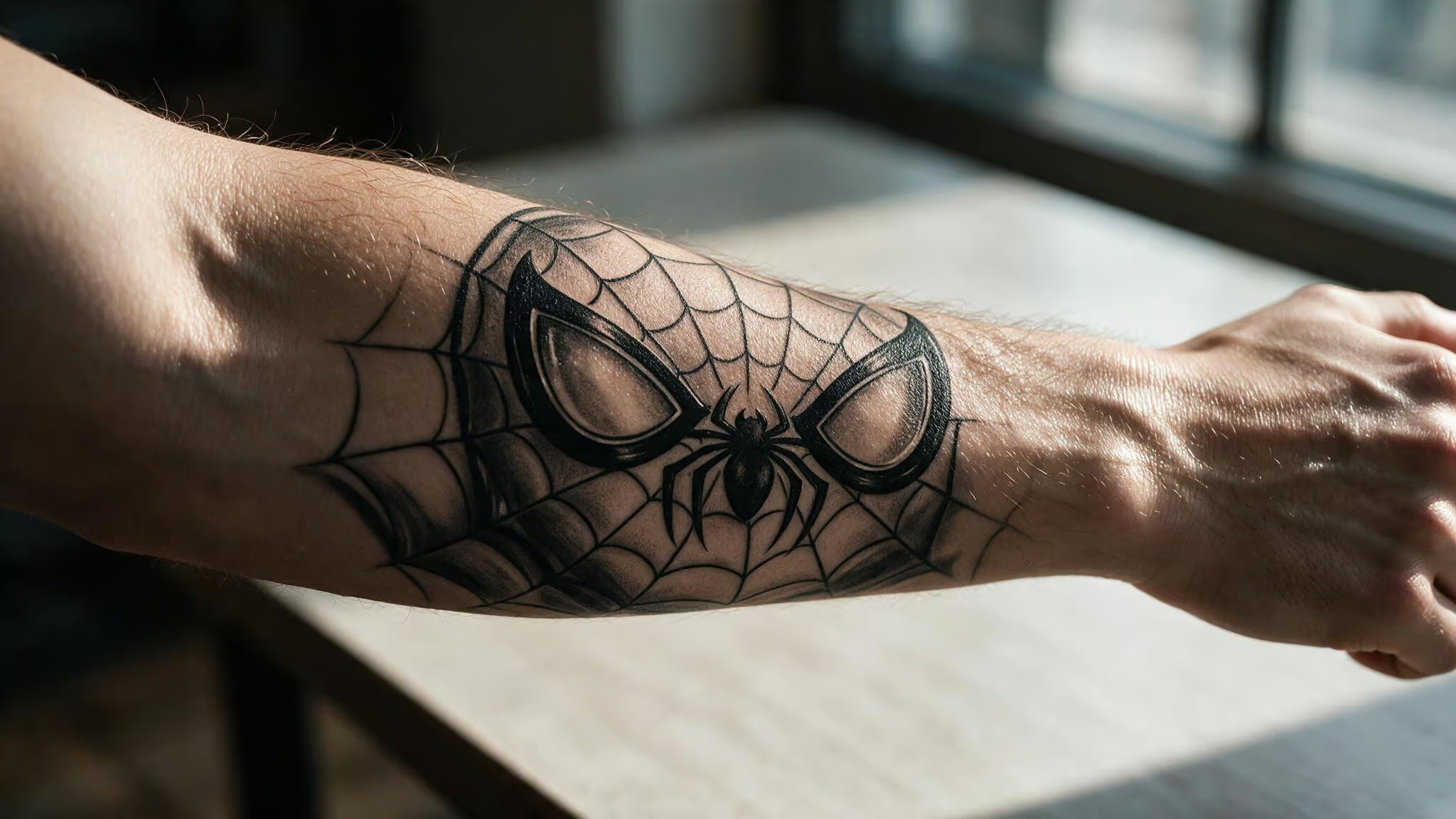
Let’s get the obvious question out of the way first: can a grown man pull off a Spider-Man tattoo without it looking like a kid’s bedroom poster? Short answer — yes.
Spider-Man debuted in 1962, from the minds of Stan Lee and Steve Ditko, and changed something fundamental about superheroes. Before Peter Parker, teenagers in comics were sidekicks — Robin, Bucky, the kid who handed the hero a gadget. Spider-Man was the first full-fledged teenage superhero in comics, carrying his own book, his own problems, and his own weight.
The character turned 59 in 2021, and Spider-Man: No Way Home dropped that December, sending a wave of people to tattoo shops. But the cultural spike aside, Spider-Man tattoos are among the most requested superhero designs globally, with appeal spanning generations from comic fans to film audiences. The character’s iconic red and blue costume and web patterns translate well to tattoos — high contrast, iconic shapes that read clearly from across a room.
The worry isn’t about the character. The question is whether the design reads as tough or cartoonish. And that’s a fair concern, because the difference comes down to specific choices in style, composition, and execution — not the subject matter itself.
Key Takeaways
Spider-Man’s 1962 origin as the first full-fledged teenage superhero gives the character a personal resonance for adult guys — the “ordinary person with extraordinary responsibility” narrative mirrors real-world pressures
The difference between a tough Spider-Man tattoo and a childish one comes down to line thickness, shading weight, and frame selection, not the subject matter
Red and blue pigments are the most UV-vulnerable colors in tattooing — red pigment fading is the #1 reason color Spider-Man pieces look washed out within a few years — any color Spider-Man piece demands more diligent sun protection than black-and-grey work
Table of Contents
Classic Comic Book Style: Making The Retro Look Tough
The traditional comic book style for Spider-Man tattoos — bold outlines, vibrant primary colors, dynamic action poses, is still the go-to for Spider-Man ink. Speech bubbles, POW! effects, Ben-Day dot patterns if you want that vintage printing nod. It’s familiar, it’s readable, and it’s the look most people picture when they think “Spider-Man tattoo.”
But here’s where most articles miss the mark: that same style can read as nostalgic and cute or as bold and tough, and the difference is in the execution.
The masculinizing trick comes down to three things. Thicker linework makes the design hold its shape as the tattoo ages and gives it a heavier visual weight. Deeper shading — especially in the red areas, keeps it from looking flat. And the frame you choose matters more than you’d think. A mid-swing action pose with heavy black shading and a dynamic angle reads completely differently from a static, smiling full-body shot.
Neo-traditional approaches give you an upgrade path here. You keep the bold outlines and classic palette, but layer in enhanced shading and richer color work that pushes it toward something more substantial.
If you want a minimalist take on this, check out our guide to Simple spiderman tattoo ideas for clean logo-style designs that still carry the weight.
Photorealistic Portraits: The Pinnacle Of Spider-Man Ink
Photorealistic portraits of Spider-Man are considered the pinnacle of Spider-Man tattoo artistry.
The technical challenge here is unique. Every other portrait tattoo has a face to work with — you render someone’s features, their expression, their recognizable likeness. A Spider-Man portrait has none of that. The mask covers everything, so the eyes of the mask have to carry the entire emotional load. That single white lens shape has to convey determination, exhaustion, fear, or triumph, and if the artist gets it wrong, the whole piece reads as dead-eyed and flat.
That’s why this style requires hyperrealistic techniques from an artist who genuinely owns them. The intricate web pattern, the costume texture, the way light hits the raised webbing — these aren’t details you can fake with heavy outlines. Every millimeter matters.
The payoff is that a photorealistic Spider-Man piece is adult. Nobody looks at that level of technical execution and thinks “cartoon.” It reads as what it is: a demonstration of mastery, rendered on your skin.
Biomechanical & Geometric Designs: Edgy Without The Cartoon
If your objection to a Spider-Man tattoo is that you don’t want a comic-book costume on your body, this is the alternative you’re looking for.
Biomechanical and geometric interpretations of Spider-Man tattoos reimagine web-shooters and spider motifs as abstract, architectural forms. You get the essence of the character without the red-and-blue suit. The web-shooters become mechanical assemblies. The spider symbol becomes a geometric pattern. The mask becomes a angular structural design.
It side-steps the literal costume entirely while keeping the reference clear to anyone who knows the character.
For guys who want the symbolism without the cartoon, this is the move. It’s also a strong option if you’re thinking about Spiderman tattoo ideas with meaning — the abstract approach lets you layer personal significance into the geometric forms.
Optical Illusions & Skin Tear Effects: The Pro-Level Wow
Optical illusions in Spider-Man tattoos, such as skin tearing to reveal the costume, make it look like the flesh has been pulled back to reveal the red-and-blue costume underneath. It’s a trompe-l’oeil effect that requires the artist to render three distinct textures — skin, muscle tissue, and the costume fabric, in a single seamless illusion.
To sell the illusion, the artist has to nail color matching between your actual skin tone and the rendered skin. They have to render the torn edge with convincing anatomy. And they have to make the costume underneath look like fabric, not painted plastic. Three textures, one image, zero room for error.
That’s why this style works best on larger canvases — forearms, chest pieces, thighs. You need room to stage the reveal. But when it’s done right, it’s the kind of piece that stops conversations. Not because it’s flashy, but because people can’t figure out how it works.
Comic Panel Remakes: Wear Your Story On Your Skin
Tattoos can be remakes of favorite comic panels, including text bubbles — I’ve seen guys pick a specific panel from a favorite issue and turn it into a tattoo. The approach carries the original storytelling weight onto your skin.
The move here is to find a moment that means something to you personally, not just the most famous panel. Maybe it’s the issue where Uncle Ben dies, and that “great power” line is what you tell yourself at work. Maybe it’s a quieter beat where Peter is sitting on a rooftop, exhausted, because that’s how you feel some days. The text bubble lets you literally wear a line that defines your values.
The frame itself — inked as a comic panel, complete with borders, gives the tattoo an intentional shape that reads as deliberate, not accidental. It’s a page from your story, not just a picture.
Villain-Inspired Tattoos: The Toughest Spider-Man Ink Isn’t Spider-Man
Here’s the truth: the toughest-looking Spider-Man tattoos aren’t Spider-Man at all.
Villains like Venom, Green Goblin, and Doctor Octopus are popular in Spider-Man tattoos and objectively read as more menacing on skin. Venom’s black-heavy mass is particularly interesting — black ink ages better than any color, and the symbiote’s organic, tendril-like form gives the artist room for aggressive linework that a clean superhero suit doesn’t.
The Green Goblin brings a different kind of menace — that jagged grin, the purple and green palette, the dramatic cape work. Doc Ock’s mechanical arms create natural framing opportunities for a chest piece or sleeve, with the arms wrapping around the body in ways that Spider-Man’s web lines can’t match.
Guys who want something aggressive don’t have to force a hero into a dark aesthetic. The villains already come that way.
Placement & Size Guide: Design First, Then Find The Canvas
The usual advice is to pick your placement first and let it dictate the design. I’d flip that: figure out what you want, then find the real estate that can handle it.
Full sleeves and chest pieces
These are the ideal canvases for detailed action poses and complex scenes. A mid-swing Spider-Man with the cityscape behind him, a Venom confrontation spread across the forearm and bicep, a photorealistic mask with the web pattern wrapping around the shoulder — these need room to breathe. Full sleeves run $1,500 to $5,000+ for detailed scenes, but you get the best canvas for intricate work, and superhero costumes remain popular among male cosplayers in 2025.
Forearm, back, and leg
Solid middle ground. Forearms give you enough space for a well-detailed mask or a medium action pose. The back and legs can handle larger pieces without the commitment of a full sleeve. These spots have enough real estate for the web pattern to stay legible — which matters more than you think.
Hand, wrist, and small spots
Detail loss is real here. Intricate web patterns and small facial features will blur within a few years if you cram them into a palm-sized spot. Fine line work on hands and wrists takes a beating from daily use and sun exposure. If you want a detailed Spider-Man piece, you need at least forearm-level real estate. If you’re set on a small spot, go with a simplified spider logo or a minimalist mask — something that reads clearly even after some spread.
For clean, simple designs that work in small spaces, our Simple spiderman tattoo ideas guide has you covered.
Color Vs. Black-And-Grey: The Longevity Tradeoff
Most articles default to “get color, but take care of it.” That’s not wrong, but it skips the tradeoff.
Color Spider-Man tattoos are striking. That red-and-blue palette pops like nothing else when it’s fresh. But here’s the catch: red pigments break down faster under UV than any other color. Blue isn’t far behind. Sun protection isn’t optional — it’s the single most important factor in whether your Spider-Man still looks like Spider-Man in five years.
Field note: Red pigment fading is the #1 reason color Spider-Man pieces look washed out within a few years — plan your sunscreen budget the same way you plan the tattoo budget.
Black-and-grey isn’t a compromise. It’s the smarter choice for guys who want a bold piece that stays sharp. Monochrome versions of the same designs hold their contrast longer, don’t demand sunscreen vigilance, and still read clearly as Spider-Man. The tradeoff is that you lose the iconic red-and-blue pop, but you gain a piece that looks better at the ten-year mark.
Aftercare That Keeps Your Spider-Man Sharp
Generic aftercare advice is everywhere. Here’s the Spider-Man-specific version.
Sunscreen is non-negotiable. Red pigment breaks down faster under UV than any other color, and once the red fades, the web pattern loses its contrast. You end up with a muddy blue-gray mess instead of a crisp Spider-Man piece.
Moisturizing matters because dry skin makes any tattoo look dull, but for a design with fine web lines, it’s critical. Those thin black lines will crack and spread if the skin is dehydrated.
Periodic touch-ups are part of the deal with color Spider-Man work. The bright reds and blues will need refreshing every few years, depending on your sun exposure and skin type. Budget for that upfront.
What Your Spider-Man Tattoo Says About You
This is where a Spider-Man tattoo connects to something real, not just fandom.
Peter Parker’s dual life — balancing school, work, relationships, and the weight of being the one person who can step in, mirrors the kind of pressures a lot of guys carry. You’re the dad, the employee, the person everyone relies on. You don’t get to clock out of being the responsible one.
The tattoo becomes a personal emblem of that. It’s not “I’m a hero.” It’s I know what it means to carry something heavy and keep going. The symbolism hits different when you’ve been the guy holding things together.
For a deeper look at how these designs tie into personal stories, the Spiderman tattoo ideas with meaning guide explores specific panels and quotes that carry that weight.
How Much A Spider-Man Tattoo Costs (Real Talk)
Let’s talk numbers, because tattoo articles skip this part.
- Small designs like a palm-sized spider logo or minimalist mask: $150–$400
- Medium pieces on the forearm or bicep: $500–$1,500
- Full sleeves with detailed scenes and color work: $1,500–$5,000+
- Color work costs more than black-and-grey — more pigment, more time, more skill required
These are industry averages, not guarantees. Shop minimums, artist skill level, and your geography all affect the final number. A top-tier photorealism specialist in a major city will charge differently than a solid street shop artist in a smaller market.
Here’s the real talk: a detailed, color Spider-Man sleeve is a serious financial commitment. And the color maintenance adds recurring costs — touch-ups every few years, better sunscreen than you’d otherwise buy. Factor that in before you start.
The Bigger Picture: Masculine Branding And Your Ink
The desire for tough, durable self-expression isn’t limited to tattoos. Look at what’s happening in consumer goods right now — there’s a wave of brands weaponizing strength imagery to speak to men.
Crooked Howlet Designs out of Sydney makes limited-run heirloom rings in sterling silver and 9-carat gold. They release monthly styles and produced a short film directed by Matthew Alexander Hill documenting the design process from concept to finished ring. The pieces feel like something you’d hand down — built to last, not trendy. Prices start around $140 AUD with free worldwide shipping, they’re not cheap, but they’re not disposable either.
War Paint takes a different angle — men’s makeup marketed with a “Keep Calm and War Paint” slogan that riffs on the WWII poster. They focus on mental health and low self-esteem, which is a surprisingly earnest angle for the category. They also provide makeup explainers for guys who’ve never used it, which is relevant if you’re considering covering ink for professional situations.
Liquid Death sells canned water with a punk/metal aesthetic — skulls, satanic cosplay, a “sell your soul” mailing list promotion. Their launch commercial was directed by Will Carsola (of Mr. Pickles fame), and it’s exactly as unhinged as you’d expect. The brand’s whole thing is violent imagery and dark humor, with phrases like “Thirst Murdering” treated entirely straight. Underneath the edge, they emphasize recycled materials — a genuine eco-angle buried in the chaos.
These aren’t sponsors, and I’m not recommending any of them specifically. The point is the pattern: guys are looking for brands and imagery that project strength, durability, and a kind of aggressive authenticity. A Spider-Man tattoo — done right, with the right style and placement, sits in that same language. It’s not a cartoon. It’s a statement about what you carry, what you’ve been through, and the fact that you’re still swinging.
Frequently Asked Questions
What does a spider tattoo represent on a man?
A spider tattoo often symbolizes patience, creativity, and the ability to weave one’s own destiny. For men, it can also represent the balance between power and vulnerability, especially when tied to Spider-Man’s narrative of carrying heavy responsibility while still pushing forward.
How much does a Spider-Man tattoo cost?
Small designs like a palm-sized spider logo run $150–$400, medium pieces on the forearm or bicep cost $500–$1,500, and full sleeves with detailed scenes and color work range from $1,500 to $5,000 or more. Color work costs more than black-and-grey, and you’ll need to budget for periodic touch-ups every few years.
Does a Spider-Man tattoo fade faster than other tattoos?
It can, especially if you go with color. Red and blue pigments are the most UV-vulnerable colors in tattooing, so a color Spider-Man piece demands diligent sun protection to avoid looking washed out within a few years. Black-and-grey versions hold their contrast longer and don’t require the same level of sunscreen vigilance.