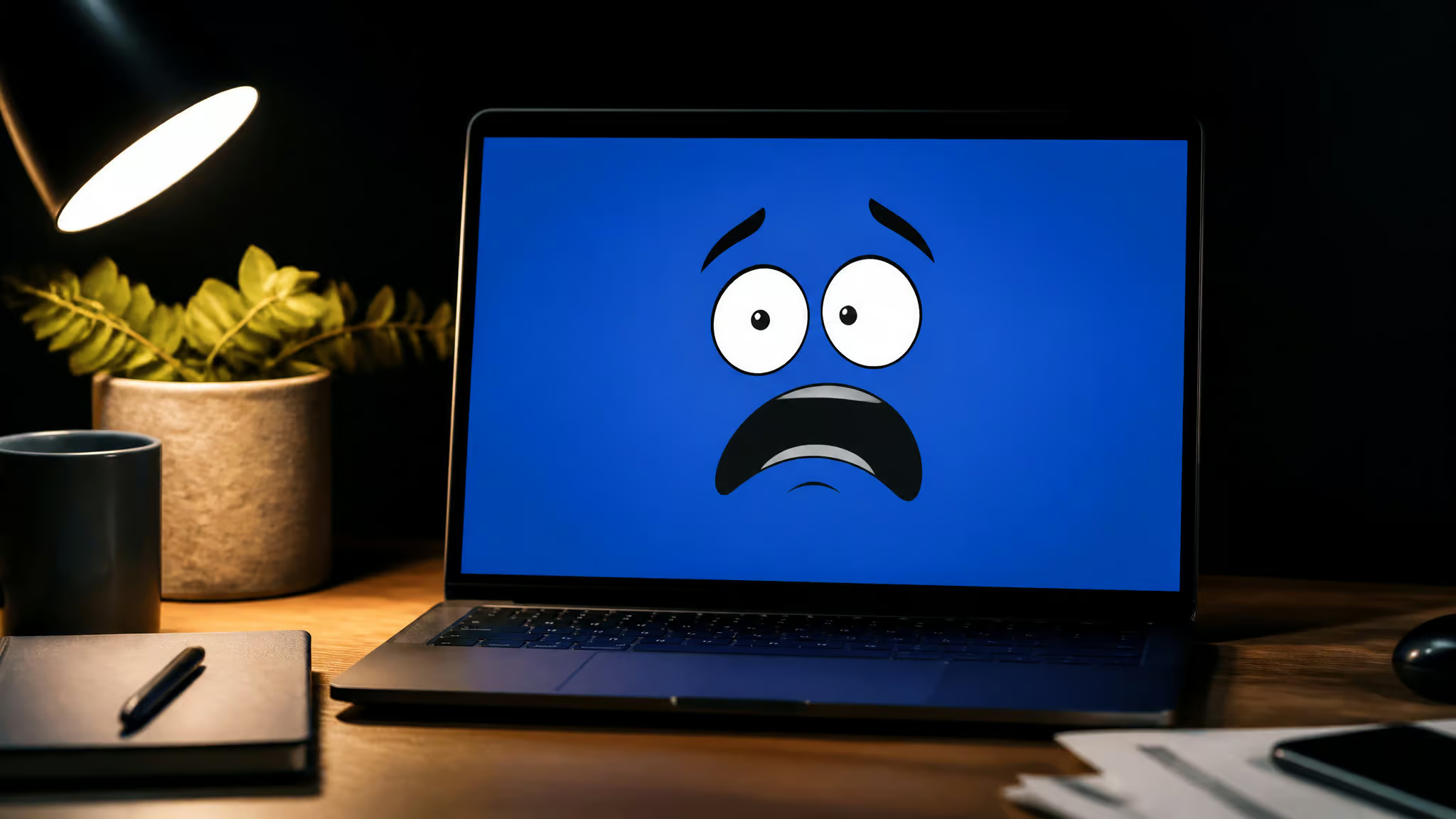
I went looking for funny laptop snaps expecting, you know, pictures. Cats on keyboards, people screaming at BSODs, that sort of thing. What I found instead was a supply chain. A search for “computer meme” on Getty alone turns up 299 stock photos, spread over 5 result pages.
Vecteezy’s “funny internet meme” page kicks back 97. That’s hundreds of professionally shot, cataloged, keyword-stacked images of people being funny at laptops. Your feed’s laptop humor isn’t just organic. Some of it is restocked on demand, like printer toner.
So this is a field guide, not an image dump. I’m going to name and date the major laptop snap formats where dates exist and be honest about the ones that don’t. Then the genuinely fun part: staging each one yourself without it looking fake. Because that’s the documented content gap.
Everyone reposts these. Nobody explains why most recreations flop.
Key Takeaways
A Getty search for “computer meme” surfaces 299 stock photos spanning 5 pages, and Vecteezy’s “funny internet meme” page returns 97, proof that laptop humor is commercially restocked, not just organically viral.
The “when you accidentally type” emoji trend is the rare format with receipts: it originated with K-pop fans via @chookook on July 7, 2020, and by July 10, 2020 brands like Mumbai Indians and SunRisers Hyderabad were running variants.
Staged laptop snaps usually fail on physical tells: a fake cracked screen that ignores screen glare, a spotless desk, a pet staring dead into the lens.
Table of Contents
The laptop snap field guide: formats, named and dated
Most roundups just dump images. That’s boring. The interesting move is archaeology: label the specimens, and date them when the record allows.
The two-buttons decision-panic family
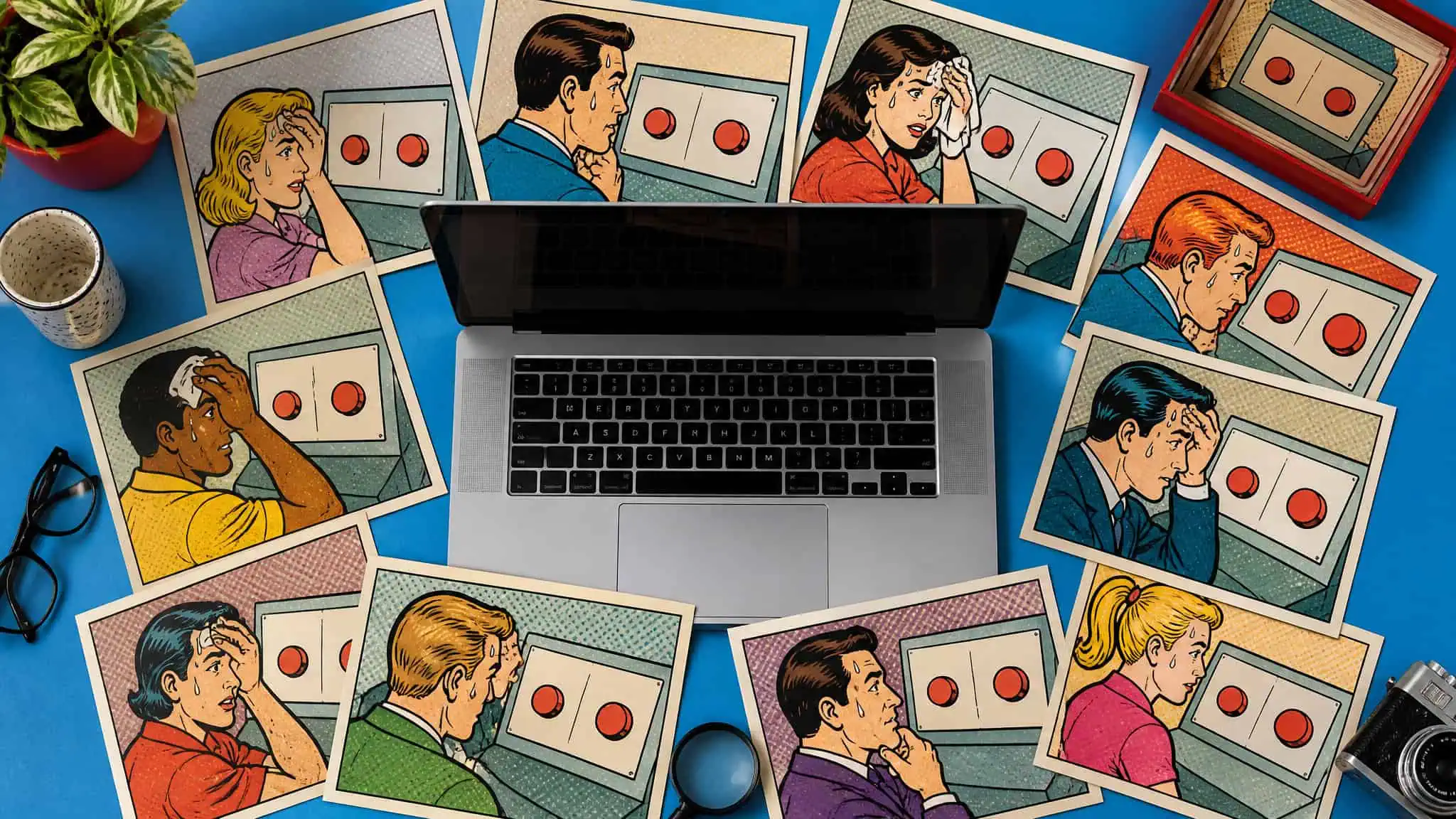
Start with the family that dominates the commercial side. Getty keeps restocking a pop-art vector dynasty of panicked figures facing two choices: the Vector Pop Art Panicked Man (image 2167709125), the Sweating Woman (2106368728), and a Panicked African American Superhero (2167876561), all tagged with things like meme, sweat, push button, decisions. The format and the emotion are welded together here. Two buttons, one sweating person, infinite captions. It’s honestly kind of elegant as a design system: swap the label text, reuse the anatomy.
The same pop-art lane also holds a retro superhero punching a monitor-headed enemy (2198536771) and a pair of Internet Troll illustrations (1205278104 and 1205458128). Different specimens, same vector habitat.
“When you accidentally type”: the trend with receipts
The “when you accidentally type” meme is a Twitter trend where you post four emojis with one swapped out, usually the third slot, for a photo that emotes the same emotion, and it started among K-pop fans on Twitter on July 7, 2020. That’s the rare meme with a documented patient zero: a fan montage from @chookook. The original pattern used the smiling face with tear emoji in that third slot, replaced by a photo of someone making the matching face.
This is wild for spread speed: by July 10, 2020, it had been picked up at scale by Indian users and brands. Mumbai Indians posted the cricket-trophy variant, ????. SunRisers Hyderabad went with ????, which is a choice. There’s a Dil Bechara variant too, ?????, and content creator Akshar Pathak participated.
Roughly 17 example tweets are documented from that window, three days from fandom in-joke to brand Twitter, which is fast even by meme standards.
Field note: The “when you accidentally type” format is the only laptop meme in the record with a dated origin and named patient zero — that’s what receipts look like.
The undated classics (and why we won’t invent dates)
Then there’s the deep canon with no paperwork: fake cracked screens, staged “working hard” desk shots, laptop-on-head absurdism. Vecteezy has an asset literally titled “Man with laptop on his head” (13620708), which I respect enormously. Here’s the thing though: no documented origin dates exist for these formats. Lots of roundups paper over that with confident-sounding history.
We’re not doing that. I’d rather tell you the record is blank than make something up, because a field guide that invents its own fossils is useless.
Animals vs. laptops: the absurdist branch
Pets on laptops go viral because the real thing only happens on the animal’s terms: the machine has to be warm, or the camera has to be away, which makes every genuine pet-on-laptop moment feel rare and slightly stolen. That scarcity is the whole joke. Stock catalogs know it too.
The commercial footprint is all over Vecteezy. There’s “man forcing his cat to work” (57220284), a Humorous Capybara Working on Laptop (72501227), teddy bears using laptops, and a British shorthair whose caption celebrates hitting 200,000 likes on social media. My favorite is a poodle sitting at an office laptop, riffing on the classic On the Internet, nobody knows you’re a dog cartoon. And the real-viral side feeds the same demand: Moo Deng, the pygmy hippo at Thailand’s Khao Kheow Zoo, showed up as stock culture-reference material once the internet lost its mind over her.
Here’s the staging tell, and this is a pattern rather than one specific photo: a spotless desk plus a pet staring dead into the lens means the shot was staged. Real versions happen when the machine is warm or nobody’s watching. The tell isn’t the animal, it’s the lighting and the eye contact. If the cat looks like it’s posing for LinkedIn, you’re looking at a shoot.
Quick test: Warm machine, half-averted eyes, lived-in desk reads real. Perfect grooming plus direct lens contact reads staged — which is why prop photographers and retail displays often use a non-working display laptop instead of a real one.
Workplace laptop comedy: the IT-support canon
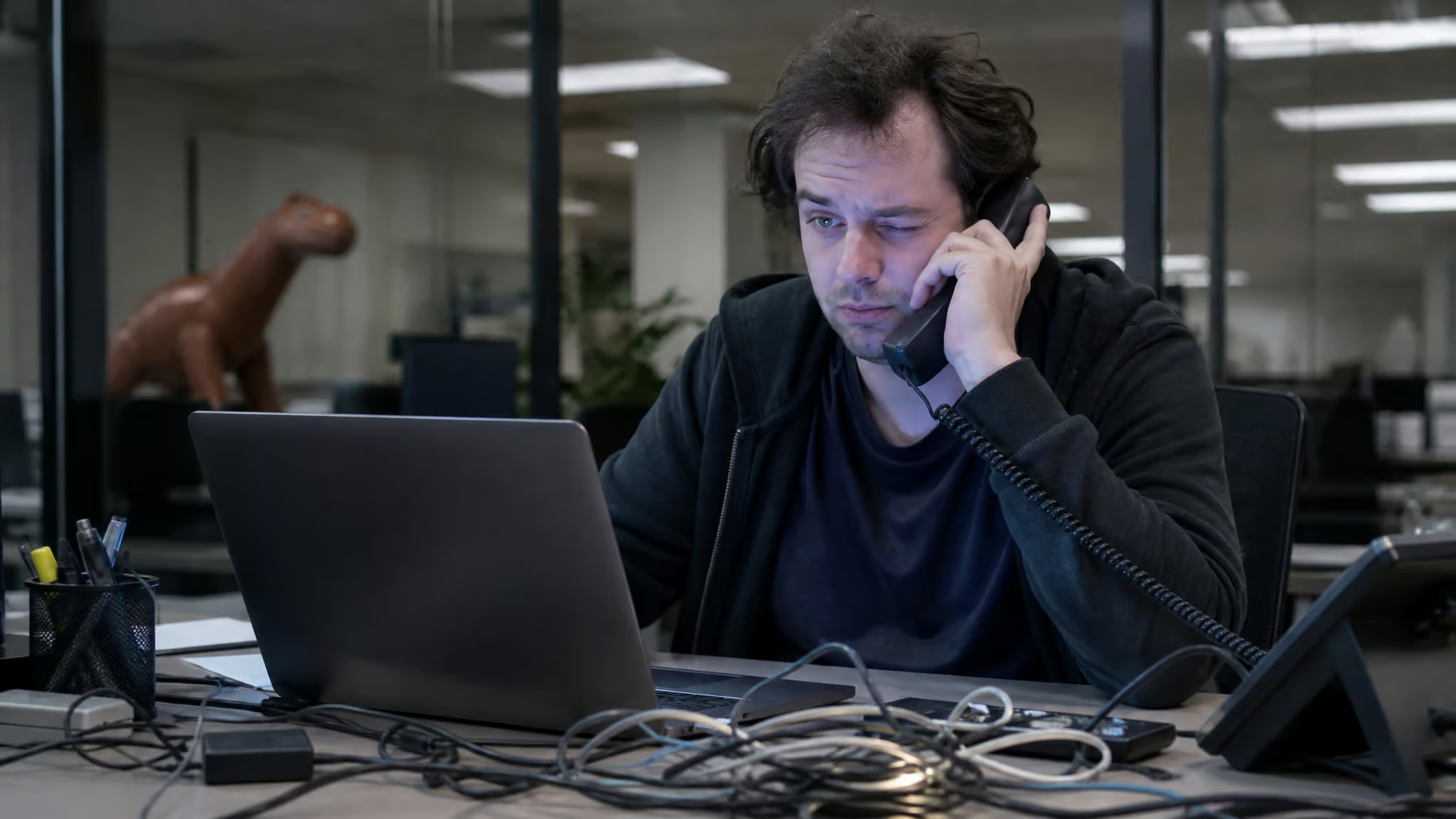
The helpdesk gave laptop comedy an actual taxonomy: PEBKAC, which spells out to “Problem Exists Between Keyboard And Chair,” PICNIC, “Problem In Chair, Not In Computer,” and the ID-10-T Error, which only reads as a word if you write it as a number. They’re three distinct entries in the support-desk lexicon, not synonyms, and TOPdesk catalogued all of them alongside a roundup of 14 IT-support anecdotes.
PICNIC, PEBKAC, ID-10-T: the insider taxonomy
Unpacking each briefly: PEBKAC locates the fault anatomically, between the keyboard and the chair. PICNIC says roughly the same thing but dresses it as a picnic, because support folks apparently can’t resist a pun. ID-10-T is the sneakiest one, because it’s how you write “idiot” using characters, which means it doubles as something you can say over the phone without the user catching on. Yes, it’s mean-adjacent, but it’s also bench-talk heritage, the way pilots have their own shorthand for weather.
‘DefinitelyWork.zip’ and the best TOPdesk anecdotes
All of the following belong to TOPdesk’s roundup of 14 IT-support anecdotes, not to me. The crown jewel: a screen share during which a user deleted 300 music files plus a file named DefinitelyWork.zip. Live. During the share. There’s also the ethernet cables someone joined with a bowline knot, which is at least a knot with nautical pedigree; the powered-off monitor reported as “broken”; the wireless mouse defeated by its own off switch; the user requesting someone “fax me more paper”; and a ticket resolution logged as the system “last used in 1998.”
Here’s the contrarian beat, and I think it’s true: the genre’s most durable laptop joke isn’t hardware failure at all. It’s that the machine was fine and the human was the error, the bored, restless human hunting for things to do on a laptop instead of blaming the hardware. Everyone’s been on one side of that call. I’ve been on both, and I’m not proud of one of them.
Which laptop memes get restocked (and why)
The format families that keep recurring in stock catalogs are the pop-art two-button panicked figures, the monitor-head superhero, memecoin photo illustrations like Dogecoin and TrumpCoin, #DollyPartonChallenge imagery, and Moo Deng culture references. If a meme survives long enough to become a purchaseable image, it lands in one of those lanes.
The long tail gets weirder the deeper you go. Getty has an Office Worker Clown photo (2232382672), a funny pixelated boss with sunglasses out of Malaysia (1452731258), and a crying-woman comic illustration (1134310793). Vecteezy, which is Shutterstock-affiliated, has ready-made meme formats too: a “Just Stop” entry, an image of a nerd sitting on a psychotherapist’s couch (2472067645); an entry whose caption reads I am nurtured by your hatred (2499738617, which also exists under a second ID, 2449414849); and something called “Napalm Fart” (2520206197) that I refuse to investigate further. The captions keyword-stack hard, promising things like perfect fits for viral marketing memes. That’s supply chasing demand, plainly visible in the metadata, the same demand-matching instinct behind any curated laptop snap idea bank, just pointed at more tasteful compositions.
One required honesty note: recurrence in listings proves commercial demand. It does not prove anything is a best-seller, and neither catalog publishes sales rank or view counts in a form we can cite. Catalog presence is a supply signal. Treat it that way and you won’t get fooled.
How to stage each format yourself (without it looking fake)
Here’s the payoff section, and the honest headline: a staged “working hard” laptop photo works when the physical setup, the lighting, and the caption are all in on the gag, and it fails the moment any one of them reads fake. There’s real how-to guidance for almost none of this in the sources, which is exactly why it’s worth writing down.
The fake cracked screen: why most attempts fail on glare
The fake cracked screen prank fails on lighting, almost every time. A typical setup goes like this: you screenshot a crack image, set it as the wallpaper, snap a photo. The tell is that the crack doesn’t follow the screen’s glare. A real crack sits in the glass and catches reflections; a wallpaper crack sits under them.
In a photo, the “damage” reads flat, like a decal. For the gag to survive, the crack image has to track the screen’s reflections, and most attempts just don’t.
This is also why the prank photo stays popular: since most attempts are obviously fake, spotting the tells is half the fun. The genre ate its own tail and made the failure modes the entertainment. For the record, none of this involves actual damage, and no prank in the documented sources broke a real laptop.
Red flag: If the crack sits flat and ignores reflections, everyone can tell it’s wallpaper. Real damage lives in the glass.
The staged ‘working hard’ shot and its caption
The staged “working hard” shot is incomplete without its ironic caption; the photo and the caption travel together as one format. Split them and you’ve just got a stranger at a laptop. The four-emoji-one-photo substitution structure from the “when you accidentally type” trend doubles nicely as a caption recipe: three slots of setup, one slot of punchline, and the punchline is a photo of you emoting it. Mumbai Indians’ ???? is basically the template.
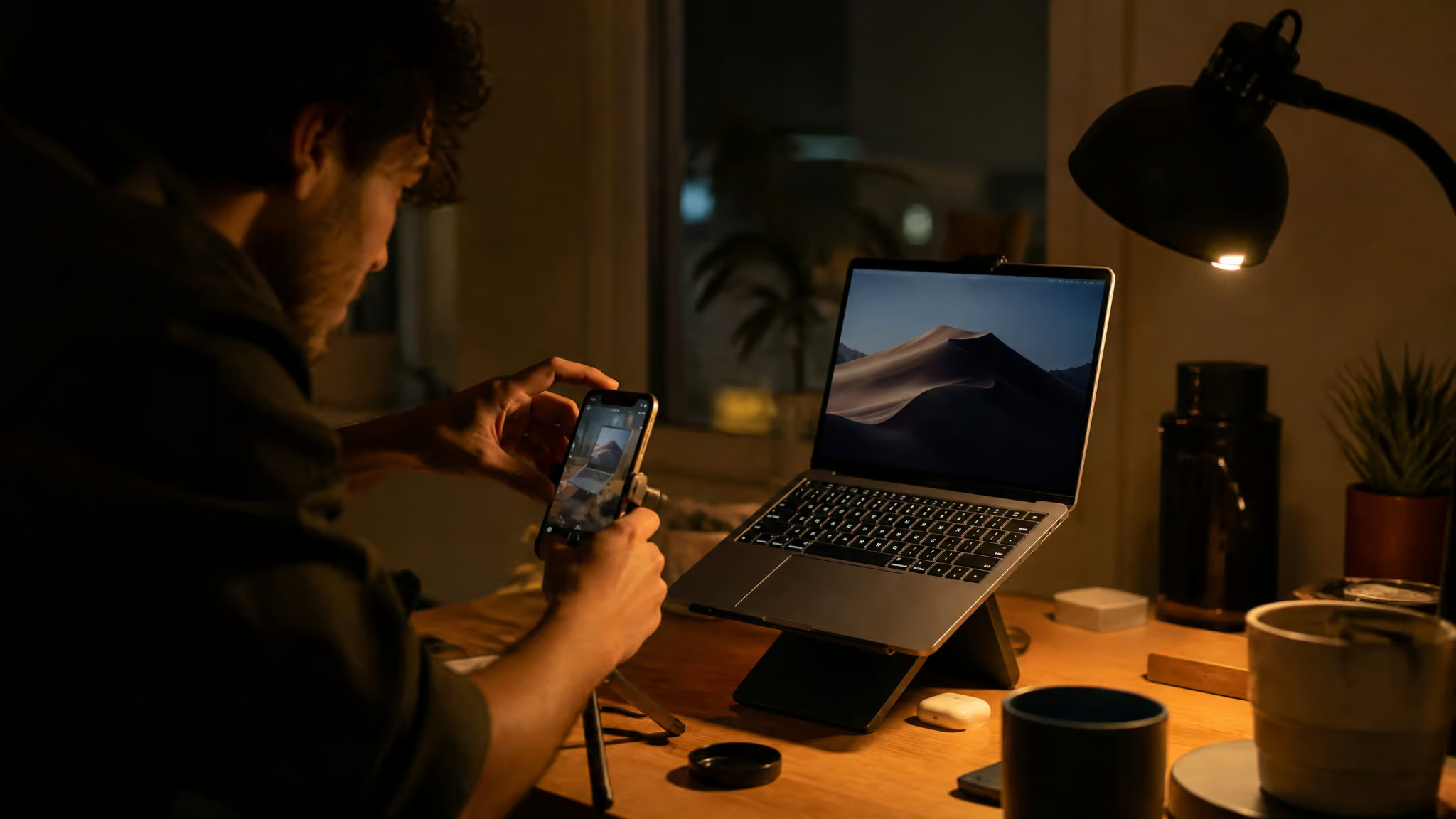
The physical setup carries weight too. The stand, the angle, the night lighting are part of the joke, not just production values. A laptop stand angles the screen toward the camera so the “work” is legible, and the night-snap lighting does the “late grind” storytelling for you. If you want more composition patterns, we’ve got a whole bank of laptop snap ideas organized by vibe and effort level.
The ChatGPT caricature prompt, verbatim
The viral ChatGPT caricature trend runs on a single deceptively simple prompt: the model is asked to draw a humorous caricature of the user and their work, using everything it knows about them from their history. It requires uploading a close-up photo of yourself, and the magic comes from the model drawing on your actual chat history.
The real tradeoff, per coverage of the trend from TOPdesk and Mashable: accounts without a long chat history have to supply the personal detail themselves, and in doing so they lose the surprise. If you feed ChatGPT your own punchlines, there’s no punchline. New account, flat caricature. The trend is really a long-tenure flex, which is a funny thing for a meme to be.
Meme culture as news: when jokes get photographed
At some point, memes stop being things people photograph and start being things photographers photograph. Wire shooters literally set up shots of screens displaying the joke, and the meme becomes a documented news subject with a dateline.
My favorite piece of evidence: a Getty wire photo of an editor viewing #DollyPartonChallenge memes on a monitor, shot in Los Angeles on January 24, 2020 (image 1195919175). The caption truncates mid-sentence at “Celebrities from Mark…” and I’m leaving it that way, because that’s where the record ends and completing it would be fabrication. The memecoin coverage runs the same pattern: photo illustrations shot in Krakow showing the TrumpCoin website, the Melania Official Meme website, and Elon Musk’s X account with Dogecoin, dated June 10, 2022 and February 2, 2025. And the “6 7” meme shows up as separate Getty assets (2259451613 and 2259451189) plus a Shutterstock “6 7” pumpkin (2695049347), the same phenomenon filed as distinct platform assets. Provenance-wise, that’s the difference between a joke existing and a joke being on the record.
Is that meme real or AI, and can you use it?
Yes, AI-generated meme images are okay to use when they’re explicitly labeled and properly licensed, and both major stock catalogs now make that distinction easy to check. Vecteezy explicitly labels AI-generated images alongside real photography, and it offers an AI-content removal filter among its result filters, so you can screen synthetic material out if you want only real photos. Getty markets its Generative AI as “commercially safe, ready-to-license,” and notice the selling point is safety, not authenticity: Getty is promising you won’t get a legal surprise, not that the image documents anything real.
The cautionary layer is the word “free.” Pages promising free meme images sit on real monetization infrastructure: Shutterstock affiliate redirects, Playwire ad containers, Intent IQ pixels, and a TOPdesk page that embeds 11 ad-tech pixel URLs all sharing a single tracking ID. Practically speaking, it pays to check the AI filter and the license before assuming anything, and to see “free” as a funnel, not a public-domain grab bag.
Where to find funny laptop meme images worth using
Getty Images and Vecteezy are the two documented catalogs for funny laptop and computer meme images, one licensed and editorial-grade, one free and filter-heavy. Which one fits depends on what “worth using” means for your project.
- Getty Images: the “computer meme” search returns 299 results across 5 pages; it has an exclusive editorial archive, Premium Access subscriptions, and new single-seat Creative/Editorial image subscriptions advertised at up to 90% savings per download. Sister sites include iStock, Unsplash, and Photos.com.
- Vecteezy: 97 free photos on the “funny internet meme” page, with filters for license, AI-content removal, orientation, people count, and framing, and 8 interface languages. The Pro/Plus upsell unlocks 60M+ assets with full commercial rights and legal coverage.
- The tradeoff: licensed-and-safe versus free-but-filtered. Vecteezy’s free tier is ad-supported and routes some results through Shutterstock affiliate links; Getty costs more but buys you licensing certainty, the editorial archive, and even a Custom Content creator network of 340,000+ creators if you’d rather commission the shot than hunt for it. Neither is a wrong answer; they’re just different risk profiles. If you’re staging your own shots instead of licensing them, our guide to fake display laptops covers the prop side of that.
The laptop snap is an organic gag that also gets restocked like printer toner. Now you know the formats, the dates, the failure modes, and the supply chain behind your feed. But notice where we landed anyway: the genre’s most durable joke is still the human one. The machine was fine. It’s always the machine that was fine.
Frequently Asked Questions
What are some good slogans for laptops?
Laptop slogans tend to lean on work humor and portability: lines like “the office is wherever the laptop is” or “working hard (or at least angled like it).” The staged ‘working hard’ photo genre pairs its snaps with ironic captions — the photo and the caption travel together as one format. Three slots of setup, one slot of punchline is the reliable recipe, as Mumbai Indians’ ???? showed.
What are some cool tricks I can do with my laptop?
The classic is the fake cracked screen: screenshot a crack image, set it as your wallpaper, and let someone panic. The catch is that most attempts fail on glare — a real crack sits in the glass and catches reflections, while a wallpaper crack sits flat under them. For a less destructive trick, the ChatGPT caricature trend asks the model to draw a humorous caricature of you and your work using everything it knows from your chat history.
What is the ‘when you accidentally type’ emoji meme and where did it start?
It’s a Twitter trend where you post four emojis with one swapped out — usually the third slot — for a photo that makes the same face. It started among K-pop fans on July 7, 2020, with a fan montage from @chookook, using the smiling face with tear emoji in the swapped slot. By July 10, 2020, brands like Mumbai Indians (????) and SunRisers Hyderabad (????) were running variants — three days from fandom in-joke to brand Twitter.
What are the classic IT help desk jokes like PEBKAC and ID-10-T errors?
The support-desk canon includes PEBKAC (‘Problem Exists Between Keyboard And Chair’), PICNIC (‘Problem In Chair, Not In Computer’), and the ID-10-T error, which spells ‘idiot’ if you write it with characters — meaning it can be said over the phone without the user catching on. They’re three distinct entries, not synonyms. The genre’s most durable joke isn’t hardware failure at all; it’s that the machine was fine and the human was the error.