Jensen Huang walked away from Nvidia on November 12, 2026, ending more than three decades at the helm of the world’s most valuable chipmaker. Almost immediately, posts started flying across X claiming the longtime founder plans to raise $50 billion for a brand-new semiconductor company.
I saw those posts making the rounds in my own X feed right after the exit news broke. Big round numbers travel fast when a marquee tech founder steps down, even when there isn’t a single filing, named investor, or news report to back them up.
Key Takeaways
Jensen Huang hasn’t announced or joined any new company since resigning from Nvidia on November 12, 2026, and Nvidia confirmed he’ll have no formal role at the company going forward.
Four of the five news and reference accounts reviewed say Huang resigned over an affair with a suspected Chinese spy, while one says the board told him to resign or be fired.
Huang’s only confirmed post-Nvidia actions are retaining Paul, Weiss defense lawyers Melinda Haag and Walter Brown amid federal inquiries and agreeing to testify before Congress, with no criminal charges indicated.
Table of contents
Table of Contents
Does Jensen Huang have a new company?
No, Jensen Huang hasn’t founded, joined, or announced a new company since resigning as Nvidia’s president and CEO on November 12, 2026. Nvidia also confirmed that Huang won’t hold any formal role at the company going forward.
Unverified posts on X are the only source claiming he plans to raise $50 billion for a new semiconductor venture. Nothing in regulatory filings or established news reporting backs up that figure, and Huang hasn’t made any public announcement about a second act.
Before stepping down, Huang spent plenty of time pitching big computing ideas, including unifying computer graphics and generative AI, building digital twins to train robots and self-driving cars, and expanding Omniverse, Nvidia’s platform for simulated 3D worlds. He also predicted that human language itself would become the programming language of the future. Those were strategic pitches for Nvidia’s roadmap, not blueprints for a new startup.
Why Jensen Huang resigned: the November 2026 timeline
Jensen Huang resigned as Nvidia’s president and CEO on November 12, 2026, following a series of reports from The New York Times that began on October 29 and alleged multiple extramarital affairs, including one with Chinese tech executive Alice Huang.
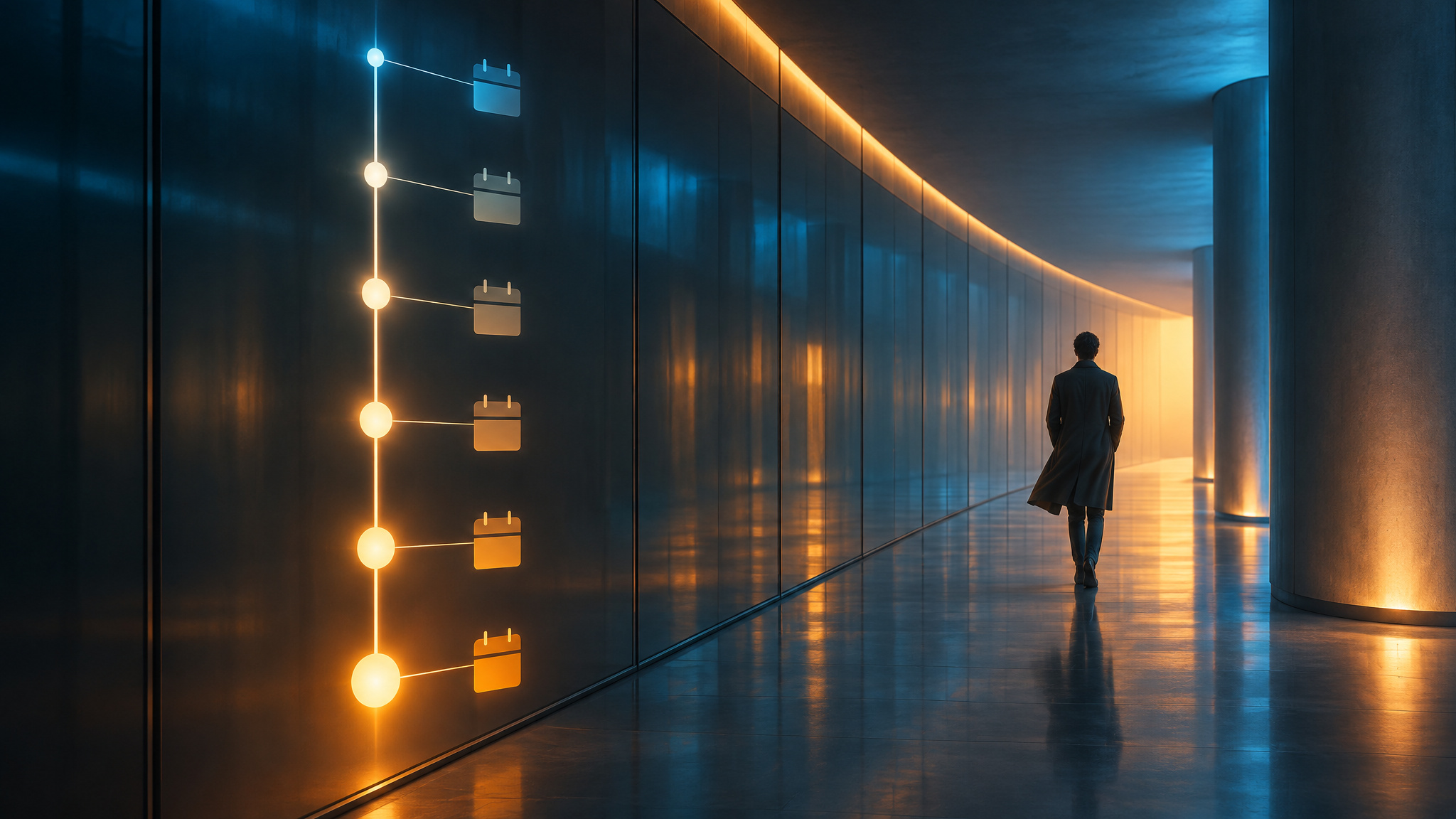
The timeline unfolded over two weeks:
- October 29, 2026: The New York Times began publishing a series detailing Jensen Huang’s relationship with Alice Huang, an executive at Megaspeed, a Singapore-based buyer of Nvidia AI chips. Despite sharing a surname, the two have no family connection.
- November 8, 2026: In an internal memo, Huang acknowledged his marital infidelity. Nvidia’s board launched an investigation while stating it had “no reason to believe that either national security or NVIDIA secrets were compromised” and adding that “The Board has confidence in Jensen and his leadership team.”
- November 11, 2026: The New York Times reported a second affair, this time with Nvidia healthcare vice president Kimberly Powell, including a hotel incident filmed by a bystander who was made to sign a nondisclosure agreement. That same day, The Wall Street Journal reported that the board was preparing to meet to determine his future, though one WSJ report from that period failed verification and should be treated as reported rather than confirmed.
- November 12, 2026: Huang resigned, and Reuters reported a third affair involving a second, unnamed Nvidia employee.
Among five news and reference accounts checked for this piece, four attribute Huang’s exit to an affair with a suspected Chinese spy, whereas one reports that the board told him to resign or be fired. For readers trying to square those two versions, the sequence shows that mounting infidelity disclosures and board pressure hit at the exact same moment, even while the espionage claims remained unsettled.
The disputed Alice Huang spying allegation
Intelligence sources believed China’s Ministry of State Security had recruited Alice Huang, turning a personal scandal into a potential national security problem for a company at the center of global AI hardware. Yet the official record never locked that claim down.
Attorney General Todd Blanche stated on November 12 that the Justice Department hadn’t concluded whether Alice Huang was spying for Beijing. CNN similarly reported that collected intelligence didn’t prove she acted as a spy and that officials disagreed on the evidence of Ministry of State Security recruitment. Neither Huang nor Nvidia faces indicated criminal charges.
How the board’s posture shifted
On November 8, Nvidia’s board publicly backed Huang and his executive team while opening an internal review. Just three days later, after The New York Times detailed the Kimberly Powell relationship and the nondisclosure incident, The Wall Street Journal reported that directors were preparing to meet over his future at the company. By the following day, Huang was out.
Colette Kress, Nvidia’s interim CEO after Jensen Huang
Colette Kress, Nvidia’s longtime chief financial officer and executive vice president, became interim CEO on November 12, 2026, the same day Jensen Huang stepped down. Nvidia confirmed that Huang will have no formal role at the company going forward, leaving Kress in charge of a business that his departure abruptly reshaped.
Just days before the handover, on November 8, Nvidia’s board had publicly expressed confidence in Huang and his leadership team. That stance didn’t survive the November 11 reporting, and Kress moved into the top seat as the board pivoted to containment.
As for who’s buying Nvidia stock now that Huang is gone, no post-resignation trading or investor-buying data is public in the confirmed record. The only established ownership facts are Kress’s interim appointment and the roughly 3.6% Nvidia stake Huang still holds.
The $50 billion rumor circulating on X
No corroboration exists for the $50 billion semiconductor rumor. No news outlet, regulatory filing, or named investor has confirmed a raise, and Huang hasn’t announced a new company.

Here at GeekExtreme, we treat social-feed chatter the same way we treat pre-release hardware leaks: separate what’s actually documented from what’s just making noise in the timeline. When a prominent founder leaves a flagship company, social feeds fill within days with massive, round funding figures that outrun any real verification. That’s the exact pattern I watched play out on X after November 12, where posts claiming Huang was raising $50 billion for a new chip venture circulated without a shred of primary evidence.
What Jensen Huang is doing after Nvidia
Jensen Huang’s confirmed post-Nvidia moves are legal and defensive rather than entrepreneurial, with no criminal charges indicated against him or the company. He has retained white-collar defense litigators Melinda Haag and Walter Brown of Paul, Weiss amid widening federal inquiries and agreed to testify at a congressional hearing.
Federal inquiries and legal constraints
The Department of Justice is running an antitrust investigation focused on Nvidia alongside separate export-control probes into Supermicro and Megaspeed tied to Alice Huang. Even though Attorney General Todd Blanche and CNN reporting indicate that the espionage allegations against Alice Huang weren’t proven, the overlapping federal scrutiny limits how freely Huang can maneuver right after leaving Nvidia.
His pre-resignation vision and Nvidia’s campus
Before the November scandal upended his tenure, Huang’s pitch centered on blending Nvidia’s graphics roots with generative AI. He talked up Omniverse as an industrial metaverse, showcased digital avatars like Diane, and argued that digital twins would let companies train robots and autonomous vehicles in physics-accurate simulations before deploying them in the real world.
He brought that same systems obsession to Nvidia’s Santa Clara headquarters, a pair of triangle-shaped buildings often nicknamed spaceships. Huang claimed the main building was the first structure requiring a supercomputer to design, and he outfitted it with video cameras and AI tracking capable of dispatching a janitor within an hour, even though only about a third of the workforce has been on site post-Covid.
The Jen-Hsun & Lori Huang Foundation
Outside the office, Huang and his wife Lori established the Jen-Hsun & Lori Huang Foundation in 2007 with $330 million in Nvidia shares. By late 2025, its assets had topped $12 billion, boosted by another $60 million added in June 2025. Roughly two-thirds of its grants go to donor-advised funds, charitable accounts where money is parked before going out to recipients, including the GeForce Fund at Schwab Charitable. The foundation disbursed $123 million in 2024 and projected $369 million for 2025, though Huang himself logs about an hour a week on it.
Its headline gifts include:
- Oregon State University: A $50 million gift on October 14, 2022, toward the $213 million Jen-Hsun Huang and Lori Mills Huang Collaborative Innovation Complex, matched by $50 million from the Wayne and Gladys Valley Foundation. Waste heat from its DGX SuperPOD and OVX SuperPOD clusters warms more than 500,000 square feet, alongside a $200 million semiconductor research center at the university.
- California College of the Arts: A $22.5 million match in early 2025 that completed a $45 million rescue of the school.
- Nepal and Tibet flood relief: A $10 million donation in 2026 toward recovery from floods carrying roughly $5 billion in rebuilding costs.
- Oneida Baptist Institute: A building donation in 2019 to the Kentucky boarding school Huang attended as a boy.
How Nvidia started: $600 and a Denny’s booth
Nvidia began with $600 in capital and a business plan drafted at a Denny’s breakfast booth in East San Jose. Huang, Chris Malachowsky, and Curtis Priem met while working on Sun Microsystems’ GX graphics engine at LSI Logic, which wrapped up in 1989. As Sun’s business cooled after 1990, the three engineers left to build graphics chips on their own, meeting throughout 1992 at that Denny’s for the inexpensive coffee and a quieter setting than home.

They initially wanted to call the company NVision, only to discover a toilet paper manufacturer already owned the name. They pivoted to Nvidia, drawn from the Latin word invidia, hoping competitors would turn green with envy, and dropped the opening letter to match their planned NV1 chip. Lawyer James Gaither incorporated the company using $200 each from Huang, Priem, and Malachowsky, while LSI Logic CEO Wilfred Corrigan provided early funding and introduced Huang to Sequoia Capital’s Don Valentine, with Sutter Hill Ventures also backing the startup.
Nvidia’s articles of incorporation are dated April 5, 1993, with Huang installed as president and CEO from day one at age 30. His co-founders deferred to him right away. That founding booth also capped a 45-year loop with Denny’s: Huang worked the graveyard shift as a dishwasher, busboy, and waiter from 1978 to 1983 before drafting Nvidia’s paperwork in that San Jose booth in 1993. When he returned in September 2023, he ordered seven items, including a Super Bird sandwich and chicken-fried steak, told his waitress he used to wash dishes there, left a $1,000 tip, and accepted a plaque from Denny’s CEO.
Would Jensen Huang start another company?
No confirmed plans exist for a second startup, and while Huang’s career is a highlight reel of reckless-looking hardware bets that paid off, his own blunt warnings about the misery of building a company cut hard against the $50 billion X rumor.
Near-death bets and the RIVA 128 rescue
Nvidia’s earliest chips rendered quadrilateral primitives while the rest of the graphics industry standardized on triangles. When Microsoft announced its graphics software would support only triangles, the decision nearly killed the young company. Sega kept Nvidia afloat with a $5 million investment that paid for a drastic pivot.
In 1996, Huang laid off more than half of his roughly 100 employees, switched to triangles, and staked the remaining cash on untested silicon at fifty-fifty odds because the company was going under anyway. The resulting RIVA 128 shipped in August 1997 and sold 1,000,000 units in four months, arriving with just one month of payroll left in the bank.
From a 32-card Quake rig to CUDA and the AI pivot
That survival instinct turned into a habit of making huge bets years before the market agreed. In 2000, Stanford graduate student Ian Buck chained 32 GeForce cards together to run Quake across eight projectors, building the first 8K gaming rig, then used a DARPA grant to hack GeForce shaders into a budget supercomputer. Buck oversaw CUDA starting in 2004 ahead of its late-2006 launch to put supercomputing on every GeForce card.
Wall Street hated it. Nvidia spent billions chasing an academic niche, its stock plunged 70% by the end of 2008, CUDA downloads peaked in 2009 before sliding for three straight years, and board member Jim Gaither worried about corporate raiders while brand consultant Dawn Hudson called it a flat, stagnant company. Huang pointed instead to researchers like Ting-Wai Chiu at National Taiwan University, who cooled a homemade GeForce supercomputer with desk fans, and early commercial users like General Mills, which simulated frozen-pizza thermal physics on GPUs.
Then deep learning caught fire. In 2009, Geoffrey Hinton’s University of Toronto group trained a speech-recognition neural network on CUDA, even after Nvidia turned down Hinton’s request for a free GPU. In 2012, Alex Krizhevsky and Ilya Sutskever bought two GeForce cards on Amazon and trained AlexNet in Krizhevsky’s bedroom on his parents’ electricity bill, chewing through millions of images in a week and winning ImageNet by such a margin that organizers suspected cheating. Their nine-page paper racked up over 100,000 citations, proving GPUs could train neural networks up to 100 times faster than CPUs at a moment when Google’s cat-identifying network needed roughly 16,000 CPUs.
In 2013, Huang sent a Friday-evening email pivoting the entire company to AI; by Monday, according to vice president Greg Estes, Nvidia was an AI company. Lead researcher Bryan Catanzaro worried Huang was walking into another trap, only to concede a decade later that his boss had been right as GPU-trained networks hit 96% image-recognition accuracy by the mid-2010s.
Around 2016, Huang hand-delivered Nvidia’s first DGX-1 supercomputer to OpenAI, where Elon Musk sliced the box open with a box cutter. Google’s 2017 transformer paper and OpenAI’s 2018 GPT followed, leading up to ChatGPT’s late-2022 launch. By May 25, 2023, Nvidia posted a roughly $200 billion single-day Nasdaq surge that left it worth more than Walmart and ExxonMobil combined, with supercomputers sold to 50 of America’s 100 largest companies. As one analyst put it:
There’s a war going on out there in A.I., and Nvidia is the only arms dealer,
Why Huang says nobody in their right mind would do it again
For all his appetite for high-stakes silicon bets, Huang has repeatedly poured cold water on the idea of starting over. In interviews and October 23, 2023 Fortune coverage, he said he and his co-founders had no idea how to build a company and that it turned out a million times harder than expected. He added that no rational person would launch a business from scratch a second time, even though the pain and embarrassment of those early years forged his leadership.
At 63, sitting on a $128.4 billion fortune and dealing with federal inquiries alongside longtime friendships with Supermicro co-founder Charles Liang and TSMC founder Morris Chang, he doesn’t need another startup to prove anything. His public comments on AI also sounded more like a philosopher-executive than a stealth founder: he declined to sign the May 2023 statement equating AI risk with nuclear war, argued that AI would disrupt fiction writers first, insisted no AI should learn without a human in the loop, and projected AI reasoning capability two to three years out.
The chip market a new Huang company would enter
Any new semiconductor startup launched by Huang would walk straight into a market shaped by Nvidia’s own ~70% gross margins. Those margins have already drawn in hyperscalers like Google, automakers like Tesla, and challengers like Cerebras, whose CEO Andrew Feldman described Nvidia’s pricing bluntly:
They’re just extorting their customers, and nobody will say it out loud,
Huang’s standard reply has been that the more customers buy, the more they save. Meanwhile, AMD has seen its stock climb thirtyfold since 2014 under CEO Lisa Su, who happens to be Huang’s first cousin once removed, a family link he learned about only after she took the top job. Analyst Hans Mosesmann noted that Su is reserved and stoic while Huang is temperamental and expressive, and Intel has repeatedly tried to push Nvidia out of the market altogether, forcing Huang to keep moving. Even supply-chain partners rode the wave, with Super Micro shares climbing 3,454% over five years according to an archived report retrieved September 3, 2026.
Jensen Huang’s net worth and what it could fund
Forbes estimates Jensen Huang’s net worth at US$128.4 billion as of November 2026, ranking him fourteenth in the world on the strength of his ~3.6% Nvidia stake. The generative AI boom sent that fortune soaring. His stake climbed from roughly $3 billion in 2019 to over $40 billion in late 2023, hit $90 billion in May 2024, crossed $100 billion in June 2024 as Nvidia reached a $3 trillion valuation, and stood at $128.4 billion by November 2026.
On paper, that kind of personal balance sheet makes a $50 billion venture sound mathematically possible. In practice, keeping a ~3.6% stake in Nvidia creates an immediate financial conflict: launching a rival semiconductor company would pit Huang directly against the equity that holds most of his wealth. A December 5, 2024 New York Times investigation by Matthew Goldstein and Ariel Levy also found that Huang set up an intentionally defective grantor trust and a grantor retained annuity trust estimated to trim his family’s estate taxes by about $8 billion, pointing more toward long-term wealth preservation than a risky second startup.
Can Nvidia survive without Jensen Huang?
Yes, structurally Nvidia is built to survive Jensen Huang’s departure on the strength of Colette Kress’s interim leadership, its $5-trillion-plus market scale, and an institutionalized operating culture, though the final verdict stays open until post-resignation performance data exists. Whenever a charismatic founder-CEO exits a dominant tech company, major customers and hardware partners naturally test the new leadership on pricing, roadmap execution, and supply commitments.
Nvidia enters that test from an extraordinary baseline. Its valuation hit $2 trillion on March 12, 2024, reached $3 trillion in June 2024, briefly passed Apple in November 2024, and made Nvidia the first publicly traded company above $5 trillion in October 2025. That valuation rests on hardware like the 370-pound DGX H100, priced up to $500,000, running five times faster than the gear that trained ChatGPT, fast enough to train AlexNet in under a minute, with half a million units projected. Nvidia’s moat goes back to its 1999 IPO and the GeForce launch, when marketing chief Dan Vivoli coined the term graphics-processing unit to turn Quake demand into a category where CPUs acted like delivery trucks and GPUs swarmed like a fleet of motorcycles, helping Huang earn $24.6 million by 2007 as Forbes’s 61st highest-paid U.S. CEO.
Huang also wired his survival paranoia directly into Nvidia’s management system. He kept no fixed office, wore no watch, managed roughly 60 direct reports with no one-on-one meetings as of November 2024 across a company of thousands, sent hundreds of terse emails compared to haiku and ransom notes, reviewed weekly five-task lists late at night, and held intense struggle sessions that employees likened to sticking a finger in an electric socket while still staying at high rates. Staff opened meetings for years with his unofficial motto:
Our company is thirty days from going out of business
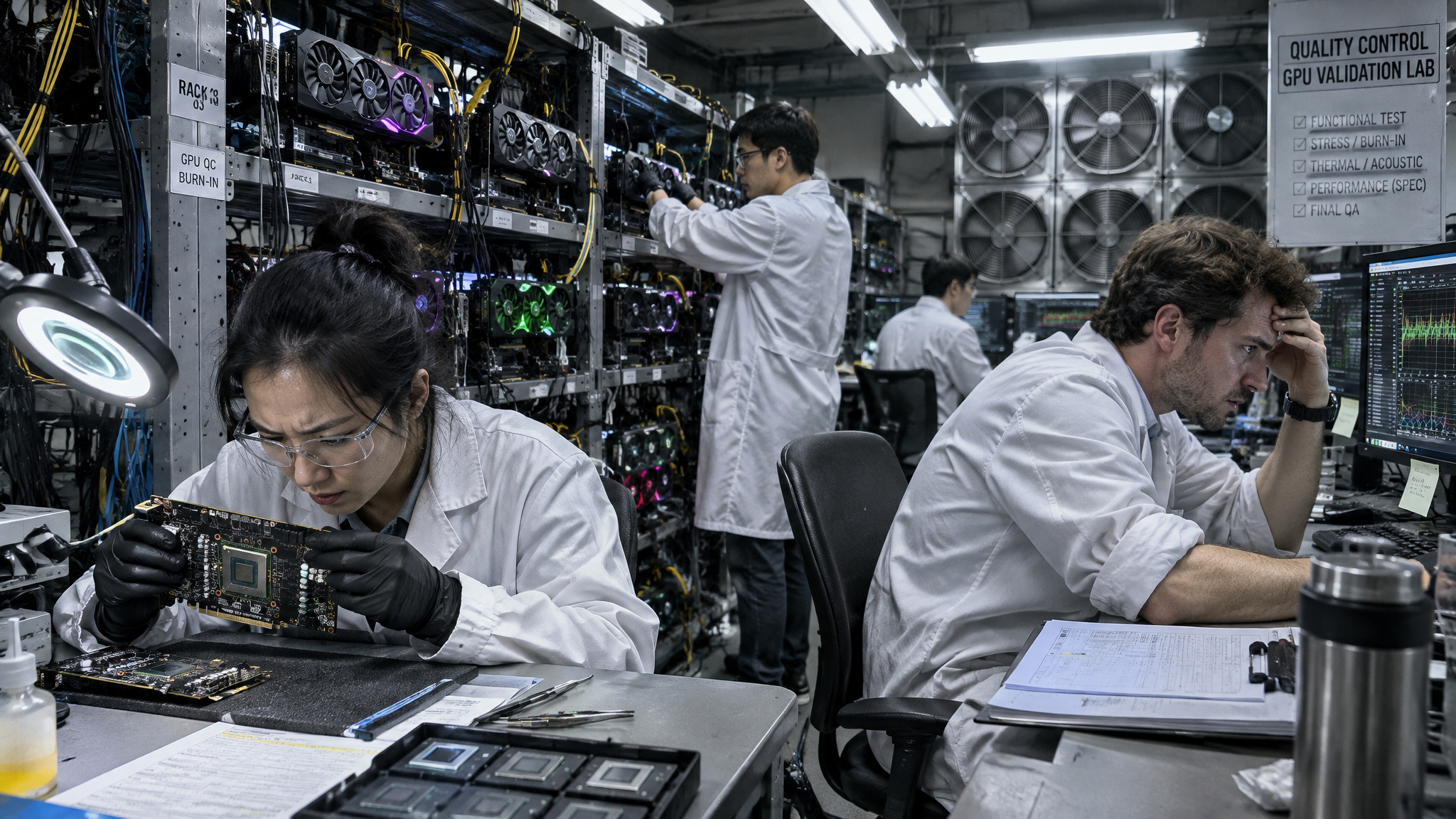
Even failure became an institutional ritual after a faulty early-2000s graphics card was presented on stage as a leaf blower. Inside the windowless quality-control labs of Nvidia’s Santa Clara campus, technicians still push chips to failure amid roaring fan noise, and an informal visual estimate of the cafeteria crowd puts it at roughly one-third South Asian, one-third East Asian, and one-third white, overwhelmingly male, though that’s an informal visual impression rather than official company data.
Who is Jensen Huang? Age, family, and origins
Jen-Hsun Huang was born on February 17, 1963, making him 63 years old in 2026, in Taipei, Taiwan, to chemical engineer Huang Hsing-tai and schoolteacher Lo Tsai-hsiu. He holds dual Taiwanese and U.S. citizenship and speaks Taiwanese Hokkien natively.
Childhood and the Oneida Academy years
Before leaving Asia, Huang’s mother taught him and his brother 10 random English dictionary words a day. The family moved to Thailand when he was about five for roughly four years, where he attended Ruamrudee International School in Bangkok, before his parents sent him and his older brother to the U.S. in 1973 at age nine as unaccompanied minors to live with an uncle in Tacoma, Washington.
His aunt and uncle mistakenly enrolled him at Oneida Baptist Institute in Oneida, Kentucky, thinking it was a prestigious boarding school rather than a religious reform academy, after his parents sold nearly all their possessions to cover tuition. Huang cleaned toilets every day, endured beatings and racial slurs including an attempt to push him off a rickety footbridge, and roomed with a 17-year-old who showed him stab wounds, a stretch childhood friend Ben Bays said made Huang a natural target. Huang taught his illiterate roommate to read in exchange for bench-press lessons, knocked out 100 pushups every night, and ended the year leading those same boys into the woods, later crediting Oneida with forging his resilience.
Education and early chip career
At Aloha High School in Aloha, Oregon, Huang skipped two grades, graduated at 16, finished third in junior doubles at the 1978 U.S. Table Tennis Open at age 15 after appearing in Sports Illustrated at 14, and spent 1977 playing Super Star Trek and coding Snake in BASIC on the school’s Apple II. From 1978 to 1983, he worked the graveyard shift at Denny’s while studying electrical engineering at Oregon State University, a school he picked for its low tuition, and graduated with highest honors in 1984. He followed that with a master’s degree from Stanford University in 1992.
One date quirk in the biographical record remains unresolved: Huang’s 1984 Oregon State graduation overlaps with his 1984 to 1985 microprocessor design stint at AMD, where he picked up Mandarin phonetically from Chinese photomask workers. Texas Instruments, AMD, and LSI Logic all recruited him, and he eventually jumped from AMD to LSI Logic. There, a Sun Microsystems contract paired him with Malachowsky and Priem on the GX graphics engine, which they finalized in 1989 as Sun’s revenue climbed from $262 million in 1987 to $656 million in 1990. That work helped elevate Huang to director of LSI’s CoreWare division.
Marriage, family, and real estate
At Oregon State, Huang met Lori Mills as his electrical engineering lab partner, one of perhaps three women among roughly 250 students, and spent six months doing weekend homework together before their first date. They married in 1985 and have two children who both worked in hospitality before joining Nvidia. The family moved to Los Altos Hills in 2003, bought a second home in Wailea, Hawaii, in 2004, and acquired a $38 million San Francisco mansion through an LLC in 2017.
Awards and celebrity status
Over the past decade, Huang became one of tech’s most recognizable figures. His honors span the Oregon State engineering Hall of Fame (2013), the IEEE Founders Medal (2020), and a 2024 sweep of the VinFuture Prize, Edison Award, and Primetime Engineering Award, followed by the Queen Elizabeth Prize for Engineering in 2025 and both the IEEE Medal of Honor and National Medal of Science in 2026. Outside pure engineering circles, he landed on Time’s 100 most influential people lists in 2021 and 2024, shared Time’s 2025 Person of the Year recognition as one of the Architects of AI, and was appointed by Donald Trump to the President’s Council of Advisors on Science and Technology in 2026.
Outside awards banquets, he drew “Jensanity” crowds at Computex 2024, swapped jackets with Mark Zuckerberg in a March 2024 Instagram post comparing him to Taylor Swift for tech, showed off an Nvidia logo tattoo at GTC 2010 when the stock hit $100, roasted Nvidia architect Hao Ko’s wardrobe for six minutes at a Gensler-sponsored event, and saw one of his signature black leather jackets fetch US$960,000 at Sotheby’s in July 2026.
What to watch next
Confirming any new Jensen Huang venture takes hard paperwork, not social-media posts: look for SEC or corporate filings, a registered company name, named co-founders, disclosed investors, or reporting from established newsrooms. Even with $128.4 billion in personal wealth, any real timeline for a next move will run through his upcoming congressional testimony, ongoing federal inquiries, the fallout from the November 2026 scandal, and his own long-held view that no sane founder would go through launching a startup a second time.
Observed prices
Observed prices run $1.6-$656 across 2 sources (checked Thursday, November 19, 2026). Sources: finance.biggo.com, en.wikipedia.org.
Frequently Asked Questions
What is Jensen Huang’s new company after Nvidia?
He doesn’t have one—Huang hasn’t launched, joined, or announced any new venture since stepping down on November 12, 2026, and Nvidia confirmed he will hold no formal role there going forward. The rumor making the rounds on X that he’s raising $50 billion for a rival chipmaker has zero backing in regulatory filings, named investors, or credible news reporting. Before his exit, Huang spent plenty of time pitching Omniverse, digital twins, and simulated 3D worlds, but those were Nvidia’s own product roadmap rather than a stealth startup.
Why is Jensen Huang resigning from Nvidia?
Huang stepped down on November 12, 2026, capping a two-week meltdown triggered by New York Times reporting that began on October 29 and detailed multiple extramarital affairs, including one with Megaspeed executive Alice Huang. Although Nvidia’s board initially backed him on November 8 while opening an internal review, its support evaporated after The New York Times reported a second affair with Nvidia vice president Kimberly Powell and Reuters later reported a third involving an unnamed employee. Four of the five news and reference accounts reviewed attribute his exit to the affair with a suspected Chinese spy, while one reports the board gave him an ultimatum to resign or be fired.
What will Jensen Huang do next after stepping down as Nvidia CEO?
So far, Huang’s post-Nvidia playbook is strictly defensive rather than entrepreneurial. He has hired Paul, Weiss white-collar defense attorneys Melinda Haag and Walter Brown to navigate overlapping federal antitrust and export-control inquiries, and he agreed to testify before Congress, though no criminal charges have been indicated against him or Nvidia. Outside his legal defense, his main ongoing vehicle is the Jen-Hsun & Lori Huang Foundation, which held over $12 billion in assets by late 2025.
Did Jensen Huang found Nvidia and how did it start?
Yes, Huang co-founded Nvidia with Chris Malachowsky and Curtis Priem after the three engineers worked together on Sun Microsystems’ GX graphics engine at LSI Logic. They hashed out the business plan in 1992 over cheap coffee at an East San Jose Denny’s—the same restaurant chain where Huang had worked graveyard shifts from 1978 to 1983—and incorporated on April 5, 1993, with $200 apiece in seed capital. After discovering a toilet paper maker already owned their first choice, NVision, they settled on Nvidia from the Latin word invidia, putting the 30-year-old Huang in the CEO chair from day one.
What is Jensen Huang’s net worth in 2026?
As of November 2026, Forbes pegs Huang’s fortune at US$128.4 billion, making him the fourteenth-richest person on the planet. Almost all of that wealth rides on his roughly 3.6% stake in Nvidia, which swelled from around $3 billion in 2019 past $100 billion in June 2024 on the back of the generative AI boom. He has also structured family trusts estimated to cut his estate taxes by about $8 billion, signaling a focus on wealth preservation rather than another high-risk startup.
Was the China spying allegation against Jensen Huang true?
The espionage suspicion actually centered on Alice Huang, a Megaspeed executive involved in an affair with Jensen Huang whom intelligence sources believed China’s Ministry of State Security had recruited, rather than accusing Jensen Huang of spying himself. Even then, the official record never proved the claim: Attorney General Todd Blanche stated on November 12, 2026, that the Justice Department hadn’t concluded she was spying for Beijing, and CNN reported that officials disagreed on the intelligence. Nvidia’s board said it had no reason to believe national security or company secrets were compromised, and neither Huang nor Nvidia faces indicated criminal charges.
Will Jensen Huang start another company like he did with Nvidia?
There are no confirmed plans for a second startup, and Huang’s own track record suggests he has little appetite for starting over at 63. He has repeatedly stated that building Nvidia turned out a million times harder than he expected and that no rational person would launch a company from scratch twice. On top of dealing with federal inquiries, keeping his ~3.6% Nvidia stake creates a built-in financial conflict against bankrolling a rival chipmaker.