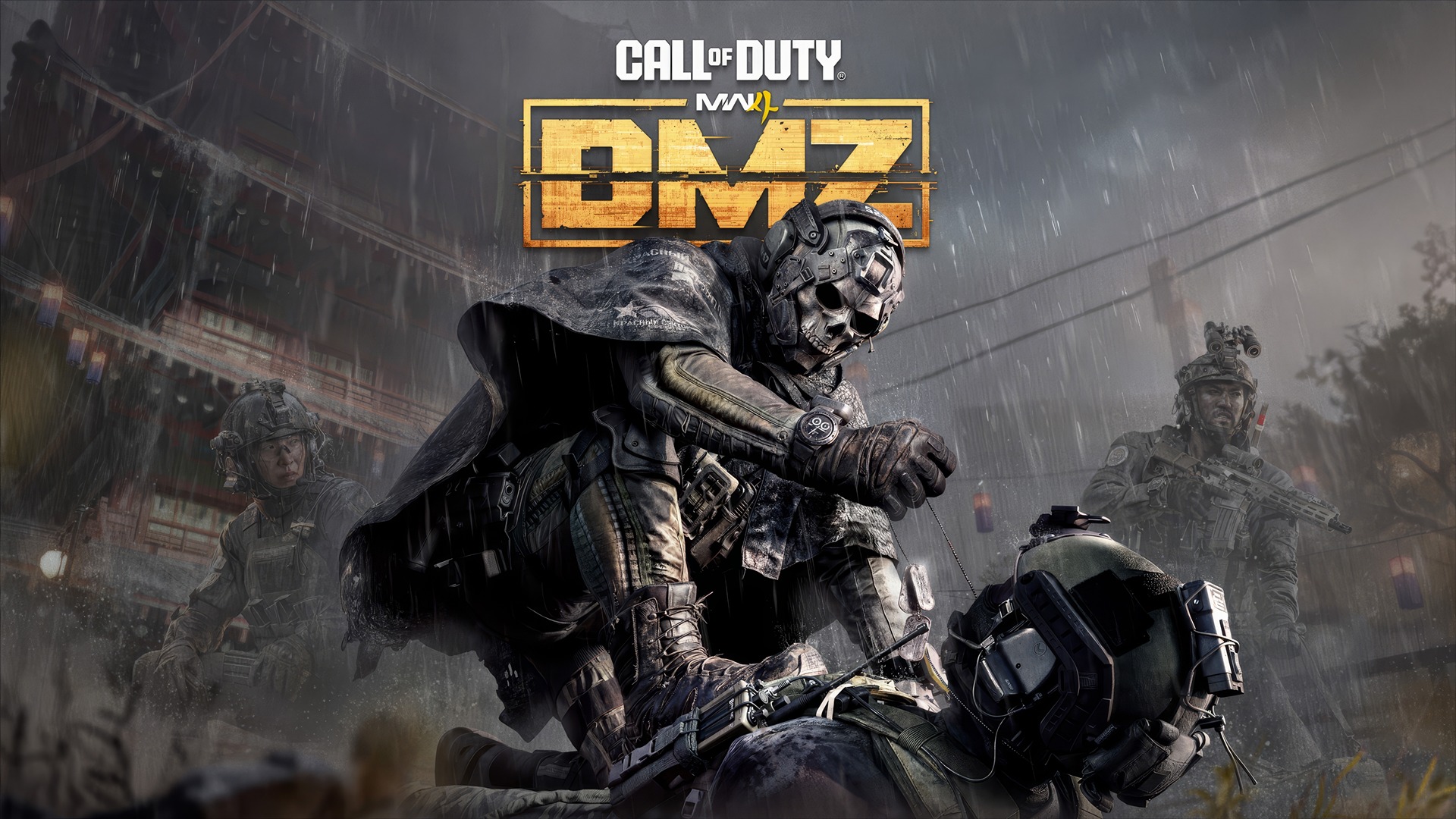
Call of Duty: DMZ launches with Modern Warfare 4 on Friday, October 23, 2026, alongside Campaign and Multiplayer, and unlike the MWII-era version you may remember, it is not free-to-play. The way we usually cover launch cycles, the date is the headline; here the business model doing a full reversal is the headline. DMZ debuted in Warzone 2.0 in November 2022 as a free, Warzone-attached experiment.
Four years later it’s a paid pillar inside a full game purchase, and Infinity Ward rebuilt it around higher stakes based on direct player feedback rather than starting over. This is iteration, not a reboot: the mode evolved from the original DMZ Beta into a paid pillar with its own dedicated 1-70 progression track and more than a dozen Forward Operating Base stations, one more data point in the broader question of the future of the Call of Duty franchise. One concrete example of what that means in practice: when your Operator dies in the new Exclusion Zone, bringing them back costs cash, and the loot they were carrying can be gone for good.
The date lands on a Friday, which feels correct. Extraction runs and launch-day Fridays have the same energy: you tell yourself one more match and then it’s suddenly 2 a.m.
What’s below: what the mode actually is now, how the Hajin map works, what death costs, how the bounty loop puts a price on your own head (a $250,000 wanted bounty showed up in gameplay footage once a player notched their ninth kill), and which post-launch plans are confirmed. We’ll also flag the three questions nobody can answer yet: how Survival Kits get sold, whether the leaked Single Squad Mission is real, and how many players Hajin holds. Monetization and longevity are the open parts. Everything else, Infinity Ward has said out loud.
Key Takeaways
Call of Duty: DMZ launches with Modern Warfare 4 on Friday, October 23, 2026, bundled with the full game rather than free-to-play like the 2022 DMZ Beta in Warzone 2.0.
The redesign traces to one piece of feedback: Infinity Ward co-studio head Jack O’Hara said players felt the original Beta’s stakes weren’t high enough, so death now costs cash through MIA rescues and loot can be permanently lost.
The Forward Operating Base runs a dedicated 1-70 progression track with five starting stations and seven unlockables, and there are no XP penalties regardless of whether you exfil.
Table of Contents
What is Call of Duty: DMZ?
DMZ, a name borrowed from the military term for a demilitarized zone, is Infinity Ward’s “action extraction shooter”, their label, not press shorthand, for a PvPvE mode where you deploy into an Exclusion Zone, work through objectives, gather loot, and exfil while AI patrols, bosses, and rival squads hunt you the entire time. The label is a design statement. Where hardcore extraction shooters meditate on stealth and box-looting, this one is built around friction and constant danger, and that goal explains nearly every other system in the mode.
Which Call of Duty games have had it? Four iterations, and the dates matter:
- Warzone 2.0, November 16, 2022. DMZ debuted as a free mode attached to Warzone, set on maps including Al Mazrah, Building 21, Ashika Island, Koschei Complex, and Vondel, with up to 60 players on large maps and up to 12 on small ones.
- Modern Warfare II, July 29, 2025. The mode became a fully integrated part of the standalone game.
- Call of Duty: Mobile, December 11, 2025.
DMZ: Recon arrived in Season 11: 6th Anniversary with Serpent Island, Building 21, and Rebirth Island. - Modern Warfare 4, October 23, 2026. The upcoming version, with exclusion zones including Hajin and XO1 and enemies including the Gorani.
One caveat on those player counts: they belong to the older iterations. Nobody has published numbers for Hajin yet.
The premise is pure spy movie, and the official description leans into it: “Operating as a shadow CIA asset, you are deployed behind enemy lines and tasked with securing the various weapons and technology left behind before they fall into enemy hands.”You’re racing the map and everyone else on it. That’s the tension engine, and it’s the fantasy the mode sells from the moment you infil.
DMZ release date, platforms, and free-to-play status
No, MW4’s DMZ is not free-to-play. It requires owning Modern Warfare 4, and that’s the real change from the Warzone 2.0 era, when DMZ shipped as a free Warzone-attached experiment.
Platforms cover Xbox Series X|S, PlayStation 5, and PC via Battle.net, Xbox on PC, and Steam, plus a native Nintendo Switch 2 version built by Digital Legends. Infinity Ward leads development with PC optimization from Beenox, supported by Raven Software, Sledgehammer Games, Treyarch, High Moon Studios, Demonware, and Activision. The reveal ran as a full intel week, first drop covering mechanics and Hajin, second covering the FOB tour, with over three minutes of first-ever DMZ gameplay footage released. Preorders opened with a Vault Edition and a Loyalty Discount, and pricing and editions may vary.The official blog on callofduty.com carries the ESRB Mature 17+ rating, with descriptors including Blood and Gore, In-game Purchases, and Users Interact.
Why DMZ changed: the stakes redesign since the DMZ Beta
The redesign traces back to one documented complaint. Infinity Ward co-studio head Jack O’Hara told IGN that player feedback indicated the original DMZ Beta lacked high enough stakes. From that single piece of feedback, the whole chain follows: operator death now costs something to bring back, lootable items can be permanently lost on death or if dropped, and the mode grew into a paid pillar with a dedicated 1-70 progression track and a dozen-plus FOB stations rather than a fresh mode.
MIA rescues, bounty pricing, threat escalation, all of it traces to that feedback. Most coverage presents this as a pile of new features.
Hajin Exclusion Zone: regions, risk gradient, and living world
Hajin was forged by the aftermath of the MW4 Campaign, sitting where Russia and the Korean peninsula meet at a three-way border, and Infinity Ward describes it as “one of the largest and most ambitious Call of Duty environments ever built.” The regions stack into a risk gradient: the irradiated Fallout reactor on the map’s east side, where exclusive loot requires a gas mask, so bring the mask or skip the good stuff; the highly secured Prison complex; the remains of Hajin City; and the heavily defended Military Base. POIs vary in difficulty, so you onboard in low-threat zones and push into high-threat zones for better rewards, a structure MWZ and Endgame players will recognize.
The exploration wrinkles are where this map gets fun. Some POIs have water-only entrances, meaning you commit before you see what’s inside.Underground entrances hide in rural areas. Sudden downpours, dense fog banks, and overcast skies change visibility and navigation every run, weather doing actual gameplay work instead of set dressing.
The world moves too: vehicle convoys, air traffic, hostile forces repositioning WMDs, and a Gas Station where vehicles get repaired and refueled. Loot follows the world’s logic, police stations hold combat gear, hospitals hold scarce medical supplies, residential districts hold crafting resources, and the classic first-run mistake is looting randomly instead of by building type, leaving a hospital empty-handed while carrying duplicate crafting materials.Scavenged weapons can have damaged optics, broken attachments, and improvised repairs, while high-value Lieutenants carry uniquely customized weapons. DMZ inherits MW4’s refined movement, climbing pipes and fluid traversal, plus what Infinity Ward calls Ballistic Authority gunplay.
Early gameplay footage, not confirmed official detail, shows keys returning from the original DMZ, including a legendary “chemist secure armory” key placed at F4 that opens a bunker by the reactor’s boat house near the nuclear facility, plus returning bosses the Scavenger (dog tag plus throwing knives) and Rozlin “Roze” Helms (dog tag plus a Kraken sniper rifle variant). Story-mission POI names from leaked menu footage carry some transliteration uncertainty.
Deployment options: Story Missions, Dynamic Operations, Side Ops, and Free Roam
Four paths into Hajin, each trading narrative, reward, stress, and freedom differently. Story Missions expand the MW4 narrative, where “the fall of the Supreme Leader” left a power vacuum in Hajin, delivered with exactly the right B-movie energy, with unique objectives at specific POIs on live servers. Locations are selectable in any order with per-location completion ticks, built for squads and solo players with replayability. Dynamic Operations are match-generated multi-step contracts, neutralizing weapons programs, securing assets, rescues, assaults. You deploy straight into an active mission rather than idling in menus, with payouts in DMZ Cash, XP, and Supply Drops of increasing rarity.
Side Ops are the breather tier: repairable trucks (advantageous once fixed), lost supply drops, damaged radio towers, UAV towers, boss intel. Free Roam drops you in with no mission at all, hunting rival Operators or Lieutenants, or commandeering a derelict casino and breaking into its vault, which is the activity I’m most excited about.
One sourcing conflict to reconcile: PlayStation Blog lists three deployment options, while leaked menu footage shows a fourth, Single Squad Mission, which appears to be Infinity Ward’s answer to a solo playlist. Its exact rules, PvE-only or solos against everyone, haven’t been confirmed, so treat the fourth option as a maybe until the studio says otherwise.
The Forward Operating Base: every station and the 1-70 progression spine
The Forward Operating Base is DMZ’s home base, the hub where you manage progression, prep gear, and plan deployments.The structural trick is that it inverts the usual extraction-shooter hideout: instead of a menu, the base you deploy from is what the 1-70 track builds, a physical stronghold that grows from a modest foothold into a fully operational base, gaining more than a dozen stations along the way on the way to Tier 1 operator status. Five of those stations are available from the start. Operators, DMZ Orders, Stash/Loadout, Firing Range, and Deploy, with seven more unlockable as you progress, including the 3D Printer, Gunsmith, Vendor, Bounty Leaderboard, Boss Board, Dog Tag Case, and DMZ Progression. FOB imagery was promised in a later intel drop, so we know the structure but not the screenshots yet.
Five starting stations:
- Operators: review your Active Duty Operator roster, check status, and pick who deploys.
- DMZ Orders: missions download to the Orders Tablet, which is a nicely diegetic touch, and they carry both your progression and the story.
- Stash/Loadout: persistent inventory that grows with DMZ rank; stow extracted loot, equip for the next infil, and take a Free Loadout of combat essentials when you just died and you’re broke.
- Firing Range: test equipped weapons against a variety of targets before betting a run on them.
- Deploy: permanently available, running the Paid Infil System. Choose quiet on-foot, a fast helicopter, a large plane, or a dropped vehicle.
Parachutes are not default and must be crafted for plane-jump infils, and yes, this will catch someone out on day one. Maybe you.
Seven unlockables: 3D Printer, Gunsmith, Weapon Vendor, Bounty Leaderboard, Boss Board, Dog Tag Case, and DMZ Progression. The dedicated 1-70 track is separate from multiplayer, unlocking stations and rewards every level. Each Operator carries their own persistent Backpack, Loadout, and Trait Tree, with Trait Points earned during missions and tied to the Operator who earned them, no pooling, so specialization is a commitment.Traits are spread across the warfighter, scout, and survivalist trees, with two main traits for each Operator, built for PvP, infiltration, looting, recoveries, or cash-mule roles, with prestige up to three times.
DMZ Cash, the 3D Printer, and the gear economy
DMZ Cash is the loop’s fuel. Missions and Ops generate it, and it buys weapons, attachments, MIA rescues, and Lieutenant intel. Looted materials feed the 3D Printer, which crafts everything except weaponry across ten categories. Gear, Backpacks, Plate Carriers, Tacticals, Lethals, Consumables, Field Upgrades, Fire Support Items, Tracked Recipes, Special Items, and also upgrades FOB stations. Field Upgrades don’t recharge like in Multiplayer and materials auto-disassemble during missions, so every craft is a real decision. Gunsmith allows up to five attachments per weapon plus one Apex Attachment, with eight-attachment weapons confirmed within Hajin, and weapon progression tracks across Multiplayer and DMZ, with Weapon Manuals part of that progression. Gear shown in footage: plate carriers in one-, two-, and three-plate versions plus vest variants, with higher-rarity carriers costing more materials and able to protect against one-shot sniper headshots; smelling salts granting 60 seconds of infinite stamina and faster reloads; a sedative inhaler granting 60-second immunity to radar, marking, and thermals; and a Weapon Vendor whose limited, day-to-day rotating stock goes straight to the Stash.You can also run an Active Duty Operator as a specialized cash mule, and the mode uses that exact, self-aware term.
What happens when your Operator dies: MIA rescues and what failure actually costs
Death costs gear and cash, never progression. The MIA system is the recovery path: spend cash to deploy rescue teams that recover lost Operators, and recovered Operators keep their traits, trait points, and dog tag rank but lose most of their loadout. You can also dismiss and replace them instead, and sometimes the cold math answer is the right one.Higher rank increases rescue cost, so your best character is the most expensive to bring back, which stings by design. Footage showed an F-rated report following a failed exfil, and a “rescue SAS” reinstatement option for a two-player squad missing one Operator.
There are no XP penalties for dying. All DMZ XP upgrades the FOB, unlocks stations, and ranks your Operator regardless of exfil success.The After Action Report appears after every deployment, ratings run F to S++, and it shows XP progress on DMZ rank and Dog Tag level, deployment bonus, loot containers opened, hostiles killed, and orders completed. The tell for skeptics: even an F-rated run still pays out full XP.
Players coming from harsher extraction shooters often assume a failed run wipes everything; in practice it doesn’t, and that’s likely to be a typical first-week realization. The Tourniquet heals you to a wounded state, field medicine rather than magic, and exfil happens via helicopters or skyhooks, and yes, the skyhook is exactly as sci-fi as it sounds.The official XP advice: prioritize Story Missions, Dynamic Ops, and Orders, hunt Lieutenants and Commanders for XP, their weapons, and high-value loot including the Weapon Case, loot consistently and use the 3D Printer, strive for S Tier or better ratings, and use vehicles for faster travel.
Threat levels, the Stealth Meter, and the AI overhaul
Every map area carries its own Threat Level, and the Escalating Threats system punishes loud play: escalation deploys attack helicopters, armored troops, and eventually Deathstalkers. Silence is a resource. Stealthy play with silenced weapons and melee takedowns keeps high-threat zones’ best loot accessible, and the Stealth Meter (white to yellow to orange, with an audio cue near detection) turns AI detection into a legible HUD state, which matters most for solo players.The Emergent Enemies overhaul gives AI squads the ability to coordinate, navigate, react, and pressure you, while lone AI take cover, hold position, freeze, or break line of sight.
Drones, Juggernauts, Elite Strike Teams, Rogue Operators, and tanks fill out the bestiary. Footage showed a solo player using smelling salts to clear a pile of AI hostiles at Changan air base while the area sat at its top threat level, a decent solo-viability signal.
Bounties, Dog Tags, and rival Operators: the PvP risk loop
Hunting rival players builds your notoriety and makes you a marked target, and the loop runs end-to-end from there.Gameplay footage showed a $250,000 wanted bounty appear once a player recorded their ninth kill in a single match. The common failure pattern is stacking early kills without realizing you’ve priced your own head until the wanted-bounty notification pops mid-match, a classic PvPvE friction point. There’s a built-in off-ramp: hunting bounty targets can lessen your own bounty, and securing rival dog tags and extracting yields payouts plus Bounty Leaderboard placement.
Then the trophy chain tightens. Pay for Lieutenant intel or climb Hunt Towers to reveal the closest Lieutenant’s location. Slaying a Lieutenant drops Dog Tags that populate the Boss Board, but those tags let enemy squads track the carrier, forcing resistance at hot exfil points. The mode’s biggest payouts are engineered to funnel aggressive players into ambushes at extraction, which is elegant design.
Defeating Lieutenants and Commanders awards XP, their weapons, and high-value loot including the Weapon Case. The social layer helps you hear it coming: revamped Proximity Chat with distance-based vocal falloff, improved directionality, and environmental voice reverb that differs inside structures versus open topography, a clue to a rival’s whereabouts. Footage also caught a riot shield player eating an RPG hit in an outdoor firefight, and a solo player running a UAV along a remote North Korean border crossing.
DMZ against the 2026 extraction field: PvPvE commitment vs Marathon and Arc Raiders
MW4’s DMZ is the full-PvPvE commitment in a field where the competition offers off-ramps.Infinity Ward’s “action extraction shooter” label doubles as a positioning statement: DMZ returns to the PvPvE loop of the original, unlike MW3 Zombies and Black Ops 7’s Endgame, and no PvE-only mode is planned, unlike Marathon and Arc Raiders. The bet is that CoD’s gunplay foundations, Ballistic Authority and refined traversal, are the differentiator, not accessibility. Context worth holding onto: MW4 ships fewer modes than Black Ops 7, which makes DMZ the pillar many players are banking on.
Post-launch roadmap and the open questions coverage can’t answer yet
Yes, seasonal updates are confirmed: dynamic weather per season, map changes, new bosses, and new maps or new parts of Hajin, with additional DMZ content expected in updates. Three questions are unanswered. Survival Kits, themed packs of loot items for crafting or gearing up, have an unconfirmed monetization method, and at least one outlet raised concerns about that, so the question stays open until pricing is official.
Single Squad Mission’s exact status remains unresolved. And no source gives Hajin player counts: the historical figures of up to 60 players on large maps and 12 on small ones belong only to earlier DMZ iterations, and the official deep dive contains no player-count statistics at all.
On longevity, Windows Central’s skepticism captures the mood: hopefully DMZ sticks and isn’t dropped next year, a hope tied to the survival-kit concerns and to MW4 leaning on DMZ beyond multiplayer and Warzone. The real question isn’t whether the mode is good at launch. It’s whether a paid, non-free-to-play DMZ retains enough players to justify the promised roadmap, and no source can answer that yet.
Frequently Asked Questions
What is the DMZ mode in Call of Duty?
DMZ is Infinity Ward’s “action extraction shooter” — a PvPvE mode where you deploy into an Exclusion Zone, complete objectives, gather loot, and exfil while AI patrols, bosses, and rival squads hunt you. The name borrows from the military term for a demilitarized zone. Unlike hardcore extraction shooters, it’s built around constant friction and danger rather than slow stealth.
What does DMZ stand for?
DMZ stands for demilitarized zone, a military term for a buffer area between opposing forces. The mode borrows the name for its Exclusion Zone setting, where you play as a shadow CIA asset deployed behind enemy lines to secure weapons and technology before enemies get them.
which call of duty has dmz
Four iterations: Warzone 2.0 (November 16, 2022), Modern Warfare II (July 29, 2025), Call of Duty: Mobile’s DMZ: Recon (December 11, 2025), and Modern Warfare 4 (October 23, 2026). The MW4 version is the first paid one, rebuilt around higher stakes based on player feedback.
how does the forward operating base work in mw4 dmz
The Forward Operating Base is DMZ’s home hub, running a dedicated 1-70 progression track separate from multiplayer. It starts with five stations (Operators, DMZ Orders, Stash/Loadout, Firing Range, Deploy) and unlocks seven more — including the 3D Printer, Gunsmith, and Bounty Leaderboard — growing from a modest foothold into a fully operational base as you rank up.
is the new dmz too punishing for solo players
Infinity Ward seems aware of the concern: the Stealth Meter makes AI detection a legible HUD state that matters most for solo players, and leaked menu footage hints at a Single Squad Mission option that may be a solo playlist — though its exact rules aren’t confirmed. Gameplay footage also showed a solo player clearing top-threat-level AI at Changan air base, a decent solo-viability signal.
What’s the difference between DMZ and other extraction shooters like Marathon and Arc Raiders?
DMZ is the full-PvPvE commitment in a 2026 field where competitors offer off-ramps: unlike Marathon and Arc Raiders, no PvE-only mode is planned. Infinity Ward is betting that CoD’s Ballistic Authority gunplay and refined traversal are the differentiators, not accessibility.