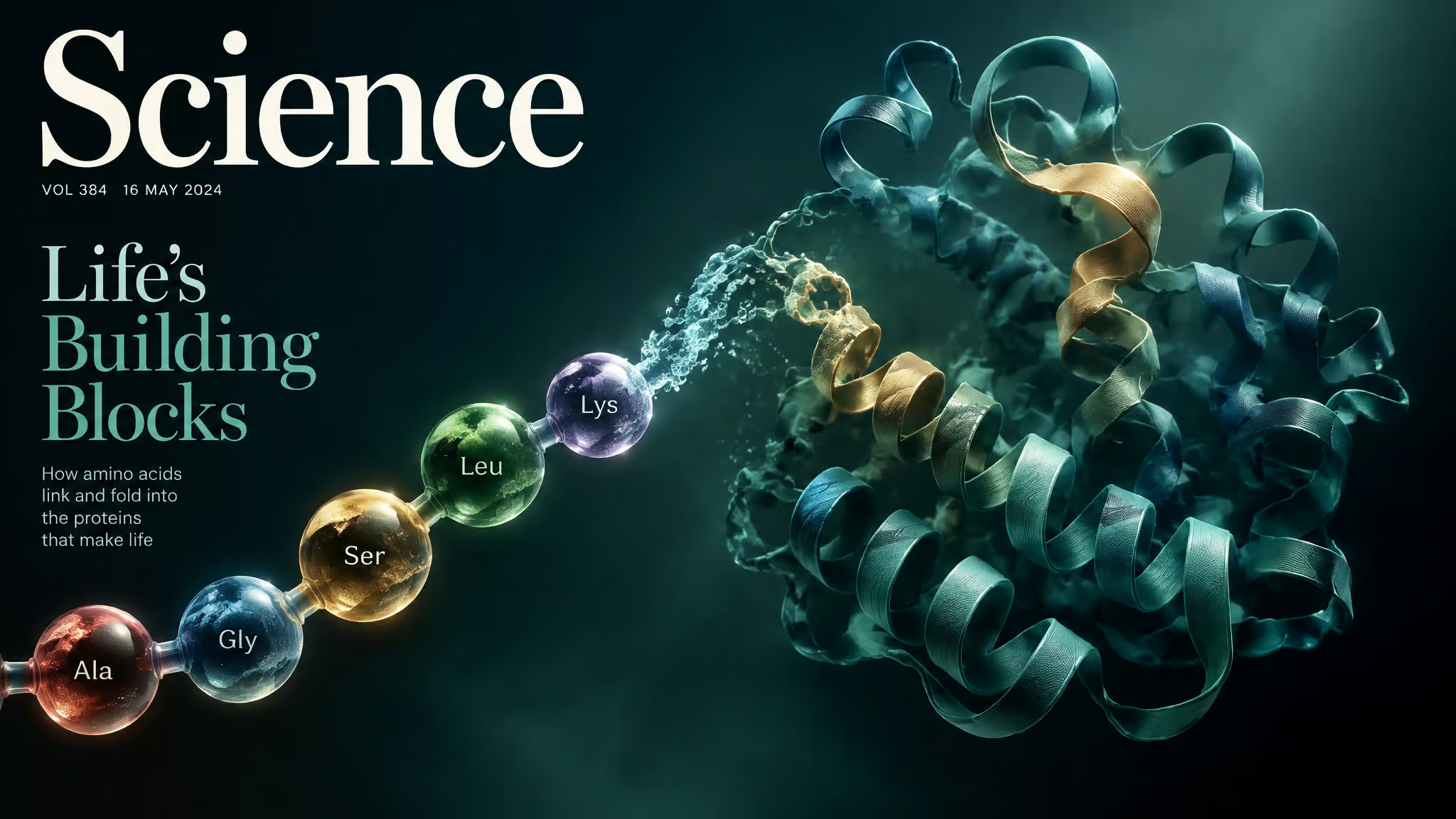
A peptide is a short chain of roughly 2 to 50 amino acids linked by chemical connections called peptide bonds. Long before anyone bothers to check the molecular specs, the word pops up on skincare labels, supplement tubs, and gym injection forums. Under the hood, peptides and proteins pull from the exact same parts bin: both are strings of amino acids joined by peptide bonds. They differ mainly in scale, since proteins stretch for hundreds or thousands of residues, and that 50-amino-acid cutoff is a working rule of thumb rather than a hard law of nature.
Key Takeaways
A peptide is a short chain of roughly 2 to 50 amino acids joined by peptide bonds through dehydration synthesis, while full proteins run hundreds to thousands of residues and fold into stable 3D machines.
Peptide hormones like 51-amino-acid insulin and glucagon are water-soluble chains that trigger fast, short-lived cell-surface cascades via second messengers like cyclic AMP. Lipid-soluble steroid hormones like cortisol and testosterone derive from cholesterol and cross membranes to alter DNA transcription.
Natural peptide signaling is vital to life, but exogenous peptide use carries real risk when dosing or sourcing goes wrong, which led the FDA to recategorize more than a dozen peptides so compounding pharmacies can’t make them.
Table of Contents
What is a peptide?
A peptide is a short chain of amino acids connected by peptide bonds, typically spanning 2 to 50 residues, whereas chains longer than 50 residues are generally classified as polypeptides or proteins. Reference books don’t agree on a single border, placing the cutoff at 40, 50, or 100 amino acids depending on the text. Because raw residue counting breaks down at the edges, scientists usually call a chain a protein once it folds into a stable three-dimensional shape on its own.
Simple answers about peptides fall short: the short answer is size, but the real difference is a little more interesting, and the positive effect of collagen peptides could possibly be explained by the signaling effect of bioactive peptides rather than something already settled. A long chain twists into spirals and sheets before packing into a precise three-dimensional structure, and that autonomous folding depends on more than raw length. Think of the boundary in terms of text: a peptide is like a sentence, while a protein is like a whole chapter. The border between them is a blurry line, not a hard wall.
Peptide vs protein: where the line sits
No, a peptide is not the same as a protein, even though both are built from the exact same amino acid building blocks linked by peptide bonds. By convention, peptides are short chains of roughly 2 to 50 residues while proteins are longer chains of hundreds to thousands of residues that fold into functional 3D machines. That size rule breaks quickly on borderline molecules like insulin, which contains just 51 amino acids across two short chains yet folds into a stable shape like a tiny protein.
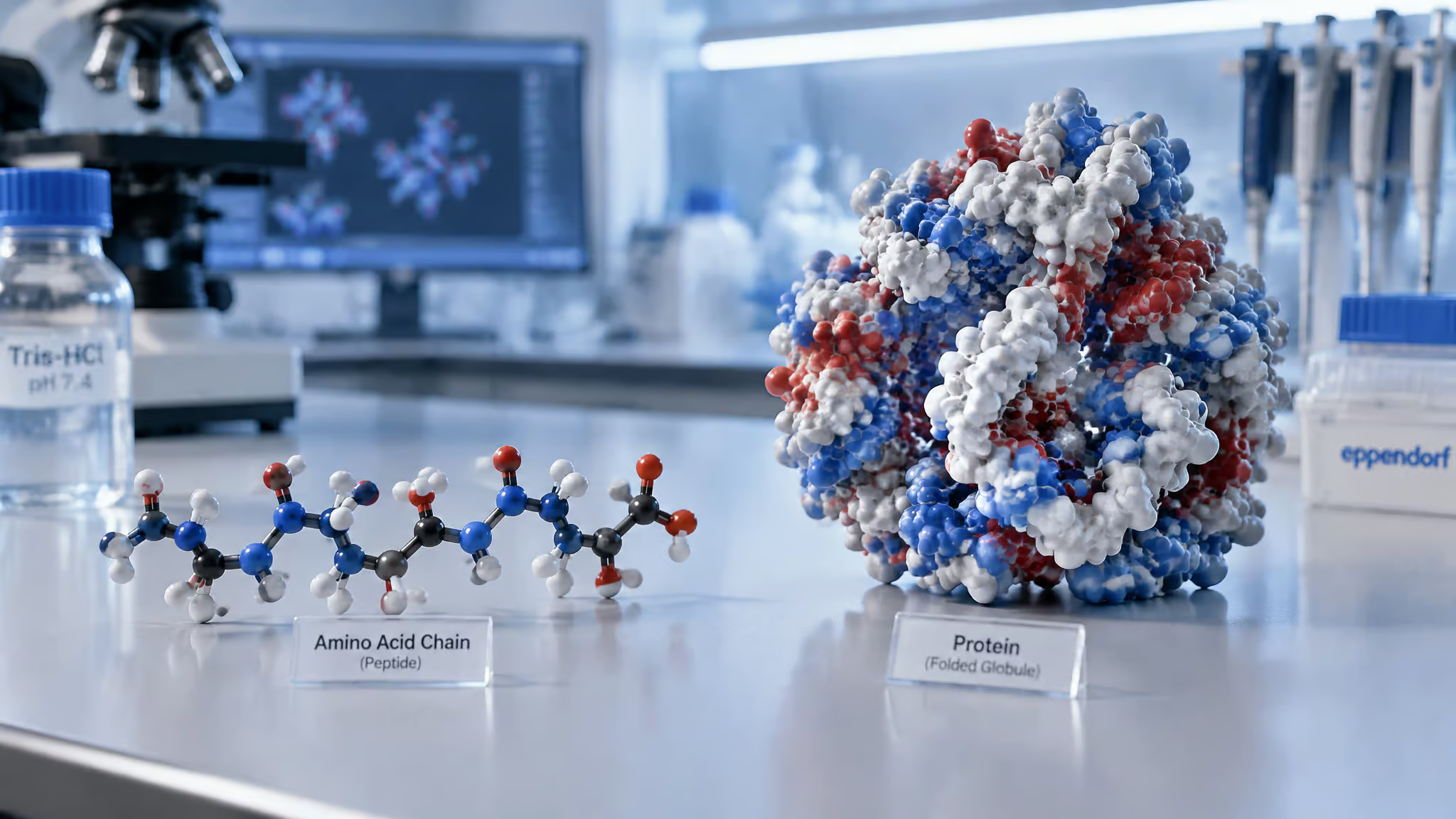
People sorting molecules into peptide or protein bins often get tripped up by borderline examples and assume they misread the definition, when the boundary itself is genuinely fuzzy. At GeekExtreme, our crew likes to look past messy marketing labels to the actual molecular specs, and the naming conventions get wild when you check the edge cases.
Absolute Biopharma‘s convention puts polypeptides at 10 to 10,000 amino acid residues and reserves “protein” for chains above 10,000, an outlier cutoff that immediately breaks on 51-residue insulin. Across the proteome, folded polypeptides make up the roughly 20,000 to 50,000 functional proteins your body builds from its genetic code to run as enzymes and receptors.
How peptides are built: amino acids and the peptide bond
Peptides form when individual amino acids snap together into a directional chain, dropping a water molecule at each joint. Built from carbon, hydrogen, oxygen, and nitrogen, peptides and proteins stand apart from carbohydrates and fats because of that nitrogen atom.
Amino acid anatomy
Every amino acid shares a common chassis: a central core carbon attached to an amine group (a nitrogen atom with two hydrogens), a carboxyl group (a carboxylic acid), and a variable functional R group. The name “amino acid” comes literally from combining that amino group and carboxylic acid group. Twenty different types of amino acids exist, each defined by its unique R group. Your body can’t synthesize the nine standard adult essential amino acids (roughly six to eight in one looser biochemistry overview), so you have to get them from food.
How the peptide bond forms
Peptides are formed from amino acids when the carboxyl group of one amino acid reacts with the amino group of the next, creating a covalent amide linkage called a peptide bond through dehydration synthesis. Every peptide bond formed releases one water molecule (H2O) and leaves the finished chain with a distinct direction: an amine (N-) terminal on one end and a carboxyl (C-) terminal on the other.
The naming ladder, from dipeptide to polypeptide
Chemists name these chains by length according to usage convention rather than a single universal law:
- Dipeptide: 2 linked amino acids
- Tripeptide: 3 linked amino acids
- Oligopeptide: a few linked amino acids
- Polypeptide: a long string of amino acids linked by peptide bonds (defined in Absolute Biopharma’s convention as 10 to 10,000 residues, with proteins defined as chains of more than 10,000 residues)
From sequence to shape: why folding decides function
A polypeptide’s three-dimensional shape is driven by the chemical properties of its functional R groups, which push and pull the chain into a working structure.
How R-group chemistry drives folding
R groups are hydrophobic, hydrophilic, acidic, basic, positive, or negative. Opposite charges attract (aspartate and lysine form an ionic bond at physiological pH), like charges repel, hydrophobic groups bury inside, hydrophilic groups face water, and cysteine residues form covalent disulfide linkages strong enough to stabilize a fold singly.
The four levels of protein structure
Structure scales across four tiers: primary structure (the amino acid sequence), secondary structure (identical backbone atoms forming an alpha helix where the amide hydrogen bonds the carbonyl oxygen four residues away, or a flat beta sheet with 5-to-10-residue strands hydrogen-bonding between neighbors), tertiary structure (every atom’s 3D coordinates locked in by side-chain and backbone interactions), and quaternary structure (subunits assembling, like hemoglobin’s two alpha and two beta subunits). Completed proteins work as receptors and enzymes that speed reactions millions of times over. Swap just one amino acid from an acid to a base via a DNA mutation, and you can wreck the whole fold.
What peptides do in the body
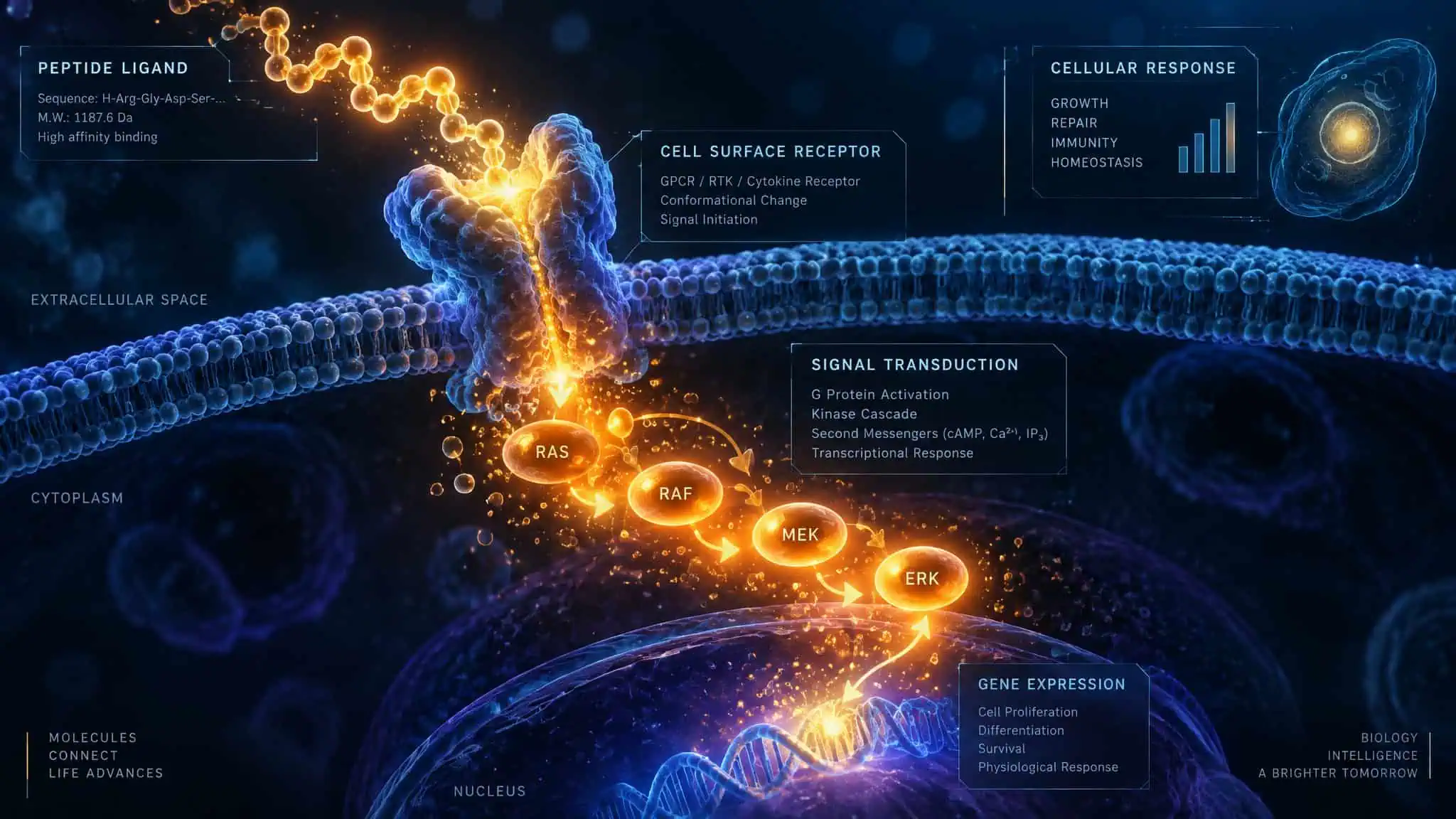
Peptides act as short-lived chemical messengers that regulate physiological processes across the body. Because peptide hormones are built from amino acids and are water-soluble, they can’t diffuse across the lipid cell membrane on their own. Instead, a peptide hormone binds a specific cell-surface receptor and triggers an intracellular cascade, often using second messengers such as cyclic AMP, as seen when insulin binds surface insulin receptors to increase cellular glucose uptake alongside its fellow peptide hormone glucagon.
The body’s fast messengers
Hormones divide broadly into two camps: peptide hormones and steroid hormones. Peptides are smaller and more flexible than full-scale proteins, and peptide hormones make up the largest hormone category in the human body. Cells synthesize them as polypeptides (sometimes assembling multiple polypeptides, modifying polypeptides, or chopping longer polypeptides down) and stockpile them inside cellular vesicles through vesicle storage until it’s time to secrete them. Every hormone the pituitary gland releases is polypeptide-based at its backbone, and some related messengers are glycoproteins, which are protein-core molecules with carbohydrate sugar molecules bolted on (“glyco” meaning sugar).
Because water solubility locks peptide hormones outside the oily cell wall, they work like a mailman who needs a receptor “door” to deliver a message:
- Vesicle release: Secretory cells dump stockpiled peptide hormones from storage vesicles into the bloodstream for immediate dispatch.
- Surface docking: The peptide travels to its target cell and binds a matching cell-surface receptor on the exterior membrane.
- Second-messenger relay: Receptor binding kicks off an internal relay race, often firing up second messengers like cyclic AMP inside the cell.
- Rapid cellular action: The intracellular cascade flips existing switches inside the cell, producing a fast physiological response such as insulin driving glucose uptake or glucagon counterbalancing blood sugar.
Why peptide signals fade fast
That speed comes with a built-in expiration timer. Once a flexible peptide chain docks at its surface receptor and passes the message, enzymatic breakdown clears it out: enzymes in the body quickly chop the peptide apart, resulting in short-lived signaling. Stockpiling pre-made hormones in vesicles lets the body fire off a signal almost instantly, and rapid enzymatic cleanup ensures the message turns off just as fast instead of lingering in the bloodstream.
Are peptides steroids?
No, peptides are not steroids: peptide hormones are water-soluble chains of amino acids, whereas steroid hormones are lipid-soluble molecules derived from cholesterol. That fundamental split in solubility determines whether a hormone can cross the oily lipid cell membrane on its own. Water-soluble peptides like insulin and glucagon must bind exterior receptors to trigger surface cascades, while lipid-soluble steroids like cortisol, estrogen, and testosterone slip straight through the membrane to alter gene expression from the inside.
People who run into both terms in gym or performance chatter often assume “peptide” is just a newer subcategory of steroid, when their molecular hardware and signaling mechanics are complete opposites.
How peptide hormones signal
Because peptide hormones are water-soluble, the lipid membrane is a brick wall. Acting like a mailman knocking on a front door, a peptide docks at a cell-surface receptor and sets off a fast, brief second-messenger cascade without ever entering the cell.
How steroid hormones signal
Steroid hormones behave like a stealth spy slipping straight through the wall. Because they’re cholesterol-derived and lipid-soluble, steroid hormones diffuse right across the cell membrane. Take cortisol: it passes through the membrane, binds an intracellular receptor, and the resulting complex alters gene expression for long-term shifts in cell behavior. More broadly, once steroid hormones cross the membrane, they bind intracellular receptors, dimerize (pair up), cross the nuclear membrane, and bind DNA as a transcription factor to drive gene transcription. Because gene transcription, mRNA processing, and new protein production all take time, steroid hormone effects come on slowly and last much longer than a peptide pulse.
Insulin and collagen: two molecules that prove the line is blurry
If you want to see why rigid residue cutoffs fail in the real world, compare two of the body’s best-known molecules: 51-amino-acid insulin and 1,000-plus-amino-acid collagen.
Insulin: the 51-amino-acid borderline case
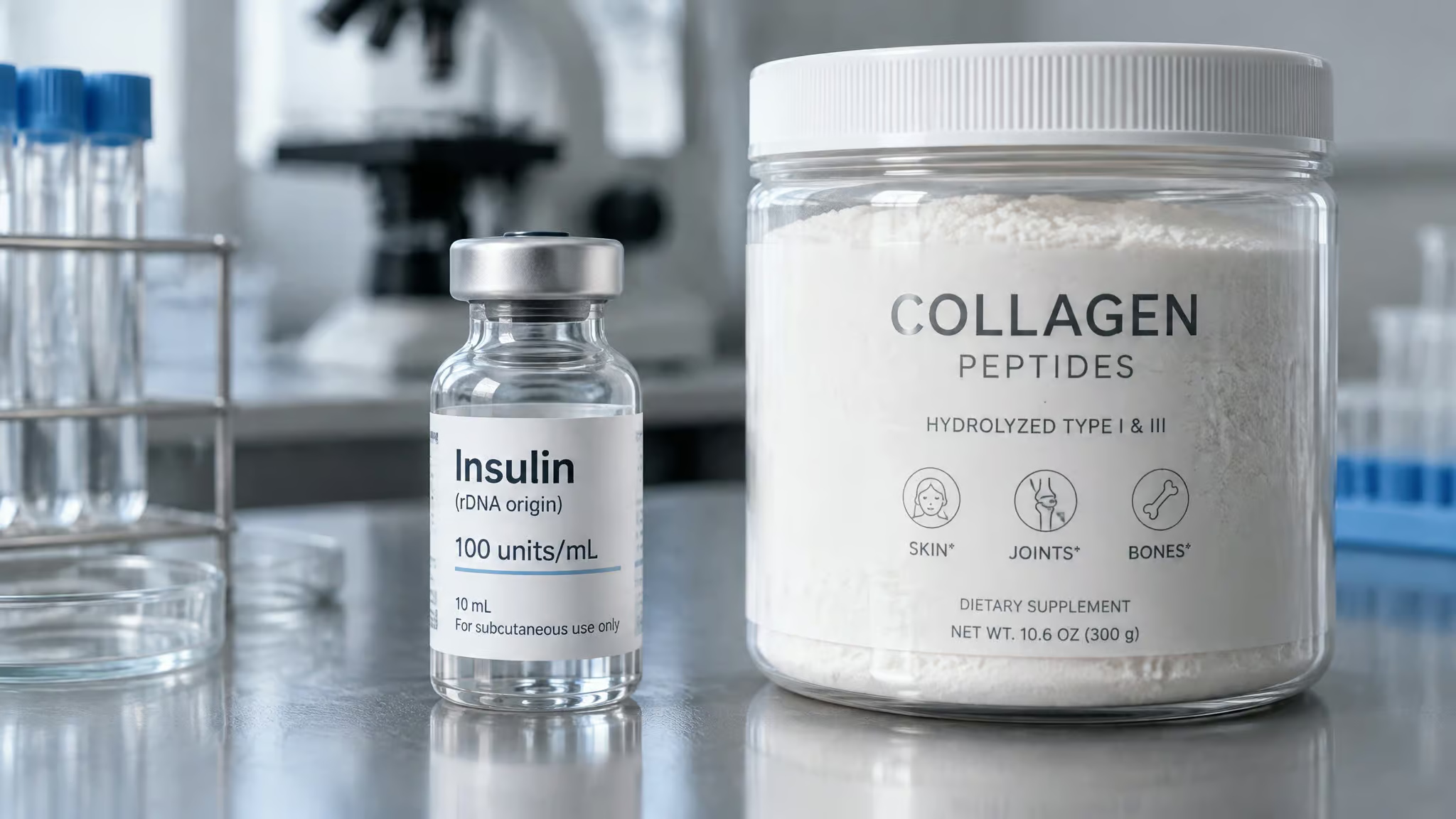
Insulin has 51 amino acids split across two short chains held together by cysteine disulfide bridges. Because it sits right on the ~50-residue border, it’s small enough to be called a peptide hormone yet folds into a stable 3D shape like a tiny protein, so scientists describe it both ways.
The body doesn’t even build it at 51 residues initially: insulin undergoes post-translational modification from a longer precursor called proinsulin, chopping off excess polypeptide segments and linking insulin’s two chains with disulfide bridges. Inside the pancreas, the hormone is stored as an insulin hexamer of six molecules stabilized by two zinc atoms. It does its actual job as a single monomer at the receptor binding site, though released monomers strongly tend to pair up into insulin dimers; pharmaceutical insulin analogs for diabetes are engineered to reduce dimer formation so the hormone hits receptors faster after injection.
You’ll see peptide hormones like insulin drawn as flat chemical structures, chain diagrams, or 3D models. Like photographs of hair at different zoom levels, all three views show the exact same molecule.
Collagen and the “collagen peptides” on the shelf
Collagen peptides in skincare tubs and supplements are chopped-up fragments of full-length collagen. Basic molecular biology explains the fragments, not whether they actually help your skin or joints. Intact collagen sits firmly on the protein side of the border: each chain exceeds 1,000 amino acids, and three chains wind together into a rope-like triple helix that gives structural strength to skin, bone, and tendons. When manufacturers chop that triple helix into short breakdown products, they sell the pieces as collagen peptides. Any positive effect of collagen peptides on body composition could possibly be explained by the signaling effect of bioactive peptides rather than settled proof.
Why peptides are everywhere right now, and what the biology doesn’t answer
Peptides are used for natural hormone signaling (such as insulin and glucagon regulating blood sugar), recombinant DNA therapeutics synthesized to mirror the body’s own messengers, collagen peptide supplements and skincare products, and exogenous muscle-growth, weight-loss, or biohacking protocols. They draw intense interest because evolution built peptides to be fast, receptor-specific, short-lived messengers that flip targeted cellular switches and then get cleared by enzymes. Pharmaceutical engineers love that precision for drug design, and the biohacking crowd chases the exact same targeted signaling.
Curiosity about peptides almost always arrives sideways: people spot the word on a moisturizer, scroll past a supplement ad, or hear gym talk about social gatherings where people self-administer peptides long before they ever look up what an amino acid chain actually does. Once you know the molecular architecture, the delivery method makes immediate sense. Unlike larger therapeutic proteins, smaller peptides break down rapidly in the digestive system, which is why many exogenous compounds are taken as peptide injections rather than pills, including in non-clinical group injection settings.
| Peptide category | Typical chain spec | Primary biological or consumer role | Settled by basic molecular biology? |
|---|---|---|---|
| Endogenous peptide hormones (e.g., insulin, glucagon) | ~2 to 51 amino acids | Fast, short-lived cell-surface receptor signaling before enzymes break them down | Yes (short-lived receptor signaling and enzymatic breakdown settled) |
| Intact structural proteins (e.g., collagen) | 1,000+ amino acids per chain | Rope-like triple helix supporting skin, bone, and tendons | Yes (rope-like triple-helix architecture and structural role settled) |
| Collagen peptides (supplements and skincare) | Short cleaved fragments | Breakdown products; possible bioactive peptide signaling | Partial (cleaved fragment structure settled; clinical outcomes unsettled) |
| Exogenous optimization and bodybuilding peptides | Short synthesized chains | Investigational or unapproved protocols via injection interacting with growth hormone, metabolism, or immune receptors | No (dosing, duration, efficacy, and safety unsettled; clinical data required) |
No, exogenous peptides are not risk-free, except when administered under controlled medical dosing and regulated pharmaceutical sourcing. Peptides’ therapeutic potential comes with risk if dosing or sourcing goes wrong, and safety concerns led the FDA to recategorize more than a dozen peptides, making them ineligible for compounding pharmacies to make. Even when grey-market vials are labeled “not for human consumption. That hasn’t stopped online shoppers from buying and self-administering the medication”.
Knowing how dehydration synthesis and cyclic AMP cascades work gives you a solid BS detector for marketing hype, because basic biochemistry only explains how the category operates in the body. It doesn’t establish how long specific peptide shots last, whether bodybuilding or weight-loss stacks deliver on their promises, or the known and unknown side effects of BPC-157 and other unapproved compounds. Understanding the molecule is step one, and separating clean signaling biology from untested product pitches is step two.
Frequently Asked Questions
What is a peptide in simple terms?
A peptide is a short string of roughly 2 to 50 amino acids snapped together by chemical links known as peptide bonds. If a full-scale protein is an entire book chapter, a peptide is a single sentence built from the exact same alphabet. Once an amino acid chain stretches past that fuzzy 50-residue cutoff and folds into a stable three-dimensional machine on its own, scientists generally classify it as a protein instead.
Does peptide just mean protein?
No, though both pull from the exact same parts bin of amino acids linked by peptide bonds. Peptides are shorter chains of about 2 to 50 residues, whereas proteins run for hundreds or thousands of amino acids and pack themselves into complex 3D structures. The boundary is a working rule of thumb rather than a hard wall, which is why 51-amino-acid insulin gets called both a peptide hormone and a tiny protein.
Are peptides steroids or is peptide a steroid?
Not at all — their molecular hardware and signaling mechanics are complete opposites. Peptide hormones like insulin and glucagon are water-soluble amino acid chains that can’t cross the oily cell wall, so they knock on exterior cell-surface receptors to trigger fast, short-lived cascades. Steroid hormones like testosterone, estrogen, and cortisol are lipid-soluble molecules made from cholesterol that slip straight through the cell membrane and enter the nucleus to alter DNA transcription over a much longer window.
How are peptides formed from amino acids?
Individual amino acids link up through a chemical reaction called dehydration synthesis, where the carboxyl group of one amino acid reacts with the amino group of the next. Each connection forms a covalent amide linkage—the peptide bond—and drops one water molecule (H2O) in the process. That assembly leaves every finished chain with a distinct direction, running from an amine (N-) terminal on one end to a carboxyl (C-) terminal on the other.
What are peptides in skincare and do collagen peptides work?
Full-length collagen is a massive structural protein where three chains of more than 1,000 amino acids wind into a rope-like triple helix to support skin, bone, and tendons. To make the collagen peptides sold in supplement tubs and moisturizers, manufacturers chop that intact triple helix down into short amino acid fragments. Basic molecular biology explains how those cleaved pieces are made, and while any upside for body composition could possibly come from bioactive peptide signaling, clinical outcomes for skin and joints remain unsettled.
Are peptides safe, and what is the downside of peptides?
Regulated peptide therapeutics used under controlled medical dosing are a world apart from grey-market vials sold online as “not for human consumption.” When dosing or sourcing goes sideways with exogenous peptides, the safety risks are real enough that the FDA recategorized more than a dozen peptides to block compounding pharmacies from making them. The biggest downside outside a clinic is flying blind: basic receptor biology cannot tell you whether an unapproved weight-loss or bodybuilding stack actually works or what side effects compounds like BPC-157 carry.
