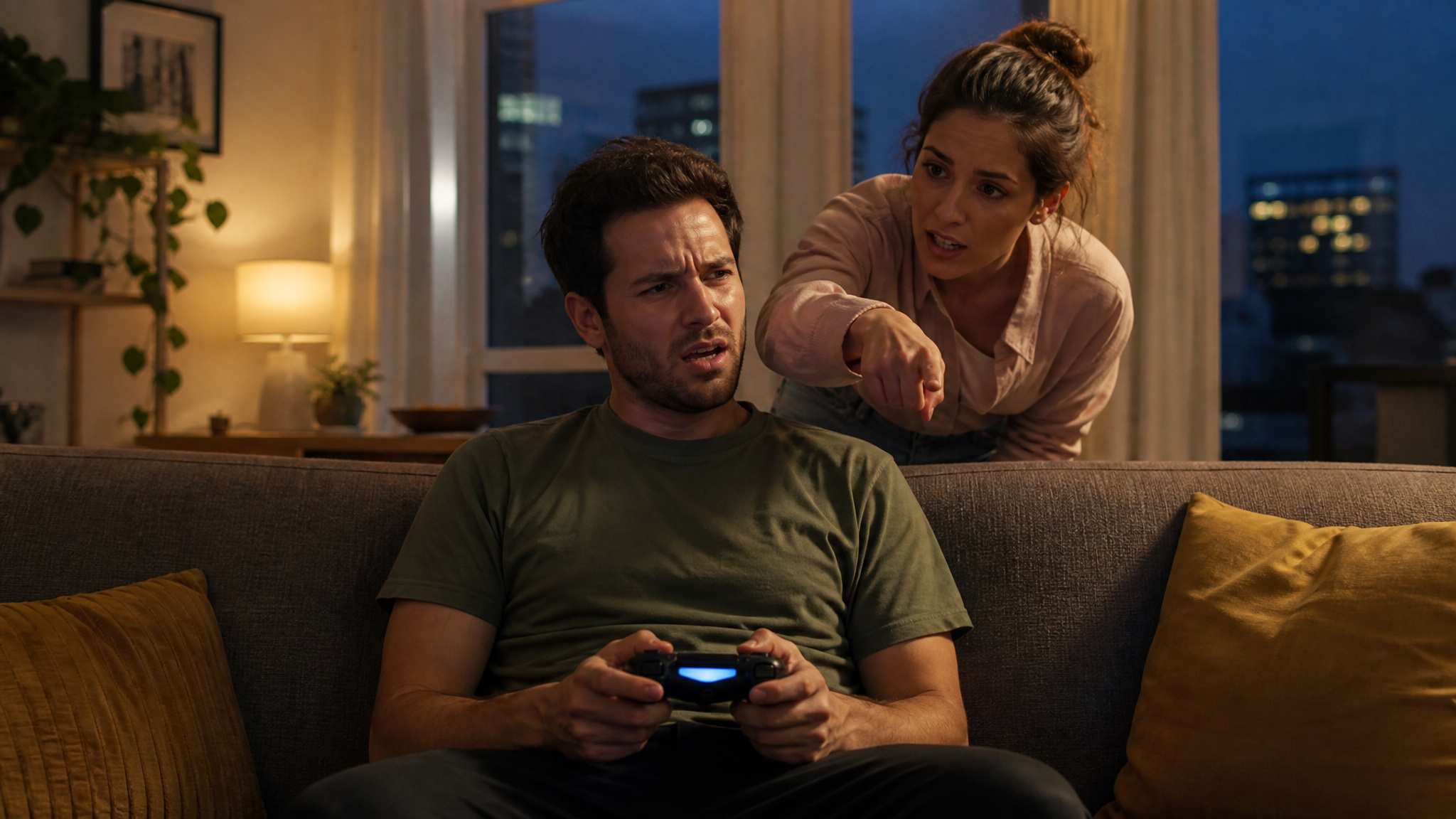
I’m lining up a clean shot in Call of Duty: Modern Warfare 4 when I feel my wife lean over from the other end of the couch. “You should reload now,” she says, and just like that, the moment is gone. The shot whiffs, I’m caught mid-animation, and the other team gets a free kill.
She wasn’t being mean. The advice was, technically, correct: my magazine was nearly empty, and reloading before pushing an angle is solid FPS fundamentals. It’s also irrelevant, because I didn’t reload, because someone was telling me to, and that’s the part of my brain that can’t process instructions in real time.
This is my life across every genre I touch. My wife narrates enemy positions during my Hell Let Loose: Vietnam sessions. She offers betting strategy during online casino games, and she regularly checks the best online casino sites in UK to keep her advice sharp. She’s a freelance director for whatever’s on my screen, and she’s often right, and she can’t stop.
That’s backseat gaming: unsolicited direction or commentary given to a player or streamer. It’s the person who isn’t in the game, and maybe isn’t even in the room, who tells you what to do while you’re playing it.
Here’s what we’re covering: where the term came from, why it grates so hard, when it slides from annoying into toxic territory, and how to handle it from either side of the couch.
Key Takeaways
Backseat gaming is any unsolicited instruction, advice, or commentary from someone who isn’t actively playing the game, a term formed by analogy with “back-seat driver.”
The harm is real: it breaks immersion, makes players feel judged, and strips away agency to the point where you feel like “a tool obeying orders.”
The fix is an escalation path: set boundaries clearly first, block or mute persistent offenders online, and reserve help for the point-of-no-return exception in streams.
Table of Contents
What Is a Backseat Gamer, Exactly?
A backseat gamer is someone who tells you what to do in a game while you’re playing it. Wiktionary offers a more formal cut: Someone who excessively commentates on the in-game decisions and actions of another player, without playing the game themselves.
The key clause is “whilst not playing the game.” That’s what separates backseating from ordinary teamwork. The person giving direction is outside the game entirely, either because they never picked up a controller or because they died five minutes ago and are now haunting the spectate screen. The etymology makes this obvious: the term is formed by analogy with “back-seat driver.”
Same unsolicited directions, different vehicle. Instead of navigating to a gas station, you’re trying to beat a boss.
Backseating is unsolicited instructions, advice, ideas, directions, or commentary on what’s happening in the game. It’s not just “do this” in the moment; it’s also “you should’ve done that” fifteen seconds too late.
And it’s not limited to competitive titles. You can catch backseat gaming in co-op games, single-player RPGs, puzzle games, story-driven adventures, even cozy builders like ReStory: Chill Electronics Repairs where the stakes are a poorly placed flower. No genre is safe, and no game is too chill for someone to lean in with an unsolicited opinion.
What Backseat Gaming Looks Like in Practice
The usual suspects are friends, family members, and stream watchers who believe they have superior methods or techniques, like the ones who backseat in Hell Let Loose. There’s a particular “I know better” energy that drives it. The people doing it often mean well; they just can’t resist the urge to steer.
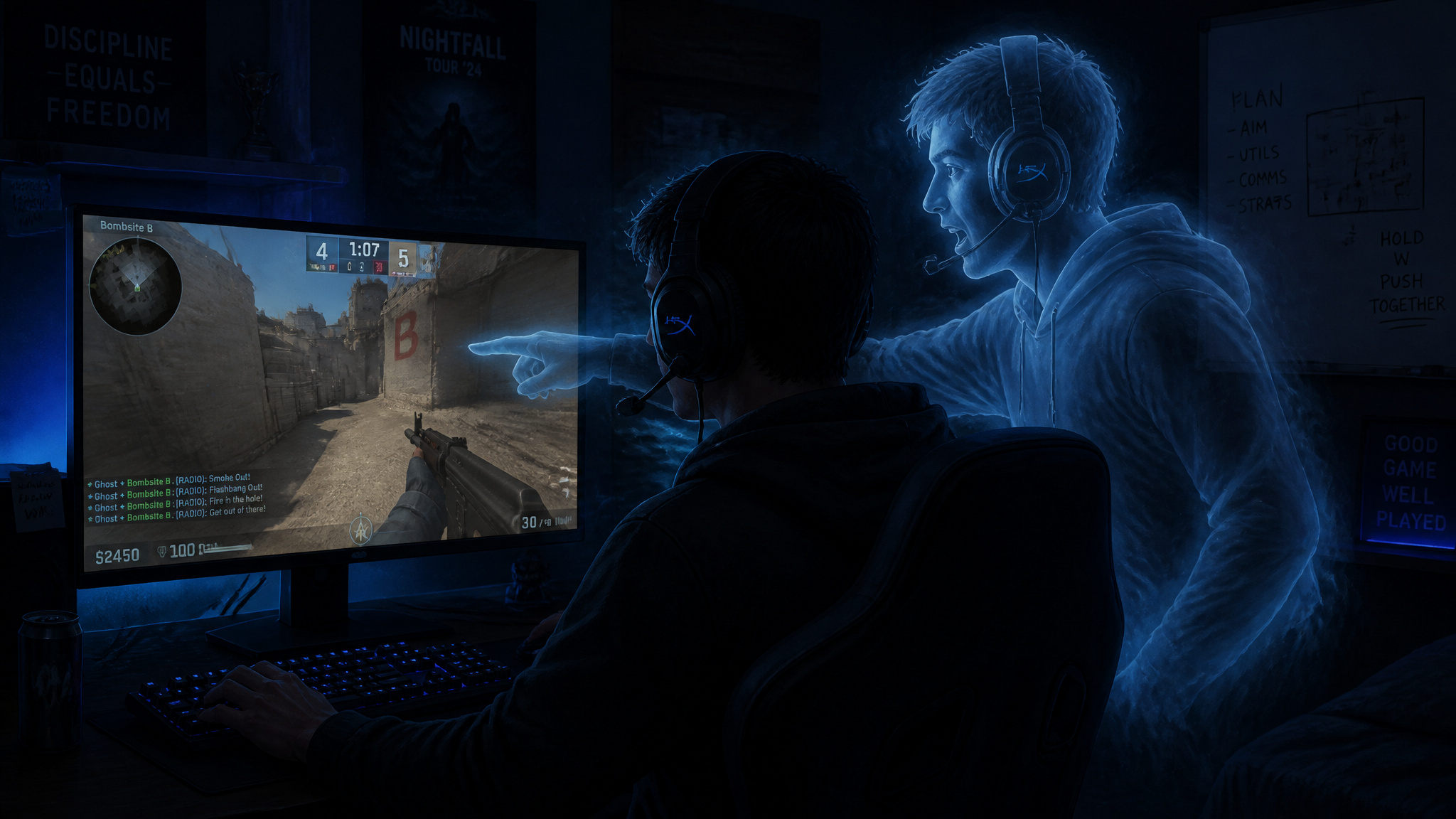
The archetypal scenario is the dead teammate. A player dies mid-match, their ally is still alive, and suddenly the dead player is a director with a headset: “Go left! No, your other left!” Urban Dictionary’s example nails the chaos of it perfectly: “No, shoot that guy!
Not that one, that one! The other guy!” Pure, contradictory noise.
Back in my own living room, my wife is a one-woman demonstration. During Hell Let Loose: Vietnam sessions, she narrates enemy positions like she’s doing color commentary for a sport I’m not playing. During online casino games, she offers betting advice as if the whole point of a slot spin is to optimize it. The thing is, she’s often technically correct.
That’s the frustrating part: the advice isn’t bad, the delivery is.
The dead-teammate scenario
There’s a specific flavor of backseating that emerges when someone has no stake left in a match. They died, their ally is still alive, and rather than quietly waiting for a respawn, they start force-directing every move. That’s peak backseat gaming. It’s also the clearest example of the phenomenon because there’s no pretense of teamwork. The dead player isn’t sharing information to help; they’re commanding.
Why the “help” lands as noise
Even when the advice is good, it’s still noise. Constant interruptions break your focus, as any Forza Horizon player can attest. I’ve lost plenty of gunfights because my brain was busy processing an external instruction rather than reacting to the game.
Why Backseat Gaming Is a Problem
Yes, backseating is harmful, and the harm stacks across three levels. It’s not just annoying, not just distracting, and not just rude. It degrades the experience.
Disrupted immersion and attention
The first cut is mechanical. Constant interruptions shatter immersion. It’s hard to get lost in a game when someone’s narrating your every move. You’re not in the game anymore, you’re in the commentary track.
If you’ve ever tried to play a story-driven title while someone talks over every cutscene, you know the feeling. The game becomes secondary to the voices.
The feeling of being assessed
The second cut is psychological. Backseating makes you feel graded. Every move is scrutinized, every decision is critiqued. You’re not playing a game; you’re taking a test, and the backseat gamer is the judge. That’s the opposite of fun, it’s a known issue that turns a casual session into a performance review, as what backseat gaming is illustrates.
The loss of player agency
The deepest cut is the loss of autonomy. Unwanted advice pressures you into a specific playstyle, reducing your enjoyment and flexibility. You stop experimenting because you’re too busy following orders. The worst case twists it further: backseating removes your individuality and decision-making, making you feel like a simple tool obeying orders.
Your choices don’t matter because you’re not making them. You’re just executing someone else’s plan on a controller.
Net effect: a fun, relaxing experience warps into a stressful, frustrating one. That’s the cost, and it’s the opposite of why anyone sits down to play a game.
Backseat Gaming and Streaming Culture
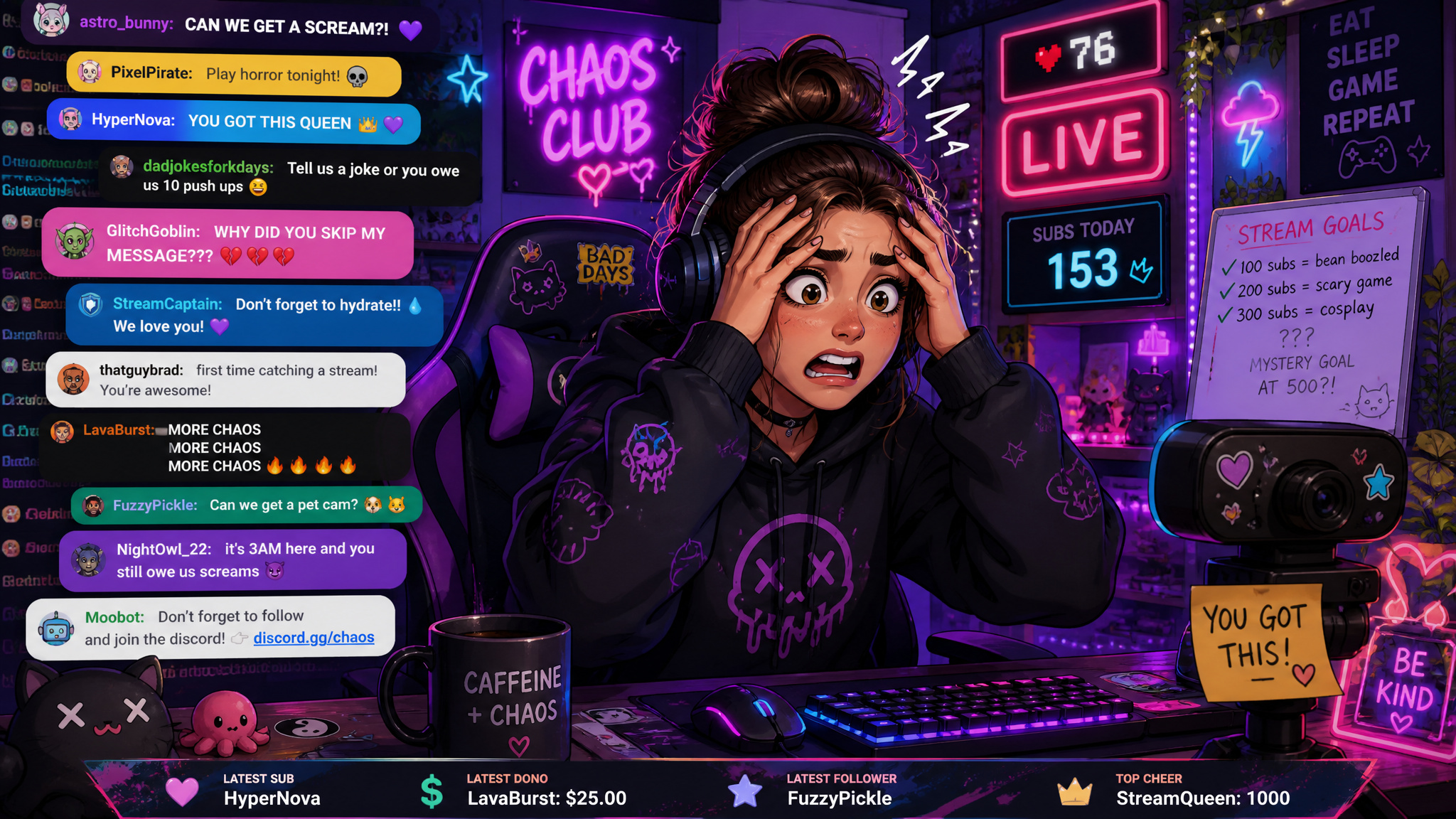
The streaming context changes the stakes. When a streamer is playing a game like Blood of Dawnwalker for the first time on camera, the fun is the discovery. They want to figure out the story, the secrets, and the mechanics on their own. A chorus of hints from chat ruins that.
This is why “no backseat gaming” is a standing rule in so many channels, especially for titles like Blood of Dawnwalker. It’s about preserving the experience the streamer is building for themselves and the audience.
There’s a darker dimension here that deserves attention. Backseat gaming is especially problematic for AFAB/Femme presenting streamers. It occurs across all streamers, but proportionally, this group experiences it the most.
The toxic core of this behavior is a fixation on “perfect” play. People who backseat have an obsession with watching the streamer do everything perfectly, to their standards, the first time. That’s not helpful. That’s toxic.
It’s about control. Some backseat gamers are so invested in the streamer performing exactly to their specifications that any deviation draws hostile commentary.
The toxic obsession with “perfect” play
The demand that a streamer play to a stranger’s standards on a first playthrough is unreasonable on its face. The obsession with “perfect” runs so deep that it can turn a fun, light stream into an unpleasant experience for everyone involved.
The code word strategy for streamers
Many streamers have found a clever workaround: a code word or phrase that signals when help is actually welcome. The streamer can toss out the code word mid-run, which grants chat permission to offer a specific kind of help. It’s an elegant system because it gives the audience a clear signal without killing the vibe of the stream. When the code word isn’t active, chat stays in observation mode. Different streamers have different rules, so the universal fallback applies: when in doubt, ask what advice is okay.
Callouts vs. Backseat Gaming: The Line Between Helping and Hijacking
Callouts pass information without commanding. Backseat gaming gives orders. That’s the boundary, and it’s worth making explicit because most players feel the difference but can’t articulate it.
A callout is “enemy at 2 o’clock.” It gives the player context and lets them decide what to do with it, a distinction that matters in Hell Let Loose. Backseating is a command sequence, not an information share.
Here’s the practical distinction with a trap: “there’s a trap” is a callout. “Step left now” is backseating. The first informs; the second overrides. That distinction matters for multiplayer etiquette because the first is teamwork and the second is control. Even in my own marriage, a callout from my wife that slides into a command flips from helpful to frustrating in the same sentence.
How to Deal with a Backseat Gamer
You can stop the behavior, and the first step is setting a clear boundary. Tell the person to stop. Be direct and unambiguous; no hinting, no passive-aggression. I’ve got this one, but I’ll ask if I need help beats a sigh and an eye roll every time.
If the behavior continues, the next step online is block or mute. Protect your peace. There’s no obligation to sit through commentary you’ve already asked to stop.
There’s a caveat: blocking and muting are short-term fixes that only work online. They don’t help with your in-real-life friends, your family, or your spouse.
Setting boundaries first
For the people you can’t mute, the regular co-players who are otherwise fine to game with, you need a different approach. Explain the difference between callouts and backseating. Tell them: information is welcome, commands are not. Give them a ready script so the boundary is clear and easy to follow.
When to block or mute
If you’ve stated the boundary and the person ignores it, escalate. In online games, blocking or muting is the logical next step. It’s not a dramatic act; it’s a practical one. The person isn’t trying to help, they’re hijacking your session.
How to Avoid Being a Backseat Gamer
Most backseat gamers mean well. The advice comes from a genuine place of wanting to help. The golden rule is simple: let other players decide for themselves and learn from their own mistakes.
Ask first, or don’t ask at all
If you feel compelled to offer advice, ask first. “Want a tip?” goes a long way, whether you’re playing Call of Duty: Modern Warfare or a cozy builder. It gives the other player the choice to accept or decline, and that choice alone preserves the fun. If they say no, let it go. Don’t ask again in thirty seconds.
Cooperation over control
Emphasize cooperative play over controlling others. You’re a team, not a commander. Provide assistance and collaborate toward shared objectives without prescribing how others should play. Instead of calling out errors, give encouragement and positive reinforcement.
Be patient with learning curves and acknowledge accomplishments. Everyone starts somewhere, and letting players enjoy the game at their own pace is usually best.
When Help Is Actually Acceptable
There’s a legitimate exception to the no-backseating rule: the point-of-no-return warning. If a streamer missed something important, such as an NPC to talk to or a chest with a quest-required item, and they’re about to pass a point of no return, it’s acceptable to point it out. Phrase it as a question, not a command: “Oh, you missed someone/something important back there. You won’t be able to go back for a while/ever.”
The key principle: the streamer had a fair chance to find it on their own, especially if it was obvious and on screen. If they walked right past it, that’s a factual heads-up, not a method critique.
Even character-build advice counts as backseating unless requested. You might have the perfect Yuna build figured out in Final Fantasy X, but the streamer may not care or may not know the intricacies during a first playthrough of Blood of Dawnwalker. This gets serious enough that the guide author had someone banned after multiple warnings for harassing about character builds. That’s how far it can go.
The universal fallback: when in doubt, ask the streamer what advice they’re okay with. Rules differ from streamer to streamer. Don’t assume. A quick question respects the streamer’s space and keeps the channel fun for everyone.
The bottom line is that having fun is the main objective. A little backseating can sour an entire session, but the opposite is also true: a clean co-op run in Hell Let Loose, where everyone plays their own game and shares only what’s asked for, is the best way to keep the atmosphere light. Steer clear of needless tension and let the game be the game.
Frequently Asked Questions
What is backseating in gaming?
Backseating in gaming is when someone who isn’t playing the game gives unsolicited advice, instructions, or commentary on how to play. It’s like a back-seat driver, but for video games. The key is that the help is unwanted and often disrupts the player’s experience.
What does backseat mean in slang?
In slang, ‘backseat’ refers to someone who tries to control or direct a situation without being in a position of authority or responsibility. It comes from the idea of a passenger in the back seat of a car telling the driver what to do. In gaming, it means giving unwanted advice or commands to the person actually playing.
What does “no backseat gaming” mean?
“No backseat gaming” is a rule many streamers and players use to tell others not to give unsolicited advice or commentary while they play. It’s about preserving the player’s autonomy and enjoyment, especially during first playthroughs where discovery is part of the fun. When this rule is active, viewers should watch without offering tips unless asked.
What does “backseat girl” mean?
A ‘backseat girl’ is a slang term for a female who gives unsolicited advice or tries to control a situation, especially in gaming or driving. It’s the gendered version of ‘backseat driver’ or ‘backseat gamer.’ The term is often used playfully but can carry a negative connotation when the behavior is unwanted.
What is the difference between a callout and backseat gaming?
A callout shares information without telling the player what to do, like ‘enemy at 2 o’clock.’ Backseat gaming gives commands, like ‘step left now.’ Callouts inform and let the player decide; backseating overrides the player’s agency. The line is between helping and hijacking.
How do you deal with a backseat gamer?
First, set a clear boundary by telling them to stop, like ‘I’ve got this, but I’ll ask if I need help.’ If they continue, block or mute them online. For in-person friends or family, explain the difference between callouts and commands, and ask them to only share information when you request it.
When is it okay to give advice in a game?
It’s okay to give advice when it’s explicitly requested, or in rare cases where a player is about to miss a point of no return and you give a factual heads-up, like ‘You missed an NPC back there.’ Phrase it as a question, not a command. When in doubt, ask the player what advice they’re comfortable with.