I went looking for a simple answer to a simple question: what exactly shouldn’t you feed a Mogwai after midnight? The answer, it turns out, is “a Mogwai,” and the follow-up question, “okay, but when exactly does after midnight end?”, is where the whole thing spiraled. Because here’s the deal: you never feed a Mogwai, Gizmo’s species from Gremlins (1984), any food whatsoever once midnight has passed. The rule is about timing, not food type. There’s no forbidden snack list. A cracker is as dangerous as a burrito.
The Mogwai care spec has exactly three rules, stated in the 1984 film: keep them away from bright light (sunlight kills them), don’t get them wet, and never feed them after midnight. Three lines. And the third one is self-contradictory as written, because every moment of your life is after some midnight. That’s not me being pedantic; it’s a bug report the fan community has filed for forty years, and the franchise itself eventually shipped two patches for it.
One of them is a joke in Gremlins 2. The other is buried in an animated series episode called “Always Buy a God a Drink First,” and honestly, it’s clever.
Oh, and the rules have an author. An in-universe author, with a motive. And the rule lore feeds directly into Gremlins 3, which arrives October 6, 2028. That’s where I ended up after what started as a five-minute lookup. Let me walk you through it.
Key Takeaways
You never feed a Mogwai any food after midnight; the rule is about timing, not food type, and breaking it triggers cocooning, then a scaly gremlin hatches.
Canon supplies two answers to the question of when “after midnight” actually ends: a Gremlins 2 date-line gag mocking the ambiguity, and the original moon-peak rule revealed in Gremlins: Secrets of the Mogwai.
The rules aren’t pet-care trivia; they’re the terms of a bet between the gods Nuwa and Fuxi over whether humanity is mostly good, and Gremlins 3 is positioned as a possible third strike.
Table of Contents
The three Mogwai rules, and what breaking each one actually does
The three rules of Mogwai care, as stated in the 1984 film, are: avoid bright light, because sunlight kills; don’t get them wet; and never feed them after midnight. That’s the whole contract. What most explainers miss is that these aren’t three interchangeable warnings on the same sticker. They’re three different systems with different triggers, different severity, and wildly different failure modes: bright light hurts and can temporarily blind a mogwai, water makes it spawn new mogwai from its back, and a post-midnight snack kicks off cocooning and the full transformation into a gremlin. Treat it like a spec sheet with known bugs, because that’s genuinely how it reads.
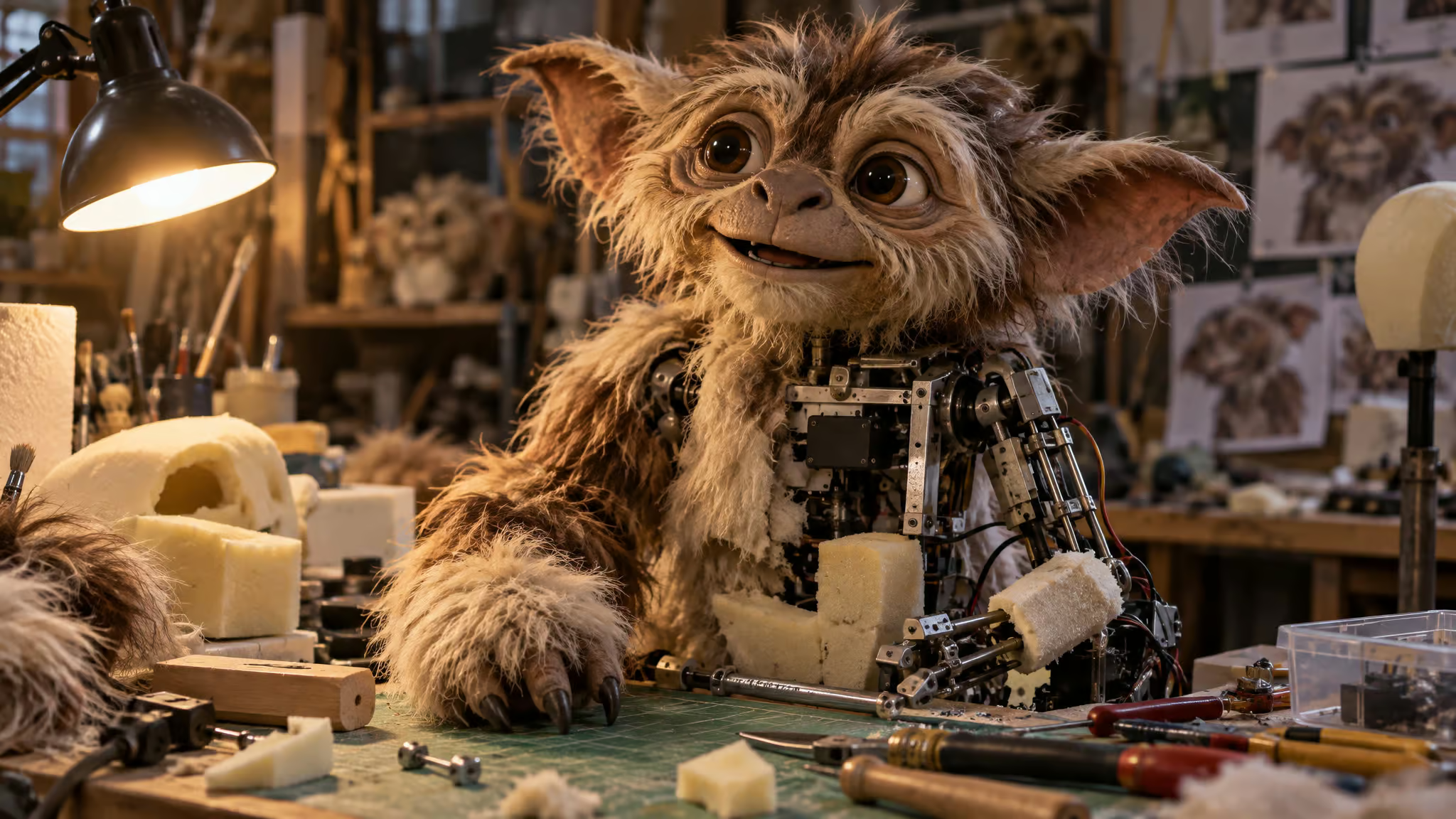
For the uninitiated: a mogwai is a small, fluffy mammalian creature, wide head, big bat-like ears, whose fur grows in white, black, brown, or gray patches, occasionally several colors at once, everywhere except the muzzle, ears, hands, and feet. Think of the cutest thing you’ve ever seen, then note that it ships with three catastrophic edge cases.
Rule 1: No bright light
Bright light hurts a mogwai and can temporarily blind it. That’s the non-fatal tier. The fatal tier is direct sunlight: they burn, and they die. So this is the one rule with a literal kill switch, and the severity ladder is clean: discomfort, then death, depending on the light source.
Here’s the elegant design detail, though: light is also the countermeasure. The same property that kills mogwai is the tool you use to fight gremlins. The weakness is the weapon. Very few creature designs in movies are that internally consistent, and I don’t think it gets enough credit.
Rule 2: Don’t get them wet
A wet mogwai spawns new mogwai from its back. Let that land for a second. Getting splashed isn’t a hygiene issue; it’s reproduction. The failure mode for “don’t submerge” is “you now have more of them.”
The newborns start as fur balls the size of marbles that grow and unfold into fully grown mogwai, which is a delightful and slightly horrifying image. And the copies aren’t identical: water-spawned mogwai often come out with unusual physical traits and noticeably more mischievous personalities. It’s a clone-with-drift problem. The copies are worse than the original, and canon has an actual reason for that, which we’ll get to.
Rule 3: Never feed them after midnight
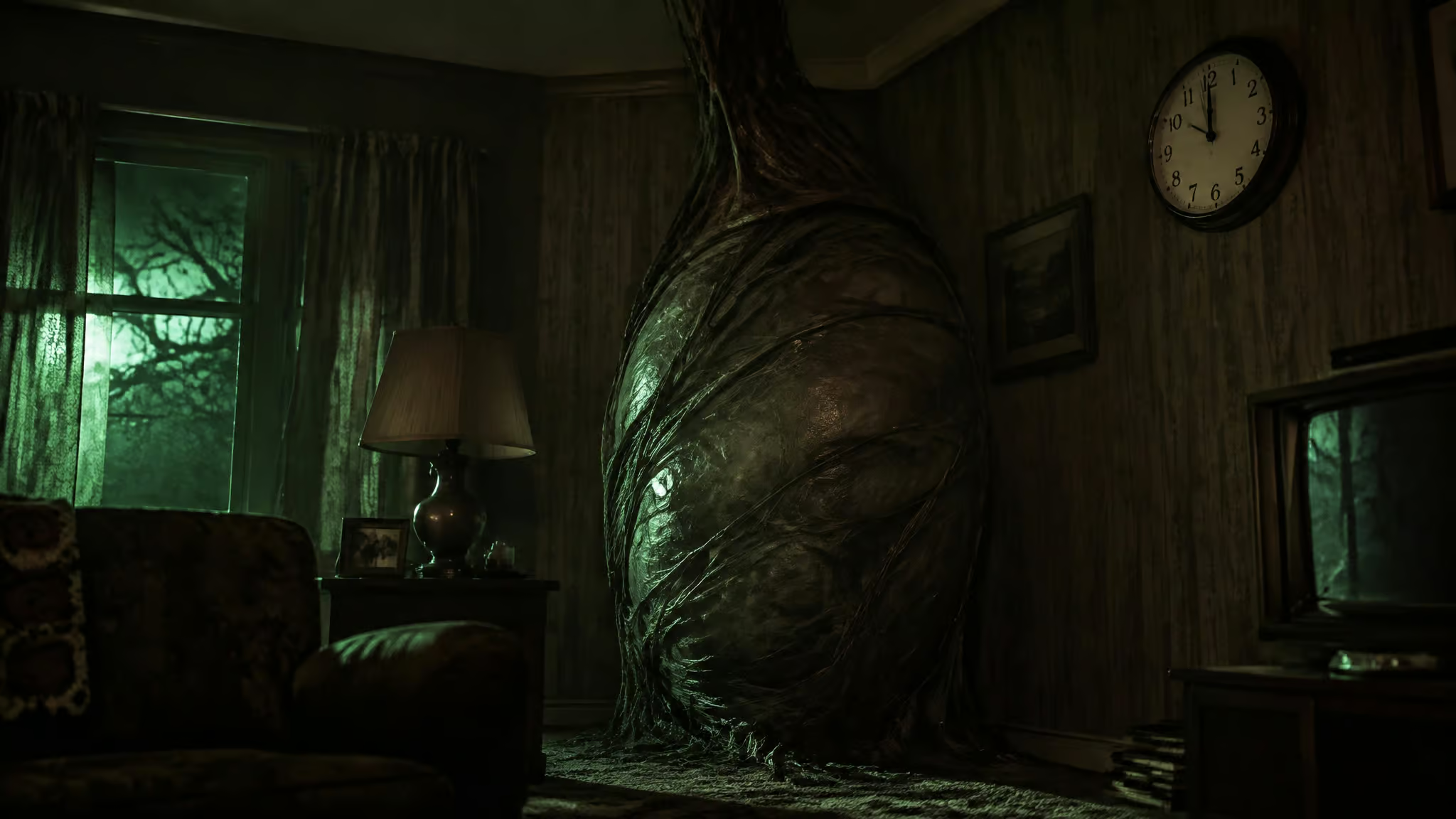
Eating after midnight doesn’t transform a mogwai instantly. It runs as a sequence: the mogwai eats after midnight, cocoons, and emerges as a gremlin. The cocoon stage is the part the single-clause summaries skip, and it’s the best part: big, slick cocoons in murky gray-brown or green that throb. After some time, a scaly, fully transformed gremlin hatches out of it.
The gross specificity is doing real work here. This isn’t a werewolf-style instant change under a full moon. It’s staged biology with a visible intermediate state, which means there’s a window where you can watch the consequences of your mistake pulse menacingly in the corner of the room.
What happens if you feed a Mogwai after midnight
Yes: a mogwai fed after midnight transforms, via cocooning, into a scaly gremlin. And the canonical case study makes it clear this isn’t careless pet ownership. In the 1984 Kingston Falls outbreak, Pete Fountaine accidentally spilled water on Gizmo, spawning five new mogwai, and those five then tricked Billy Peltzer into feeding them after midnight. Deliberate, not accidental. The mogwai exploited the human.
Why would they? Because water-spawned mogwai carry a curse from Fuxi making them destructive tricksters for their first century of life, and many of them actively seek out the after-midnight feeding. They’re not stumbling into the bug; they’re trying to trigger it. Gizmo breaks the pattern: he never begs for food and never breaks the rule.
For him, the temptation simply never lands. One fan take worth passing along, from commenter FelixSH: every mogwai other than Gizmo is rotten from the start. That’s a fan observation, not canon, but it tracks with what the films show. The feeding scene ritual, if you’ve seen it: someone litigates the clock, a few minutes before midnight, surely that’s fine, and then the cocoons show up, and the argument moves from the rulebook to the TV.
When does “after midnight” end? Canon’s two answers
The paradox is real: all time is after some midnight, and the films never specify a safe eating window. Fans have been confused about this for years, and forum threads recycle the same proposed fixes every time the topic resurfaces: pick a timezone, count from sunrise, insist that “midnight” really means the middle of the night. But it isn’t actually unresolved. The franchise shipped two answers.
The Date Line spoof
Gremlins 2: The New Batch mocks the rule’s own ambiguity. A man dismisses warnings about a mogwai eating on a plane before midnight, and then the plane crosses the International Date Line. That’s the whole beat, and it’s perfect: not even time zones offer an escape. The filmmakers were in on the joke. The paradox isn’t a plot hole they overlooked; it’s one they performed on screen.
The moon-peak rule
In the Secrets of the Mogwai episode “Always Buy a God a Drink First,” the goddess Nuwa reveals the original rule: a mogwai was forbidden from eating while the moon stood at its zenith. Humans changed it and shortened it to “midnight,” a narrowing that created the loophole. The moon-based original also accounts for mogwai transforming at midnight in both China and the US despite the time zone difference. The plot hole closes.
To be clear: this comes from the animated series, not retroactive live-action film canon, and no precise clock cutoff exists in canon. But it’s the only in-universe resolution anyone has actually shipped, and it’s a good one.
Field note: Both canon resolutions come from spinoffs — the 1984 film itself never defines a safe eating window.
Why the rules exist: Nuwa and Fuxi’s bet over human nature
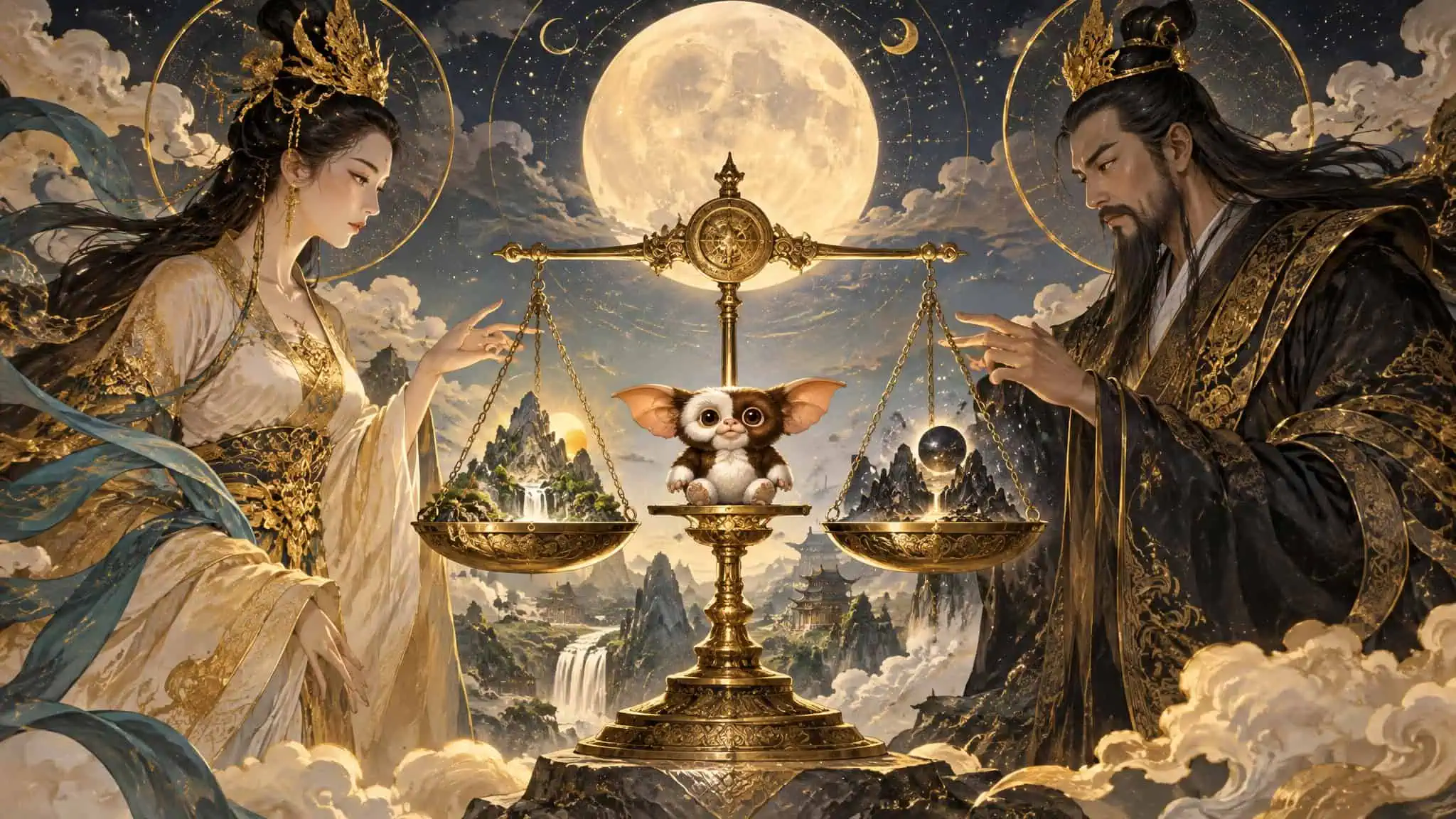
The rules aren’t pet-care trivia. They’re the terms of a bet. Centuries ago in ancient China, the sibling creator gods Nuwa and Fuxi wagered over whose view of humanity was correct. Nuwa thought humanity was mostly good, and she created the mogwai.
Fuxi wrote their rules. The stakes: the losing god quits creating life forever.
The field trial was the city of Fengdong, which stood in for humanity. Its residents grew to love the mogwai too much, broke one rule, then the other two. The mogwai became gremlins, and people died. Humans, not mogwai, were the failure.
Nuwa shut the test down, reverted the gremlins, and hid the mogwai in the Valley of Jade, her last creation. Rollback and quarantine, divine edition.
One framing note: all of this is the franchise’s later mythology, from the animated series and wiki lore. The 1984 film states none of it. But the film gestures at the same idea through Mr. Wing, the shopkeeper, who tells Rand Peltzer: “You do with Mogwai what your society has done with all of nature’s gifts! You do not understand!
You are not ready.” It lands without commentary.
The fine print: the hidden fourth rule and the rules’ earlier logic
Yes, there’s a hidden fourth rule, per wiki lore rather than film canon: mogwai live forever unless wounded, and eating a furry mogwai whole grants immortality. Eating a gremlin instead just makes you sick. That is wild, and almost nobody mentions it. Separately, one fan comment claims an early full-horror draft of the script explained rule 2 as requiring pure water at least 10 degrees above freezing, meaning beer, soup, or snow wouldn’t set off multiplication. That one is unverified fan recollection, but the 10-degree specificity is exactly the kind of forgotten spec detail I love.
Mogwai vs. gremlin: the word, the folklore, and two origin canons
Before digging into the rules’ deeper lore, it helps to get the two words straight, because “Mogwai” and “gremlin” get used interchangeably in ways the franchise never intends. So let’s get the two words straight: what each one means, where the names come from, and the two competing origin stories the franchise carries.
Naming and etymology
Mogwai is the fluffy pre-transformation stage; gremlin is the post-feeding stage. The food rule applies to the mogwai stage only, which also clears up the common confusion about what you can or can’t give a gremlin: the rule simply doesn’t apply to it anymore.
The name has receipts. In Chinese mythology, mogwai (Mandarin ??, mó guài; Cantonese ??) translates roughly as “devil” or “demon,” and folklore casts these creatures as bringers of harm to humans. Chris Columbus’s Gremlins script (sections 5-6) built that connection on purpose. And in folklore, mogwai reproduce in the rain, a mythological echo of the film’s water rule.
The rule has a folklore source. That’s a satisfying origin trace.
Gods vs. aliens
The franchise carries two genuinely incompatible origin stories. The gods version is above. The alternate canon lives in George Gipe’s novelization: a placid alien scientist named Mogturmen bred mogwai as docile ambassadors of harmony and shipped them to three planets, Klm-6 in the Porasti Range, Clinpf-A of the Beehive Pollux, and Earth, third planet of Minor Sun #67672. Only one in 10,000 turned out good; most became the malicious pixies and goblins of legend.
The planet names alone are worth the price of admission. Neither origin is officially privileged over the other, and if you’re wondering which one counts, welcome to the club: the standard deep-dive pattern is to ask which canon is real, then cite the novelization as canon in your next argument anyway.
Every on-screen rule-break: 1920, 1984, 1990
There are exactly two documented on-screen rule-breakings, and both follow the same pattern: water first, then an after-midnight feeding. In 1920, per Secrets of the Mogwai lore, Gizmo was torn from his tribe while defending his home from an eagle, got captured by a traveling show, and in Shanghai Sam Wing’s grandfather tasked Sam with returning him to the Valley of Jade; sorcerer Riley Greene wanted the mogwai, and water contact spawned four that became gremlins. Sam later cared for Gizmo for years and brought him to an American antique shop. In 1984, Randall Peltzer obtained Gizmo from Sam Wing’s grandson, Pete Fountaine’s spill spawned five mogwai, and their tricked feeding unleashed gremlins on Kingston Falls.
In 1990, after Sam Wing’s death and the Clamp Center demolition of the shop, Gizmo’s water exposure spawned four mogwai that became gremlins, and Gizmo ended up back with Billy. The spawn counts repeat, four, five, four, which may or may not mean anything. The pattern does: two breaks down, a third one is structurally loaded.
Gremlins 3: how the rule lore could drive the plot
Everything above, the three rules, the bet between Nuwa and Fuxi, and the two documented on-screen rule-breakings, sets up the question of what a third film does with them. This section covers where Gremlins 3 actually stands, and why the rule lore makes a third strike a structurally loaded possibility.
Production status
Gremlins 3 arrives October 6, 2028. Chris Columbus, who wrote the rules into the 1984 script, directs and produces, and Steven Spielberg returns as executive producer via Amblin Entertainment. The announcement came from David Zaslav on a Warner Bros. Discovery investor call, per Variety, which is honestly the least glamorous venue imaginable for a Gremlins revival.
The release slipped from November 19, 2027, the date set at the November 2025 announcement, to October 6, 2028. That’s almost 11 months of delay, with no public studio explanation. The receipt: a Warner Bros. teaser posted on Twitter/X on September 23, 2026 showed Gizmo peeking out of a backpack, captioned “10.6.28. Only In Theaters.” Thirty-eight years will have passed since Gremlins 2 (1990), which grossed about $40 million, over $100 million less than the first film.
Galligan defends it as misunderstood satire, and that take deserves a fair hearing. The screenplay picture is genuinely messy: Variety reports Zach Lipovsky and Adam B. Stein (Final Destination Bloodlines) are penning the script, building from an earlier screenplay by Columbus, Lipovsky, and Stein, while one truncated source indicates Hannah Marks is writing the current draft. I’m not picking a winner; the attribution conflicts.
The third-strike thesis
Here’s where the rule lore pays off. In 2020, Zach Galligan told SYFY WIRE that Billy breaking the rules a third time would be the key mistake of a third film, capping his plot proposals with “Who you gonna call? Gremlin-busters.” In July 2025 at Comic-Con Manchester, he told fans a script exists and only needs Spielberg’s approval, and he has said he prefers a sequel to a reboot.
No returning human cast is confirmed; Warner Bros. hasn’t announced anyone, and Galligan’s reaction to the teaser was a looking-eyes emoji, which is not a contract. But the structure is sitting right there: two documented rule-breakings, both water-then-feeding, plus the original screenwriter now in the director’s chair. A third strike is a reasoned possibility, not a scoop, and you can read more of what’s confirmed and rumored in our Gremlins 3 deep-dive.
The rules as the franchise’s organizing grammar
The closing observation from the rabbit hole: the rules aren’t one-off plot mechanics. They’re the franchise’s organizing grammar. Gremlins: Secrets of the Mogwai, two seasons of 9 + 9 episodes, titles its episodes after the rules with “Always/Never” phrasing, including “Never Get Them Wet” and “Never Feed Them After Midnight.” The show literally built its structure around the subject of this article, which is the kind of thing you only notice after spending a weekend in the wiki.
Behind the camera, the mogwai were practical puppets, mostly voiced by voice actors, and Gizmo was voiced by Howie Mandel. Yes, that Howie Mandel. During Gremlins 2 production, several prototype mogwai were built, including Penny (pure white) plus variants with different stripe patterns: prototype hardware that never shipped. And the 1984 film itself, directed by Joe Dante and written by Chris Columbus, helped force the PG-13 rating into existence and drew violence complaints despite its family aim.
Three rules, all of them broken on screen, and a third strike scheduled for October 6, 2028. The spec was never the problem. We were.
Frequently Asked Questions
Why can’t you feed a Mogwai after midnight in Gremlins?
Because eating after midnight triggers the sequence that turns a mogwai into a gremlin. In-universe, the rules are the terms of a bet between the sibling creator gods Nuwa and Fuxi over whether humanity is mostly good — and Fuxi wrote them. Water-spawned mogwai even actively want the rule broken: a curse from Fuxi makes them destructive tricksters for their first century of life, so many seek out the after-midnight feeding deliberately.
How did the mogwai rules originate in Chinese mythology and Gremlins lore?
The name has receipts: mogwai (Mandarin ??, mó guài) translates roughly as “devil” or “demon,” folklore casts them as bringers of harm to humans, and folklore mogwai reproduce in the rain — a mythological echo of the film’s water rule. Chris Columbus’s Gremlins script built that connection on purpose. In-universe, the rules have an author with a motive: Fuxi wrote them as the terms of a bet with Nuwa, where the losing god quits creating life forever.