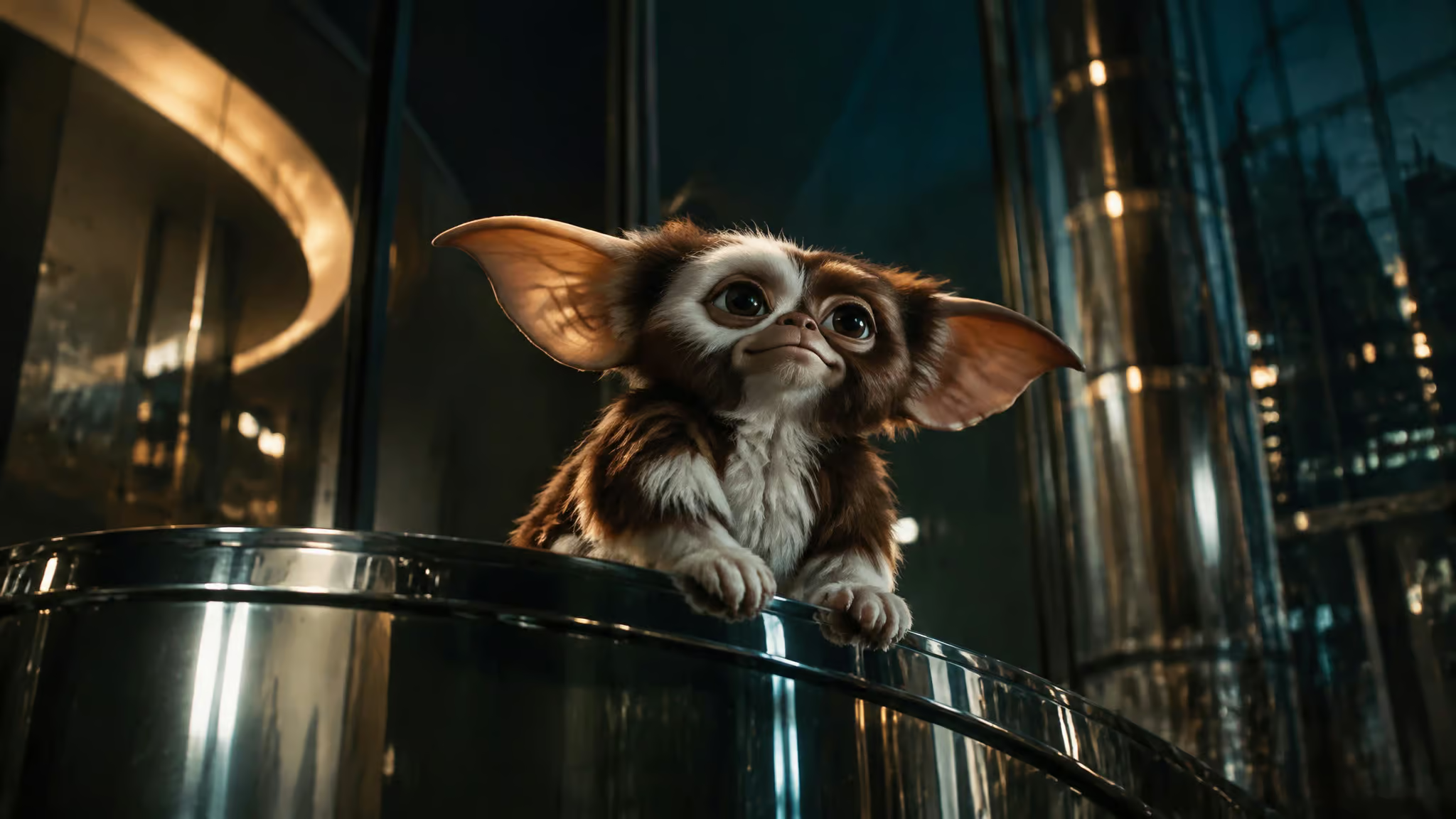
Gremlins 2: The New Batch is the 1990 American comedy horror sequel to Gremlins, with Joe Dante directing from a Charles S. Haas screenplay, released by Warner Bros. on June 15, 1990, and running 106 minutes. And it exists for exactly one reason: Dante kept saying no until Warner Bros. handed him complete creative control and roughly triple the original’s budget, at which point he turned the franchise into a self-parody, and described the result as one of the stranger major-studio releases ever made. It flopped in 1990, split audiences down the middle, became a cult fixture on home video, and now there’s a third film dated October 6, 2028, which makes this the perfect moment to rewatch the weird middle child and figure out what it actually is.
Key Takeaways
Joe Dante only returned for the sequel after Warner Bros. gave him full creative control and roughly triple the budget, and screenwriter Charlie Haas collapsed the action into Clamp’s “smart building” because executives balked at the cost of trashing all of New York.
It grossed $41,482,207 in the US and Canada against a $30-50 million budget, landing 31st for 1990, roughly $100 million short of the original.
Gremlins 3 is dated for October 6, 2028, with Chris Columbus directing and Spielberg executive producing, after slipping from November 19, 2027.
Table of Contents
How the sequel got made: control, budget, and a smart building
The original Gremlins cleared $150 million in 1984, so Warner Bros. wanted a sequel immediately. Dante said no, on the reasonable grounds that the first film had a proper ending. Meanwhile, pitches developed without him sent the gremlins to Las Vegas, or to Mars.
Gremlins on Mars.
What got him back was chairman Terry Semel offering the two things directors almost never get: complete creative control and roughly triple the original’s budget. Dante took the deal and immediately started heckling his own movie.
Screenwriter Charlie Haas did the structural heavy lifting. He invented Daniel Clamp and moved the story to New York, and when executives balked at the cost of gremlins trashing an entire city, he collapsed the action into Clamp’s smart building. That’s a budget constraint producing the film’s signature setting, which is the good kind of constraint. (The screenplay also had an unproduced cow-hamster hybrid on a treadmill, which I mention only because it deserves to exist somewhere.)
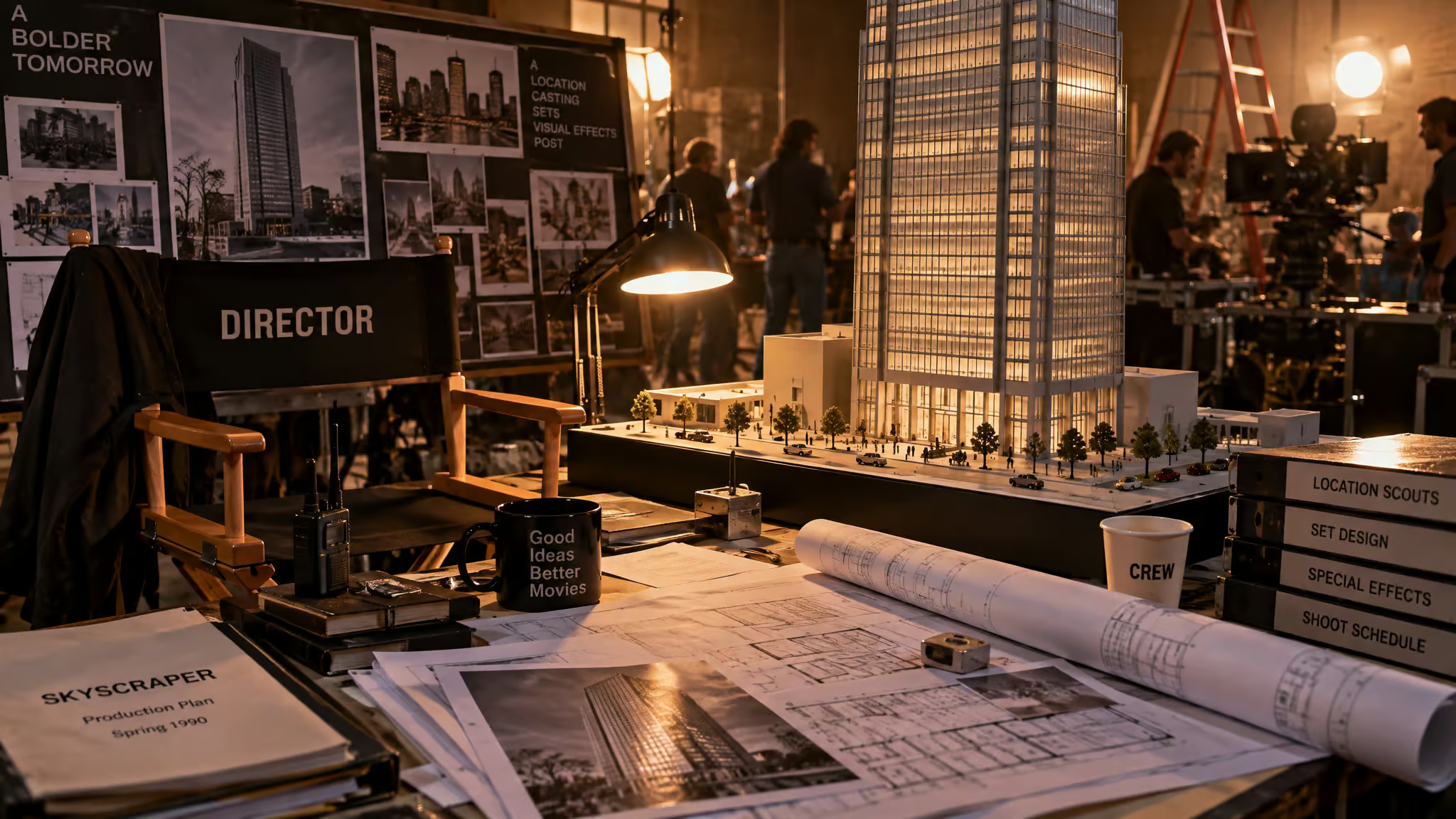
The logistics are a build log worth reading: principal photography ran May 26, 1989 through September. Clamp Center’s exterior went up at 101 Park Avenue, and the lobby, a 10,000 sq ft two-story set with a working elevator, was built in Burbank. Additional effects filming ran five months, including six full weeks of puppet-only work after the actors wrapped. There were also live monkeys on set who were afraid of the puppets, which is the kind of production detail you can’t invent. And the timing mattered: the film was shot just as cable television, genetic engineering, and frozen yogurt were becoming common in popular culture, so it parodies all three.
Plot: the Clamp Center siege, from Splice O’ Life to Greta’s finale
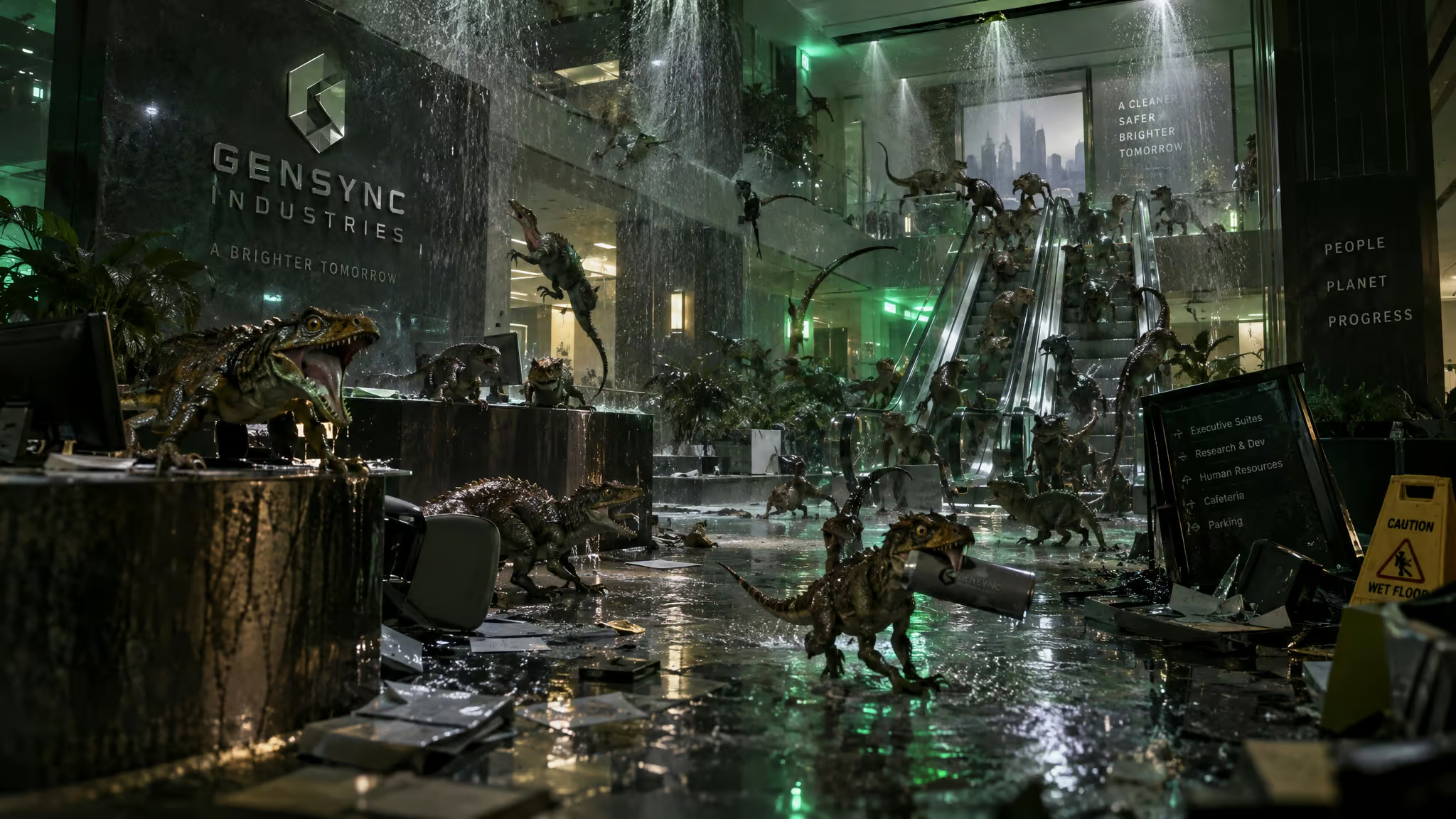
The mutant gremlins in this film are the Brain Gremlin, Greta, the electric gremlin, the Bat, Vegetable, and Phantom-masked variants, plus Mohawk’s spider hybrid, and they all exist because gremlins drink genetic serums in the Splice O’ Life lab. That’s the engine of the whole plot.
After Sam Wing’s death, Gizmo gets captured at the lab under Doctor Cushing Catheter. Billy and Kate, who both work in the building, rescue him.Clamp takes a liking to Billy’s concept-design skills, which draws the interest of Billy’s superior, Marla Bloodstone. Then a drinking fountain breaks and spawns four new mogwai: George, Lenny, Daffy, and Mohawk, names used only in the script and never spoken on screen.
They stash Gizmo in the vents and eat after midnight at the food court. Mohawk tortures Gizmo; the gremlins trigger the fire sprinklers to spawn an army, which is weaponizing the building’s own safety systems, the clever-horrible part.
Billy’s counter-hack, a giant sheet painted as night hung over the lobby entrance so gremlins walk into sunlight and die, works until a storm ruins it. Plan B: Murray Futterman hoses the horde down, and the electrical gremlin, which killed Catheter and lives in the building’s phone system, melts the rest. Mohawk drinks a serum and becomes a centaur-like spider hybrid, catching Marla in a web where she delivers the on-brand line about being stuck in some kind of adhesive polymer with a deadline bearing down on her. Gizmo, Rambo-inspired, kills him with an arrow tipped with ignited correction fluid. A small, absurd miracle.
Clamp promotes everyone, and Greta corners Forster into marriage on the top floor. Yes, really.
Cast and voices: everyone in Gremlins 2, down to the long tail
The returning cast from the first film is Zach Galligan (Billy), Phoebe Cates (Kate), Dick Miller (Murray Futterman), Jackie Joseph (Sheila), and Keye Luke (Sam Wing), joined by newcomers John Glover (Daniel Clamp), Robert Prosky (Grandpa Fred), Robert Picardo (Forster), Christopher Lee (Doctor Cushing Catheter), Haviland Morris (Marla), Gedde Watanabe (Mr. Katsuji), and Kathleen Freeman (Microwave Marge).
Then the long tail, because this movie is stuffed:
- Jason Presson as Alex, the frozen-yogurt clerk
- Julia Sweeney as Peggy the receptionist
- Belinda Balaski and Kenneth Tobey, back from the first film in new roles (a theater mother and the projectionist)
- Don Stanton and his twin brother as the identical office workers
- Paul Bartel somewhere in the building, as he tended to be in Dante films
The voice roster is its own changelog.Howie Mandel voices Gizmo. Tony Randall, a veteran comic actor best known for the 1968-1971 sitcom The Odd Couple, voices the Brain Gremlin, the smartest monster in the building, and that contrast is the joke. Frank Welker voices Mohawk, the same actor who did Stripe in 1984.
Mark Dodson handles George, Lenny, Daffy, and Greta, with Kirk Thatcher voicing most of the remaining gremlins.Jeff Bergman voices Bugs Bunny, Daffy Duck, and Porky Pig, which is Looney Tunes authenticity inside a live-action horror comedy. Neil Ross is credited as the intercom. Even the building’s PA has a voice. Chad Everett voices John Wayne, for reasons the fourth-wall section will explain.
The naming archaeology is a rabbit hole in itself. George is an Edward G. Robinson caricature. Lenny nods to Of Mice and Men. Daffy is named for the behavior.
Mohawk is named for the hair. The female gremlin is a versioning mess across three media: “Girl Gremlin” in the script, “Lady Gremlina” on the trading cards, and finally Greta, after Greta Garbo. And Catheter’s first name, Cushing, honors Peter Cushing, Christopher Lee’s Hammer co-star and close friend, a tribute hidden in a pun.
The cameo cluster works as easter eggs: Leonard Maltin and Hulk Hogan as themselves, Jerry Goldsmith as a frozen-yogurt customer (the composer tucked inside his own film), Dick Butkus and Bubba Smith playing themselves, the Square One Television cast filming in Clamp Center’s lobby, plus Dean Norris, Raymond Cruz, and Joel Brooks.Dante himself directs Grandpa Fred’s show in-universe, the director cameoing as a director, which is the most Dante possible cameo.
Two Lee anecdotes worth keeping: he apologized to Dante for Howling II, and the crew threw him a party for his 200th film.
And the reunion material: at the Anthology Film Archives Dick Miller tribute, Galligan recalled stuttering through his first scene with him, thinking “I’m working with Dick Miller, Ma.” He says he’s still known as “the guy from Gremlins,” and he regrets choosing college over his LA career afterward.Nobody prompted either of those; they’re his own.
The mogwai rules, mocked on purpose
Mogwai can’t get wet, can’t eat after midnight, and can’t face bright light, and Gremlins 2 openly mocks all three. The centerpiece is a scene where building staff derisively interrogate Billy on the precise meaning of the rules, including the thought experiment of a mogwai aboard a plane that crosses a time zone. Is it after midnight?Whose midnight? The scene works because the filmmakers themselves considered the rules irrational, and some of those edge cases came straight from fans of the original.
This is spec-lawyering as comedy, and it works because some of those questions came from real fan debates about the 1984 film. The filmmakers took the rules’ irrationality, which the audience had been arguing about for six years, and wrote it into the movie on purpose. Mr. Wing’s line calling television “an invention for fools” extends the anti-technology thread running underneath it all.
Effects and music: the craft burden behind the look
Rick Baker took the effects job from Chris Walas only on the condition that he could diversify the creatures, and Dante credits that condition with inspiring the genetic-engineering subplot itself. The casting decision shaped the plot architecture. Doug Beswick worked the effects alongside him. The grounding detail: six weeks of puppet-only filming after the actors wrapped, and when Billy Idol denied them “Dancing with Myself,” Fats Domino’s “I’m Ready” landed in the spot instead.
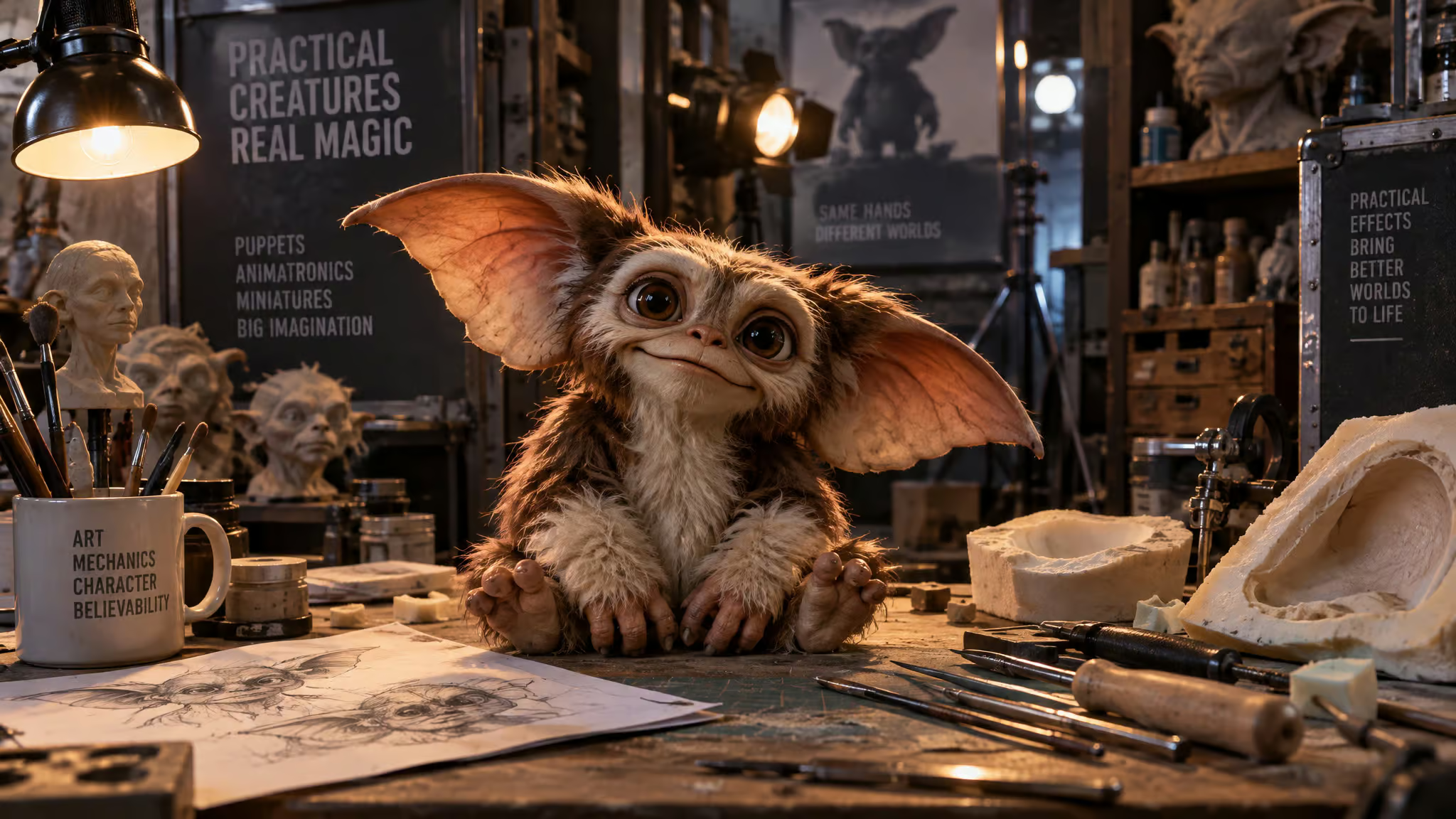
The score commits to the bit: a Gizmo theme under the spider kill, Slayer’s “Angel of Death” under Mohawk’s transformation, and the Brain Gremlin’s “New York, New York” number, which Dante called “a shameless steal” from Dames (1934). The soundtrack came out August 31, 1990 on Varèse Sarabande, 12 tracks in 39:25, with an expanded 25th Anniversary Edition on June 22, 2015 running 76:27.
Daniel Clamp: the Trump and Turner composite, with receipts
Yes, Daniel Clamp is a composite of Donald Trump and Ted Turner, played by John Glover, and the character was written as a villain until Glover’s enthusiastic innocence softened him into a bumbling figurehead. Both halves have receipts.The Trump half: Clamp Center is an idealized Trump Tower interior, complete with a Tiffany’s and a 7-11, per Dante’s 1990 Starlog interview, and the film pegs the tower at $250 million. The Turner half: Clamp’s network CCN airs a colorized Casablanca that now ends happily, echoing Turner’s colorization campaign, and Clamp keeps a prepared end-of-the-world broadcast ready to go, echoing the CNN boast.
The jargon satire holds up because it was accurate then and still is: “synergy,” “think outside the box,” “have a powerful day!” The gremlin takeover gets read as “a failure of management,” and Clamp’s own line about the building, that it wasn’t built for people but for things, and that things inevitably turn up once you build for them, is the thesis statement.The gremlins themselves read as trickster agents of pure chaos, the antidote to a homogenized corporate environment.
As for prescience, the sourced list is: smart buildings, niche channels like The Archery Channel and Microwaving with Marge, organic peanut butter cups, and genetic engineering. That’s the list. It’s plenty.
The fourth wall, on screen and on tape
The film’s self-referential beats, like a security guard mocking the gremlin rules right before one bursts through the switchboard, get read by commentators as practically a blueprint for Scream, landing four years before New Nightmare (1994), inside a fourth-wall tradition running through The Tingler and House on Haunted Hill.The Tingler-inspired projector hijack, where gremlins swap the print for Volleyball Holiday until Hulk Hogan intimidates them into resuming, survived because a test screening proved audiences loved it. Chuck Jones’s extended animated title gag was cut from theaters for bewildering test audiences. And Maltin’s revenge cameo on The Movie Police, where the critic who panned the first film denounces it on camera before gremlins assault him, is the most direct joke in the movie.
Which version are you watching?The format-dependent fourth wall
DVD and Blu-ray releases include both fourth-wall break variants, the theatrical cut and the VHS one, so you get the complete set. Here’s how it breaks down: the theatrical cut and US LaserDisc carry the projector hijack. VHS and the Japanese LaserDisc replace it with gremlins sabotaging your VCR and channel-surfing until they land on Chisum, where John Wayne, voiced by Chad Everett on the recommendation of Wayne’s son Patrick Wayne (necessary because Wayne died in 1979), forces them to continue the movie. The variant also works in a Falling Hare clip and KTHV Little Rock newscast titles.
The joke got ported per platform, which is the correct engineering instinct. On streaming, availability shifts constantly, so check what’s currently on the platforms you subscribe to rather than taking anyone’s word for it.
Why it flopped: the numbers and the aesthetic case
Gremlins 2 flopped because it deliberately abandoned the original’s scares and refused the standard sequel playbook, not because it was bad. That’s the takeaway, and the numbers back it up:
| Metric | Figure |
|---|---|
| Opening weekend | $9,702,804 |
| US/Canada gross | $41,482,207 |
| Production budget | $30-50 million |
| 1990 rank | 31st highest-grossing |
| UK gross | £7,400,000 |
| Shortfall vs. original | roughly $100 million (original cleared $150M in 1984) |
The sticker price versus what actually came back tells the story plainly: a $30-50 million production returning $41.5 million domestically is the kind of purchase you regret.Benchmarks make it concrete. It finished behind Back to the Future Part III ($87,727,583), Edward Scissorhands ($56,362,352), and Arachnophobia ($53,208,180), and ahead of Predator 2 ($30,669,413), Child’s Play 2 ($28,501,605), and The Exorcist III ($26,098,824). Mid-pack for 1990, which is the honest read.
The competitive context was brutal. It opened June 15, 1990, the same day as Dick Tracy, in a summer stacked with Another 48 Hrs., RoboCop 2, Die Hard 2, Young Guns II, and Delta Force 2. The international rollout was staggered: Norway July 5, Finland July 6, Colombia July 12, the UK and Spain July 27, France and Argentina in August, Australia September 20.
The UK leg took £7,400,000. Canadian audiences reportedly loved the Mountie-waiter restaurant scene, and the “reportedly” leaves room for doubt.
The aesthetic case is the interesting half. The film’s goriest beat, Clamp stuffing a gremlin into a paper shredder, reads like Monty Python’s The Meaning of Life rather than a slasher death, and that’s the whole problem in one image. Audiences who bought a ticket expecting the 1984 film’s menace got a comedy that heckles its predecessor instead. Dante later acknowledged too much time had passed between films, which may have hurt interest. He also said, on the 2002 DVD commentary, that he spent a lot of time ensuring there wouldn’t be a Gremlins 3.Hold that thought.
The tone split: two audiences, two verdicts
It’s not simply better or worse than the original. The record shows two audiences judging two different movies. On one side: Ebert’s 2.5/4, feeling it was too close to the original and became “a series of gags.”On the other: VideoHound’s 3.5 bones, ranking it above the original’s 3, plus Maltin’s 3/4, Hal Hinson’s mixed-but-appreciative Washington Post review, Films in Review praising Cates’s wholesome charm and Galligan’s convincingly naive foil turn, Desson Howe approving the parodies, National Review calling it much freer and wittier than the first one, and Entertainment Weekly crediting Glover and Dante with making it wittier and more subversive.
The aggregates split the difference. Rotten Tomatoes: 72% from 67 reviews (6.7/10 average). Metacritic: 69/100 from 28 critics. CinemaScore: a B+ on its A+ to F scale. Plus six Saturn nominations including the Glover/Picardo double Best Supporting Actor nod, the movie nominating against itself.
My read on the split, and this is the retrospective lens this whole piece runs on: 1990 viewers met it in theaters expecting a horror sequel, while home-video-era viewers discovered it as a comedy first. Two vintages, two verdicts. That’s a pattern in the retrospective discussion, not survey data.The honest counterweight: the Mr. Katsuji gags, played by Gedde Watanabe (also Long Duk Dong in Sixteen Candles), are judged by some commentators to have not aged well.
How a flop became a cult fixture
It became a cult classic because it was unreplicable. Warner Bros.’ hands-off attitude plus Dante’s refusal to simply remake the first film produced something sui generis, a combination that gets compared to Mad Max: Fury Road, another film born from studio distance and director stubbornness.Anniversary retrospectives and placements on all-time best-sequel lists did the rest, and the Anthology Film Archives Dick Miller tribute double feature, with Dante attending and Galligan and Cates in Q&A (one fan got Cates to sign a Mohawk spider-gremlin replica, an excellent fan object), cemented the reunion arc.
On a rewatch, the layers that pay off are the background cable gags (The Archery Channel, Microwaving with Marge, The Safety Channel), the “failure of management” reading of the takeover, Cates’s Lincoln’s birthday monologue as Dante’s harshest piece of satire, the Phantom homage’s “Acid. Do Not Throw In Face” vials, the Some Like it Hot “Osgood moment” ending, and the love-letter homages to Busby Berkeley, Perils of Pauline, The Wizard of Oz, and Marathon Man’s “Is it safe?” Even the first film’s Mrs. Deagle gets a designed echo: she’s introduced like Miss Gulch from The Wizard of Oz and dies on a stair lift where the original killed her with a bucket-of-water payoff. The rewatch verdict: worth it, with the concession from the last section attached.
The prescience and meta beats hold. The dated gags don’t.
Legacy and the road to Gremlins 3
Yes, Gremlins 3 is really coming.Chris Columbus directs, co-writing with Zach Lipovsky and Adam Stein, with Spielberg executive producing, and it’s dated for October 6, 2028 after slipping from November 19, 2027. The changelog: January 2013, Amblin reboot talks with Seth Grahame-Smith and David Katzenberg attached, later on hold. November 2015, Galligan confirming sequel-not-reboot.
December 2016, Columbus “aggressively working on” it with Carl Ellsworth on a “twisted and dark” script.November 2020, Columbus committing to practical puppets and animatronics over CGI. April 2025, Pam Abdy confirming development. July 2025, Galligan saying the script awaited Spielberg’s approval. November 2025, the announcement.
September 23, 2026, the Gizmo teaser and the delay to October 6, 2028.Subtitles like “Dawn of Desmond” and “Curse of the Mogwai” circulate in search queries, but they’re not confirmed titles, just observed search demand, so treat them accordingly.
The tonal fork is the real question. Dante said he worked to prevent a third film, which is the most ironic line in this entire production history. Commentators have argued the new film should mirror the 1984 menace, since Gremlins 2’s comedy depends on the original’s established scares; that’s an attributed argument, not settled consensus.Galligan has floated a Gizmo-practical/gremlins-CGI compromise; Dante has said he wants nothing to do with CGI. Meanwhile the franchise keeps bridging the gap: Gremlins: Secrets of the Mogwai on Max, a Brain Gremlin skin and Greta icon in MultiVersus, the Applause figures from 1990, NECA’s Brain and Mohawk figures, David Bischoff’s novelization where the Brain Gremlin locks the author in his bathroom, Sunsoft’s NES and Game Boy titles, Topo Soft’s game as the first exclusive Hollywood movie license for a Spanish developer, and Hi-Tech Expressions’ poorly received 1991 PC game, which we’ll describe gently and leave there.
The through-line: Gremlins 2 only works because of what it was allowed to be. The interesting question for October 6, 2028 is whether anyone gets handed the same deal Dante did.
Frequently Asked Questions
Is Gremlins 3 really coming out?
Yes. Gremlins 3 is dated for October 6, 2028, with Chris Columbus directing, co-writing with Zach Lipovsky and Adam Stein, and Spielberg executive producing. It slipped from an earlier November 19, 2027 date, and a Gizmo teaser arrived on September 23, 2026. Subtitles like ‘Dawn of Desmond’ and ‘Curse of the Mogwai’ circulate in search but aren’t confirmed titles.
What types of Gremlins are in Gremlins 2: The New Batch?
The mutant batch includes the Brain Gremlin, Greta, the electric gremlin, the Bat, Vegetable, and Phantom-masked variants, plus Mohawk’s spider hybrid. They all exist because gremlins drink genetic serums in the Splice O’ Life lab, a subplot that grew out of effects designer Rick Baker’s condition that he be allowed to diversify the creatures.
Why can’t mogwai get wet?
The film never gives a scientific reason — the rules are deliberately arbitrary, and Gremlins 2 openly mocks that arbitrariness. Water spawns new mogwai, eating after midnight turns them into gremlins, and bright light kills them. The sequel’s centerpiece gag has building staff interrogate Billy on edge cases, like a mogwai on a plane crossing time zones: is it after midnight? Whose midnight?
Is Gremlins 2 better than the original Gremlins, or just a different kind of sequel?
It’s a different kind of sequel, and the record shows two audiences judging two different movies. Some critics ranked it above the original — VideoHound gave it 3.5 bones versus the first film’s 3, and National Review called it freer and wittier — while Ebert’s 2.5/4 felt it became ‘a series of gags.’ The retrospective read: 1990 theatergoers expected a horror sequel, while home-video viewers discovered it as a comedy first.