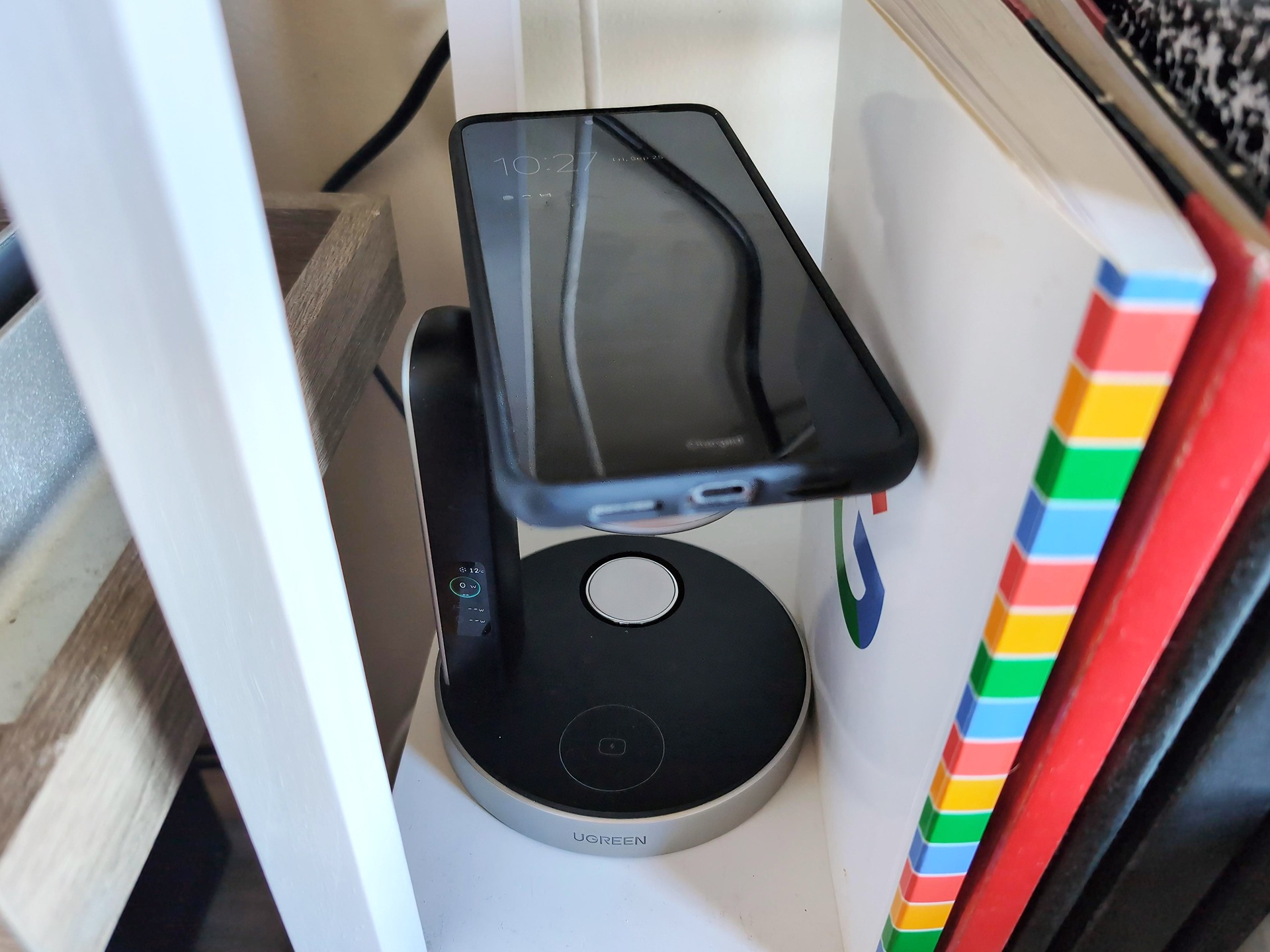
Okay, so the headline spec: the UGREEN MagFlow 3-in-1 Magnetic Wireless Charger is one of the first chargers with official Qi2.2 certification from the Wireless Power Consortium. That’s the whole reason it matters right now, because Qi2.2 lifts wireless charging from 15W to 25W on late-model iPhones. I pulled my Google charging dock off the nightstand and replaced it with the MagFlow, and I’m not going back. Slapping the phone on magnetically before bed beats fumbling with a dock connector every single time, daytime top-ups hit roughly 50% in 30 minutes on my iPhone 16 Pro Max, and the thing looks tidy on the stand. But let me scope the verdict before you get excited: this is a conditional recommendation.
If your setup is deeply MagSafe-embedded, an iPhone, an Apple Watch, AirPods all charging on one stand, this is an easy yes. If they’re not, the value collapses, because the magnets only grip devices with built-in magnet arrays. Pricing sits at $139.99 list with a $99.99 sale price that shows up often (prices may vary), and Cult of Mac landed on 4 out of 5 stars, which feels about right: excellent at its job, with a few honest frictions. The MagFlow line launched in early September 2026, debuting at IFA alongside the rest of the family, and it’s already discounting.
On my bench, the numbers held up. An iPhone 16 Pro Max went from 0 to roughly 50% in 30 minutes, 10% of that in the first 10. And the ~7N magnetic hold kept the phone planted even through a leather case. There are a few caveats, though: a stiff hinge, a chunky 45W GaN wall brick, a bright LED at night, and I’ll get to all of them. But if you’ve been waiting for wireless charging to actually get faster instead of just getting marketed faster, this is the first wave of the spec that delivers it.
Key Takeaways
The MagFlow 3-in-1 is among the first chargers with official Qi2.2 certification, delivering 25W to late-model iPhones (tested: iPhone 16 Pro Max hit ~50% in 30 minutes); older devices fall back to 15W.
At $99.99 on sale (list $139.99), the box includes a 45W GaN adapter and 1m cable worth roughly £25 separately, real value competitors like the Belkin UltraCharge Pro don’t match.
The verdict is conditional: excellent for MagSafe iPhone + Apple Watch + AirPods users, a bad buy for Android or older iPhone owners, since the magnets need built-in magnet arrays.
Table of Contents
Design and build quality: aluminum, weighted base, and the stiff hinge
It folds for travel, but let’s be honest about what it is: a desk device. At roughly 150 × 100 × 95mm, this is not fitting in a pants pocket, and UGREEN isn’t pretending otherwise. The shell is space gray aluminum alloy over PC/ABS plastic with a 94V-0 fire rating, which is the kind of spec nugget I appreciate, the plastic is rated for flame resistance, not just looks. The base is weighted, so it doesn’t slide around when you slap the phone on one-handed.
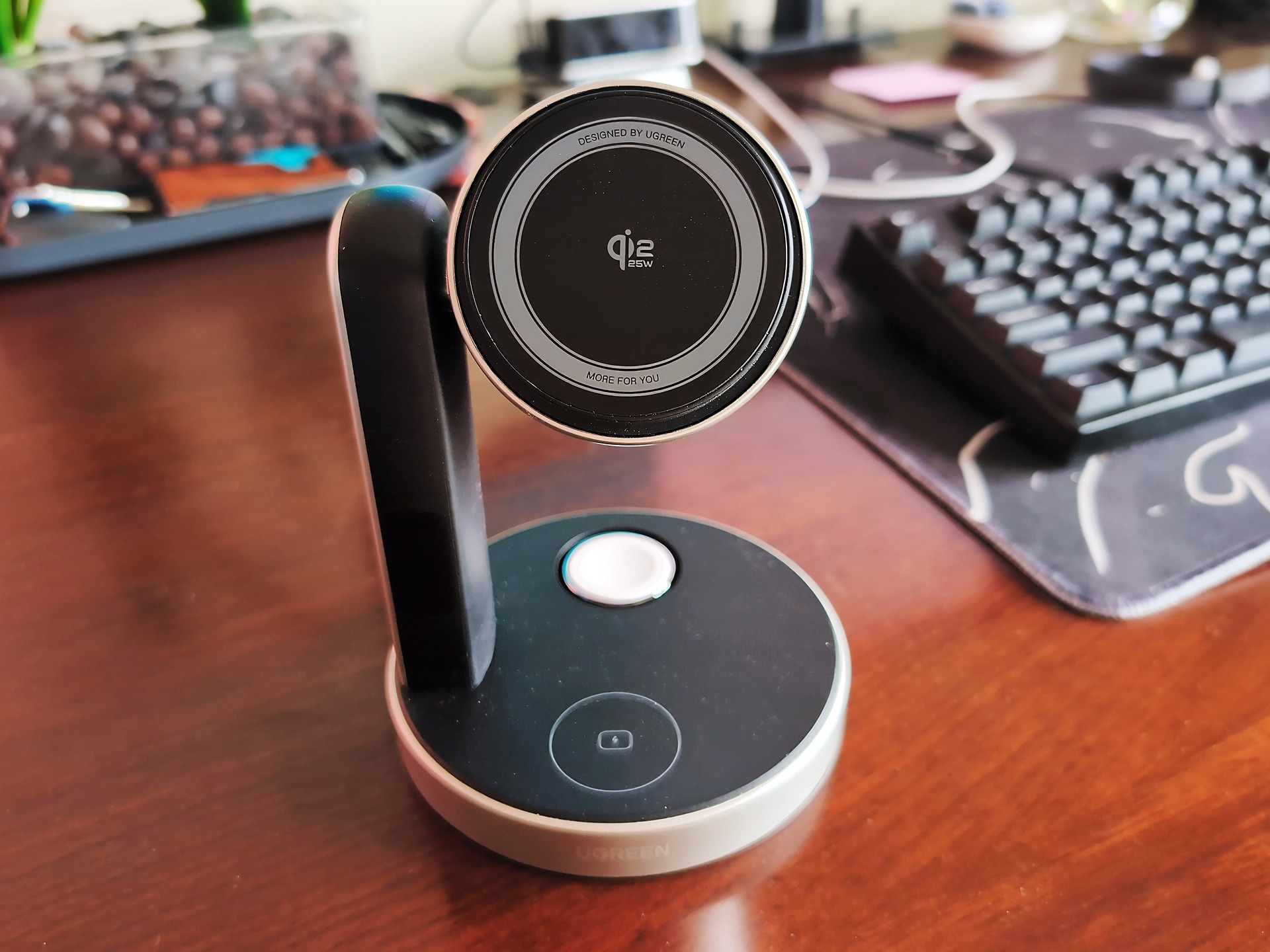
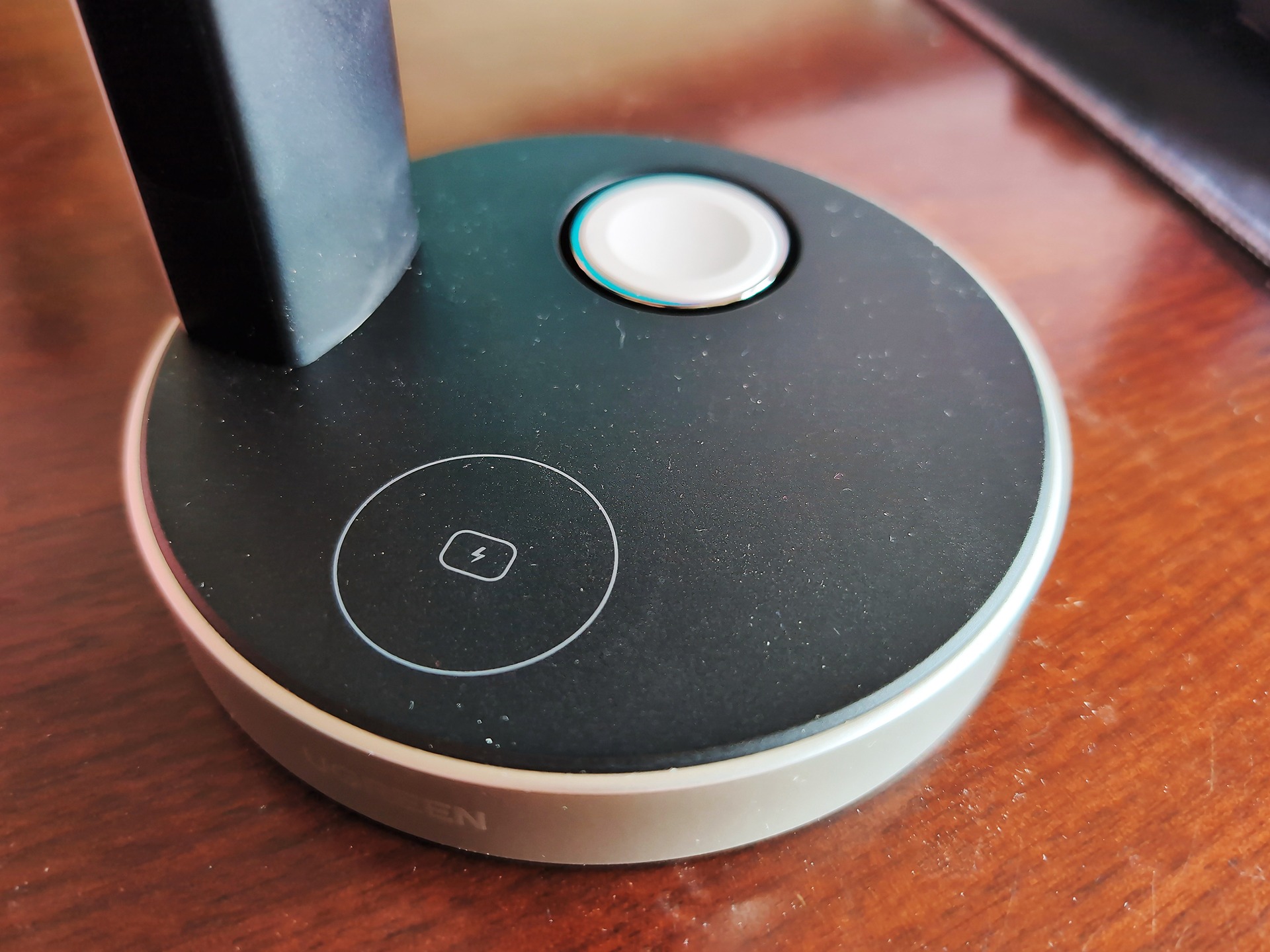
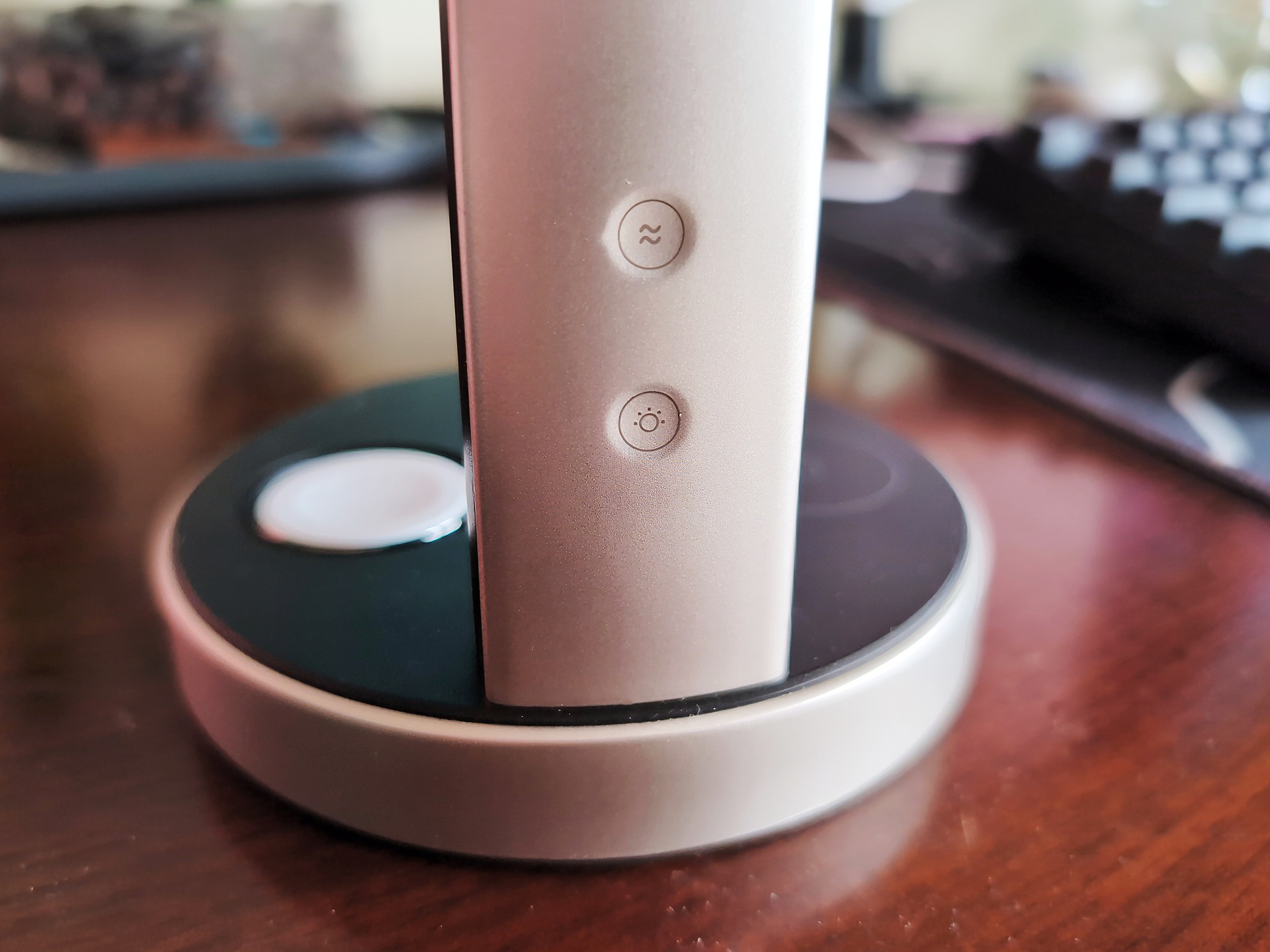
Tilt runs 0°, 60° on the standard model, though one source cites 70°; I’ll flag that discrepancy honestly rather than pick a number. Only the Pro adds 90° tilt and 360° rotation. Now, the hinge: it’s stiff, less fluid than some rivals, and the first-week instinct is to read that as a flaw. It’s not.
That stiffness is exactly what keeps a magnetically attached phone from sagging mid-charge. It’s a load-bearing design choice, not a defect, people expect laptop-screen fluidity and get something more deliberate instead.
Charging performance: Qi2.2 25W, and who actually gets it
My tested iPhone 16 Pro Max went from 0 to ~50% in 30 minutes, and picked up 10% in the first 10 minutes. But 25W only materializes on Qi2.2-capable late-model iPhones. Everyone else falls back to 15W under Qi2 backward compatibility, and that’s the measurement gap that fills comment sections with angry reviews: buyers benchmark a new Qi2.2 charger against old numbers without checking whether their phone even negotiates 25W, then blame the charger. The tell is simple, check the phone’s on-screen charging wattage.
Quick test: Before benchmarking any Qi2.2 charger, confirm your phone actually negotiates 25W — check the on-screen charging wattage first.
The per-zone spec, clean:
- Phone pad: 25W (Qi2.2) / 15W (Qi2 fallback)
- Apple Watch puck: 5W
- Earbuds pad: 5W
- Rear USB-C: 10W (5V/2A)
- Total: 35W max (one source cites 32.5W total wireless, sources differ, so there’s both)
- Input: 9V/12V/15V at 3A; static draw ?1W
The USB-C passthrough ports also do UFCS 63W, PD3.1, PPS, QC3.0 and more, unusually generous for ports that are technically a bonus. UGREEN rates the unit for operating temperatures of -10 to 35°C, and storage from -20 to 80°C. A hot windowsill desk is fine. A parked car in summer, not so much.
Three-zone charging: iPhone, Apple Watch, and AirPods at once
Yes, all three charge simultaneously: magnetic phone pad up top, retractable Apple Watch puck on the arm, flat Qi pad in the base for AirPods. Smart power allocation keeps each zone at optimal speed, the same philosophy behind the world’s smallest 30W charger, where compact hardware still delivers full-speed charging, so it sorts itself out, with no manual juggling and no “which device gets the wattage tonight” math. One brick, three devices, zero cable spaghetti.
The retractable watch puck deserves a sentence of genuine appreciation: it folds away into the arm when you’re not charging the watch, The rear USB-C output (5V/2A, 10W max) is the fourth-device escape hatch, and reviewers confirmed it actually works with another device, tested, not just spec-sheet claimed.
One quirk no spec table reveals: in StandBy mode, the phone can touch the AirPods pad unless you tilt it higher. Nudge the tilt, problem solved.
Magnets, cases, and StandBy mode on the desk
StandBy works well: landscape clock and widgets at night, portrait for video calls. The ~7N magnetic hold gripped an iPhone 16 Pro tightly even through a Mujjo leather MagSafe-compatible case, portrait and landscape. I tried to knock it off and couldn’t. The gate: few devices beyond MagSafe iPhones have built-in magnets, so anything else needs a case or accessory to stand vertically.
MagFlow vs. MagFlow Pro: which SKU are you actually buying?
The decisive difference: the Pro adds CryoPulse thermoelectric active cooling with a sub-15dB fan, a smart display showing real-time wattage and temperature with capacitive touch controls, and 90° tilt plus 360° rotation. The standard model has none of that, it relies on ThermalGuard, which polls temperatures 200 times per second and cuts power if things run warm, with a 58°C max shell temperature at full load. Active cooling in a desk charger is unusual, and I kind of love it. UGREEN pitches CryoPulse as faster, cooler, more stable, that’s their claim, not a reviewer’s finding, so weigh it accordingly.
Now the naming mess, head-on: you’ll see MagFlow, MagFlow Pro, model W711, SKUs 55676 or 55678 (sources conflict on which), and Pro SKU 75724. Listings frequently don’t make clear which SKU they’re selling. The identification tell: look for the fan, the display, the 90° tilt. If you see those, it’s the Pro. The broader lineup also spans a 2-in-1 foldable and a liquid-cooled power bank, separate products, clearly named, not this review.
Heat, safety, and why thermal control makes 25W sustainable
UGREEN chargers are legit: Qi2.2-certified by the Wireless Power Consortium and MagSafe-compatible, though not “Apple approved.” Heat is the silent limiter of wireless charging speed, and thermal control is what lets 25W sustain instead of throttling. You get eight protection layers including foreign object detection, overcurrent, short-circuit, and over-temperature, fed by the required 45W GaN adapter driving three coils at speed. GaN being the transistor tech that lets the brick run cooler and more efficiently than silicon while pushing that much power, and UGREEN applies the same engineering at desktop scale in its Nexode Pro 300W review, where a 140W port held strong with all five ports loaded.
Some reviewers heard a faint hum during operation, likely from internal cooling, minor, but real. Is UGREEN in Anker’s class? Both are established accessory brands in the same category, but I haven’t tested them head-to-head, so read that as positioning, not a verdict.
What’s in the box and the real value math at $99.99
At $99.99 with a 45W GaN adapter and a 1m 3A USB-C cable included, the adapter worth roughly £25 separately, and comparable to the best GaN wall chargers on their own, the effective deal differs materially from competitors that omit the charger. That’s the math most listings blur, so let’s run it.
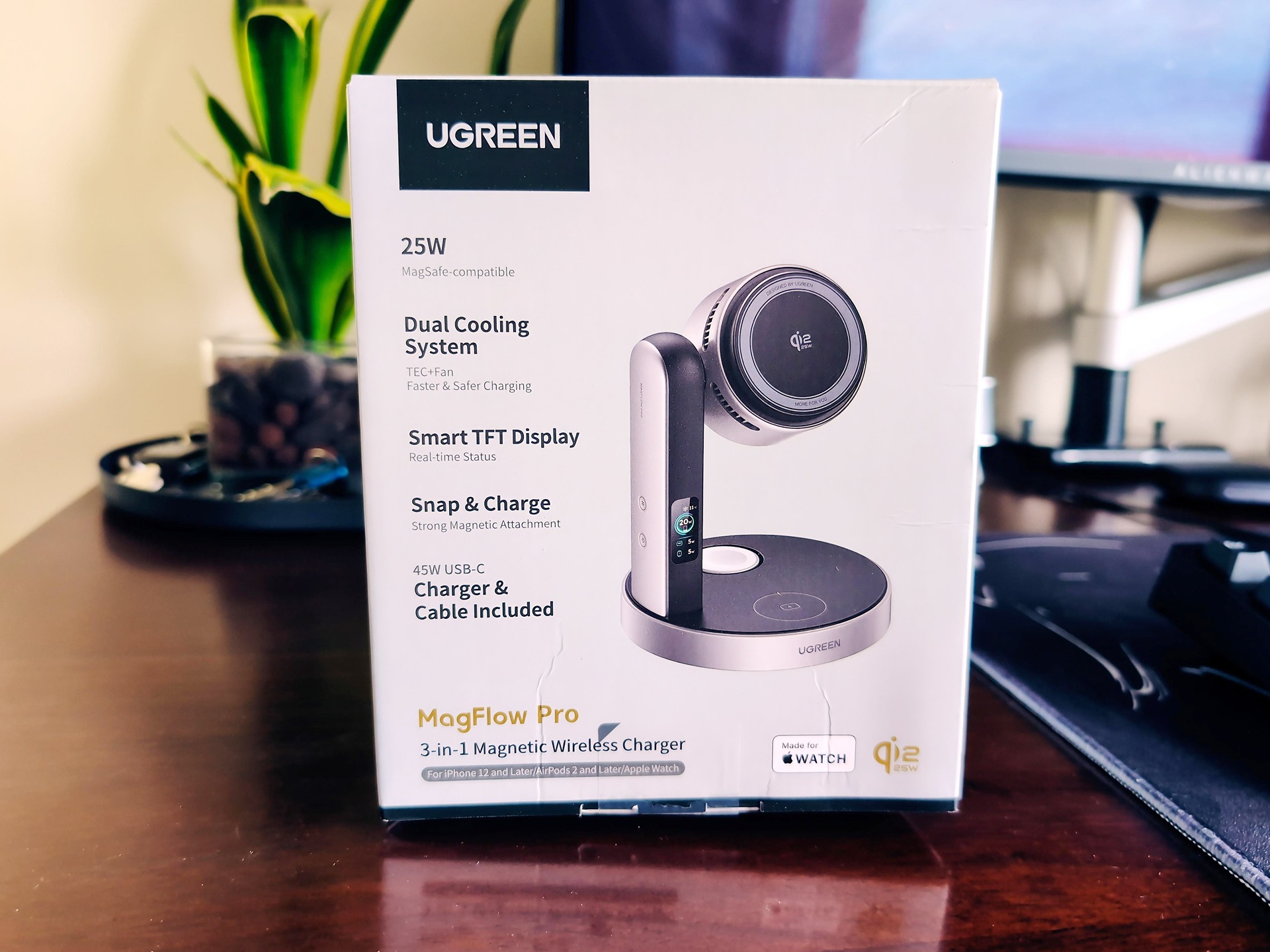
The box: the MagFlow 3-in-1 itself, the 45W GaN USB-C wall adapter (GaN is why the brick is smaller and more efficient than old-school chargers), and the 1-meter C-to-C cable. Pricing runs $139.99 list, $99.99 on sale; in the UK it’s £124.99 RRP with a discounted offer spotted at Versla Marketplace. Prices may vary, and the sale happens often enough that waiting is reasonable buyer guidance, the line launched in early September, and launch discounts followed quickly.
Cost check: The included 45W GaN adapter and 1m cable are worth roughly £25 separately — factor that in before comparing list prices.
Now the honest cost side. The 45W brick is slightly bulky and can crowd shared power strips or block adjacent outlets, and the 1m cable limits where the outlet can be. Neither is a dealbreaker; both are worth knowing before you rearrange your desk.
Against the premium comparison set: the Belkin UltraCharge Pro and Nimble Fold 3-in-1 are the other things I’d consider, and the fair comparison is on supported specifics only. The MagFlow’s edge is concrete, the included 45W GaN adapter, Qi2.2 25W speed, and a lower price. I can’t say whether Belkin or Nimble win elsewhere, the evidence here doesn’t cover it, and I won’t invent benchmarks to fill the gap.
Nightstand reality: the 11pm experience
For bedside use, this beat my old Google dock decisively. Slap the phone on magnetically in the dark, done, no fumbling with alignment, no half-seated connections. Daytime top-ups at 25W are fast enough that I actually bother, and the stand looks neat instead of like a cable nest.
Three frictions desk reviews miss, though. First, the status LED is bright and distracting at night, useful by day, annoying at 11pm. Second, the manufacturer instructs you to unplug the charger after each session, which is a tedious requirement and one I’m honestly not sure is necessary. Take it with a shrug. Third, the placement footprint plus the chunky brick matter on a crowded nightstand outlet, same power-strip problem from the value section, but it hits harder when the outlet is behind your headboard.
Who should skip it: compatibility limits and brand-trust questions
No. Android phones and non-MagSafe iPhones don’t get the full experience. The magnets only grip devices with built-in magnet arrays, so for older iPhones and many Android users, the value collapses to an ordinary wireless charger at a premium price. The rear 10W USB-C port partially offsets this by handling a fourth device, but it doesn’t rescue the core pitch.
The trust questions, with evidence: the MagFlow is Qi2.2-certified by the Wireless Power Consortium, not “approved by Apple”, and it’s MagSafe-compatible, not Apple-made. UGREEN has operated since 2012 and claims over 200 million users; that’s a company claim, not something I’ve independently verified. UGREEN versus Anker is category positioning, not a tested rivalry. And the honest alternative: if you don’t charge an Apple Watch, the smaller MagFlow 2-in-1 is the sensible pick, same core idea, less money, no watch puck you’d never use.
Verdict: worth it for the right buyer
Yes, the UGREEN MagFlow 3-in-1 is worth buying, if you’re deeply embedded in Apple’s ecosystem. Skip it if your devices lack magnets. I replaced my Google dock with it and I’m not going back: the slap-on convenience, the fast top-ups, the tidy look. Cult of Mac‘s 4/5 corroborates the solid-but-not-perfect read, and for transparency, review units were provided by UGREEN to Cult of Mac, eTeknix, and iOSHacker with non-sponsored opinions disclosed.
The target buyer is us: power users, enthusiasts, gamers who want one tidy spot instead of cable chaos through long sessions. Against the Belkin UltraCharge Pro, the MagFlow’s edge is the included 45W GaN adapter, Qi2.2 25W speed, and price, positioning, not benchmarks I ran myself.
The decision rule: MagSafe iPhone plus Watch or AirPods at a desk or nightstand means buy. No magnets means skip.
Frequently Asked Questions
Is the UGREEN MagFlow worth $99.99 or should I wait for a sale?
The $99.99 sale price is the price to pay — it lists at $139.99, but discounts have appeared often since the line launched in early September 2026, so waiting is reasonable buyer guidance. The sale price also includes a 45W GaN adapter and 1m cable worth roughly £25 separately, real value competitors like the Belkin UltraCharge Pro don’t match. Prices may vary.
What are the downsides of the UGREEN MagFlow 3-in-1 charger?
The honest frictions: a bright status LED that’s genuinely distracting at night, a stiff hinge (deliberate, so the phone doesn’t sag), a chunky 45W wall brick that crowds power strips, and a 1m cable that limits outlet placement. UGREEN also instructs you to unplug the charger after each session, which is tedious. None are dealbreakers, but all are worth knowing.