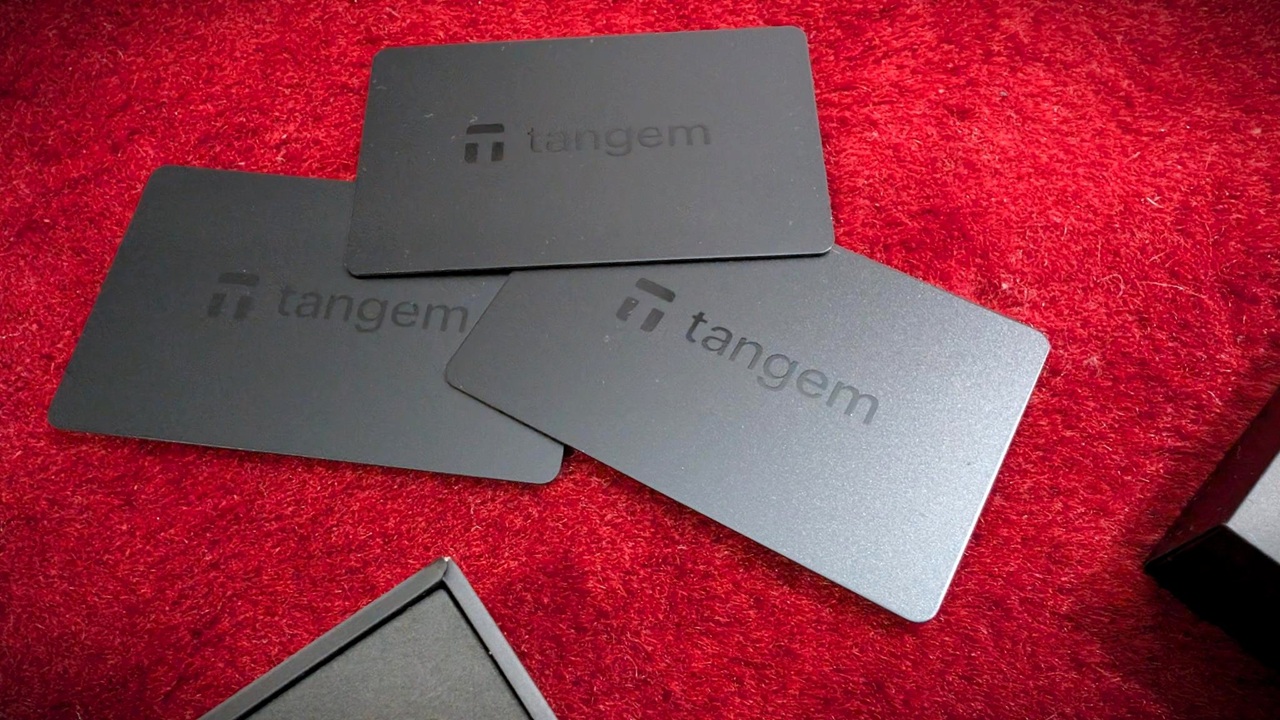
The Tangem Wallet is an NFC cold-storage wallet the size of a credit card, and it’s one of the more genuinely interesting pieces of crypto hardware I’ve dug into this year. It fits a specific buyer: someone who wants self-custody without a dongle with a USB cable and a tiny screen, who’s fine trusting an app for transaction display, and who’d rather spend $70 than $200. But this isn’t a spec-sheet review, because Tangem makes three big marketing promises and each one deserves to be tested against actual records: the “never hacked” track record, the seedless backup design, and the 25-year warranty. The way we look at hardware here at GeekExtreme is to audit the claim, not repeat it.
Why does any of this matter right now? On February 21, 2025, roughly $1.5 billion got lifted off Bybit, and that was the moment cold storage stopped being a niche obsession and went mainstream. I’m not going to claim a Tangem card would have prevented that hack, because that would be nonsense. But the lesson people took from it, that exchange custody is a bet on someone else’s security team, is real, and it’s why a plastic card with no battery, no screen, and no cables suddenly sounds appealing.
Most reviews bury the catch: within your first three minutes of setup, you make an irreversible decision about your backup model, seedless cards or a generated 12/24-word seed phrase. Pick wrong (or pick accidentally, which happens more than it should), and changing your mind later means a full factory reset and recreating the wallet from scratch. That single decision determines your entire recovery model forever, so it’s the spine of this review.
What follows is the marketing claims tested against the dated record: Tangem’s incident history, the named audit labs (Kudelski Security, Riscure, Cure53), Trustpilot’s actual review patterns, and the warranty fine print. Some of it holds up well. Some of it has asterisks. All of it, you’ll see with sources.
Key Takeaways
Zero successful field hacks across roughly 2-2.5 million cards issued (Tangem’s own profile claims 0 of 6,000,000), with disclosed bugs like the Dec 31, 2024 key-in-app-logs issue patched and lab-only attacks never reaching the field.
The setup route is a one-way door: a 12/24-word BIP39 seed can only be generated during setup under Other options > Generate seed phrase, and adding one later requires a full factory reset.
The 25-year warranty covers only hardware defects, not loss, and support responsiveness (recurring video-request requests, AI-support reliance) is the weakest trust signal in an otherwise solid 4/5 Trustpilot profile from roughly 1,000 reviews.
Table of Contents
What the Tangem Wallet is, and why a screenless card counts as cold storage
Yes, it’s a cold wallet, because “cold” describes where the key lives, not where the transaction gets signed. Keys are generated on-card inside a Samsung secure element via a hardware TRNG, and your phone supplies the interface and the power over NFC, no battery, no cables, no Bluetooth. Honestly a neat bit of engineering. Tangem can’t access, recover, or freeze your assets.
Coverage is 70+ blockchains and 6,000+ assets (the official list runs closer to 81 networks and ~2,840, so take the headline numbers loosely), with BTC, ETH, SOL, and XRP native. The one wrinkle: no screen means blind signing, which we’ll come back to.
Setup: the irreversible decision hiding in the first three minutes
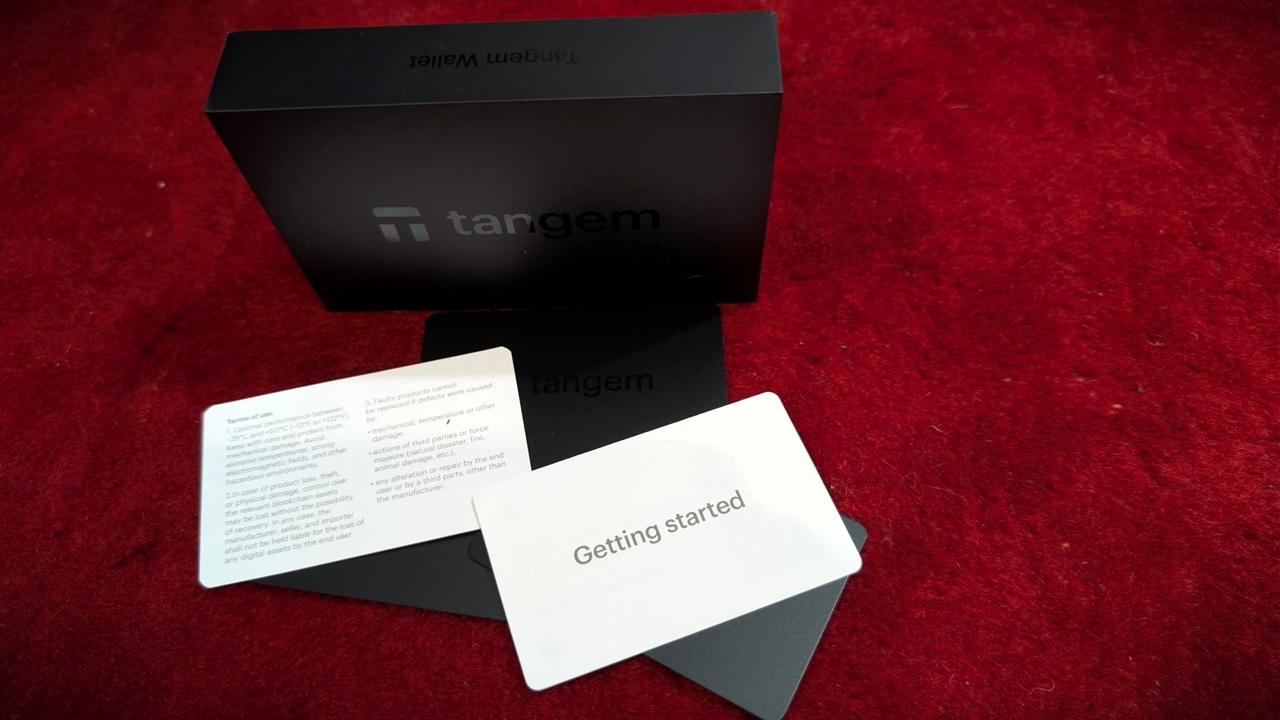
Officially, setup takes under 3 minutes, with a card scan of about 15 seconds, an access code, and a card backup; a long-term reviewer measured about 5 minutes in the real world. Either way it’s fast, which is exactly why the fork at the middle of the flow is easy to blow through. The optional 12/24-word BIP39 seed phrase exists only during setup, tucked under Other options > Generate seed phrase. Skip it and want one later? That’s a full factory reset and wallet recreation.
That’s not a theoretical gotcha. Trustpilot has a recurring 1-star pattern from people who realized too late that the Other options menu, not the main flow, is where the seed phrase hides. One US reviewer expected “Set up wallet” to cover it, learned post-creation seeds require the reset, and nearly returned the thing before Tangem explained the path. The info exists; it’s just easy to miss.
On capacity: max 3 cards, minimum 2 per wallet (the minimum exists because backup is the whole point), no additions after backup, and the app handles 40-50+ wallets.
The seedless backup tradeoff: a three-way risk matrix
Depends on your route. If you lose all your cards in seedless mode, the funds are unrecoverable, full stop. If you generated a seed phrase, compatible wallets can recover from it. Seedless mode’s elegance is that backup is literally your second and third Tangem cards: keys are generated inside the secure element via hardware TRNG and encrypted key material is copied on-card, so “keys never left the chip” is true, but only for this mode.
On its own, a stolen card is useless for moving funds without your access code. The flip side: lost cards can’t be revoked remotely, and once backup is complete the card set is fixed. So you’re picking your risk: phrase exposure, hardware management, or unrecoverable total loss.
| Scenario | Seedless | With seed phrase |
|---|---|---|
| Lose all cards, funds recoverable? | No (unrecoverable) | Yes (via compatible wallets) |
| Stolen single card can move funds? | No (needs access code) | No (needs access code) |
| Lost cards revocable remotely? | No | No |
| Add cards after backup? | No | No |
If the seedless idea appeals but you want a different flavor, Cypherock X1 is the other notable seed-alternative design.
Security teardown: does “never hacked” hold up?
Yes, the Tangem Wallet is safe by the standard that matters: zero successful field attacks across roughly 2-2.5 million cards issued, provided you understand what that claim doesn’t cover. One honest footnote on the numbers: Tangem’s profile says 0 of 6,000,000 cards hacked since inception, while other sources report 2-2.5 million issued over 5+ years. The discrepancy doesn’t change the point, but I’d rather show you the math than hide it.
The zero-hack claim vs the disclosed record
The hardware is legit on paper: Samsung S3D232A or S3D350A secure elements, EAL6+ certified, with a silicon partnership with Samsung Semiconductor said to span 25+ years. Brute-force attempts are throttled like API rate-limiting: delays ramp to 1 second per 6 failed attempts, up to 45 seconds. Simple, effective, and that’s just the start of how safe a Tangem wallet really is in practice.
Now the receipts. On December 31, 2024, a bug was disclosed where keys could end up in app logs; it was patched in iOS 5.19.1 and Android 5.19.2, and seedless users were unaffected. In September 2025, Ledger Donjon published a guess-delay bypass that Tangem disputed. And on July 9, 2026, researchers demonstrated a laser password-reset attack, one that requires lab possession of the physical card.
Here’s the key nuance: zero field hacks and a record of patched disclosed bugs and lab-only attacks are both true, because they operate at different claim levels. None of these translated into a user losing funds to an attack.
The audit trail
Tangem’s profile cites a Kudelski Security firmware audit from 2018, Riscure audited in 2023, and Cure53’s SDK review turned up 12 findings with 10 fixed and none rated Critical or High, per the report dated February 10, 2026. That’s a real audit chain, more than most wallets can show. The limitation: audits are point-in-time snapshots, and because the card firmware is closed and non-updatable, there’s no way to independently verify what’s actually running on the card today.
The cons that shape the trust model: blind signing and closed firmware
The main disadvantages of the Tangem Wallet are blind signing, closed non-updatable firmware, and backup rigidity, the honest cons list behind this wallet. The blind-signing mechanism is the big one: with no display on the card, you can’t verify the destination address on the hardware itself. You’re trusting the app’s screen to show you what you’re actually signing, and in crypto, approving a wrong transaction usually means no recourse. Firmware-wise, the card code is closed and can’t be patched or inspected (Tangem frames this as a feature: nothing to remotely patch), while the app code is technically public but only under proprietary non-commercial licenses, so it’s not open source in any meaningful sense.
Strip all that down and what you’re left trusting is Tangem’s supply chain and their app. That’s the deal. It’s worth knowing you’re making it.
Daily use, fees, and the true cost of ownership
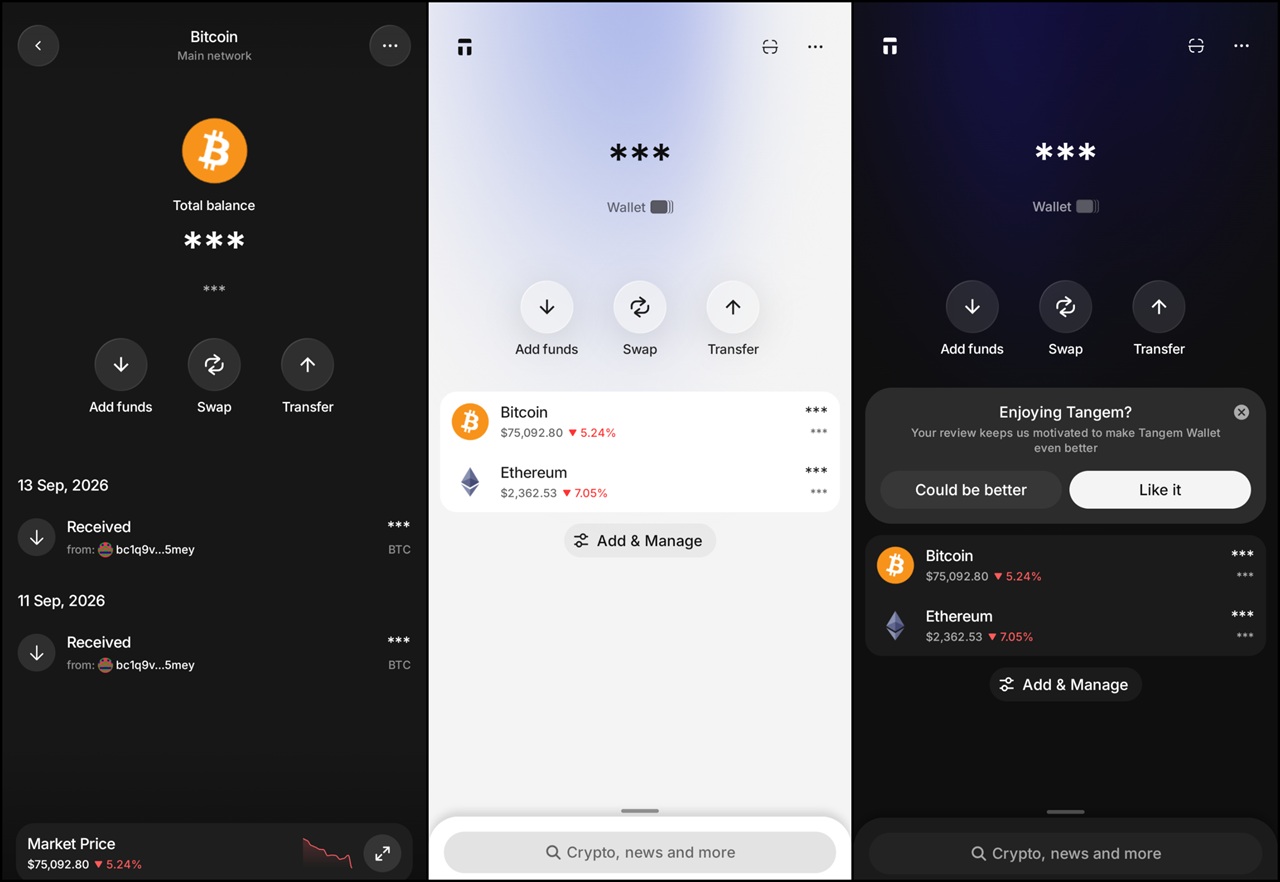
You tap the card to sign, and the app handles buy, sell, swap, staking, NFTs, and dApps via WalletConnect, with 40-50+ wallets supported per app. The cost gotcha: Cyber Scrilla observed a $57 third-party fee on a $1,000 in-app BTC purchase versus about $10 on an exchange, one transaction from one reviewer, not a universal fee schedule, but it explains why the hardware is so cheap. Staking through the app carries its own cut: the Yield Mode fee takes 15% of your earned yield, on top of gas. The app monetizes usage, so the savvy play is buying on an exchange and transferring to the card.
What real users say: Trustpilot under the microscope
Tangem holds a 4/5 “Great” rating on Trustpilot from roughly 1,000 reviews, listed under Cryptocurrency Service. I’d treat it like glancing at a project’s popularity before adopting it: a sanity check, not a verdict. The pool isn’t curated, either. Tangem invites both positive and negative reviews, and Trustpilot doesn’t fact-check them beyond automated screening.
The praise pattern
Sampled reviews skew heavily 5-star: easy setup, a smooth app, cheap in-app swaps, support for many chains, that stealth card design. Gede Yudha gave it 5/5 after 2 years, calling it the best cold wallet he’s used. KM Lynn is repurchasing sets. One reviewer, Diane Wyatt, called it “100 times better than Ledger,” which I’ll report as one person’s strong take, not consensus. A different happy Rob distilled the whole model into one rule: keep track of all three cards, and never let the password slip.
The complaint archetypes
The 1-star material is specific and worth reading. Rob filed a warranty dispute over one of his three cards failing on the same phone where the other two worked, followed by repeated troubleshooting and video-scan requests; Tangem points to an active support ticket and its verification process. Michele Keenan’s 2-star review warned readers to be prepared to use the AI support a lot. And Barrett Depew resolved his product questions via ChatGPT after email support went unanswered; Tangem says replies were sent and to check spam.
There’s also Jasper T’s duplicate-order saga (cancellation refused post-shipment, later resolved positively via return with support help) and Freddie King’s gripe about the website being hard to navigate. The pattern I take from all this: the product reviews well, but support is the weakest trust signal despite the warranty headline.
Warranty and durability: what the 25-year promise actually covers
Yes, the cards are safe to carry daily, with the security-history conditions from the teardown above. But here’s the fine print that matters: the 25-year warranty is limited hardware defect coverage. It is not loss or theft insurance. Your card can stop working and get replaced; your lost card’s crypto does not come back.
Pair that with the IP68 rating (dust, water, X-ray, EMP, and ESD resistant, basically the survives-your-worst-day spec list) and Cyber Scrilla carrying the cards daily in-pocket for over two years with them still working, and the hardware itself looks genuinely durable. Rob’s dispute above is the documented example of where warranty friction happens, so go in expecting a verification process, not an instant replacement.
Tangem vs Ledger vs Trezor: choosing a trust model, not a spec sheet
The decisive difference isn’t features, it’s what you’re trusting. Tangem trades the screen and open firmware for form factor and price; Ledger and Trezor give you on-device verification and richer tooling for active traders. The Trezor Model T’s touchscreen solves blind signing outright, which makes it the pick for verification-focused users (r/tangem vs Ledger threads tend to split along exactly this line). Cypherock X1 is the other seed-alternative worth a look, and MetaMask is the software-only benchmark for what convenience without hardware gets you.
| Tangem | Ledger Stax | Trezor Model T | |
|---|---|---|---|
| On-device display for verifying tx | No (blind signing via app) | Yes | Yes (touchscreen) |
| Open firmware you can inspect | No (closed, non-updatable) | Partial (audited, updatable) | Partial (open heritage) |
| Seedless card backup | Yes | No | No |
| Form factor | Credit card / Ring, no cables | Screen device | Screen device |
| Multi-chain support | 70+ chains / 6,000+ assets | Broad | Broad |
Which tool for which job, not a scoreboard. And that “100 times better than Ledger” quote stays one reviewer’s opinion, not a verdict.
Price, where to buy, and the Mobile Wallet trap
As of September 9, 2026: $59.90 for the 2-card set, $69.90 for 3 cards, $160 for the Ring plus 2 cards, $139.80 Family Pack, and $29.90 for the leather cardholder. Prices have crept up from $54.90 (two-card) and a $55.24-69.90 three-card range in earlier listings, and may vary, but the backup structure stays fixed at max 3 cards regardless of what you pay. On where to buy: stick to the official site or authorized resellers, no marketplace gray-market gambles, and note shipping excludes Iran and Russia.
The Mobile Wallet trap
The app also offers a free self-custody Mobile Wallet, and here’s the fine print: it isn’t backed up by default until you complete a recovery-phrase backup or upgrade to hardware. It works fine today, but it’s not recoverable yet, which is the clearest way to put it. There’s one per app, you can’t create it after adding hardware, and keys live in the iOS Keychain/Secure Enclave or Android Keystore/StrongBox. Know which wallet you’re creating before you fund it.
Before you buy: order from the official site or an authorized reseller only. Tangem doesn’t ship to Iran or Russia, some destinations require a tax ID, and US services are separately gated, check what applies to you rather than assuming the whole product is unavailable. Ring sizing lacks half-size increments, which matters if you’re between sizes. Affiliate codes (CRYPTONEWS or “cyber skrilla”) take 10% off, disclosed as affiliate links, if that’s your thing.
Verdict: who should buy the Tangem Wallet, and who shouldn’t
Yes, the Tangem Wallet is legit: a Swiss company (Tangem AG, founded 2017, based in Zug) with named independent audits, a 4/5 Trustpilot rating from roughly 1,000 reviews, and no successful field hacks on record. The real caveats are support responsiveness and closed firmware. The Tangem Wallet is a $70 gadget that does something genuinely clever, and it’s not trying to be everything.
Closing the three-promise frame from the intro: the “never hacked” claim holds at the field-attack level, with disclosed bugs patched and lab-only attacks never reaching real users. The seedless backup is safe only with disciplined custody of all your cards, because there’s no revocation and no seed safety net unless you generated one at setup. And the 25-year warranty, while genuine, only covers defects, it’s no insurance policy.
Buy it if you’re simplicity-first, price-sensitive, or a multi-chain holder who’s comfortable with blind signing and the app-as-screen trust model. Seedless buyers need to treat all three cards as irreplaceable objects, because they are.
Skip it if you need on-device transaction verification, want open or updatable firmware or remote card revocation, live in an excluded region or rely on gated US services, or expect a responsive human on support when something goes sideways.
Pros: tap-to-sign NFC with no battery or cables; 70+ chains and 6,000+ assets with BTC, ETH, SOL, and XRP native; EAL6+ Samsung secure element; Kudelski, Riscure, and Cure53 audit trail; setup in about five minutes real-world; IP68 durability; under-$70 entry price.
Cons: blind signing by design; closed, non-updatable card firmware; backup locked at 3 cards with no additions and no remote revocation; high in-app purchase fees ($57 vs ~$10 on a $1,000 buy per Cyber Scrilla); flaky WalletConnect for dApps; support friction is a recurring theme; warranty doesn’t cover loss.
I dug into the audit reports and the incident history expecting marketing gloss, and mostly found a coherent, if opinionated, security design. If the setup flow is where you pay attention to anything in this review, let it be that: slow down in the first three minutes, decide your recovery philosophy deliberately, and the rest of the card is honestly kind of elegant.
People Also Ask
How safe is a Tangem Wallet?
It’s safe by the standard that matters: zero successful field attacks across roughly 2-2.5 million cards issued, with disclosed bugs — like the December 31, 2024 key-in-app-logs issue — patched and lab-only attacks never reaching real users. The hardware uses EAL6+ Samsung secure elements with brute-force delays ramping up to 45 seconds. The caveats: you’re trusting Tangem’s supply chain and app screen, since the card has no display and closed firmware.
Is Tangem wallet legit or a scam?
It’s legit: Tangem AG is a Swiss company founded in 2017 and based in Zug, with independent audits from Kudelski Security (2018), Riscure (2023), and Cure53 (whose SDK review found 12 findings with none rated Critical or High). It holds a 4/5 ‘Great’ Trustpilot rating from roughly 1,000 reviews and has no successful field hacks on record. The honest caveats are support responsiveness and closed, non-updatable firmware.