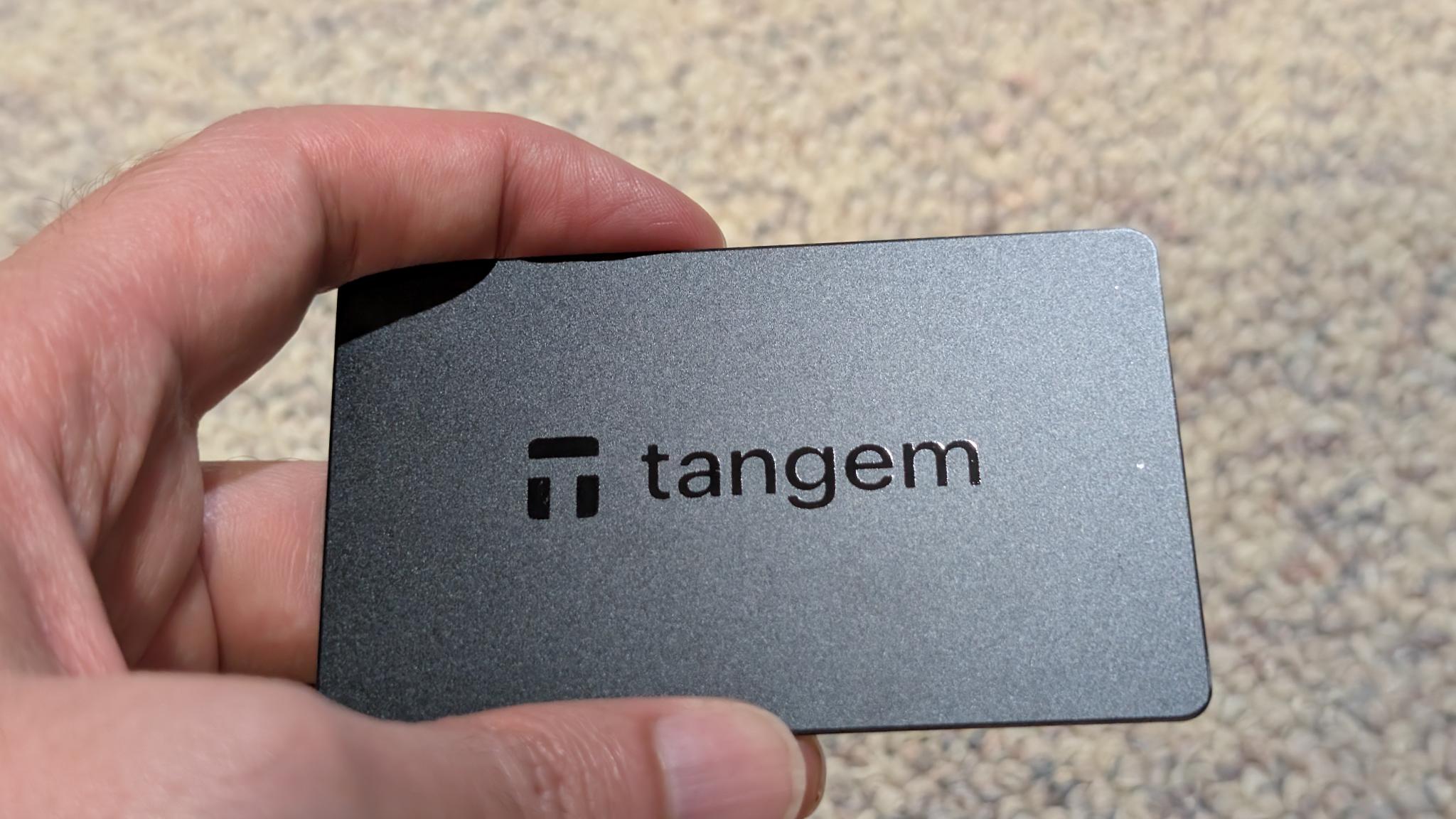
Every wallet comparison page I opened while researching this piece had the same shape: a champion, some villains, and a “never been hacked” badge doing all the heavy lifting. The problem is that when you dig into the most trustworthy crypto wallet question at spec level, the evidence trail gets weird. The sharpest attacks on Trezor come from Ledger’s own marketing. The loudest pro-seedless stats come from Tangem’s blog.
Nobody seems to have independently tested these things head-to-head. So instead of picking a mascot, let’s build a method.
Key Takeaways
No confirmed real-world attack has ever extracted private keys from Ledger or Trezor hardware; the late-2023 Ledger Connect Kit attack drained $600,000+ through ecosystem software, not the devices themselves.
The decisive Ledger-versus-Trezor difference is where the trust boundary sits: Ledger’s certified Secure Element handles signing and display, while Trezor’s display and signing run on the MCU outside its secure chip.
The biggest loss vector isn’t wallet hardware at all: FBI IC3 recorded $5.6B+ in crypto fraud losses in 2023, and 150,000+ wallets were drained via phishing in 2025.
Table of Contents
What makes a crypto wallet trustworthy
Ledger, Trezor, and Tangem carry the strongest trust evidence in the hardware wallet market, and which one fits you depends on which failure you fear most. Here’s the grounding: no confirmed real-world attack has extracted keys from Ledger or Trezor hardware. Ledger has shipped 8M+ devices across 200+ countries. Trezor shipped the first commercial hardware signer back in July 2014, when most of crypto was still arguing about block sizes.
Trust in this space is checkable, though. It comes down to five things, and each one has its own kind of evidence:
- Security track record, confirmed incident records, not marketing. Did an attack touch the silicon, the software, or the user?
- Transparency, published, auditable code. Can strangers actually review what the device runs?
- Certification level. Common Criteria EAL ratings (EAL5+ through EAL7), with the crucial caveat that a badge says nothing about scope.
- Custody and recovery model, backup architecture. Seed phrase, Shamir shares, custodial split, or seedless cards?
- Company longevity, founding dates, shipped device counts, a decade-plus of disclosed patches.
One baseline before anything else: wallets store private keys, not coins. The coins live on-chain. That also means none of this is FDIC- or SIPC-insured; a bank-run analogy breaks down fast. And there’s a completely different trust model worth naming: custodial services like CoinRabbit manage recovery for you, which removes the seed-phrase problem but creates third-party dependence. Suddenly “trust” means trusting a company instead of your own backup discipline. Different question, different answer.
The pattern we see when readers ask us which wallet to trust: they’ve compared price, screens, and asset counts and never once asked what the certified chip actually covers. That last question is the whole game, so let’s play it.
Ledger vs Trezor: where the trust boundary sits
The decisive difference between Ledger and Trezor is physical location: Ledger’s screen shows what the same certified Secure Element that signs your transaction will sign (that’s Clear Signing), while Trezor’s display and signing run on the microcontroller sitting outside its secure boundary, which means a compromised MCU could theoretically show one transaction while signing another. Worth noting the framing, though: Ledger’s single-chip setup is elegant on paper, but Trezor would counter that its design is transparent and open to scrutiny, so where you want your trust boundary is genuinely a philosophy call. The firmware split runs the same way: Ledger’s custom OS isolates each crypto app so one app’s vulnerability can’t compromise the device, while Trezor’s monolithic firmware runs everything in one shared trusted environment, less structural isolation, but faster support for new assets, and the open-source code is there for anyone to audit.
Okay, architecture time, because this is genuinely interesting. Ledger’s design is a single Secure Element that does everything: stores keys, runs the custom OS, parses transactions, generates the display, and signs. That’s what powers Clear Signing, including the ERC-7730 parser that arrived in 2025, which produces prompts like “Swap 0.5 ETH for USDC on Uniswap” right on the device. Honestly kind of elegant: one trusted environment, no handoffs.
Trezor splits the job across two chips. Key storage lives in the secure chip, but display generation and signing happen on the MCU outside the secure boundary. Ledger’s comparison content frames this as a theoretical “show one transaction, sign another” risk, and you should read that framing for what it is: competitor-authored. Trezor positions the same design as transparent and auditable, which it is.
The verification stack splits the same way. Trezor relies on Blockaid running in Trezor Suite on your computer to render human-readable transactions. Ledger parses inside the chip itself. Same goal, different physical location, different attack surface.
Firmware philosophy diverges too. Ledger runs a custom OS with app isolation, so one app’s vulnerability can’t compromise the whole device. Trezor runs monolithic firmware in one shared environment, which means faster asset support but less structural isolation.
Here’s the checkable question you can ask of any wallet, not just these two: what does the certified chip actually cover? An EAL6+ badge on a spec sheet answers nothing by itself. And don’t leave thinking one architecture is strictly safer. Ledger’s own late-August disclosure described a patched app flaw that could make a device sign differently than displayed, with no reported fund loss. Display-integrity risk touches every design.
Quick test: Before trusting any wallet’s display, ask one question — does the same certified chip that signs the transaction also render what you see?
The incident record: what “never been hacked” actually shows
The late-2023 Connect Kit attack drained $600,000+ and tells you nothing about Ledger’s device silicon: it was ecosystem software pushed through a phished ex-employee, and the hardware was never touched. So no, this incident isn’t a reason to distrust the wallets themselves, it’s a reason to distrust the software around them. That’s why “never been hacked” is the least informative claim in crypto. What matters is which attack surface each incident actually reached, and the record breaks into four kinds:
- Hardware key extraction: no confirmed real-world case against Ledger or Trezor hardware. Ledger Donjon’s lab experiments did extract keys from Trezor signers back in 2018, with physical access required; the disclosure came in November 2018 and Trezor One firmware 1.8.0 (Feb 27, 2019) and Model T 2.1.0 (Mar 6, 2019) fixed it. Hold this one at medium confidence, since the source record is truncated at the disclosure.
- Supply chain: the Connect Kit incident above. Ecosystem software, phished ex-employee, devices unharmed.
- Physical access: the 2025 Ledger-team “tearing attack” on Tangem cards found 4-digit PINs crackable in roughly an hour and 8-digit PINs in roughly 460 days, assuming an attacker has the card.
- App integrity: Ledger’s late-August signing-mismatch disclosure, patched through Ledger Live with no reported user fund loss, plus Trust Wallet’s December 2025 Chrome extension hack, which left the mobile apps unaffected.
One more habit worth stealing: the scariest numbers circulating in wallet discourse usually travel without authorship labels. Demand them.
Open source versus certified silicon: two theories of trust
Yes, Trezor’s open two-chip design is safe, with conditions: no confirmed real-world key extraction exists, the 2018 Donjon work was a physical-access lab exercise that Trezor patched, and the mismatch scenario is a theoretical framing that comes from a competitor.
The two philosophies are both coherent, they just audit different things. Trezor ships auditable monolithic firmware with community review and a public bug bounty. Ledger ships a closed, app-isolated custom OS backed by internal Donjon testing and certified Secure Elements. Open source audits the code; certification tests the silicon against voltage glitching, side-channel analysis, and fault injection, work done by independent labs such as Kudelski Security. Neither process checks the other’s work.
The certification ladder is worth a look on its own, device by device: Ledger Nano X at EAL5+; Trezor Safe 3 and Safe 5, most Ledger devices, and Tangem at EAL6+; NGRAVE ZERO at EAL7, the ceiling; and Trezor Safe 7 adding the TROPIC01 chip. Those certifications are evaluated by outside specialists. Riscure among them, which is what keeps the silicon testing more than a self-graded exam. These devices matter because keeping private keys offline in cold storage is the core of crypto security for any significant holdings.
Counterweights cut both ways, though. Donjon’s early-2026 analysis found post-quantum algorithms strain small devices, which tempers Trezor’s post-quantum positioning.
And Ledger’s own August disclosure proved closed architecture isn’t immune to display-integrity flaws. No winner here, just two honest tradeoff curves.
Custody and recovery: where trust actually breaks
Recovery design is where trust actually fails, because once your wallet is lost, the only thing that saves you is whichever backup architecture you chose months earlier. And here’s the pattern that shows up in buyer research: people generate a backup during setup, file it away, never rehearse recovery, and each model’s weakness surfaces only after the loss. The five models on the market:
- BIP-39 24-word phrase (Ledger): portable to any compatible wallet, but one lost or stolen phrase ends everything.
- SLIP-39 Shamir multi-share (Trezor Safe defaults): split into shares, say 3 with any 2 recovering the wallet. Distributed risk, less widely supported.
- Ledger Recover: the seed split into three encrypted fragments held by custodians. Forget-proof, but you’re depending on the custodians; touchscreen devices also include a PIN-protected Recovery Key card.
- Tangem chip-to-chip backup: multiple cards back each other up, no phrase to leak. Lose all the cards plus the PIN and the funds are gone.
- Zengo MPC recovery: keyless, three-factor.
Tangem’s blog claims 80-90% of user losses trace to seed-phrase management mistakes, and the same source speculates seedless mode may be 5-10x safer. Treat both strictly as vendor-authored; the second one is flagged speculation, not fact. Still, the direction is plausible enough that the custody question deserves as much scrutiny as the chip question.
Red flag: Any safety statistic about seed phrases that doesn’t name its methodology is vendor marketing — check who published it before it changes your buying decision.
Tangem: the seedless card wallet and its tradeoffs
Tangem’s seedless design is safer for users whose dominant risk is losing their seed phrase, if they can live with phone-side blind signing and firmware that never changes. The product itself is fun: NFC cards and rings you tap against iOS or Android, no cables, no battery, no screen, EAL6+ chip, waterproof and tamper-resistant, 16,000+ assets across 90-93 networks, at $54.90 for two cards or $69.90 for three (prices may vary).
The risks deserve their attribution labels, because both the praise and the criticism here are vendor-authored. The seedless-safety case comes from Tangem’s blog; the attacks come from Ledger’s comparison content. That said, the mechanics are real either way: no display means trusting your paired phone for transaction details, which is blind signing; losing every card plus the PIN is unrecoverable; and the 2025 Ledger-team tearing attack estimated a 4-digit PIN falls in about an hour, an 8-digit PIN in roughly 460 days, given physical access to the card.
The firmware consequence is the strangest part. Tangem’s firmware is closed source, audited, and cannot be patched after manufacture, so mitigation means replacing your cards with a newer version. We dig into the full tradeoff in our Tangem wallet disadvantages breakdown, and our Tangem app review covers the software side of daily use.
The firmware lifecycle question: patching versus replacing
There’s no safe-by-default answer between updatable and fixed firmware; each buys a different tradeoff, and almost no comparison names it explicitly. Updatable devices like Ledger and Trezor can be patched: Trezor fixed the 2018 Donjon findings through firmware updates, and Ledger’s 2025 ERC-7730 parser shipped as a firmware capability. But the update path itself is a code injection pathway into the device, and the Connect Kit attack arrived through the ecosystem rather than the silicon. Tangem’s fixed firmware eliminates remote exploits after manufacturing, and in exchange converts any future vulnerability into a replacement cost: you buy new cards.
Neither posture is reckless and neither is indefensible. Pick the failure mode you’d rather manage.
Other hardware contenders: air-gapped and maximum-certification options
A trustworthy hardware wallet starts at $59, which buys you a Trezor Safe 3 or Ledger Nano S Plus. Spending more gets you specific features, not proportionally more safety. Four contenders, each with its own trust philosophy:
- SafePal S1 ($50-100): air-gapped QR signing, 10,000+ assets, seed-dependent, and not fully open source.
- Keystone ($129+): fully air-gapped QR transactions, fingerprint authentication, strong multisig support, in a bulkier body with slower QR signing.
- Ellipal ($99+): tamper-resistant metal case, QR signing, no USB or Bluetooth at all, closed ecosystem, seed-dependent, no open-source code.
- NGRAVE ZERO (~€398-400): air-gapped, EAL7 certified, biometric auth, 3,500+ assets. The certification ceiling.
Air-gapped QR signing is worth understanding as a concept: no radio, no USB, so the attack surface shrinks to light itself. The awkward bit is that price and certification don’t correlate: the EAL7 device costs far more than the EAL6+ devices, and certification says nothing about scope.
Hot wallets and the limits of security scores
Hot wallets are absolutely usable for daily activity, but they belong inside a two-wallet setup with cold storage for actual holdings, and their security scores should be read as scoped snapshots rather than safety verdicts. The quantified signal here is CertiK ratings:
- OKX 91.31 (AA; unavailable in New York, Texas, and four U.S. territories)
- Trust Wallet 90.51 (AA)
- MetaMask 88.57 (AA; 0.875% swap fee, 99.99% transaction success rate)
- Base 87.77 (AA; closed-source)
- Bitget 87.40 (AA; $300M protection fund)
- Phantom 82.37 (A)
Now the killer caveat: Trust Wallet scored 90.51 and its Chrome extension still got hacked in December 2025, while the mobile apps were unaffected. That’s exactly what a score can’t see. Relatedly, Trezor Suite holds a CER rating of C, which measures a different scope than device security, so don’t read it as “Trezor is unsafe.”
The custody spectrum runs from custodial CoinRabbit, through MPC-based Zengo, to non-custodial options: Guarda (70+ chains, 1M+ tokens), Exodus (300+ assets), Bitcoin-focused Electrum and Sparrow with manual transaction control, and MetaMask as the EVM and DeFi standard. As for which wallet most people in the US actually use: Base (formerly Coinbase Wallet) shows up constantly in beginner rankings because it eases the move from exchange custody, which says more about onboarding than security.
Track record, longevity, and who writes the comparisons
The most common way people lose crypto even with a secure wallet is phishing, fake apps, and wrong approvals, not wallet software. The numbers back this up: FBI IC3 recorded $5.6B+ in crypto fraud losses in 2023, 150,000+ wallets were drained via phishing in 2025, and the Sality botnet clipboard-hijacked BTC and ETH addresses across 15,000+ devices, stealing $150K+ before authorities disrupted it with CrowdStrike’s help.
The longevity ledger, dated and verifiable: SatoshiLabs founded in Prague in 2012, shipped the first commercial hardware signer in July 2014. Ledger founded in Paris in 2014, released the Nano S in 2016, and has shipped 8M+ devices across 200+ countries. A decade-plus without confirmed hardware key extraction is the longest trust signal anyone in this market can offer.
Now the attribution layer, which is the part nobody tells you: the MCU-mismatch claim against Trezor and the tearing attack against Tangem both originate in Ledger’s comparison content. The pro-seedless statistics come from Tangem’s blog. Even Donjon’s genuinely impressive research doubles as competitive marketing. Before any scary number changes your buying decision, ask who made the claim and what they sell. And if you’re wondering whether wallet choice hides transactions from the IRS: public-chain activity is inherently visible, and no wallet changes that.
Which wallet earns trust for which user
For beginners choosing between Base and Trust Wallet: Base (formerly Coinbase Wallet) eases the transition from exchange custody but is closed-source, while Trust Wallet leads on mobile breadth and scored 90.51 (AA) on CertiK, though its Chrome extension was hacked in December 2025 with mobile apps unaffected. Beyond that, the mapping is criteria-to-profile, no single winner:
- Seed-loss-averse beginners ? Tangem. Seedless chip-to-chip backup removes the number-one loss vector. Accept blind signing and fixed firmware.
- Transparency-first users ? Trezor. Open auditable firmware, SLIP-39 Shamir backup, post-quantum positioning. Accept the theoretical, competitor-attributed MCU framing.
- Ecosystem-depth users ? Ledger. Roughly 15,000+ supported assets (approximate and variable by source and date), Clear Signing, EAL6+ devices. Accept the closed OS and optional custodial Recover.
Device lineup, with prices that may vary: Trezor Safe 3 at $59, Safe 5 at $129, Safe 7 at $249. Ledger Nano S Plus at $59, Nano X at $99-149, Gen5 at $179, Flex at $249, and Stax at $399, which several sources named best overall. Tangem at $54.90/$69.90. Connectivity splits matter too: Bluetooth ships on the Trezor Safe 7 and Ledger’s Nano X and newer; NFC appears on Ledger’s Gen5, Flex, Stax, and all Tangem cards; Ledger has full iOS support where Trezor is limited; both handle FIDO2.
And for most people, the highest-leverage pattern isn’t a device at all: cold storage for holdings, a hot wallet for daily spending.
Trust isn’t a brand adjective; it’s a set of checkable records, and no wallet here wins all five: architecture, incidents, certifications, recovery design, longevity. The two-wallet pattern plus basic phishing vigilance matters more than the marginal differences between top devices. And remember, crypto isn’t FDIC- or SIPC-insured; the wallet never fixes behavioral risk, it just removes one class of it.
Frequently Asked Questions
Is Ledger or Trezor safer for storing crypto long term?
Neither is strictly safer; they audit different things. Ledger’s certified Secure Element handles both signing and display in one trusted environment, while Trezor’s display and signing run on the MCU outside its secure chip — a risk framing that comes from Ledger’s own marketing. No confirmed real-world attack has extracted keys from either, and both have over a decade of disclosed patches.
Is the Tangem seedless wallet actually safer than a seed phrase hardware wallet?
It’s safer if your dominant risk is losing your seed phrase, but the safety stats are vendor-authored: Tangem’s blog claims 80-90% of user losses trace to seed-phrase mistakes and speculates seedless mode may be 5-10x safer — flagged speculation, not fact. The real tradeoffs are blind signing (no display, so you trust your phone), unrecoverable loss if you lose every card plus the PIN, and firmware that can never be patched after manufacture.