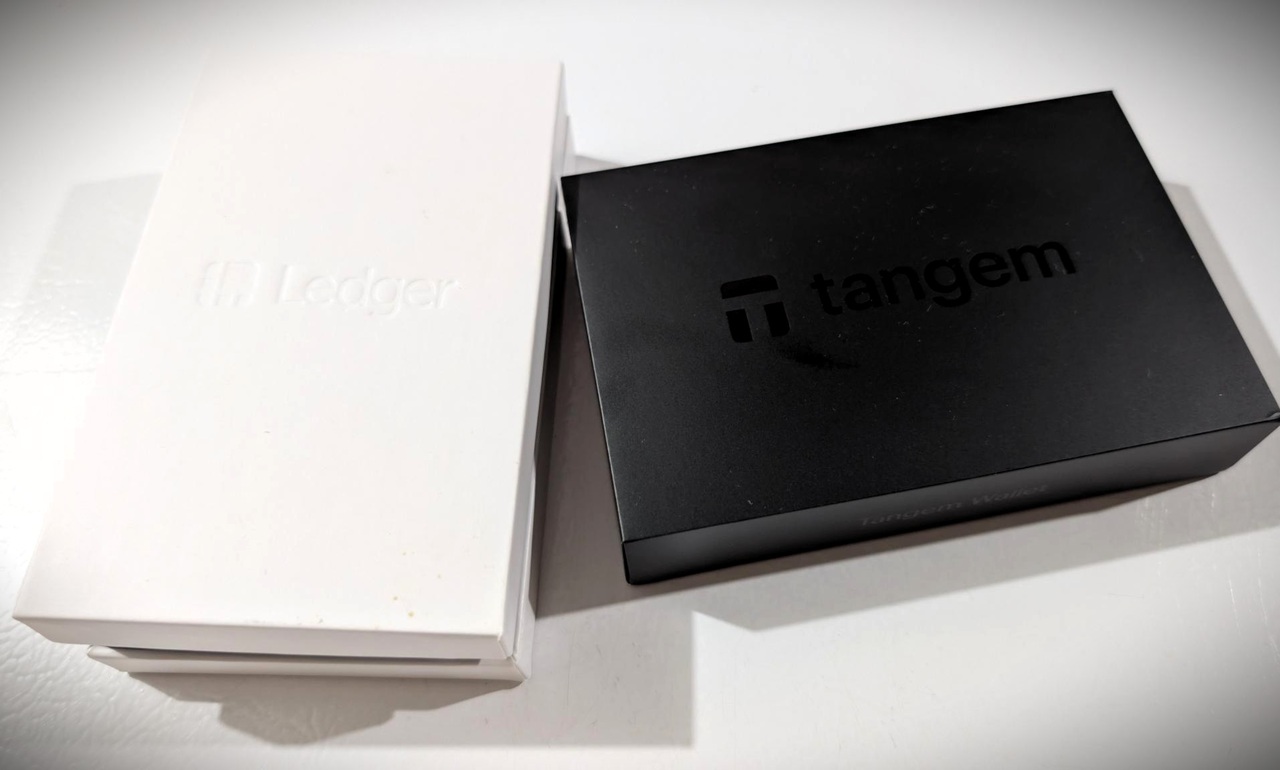
There’s a specific kind of unease that hits when you realize the device guarding your crypto is one you can never update. Not “hard to update.” Not “locked down by default.” Never. That’s the Tangem situation: a $50, $70 plastic card with factory firmware that will run, unmodified, for the rest of its life.
This isn’t a hit piece or an ad, it’s triage. The headline cons: closed-source firmware you can never patch, no screen on the card, mobile-only workflow, and a seedless backup that’s a one-way door. Some of those are dealbreakers. Some genuinely aren’t. Let’s find out which are which for you.
Key Takeaways
Tangem’s firmware is closed source and factory-immutable, meaning a future vulnerability on existing cards can never be patched, only trusted away, despite clean audits from Kudelski Security (2018) and Riscure (2023).
If you create a seedless wallet and lose every card, the funds are gone permanently; a wallet created without a BIP39 seed can never add one later, and backups max out at 3 cards set up together at activation.
There’s no Tangem markup anywhere (network fees only), but in-app swaps run through third parties like Changelly, whose embedded fees, roughly 0.35% in the cited example, are what fee complaints usually misattribute to Tangem.
Table of Contents
Tangem Wallet disadvantages at a glance
The main problems with the Tangem wallet are: no on-card display, so you’re verifying transactions on your phone screen; a mobile-only workflow (iOS or Android devices with NFC support; there’s no desktop client or browser extension); closed-source firmware that’s factory-installed and can never be patched; permanent fund loss if you lose all seedless cards; lock-in to the official app; one public address per asset per blockchain; and non-adjustable transaction fees. Each one disqualifies a different reader. The missing display hurts anyone who won’t trust a phone screen for verification. Mobile-only bites desktop traders.
Immutable firmware is the problem for people who want a decade of security patches. The seedless backup is a risk for anyone who loses things. The single-address design costs the privacy-conscious.
And the counterweight, before the cons list makes you bounce: no monthly fee, no wallet surcharge on send, receive, or hold. The card itself doesn’t tax you for existing.
Closed-source firmware: audited twice, patched never
Tangem’s firmware is closed source but has been audited twice, and that buys you a specific, limited kind of assurance. The vendor frames the closed, immutable design as a smaller attack surface: fewer moving parts, no update mechanism for an attacker to poison, no user-facing flash process to get wrong. That’s a real engineering argument. It’s also the same argument as “we never ship fixes.”
Here’s the evidence: Kudelski Security audited the firmware in 2018 and found no backdoors. Riscure ran a second audit in 2023 and reported no key exposure and no hidden backdoors. Two independent labs, years apart, clean results both times.
What the audits actually cover
A snapshot in time. The 2018 audit says the 2018 firmware was clean. The 2023 audit says the 2023 firmware was clean. Neither one guarantees what’s on a card you buy next year. That’s normal for audits, but it matters more here because of what comes next.
Why immutable firmware can’t be patched
Immutability and patchability are opposite virtues. If a vulnerability turns up in the firmware on cards already in circulation, there is no fix path. No OTA update, no re-flash, nothing. Your options are to trust it or stop using it. That’s the part most cons lists stop short of saying out loud.
One honest caveat: the apps and SDKs have public code on GitHub, and the app runs independently of Tangem’s servers. So the transparency ledger reads: open app layer, closed firmware, two independent checks on the closed part. Like inspecting the repo but trusting the shipped binary.
If open-source firmware is non-negotiable for you, that’s a clean disqualification, and the Trezor Model T is your pick.
The seedless decision you can’t undo
No, you cannot recover funds if you lose all seedless Tangem cards without a spare card; and a wallet set up without a seed can never add one later. That second half is the detail that deserves more airtime than it gets: the seed decision happens once, at wallet creation, and it’s final. It also sets the portability ceiling: without a seed you can’t restore your keys into any other wallet, so if you later want a Ledger or Trezor, you create a new wallet there and move funds on-chain, accepting network fees and fresh addresses along the way.
Okay, the clever part first, because it’s genuinely elegant. There’s no seed to type by default. A true random number generator generates your private key inside the secure element at activation. The key is born on the card, lives on the card, and never leaves it. Backup cards clone that same key, so any surviving card restores access. It’s redundancy, not multisig, but as a key-management story it’s tidy.
Losing all cards without a seed is permanent
Lose every card with no seed backup and the funds are unrecoverable. Not “difficult,” not “customer support can help.” Gone.
Backups are a setup-day decision, max 3 cards
Backup cards have to be created together with the primary at activation, up to 3 per wallet. You can’t retrofit a backup later, and you can’t add a seed later to a seedless wallet. A pattern that shows up in user forums: new buyers treating the spare cards as “activate later” desk-drawer items, when the multi-card set is the only recovery mechanism that will ever exist. Activate them on day one.
The optional escape hatch is a 12/24-word BIP39 seed, or importing an existing seed with a passphrase, but only at creation.
Quick test: If you can’t tolerate losing the cards themselves, activate every backup card on setup day — later is never with this scheme.
A card plus the access code equals spending power
Anyone holding both a card and its access code can spend. So store the cards apart. One documented real-world approach: primary card in the wallet, second in a safe, third buried in the backyard. That’s one person’s storage pattern, not a recommended procedure, but the underlying hygiene rule is simple: don’t keep the cards and the access code in the same drawer as your phone.
No screen on the card: why you’re trusting your phone
Tangem cards have no display. Every transaction detail gets verified on your phone screen before you tap. That’s the classic hardware-wallet trust question, relocated: the thing confirming “yes, this address is correct” is the device most likely to be compromised. If malware on your phone swaps a destination address, the card will happily sign it, because the card can’t see what it’s signing.
The mitigations are habits, not hardware: read addresses carefully, keep the phone malware-free, and keep in mind the physical tap acts as its own gate. Your phone getting owned isn’t game over, because nothing moves without a card in physical contact.
The sharp comparison here is CoolWallet S, the like-for-like card rival. Same credit-card shape, Bluetooth instead of NFC, and an on-card screen, plus 10,000+ supported tokens. That isolates exactly what Tangem traded away for battery-free NFC: a screen costs you a battery. CoolWallet paid that price. Tangem didn’t.
Mobile-only workflow: the desktop gap that bites mid-session
Tangem is mobile-only: iOS or Android with NFC, no desktop client, no browser extension, no USB, no Bluetooth. Spec check before you buy: confirm your phone has NFC, or this card is a coaster, and get to know the Tangem app itself, since it’s the only interface you’ll ever use.
Plenty of buyers assume the card pairs with a desktop suite like Ledger Live or Trezor Suite. It doesn’t. The surprise hits mid-session, when you’re trying to manage positions from a laptop and there’s nothing to install, the phone is the entire interface.
WalletConnect is the only DeFi bridge
dApp access runs through WalletConnect only: your key stays in the card, the phone talks to the dApp, approvals happen on the phone. That’s the elegant part. The friction is coverage: fewer native DeFi integrations than desktop suites, and the advantages and disadvantages of digital wallets vary by protocol. Expect occasional gaps or extra steps for niche tokens or advanced contract calls.
Who this excludes: desktop traders juggling multi-window workflows and DeFi power users who want depth. If your day lives across several desktop tools, this feels cramped.
Tangem vs Ledger Nano X (and Trezor Model T)
For desktop traders and DeFi power users, the decisive difference is desktop presence. Ledger Nano X runs Ledger Live on desktop and mobile over Bluetooth or USB, supports 5,500+ assets, and defaults to a seed phrase. Tangem has no desktop client and WalletConnect-only dApp access. That’s the whole argument in one sentence, and for a lot of readers it settles things.
Trezor Model T if open-source firmware matters
The Model T is fully open source, which directly answers the Tangem firmware complaint. It has a touchscreen, meaning on-device transaction verification, which is exactly the thing Tangem users give up. It connects over USB with the Trezor Suite desktop app, supports thousands of assets through Suite and third-party wallets, and carries a 2-year warranty. If your dealbreakers are transparency and a display, this is the pick, and it’s the natural answer to which hardware wallet suits someone who distrusts closed-source devices.
Ledger Nano X for ecosystem and desktop tooling
Ledger’s practical advantage is ecosystem weight: broad third-party integrations plus the Ledger Live suite on desktop and mobile. One year limited warranty. Seed phrase is the default, which pairs with Ledger Recover as a subscription (one long-term reviewer used Ledger for 6-7 years and left after the Ledger Recover subscription, on trust grounds rather than spec grounds, and that’s his line in the sand, not a consensus verdict).
Seed-default versus seedless is different philosophy, not right versus wrong. A seed is portable and restore-anywhere but typeable and phishable. Seedless never gets typed but locks recovery to the cards. Pick your poison deliberately.
The real question is which of these wallets you can actually trust, and the spec-level differences below are a good starting point:
| Tangem | Ledger Nano X | Trezor Model T | |
|---|---|---|---|
| Desktop client | No (mobile-only) | Yes (Ledger Live) | Yes (Trezor Suite) |
| On-device screen | No | No | Yes (touchscreen) |
| Firmware open source | No (audited 2018, 2023) | No (vendor-audited) | Yes |
| Seed by default | No (optional at creation) | Yes | Yes |
| Asset support | 13,000+ as of early 2025, 16,000+ current | 5,500+ | Thousands |
| Warranty | 25 years | 1 year limited | 2 years |
One note the table can’t hold: Tangem’s asset count has climbed over time (early snapshots cited 13,000+ and fewer chains; the current spec sheet says 16,000+ across 85+), so treat any snapshot as a floor, not a promise that your specific token is covered.
Power-user small print: one address, fixed fees, no multisig
Tangem gives you one public address per asset per blockchain, so every transaction you make is publicly linkable, a privacy cost rather than a generic feature gap. Transaction fees aren’t adjustable: you pick slow, normal, or fast and take what the network gives, and tinkerers will miss the manual dial. There’s no native multi-address support and no native multisig. If your threat model wants multisig, this isn’t the tool.
Where the fees actually come from: no wallet markup, but swaps cost you
The Tangem wallet itself charges no markup: no monthly fee, no surcharges on sending, receiving, or holding. You pay network fees, and that’s it. Buying or selling inside the app is different: fiat on-ramps run through Mercuryo, Simplex, and MoonPay, and those processors set their own prices. The wallet doesn’t, the processors do.
Swapping is where the recurring cost lives. Tangem Express aggregates quotes from 1inch, ChangeNOW, Changelly, ChangeHero, OKX DEX/Bridge, Simpleswap, and Unlimit. The roughly 0.35% figure that comes up in fee complaints is an embedded provider fee (the cited example is Changelly), not a Tangem cut. That misattribution is exactly what Reddit-style fee threads miss: it’s transparent reselling, not a hidden wallet fee.
Cost check: Tangem takes no cut on swaps — the embedded fee belongs to the third-party provider your quote came from.
One documented workaround, attributed clearly to a single long-term reviewer: he cited swap fees as his main con and started routing transfers through exchanges instead. It’s one person’s workaround, not a consensus finding, and not a claim that it beats native swaps universally.
Has Tangem ever been hacked? Audits, the record, and one uncorroborated claim
Tangem reports zero hacks across 2M+ cards produced since 2018, with newer claims running up to 6M+ cards. Attribute that as a company claim, not independent verification, but it’s the documented record.
The architecture backs the claim up concretely. Keys are generated on-card by a TRNG inside a Samsung S3FV9RR or S3D350A secure element certified at Common Criteria EAL6+, where rivals typically run EAL5+. That’s a real certification gap, stated as a spec, not a victory lap. Tamper resistance means messing with the card doesn’t hand you the key, and tap-to-sign means a compromised phone by itself can’t move funds.
No seed to type means the seed-phishing attack path mostly disappears. Against context: roughly $1.38B was stolen in crypto in H1 2024, up from $657M in the same period in 2023, including a $243M phishing heist. In a market worth over $3 trillion, attackers are motivated. Cold storage exists because hot wallets and exchanges carry hacking, phishing, social engineering, insider, and key-control risks that offline keys sidestep.
The honest bookkeeping
One review (crypto-corner) alleges a seed-phrase-exposure breach. It’s single-source, uncorroborated by any other outlet, and other sources point to the clean audits and the zero-hack record. The claim was addressed, but community concern lingered. Confidence in it is low. Weigh it accordingly, and keep it in perspective alongside the audits rather than letting either side erase the other.
Single-vendor trust: what if Tangem disappears (and what Tangem Pay changed)
For long-term holders who rarely transact, Tangem is a good cold wallet, provided the seedless one-way door and closed firmware don’t disqualify you first. The case is almost entirely negative maintenance: a battery-free card that signs by NFC tap, an IP69K durability rating, an operating range of -25°C to +50°C, EMP/ESD/X-ray resistance per ISO 7816-1, 6 grams, and a 25-year warranty. There’s nothing to charge, nothing to update, nothing to babysit. Losing your phone means install-and-tap on the new one.
The shutdown scenario, answered concretely
If Tangem the company vanished tomorrow, the cards keep working: the app runs independently of Tangem’s servers and is available on GitHub. For a long-hold device, that’s the question that matters, and it has a real answer.
On fundamentals: founded 2017, headquartered in Zug, Switzerland, $15M from SBI Crypto Investment in 2019, with card production in the millions. The design puts privacy first: no KYC for wallet use, no IPs, addresses, or balances collected, and no servers involved in your crypto operations.
What Tangem Pay quietly changed
Tangem Pay launched in November 2025, and it’s the interesting wrinkle: a non-custodial payment account for spending native USDC on Polygon through a virtual Visa in Apple Pay or Google Pay. The card was issued through Third National, and here’s the honest asterisk: Rain co-signs under a hybrid key model and can freeze the card. That’s a counterparty trust element reintroduced into a product line marketed on trustlessness. Say it plainly: co-signing and freezing are partial custody wedges.
KYC is siloed via Paera LLC with Sumsub and Elliptic, which is a real difference from the KYC-free core wallet. There’s no monthly or transaction fee beyond Polygon gas and Visa FX. It rolled out in the US, LatAm, and APAC first, with UK/EU availability planned for early 2026 under MiCA. There’s a same-asterisk footnote on Yield Mode, which supplies USDT, USDC, and DAI to Aave with liquid, instantly withdrawable positions, but whose backend can auto-withdraw your funds if it detects a protocol vulnerability. Convenient. Not purely trustless.
Tangem’s other limitations: buying channel, support, and product scope
The 25-year warranty applies only when you buy from the official store or an authorized retailer, like Etherbit.in in India, SIAMBC/Bitcast in Thailand, or Virgin Megastore in UAE. Third-party marketplaces can mean older batches with limited warranty, so buying from the wrong channel can silently void the headline spec. Pricing runs about $49, $54.90 for a 2-card set and $59.40, $69.90 for 3 cards (£49.99/£65.99 in the UK, ?5,799/?6,499 in India); prices may vary.
What owners say: Trustpilot 4.1/5 from 700+ reviews, which is solid but not flawless; App Store 4.9/5 across roughly 16K ratings; Google Play 4.7/5. The complaint clusters echo this article’s own cons: recovery risk, fewer integrations, support delays, shipping.
When something breaks, support is a Help Center, a Telegram channel, and 24/7 email. Ledger runs tickets and live chat; Trezor has a knowledge base with a chatbot called Hal. Responsiveness varies by queue. Setup, meanwhile, takes 1-3 minutes versus roughly 20 for rivals, which is the whole onboarding story. If NFC acts up, enable NFC, tap the antenna spot, rescan.
Partial mitigations, briefly: the Tangem Ring is an EAL6+ cold wallet in Zirconia ceramic (still pre-order), staking is available across listed networks like Solana, Polkadot, and Cardano, and NFTs are handled natively in-app on Ethereum, Solana, TON, and Polygon.
Who should genuinely avoid Tangem, and who shouldn’t worry
Which con actually disqualifies you is the whole decision. Open-source advocates and desktop traders: Trezor Model T. Ecosystem and integration seekers: Ledger Nano X. Screen purists who want the card form factor: CoolWallet S. Budget-driven simplicity seekers: a free hot wallet like Best Wallet works, with the usual hot-wallet risk surface as the trade.
Is it worth it over a free hot wallet? A hardware card beats free software wallets on the attack paths that actually drain funds, because offline keys cut off phishing and seed-typing. With $1.38B stolen in the first half of 2024 alone, a $49, $70 card is cheap insurance. And if you’re seed-averse, mobile-first, and low-maintenance about holdings, you lose almost nothing here: two independent clean audits, industrial-grade durability, a 25-year warranty, a privacy-first design, and setup measured in minutes.
The cons are real, but they’re aimed at specific users. If none of them are you, triage says you’re fine.
Frequently Asked Questions
What are the problems with Tangem wallet?
The main problems are closed-source firmware that can never be patched, no on-card display so you verify transactions on your phone screen, a mobile-only workflow with no desktop client, and a seedless backup that’s a one-way door — lose all cards without a seed and the funds are gone. Power users also miss adjustable fees, multiple addresses, and native multisig.
Which is the safest hardware wallet?
It depends on which trust model you prefer. Tangem has an EAL6+ secure element, clean audits from Kudelski Security (2018) and Riscure (2023), and no seed-phishing attack path, but its firmware is closed and immutable. The Trezor Model T is fully open source with on-device touchscreen verification, which directly answers the closed-firmware concern if transparency is your priority.
Is Tangem wallet safe if the firmware is closed source?
It’s a calculated trust decision. The closed firmware has passed two independent audits — Kudelski Security in 2018 and Riscure in 2023 — with no backdoors or key exposure found, and Tangem reports zero hacks across millions of cards since 2018. The trade-off is that if a future vulnerability emerges, cards already in circulation can never be patched, so you’re trusting audits rather than verifying code.
What happens if I lose all my Tangem cards without a seed phrase?
The funds are gone permanently — not recoverable through customer support or any other means. A wallet created without a BIP39 seed can never add one later, and backup cards (max 3 per wallet) must be activated together with the primary at setup. That’s why every backup card should be activated on day one, since later is never with this scheme.
Are there hidden fees when swapping or buying crypto inside the Tangem app?
No Tangem fees — the hidden cost lives with third parties. Tangem Express aggregates quotes from providers like 1inch, ChangeNOW, Changelly, and OKX DEX, and the roughly 0.35% fee that shows up in complaints is an embedded provider fee (the cited example is Changelly), not a Tangem cut. Fiat purchases run through Mercuryo, Simplex, and MoonPay, which set their own prices.