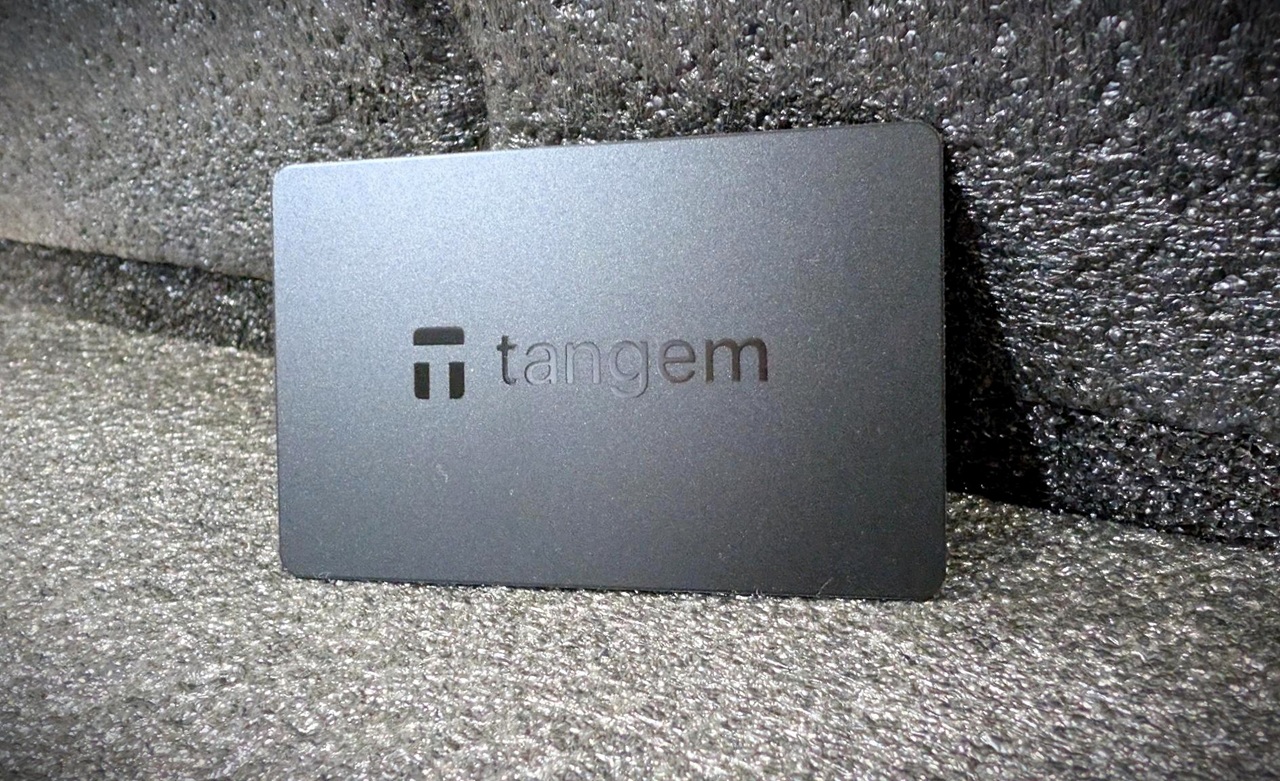
So I went down the Tangem rabbit hole expecting the usual vendor copy, and instead found myself reading secure element specs at 1 a.m. Short version, verdict first: Yes, the Tangem Wallet is a safe cold hardware wallet when you set a real access code and keep at least one backup card (or an exported seed) somewhere safe. That’s not marketing hedging; it’s the honest shape of the answer. The receipts are real: every card in the line runs on an EAL6+ certified Samsung S3D350A secure element, Kudelski Security audited the firmware and protocol source code in 2018, Riscure put the hardware through side-channel and fault-injection testing in 2023, and both found nothing.
More than 8 million cards have been produced since 2018, with zero reported hacks or user fund losses. That’s a track record you can actually check, not a press-release adjective.
But “safe” comes with footnotes, and I’d rather hand them to you up front. There’s exactly one real disclosed vulnerability: a laser fault injection attack demonstrated in a lab by Ledger’s Donjon team that bypasses the access code. It’s unpatchable, the firmware is factory-immutable, but wildly impractical outside a well-funded lab. There’s the flip side of seedless design: lose every card in your set without exporting a seed phrase, and the money is gone, permanently, and Tangem can’t fix that. And there’s blind signing, the inherent cost of a wallet with no screen.
The context that makes this worth the deep dive: crypto is a bearer asset. No bank reversal, no password reset, no support ticket. Self-custody means full control and full responsibility, which is precisely why the architecture matters. By the end, you’ll have a five-criterion rubric, unextractable key, verified supply chain, independent audit, remote-attack immunity, proven track record, that works on any wallet, Ledger and Trezor included.
Key Takeaways
Tangem’s entire product line uses the EAL6+ Samsung S3D350A secure element, with clean audits from Kudelski Security (2018) and Riscure (2023) and zero reported hacks or fund losses since 2018 across 8M+ devices.
The one real disclosed flaw, Ledger Donjon’s laser fault injection demo, bypasses the access code but needs the physical card, roughly $250,000 of lab equipment, and expert skill; it’s unpatchable by design and has cost nobody actual money.
The biggest risks are human and interface-level: lose the whole card set without a seed and funds are gone forever, and a screenless card means you’re blind-signing whatever your phone shows you.
Table of Contents
What “safe” means for a hardware wallet
No, someone can’t steal your Bitcoin just by knowing your wallet address. A public address reveals nothing extractable, it’s a destination, not a key. The address-based threat that actually exists is address poisoning, where scammers send lookalike zero-value transfers hoping you’ll copy the wrong address from your history later.
Real safety comes down to two plain questions: can an attacker pull the private key out of the device, and can you lock yourself out? Here’s how the five criteria map onto Tangem:
| Criterion | Tangem status |
|---|---|
| Key extraction blocked by hardware isolation | Yes (EAL6+ secure element, key never leaves card) |
| Supply chain verified by cryptographic attestation | Yes (per-card authenticity key pair checked by app) |
| Independent third-party audits | Yes (Kudelski 2018, Riscure 2023, both clean) |
| Immune to remote attacks | Yes (key is never online) |
| Track record without breaches at scale | Yes (zero reported since 2018, 8M+ devices) |
The stakes aren’t theoretical: roughly $1.38 billion was stolen in crypto hacks in the first half of 2024, nearly double the same period in 2023.
Inside the chip: how the secure element actually works
A secure element is a specialized, isolated microprocessor with ancestry in smart cards, SIM cards, and e-passports. The distinguishing fact versus a regular chip: its deliberately limited internal OS prevents direct memory reads. It can’t leak what it can’t show.
How the key never leaves the card
The private key is generated on-chip by a true random number generator (TRNG) during activation, it never exists anywhere else. Walk through a 100 USDT transfer: the app prepares the unsigned transaction and sends it to the card, the card signs it internally using ECDSA, and only the signed result comes back for broadcast. Unsigned in, signed out. The key never touches anything networked, which is honestly kind of elegant. It also means cold storage structurally blocks phishing and malware: even if you click a malicious link, there’s no live connection for it to reach these funds through.
Tamper sensors and side-channel defenses
The chip carries laser, temperature, light, and power sensors, and a protective mesh that self-destructs internal data if physically penetrated. The chip kills its own secrets before an attacker can read them. Against side-channel attacks (SPA/DPA), it runs constant-time execution, flattens its power draw so it doesn’t betray what it’s computing, uses masking and blinding to randomize intermediate signals, shields against EM leakage, and halts on voltage or frequency anomalies.
SE vs TEE vs MCU
“Has a chip” isn’t “has a secure element.” Older Trezors ran on general-purpose STM32 microcontrollers and fell to voltage-glitch flash dumps that extracted private keys. Trusted Execution Environments share buses and power with the main OS, so they’re a step down from an isolated SE, and TPMs sit below EAL5+/6+ secure elements entirely, which is exactly why a proper SE chip plus a PIN is the baseline for anyone serious about how to keep your crypto safe. The industry has noticed: Trezor’s Safe 3 and Safe 5 adopted an EAL6+ Infineon OPTIGA Trust M, and the Safe 7 ships the open TROPIC01.
What EAL6+ actually certifies, and why most rivals stop at EAL5+
EAL6+ is a Common Criteria certification under ISO/IEC 15408, meaning the chip’s design got semi-formally verified, with augmented requirements such as fault-injection protection. The scale runs 1 to 7, EAL7 is practically unreachable for complex products, and EAL5+ is the typical minimum for serious cold storage, which puts EAL6+ near the practical ceiling. It’s the same certification tier as the chips in biometric passports and payment cards.
Why doesn’t everyone hit EAL6+? Economics. Higher EAL means substantially more cost and evaluation time, and the strict profile limits what the chip can do, you trade flexibility for verification. That’s why most makers stop at EAL5+.
For contrast: the Ledger Nano X’s ST33 is EAL5+, while the Nano S Plus and Stax are EAL6+. Tangem’s EAL6+ covers the whole line, not just a premium SKU. And the “no backdoors” claim? Per the documentation.
The audits: who tested what, and what they found
Tangem’s audits are a layered record: Kudelski Security audited the firmware and protocol source code in 2018, Riscure tested the hardware for side-channel and fault-injection vulnerabilities in 2023, and both found no vulnerabilities. That layering is what makes “clean” meaningful rather than redundant. Kudelski specializes in embedded systems and cryptographic protocols, so the 2018 audit covered the software attack surface. Riscure is a hardware security testing specialist, so the 2023 assessment covered the physical attack class, a different threat model entirely.
One honest flag: Cure53 is cited as a third auditor, but the timing is uncorroborated (one source says 2026), so I can’t tell you when it happened. The continuously-tested layer is the open one: the iOS and Android apps and the SDK are open source on GitHub, where anyone can review them, plus there’s an ongoing bug bounty and responsible disclosure program. Closed chip, verified by external audit; open app, verified by anyone with a free afternoon.
The one real disclosed flaw: laser fault injection
No, the laser fault injection attack is not a practical real-world risk to Tangem Wallet owners, but the vulnerability is real and unpatchable. Ledger’s Donjon team demonstrated a lab attack that bypasses the access code. The requirements list is the reassurance: physical possession of the stolen card, roughly $250,000 of equipment, expert skill, and significant time. Similar demos worked on Coldcard and the Trezor Safe 7, so this is an industry-wide physical-attack reality, not a Tangem-specific failure.
Zero real-world fund losses. The lab-versus-street math is simple: the attack has to cost less than the haul.
Field note: The attack demands the card in hand, a quarter-million in lab gear, and expert time — theft that costs more than the haul isn’t theft.
Here’s the uncomfortable part, though. The immutable factory firmware Tangem markets as an anti-backdoor win is the same reason this flaw can never be patched on existing cards. No update channel to poison, but no patch channel either. The mitigation is the cost barrier, not a fix.
And the discourse got weird: the story got amplified by fresh spam YouTube and French X accounts, plus unverified speculation that Ledger benefited. All of that is unverified, so I’ll leave it there.
Lost, stolen, or counterfeit cards: what actually happens
If you lose all your Tangem cards without an exported seed phrase, the funds are permanently inaccessible. Tangem cannot recover them. That’s the whole failure mode of the seedless model, and everything below is about avoiding it.
How Smart Backup works
Two or three cards share one private key, cloned between them via encrypted NFC. They’re fully interchangeable, any card in the set gives full access. The backup is the physical cards, so store them in at least two separate locations. The most common setup mistake I keep seeing described is keeping both cards in the same desk drawer, which converts a resilience scheme into a single point of failure with extra steps. The genuine upside: no seed phrase means no paper to photograph, lose, or get phished for.
Is multi-card backup safer than a seed? It trades paper exposure for total-set-loss risk, a different bet, not a strict upgrade.
Quick test: If both backup cards live in the same drawer, you don’t have redundancy — you have one failure point with extra steps. Separate locations or nothing.
Losing the whole set
Permanent. Unless you imported the optional 12/24-word seed (with passphrase support), there’s no recovery path. That hedge exists; use it or don’t, but know the tradeoff either way. Seed-phrase wallets put recovery in words you must guard; Shamir/SLIP39 splits it into shards. Tangem puts it in plastic you must geographically separate.
Stolen and counterfeit
The access code runs a minimum of 6 characters, with progressive delays after 6 failed attempts, so brute force gets painfully slow. But if your code is 123456, the delay is doing all the work, and that’s not much. Set something real. A card lost on the street is safe if an access code is set.
Counterfeits die at setup: each card carries its own authenticity key pair, and the app verifies card and firmware before any wallet operation, so a fake fails before funds go on. Which is why buying from a third-party marketplace and trusting the packaging while skipping that first-tap authenticity check is the classic buyer mistake. The app check is the verification; the shiny wrap is not.
What a certified chip cannot protect against
Tangem’s certified chip cannot protect against blind signing, phishing, address poisoning, physical coercion, or irreversible wrong-address approvals, the risks live in the interface and the human, not the silicon.
Blind signing on a screenless wallet
There’s no screen on a card, so every verification happens on your phone. Connect that phone to a fake Uniswap site via WalletConnect, and a malicious Approve transaction gets faithfully signed, the secure element does its job perfectly and signs a blank check. The composite pattern that keeps showing up: a first transaction on an unfamiliar dApp, a tap-through without reading, and someone who can confirm the card keeps keys safe but can’t tell you what they approved last week.
The same interface layer carries the rest of the catalogue. Address poisoning works via lookalike zero-value transfers that pollute your transaction history, waiting for a copy-paste mistake. Physical coercion, a forced tap plus your access code, grants access, and that’s user-side risk, not hardware failure. And a wrong-address approval is irreversible on most blockchains: the card verifies the destination, the human decides, and the chain doesn’t do takebacks.
Bybit and Connect Kit: the interface layer
The biggest real-world losses bypassed audited contracts and certified hardware entirely. The February 2025 Bybit hack took $1.5 billion, the largest crypto theft on record, through a compromised Safe developer machine and malicious interface JavaScript that produced blind-signed approvals; forensics by Sygnia and Verichains exonerated the Safe contracts themselves and attributed the attack to the Lazarus Group. Before that, the December 2023 Ledger Connect Kit supply-chain attack drained roughly $600,000 through compromised frontend code while device keys stayed safe. Tangem’s screenless form factor sits closer to that boundary than screen-equipped rivals, which is worth knowing before you buy.
Practical habits that actually move the needle: hot wallet for spending, cold for bulk; test your recovery before funding significant amounts; verify addresses carefully; never store access codes digitally. One fair aside: secure elements elsewhere can control the display to defeat address-swap malware and even do FIDO2. Tangem cards have no screens, so don’t credit them with that.
The track record in numbers
Community complaints, per the video source breakdown, are overwhelmingly user error, stuck swaps, and support gripes, not cryptographic flaws. Ratings back that up: Trustpilot sits at 4.1/5 from 700+ reviews, the App Store at 4.9/5, Google Play at 4.7/5. The hard numbers: zero reported hacks or user fund losses since 2018, across a production run that grew from 3M+ (earlier sources) to 8M+ (later) devices.
A 2025 study put the incident rate under 5% for hardware-secured wallets versus over 15% for software-only, against that $1.38 billion of H1 2024 ambient theft. On continuity: Tangem was founded in 2017 in Zug, Switzerland, requires no KYC or registration for basic use, collects no personal data, routes transactions around its own servers, and the cards keep working 25+ years even if the company vanished tomorrow. For the deeper teardown, there’s a full Tangem wallet review with the daily-usage side.
Open source vs certified closed chips
Neither model guarantees safety, and there are named failures on both sides. Trezor Safe 7’s TROPIC01 is the first fully auditable open secure element: RISC-V, no NDA, netlist-readableKerckhoffs’s Principle in silicon. The counterexample cuts the other way: the July 2026 Coldcard firmware RNG bug, in which a software RNG from a 2021 update reportedly sat undetected in public code for five years with tens of millions in BTC stolen, a single-source, low-confidence claim, not established fact. Closed firmware leans on private audits and bounties (Synacktiv audited Ledger’s firmware in January 2026); Tangem splits the difference with open apps and a closed chip. No winner declared.
Verdict: who Tangem is actually safe for
Tangem is safe and well-suited for beginners, travelers, and long-term holders; desktop-centric traders, DeFi power users, and multisig treasuries are better served elsewhere. The card’s case: battery-free NFC, IP68, -25 to +50 °C, a 25-year warranty, 16,000+ tokens across 85+ blockchains, and sets from roughly $54.90 (2-card) to $69.90 (3-card) and ~$160 for the Ring (prices may vary). Power users have reasons: Ledger, Trezor, the four-SE OneKey Pro at $278, Sparrow plus Coldcard for Bitcoin, Safe for multisig, or Ellipal, the Titan Mini at $99 and the Ellipal 2.0 at $169, both on EAL5+ chips supporting 10,000+ assets across 80+ networks. One flag on new surfaces: Tangem Pay (announced November 2025, USDC on Polygon with Rain co-signing) and Yield Mode (auto-supplying stablecoins to Aave) add smart-contract and counterparty risk the chip never covered, a fuller rundown lives in our Tangem wallet price and lineup piece.
No wallet is universally “safest in the world”; custody model, verified architecture, recovery design, and your habits decide. If you want the incident-by-incident version, see our Tangem wallet hacked investigation.
People Also Ask
What are the disadvantages of Tangem Wallet?
The main downsides are interface- and user-level, not cryptographic. There’s blind signing because the card has no screen, so you trust your phone to show what you’re approving. The seedless model means losing every card without an exported seed means permanent loss, and the one disclosed flaw — the laser fault injection bypass — is unpatchable since firmware is factory-immutable.
Is a seedless multi-card backup safer than a traditional seed phrase?
It’s a different bet, not a strict upgrade. Seedless multi-card backup trades paper exposure — no phrase to photograph, lose, or get phished for — for total-set-loss risk. Seed phrases put recovery in words you must guard; Tangem puts it in plastic you must geographically separate.
What certifications and security audits does the Tangem wallet have?
Every card runs on an EAL6+ certified Samsung S3D350A secure element, the same tier as chips in biometric passports and payment cards. Kudelski Security audited the firmware and protocol source code in 2018, and Riscure performed hardware side-channel and fault-injection testing in 2023 — both clean. The iOS and Android apps and SDK are also open source on GitHub, with an ongoing bug bounty.
Is Tangem a good cold wallet for beginners and travelers?
Yes — that’s who it’s best suited for. The card is battery-free NFC, IP68-rated, works from -25 to +50 °C, supports 16,000+ tokens across 85+ blockchains, and needs no KYC or registration for basic use. Desktop-centric traders, DeFi power users, and multisig treasuries are better served by screen-equipped or specialized alternatives.