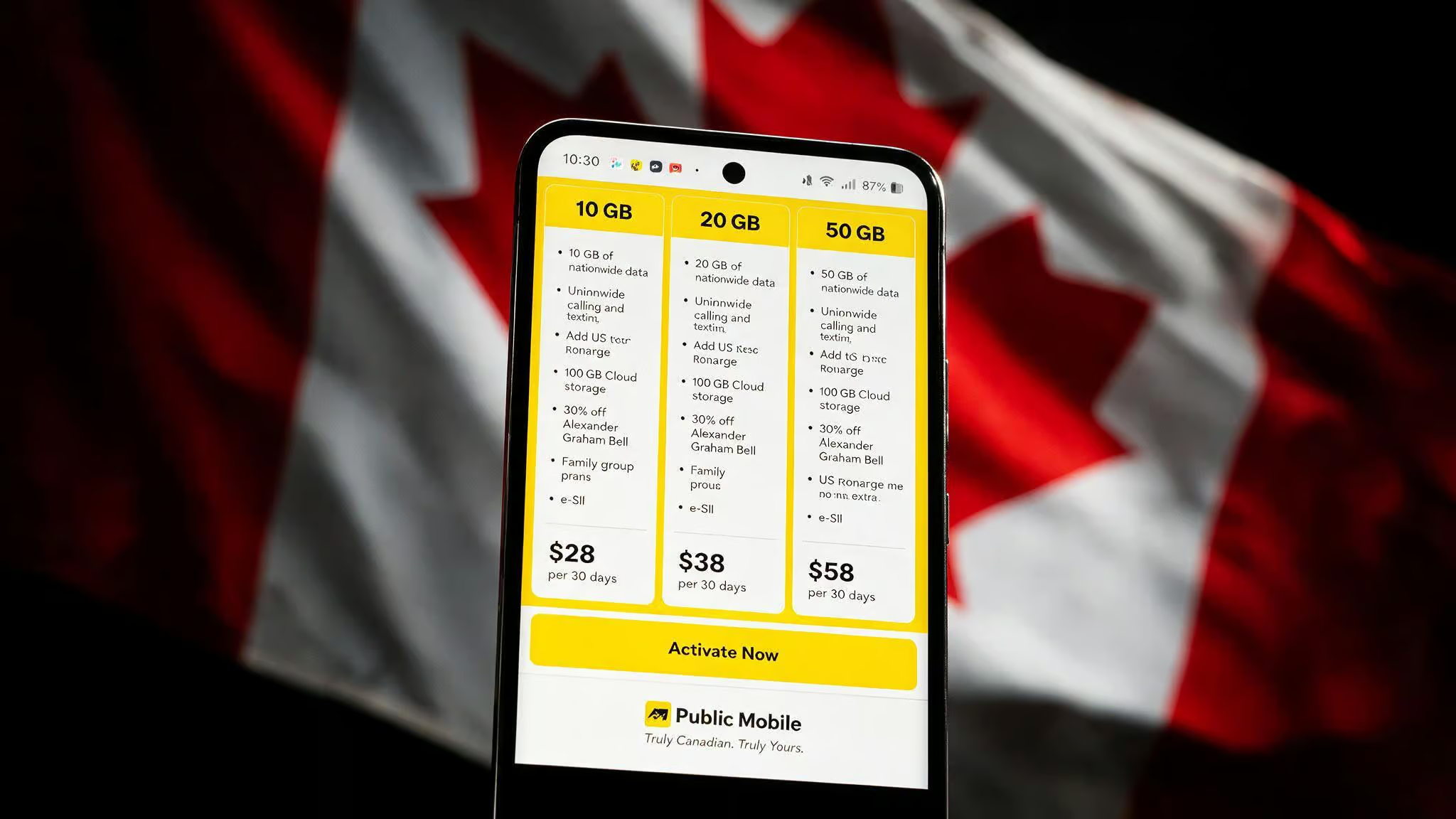
Public Mobile has always been the budget-friendly, no-strings-attached option in Canada. No contracts, no credit checks, no surprise fees — just a SIM card and a reasonable monthly bill. And for the most part, people seem to like it. On PlanHub.ca, 86% of 466 reviewers say they’d recommend the service. That’s a solid vote of confidence for any carrier, let alone a discount brand.
But something changed in July 2026. Public Mobile quietly swapped its limited-time promotional plans for a lineup of permanent plans that are… less generous. The old $25-for-25GB deal? Gone.
The $35-for-40GB offer? Also gone. In their place sit more modest plans that make you stop and do the math. The honeymoon phase is over, and the question now is whether Public Mobile still makes sense for the average Canadian.
I’ve been digging through the forum posts, the review data, and the plan comparisons to figure out exactly where Public Mobile stands in 2026. Here’s what I found.
Key Takeaways
Is Public Mobile still worth it? Yes, if you don’t need Wi-Fi Calling and can work with the new permanent plans.
The 86% recommendation rate on PlanHub.ca is strong, but most reviews predate the July 2026 plan changes that replaced the $25-for-25GB promo with a $24-for-5GB plan — five times less data for the same price.
Wi-Fi Calling remains unavailable, making it a dealbreaker for anyone in basements, concrete buildings, or remote areas.
Table of Contents
What Is Public Mobile? The No-Contract Carrier Explained
Public Mobile is a no-contract, no-credit-check Canadian carrier owned by Telus. It relies on Telus’s network for coverage and supports BYOD only. It started in 2010 with a couple of stores in Montreal and Toronto — and yes, they even released a flip phone (the UMX Companion) in 2012. It’s a Quebec-based carrier that’s been owned by Telus for years, meaning it runs on the same network as Telus and Koodo.
Same towers, same coverage. Just a different price tag and a stripped-down experience.
The core model is refreshingly straightforward: you bring your own device (BYOD), pick a plan online, and that’s it. No credit check, no multi-year commitment, no hidden fees. You pay for what you agree to use, not for what some algorithm guesses you’ll need. There’s no data rollover, but there’s also no penalty if you don’t hit your cap. It’s the anti-carrier approach, and for anyone tired of the usual telecom song and dance, it feels like a breath of fresh air.
Public Mobile modernized in 2023 when it finally flipped the switch on VoLTE and 5G — a long-overdue update that brought call quality and speeds up to par with the big guys. The Public Points loyalty program launched in 2022, giving you small savings for sticking around. Nice bonus, not a game-changer, but every dollar counts.
Public Mobile Plans and Pricing in 2026 — What Changed and What It Means
Here’s the part that stings. Let’s look at what’s available in Ontario right now, because that’s where the PlanHub.ca data comes from.
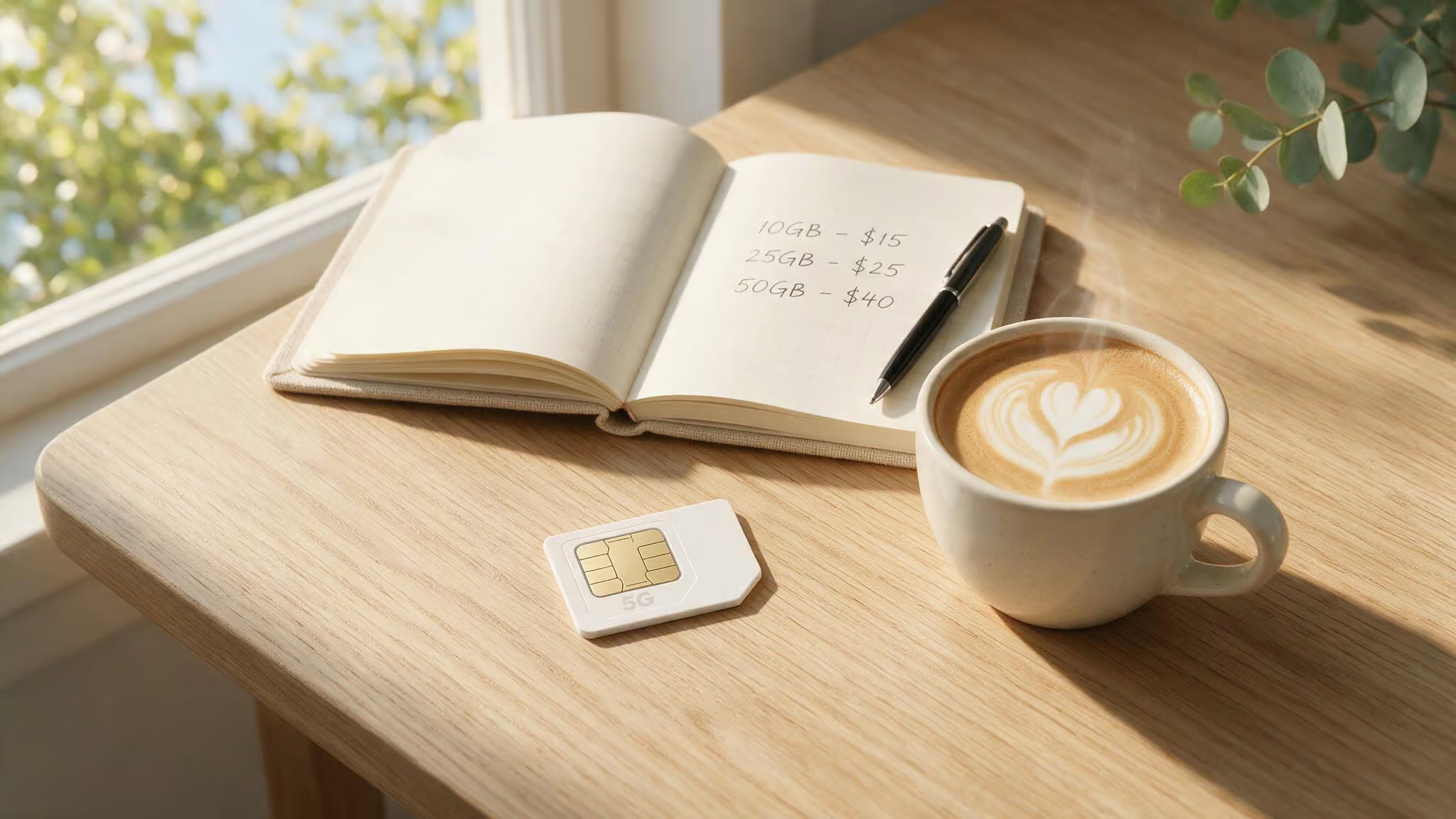
Plans run from $22 to $50 per month, averaging $34.33. The entry-level plan is $24 for 5GB. The top-tier plan is $40 for 75GB — generous for heavy users. There’s also a new middle-ground plan at $26 for 10GB.
Sounds reasonable, right? Until you compare it to what was available a few months ago. MobileSyrup reported that in July 2026, Public Mobile replaced its limited-time offers with these less exciting permanent plans. Here’s the before-and-after that hurts:
- Old: $25 for 25GB (limited-time promo) ? New: $24 for 5GB
- Old: $35 for 40GB (limited-time promo) ? New: $30 for 35GB
The $25-for-25GB swap is the headline-grabber. Same price range, five times less data. The $35-to-$40GB plan is a milder downgrade — you save $5 but lose 5GB, so the value per gigabyte actually gets worse. The $26 for 10GB plan is fine, but it doesn’t replace the crazy value the promos offered.
Bottom line: The $25-for-25GB promo gave five times more data than today’s $24-for-5GB plan. If you missed that deal, don’t expect it back.
Public Mobile doesn’t have any unlimited data BYOD plans in Ontario right now. No iPhone plans, no Android device plans — it’s strictly bring-your-own. That’s fine for most budget shoppers, but if you want a phone subsidy or truly unlimited data, you’ll need to look elsewhere—though if you sign up with referral code 4727PJ for a $10 bill credit, their current plans may still offer decent value.
Coverage, Network Performance, and the Wi-Fi Calling Gap
The network itself is excellent. Public Mobile rides on Telus’s infrastructure — 4G LTE and 5G are available since 2023, and coverage is generally on par with the big three. In most Canadian cities and major highways, you’ll get solid speeds and reliable calls, and early signs suggest that Public Mobile reviews 2025 will highlight its continued strong value as 5G expands.
So what’s the problem? Wi-Fi Calling. It’s been years, and it’s still not here.
This is the community’s biggest ask. And when you read the forum posts, you see exactly why. Take Pelbaxdar’s situation: they work in a downtown Ottawa office with unusable cellular reception — concrete and steel do a number on signal. WiFi is available at that desk.
They also have a Quebec cottage with no reception at all, but fiber internet runs to the property. Wi-Fi Calling would solve both problems instantly. Instead, they’re stuck with a phone that doesn’t ring in half the places they spend time.
Lyteforce has a similar story. Their workplace has poor interior reception that was completely fixed by Wi-Fi Calling when they were on another carrier. And their in-laws live off-grid at the edge of a cell tower’s reach — Wi-Fi Calling is the only way to make that line of communication work reliably.
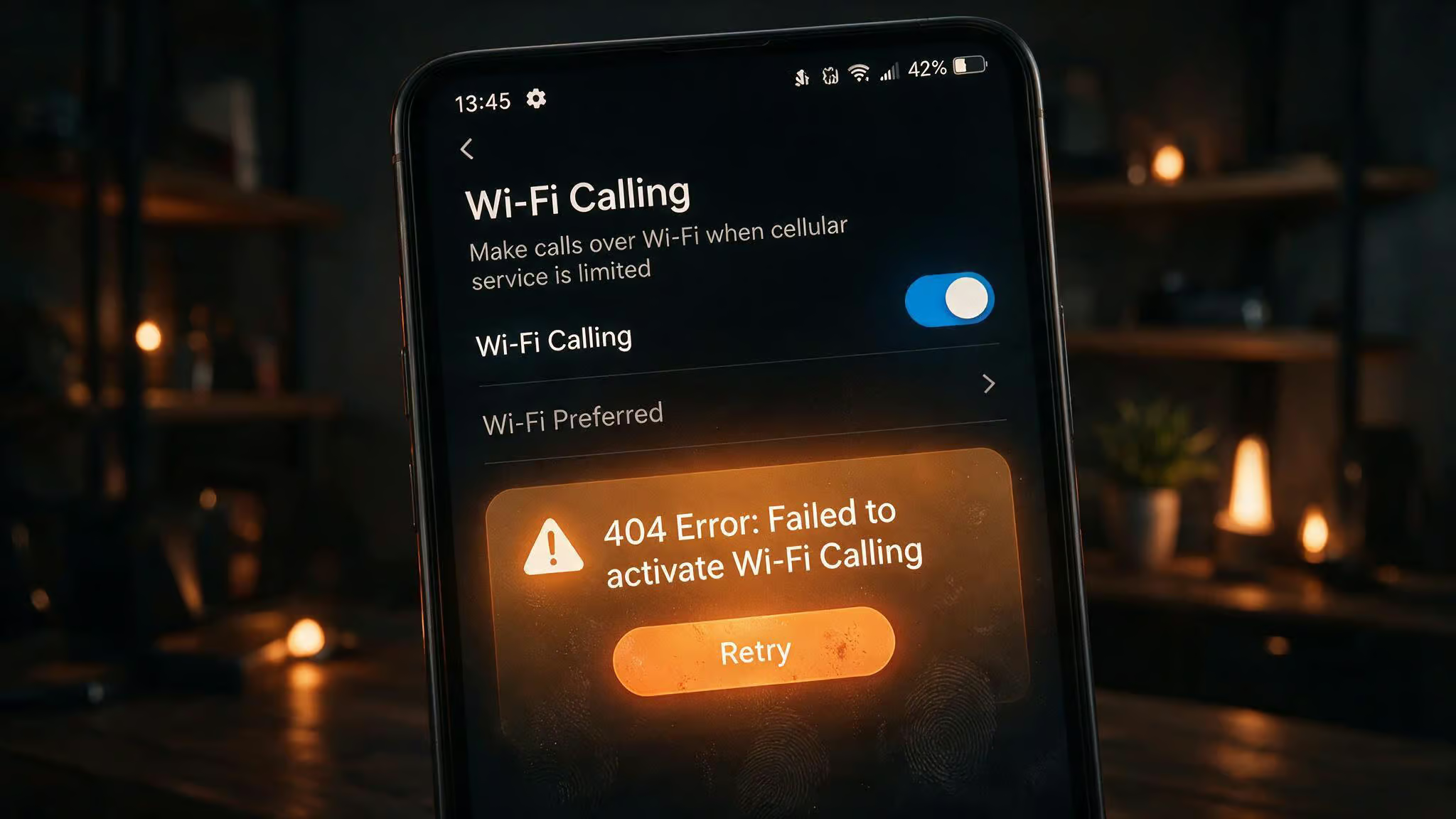
It gets worse. Google Pixel users actually see a Wi-Fi Calling option in their settings. But clicking it takes them to a 404 page on Telus’s website. That’s not a feature that’s coming soon — that’s a tease.
On the plus side, there are hints of better things. The 5G+ symbol shows up on iOS 17.4 beta devices where the 3500MHz band is present, and speeds can surge past 300Mbps. Telus already owns that spectrum, so mid-band 5G expansion seems plausible. International roaming is partially covered through Canada-US add-on packages from the add-on section, and Telus Easy Roam works in 73+ countries — but it hasn’t been formally extended to Public Mobile as a built-in option yet.
What Customers Are Saying — Public Mobile Reviews and Real Feedback
The 86% recommendation rate on PlanHub.ca is the headline, but it’s worth reading the actual reviews to understand the nuance.
Positive experiences are common. Reviewer RW972Z says activation took five minutes, reception is excellent, and the monthly bill dropped. Reviewer BBSVDG praises the reliable network, affordable plans, and savings from the points system. That’s the trifecta: easy setup, good coverage, lower cost.
But the complaints are consistent. The most common ask: Wi-Fi Calling. Next up: frustration that the limited-time promo deals are gone. The value proposition has shifted from “no-brainer” to “decent enough.”
User Luddite posted a request for a data-only 3GB plan at $15 to use with VoIP calling — that’s a niche but valid demand, and it’s not currently offered.
And then there’s Pelbaxdar again, who actually tried switching to Koodo — same network, same parent company. Their verdict? Koodo was far worse. Worse plans, a messy payment system. The grass isn’t always greener, and they came back to Public Mobile, whose Public Mobile reviews consumer reports offer a more data-driven look at coverage, value, and hidden costs.
That’s telling — even with the plan changes and the missing Wi?Fi Calling, a thorough Public Mobile review shows why some people still find it the best option in their specific situation.
Public Mobile vs. the Competition — How It Stacks Up
If you’re comparing carriers, here’s the short version.
vs. Koodo: Same Telus network. Koodo has Wi-Fi Calling. Plans are similar in price, but Pelbaxdar’s experience suggests Koodo’s plan structure and payment system can be worse. Your mileage may vary.
vs. Fizz: A strong competitor in Quebec and Ontario. Fizz offers Wi-Fi Calling and rollover data — two things Public Mobile lacks. If those matter to you, Fizz is worth a look.
vs. Lucky Mobile: Bell’s budget brand. Price points are similar, but Lucky runs on Bell’s network. Coverage is comparable in most areas, but the plan details differ.
vs. Freedom Mobile: Regional player with aggressive pricing in Ontario and BC. Lower prices in some cases, but coverage outside city centers can be weaker.
PlanHub.ca has dedicated comparison pages for Public Mobile vs Fizz, vs Koodo, vs Videotron, and vs Telus — worth a visit if you want the full spreadsheet-level breakdown. But the biggest differentiator is that Wi-Fi Calling gap. Public Mobile doesn’t have it. Koodo and Fizz do. That single feature might be the deciding factor.
Quick test: If you make calls from a basement, concrete building, or remote cabin, check whether Wi-Fi Calling is listed in your phone’s settings. If it’s missing on Public Mobile, that’s your dealbreaker.
What’s Next for Public Mobile? A Look at the Potential Roadmap
Nobody outside Telus knows exactly what’s coming. But there are clues, and the community has been piecing them together.
Forum user fixin posted a speculative roadmap that’s been circulating. It predicted Wi-Fi Calling for 2024 (didn’t happen), then 5G+ for 2025 (the iOS beta symbol suggests that’s being tested). Further out, family plans could land in 2026-2027, and international roaming via Telus Easy Roam might eventually arrive as an add-on system similar to the existing Canada-US packages.
The 5G+ icon appearing on iPhones in 3500MHz areas is a real technical signal. Telus already has that spectrum deployed for other brands. It’s not a stretch to think Public Mobile will get access eventually. The 404 error on Pixel’s Wi-Fi Calling page is a different kind of signal — it shows the feature exists in the backend code, but isn’t provisioned for Public Mobile accounts. That’s frustrating, but it also means the infrastructure is there.
This is all speculation. But the pattern is that Public Mobile tends to get major network features a year or two after Telus’s other brands. VoLTE and 5G arrived in 2023, years after Koodo had them. Wi-Fi Calling might follow the same slow cadence — or it might never come.
Verdict — Should You Switch in 2026?
Is Public Mobile still worth it? It depends on two things: whether you need Wi-Fi Calling, and whether you can live with the current permanent plans.
Best for: Budget-conscious users who don’t need Wi-Fi Calling. Light-to-moderate data users who can work with 5GB to 10GB. People comfortable with online-only support. Students, new Canadians, or anyone who appreciates no credit check. The 86% recommendation rate is still strong — keep in mind that many of those reviews predate the July plan changes.
Not ideal for: Anyone who needs Wi-Fi Calling — that’s basements, concrete buildings, remote cabins, off-grid in-laws. If you want device financing or phone subsidies, Public Mobile is BYOD-only. Heavy data users who miss the 25GB-for-$25 promo will find the new plans disappointing.
My take: If you’re a light data user in a good coverage area, Public Mobile remains a solid choice. The activation is fast, the network is reliable, and the price is fair. But if you’re comparing plans today, do a side-by-side with Fizz and Koodo — especially if Wi-Fi Calling matters. That one missing feature turns a great carrier into a frustration for people in the wrong building.
The $24-for-5GB plan is a fine entry point. The $40-for-75GB plan is a steal for heavy users who don’t need unlimited. Don’t expect the magic promo deals that made Public Mobile famous a year ago. Those are gone, and they’re probably not coming back.
Frequently Asked Questions
What are the best Public Mobile plans in 2026?
Current plans range from $24 for 5GB to $40 for 75GB, with a middle option at $26 for 10GB. The $40-for-75GB plan offers strong value for heavy users, while the $24-for-5GB plan works for light users. There are no unlimited data plans or device financing options — it’s strictly bring-your-own-device.