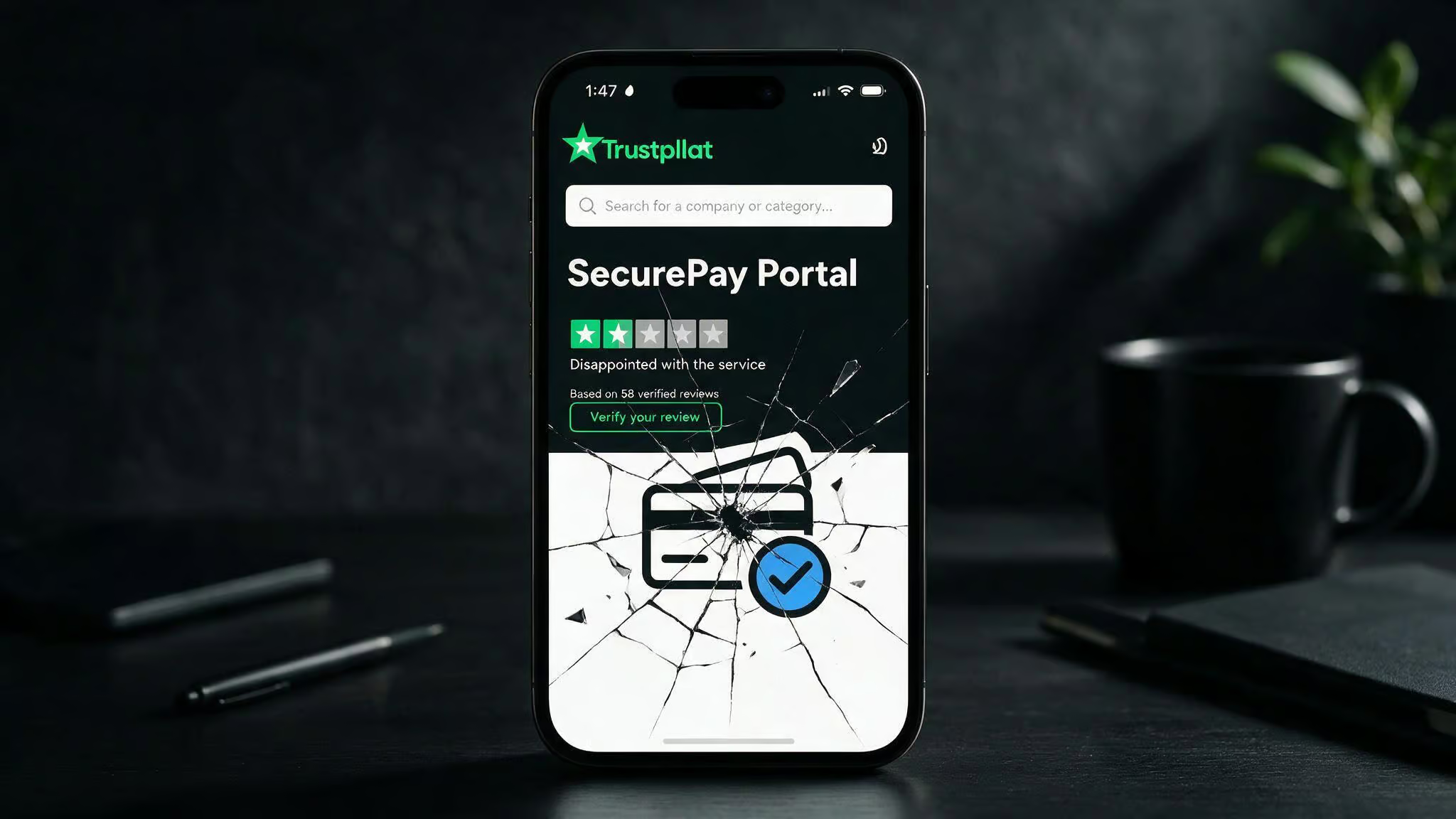
I spent a weekend digging through Public Mobile’s plan terms, 360 Trustpilot reviews, and forum threads so you don’t have to. The headline numbers are: a 150GB Canada-US-Mexico plan for $45 a month, about half what Bell, Rogers, and Telus charge for comparable data. And then there’s the Trustpilot score: 1.5 out of 5 from 360 reviews. So here’s the question: is the $50/month savings worth the risk of a payment cascade that can block service and disable SMS 2FA, or are you signing up for a support nightmare that could leave you stranded without service?
Key Takeaways
Public Mobile’s 150GB plan costs $45/month — roughly half the price of comparable Bell, Rogers, and Telus plans, but its Trustpilot rating is 1.5/5 from 360 reviews, driven by complaints about customer service, system issues, and payment failures.
A single missed payment can trigger a cascade: service is blocked at 8AM on the due date, SMS 2FA is disabled, and restoration can take up to five days even after you pay, locking you out of banking apps in the process.
The network is identical to Telus (solid coverage in Canada and the US), but 5G speeds are capped at 250Mbps, US roaming voice calling is unreliable on older Android phones, and the Public Points rewards program was recently cut by up to $7 per 30 days.
Table of Contents
The $45 Question: Is Public Mobile Worth the Risk?
Public Mobile is a prepaid brand owned by Telus — no contracts, no retail stores, no phone support. Everything happens online, from sign-up to troubleshooting. The core tension: you can save roughly $50 a month compared to a Bell, Rogers, or Telus plan, but you’re also looking at a 1.5/5 Trustpilot score from 360 reviews, one of the lowest-rated flanker brands, only Koodo (1.2) scores lower.
I’ll walk through the plans, the network performance (with speed test data from downtown Toronto showing 180-240Mbps), the support system that’s been described as an “infinite loop,” the specific bugs that can derail your service, and how Public Mobile stacks up against competitors like Fizz. By the end, you’ll know exactly who should sign up — and who should run the other way.
Plans and Pricing: What You Actually Pay (and What It Costs You)
Public Mobile’s pricing is aggressive, but the headline numbers come with strings attached — rewards cuts, no family discounts, and occasional price hikes.
The Headline Plans: 150GB for $45 and Beyond
Public Mobile’s current lineup is aggressive on price. Here are the plans as of early 2026:
- 150GB Canada-US-Mexico – $45/month (includes hotspot data)
- 200GB Canada-US-Mexico – $50/month
- 100GB Canada-US-Mexico – $40/month
- 25GB Canada-US-Mexico – $35/month
- 20GB Canada-wide – $30/month
No contracts, no activation fees on most promotions, no overage charges — you hit your data cap and you’re just throttled, not billed extra. Compare that to a Bell, Rogers, or Telus plan with similar data and you’re looking at $90–$100 a month. Public Mobile is half the price.
Hidden Costs and Value Erosion
The recent hit is the Public Points rewards program change. Users who were earning loyalty credits report losing up to $7 per 30 days in value.
There are also no family plan discounts. Each line is a separate account with its own payment. If you’re setting up a household of four, you’re managing four independent accounts and paying full price on each.
And users report prices increasing without notice. The Trustpilot reviews are full of people who signed up for a plan at one price and later found their bill had crept up. No explanation, no email — just a new charge.
How Public Mobile Compares to Big Three Pricing
The $45 plan for 150GB is half of what Bell, Rogers, or Telus charge for a similar data bucket. Even the $30 entry-level plan undercuts prepaid options. If you’re on a tight budget, the savings are $50–$60 a month versus a comparable postpaid plan. That’s $600–$720 a year.
Network Performance: Telus Coverage with a Speed Cap
Public Mobile uses Telus’s network, so coverage is solid, but there are important limitations on speed and roaming that you need to know.
5G Speed Tests and the 250Mbps Cap
Public Mobile rides on Telus’s network, so coverage is identical to Telus in Canada and the US. The catch is that 5G speeds are capped at 250Mbps. That’s fast enough for 4K streaming, cloud gaming (GeForce Now, Xbox Cloud Gaming), and heavy hotspot duty, but you won’t see the multi-gigabit speeds that Telus postpaid customers can hit.
Tests in downtown Toronto show speeds between 180Mbps and 240Mbps. I’d use it as my primary connection for work calls, video streaming, and gaming on a hotspot.
The US Roaming Problem on Older Android Phones
Here’s the caveat that trips up travelers. US roaming voice calling is unreliable for users, especially on older Android phones. The pattern in user reports: calls drop, fail to connect, or never ring. One user named Codybraithwaite went through 20+ support reps, couldn’t make a successful call in the US, and eventually returned to Lucky Mobile. Another user, hTideGnow, reported similar issues.
If you’re a US traveler with an older Android device, this could be a dealbreaker. iPhones and newer Android phones seem to fare better, but the issue is widespread enough that I wouldn’t rely on Public Mobile for voice roaming without a backup plan—so you might want to follow what is happening with Public Mobile to stay ahead of any changes.
Customer Support: The Digital-Only Nightmare
Public Mobile’s support model is digital — no phone, no stores, and user reports describe a system that deflects rather than resolves.

How the Support System Actually Works (and Fails)
Public Mobile has no phone support and no retail stores. Your options are a chatbot, a community forum, and a ticketing system. The interaction goes like this: you hit a problem, the chatbot redirects you to an FAQ, the FAQ links you back to the chatbot. Rinse and repeat. If you find the hidden ticket form, you might get a response in days — or never.
The “infinite loop” pattern is the failure mode. You’re stuck in a system designed to deflect you, not solve your problem.
Named User Stories That Illustrate the Pattern
- Gen Thomas described the bot as “useless” and noted you have to know exactly what to say to even get a ticket opened.
- xxdesertstorm submitted 15+ tickets in 24 hours and got no response. Eventually escalated to the CCTS (the telecom ombudsman).
- T T GB was told “you are more than welcome to leave” after four weeks of intermittent service.
- Codybraithwaite (the roaming user) went through 20+ support reps with zero resolution.
System Bugs and Payment Failures: The Cascade Trap
A payment hiccup can snowball into a multi-day service outage, locking you out of accounts that rely on SMS verification.
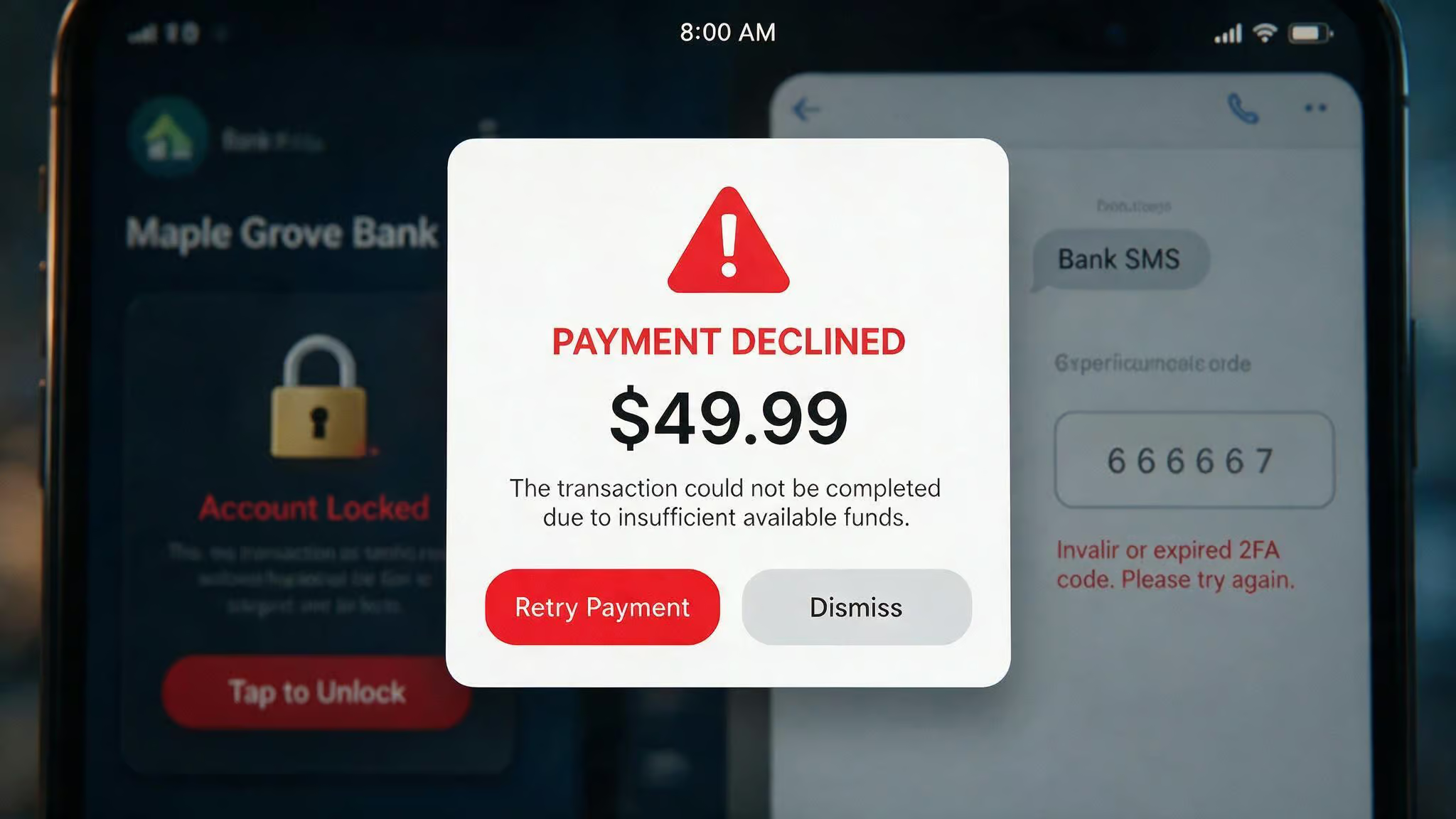
The Payment Cascade: One Missed Payment, Five Days Without Service
Here’s how it works:
- A declined credit card triggers a service block at 8AM on the due date.
- The block disables SMS 2FA — you can’t receive the text codes needed to log into your bank, your email, or your Public Mobile account.
- Without SMS 2FA, you’re locked out of banking apps, account recovery, and any service that relies on text verification.
- If you pay the bill later that day, service can take up to five days to restore.
Users confirm this pattern. Sierra Stephen reported the 8AM block and a five-day wait. Caleb was locked out of his bank because his 2FA was tied to his Public Mobile number.
eSIM Activation and Account Access Failures
eSIM activation is another failure point. Taigita Biln was logged out of her account and charged $56 after attempting to cancel a $25 plan. Catalin reported that the system rejected an already-activated SIM card. Users report that physical SIMs are less prone to activation failures than eSIMs, though both can suffer from the same payment cascade issues.
Other users mention login difficulties, the system charging after cancellation, and refund delays of 15 to 20 days. If you’re traveling and need to activate an eSIM, you might find yourself stuck.
Trustpilot Sentiment: What the 1.5/5 Rating Actually Means
The 1.5 rating isn’t driven by a issue — it’s a mix of support failures, system bugs, and payment problems that compound each other.
The Complaint Categories Behind the Score
The Trustpilot summary breaks it into five categories:
- Poor customer service – the chatbot/ticket loop described above
- System bugs – login issues, payment declines, data loss
- Payment issues – the cascade trap, unexpected charges
- Roaming problems – US voice unreliability, especially on older Android phones
- Declining service quality after Telus acquisition – features removed, prices increased
A billing error leads to a support ticket that goes unanswered, which leads to a service block, which leads to a 2FA lockout — and while individual mistakes vary, checking Public Mobile review complaints reveals that such cascading failures are one of the most common grievances, but using code 4727PJ can give you a one-time $10 bill credit to help offset such issues.
Positive Reviews Exist — Here’s What They Say
It’s not all doom and gloom. Some users are happy:
- Phil_Adelphus reported a positive experience over a couple of years, with data speeds hitting the plan maximum.
- will13am has been with Public Mobile since 2016 and sees no reason to switch.
- colleeno has been on the service for five years, with strong signals in rural Southwestern Ontario and Sault Ste Marie.
- Steve Vegvari from MobileSyrup tested the 150GB plan and found it perfectly capable for streaming and hotspotting — though he gave customer service a 2/5.
How Public Mobile Stacks Up: Competitor Comparison
Public Mobile’s Trustpilot score is among the worst in Canada, but a few competitors offer similar pricing with better ratings.
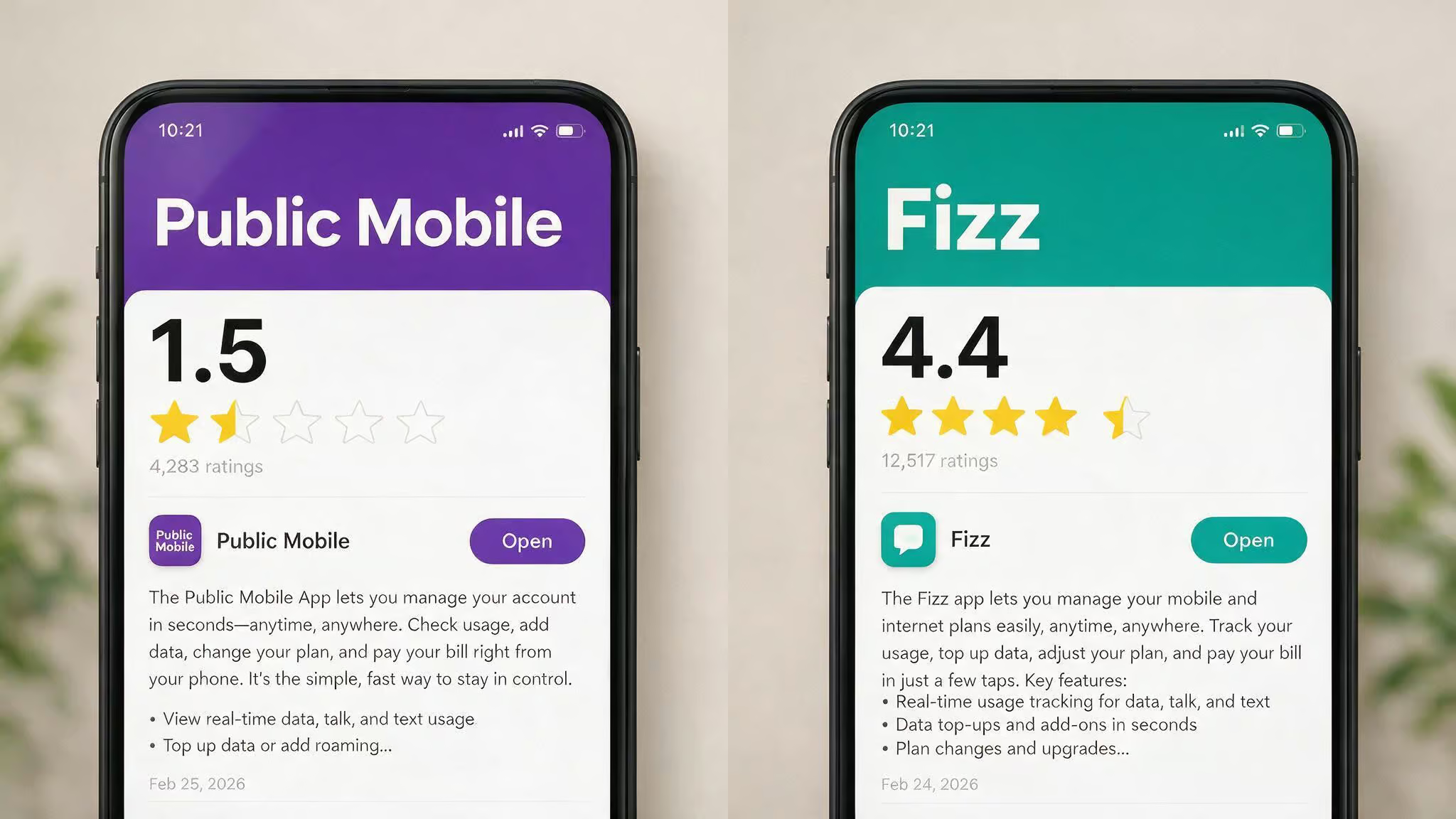
Trustpilot Ratings Across Canadian Carriers
Here’s how Public Mobile’s score compares to the rest of the Canadian telecom landscape on Trustpilot:
| Carrier | Trustpilot Score | Reviews |
|---|---|---|
| Public Mobile | 1.5 | 360 |
| Fizz | 4.4 | 1,700 |
| Freedom Mobile | 1.8 | 2,000 |
| Lucky Mobile | 1.5 | 367 |
| Koodo | 1.2 | 2,000 |
| chatr | 1.5 | 510 |
| Bell | 1.3 | 3,000 |
| Rogers | 1.2 | 3,000 |
| Fido | 1.2 | 3,000 |
The Canadian mobile industry gets roasted on Trustpilot. The outlier is Fizz, which scores 4.4 from 1,700 reviews despite being a flanker brand with similar pricing.
The Fizz Exception: What Makes It Different
Fizz is owned by Quebecor/Videotron and operates in Quebec and parts of Ontario. Its pricing is comparable to Public Mobile’s, but its support model is different: Fizz has a functional chat support, a help center that resolves issues, and a community that’s moderated by responsive staff.
The Telus Takeover: How Public Mobile Changed
Since Telus acquired Public Mobile, longtime customers have watched features disappear and prices rise — a pattern that continues today.
What Was Lost After the Acquisition
Public Mobile started as an independent MVNO with a scrappy, community-driven vibe. After Telus acquired it, the changes were gradual but unmistakable:
- The Public Points rewards program was cut — users lost up to $7 per 30 days.
- Prices increased without notice, according to customers.
- The 3G shutdown was used to pressure users into migrating to higher-margin Telus brands. Kirby More reported being threatened with a 3G shutdown despite having 4G devices.
- Brodie summed it up: Telus takeover led to feature removal and price increases without notification.
The Pattern of Value Erosion
Telus uses Public Mobile as a low-cost acquisition funnel. New customers get a great deal, but over time, features are stripped, rewards are cut, and prices creep up. Loyal customers are gradually pushed toward Koodo or Telus postpaid. Vivalableue, a 14-year customer, had her mother’s account suspended over a mistaken chargeback, then faced contradictory payment demands and eventually filed a CCTS complaint.
Final Verdict: Who Should (and Shouldn’t) Sign Up
Public Mobile works well for the right user, but the risks are real — here’s how to tell if you’re a match or should look elsewhere.
You’re a Good Fit If…
- You’re tech-savvy and comfortable self-diagnosing issues. If you can troubleshoot a modem, you can handle Public Mobile.
- You have a backup 2FA method — an authenticator app like Google Authenticator or Authy, not SMS. This step prevents the most dangerous failure mode.
- You never need phone support. If your cell service is “set it and forget it,” you’ll be fine.
- You stay in Canada and don’t travel to the US with an older Android phone.
- You’re on a tight budget and the savings (~$50/month vs. Bell, Rogers, and Telus) matter enough to tolerate the risk.
Stay Away If…
- You travel to the US and need reliable voice roaming, especially with an older Android phone.
- You might need help with billing, activation, or account recovery. The support system will not help you quickly.
- You cannot risk a 2FA lockout — for example, your banking requires SMS 2FA and you have no backup.
- You value phone support or in-person service. This is not the carrier for you.
- You’re setting up multiple lines — the lack of family plan discounts adds up, and managing separate accounts is a hassle.
The Honest Bottom Line
The network is excellent (it’s Telus), the plans are cheap, and some users are happy for years. But the support system is broken, the payment cascade is a danger, and the Telus acquisition is slowly squeezing the value out of the brand.
If you fit the “good fit” profile, save the cash. If you don’t, spend a little more on a carrier that won’t leave you stranded.
How to Handle Common Issues If You’re Already on Public Mobile
Setting Up Backup 2FA (Do This Before You Need It)
Switch your banking and critical accounts from SMS-based 2FA to an authenticator app like Google Authenticator or Authy. If your service gets blocked, you won’t lose access to your bank, email, or account recovery.
What to Do If You Get Hit by the Payment Cascade
- Set up auto-pay and keep a backup payment method on file.
- If service is already blocked, try a convenience store top-up — some users report this works as a bypass.
- Document everything: screenshots, ticket numbers, dates. Users got their issues resolved only after providing evidence.
- If you’re stuck for more than a few days, port out to another carrier. Request your account number and port-out PIN from the self-serve portal. If the system is broken, use the CCTS to force the port.
How to Escalate When the Ticket System Fails
If you haven’t received a response in 72 hours, file a complaint online at the CCTS website (Commission for Complaints for Telecom-Television Services). The CCTS will contact Public Mobile on your behalf, and carrier response times improve once an ombudsman is involved.
Keep your screenshots and ticket numbers handy.
Frequently Asked Questions
Is it easy to cancel Public Mobile?
Cancellation is handled entirely through the self-serve portal, but users report system bugs that charge after cancellation, log you out of your account, or delay refunds by 15 to 20 days. If the portal fails, you may need to escalate to the CCTS (telecom ombudsman) to force the port-out.
How does the Public Mobile payment cascade work?
If a credit card payment is declined, service is blocked at 8AM on the due date, which also disables SMS 2FA — locking you out of banking apps and your Public Mobile account. Even if you pay the same day, restoration can take up to five days, and some users bypass the block with a convenience store top-up.
Is Public Mobile worth it for the price?
It depends on your risk tolerance. The $45 150GB plan saves roughly $50/month versus Bell, Rogers, or Telus, and the network is solid. But if you need phone support, travel to the US with an older Android, or rely on SMS 2FA without a backup authenticator app, the savings aren’t worth the potential multi-day service outage.