
You’re standing at the kitchen counter telling your partner about the grill you keep eyeing, and two days later an ad for that same grill is sitting at the top of your feed. Not a grill. That grill. The one you said out loud.
The most reasonable conclusion is also the most instinctive one: my phone is listening to me. It’s the rare tech belief that survives every official denial, including a flat “No” delivered in front of Congress.
I went down this rabbit hole the way this blog loves to: I followed the creepy ads, read the testimony, dug through the tracking methods, and came out the other side with a picture that’s weirder than either side admits. The phone hearing you talk about a grill, then serving you a grill ad, feels like proof of eavesdropping. But the actual mechanism is broader, sneakier, and harder to escape than a microphone ever would be. That’s the real question hiding inside the whole debate over phone listening versus data collection: not whether a stranger heard you, but what’s been built from the trail you leave everywhere else.
So is your phone listening to you for ads? Almost certainly not. Here’s what’s actually happening instead.
Key Takeaways
Across ten hours of Senate and House testimony, Mark Zuckerberg gave exactly one clean answer on the microphone question: “No.” The tracking that actually powers those hyper-specific ads is broader than eavesdropping, and none of it needs audio.
A Wandera experiment played pet ads and silence on test devices and saw no meaningful change in data consumption or battery drain; Facebook’s network traffic never resembled “Hey Siri” or “OK Google” activation. The Facebook app isn’t secretly turning on your mic.
An ESADE study ran 10 controlled conversations with 27 participants and saw destination-matching ads in half its tests, yet its own authors still flagged the limited scale. The mic probably wasn’t the source. The data trail was.
Table of Contents
Why the phone-listening myth refuses to die
The myth doesn’t come from nowhere, and it doesn’t die when executives deny it. Two things keep it alive: the official line, and the silence around everything else.
The official line: a flat “No”
Somewhere across ten total hours of Senate and House testimony, Mark Zuckerberg gave one straightforward, privacy-protective answer. When Sen. Gary Peters asked whether Facebook uses the microphones in users’ cell phones to listen to them to gather information for serving ads, Zuckerberg confidently said, “No.”
Meta’s official position has been consistent since. The company insists it doesn’t use microphones to pick up conversations and shape ads. Its own framing even acknowledges the problem: sometimes ads are so specific it seems like the phone must be listening, and yet the company says it isn’t. That’s the entire official case condensed into one breath.
Why the denial never landed
Here’s the thing: the denial is probably true, and it doesn’t matter. Because Zuckerberg also condescendingly called the whole idea a “conspiracy theory” during that testimony, and that dismissal landed the way dismissals usually do when you’ve been caught being opaque about everything else.
Facebook has refused to be upfront about how it collects and analyzes information. So when users see an ad for something they only said out loud, they reach for the most emotionally accurate explanation available, even if the mechanics are wrong. A stranger overheard me. That captures the feeling of being watched perfectly, even though a microphone isn’t what’s doing the watching.
The mainstream expert counter-explanation always gets described the same way: it’s behavioral advertising, built from browsing histories and geolocation, not audio. That’s true. But it rarely gets explained with the same confidence as the denial, so the belief persists.
What the evidence actually shows about phone mics
The Facebook app isn’t secretly turning on your phone’s mic. That’s been checked. The interesting part is how it’s been checked, and what the checks tell you about the actual tracking apparatus.
The experiment that tried to catch it
Security firm Wandera ran one of the cleaner tests: they played pet-food ads and silence on test devices and watched the data and battery meters. If the phone were streaming audio back to a server, something should tick up. Nothing did. No meaningful change in data consumption, no battery drain.
The network traffic angle was equally telling. The data flowing out of Android and iOS devices during those tests didn’t resemble the signature of a “Hey Siri” or “OK Google” voice-activation. That’s a technical tell: if audio were being streamed and processed in real time, you’d see it in the traffic patterns. Research groups at Northeastern and Princeton did their own audio-forensics checks and came back empty too. If you want the full evidence tour, our deeper look at Is Your Phone Listening to You? walks through every audio-handling detail.
Why covert listening is a terrible business plan
Beyond the experiments, mass eavesdropping is someone’s worst advertising strategy on a systems level. Secretly monitoring conversations is unethical and almost certainly illegal. That’s a reputational risk no advertiser wants to touch, and meta-level coordination across thousands of apps would be a scandal machine.
Then there’s the engineering. Streaming unprocessed audio would produce obvious network traffic. Processing audio with on-device voice recognition would spike processor activity. Both are exactly the kind of thing researchers routinely catch when they reverse-engineer processes and network protocols. If this were happening at scale, it would have been found by now, repeatedly.
How voice assistants and microphones actually work
The microphone isn’t idle, though. It’s just used for reasons that have nothing to do with ad targeting. Getting this straight is where the whole “it’s listening” fear either hardens into truth or dissolves into the boring reality.
The wake word is doing the listening
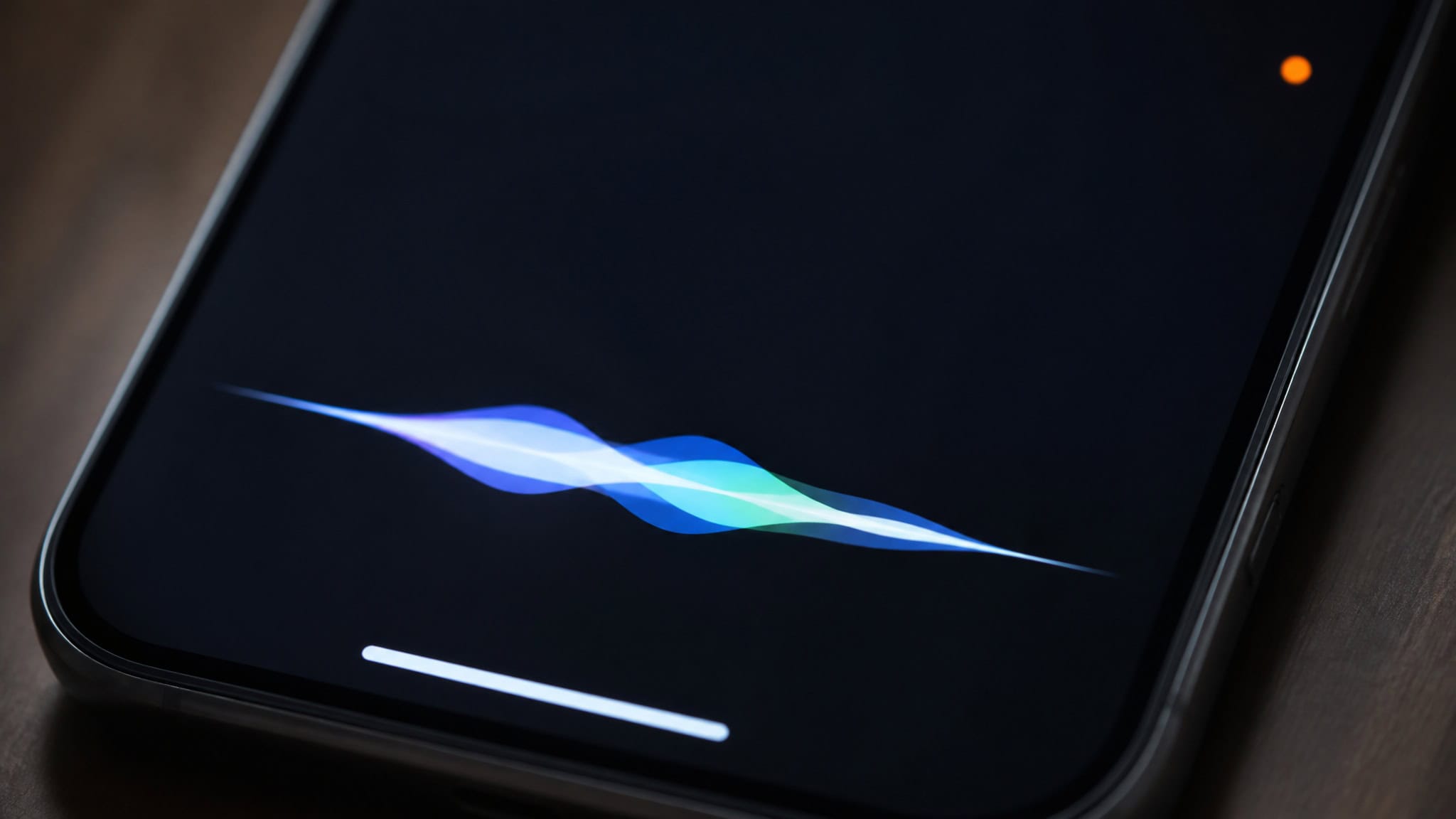
Siri, Alexa, and Google Assistant aren’t recording your life. They’re listening for an activation phrase like “Hey Siri” or “OK Google,” processing most audio on-device, and normally only streaming once that phrase matches. When you say “Hey Google,” you’re consenting to a voice interface that replaces the search bar.
Two caveats keep this honest. Wake words can be triggered accidentally, and some audio snippets do get sent back for tuning and verification so the assistant can recognize speech better. That’s a real wrinkle, not a conspiracy.
Facebook also has legitimate, boring reasons to ask for mic permission. It’s needed to handle videos you post, and for the “Listening to” status feature that identifies music or TV playing near you. The permission isn’t purely nefarious, which is exactly why it’s so easy to point to and say “see, they wanted the mic for something.”
The times the mic was actually on
This is where the article refuses to be a corporate defense, because the exceptions are real.
In 2015, Samsung had to walk back a Smart TV privacy policy that admitted spoken words could be captured and transmitted to a third party. Under public uproar, the company changed it so only voice-command recordings were sent. In 2022, researchers found that Cisco’s Webex was listening through device mics even when users muted themselves. Cisco said it was for user experience, then announced it would stop.
Those incidents don’t make the advertising-listen theory true. But they explain why the fear isn’t bonkers. If you’re worried about a powered-off handset, Can Someone Listen Through Your Phone When It’s Off? digs into whether that’s a real threat.
The indicator lights that changed the game
Newer phones now show mic and camera in-use indicators as a small dot or orange/green light near the status bar. That alone makes covert background recording far harder to hide. If an app quietly kept the mic on, the indicator would be sitting there in plain view for anyone who glances at the screen.
What Facebook actually does instead of listening
So if it isn’t the mic, how are the ads this specific? The answer is a stack of tracking methods that don’t need audio at all. This is the point where “not listening” and “not tracking” split hard.
| What you might suspect | What’s actually happening |
|---|---|
| The mic is always on | The mic activates only via permission or wake word |
| A stranger heard my conversation | Algorithms connect location, browsing, purchases, and device IDs |
| That ad proves I was overheard | That ad proves a profile about me already exists elsewhere |
Here’s the walkthrough of the actual apparatus, method by method. None of it needs a microphone.
Like buttons
Every Like button scattered across the web pings Facebook, whether you’re logged in or don’t have an account at all. That’s how the company sees you browsing sites that have nothing to do with Facebook.
Shadow profiles
Facebook maintains profiles on people who never signed up for the service at all. The “I don’t use Facebook, so I’m safe” assumption falls apart right here.
Call and text logs
On Android, Facebook logged users’ calls and texts. The company says this was meant to improve friend suggestions; the practice was a “yikes” moment for anyone who realized the company had their actual communication logs. This one is historical, not current.
Device identifiers
Through in-app advertising, Facebook absorbs unique phone identifiers and uses them to link your identity across devices. That’s the “how did they know it was me” answer in two sentences.
Location tracking
Ads get served based on your current location, your home address, and your workplace. Hyper-local ads aren’t telepathy, they’re a map of your daily movement.
In-store purchases
Facebook connects your online ad clicks to what you buy in physical stores. That’s the bridge between your digital and real-world behavior, and it means the they know what I bought at the mall feeling has a mechanical explanation.
Self-censorship tracking
Facebook watches what you start typing but don’t post. Tracking self-censorship is a deep read on your thoughts, even when you never hit publish.
Messenger purchase links
The company linked purchases to Messenger accounts so sellers could send confirmations without seeking affirmative permission. That’s a consent question that has nothing to do with audio.
The Onavo VPN
Facebook bought a VPN, advertised it as a privacy tool, and used it to track what users did on other apps to crush competition. That’s a direct betrayal of trust, and it’s a big reason people don’t believe denials. Also historical.
Newsfeed manipulation
In a research experiment, Facebook manipulated users’ Newsfeeds to see whether posts could make people sad or happy. Emotional manipulation as a test run explains a lot about why distrust runs deep. Also historical.
Patents for future tracking
Facebook files patents for tracking tech that might be used later, including a filing about locating you via dust on the phone’s camera lens. That one sounds like sci-fi, and it’s important to be clear: it’s filed for potential future use, not shipped. But it shows the direction the company is thinking.
All of this tracking and analysis is what powers the invasive “People You May Know” recommendations. That feature often feels like mind-reading, and it isn’t. It’s the same pile of data, applied to social connections instead of shopping.
Beyond Facebook: how the tracking industry works
Targeted advertising runs on a global real-time auction of your data, not on your microphone. Zoom out from one company and you see the machinery that powers all hyper-specific ads.

Real-time bidding auctions your data by the millisecond
Google’s Real-Time Bidding, or RTB, collects cookie-derived data about your tastes, location, and consumption habits, then sells it to advertisers in real-time, bid-based auctions. Your attention is going to the highest bidder, several times a day. The scale is genuinely absurd: European users receive an average of 376 RTB “broadcasts” per day, while US users get 747, and in 2021 the auctions generated US$117 billion, according to Irish Council of Civil Liberties figures.
The trail you leave everywhere
Tracking cookies identify you across sites. Search queries, typed or voiced, get saved and connected. Shopping behavior gets analyzed through loyalty-card data and the involuntary data collected at checkout. Every one of those is a channel that feeds the same machine.
Your data gets sold, stitched, and sold again
Data is sold, connected with other sources, algorithmically analyzed, then sold again. Advertisers find target groups through indirect relations, such as someone who purchases tools being likely to buy construction materials next. The profiling doesn’t need to know what you said. It just needs to know what you did and what people like you did next.
The prediction machine
Your phones, tablets, wearables, search engines, and social networks leave a detailed digital footprint. AI tools process that footprint into behavioral prediction, pricing algorithms, and personalized experiences. The system isn’t reading your mind, but it’s better at guessing your next move than you’d probably like.
Why ads feel like proof you’re being listened to
The reason this feels like proof is a well-documented perception bias: the frequency illusion, also called the Baader-Meinhof phenomenon. Once you understand it, the eerie ad stops looking like forensic evidence and starts looking like a coincidence your brain was primed to catch.

The frequency illusion is doing the heavy lifting
Most ads are irrelevant, and you dismiss them without registering them. But you’re primed to notice topics you just discussed, so the rare matching ad stands out against a background of hundreds of misses. You remember the hit, not the shelf full of ads about stuff you never mentioned.
The algorithm is better at patterns than you’d guess
Predictive analytics can outthink you. In 2012, Target inferred a teenager’s pregnancy from her purchase patterns, and the store’s mailed coupons tipped off her father before she’d told anyone. No microphone involved, just pattern-matching on buying behavior.
Hannah Fry’s book Hello World covers how data surfaces strange, indirect connections that feel like mind-reading. And researchers have shown phones can detect when you’re watching TV using screen status and accelerometer signals alone, with no audio captured. The uncomfortable truth is that the system doesn’t need to hear you to know a lot about you.
The ESADE study that found ads following conversations
Now the honest complication. A team from ESADE and other Spanish universities ran a controlled study that concluded the suspicion of phone listening may be well-founded. It deserves to be weighed against the debunk sections, not waved away.
How the test was set up
Ten tests with 27 participants, in groups of up to three people. Each group held a fluent ten-minute conversation from written prompts distributed in sealed envelopes, with a phone within one meter and the microphone active. The topics were “journey to Rome,” “trip to Budapest,” and “journey to New York.” The keywords baked into those prompts included local landmarks like the Rome Coliseum, accommodation like tourist apartments in central Rome, and activities like eating pizza.
Tourism is one of the sectors most affected by personalized marketing, since travelers heavily base destination decisions on online content. The study wanted a topic where ad targeting would be plausible and measurable.
What the study actually saw
In every observation, at least one tourism-sector ad appeared. Half the tests produced an ad matching the destination discussed. Three of ten tests produced travel-related ads for the area in question. Twice, the same ad was repeated for different participants during the same test.
The platform breakdown is notable: Instagram served the most relevant ads with 69 instances, then Twitter with eight and Facebook with five, while various web and audio sites served one or two each. By category, tourist destinations made up 35.6% of the relevant ads, transport 22%, accommodation 18.6%, excursions and activities 8.5%, attractions 7.6%, agencies 5.9%, and hotels 1.7%.
What the researchers said afterward
The study’s authors concluded that suspicions of listening may be well-founded, and that the results confirm an urgent need to legislate on recording private conversations and their commercial use. They also acknowledged the study’s limited scale, which is worth sitting with. This is a small, controlled experiment, not a definitive verdict. The discomfort these ads caused was strong enough to negatively impact the advertised brands, which is a reminder that even if the mechanism is wrong, the feeling is doing real damage.
The trust gap: relevant ads vs. what users actually want
The corporate narrative says you love relevant ads. The public opinion data says otherwise, and the disconnect is the real story here.
The “you love relevant ads” argument
Zuckerberg’s core justification was that users have given overwhelming feedback that they’d rather have relevant content, and that even though some people dislike ads, people truly dislike ads that lack relevance. It’s a neat argument. It also ignores the privacy cost.
Congress wouldn’t have called Zuckerberg to testify if users were satisfied. And the polls back that up: the majority of users don’t consider targeted ads “better” than traditional advertising, and 63% would prefer to see fewer of them. Stacked against “overwhelming feedback,” that’s a hard number to square.
Consent is mostly a reflex
Here’s the uncomfortable part of the data collection story: we’re all part of it. Avast reports that 60% of Spaniards accept cookie policies that record their browsing activity, while only 13% reject cookies and 14% even read the policy. The consent that supposedly justifies all this is mostly a reflex click.
Data collection has become so embedded in marketing that ethical boundaries become unclear. Some companies will cross privacy boundaries to collect data, and regulations intended to prevent unethical behavior have had little impact. The regulatory guardrails you’d hope for aren’t doing much heavy lifting.
What you can actually do to limit the creepiness
Revoking mic access won’t stop most of this. The machine runs on location, browsing, and purchases. That’s the honest limitation up front: you can reduce the creepiness, but you can’t dismantle the tracking apparatus from your phone settings.
Kill the permissions that matter
Start with the boring, effective stuff. Audit your app microphone permissions and revoke anything that doesn’t need audio. Turn off personalized ad identifiers where your OS lets you, and limit cross-app tracking on iOS. Clear your search and browsing histories regularly. None of this stops collection, but it shrinks the surface area. And if you’re worried about the mic specifically, try the vacation test: leave your phone behind for a weekend and see if the ads still follow you.
The smartphone-vacation test
Here’s a logic test you can run yourself. Take a real break from your smartphone, a weekend or longer, and pay attention to the ads you see on whatever device you have with you. If ads about topics you discussed keep appearing when your phone isn’t with you, then the microphone can’t explain them. The ads follow your data trail, not your voice.
The split experiment you can run
A perplexed user on Stack Exchange ran a version of this: they picked a pool of plausible products they weren’t already seeing ads for, confirmed none were showing up in their feed, then discussed half aloud with friends and searched for half online. Their conclusion: the explicit searches generated ads, and mere discussion didn’t. You can run the same split test with your own pool of ordinary products and watch which half gets targeted.
If you suspect something genuinely malicious is going on, How to Tell If Your Phone Is Being Monitored covers the spyware signs worth checking for.
The reframed question
The fear was pointing at the right wound with the wrong finger. It isn’t surreptitious listening. It’s a decade of invisible, dimension-spanning collection that the company refused to explain, and that refusal is exactly why the listening theory took hold in the first place. When the answer to “how does this work?” is silence, a conspiracy is the most emotionally honest answer available.
So the question worth asking isn’t “is my phone listening to me?” It’s “what profile has been built from my data trail, and who’s bidding on it?” The grill ad wasn’t overheard. It was predicted, and the prediction machinery is a lot more invasive than a microphone ever was.
Frequently Asked Questions
What is the actual reason ads seem to match your conversations if your phone isn’t listening?
The matching ads usually result from detailed data profiles built from browsing history, location tracking, purchase records, and device identifiers. Companies like Facebook analyze this digital trail to predict your interests, and the timing of a relevant ad often coincides with a conversation by chance. Your phone’s microphone is almost never the source.
Why do people still believe their phone is listening even though the evidence says it isn’t?
The belief persists because of a perception bias called the frequency illusion, or the Baader-Meinhof phenomenon. Most ads are irrelevant to you and get ignored, but you notice when an ad matches something you recently discussed, making the coincidence feel like proof of surveillance.
What tracking methods does Facebook actually use instead of a microphone?
Facebook uses a broad ecosystem of data collection that doesn’t need audio. This includes tracking via Like buttons across the web, maintaining shadow profiles for non-users, collecting call and text metadata, using location data, and even running a VPN that tracked users’ activity in other apps to gather competitive intelligence.
Why do people still believe phones are listening despite official denials?
The belief persists mainly because of the frequency illusion, where you notice ads that match recent conversations but ignore the many unrelated ads you saw. It’s also fueled by historical privacy breaches like Facebook’s Newsfeed manipulation experiment and Onavo VPN tracking, which make users distrust official statements regardless of what the technology actually does.
Can you tell if an app is using your microphone from the status bar?
No, but your phone’s operating system provides indicators. When an app actively uses your microphone, both iOS and Android show a small dot or orange/green indicator near the status bar. If no indicator appears while you’re having a conversation, the mic is not being accessed for ad targeting.
What are shadow profiles and how do they affect ad targeting?
Shadow profiles are data files that social media companies keep on people who have never signed up for their services. They are built from information collected from other users’ contacts, browsing activity, and device data, and they help power targeted advertising without requiring any form of account or direct consent from the person being profiled.
