The moment happens to almost everyone eventually. You mention something out loud, a hobby or a brand or a trip you’re quietly planning, and within a day or two an ad for the exact thing slides into your feed. It’s precise enough to feel supernatural, and it plants a question that’s hard to shake: is the phone in my pocket listening, even when it’s off? I went looking for a real answer, and what I found is less scary than the rumors and more interesting than the official reassurances.
A phone that’s completely powered down isn’t capturing your conversations. But “off” isn’t what you think it is, and the actual mechanics, wake-word chips, location beacons, advertising profiles, explain most of the spooky stuff without a single conspiracy.
Key Takeaways
A fully powered-off phone isn’t recording: the 2019 Northeastern University study examined 17,000 Android apps and found no covert microphone activation, though low-power systems like Apple’s Find My and Google’s Find My Device keep broadcasting so you can find a lost phone.
“Always listening” is wake-word detection on a tiny on-device chip, and audio only leaves the phone after “Hey Siri” or “OK Google” fires; Apple and Google still store transcripts of those requests by default.
The real exceptions are narrow: Apple’s $95 million Siri settlement covered unintended activations and mishandled recordings, not mass surveillance. Pegasus-grade spyware costs millions per deployment and targets specific high-risk people.
Table of Contents
What “off” actually means on a modern phone
First, the headline fact: when you hold the power button and the screen goes black, your phone isn’t dead. It’s in a low-power state, and several things stay running on purpose.
A 2022 study from UC San Diego showed the baseband processor, the chip that manages cellular communication, can stay partially active even when the phone appears to be fully off. Dartmouth researchers found a similar quiet lifetime on the Apple side in 2021: iPhones keep emitting tiny encrypted Bluetooth beacons when they’re “off,” and nearby Apple devices can sense them. That’s by design. Apple’s Find My and Google’s Find My Device keep broadcasting a location signal after shutdown, on purpose, so you can recover a lost phone.
Kaspersky’s 2024 report documented the same behavior on the Android side. It’s a feature, not a backdoor.
Here’s the tradeoff baked into that design: a genuinely, completely inert phone is a brick you can never track down. Phone makers decided that finding a lost device is worth more than absolute shutdown. So your phone is never fully off, by design.
The reassuring part is what stays off. In 2019, Northeastern University researchers looked at 17,000 Android apps and found no cases of secret microphone activation while the device was off. Location beacons stay alive, but the microphone does not.
The Snowden claim, honestly explained
The most famous “spying when off” story comes from Edward Snowden, who said the NSA could spy on smartphones even when they’re turned off. That claim is real, but it’s real in a very specific sense, and the context matters.
We know the NSA has exploited genuine vulnerabilities. It used the Heartbleed bug, disclosed in 2014, to collect data, and the Snowden documents included reports of the agency intercepting routers and installing backdoors at the supply-chain level. Those are real state-level capabilities. They are also not about the phone in your pocket.
The distinction is the whole point. Snowden was describing what a sophisticated government actor can do when it decides a specific person is worth the effort. That’s surveillance infrastructure aimed at individuals, not a consumer feature running during your daily commute. The threat model for a journalist under a hostile government is not the threat model for someone worrying about an oddly specific ad. Conflating the two is exactly how the fear gets inflated.
How Siri and Google Assistant actually listen
This is where the legitimate part lives. Siri and Google Assistant genuinely are listening. But “listening” means something much narrower than a recorder running on your life.
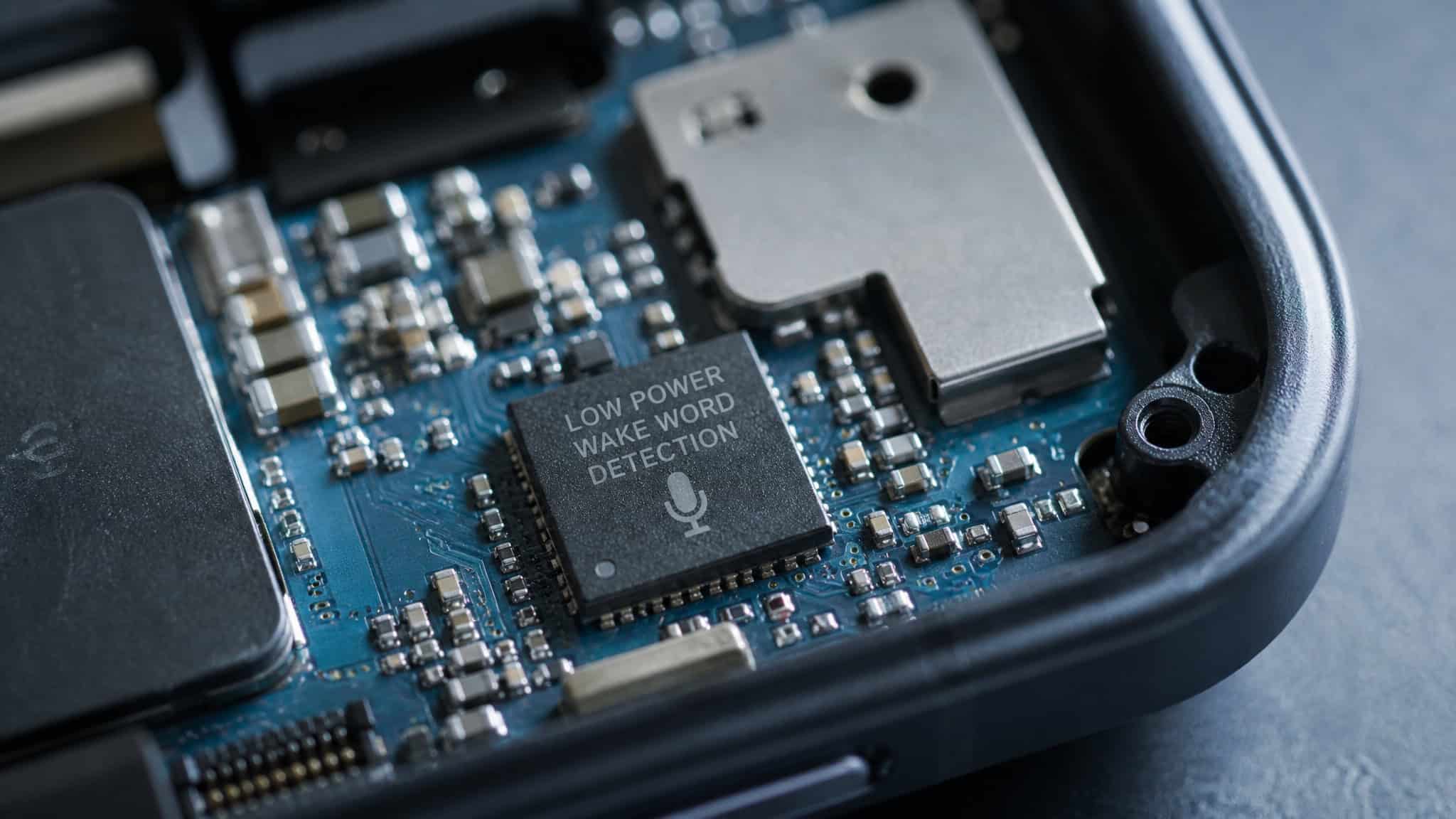
The phone runs a tiny wake-word detector on a dedicated low-power chip. It’s all local processing. The chip listens in short bursts, discards them when it doesn’t hear the trigger, and only after “Hey Siri” or “OK Google” fires does any audio leave the device. The reason for the dedicated chip is practical, not conspiratorial: full audio processing on the main processor would drain the battery within hours, so the phone offloads that job to a specialist. Honestly, it’s kind of elegant once you see the architecture.
The data side is where you should actually pay attention. Apple and Google store a transcript of each voice request by default, and you can review and delete that history in your account settings. False triggers happen, too: a word on TV that sounds like “Hey Siri” can wake the assistant and send a short clip to the server. That’s an unintended bug, but it’s a documented, known one.
Roughly half of U.S. adults use virtual assistants, so this isn’t a niche corner. The mic is technically live in standby. But “live” here means all ears for a catchphrase, not a tape running on everything you say. You can trace the whole pipeline from wake word to storage in our main investigation.
Why the ads feel like proof (and aren’t)
The oddly specific ad is the thing that convinces people the phone is listening. The actual explanation is less cinematic and a lot more comprehensive.
The data machine that already knows you
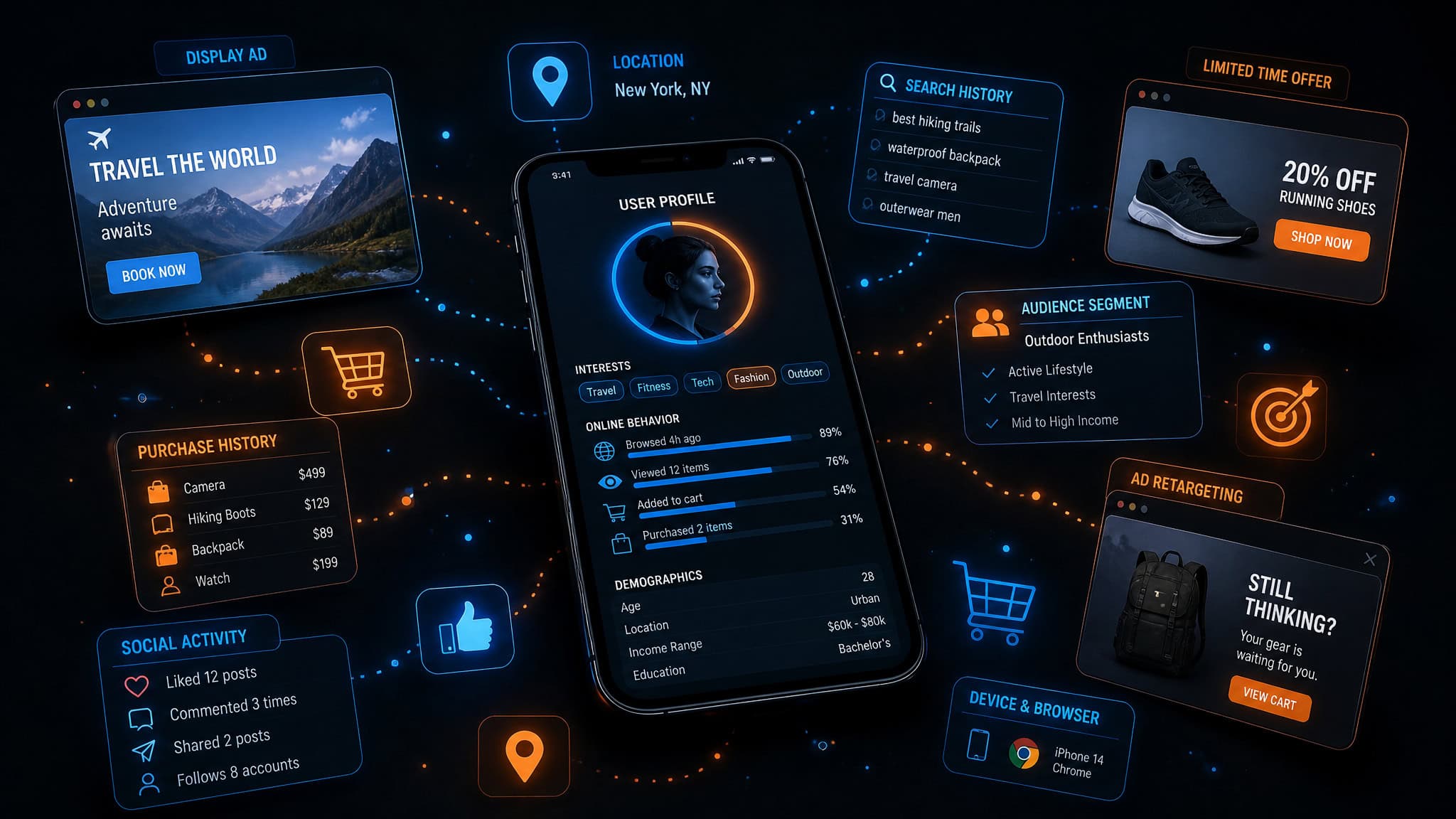
Ad platforms build profiles from browsing history, search queries, app activity, purchase transactions, and location history. Advertising IDs (the IDFA on iOS, the GAID on Android) link that activity across apps and websites. Data brokers buy the data, enrich it, and resell it; Acxiom alone claims about 2.5 billion consumer records. Cross-device tracking ties your phone, laptop, and smart TV into a single identity using IP addresses, logins, and device fingerprints.
Wi-Fi probe data can note that you walked past a store without ever connecting. Contact syncing lets platforms pull interests from the people around you.
That’s a mountain of signal, and it’s always updating, silent, and invisible. The phone doesn’t need audio to know what you want.
Your brain does the rest
There’s a psychological layer on top. Frequency illusion means you notice things more once you’re aware of them. Confirmation bias makes you remember the ads that match your last conversation and forget the hundreds that didn’t. Recency means an ad for something you just discussed lands in your working memory. And the whole system is optimized for relevance, pushing products you’re statistically likely to want.
The direct evidence backs this up. In 2019, a group of cybersecurity specialists ran the test you’d want to run yourself. They played pet food ads near an Android and an iPhone for 30 minutes a day, granted popular apps full microphone access, and waited. No pet-related ads appeared.
The Northeastern network-traffic study likewise found no evidence of apps secretly recording and transmitting audio. Those results don’t prove listening is impossible. They show the dramatic scenario doesn’t play out in controlled testing. For the full split between listening and data collection, Is Your Phone Listening to You? walks through both mechanisms.
When the official answer was wrong: the Siri lawsuit
Here’s the fire under the smoke. In 2025, Apple agreed to pay $95 million to settle a lawsuit over Siri recordings, the closest thing yet to a corporate acknowledgment that unintended recording happened.
The case was filed in 2021 by California resident Fumiko Lopez. It alleged that Siri was triggered by accident during ordinary chats, picked up private audio, and passed short clips to outside companies for ad targeting. Court documents showed Siri could be triggered by sounds as mundane as a zipper or random background noise, and there were reports of recordings being shared with third-party contractors for review. Apple apologized and promised stricter privacy controls.
The nuance matters. This isn’t confirmation that phones systematically record conversations for ads. It’s evidence that unintended activation happened, that recordings were mishandled, and that the privacy controls weren’t sufficient. That’s real accountability, and when the official “it doesn’t happen” line turns out to be wrong, it’s worth saying.
It’s also worth keeping the conclusion proportional. A specific failure, not the full conspiracy.
The one real exception: Pegasus
Now the spy movie scenario, and it’s real. Pegasus, made by Israeli firm NSO Group, is commercial spyware that can remotely activate a phone’s microphone and camera. It takes advantage of unpatched security holes in iOS and Android to install without any user interaction, though it can also arrive through a phishing link or direct installation when the phone is physically accessible. Confirmed targets include journalists, lawyers, activists, and political figures.
Pegasus costs millions per deployment and is sold only to governments. That is not a tool that ends up in a random person’s hands, and you are not the target.
There’s a related trick worth knowing, documented by Check Point Research in 2020. Firmware-hijacking malware can make a phone appear to be off while it stays powered on: the screen goes dark, calls get ignored, button presses do nothing, and the spyware keeps working underneath. A fake shutdown. The certain fix is removing the battery, which genuinely kills the hardware, but modern phones like the iPhone have non-removable batteries, so that’s more theory than practice for most people.
The critical distinction: this is the one real exception to “off means off,” and it requires the phone to already be compromised. The threat model for someone under a hostile government is completely different from the threat model for a regular consumer. For everyone else, this isn’t the risk.
How to check if your phone is listening
The operating systems gave you better tools than most people realize, and a quick check takes minutes.
The indicators you already have
Since iOS 14, an orange dot means the microphone is active and a green dot means the camera. Android 12 added the same kind of indicators. Both platforms also have a privacy dashboard showing which apps accessed which sensors and when, plus a permission manager that lists every app with microphone access. If you see an app you don’t recognize holding mic privileges, that’s your red flag.
The test that almost never works
There’s an informal check floating around called the boat engine test. Talk about something obscure, say boat engines, near your phone and watch whether ads follow. In practice it almost never produces a hit, and that near-constant failure is itself the useful data point.
When you need the professionals
If you’re in a genuinely high-risk category, journalist, activist, political figure, the on-device checks won’t catch something like Pegasus. Citizen Lab and Amnesty International’s Security Lab do forensic analysis for exactly those cases. For everyone else, the indicators and permission reviews are sufficient. Third-party tools like Bitdefender can also flag apps that use the microphone without permission: its scanner checks for spyware and alerts you when your data looks exposed. For a fuller rundown of monitoring signs, our dedicated guide goes deeper.
What to do if you want more privacy
The good news is that you can meaningfully change your setup in under an hour, and most of it uses settings you already have.
The everyday fixes
Disable microphone access per app. On Android that’s Settings, then Permissions Manager; on iOS it’s under Security and Privacy, then Microphone. If you want to kill the wake-word listener entirely, turn off Siri on iOS or Google Assistant on Android. For transcripts, iOS has Settings, then Siri and Search, and on Android you can literally say “Hey Google, delete everything I said today.”
Limit background activity so apps can’t record in the background, turn off permissions and location services you don’t need, and keep the OS updated. Security patches close exactly the holes spyware exploits.
The maintenance habits
Delete your voice history at least twice a year and reset your advertising ID every few months. On Android, navigate to Settings, then Privacy, then Ads, then reset the ID or turn off ad personalization. The tradeoff is honest: disabling the assistant means losing voice commands. These are keep-it-clean habits, not rip-the-mic-out drama.
The nuclear options
For the deeply concerned, there are heavier tools. Faraday bags block all wireless signals. DFU mode on iPhone is the closest thing to a true off switch: connect to a computer running iTunes, hold the Power button for three seconds, press and hold the Home button for ten seconds, then release Power and keep holding Home for another ten to fifteen seconds until iTunes shows a recovery pop-up. To leave, hold Home and Power until the Apple logo appears.
It’s a developer tool, not an everyday move, but it exists. On phones with removable batteries, physically pulling the battery is the only true off. And there are purpose-built privacy phones: a Blackphone, an Android-based device built around security, runs about $630 if you want the hardware approach.
The bottom line
So, is someone listening through your phone when it’s off? The honest answer is yes, but not the way you feared.
A phone that’s fully powered down isn’t secretly recording or uploading anything. But a phone is never fully off: low-power features like Find My and emergency connectivity keep parts alive by design. The phones listen for wake words, not your full conversation, and both platforms store those trigger requests as transcripts you can delete. The targeted ad experience comes from data profiling, not eavesdropping. And the worst-case scenarios, Pegasus and firmware hijacking, are real but require state-level actors and specific high-risk targets. The only way to be absolutely certain is to remove the battery, though that’s not an option on most modern phones.
If you want a clean mental model, think of it like this: your phone pays attention the way a store does. It watches what you do, where you linger, what you pick up. It doesn’t need to hear your conversations to know what you want. That’s less dramatic than the rumor, and it’s also more manageable. The concern is valid, the reality is less scary than the stories, and the controls actually exist, like the little orange or green dot that lights up whenever the mic or camera is active. You can put the phone down without paranoia and pick it up understanding exactly what it’s doing.
Frequently Asked Questions
Is my phone listening to me even when it’s off?
A phone that’s fully powered down isn’t recording, but it’s never completely off. Low-power features like Find My and emergency connectivity keep parts active by design. The phone listens for wake words like ‘Hey Siri’ or ‘OK Google’ only when it’s on, and it doesn’t record your full conversations.
Can someone listen to you through your phone without you knowing?
In most cases, no. The operating system shows indicators when the mic is in use, and apps need permission to access it. The only real exception is state-level spyware like Pegasus, which can remotely activate the mic but requires unpatched vulnerabilities and is used only against high-risk targets like journalists and activists.
Can you check to see if your phone is tapped?
You can check for signs like unusual background noise, battery drain, or data usage, but the most reliable method is reviewing the privacy dashboard and microphone permissions on your phone. For high-risk individuals, forensic analysis by organizations like Citizen Lab or Amnesty International’s Security Lab is the only way to detect sophisticated spyware like Pegasus.
What is the Siri lawsuit about?
In 2025, Apple agreed to pay $95 million to settle a lawsuit alleging that Siri was accidentally triggered during ordinary conversations, recorded private audio, and shared clips with third parties for ad targeting. The case showed that Siri could be activated by sounds like a zipper, but it doesn’t prove systematic recording for ads—it highlights unintended activation and mishandled recordings.
What is the difference between a phone being off and in low-power mode?
When you power off a phone, the screen goes black, but the baseband processor and other low-power chips stay active to support features like Find My and emergency calls. This is by design, not a bug. A truly off phone would require removing the battery, which is impossible on most modern devices. Low-power mode is a separate setting that reduces background activity but doesn’t disable the mic or other sensors.