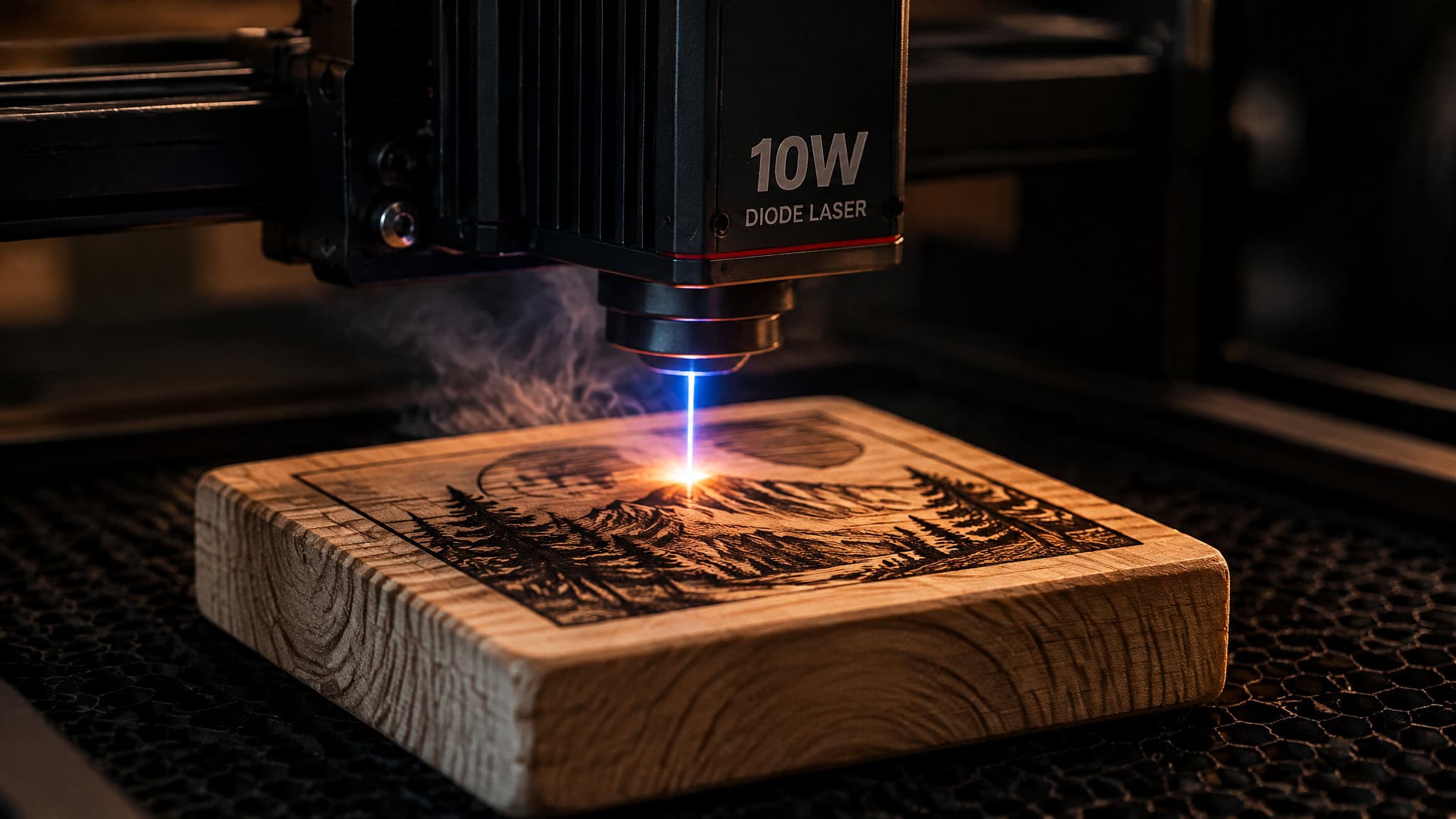
Two coasters can roll off the same laser gantry with the exact same vector file burned into their surfaces, and one of them clears a massive margin while the other barely pays for the electricity. The difference has nothing to do with beam focus or speed settings. One operator sliced a $15 eight-foot 4×4 post on a miter saw; the other bought pre-cut retail blanks at full craft-store markup. If you want a workshop machine to pay for itself instead of sitting around as a weekend toy, evaluate monetizable laser engraving ideas by unit cost, build time, and sales channel, not visual appeal.
Material sourcing and product positioning decide whether a project actually pays off. Because equipment vendors and sponsored creators supply so many of the price bands, production times, and profit estimates in this space with commercial skin in the game, every project below is stripped down to its raw workshop math.
Key Takeaways
A 10W diode laser is the safe hardware minimum for cutting 3mm basswood and engraving beginner wood and slate goods, whereas 5W units struggle with cutting and plated metal jewelry requires an infrared or fiber laser.
Raw material sourcing drives unit margins: an 8-foot 4×4 lumber post (~$15) yields hundreds of coasters that sell for $24 to $50 per four-pack in about 20 minutes of work, and a $2 sheet of 3mm basswood yields three to four incense holders selling for roughly $20 each at farmers markets.
B2B corporate accounts and local word-of-mouth beat crowded Etsy listings, with tactics like gifting a single custom cutting board to a local family or business owner generating six paid orders.
Table of Contents
4×4 lumber coasters
Yes, laser engraving is profitable for beginners with a 10W diode laser when operators target high-margin repeatables like custom wooden boards and drink coasters instead of complex one-off crafts. A 10W diode machine handles every beginner wood and slate coaster project without needing a 20W upgrade, though makers should note that hardware praise in creator demos often carries xTool sponsorship or affiliate ties.
On the unit-economics side, Pruett Woodworking (presenting for xTool) prices a four-coaster set at $24 to $50. Each set takes about 20 minutes, so batching three to five sets per hour brings in a couple hundred dollars in revenue. In that same workflow, an $8 cutting board resells for up to $50, and basswood incense holders yield three to four units per $2 sheet.
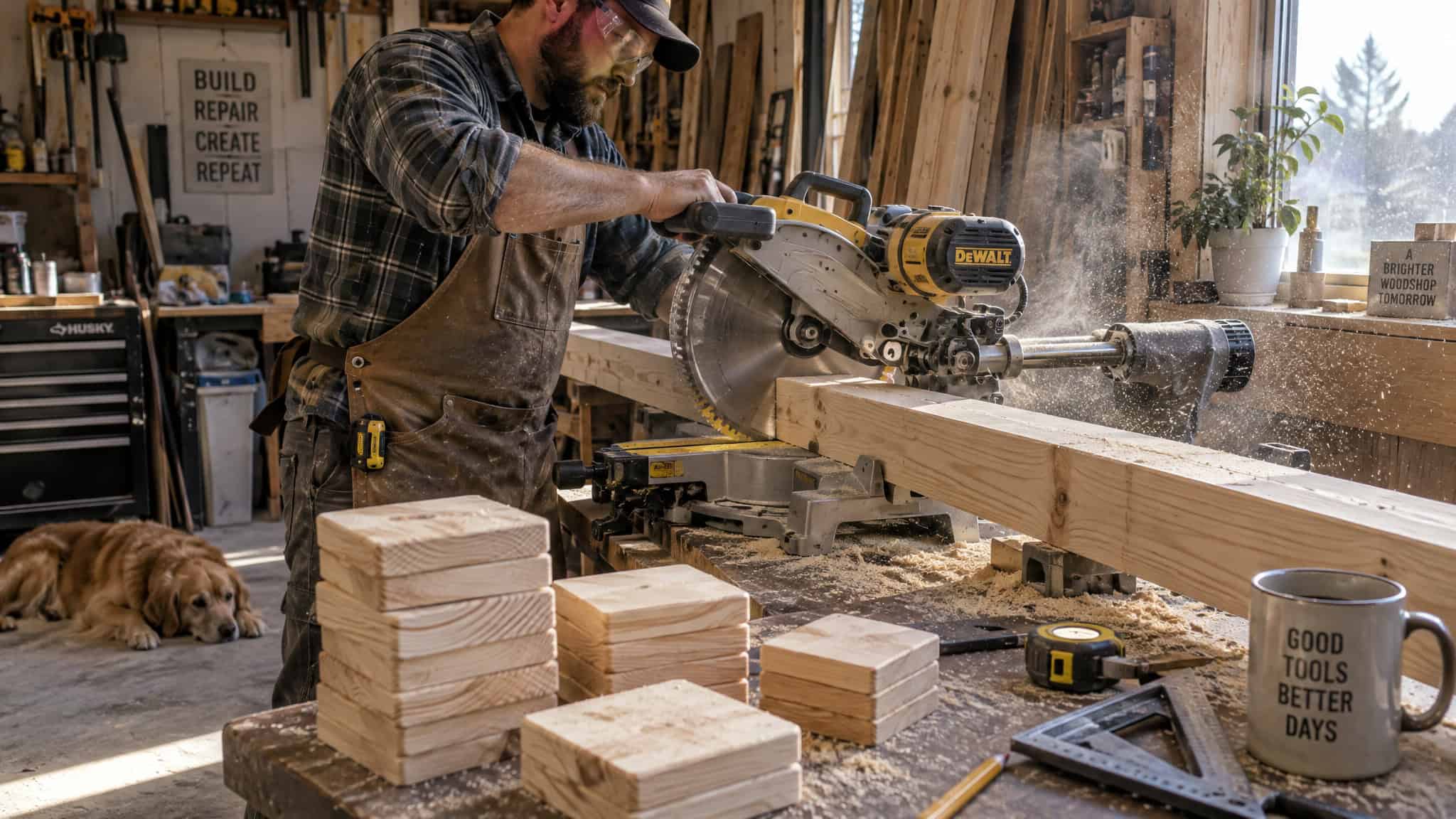
Creator Mike Nardi ranks 4×4 lumber coasters as his highest-ROI project. A single 8-foot 4×4 board costs around $15 and slices into hundreds of blanks, with finished sets of four selling for $25 to $45. Turning dimensional lumber into blanks requires a saw and an orbital sander to knock down splinters.
A miter saw is much quicker and safer than muscling a circular saw through a post. For a cleaner finish, adding green felt to the bottoms costs 75 cents per A4 sheet, a detail Nardi used on Scotty Scheffler golf-themed coasters to match Masters green. His video transcript also contains a partially garbled profit calculation claiming roughly $1,000 from $15 of wood, which is best treated as loose creator math rather than an audited ledger.
If you skip the saw and buy pre-made blanks, slate and acacia wood coasters both engrave cleanly once you dial in your laser settings for engraving darkness. Bar-humor quotes, such as “don’t ask, just pour”, “it’s always beer o’clock”, “hold on, let me drink about it”, and “drink responsibly, don’t spill it”, move sets consistently.
Animal photo engravings also sell well on coasters if you prep a sharp customer photo in software like ImageR and run sample tests on white tile painted black. Beyond retail tables, Cornelius Creations sees steady occasion-driven coaster orders: sympathy gifts for customers who lost a dog, employee Christmas gifts, and bulk corporate client appreciation packages.
Basswood incense holders
Basswood incense holders are one of the highest-margin unique laser engraving products for farmers markets and craft shows when makers cut their own stock from bulk plywood packs rather than buying pre-made giftware. While local booth shoppers reliably gravitate toward oversized porch signs, seasonal holiday ornaments, and custom drinkware, small impulse items anchored by low material costs keep cash-and-carry tables profitable. A 30-pack of 12×12-inch, 1/8-inch (3mm) basswood plywood sheets on Amazon runs about $58 CAD, or roughly $2 per sheet. Each sheet yields three to four incense holders in about 20 minutes of work, and similar holders were spotted at a local farmers market for about $20 apiece.
That per-sheet yield puts wood cost at 50 to 70 cents per holder and generates $40 to $60 in revenue from a single $2 sheet. You can grab two-piece cut files from Creative Fabrica, which offers a free account, and join the parts with super glue or wood glue. Nardi cut his batch on an xTool S1 20W, though a standard 10W diode laser cuts 3mm basswood without issue, and picking the right wood species and grain settings for clean laser cuts keeps char to a minimum on thin ply.
Alongside incense holders, several other items perform well at farmers markets, craft shows, and local booths:
- 4×4 lumber coasters: Sets of four sell for $24 to $50 and take about 20 minutes per set.
- Local high school sports ornaments: Sell for $15 to $20 each, especially when pitched through a partnership with a school principal.
- GPS coordinate keychains: Low-cost wooden, metal, or acrylic blanks engraved with meaningful location coordinates and matching icons.
- Photo collage boards: Oversized cut and engraved frames with nameplates and quotes for graduation displays.
- Oversized welcome signs: Porch and patio boards reading “Welcome to Our Home” or “Backyard BBQ Starts Here” for spring markets.
- Custom cornhole boards: Engraved sets carrying family names or team graphics for the spring and summer barbecue crowd.
Custom chess sets
Two-hour multi-sheet builds push retail prices into the $50 to $120 range, well past single-sheet impulse buys. A custom chess set uses three to four sheets of 1/8-inch basswood plywood and splits its two-hour production window evenly: about one hour of laser cutting followed by one hour of painting, gluing, and assembly.
That second hour is where you justify the higher ticket price. You need two wood stain colors, one light and one dark, to differentiate the pieces and board squares, plus super glue or wood glue for assembly. Adding green or black felt to the underside of the board and piece bottoms gives the set a heavier, finished feel in the hand, and a quick pass of spray lacquer or varnish adds shine. Nardi built a Halloween-themed chess set with custom pumpkin, witch, bat, and coffin pieces, calling it his most fun project to put together.
Cutting boards and serving boards
Starting a custom cutting board and coaster shop pays off for makers who use functional and sentimental design twists to stand out in a crowded market. Heavy saturation in cutting boards simply proves steady buyer demand, and Pruett Woodworking turns an $8 bamboo cutting board into a $50 retail item depending on thickness and material. Makers keep about 10 designs ready for a quick engrave-and-ship workflow across bamboo, acacia, and walnut blanks, often catching acacia boards at roughly 40% off during Hobby Lobby sales or buying in bulk online while saving their top five favorite Etsy name designs for customers to pick from.
Climbing a three-tier differentiation ladder protects that $8-to-$50 spread. Tier one covers last names, business logos, cooking motifs, and sayings such as “made with love in mom’s kitchen”, “made with love in grandma’s kitchen”, or “grandkids welcome” tailored for weddings, housewarmings, Mother’s Day, Christmas, and grandma’s birthday. The second tier transfers a handwritten family recipe from a loved one directly onto the wood.
Tier three adds interactive utility: a popular Etsy file engraved on an xTool P2S puts a shopper’s guide right on the charcuterie board with labeled cheese, cracker, and fruit sections plus pairing tips. Bundling one large charcuterie board with two smaller appetizer or bread boards engraved on a blue-diode xTool F1 Ultra raises the package price. Staging photos or reels with a food spread and candles also hooks buyers, a trick that landed one creator’s charcuterie photo in a local magazine.
Tumblers, flasks, and drinkware
Stainless steel Yeti-style tumblers and ceramic mugs are Cornelius Creations’ single biggest seller and most requested item. The repeatable play here is volume and permanence: combine a unified graphic theme with the buyer’s name on the cup, buy your drinkware blanks in bulk to save money, and kickstart demand by engraving three to five cups with friends’ names to post on social media.
Stainless steel flasks expand the drinkware line in plain steel or colored coatings, and because laser marking is permanent, the design won’t rub off in a pocket. Proven flask graphics include the “We the People” American flag and the Punisher logo paired with “We the People”. These move well as standalone pieces or bundled into groomsmen gift sets with shot glasses and funnels for weddings, Father’s Day, and uncles’ or cousins’ birthdays. Adding wine glasses and other drinkable items engraved with anniversary dates or sentimental text rounds out a reliable year-round catalog.
GPS coordinate keychains
Pairing a set of GPS coordinates with a matching icon turns a cheap, fast-production blank into a high-margin keepsake, provided you don’t ruin the margin with a typo. Personalized keychains and leather bracelets carry names, initials, or the exact coordinates of a first date, childhood home, or engagement spot. Adding a small vector icon next to the numbers, such as a heart for a wedding venue, mountains for a favorite hike, or an anchor for the beach, gives the piece immediate visual context.
Material choice sets the vibe: Nardi notes that metal and acrylic keychain blanks look polished, while wood blanks read as rustic. He also learned the hard way that quality control is mandatory on small personalized goods after misspelling his wife’s name on two engagement-spot keychains, so double-check every text string before firing the laser. To pull in organic orders, share a quick TikTok or Instagram clip of the engraving process and ask viewers to comment with the most meaningful place in their lives.
Custom photo puzzles
A sheet of 3mm basswood and an Etsy puzzle-cut file are all it takes to build a custom photo puzzle: convert the customer’s photo to grayscale, dial in your settings with test engravings, engrave the image, and run the cutting layer. Nostalgia fuels steady orders for wedding portraits, baby pictures for parents and grandparents, profitable pet portraits, vacation snapshots, and hobby imagery. One maker who surprised her boss with a custom puzzle recommends posting an assembly video with heartfelt music to hook families, couples, and pet owners.
Pet products and jewelry
Small shops can add profitable pet products with any standard diode laser, whereas branching into engraved metal jewelry requires stepping up to an infrared or fiber laser. On the diode side, grieving owners buy pet memorial plaques engraved with a pet’s name and dates, while everyday pet owners pick up engraved pet collars and animal photo keepsakes prepped in ImageR. Narrowing down to a specific animal-loving audience works well in practice: Shawn Flow Laser Creations built a targeted niche by engraving pictures of customers’ pets onto key fobs.
With an infrared or fiber unit on your bench, engraving gold-plated and silver-plated necklaces becomes one of the simplest and fastest gift projects in the shop. Cornelius Creations notes that while he personally sells few jewelry pieces, he still recommends the category because the cycle times are so short on the right hardware.
The seasonal product calendar
Layered floral wall art, wooden family tree plaques, and local school sports ornaments sell best for Mother’s Day and Christmas when makers schedule production backward from four major annual demand spikes. Laser engraving is a calendar business covering weddings, housewarmings, Mother’s and Father’s Day, graduation, and Christmas, so waiting until the holiday week to cut samples means missing the payout window.
Graduation
From April through June, US schools and families buy large “Class of 2025” signs, graduate name plaques, wood, acrylic, or foam board full-scale photo backdrops, and oversized photo collage boards with nameplates and quotes that move well on Etsy and at craft shows.
Mother’s Day
For the May 12 Mother’s Day window, top sellers include wall-sized layered floral panels in birch, walnut, or acrylic reading “Home is where Mom is”, alongside single-panel wooden family tree plaques engraved with names, birthdates, and photos for older moms and grandmothers.
Christmas and year-round decor
Local high school sports ornaments sell for $15 to $20 each when you partner with a school principal, a strategy from a creator who also self-reported ~$700 per hour as his best earnings on other projects. Year-round art fairs also reward 3D layered mountain, beach, and lake wall art, maps and silhouette portraits cut from wood or acrylic, plus seasonal bundles featuring floral garlands and spring bunnies.
Large-format outdoor and signage products
Large-format engravers change per-unit economics by cutting whole panels up to 2.5 meters in a single pass without tiling or piecing, and equipment vendor Tyvok claims that running batches of 5 to 10 units per raw sheet cuts labor costs by up to 40% while reducing material waste.
Outdoor products
Spring and summer sellers include custom-engraved cornhole boards with family names or team logos, steel or stainless-steel fire pit ring panels cut with American flags, family names, deer, or forest silhouettes, outdoor bar signs (“Cold Drinks Here”, beer tap labels), and oversized porch welcome signs (“Welcome to Our Home”, “Backyard BBQ Starts Here”).
Signs and panels
A single plywood sheet yields 5 to 10 farmhouse kitchen or pantry signs in one batch run, alongside custom family name, rules, or coordinates signs and intricate wood, acrylic, or PVC decorative room-divider panels.
Wedding and corporate B2B work
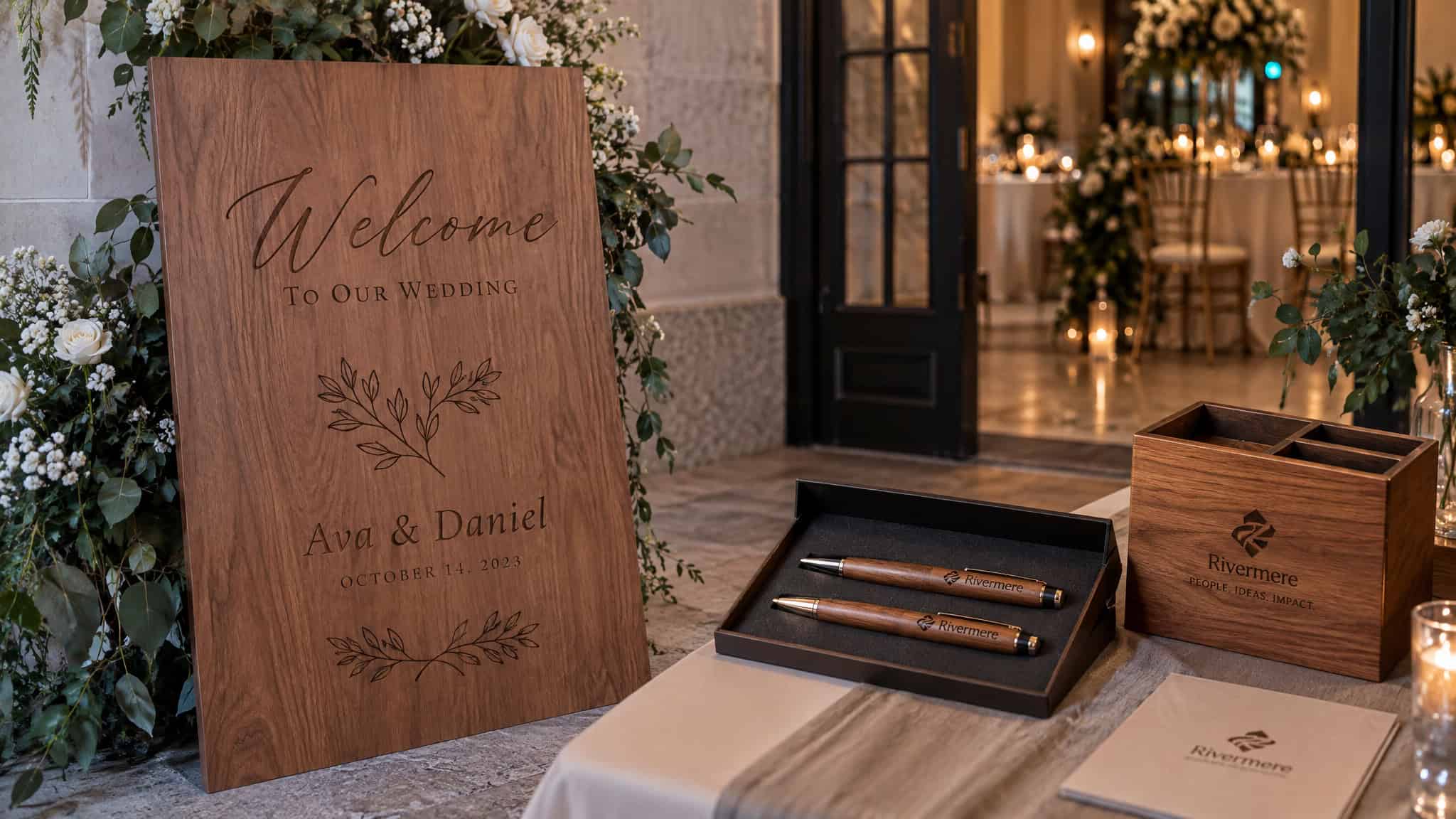
Wedding welcome boards and corporate gift orders are the highest-margin channels for laser shops ready to graduate from crowded Etsy listings and weekend farmers markets. Established event and B2B work covers single-pass acrylic, mirror, or wood wedding welcome boards and seating charts, engraved baby blocks, wooden wedding invitation replicas, anniversary date plaques, corporate recognition plaques, logo-engraved pens, USB drives, high-end notebooks, business card holders in wood, leather, or acrylic, bulk employee Christmas coasters, and workshop or medical tools marked to prevent loss. A reliable way to break into those corporate accounts is building a basswood-and-acrylic desk organizer from an Etsy file on an xTool P2S, customizable with a name, job title, company logo, or motivational quote.
Think of sales channels as a three-step ladder: Etsy is the crowded entry tier, farmers markets sit in the middle, and relationship-driven B2B owns the top margin. To land local corporate work, email a company’s marketing director, ask for their logo file, and gift them one personalized desk organizer to get on their radar for bulk orders. When you shoot product photos of that organizer, stage it with pins, sticky notes, and business cards so buyers immediately see how it works, then bundle it with an engraved pin, matching coaster, or phone holder to bump up the average order value.
Niche products: tech, gaming, and flex-targeted wallets
Wood engraving projects carry well-documented unit costs and retail margins, such as $58 CAD 30-packs of basswood turning into $20 incense holders and $50 to $120 chess sets, whereas acrylic laser projects show up mainly in multi-material desk organizers, earrings, clocks, and wedding signage without separate margin breakdowns. You can dial in your feeds and speeds on these accessible starter projects across wood and acrylic before committing to bulk blanks.
Tech accessories
Functional daily-carry items include low-cost laptop skins and decals, wooden or laser-markable plastic phone cases, monogrammed valet trays and docking stations, personalized AirTag and Tile holders, wall-mounted key and mail organizers with house numbers, and clocks cut from wood slices, vinyl records, or geometric acrylic.
Gaming and pop culture
Gamers buy upgraded Catan and chess board tokens, engraved Xbox and PlayStation controller skins, and movie, TV, or video game coasters and wall art, though all pop-culture and console imagery requires strict caution around copyright infringement.
Wearables and keepsakes
Lightweight geometric or nature-inspired wooden and acrylic earrings pair easily with custom dog tags for keys, bags, and minimalist necklaces.
Flex targeting with wallets
Cornelius Creations buys blank aluminum and wooden wallets via Alibaba or online vendors for limited-run sets that combine two complementing themes to attract a specific community, such as pairing a “We the People” American flag with an American flag made of firearms for a Southern hunting audience. He finishes each wallet with a classy serif-font name in the lower corner and slips an engraved aluminum info and thank-you card inside.
What machine you need
No, you don’t need a large-format laser engraver for most profitable projects: a 10W diode laser handles 3mm basswood cutting and every small-goods project in this guide for less money than a 20W machine. While complete shop startup budgets aren’t fixed across creators, documented 2026 startup inputs stayed modest, pairing bulk materials (~$15 for an 8-foot 4×4 board, ~$58 CAD for 30 basswood sheets) with promotional hardware like the Tyvok P2 2W Galvo Laser at $149 (50% off in 2026 vendor marketing). Keep in mind that creator hardware praise carries sponsorship risk, xTool sent Nardi his xTool S1 20W, and other creators demoed the xTool P2S and xTool F1 Ultra, while Tyvok’s model guides are direct vendor marketing.
The 10W threshold
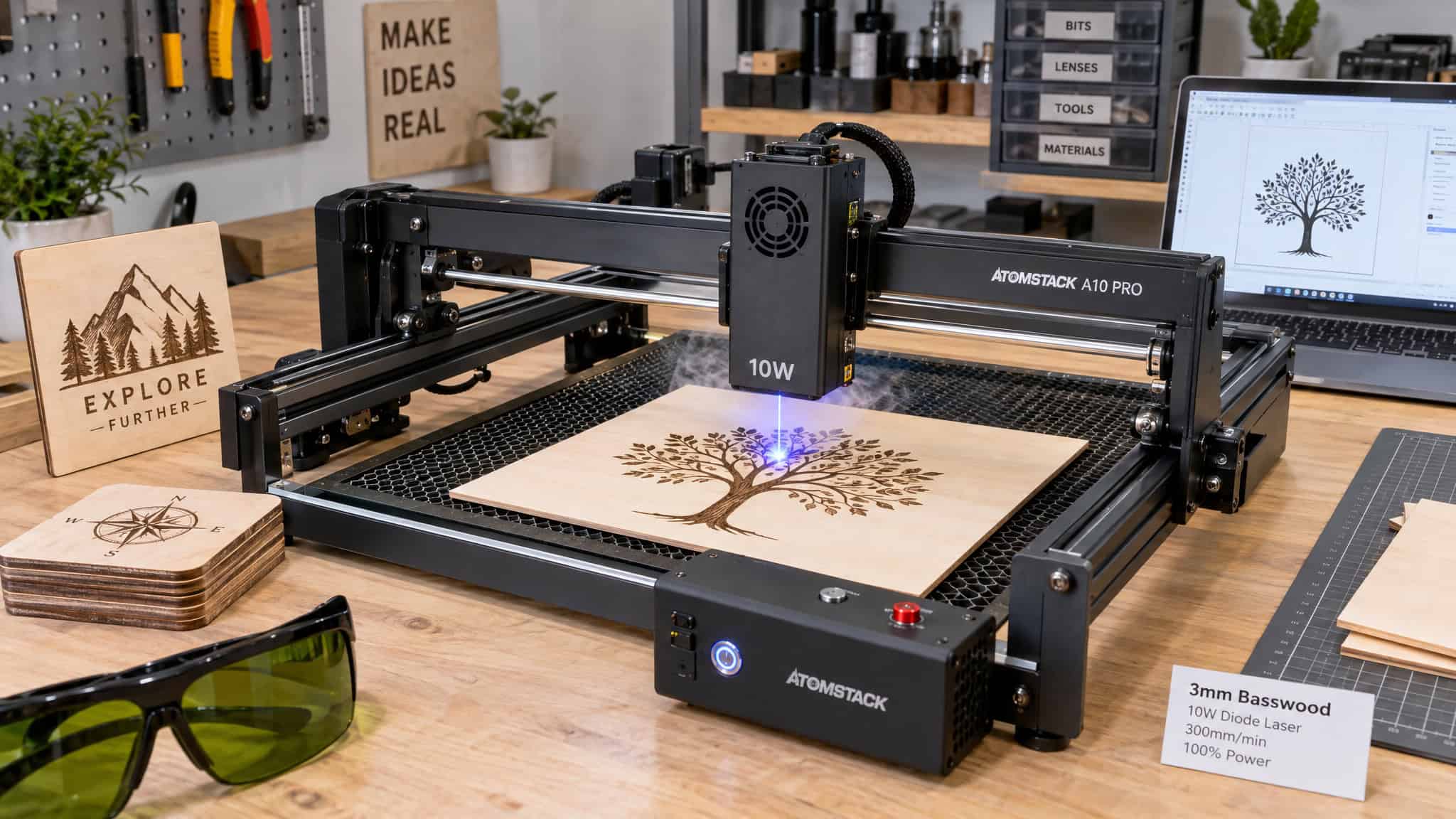
An entry-level 5W laser like the 5W xTool D series can be underpowered for cutting projects, making a 10W diode the safe minimum when comparing beginner diode and CO2 engraving hardware.
When large format matters
Full-sheet systems like the Tyvok S1 (1500x2500mm work area), Tyvok A1 800L (800x400mm), production-focused Tyvok X1S Pro, and the expandable X1S Large Format Starter Pack (X1S 2026) are vendor-positioned strictly for single-pass oversized signage, backdrops, and 5-to-10-unit batch runs.
When fiber or infrared matters
Engraving bare metal and gold- or silver-plated jewelry requires an infrared laser, fiber laser, or galvo unit like the Tyvok P2, which the vendor pitches for gifts, tags, leather, and coated blanks.
Pricing, market research, and validation
Pricing laser engraved products for maximum margin requires calculating margin per hour rather than margin per unit so slow builds don’t bottleneck your gantry. At GeekExtreme, looking past the sticker price to the hourly machine yield is the fastest way to spot a trap: four-coaster sets bring in $24 to $50 for about 20 minutes of work (three to five sets per hour), custom chess sets earn $50 to $120 across roughly two hours, cutting boards turn an $8 blank into up to $50, and local sports ornaments fetch $15 to $20 apiece. Bundling one large serving board with two smaller boards or running 5 to 10 signs per sheet in batch production pushes that hourly return higher.
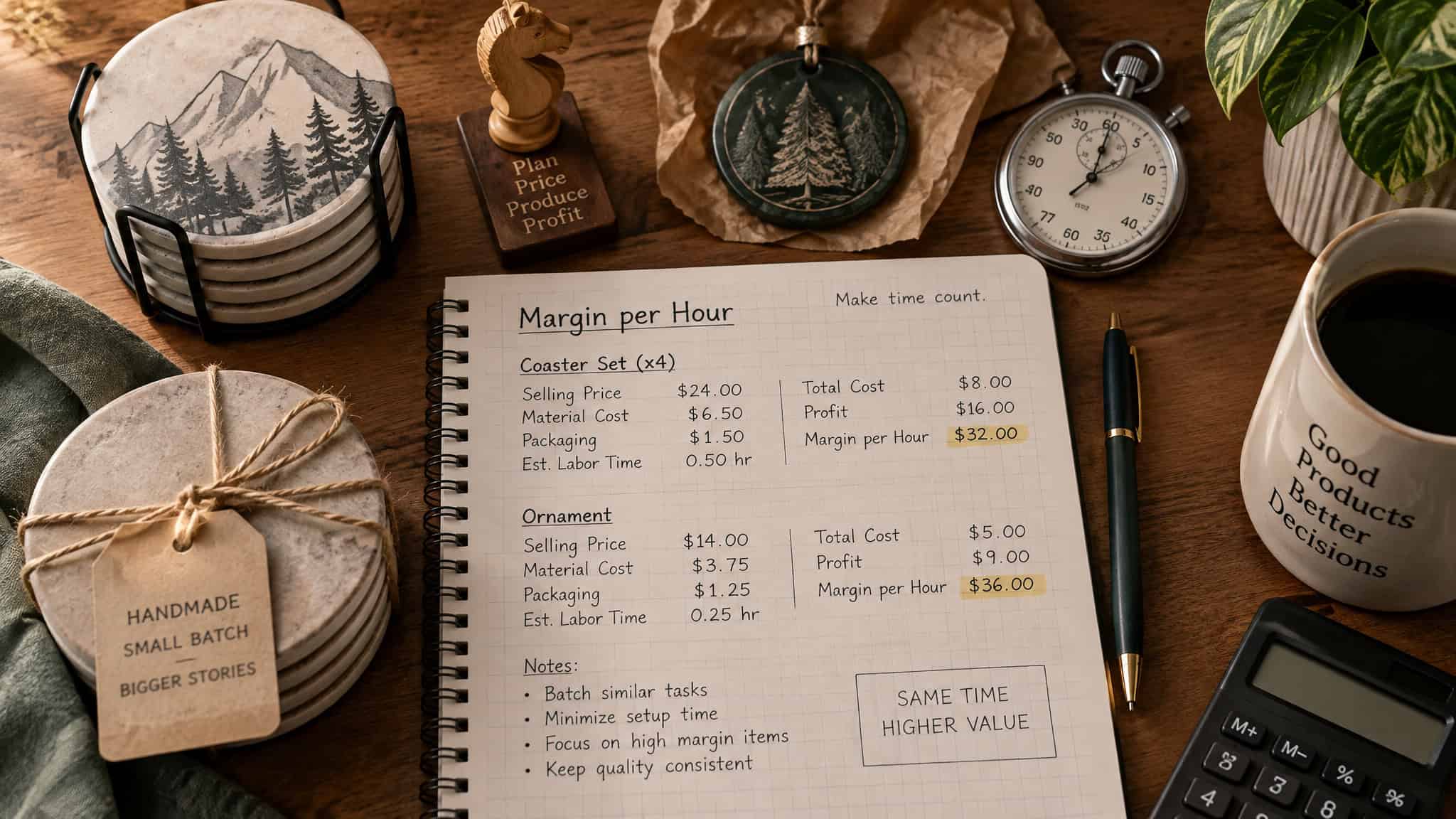
Before buying deep inventory, scout Etsy, Amazon Handmade, and Instagram to spot trend gaps, then validate demand with small batches that fit your current skills and hardware and scale what gets real customer feedback. Protect your unit costs on hardwood, bamboo, anodized aluminum, and quality leather by catching 40%-off Hobby Lobby acacia sales, ordering bulk wallet blanks on Alibaba, or grabbing an 8-foot 4×4 post because it fits inside a car. Most creator demos only share a few found blanks and broad directions, leaving plenty of room to use your own imagination and turn them into finished, sellable designs.
Selling locally without ads
Selling laser engraved products locally without an ad budget starts with engraving three to five cutting boards or tumblers with the names of local families or friends, posting the lineup photo on social media, and giving the items away, an organic seeding play where one free board gifted to a local family or business owner generated six paid orders. Beyond Etsy and Amazon Handmade, active discovery runs through Instagram Reels, TikTok, Pinterest, Facebook groups, YouTube, farmers markets, and high school principal partnerships. Good lighting, staged lifestyle shots with food spreads and candles, short process clips, and product descriptions that highlight craftsmanship, material origin, and gift sentiment turn views into inquiries.
Once a buyer messages you, Cornelius Creations and multiple corroborating creators rank your own character, integrity, and people skills as project number one. Because the seller is the brand, replying to a price check with a warm greeting, the price, design options, and a question back closes the order, whereas a curt “$40” kills it. Cornelius Creations admits he burned time pursuing overly elaborate concepts while buyers simply wanted practical custom goods, summing up the winning workshop rule as doing the simple, or common things, extraordinarily well.
What kills engraving businesses
Laser engraving businesses lose money when operators ruin personalized blanks with spelling mistakes, buy underpowered 5W lasers for cutting jobs, trigger copyright infringement claims on protected logos, or build business plans around unverified creator and vendor profit numbers.
Quality control
A single typo turns a paid order into scrap material, just as Nardi found when he ruined two engagement-spot GPS keychains by misspelling his wife’s name. Verify every letter and date before hitting start.
Legal exposure
Engraving sports team logos, Catan board game tokens, Xbox or PlayStation controller skins, and protected pop-culture art from movies, TV shows, or video games carries real copyright infringement risk flagged across multiple independent creators.
Claims to discount
Treat commercial hype with healthy bench skepticism: Nardi’s partially garbled ~$1,000-from-$15-of-wood coaster calculation and 1,000%+ margin claim across incense holders, coasters, and chess sets are unaudited creator claims, just like the ornament seller’s self-reported ~$700 per hour peak earnings. Likewise, Tyvok’s claims of up to 40% batch labor reduction and a $28 billion annual US custom-goods market carry no independent verification, and the March 5, 2026 Redsail Laser article declaring that the laser engraving market is booming is promotional vendor content.
Frequently Asked Questions
What are some unique laser engraving ideas that sell at farmers markets and craft shows?
Two-piece basswood incense holders are a standout booth item because a $2 sheet of 3mm plywood yields three to four holders in 20 minutes, and they retail for around $20 each. Other strong cash-and-carry and local market sellers include 4×4 lumber coaster sets ($24 to $50), GPS coordinate keychains with location icons, graduation photo collage frames, and $15 to $20 local high school sports ornaments. If you have room for bigger ticket items, oversized porch welcome signs and custom cornhole boards pull in spring and summer crowds.
What are the best laser engraving products for wedding and corporate bulk orders?
For weddings, single-pass welcome signs and seating charts in wood, mirror, or acrylic lead the pack, alongside wooden invitation replicas, anniversary plaques, and groomsmen flask sets. On the corporate side, reliable bulk winners include employee Christmas coasters, recognition plaques, logo-engraved pens, USB drives, high-end notebooks, and tool marking for workshops or medical offices. A smart way to land B2B accounts is gifting a custom basswood-and-acrylic desk organizer with the company’s logo to a local marketing director.
Wood engraving vs acrylic laser engraving ideas: which sells better?
Wood projects have the clearest, best-documented profit margins, like turning an $8 bamboo cutting board into a $50 retail piece, slicing a $15 4×4 post into $24-to-$50 coaster sets, or building $50-to-$120 custom basswood chess sets. Acrylic doesn’t have standalone margin breakdowns in creator data, showing up mostly as an accent material in basswood desk organizers or in wedding signs, geometric clocks, earrings, and keychain blanks where a polished look beats rustic wood. If you want predictable unit math from day one, start with bulk wood.
How do you price laser engraved products for maximum margin?
Price your catalog by hourly machine yield rather than individual unit markup so slow builds don’t clog your gantry. For example, a four-pack of coasters takes 20 minutes and sells for $24 to $50, letting you batch three to five sets an hour, whereas a custom chess set needs a full two hours of cutting, staining, and gluing to justify its $50 to $120 tag. You can push that hourly return even higher by running 5 to 10 signs on a single plywood sheet or bundling a large charcuterie board with two smaller appetizer boards.
