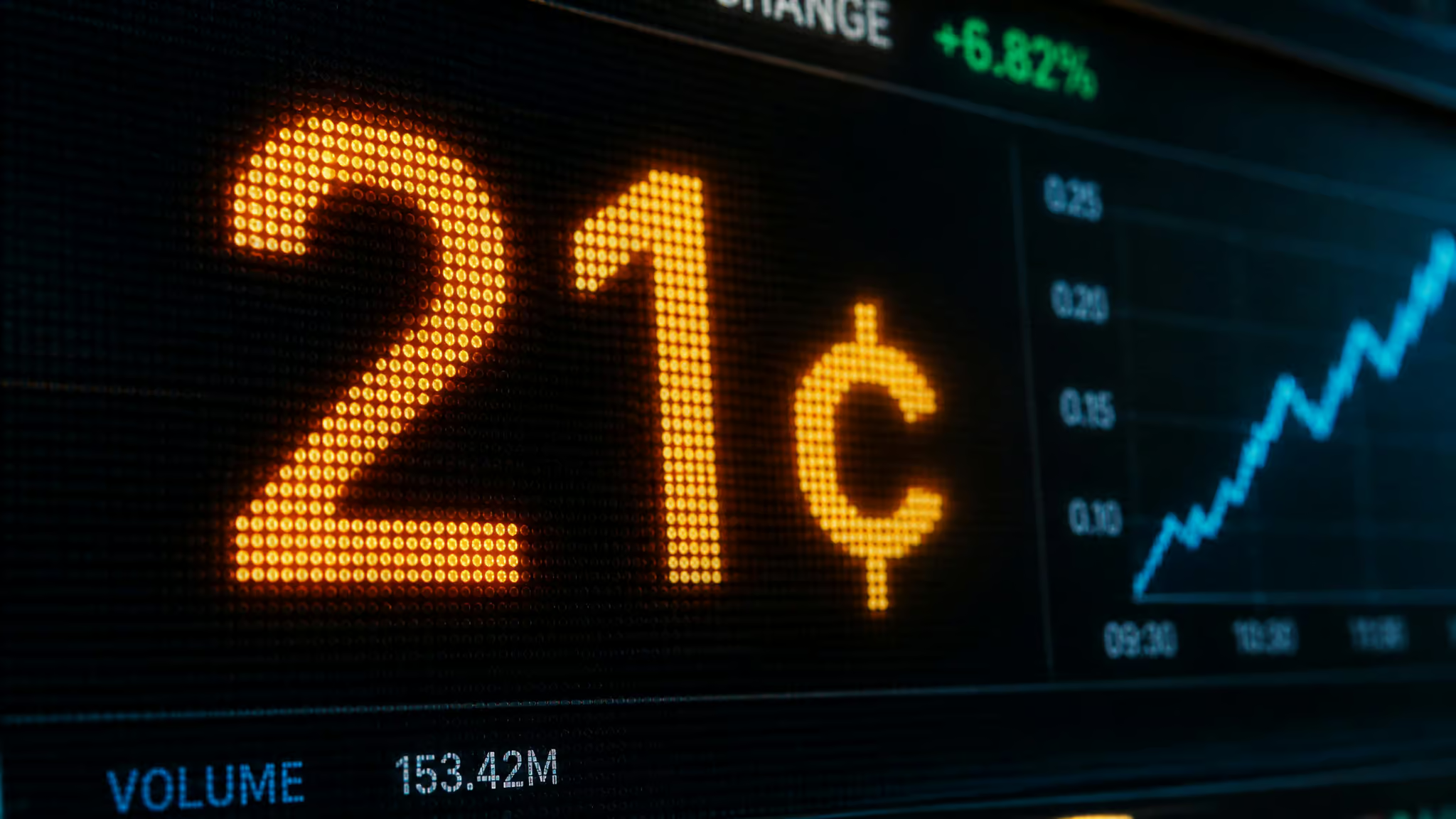
If you’ve never watched a prediction market price a Federal Reserve decision, you’re missing the oddest on-ramp to modern finance there is. The line isn’t even a line in the sportsbook sense: it’s a price. A contract on the Kalshi or Polymarket board that says “the Fed raises rates in June” doesn’t have a spread set by a house; it moves tick by tick as anyone trades it. A liquid market on a mundane question like a CPI print behaves like a small index.
That’s the thing people miss when they hear “prediction market” and immediately think betting app. These things trade amateur derivatives on the future.
That’s why I keep digging. The prediction market ecosystem is a genuinely odd stack: exchanges, sportsbook-friendly knockoffs, and academic ancestors still running in a 1995 era. As of August 2026, the platforms available to a US resident are a patchwork of CFTC regulation, state-sized carve-outs, and outright “the house never takes the other side” mechanics. But this is the year the little binary contract finally feels like a “real” asset class.
Key Takeaways
Kalshi and Polymarket dominate the space, but with completely different personalities: Kalshi is the CFTC-regulated exchange with the broadest market catalog, while Polymarket is the crypto-native global volume champion that trades in USDC and currently has an iOS-only app.
Fees are the real delimiter: Polymarket charges a flat 0.30% taker fee (and rebates 0.20% to makers), DraftKings and FanDuel take 2% of the potential payout at purchase, and OG Predictions charges about $0.02 per contract with no charge on winning contracts held to close.
The legal footing in the US is “mostly yes” rather than clean: these are federally regulated derivatives under CFTC oversight in about 49 states, but Nevada and Nevada have outright bans, and more than forty state attorneys general are currently arguing that sports contracts are basically sportsbook bets.
Table of Contents
What is a prediction market?
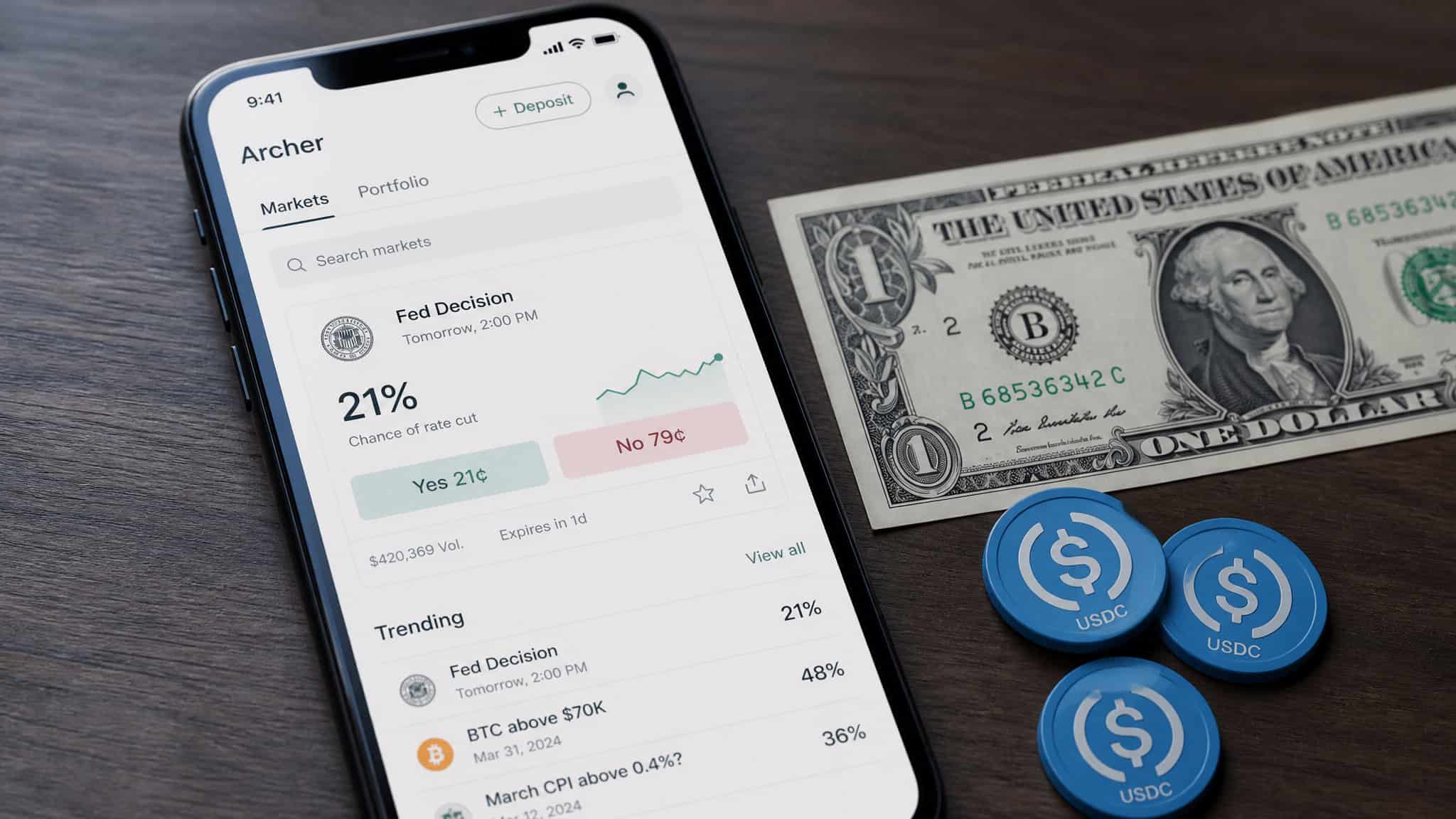
The key thing to remember: a prediction market is an exchange for contracts on real-world events, not a wager list. A binary contract pays exactly one dollar if the event resolves one way and zero if it doesn’t. At, say, 21 cents per contract, you’re looking at a roughly 21% chance that the event occurs. When the event resolves, say the Federal Reserve policy statement lands, each dollar contract is redeemed, or dies. That simple structure is why “price” means implied probability, not house-set odds.
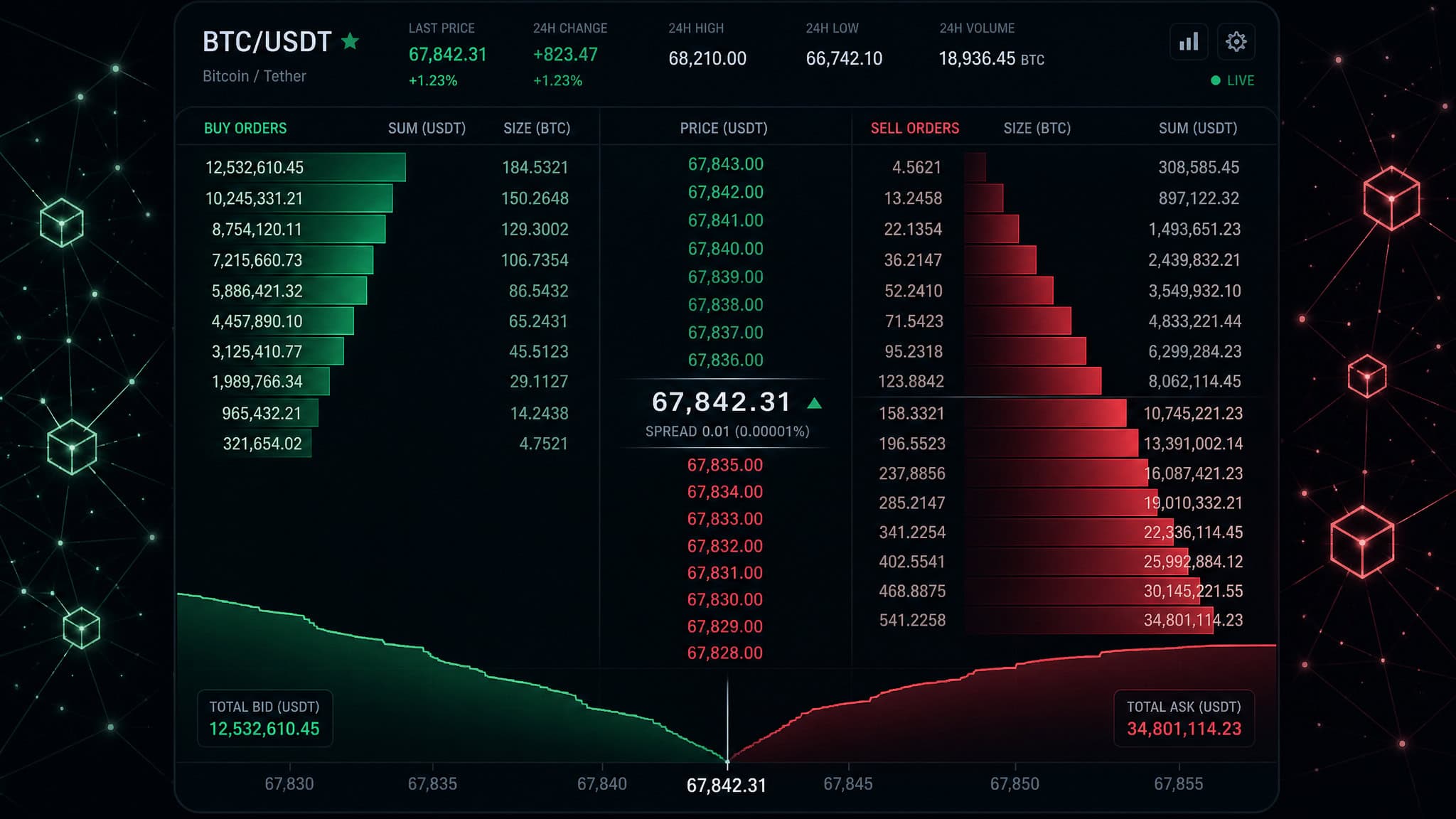
It’s also all peer to peer. Unlike a sportsbook, where the house takes the other side of your wager, a prediction market puts buyers and sellers into an order book, and the spread comes from a trade fee rather than the house edge. Contracts can be bought and sold at any time before resolution, which invites the same kind of timing play you’d do with a stock.
Here’s a worked example: in mid-2026, there’s a real market on the FOMC’s June 17 rate decision. The “No cut” / “No hike” contract trades at 21 cents on Kalshi. Someone who buys 1,000 contracts of a “no hike” at 21 cents spends $210. When the Fed holds, each contract pays $1, so the trade returns $1,000, a 21-cent contract implies a 21% chance, and that number moves with every trade.
Someone who bought “yes hike” at 30 cents, then sells it at 45 cents before the announcement, banks 15 cents per contract. No algorithm, no house call; the market simply discovered a pricing.
The key nuance is that settlement always has a pre-reported official source, the Federal Reserve, the election board, the NOAA station. There’s no argument at 4 a.m. about which “won.” The mechanism is a small miracle, and then the fee structure starts to matter.
Field note: The price you see is the market’s collective probability, not a house line. A 21-cent contract implies a 21% chance, and that number moves with every trade.
Prediction Markets at a Glance: The 2026 Field
There are two blood types in the current US prediction market. The first is exchange-based: CFTC-designated derivatives marketplaces that look like a mini trading venue with an order book and open prices. That’s Kalshi and Polymarket, the big two. The second is sportsbook-forward: DraftKings and FanDuel now pushing sports “forecast” contracts.
If you want the deepest catalog, it’s Kalshi. If you want the most global volume and crypto rails, it’s Polymarket. If you want something that feels like your existing sportsbook, the new arrivals.
But that’s only the beginning of the list. There are also the broker-natives (Interactive Brokers, Webull, NinjaTrader), a b2b-style “enterprise” layer (ForecastEx), the academic sandboxes (PredictIt, Iowa Electronic Markets), and a few bizarre curiosities (MetaMask Markets) in the same stack.
Kalshi: The First Retail DCM
The most “home-exchange” of all the platforms. Kalshi was granted a CFTC DCM license in November 2020 and went live to retail in July 2021, the first (and still largest) legally regulated event contract exchange in America. Its mobile app is the best in the category, maybe the only one that doesn’t feel laggy during a GDP release or an election night.
Kalshi’s state map is the quieter one: roughly 49 states plus D.C., excluding Minnesota, Nevada, and Washington. That’s the key transmitter for a prediction market. Deposits are pretty friction-free, ACH withdrawals are free, and cash-outs are unusually fast, 30 minutes isn’t remarkable, and the company says payments are credited immediately upon resolution.
The fee model, though, is a two-line story. Kalshi collects a 0.07% to 1.75% trading fee (roughly capped at $1.75 per 100 contracts) plus a 3% settlement fee on any winning position. For a $100 win at $1 contracts, the fee stack is about $1.75 trade fee and $3 settlement, better than a 2% social sportsbook if you’re trading efficiently, but it doesn’t scale well for whales.
There’s also a nice deposit bonus if you’re new: $10 in free stuff for a $10 deposit. Just note that offer is excluded in Arizona, Ohio, and Massachusetts. Also keep an eye: Kalshi is now routing block trades for Cantor Fitzgerald’s 3,000 institutional clients, and has filed for a “US500” perpetual, a contract with no expiration date. At that point it stops being a fun side-market and starts acting like a proto-fair-lawn.
Polymarket: The Ethereum Giant
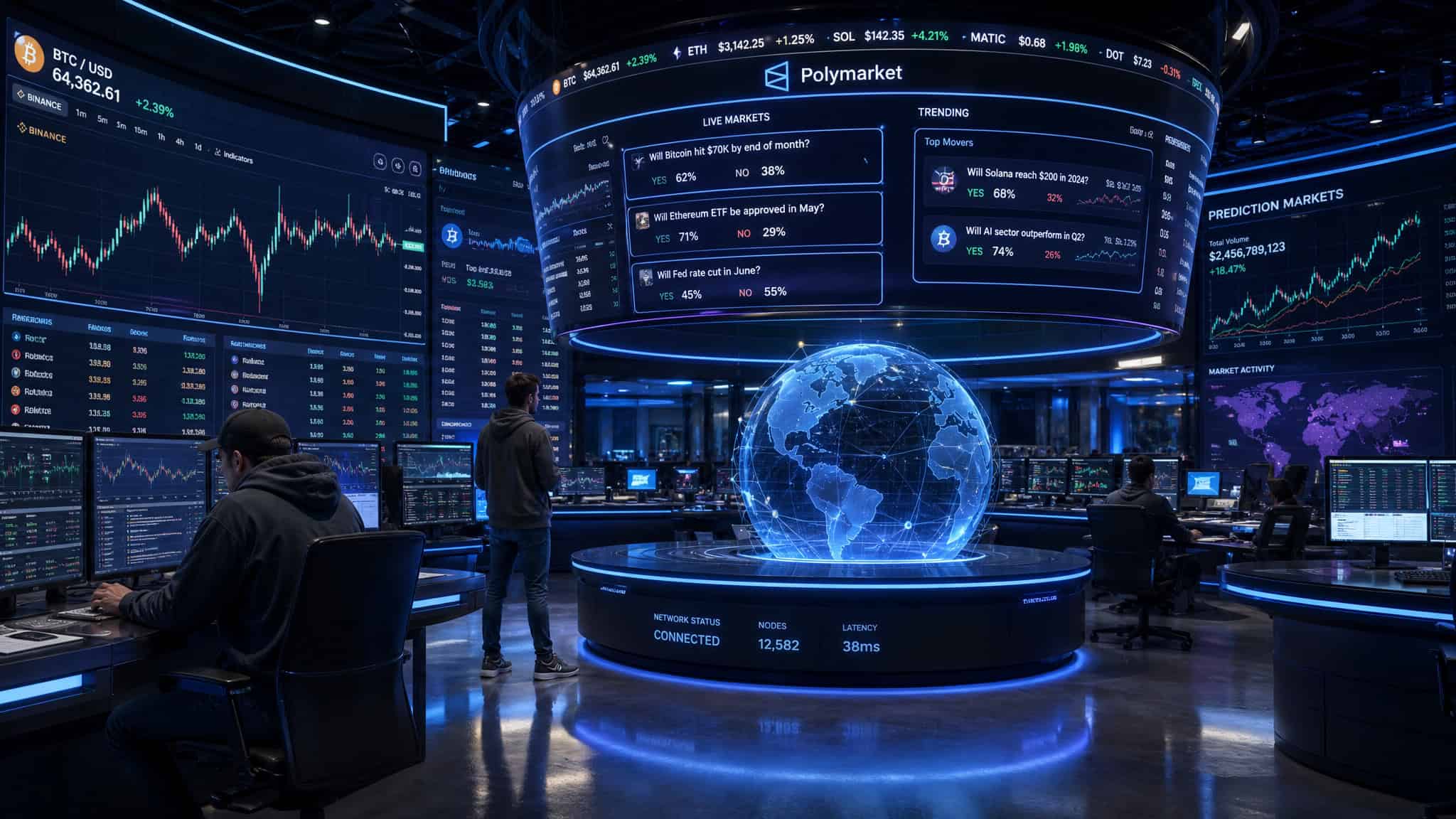
Polymarket is the largest prediction market by volume on the globe, and it’s genuinely a crypto-native creature. It went its whole life as the Portland, Oregon prediction market on the Polygon blockchain. It accepts only USDC, the stablecoin, and (with a combination of wallet-backed deposits and Moon/DeFi transit) it has no plain fiat onboarding. The platform regularly sees tens of millions of dollars in daily volume.
The history here is that Polymarket was banned by the CFTC in 2022, then purchased QCEX (a US-licensed derivatives exchange) in its “re-entry” program, and returned to US-based users in stages. Availability is fairly wide, but Nevada and Washington are fully excluded, and New York is also dicey.
The user fee is the elegant corpse: a flat 0.30% taker fee, a 0.20% maker rebate, and no settlement surcharge on winners. That’s the cheapest of the big three (it’s about a sixth of FanDuel’s cost). But crypto rails on a mobile app means you need a wallet only (the app works with Polygon). It’s an iOS-only app in mid-2026: no Android, no web client.
That’s not a tiny detail if you’re not an iPhone person, though how do prediction markets make money? Fees, spreads, and the subtle art of liquidity incentives are what keep these platforms alive.
Polymarket is also short on what the exchange folks call “responsible trading”: no limit orders, no deposit limits, no self-exclusion. Also the liquidity in the non-headline markets, like state legislature or niche election races, isn’t as thick as you’d think. But if you want the biggest “temperature of the world’s thinking” metrics, Polymarket is the market’s message board.
DraftKings Predictions: The Member with Feet
DraftKings already screams “sportsbook.” So the twist: in December 2025, DraftKings rolled out a Predictions rail, specifically focused on binary event contracts inside its fantasy/sports ecosystem. It operates as a separate feature, and I’d call it a light prediction market rather than a derivatives venue, which raises the question: how are prediction markets different from gambling? There’s no order book, no peer-to-peer liquidity, no open trading counterparty. You pay a fixed 2% fee on the potential payout at checkout (and again if you cash out early), with no trading fee on the maker side.
The functional pitch: if you already live in DraftKings, you don’t need a separate ecosystem for weather, economics, politics, or culture. But that’s also the catch. It’s sports only. The supported markets are outcomes and totals on the major leagues; no props, no combos, no “salary cap” hacks. Huge on the brand recognition, hardline on the margin.
Consider their deposit: $10 start gives you a $40 trade bonus in most states, but the bonus is non-withdrawable. Great for a one-day dabble.
FanDuel Predicts: The Capped-Stop Losses
FanDuel took their own December 2025 bow via a venture with futures exchange CME Group. The headline thing that makes FanDuel interesting is what they call “capped downside”: each contract’s maximum loss is capped at the purchase price, and you can’t lose more than your cost basis in a single trade. This is what the gambling LOD crowd is going to understand. The product is branded as Gemini Predictions, a separate offering from the main sportsbook.
The fee is a flat 2% of potential payout; there’s no fee on losses. The registration minimums are friendly at $10 for a deposit or withdrawal, and there’s a no-deposit bonus if you simply make a trade (a nice litmus test). The ugly part: sports contracts are only offered in about 18 states where FanDuel doesn’t hold a sportsbook license, which makes the geographic answer maddening. And since the CME-Grouping, if you’re in the states where FanDuel sports-book is live, you might not have the contract version at all.
OG Predictions: The Crypto.com Entry With the Most Rails
OG Predictions is (finally) the Crypto.com product, launched February 3, 2026. It is structurally a “licensed prediction market and sports trading platform” but tamer than a sportsbook sign of right. The fee is pretty nice though: about $0.02 per contract, with no charge on winning contracts that you hold to settlement. That’s usually better than a percentage of the payout at volume, though the flat fee gets weird if you’re a kid clearly shooter.
OG also has the widest funding menu of the year: ACH, debit, Apple Pay, Google Pay, PayPal, Venmo, wire, and crypto. That’s the best part. Withdrawals, however, are ACH-only, and instant deposits are locked for 7 business days before the funds are free; that’s a grind.
It covers 40+ states (blocked in IL, ME, MD, MA, MI, NJ, NV, OH) and offers a nice community layer, leaderboard, posts, and parlay building, which is a sportsbook-native gimmick but highly engaging. The welcome bonus is $10 for $20 in trade credits, locked after $50 in volume.
Robinhood Predictions, Novig, ProphetX, Metamask, and the Rest
Robinhood Predictions uses the Kalshi engine, but inside Robinhood’s own app. It launched in late 2024, and it’s notable for three things: it’s available in all 50 states, it uses a broker instead of a crypto wallet, and it has zero explicit user fees (the platform is powered by Kalshi behind the scenes). For someone who just wants a forecast test without learning a new wallet, Robinhood is probably the easiest doorway.
Novig is the wildcard: a peer-to-peer sports market with “no vig” and user-set prices, meaning you can actually get your fill-and-enter at a price the maker feels like. It cleared a CFTC DCM in June 2026, but hasn’t started accepting trades yet. It’s available in about 47 states (not AZ, MI, or NV). The fine print? Minimum age is 21, higher than most competitors, and $5 minimums.
ProphetX is another pending DCM (cleared in June 2026), but as of today the platform’s sports forward. 48 states (excludes Nevada and Nevada), with a $10-to-$20 bonus.
MetaMask Prediction Markets is Web3 speculation that gets real geeky: prediction contracts underwritten by Polymarket tech directly inside your MetaMask wallet. For the uninitiated, what are prediction markets? They’re decentralized betting pools where prices reflect crowd wisdom on future events. It’s EVM token-native, almost any of the Polygon-era coins gets you in. The experiments are capped for true web-scale curiosity.
ForecastEx is less a platform, more a clearinghouse for institutional flow. It’s an IBKR (Interactive Brokers) affiliate that lets you, up to your discount: you trade event contracts through the same account you already have. It’s also carrying Robinhood’s order flow, which explains Robinhood’s less fee-ful approach. Another broker-native is Tradovate, which offers event contracts alongside its futures trading.
Fanatics Markets is the one that got me: pending CFTC approval, but when it launches it’s designed to route sports-event contracts for the Fanatics ecosystem. Not live as of now.
Then there’s the nicely obscure University tier. PredictIt (you should all know it) is now the refugee: failure cap at $3,500 per contract, gives small returns, and it fought out of a CFTC lawsuit while still being run by a New Zealand university, beating the regulator in court in July 2023. Iowa Electronic Markets runs political and economic contracts with a max bet of $500, quietly research-grade. Verse is another academic platform, run by Victoria University of Wellington, offering event contracts for research purposes. Dr. Telescope is the crypto-est of the whole list: a chain token platform for power.
What Can You Actually Trade?
The field is wider than most people realize. Yes, politics runs deep: the “2028 Democratic primary” market has something like $1.43 billion in volume, and ACO sits at 21.4% on Polymarket against 21.5% on Kalshi (a nice example of a hedged price breakdown). Sports? You’ve got Super Bowl 61, the 2027 Pro Football Champion (the LA Rams market is hiding nearly $116 million in volume), MLB long-duration markets at ~$58 million, and a top-of-the-line 2027 NBA title.
Economics? The June Fed decision, the CPI print vs consensus, Bitcoin and ETH price mid-decade, and the new “AI compute” period contract. CFTC has been intentionally opening those.
Weather, culture, and crypto are the fun+ upside: you can find “rainfall in San Francisco this month” contracts, for a tropical hurricane session, even the Oscars and Time’s Person of the Year. That is the (wonderful) breadth.
How to choose your platform
Before you sign up, run through four checks:
- Is my state allowed? If you’re in Nevada or Washington, most Federal-DCM setup is out. If you’re in Minnesota, your options narrow. Novig is 47-state, DraftKings is avail, but the state “grenades” decide who enters.
- Just take the fee slider. Kalshi is cheap if these are high-value winners; Polymarket is better for high-turnover; OG is the cheapest at tiny sizes; FanDuel and DraftKings are “newbie zero-cost” that get expensive at scale.
- What do I want to trade? If it’s politics, Kalshi/Robinhood. Sports: FanDuel/OG with nuance. The splashy culture contracts are basically only Kalshi.
- Funding via fiat or stablecoin? Polymarket is USDC-only; Kalshi and OG (not too many ways) are ACH/debit friendly. Avoid the cash-out hold at OG.
Then the setup is trivial: loop Kalshi’s / Polymarket’s welcome bonuses, run KYC, buy one token contract to learn.
Bottom line: Match the platform to your state, your fee tolerance, and your funding rails. The best exchange for a whale is the worst one for a casual tester.
Is it legal? Yes, with the “it depends” under the letter
This is now the government message: prediction markets are legal under federal CFTC regulation in the US… generally. The moment they, however, has a state panel. Nevada went all the way total ban. Nevada passed its own, and now the wonky calls at state AGs include Oklahoma’s coalition of 41 states, argument that sports-themed contracts are activity under state sportsbook law, which would swerve them to those jurisdictions.
At the federal level, they operate under DCM licorns. It’s not legal in your state if you’re in Nevada, that state, and it’s not if your state sportsbook ban wins day. For most, though: it’s about not too bad.
At the federal level, the locals are regulated as derivatives, not as gambling. The CFTC has issued DCM and DCM status to Kalshi and Polymarket. That central fizzle used to be “red hero in a pre-K”, but not anymore.
The dark side: risk, insider info, and staying human
This isn’t a “prediction market = brilliant wisdom every time” article. It’s not. The market is sometimes plainly wrong when the crowd gets triggered by noise. A living rule pattern is: thin market, thin sets (sometimes more than 10% across), sharp bursts, and no opinion on.
Three real risks:
- State-level legal whiplash. The Oklahoma coalition could CW assert these are sports-betting and block certain contract categories; if that happens, you’ll get margin-call notices from Taylor Jr.
- Insider-edge risks. Insider trading law doesn’t clearly apply to these prediction markets. The stock market has Rule 10b-5, the prediction markets don’t (yet). That’s a giant regulatory no-person.
Several accounts (with Polymarket) moved early on Iran-related “US strikes” and profited; so did you? No laws to stop it.
- Gambling risk. Kalshi once lost a CFTC argument when the regulator said “buy a market is a practical, gambling?” for the past. And a LOT of prediction market usage is roughly identical to a spin when the someone has a gambling-addict temptation. Don’t treat it as free money; it’s a game-ish saved.
No one should read this as “backfill of your 401(k) allocation.” If the fun stops, the National Problem Gambling Helpline at 1-800-GAMBLER is the right endpoint.
Why the next two years make this weird and worthwhile
The plot only twists from here.
- Kalshi is feeling the institutions. Cantor Fitzgerald announced it will route ~3,000 institutional clients into open positions, and Susquehanna International Group has begun actively trading Fed-related contracts on the platform. That’s not a novelty act; it’s institutional flow.
- Kalshi filed for a “US500” perpetual, a never-expiring S&P 500 proxy contract that trades like a continuous future, with no settlement date. It’s a direct bridge between prediction markets and traditional index derivatives.
- CME Group is entering sports via its FanDuel Predicts venture, bringing exchange-grade infrastructure to a space that was once the domain of sportsbook apps.
- AI compute futures: the CFTC has formally requested public comment on novel derivative categories, including contracts tied to the cost of AI compute. Polymarket has experimented with similar products, Liquid Compute is racing to launch, and Kalshi is positioning itself as the first regulated venue for these instruments.
That’s the story in 2026. It isn’t a settle wave like an NFL week. It’s a filing-aboard, order-book world of $1 contracts that just veers wildly finally in the words of the phrase “forecast and trade.”
Bottom line: which one should you start with?
If you have zero context, start with Robinhood Predictions if you already use that app (no new account, fees handled). If you want to feel like a trader, Kalshi is the home-lab route. If you’re tinkering with crypto anyway, Polymarket is its own world, its tiny fee and USDC rails are worth the friction. Everything else is an “awesome but niche” pick.
It’s not a winner-take-all thing: it’s a door you open with your state at check in and your wallet stuck behind rails. That’s the twisted, beautiful patchwork.
People Also Ask
How do prediction markets make money?
Prediction markets make money primarily through trading fees and settlement fees. For example, Kalshi charges a trading fee of 0.07% to 1.75% and a 3% settlement fee on winning positions, while Polymarket charges a flat 0.30% taker fee and offers a 0.20% maker rebate.
Is it legal to use prediction markets in the US?
Yes, prediction markets are legal under federal CFTC regulation in most states, but state laws vary. Some states like Nevada and Washington have full bans, while others like Oklahoma are challenging sports-themed contracts as gambling. Always check your state’s rules before participating.
What can you trade on prediction markets?
You can trade on a wide range of events, including politics (e.g., election outcomes), sports (e.g., Super Bowl winner), economics (e.g., Fed rate decisions, CPI prints), weather (e.g., rainfall in a city), and culture (e.g., Oscars). Some platforms even offer contracts on AI compute costs and stock index levels.
