Key Takeaways
Polymarket pulled in $27 billion in traded volume in 2025. Kalshi cleared another $23.8 billion. Together, they pushed the whole prediction market industry from roughly $9 billion traded in 2024 to over $40 billion in 2025. And here’s the thing: Polymarket’s pitch is no fees, ever. Kalshi’s fee schedule is so thin it looks like a rounding error on a tech startup’s pricing page.
So if nobody’s paying, who’s footing the bill?
That’s the question I went digging into. And the answer is a masterclass in clever business design. These platforms aren’t charging you money on the way in, they’re extracting it from the structure of the market itself. There are three distinct revenue streams at work here, and two of them are invisible to the casual trader. Let’s take the whole thing apart.
Key Takeaways
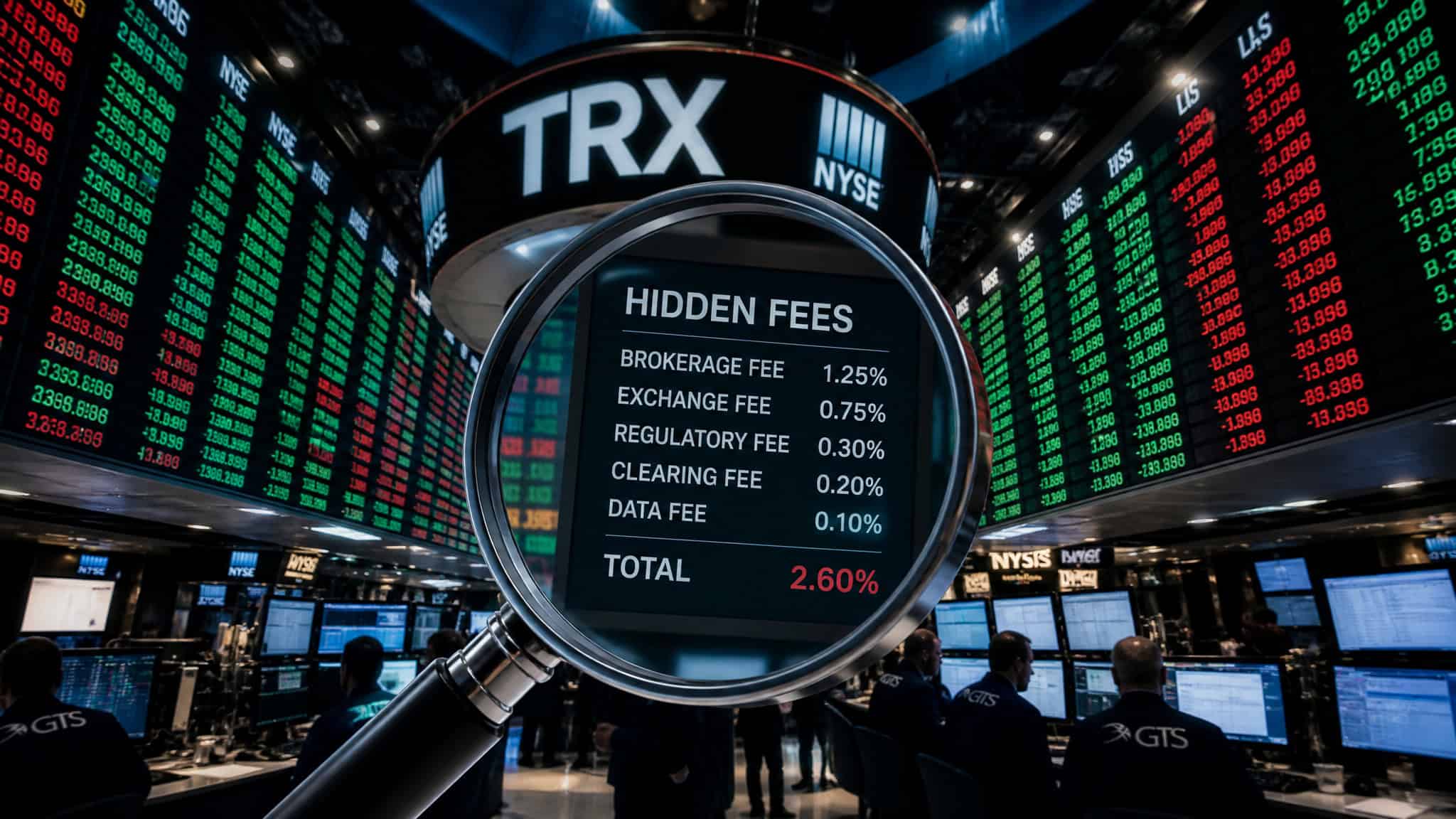
Kalshi’s explicit fee structure takes $0.02 to buy a single $0.40 contract, roughly 5%, while Polymarket charges no visible fees but captures the entire bid-ask spread, making its true cost harder to spot.
Data from a 300,000-contract study of Kalshi shows the average trader loses about 20% even before fees; takers lose 31.46% while liquidity providers lose only 9.64%.
Sports contracts are 87% of Kalshi’s trade volume, and prediction platforms are cannibalizing state-regulated sportsbook handle without paying the same taxes.
Table of Contents
What Are Prediction Markets, Actually?
Before we talk about how these platforms make money, we need to agree on what the product is. The most common form is a binary contract, a “Yes” or “No” bet on a specific event. Each contract trades between $0.01 and $1.00. If you’re right, it pays out $1. If you’re wrong, it pays nothing.
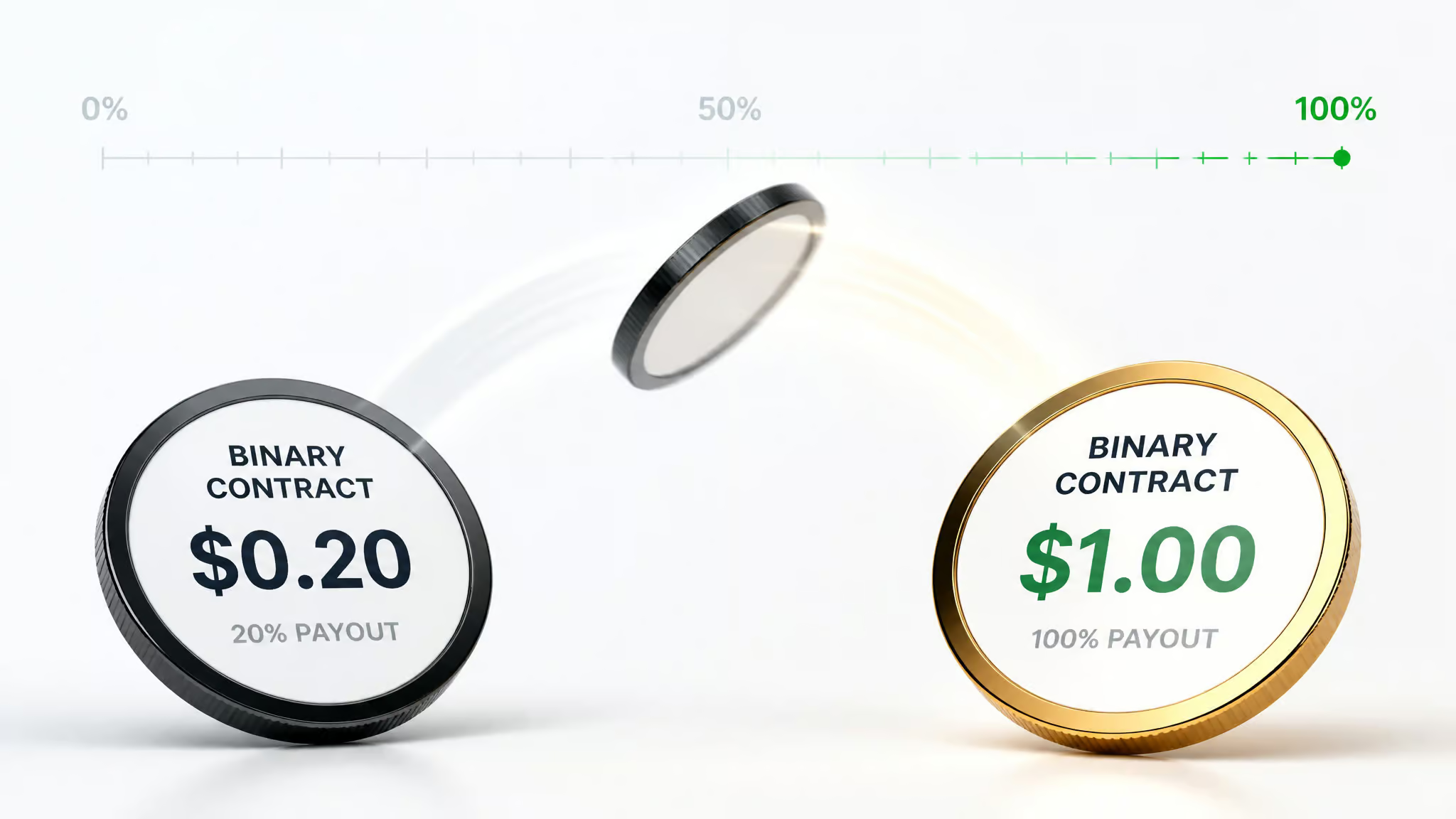
The price tells you the market’s implied probability. A contract at $0.20 means the crowd thinks there’s a 20% chance; at $0.93, a 93% chance. That’s the entire mechanism, and it’s beautifully simple.
The trick is that you can buy or sell these contracts before the event resolves. Say you buy a contract at $0.20 because you think the real probability is 40%. If the odds shift and the contract climbs to $0.35, you can sell and pocket the difference. You don’t have to wait for the outcome. That’s what separates this from a simple wager, it’s a tradable instrument.
The funding mechanics are worth noting too. Kalshi accepts bank transfers and crypto. Polymarket requires USDC stablecoins, which means every dollar on that platform is already living in the crypto ecosystem. And unlike buying stock, you don’t own anything representing future performance.
There’s no company, no dividend, no underlying asset. Just a defined outcome that settles at $1 or $0.
This product is ancient in concept, people were betting on the papal successor in 1503, and Wall Street had election betting by 1884. The intellectual foundation comes from Friedrich Hayek’s 1945 essay “The Use of Knowledge in Society” and Ludwig von Mises’s work on economic calculation. The idea is that markets aggregate dispersed information better than any central planner could.
But the business model is surprisingly new. Early attempts all failed commercially. HedgeStreet got CFTC approval in 2004 but collapsed under the burden of daily settlements between losers and winners, too expensive and clunky for retail. The Pentagon’s 2003 “terrorism futures” program was canceled after a political backlash. Even the Iowa Electronic Markets, running since 1988, is capped at $500 positions, an academic tool, not a business.
It took decades of iteration to find a way to actually make money from this concept. Which brings us to the revenue.
The Three Revenue Streams
There are three distinct ways these platforms collect money. Kalshi and Polymarket each lean on different combinations, and one of the streams is invisible to almost everyone.
Stream One: Transaction Fees
This is Kalshi’s model, and it’s refreshingly straightforward. The platform charges a small fee on each trade. The specifics matter here: buying a single contract at $0.40 costs $0.02. That’s about 5% of the contract’s value. Buy 100 contracts at that price, and you’re paying $1.68 in fees.
Notice that the fee scales with the contract price. The most expensive trades are on fifty-cent contracts, which makes sense, because that’s where uncertainty is highest and people are most willing to pay for information. There’s also a deliberate asymmetry built in: market makers (the “makers” who post liquidity) pay less than the “takers” who cross the spread. That differential is the liquidity incentive. It’s a way of saying: if you’re willing to provide quotes, we’ll charge you less, because your presence attracts the volume we actually monetize.
Stream Two: The Bid-Ask Spread
Polymarket doesn’t charge explicit fees. Instead, the revenue comes from the gap between what buyers will pay and what sellers demand, the bid-ask spread. Every trade crosses that gap, and the platform captures the difference.
This is a volume game. With $27 billion traded in 2025, even a fraction of a cent per contract adds up to serious money. The genius of the model is that it’s invisible. You never see a fee line item. You just see a price that’s slightly wider than it might be on a transparent exchange.
Stream Three: Interest on Deposits
This is the one most users never notice. Kalshi, as of August 2025, pays interest on uninvested cash and even open positions to qualified accountholders. But here’s the structural play: platforms hold user funds before trades settle, during disputes, and between events. That float generates income.
The funding mechanism matters here. Kalshi takes bank transfers and crypto. Polymarket requires USDC deposits, which sit in interest-bearing stablecoin positions. If you’ve got a billion dollars sitting in a stablecoin earning yield while your users wait for their next trade, that’s real money, and the users never see a dime of it.
The “Free” Platform Myth
Let’s punch a hole in Polymarket’s “no fees, ever” marketing, because it’s technically true and practically misleading.
The spread is a fee, you just can’t see it as clearly. And here’s the uncomfortable part: in some cases, the hidden cost of a spread-based platform can exceed Kalshi’s explicit fees.
Harry Crane, a statistician at Rutgers, ran the numbers during the 2024 election. He found that Kamala Harris’s victory odds ranged from 46% to 52% across four prediction marketspurely because of fee and spread differences. That’s not a trivial gap. That’s the same event priced differently depending on which platform you used, and the divergence was driven by the cost structure baked into each market’s design.
Here’s the kicker: fees can actively distort the information value of the market, the very product these platforms are selling. If a 6-point swing in probability is just an artifact of how the platform charges, the “wisdom of crowds” pitch gets a lot murkier.
The nuance makes it even more interesting. Kalshi’s NFL odds were worse than major sportsbooks in fall 2025, the fees contributed to that gap. But during March Madness 2026, Kalshi had better pricing than the sportsbooks after accounting for fees. There’s no clean winner here.
The “free” platform can be the most expensive, and the “fee-charging” platform can sometimes give you a better price. The takeaway isn’t that one model is evil and the other isn’t. It’s that opaque costs can be worse than transparent ones, because you can’t shop around for something you can’t measure.
Market Makers and the Liquidity Machine
The structure behind all of this is a choice between two market architectures, and that choice is a business decision, not just a technical one.
A central limit order book (CLOB) is what you see on modern stock exchanges. Buyers and sellers post their prices, and trades match when they intersect. Kalshi runs a fully centralized CLOB under CFTC regulation.
An automated market maker (AMM) is different. Robin Hanson designed the Logarithmic Market Scoring Rule (LMSR) to guarantee liquidity even in thin markets. The operator’s maximum loss is bounded and predictable, it’s a formula, not a gamble. Polymarket used an AMM until late 2022, then switched to a full order book.
Why the switch? Because CLOBs scale revenue better. An AMM’s job is to provide liquidity at a capped cost. A CLOB generates fees from every matched trade at any volume. The switch wasn’t about better technology, it was about building a bigger money machine.
The maker/taker dynamic is the engine. Makers pay less (sometimes nothing). Takers pay more. That differential is the liquidity incentive, and it shapes who profits.
A Kalshi microstructure study covering over 300,000 contracts revealed the economic consequence: makers lost 9.64% on average, while takers lost 31.46%. The people providing liquidity are losing less than the people taking it, and the platform monetizes both sides.
The House Edge
Here’s the brutal structural fact: most traders lose money, and it’s not an accident.

The same Kalshi study found that the average return before fees was approximately -20%. That’s not a bug. That’s the revenue plan. The house edge is baked into the market structure, with specific mechanisms transferring wealth from retail to professionals.
The favorite-longshot bias is the biggest one. Contracts priced at $0.10 or lower lost over 60% on average. Contracts above $0.50 earned some profit. This bias traces to traders’ “time preferences”, people overpay for longshot excitement and underprice near-term favorites. It’s a psychological pattern, and the platforms know it works.
Beyond the math, there are structural risks: full loss of investment, market manipulation, liquidity constraints, information gaps, and behavioral influences. The platforms are running a system that’s designed to extract value from predictable human biases. It’s not malicious, it’s just how the machine works.
Sports Contracts: The Real Revenue Engine
Now let’s talk about what’s actually driving the numbers.
Sports contracts are 87% of Kalshi’s trade volume, with parlays included, that’s the bulk of the entire platform. This isn’t surprising once you think about it. Elections happen every four years. Sports happen hundreds of times a week. Every game ends with a definitive result. Millions of casual fans already understand the odds.
But there’s a deeper play here. The industry jumped from $9 billion to $40 billion in traded volume between 2024 and 2025, driven by sports. The reason is a regulatory arbitrage that’s almost too good to be true.
Sports betting is legal in 39 states and DC, but those sportsbooks pay state gaming taxes and require bettors to be 21+. Prediction platforms aren’t subject to the same state gaming laws, and they only require users to be 18+. Eilers and Krejcik, a gambling research firm, estimated that 69% of sports contract volume came from states without legal online sports betting. 43% came from Texas and California alone, two of the biggest states where sports betting is still illegal.
The platforms found a loophole. They’re offering a sportsbook-like product through a financial market structure, and they’re sweeping up demand that the regulated gambling industry can’t touch.
Sportsbooks vs. Prediction Markets
The business models are fundamentally different.
A sportsbook takes the other side of every bet. If you win, the house loses. Profit comes from the public losing overall. A prediction exchange matches buyers and sellers and takes a cut of every transaction. The platform doesn’t care who wins, it gets paid either way.
The Betfair precedent shows what happens when an exchange enters a sportsbook’s territory. When Betfair launched in the UK, it drove William Hill’s gross margin from 20.7% to 8.4% over three years. But William Hill’s gross win still grew from $500 million to over $1.2 billion over a decade. Compressed margins, expanded market, that’s the classic exchange effect. The pie gets bigger even as each slice gets thinner.
But there’s a structural problem with comparing exchange volume to sportsbook handle. Exchange volume counts contracts bought and sold, so the same money can be counted multiple times. Sportsbook handle counts money wagered once. And because a full event contract is only worth $1, retail traders can move massive volume with tiny cash positions. The comparison is structurally misleading.
A 2026 Citizens Bank note estimated prediction markets already cannibalize 5% of sportsbook handle. That’s significant, and it has a fiscal consequence.
Here’s the concrete math for New York. Mobile sportsbooks generated roughly $2.6 billion in gross gambling revenue in state fiscal year 2026. New York’s tax rate is 51%, among the nation’s highest, producing about $1.3 billion for education, youth programs, and problem-gambling services. If 5% of that handle shifts to prediction markets, New York loses an estimated $55.8 million in tax revenue and $52.5 million in sportsbook revenue. About 70% of New York’s budget is committed to fixed obligations, so that revenue erosion hits discretionary spending directly.
The platforms are running a tax arbitrage at a massive scale. They’re selling a gambling product under a financial market license, and the states are watching tens of millions of dollars walk out the door.
Robinhood and the Retail Pipeline
Distribution is the multiplier, and Robinhood is the biggest channel in the game.
Robinhood launched a prediction markets hub in 2025 through partnerships with Kalshi and ForecastEx. Piper Sandler estimates that 25-35% of Kalshi’s volume comes from Robinhood users. That’s an enormous concentration through a single channel.
The economics are straightforward. Robinhood gets a sticky, daily-use engagement product, something that keeps users coming back to the app. Kalshi gets millions of retail users without buying them one by one. Revenue is shared through the partnership model.
And here’s the deeper point: retail users are the “takers” who pay higher fees. Remember the data, takers lost 31.46% on average. The more retail participation these platforms can pull in, the more profitable the maker/taker differential becomes. Robinhood’s user base isn’t just volume. It’s a pipeline of takers.
Robinhood also purchased QCEX, a licensed derivatives exchange and clearinghouse. They’re not just partnering with the prediction market infrastructure, they’re buying it.
The Regulatory Price Tag
The legal battles aren’t an external constraint. They’re an operating cost built into the business model.

The Commodity Futures Modernization Act of 2000 required prediction markets to self-certify contracts with the CFTC. That’s the fast-track listing process that lets platforms bring new products to market without prior approval. Dodd-Frank added a public-interest review for certain contracts in 2010. The result is that platforms can list new products at remarkable speed. Kalshi self-certified its Super Bowl contract days after Crypto.com‘s contracts drew CFTC attention.
The state vs. federal conflict is where it gets messy. As of June 2026, jurisdiction is actively in litigation. States won 14 preliminary injunctions or temporary restraining orders at the district court level. Nevada sent the first cease-and-desist to Kalshi in March 2025, and Kalshi sued Nevada regulators by month’s end. CFTC Chairman Michael Selig asserts exclusive federal jurisdiction, and the CFTC sued three states in March 2026.
The existential risk is the classification of sports contracts. If they’re labeled “gaming,” they lose federal cover and face state licensing and taxation, the end of the arbitrage that made these platforms profitable.
Globally, the picture is similar: Singapore blocked Polymarket in December 2024, and Thailand followed in January 2025. Spain banned both Kalshi and Polymarket for three to four months starting May 2026.
The UK treats prediction markets as betting, requiring Gambling Commission licenses. There’s no unified EU framework, and Belgium, France, Italy, Poland, and Romania have each banned Polymarket. Australia and New Zealand have moved against the platforms too.
Each ban is a real cost, legal defense, compliance adjustments, lost users. The platforms are running a global legal arbitrage, and the map is shifting under their feet.
Settlement and Oracles
The settlement process is where the model meets reality, and it’s where credibility, and legal exposure, get tested.
Regulated exchanges like Kalshi settle contracts according to a rulebook filed with the CFTC before trading. Winning contracts pay $1; everything else expires worthless. It’s clean and enforceable.
Polymarket uses UMA’s “optimistic oracle.” Proposed resolutions stand unless challenged, disputes escalate to the Data Verification Mechanism (DVM) where UMA stakers vote secretly, and a dispute resolves when at least 65% of staked UMA agrees. UMA reports 99.8% of requests resolve without escalation, but the 0.2% that escalate are the ones that matter.
The Khamenei contract is the cautionary tale. Kalshi listed a contract on whether Ali Khamenei would cease to be Supreme Leader of Iran before March 1, 2026. Khamenei was killed on February 28. Kalshi applied a “death carveout” in the contract rules, and a proposed class action covering roughly $54 million in positions was filed in March 2026.
Kalshi reimbursed trading fees and net losses on the market. The platform’s discretion cost them millions and opened a legal liability that hasn’t closed.
The Zelenskyy suit contract is the other case. Polymarket offered a contract on whether a photo or video of Zelenskyy wearing a suit would appear between March 22 and June 30, 2025. More than $237 million traded. UMA resolved the market “No” on July 1, reversing an initial “Yes” outcome. Critics pointed to weaknesses in token-weighted voting, but no manipulation was substantiated.
These cases frame a genuine trade-off: decentralization versus truthfulness versus scalability. You can’t have all three in moving off-chain information onto a blockchain, and the failures surface exactly where the money gets contentious.
Integrity Costs
Platforms have to spend real money on KYC, consumer protection, and legal defense, because manipulation and insider trading are inherent to markets where participants can influence outcomes.
The examples pile up. The CFTC charged an employee at a brokerage firm for using knowledge of customer positions to trade against them. Mr. Beast’s editor used insider knowledge of pre-recorded videos to trade accurately. Kyle Langford traded on his own election.
Kalshi and the CFTC fined him nine months later. Israeli authorities accused two people of using classified information to bet on Polymarket.
There are no insider trading laws regulating prediction markets in the US. The legal framework hasn’t caught up, and the platforms are operating in that gap.
Market manipulation is even more visible. A Polymarket weather market resolved based on a temperature sensor at Charles de Gaulle Airport, after a user heated the sensor with a heat source to profit from a false price. A Tradesports trader in 2004 short-sold Bush contracts so heavily that the price hit zero before rebounding.
The irony is that manipulation attempts can increase market accuracy, because they create profit incentives to bet against the manipulator. That self-correction is a genuine mechanism, and it works most of the time.
The marketing costs are more embarrassing than criminal. Kalshi and Polymarket raced to buy social media influencers throughout 2025. Kalshi created parallel versions of its site for influencers to fake wins without disclosure. A TikTok ad featured a young woman claiming Kalshi trades paid two years of rent. Both exchanges ended or shrank influencer programs in early 2026 after some influencers posted antisemitic content.
Addiction is the other cost. Clinicians say prediction markets generate the same “cycle of anticipation, action, and reaction” as traditional gambling. DSM-5 criteria apply. The National Council on Problem Gambling describes risks similar to sports betting. There’s a helpline number, and it exists because this product is structurally habit-forming.
The Gambling Classification Question
This is the question that determines whether the whole business model survives.
Leo Chan of Sportstensor argues intent differentiates: prediction markets exchange accurate information; gambling is primarily entertainment. Daniel O’Boyle of InGame sees no distinction: staking money on an event outcome is gambling.
The classification isn’t philosophical. It’s the business model determinant. If sports contracts are “gaming,” they violate tribal-state compacts under the Indian Gaming Regulatory Act and threaten tribal gaming revenues. They’d face state licensing, taxation, and age restrictions. The regulatory arbitrage, the thing that makes this industry profitable, would evaporate.
The state view is clear: sports event contracts are “almost indistinguishable from sports betting” but offered under the legal guise of hedging, investing, or forecasting. The regulatory patchwork is a mess: the UK treats them as betting, the EU has no unified structure, and several countries ban them outright.
So that’s the map. The platforms extract value through explicit fees, invisible spreads, and interest on deposits. They scale through sports contracts and retail distribution channels. They manage regulatory risk as an operating cost. And they face an existential question, gambling or not, that no court has definitively answered.
The machine works. Whether it keeps working depends on a classification decision that’s still in litigation.
If you want to dig deeper into how these markets work and what separates them from traditional gambling, I’ve covered the mechanics in more detail in the related guides on prediction market mechanics and the gambling distinction. And for the full legal labyrinth. CFTC jurisdiction, state conflicts, and what’s actually settled, the guide on US legality has you covered.
People Also Ask
Do people make money on prediction markets?
Most don’t. A study of over 300,000 contracts on Kalshi found the average trader loses about 20% before fees. Takers—those who cross the spread—lose an average of 31.46%, while liquidity providers lose only 9.64%. The house edge is baked into the market structure, with the favorite-longshot bias being a major factor.
How are prediction markets not gambling?
That’s the central legal question, and it’s still unresolved. Platforms argue they’re financial markets that aggregate information, not gambling. But states counter that sports event contracts are ‘almost indistinguishable from sports betting.’ The classification matters because if they’re labeled gaming, they lose federal cover and face state licensing and taxation.
Who profits from prediction markets?
The platforms themselves profit through three streams: explicit transaction fees (Kalshi charges about 5% on a $0.40 contract), the bid-ask spread (Polymarket’s invisible fee), and interest on user deposits. Market makers also profit by losing less than takers. Retail traders are the pipeline that makes the whole machine work.