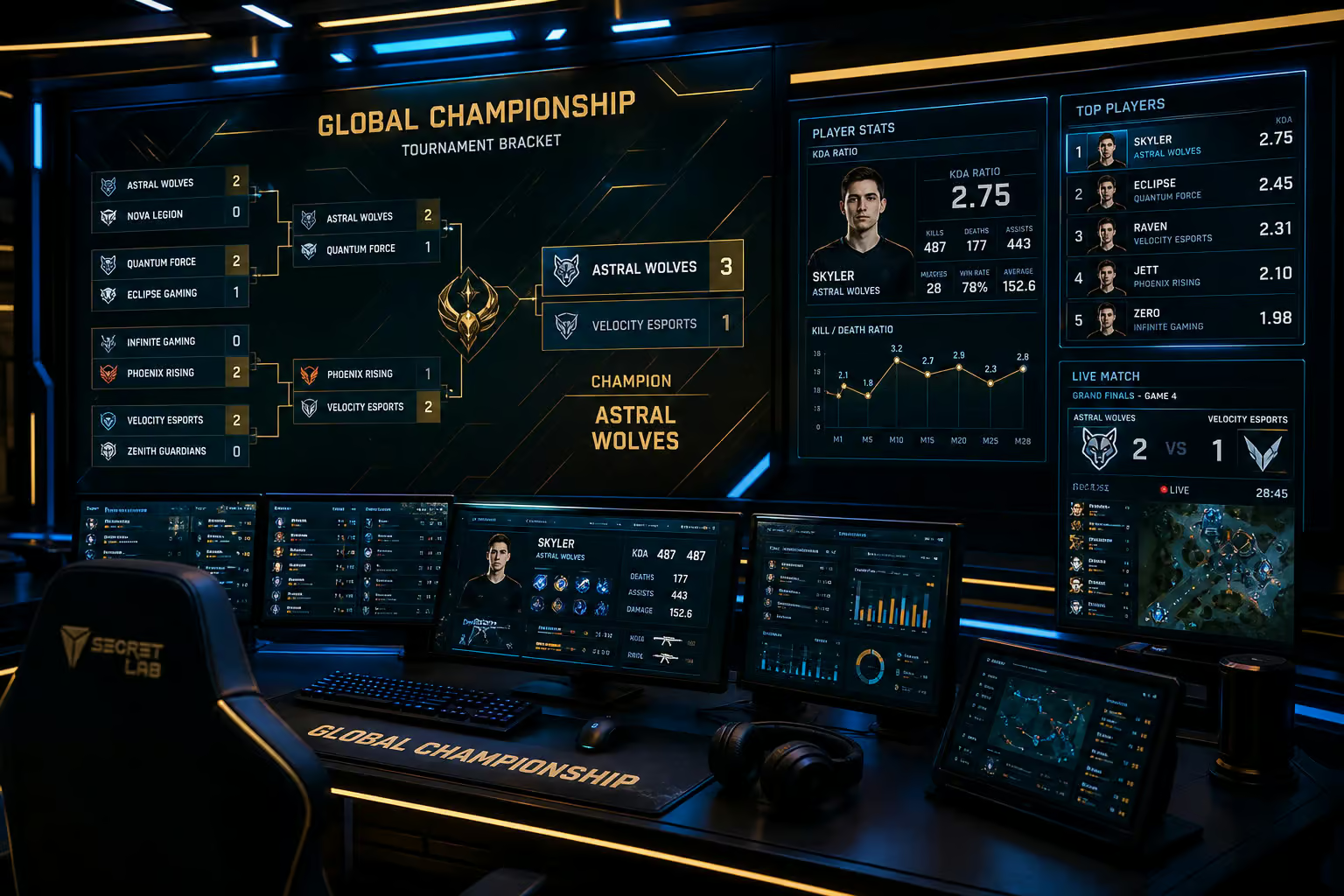
Tracking down a specific roster swap from three years ago, or figuring out which region a player actually came from (not which flag they play under), is exactly the kind of thing that sent me digging through three different wikis before I found the right one. There’re multiple wikis for League of Legends, and they serve very different purposes.
Leaguepedia is the community-run wiki for League of Legends esports, living on Fandom. It’s the place to go when you want tournament results, player histories, contract data, and live match schedules. But it’s not the only game in town, and it took me a while to figure out which wiki does what. Here’s what I found digging into Leaguepedia’s policies, features, and quirks—and how to get the most out of it.
Key Takeaways
Leaguepedia uses Country of Birth (COB) instead of nationality because COB is immutable and verifiable, avoiding problems with dual citizenship and unreliable residency data—with only one player (Huhi) generating regular complaints about the policy as of May 2016
The wiki maintains strict notability guidelines for support staff, with four explicit reasons: difficulty assessing impact, scarce data, no data loss from omission, and lack of relevant stats
The wiki identifies 349 pages that need help, including specific gaps like “Garena Premier League/Opening Event/Playoffs” and “Champions/2013/Summer” missing statistics pages
Table of Contents
What Is the League of Legends Esports Wiki?
Leaguepedia is the esports-focused wiki for League of Legends, hosted on Fandom. It’s built for tournaments, teams, players, and personalities across every competitive tier—from MSI and Worlds down to regional leagues you’ve probably never heard of. It also houses the Global Contract Database (GCD) Archive, which is basically a goldmine for anyone tracking roster history and contract timelines. The wiki is maintained by the community and is not affiliated with Riot Games, the developer of League of Legends.
But here’s where people get confused. There’s also an official League of Legends Wiki, which covers game mechanics, lore, champions, and everything in the Runeterra universe. That one’s hosted by Weird Gloop, not Fandom, and it’s also community-maintained. Different scope, different host, different purpose.
And then there’s Liquipedia, which covers esports across multiple games. You’ll find League of Legends data there too, but it’s part of a much larger multi-game ecosystem.
So right away you’ve got three wikis that all touch League of Legends in different ways. Leaguepedia is specifically for esports data. The official wiki is for game mechanics and lore. Liquipedia is for multi-game esports coverage. Knowing which one to use for what saves a lot of pointless tab-hopping.
Core Content: Tournaments, Teams, and Players
If you look at the navigation menu on Leaguepedia, you’ll see exactly how the wiki is organized. It’s not hiding anything. Tournament pages cover everything from major international events like MSI 2026 to regional leagues: LEC, LCK, LCS, LPL, CBLOL, LCP, LJL, VCS, PCS, EMEA Masters. You can click straight through to any of them, including specific events like the LPL Split 2 Playoffs, LCK Road to MSI, LCP Split 2 Playoffs, LJL Spring Series, and PCS Spring.
The GCD Archive lives under its own section in the navigation, with sub-pages for Players, Teams, and Tournaments. That’s where you go when you need contract history or roster timelines. There’s also a dedicated section for roster changes, which is updated as the musical chairs happen throughout the season.

One thing I didn’t expect: there’s a “New to League?” portal that covers champions, items, minions, monsters, summoner spells, runes, patch notes, and game modes. It’s aimed at newer fans who might be following esports before they’ve played the game much. A nice touch, and honestly useful if you’re trying to explain the game to someone who’s watching their first LEC weekend. The wiki also includes a Miscellaneous section for content that doesn’t fit neatly into the main categories.
Editorial Policies: How the Wiki Keeps Data Reliable
This is where Leaguepedia gets interesting. The wiki’s policies aren’t arbitrary—they’re pragmatic solutions to specific data quality problems. Here’s how they work.
Country of Birth vs. Nationality
The most common question people have about Leaguepedia is why it uses Country of Birth (COB) instead of nationality. The answer is straightforward: nationality is a mess to verify. Players hold dual citizenship. They get permanent residency.
They change citizenship. Country of residence is even worse, because players live with teams in different countries and their off-season home might be somewhere else entirely.
Country of birth is simple, never changes, and is usually listed in team announcements and tournament info. Clean data.
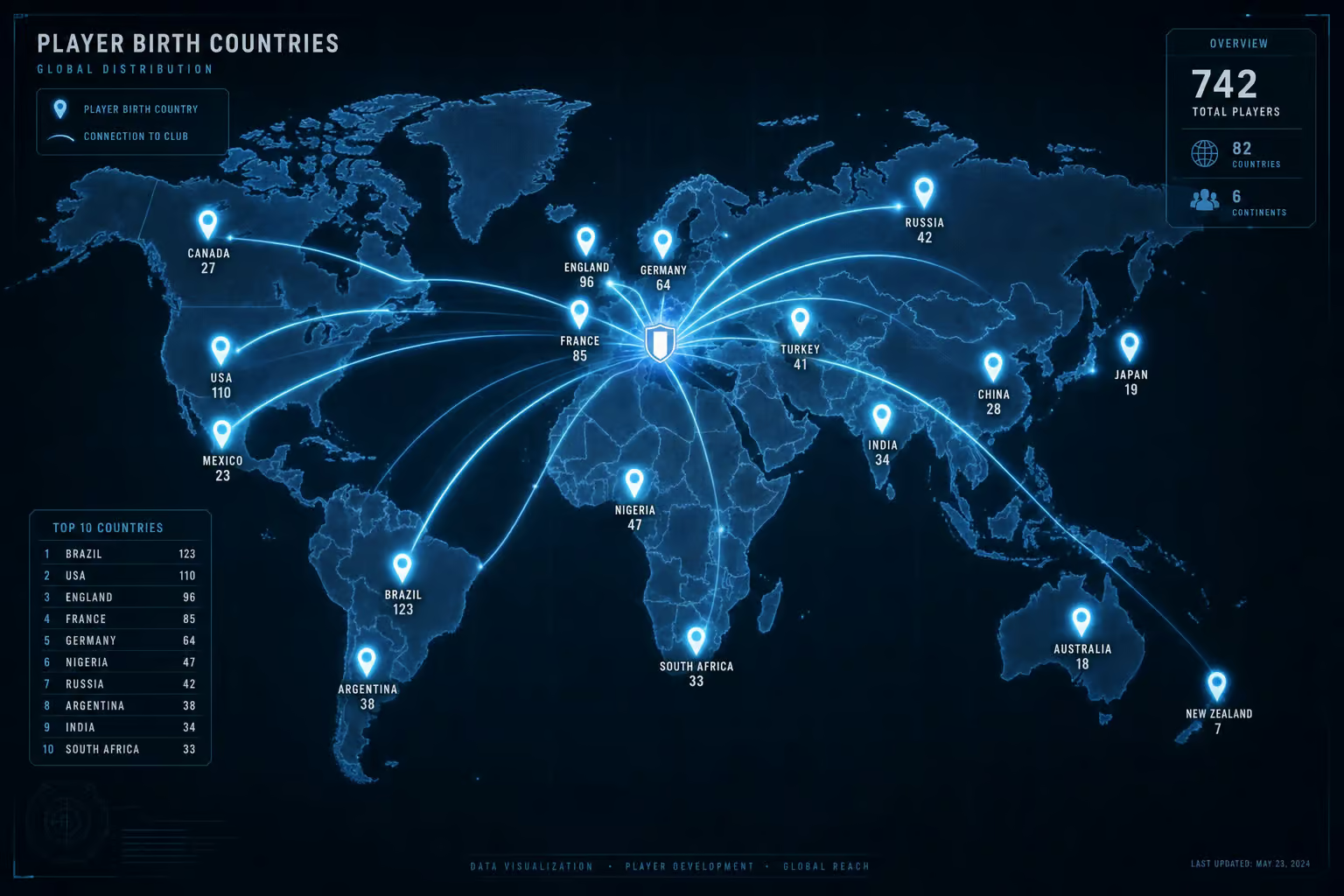
Quick test: Check any player page on Leaguepedia. If the flag doesn’t match what you’d expect, it’s probably because they’re listed by country of birth, not nationality.
The most common complaint about this policy involves Huhi, who was born in France but is considered Korean by the community. As of May 2016, he’s the only player who gets frequent gripes about it. So it’s not a widespread controversy—just one edge case that people bring up.
Team Abbreviations: The Origen/OpTic Saga
Team abbreviation conventions might sound dull, but there’s a fun piece of esports history behind them. Origen was abbreviated as OR instead of OG because OG was reserved for OpTic Gaming. Later, Origen started using its full name as the short name, and OpTic used OPT during their League of Legends run. Eventually OG freed up, but by then the whole thing was moot.
Leaguepedia also standardizes capitalization for LCK teams like KingZone, Kongdoo Monster, and SK Telecom T1. It’s the kind of attention to consistency that makes the wiki feel cohesive rather than chaotic.
Strict Notability for Support Staff
Support staff—coaches, analysts, managers—face much stricter notability guidelines than players do. The wiki lists four specific reasons for this:
- It’s historically tough to measure their impact
- Data on their roster changes is harder to find
- Omitting a page for someone doesn’t lose any data—the info can exist elsewhere
- Support staff don’t have the same kind of stats that players do, so it’s harder to justify a page
The wiki also explicitly states it’s not a resume hosting site. Notability guidelines have to be absolute to avoid inconsistencies, and if they started making pages for more support staff, they’d have to commit to maintaining a lot more pages. Editors and time are limited.
There’s also the practical problem that people have edited themselves into team history falsely. So the cautious approach makes sense.
Edit Approval System
Unless you have Editor permissions, your edits need to be approved by a staff member before going live. The approval system is a vandalism counter-measure. If your edit isn’t accepted, verify it’s correct, resubmit with an explanation, wait 24 hours, then reach out. If you can’t click the Edit button at all, make sure you’re logged in—your IP might be banned if someone made malicious edits from it.
There’s also a User namespace where people can make pages for themselves. Think of it as a personal sandbox. Those pages aren’t officially monitored or linked from the main wiki, so it’s more of a private space than a public profile. Editors can also create a profile page at Special:MyPage/Profile to share information about themselves.
Using the Wiki for Live Coverage and Research
The schedule page is where Leaguepedia becomes a live tool rather than just a historical archive. It aggregates matches across dozens of leagues with dates, times, and direct stream links to Twitch and Kick, though for a deeper dive into coverage you may want to consult League of Legends Esports Liquipedia.
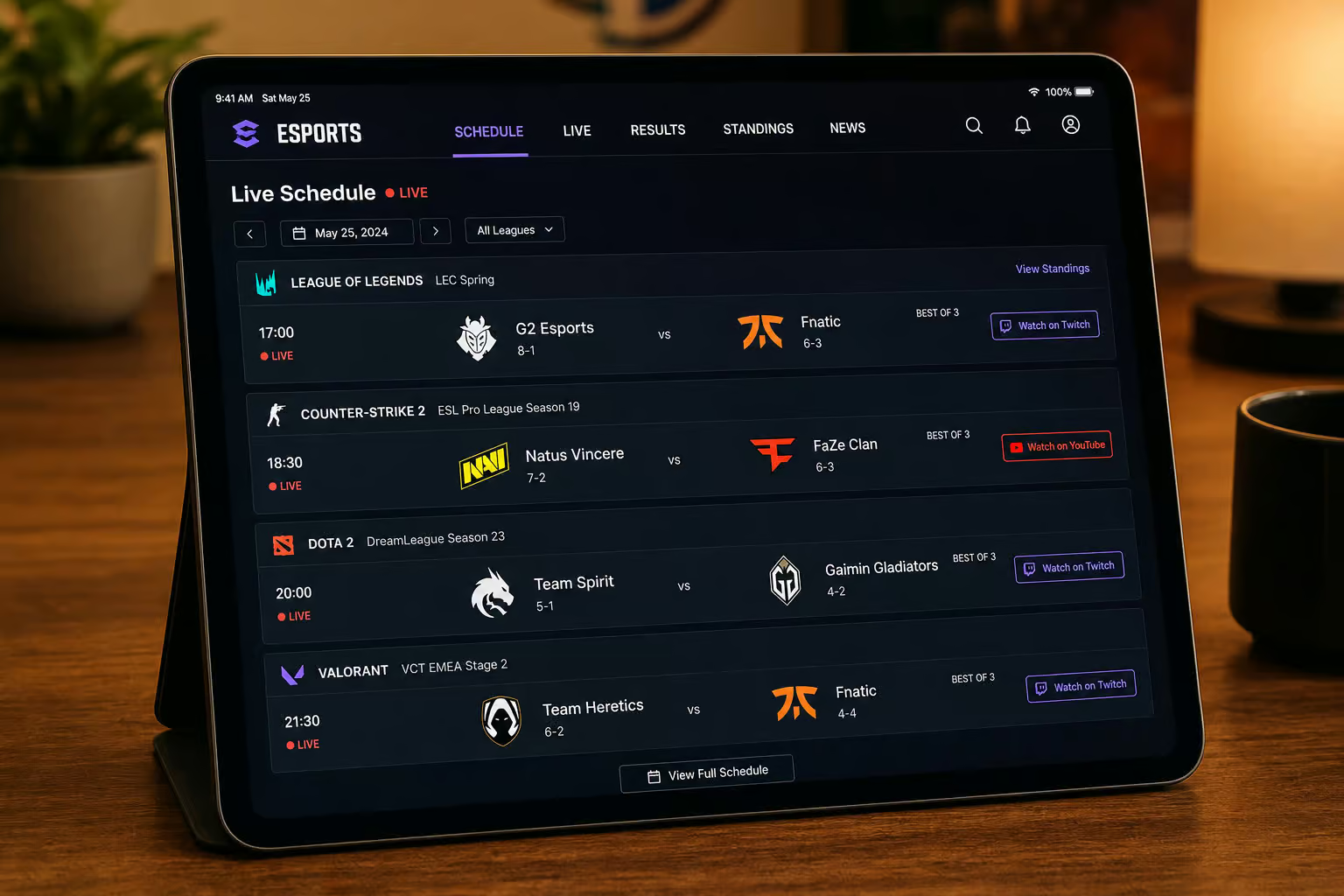
On any given day you’ll find matches from leagues like HLL (Hellenic Legends League), Prime League 1st Division, LRS (Liga Regional Sur), Finnish Pro League, 4 Nations, MSI 2026, POP Esports Masters, Nexus Tour, IDL Kings Lendas, and LRN. For a deep-dive into the complete ecosystem of League of Legends Esports, the variety is impressive—you can go from a Greek regional match at 13:00 UTC to MSI 2026 at 03:00 UTC without leaving the same page.
The GCD Archive is your friend for historical research. Need to trace a roster swap across three years? That’s where you start. The archive has sub-pages for players, teams, and tournaments, so you can approach the data from whatever angle you need.
If you’re looking to contribute, there’re 349 pages listed as needing help. Specific examples include “Garena Premier League/Opening Event/Playoffs” and “Champions/2013/Summer” missing statistics pages. It’s a concrete roadmap for where the wiki needs work. For developers, Leaguepedia’s GitHub organization hosts 10 of 11 repositories shown on Leaguepedia GitHub, providing tools and data for research and automation. These repositories offer APIs and data exports for programmatic access, making it easy to integrate Leaguepedia data into your own research or tools.

There’s also a birthday list that shows the wiki’s community-driven side. You’ll find entries for Caster Jun (born 1972), FanTaSy (1991), Takeshi (1993), Nien (1994), InKos (1996), Maxlore (1996), Spirit (1996), Syrpy (1998), Kryze (1999), and STEPZ (2006). It’s not essential data, but it’s the kind of thing a community maintains because someone cares enough to keep it up. For example, the article on player Peyz was published on 2026-06-30, showing how the wiki tracks recent player information.
And if a match history or statistics page feels stale, log in and hit the Refresh button in the dropdown menu next to the search bar. Refreshing it once fixes it for everyone.
Getting Involved: Editing and Community
Anyone can contribute, but there’s a process. The edit approval system is the first thing to understand: unless you have Editor permissions, your changes need staff approval before going live. It’s a quality safeguard, not a gatekeeping mechanism.
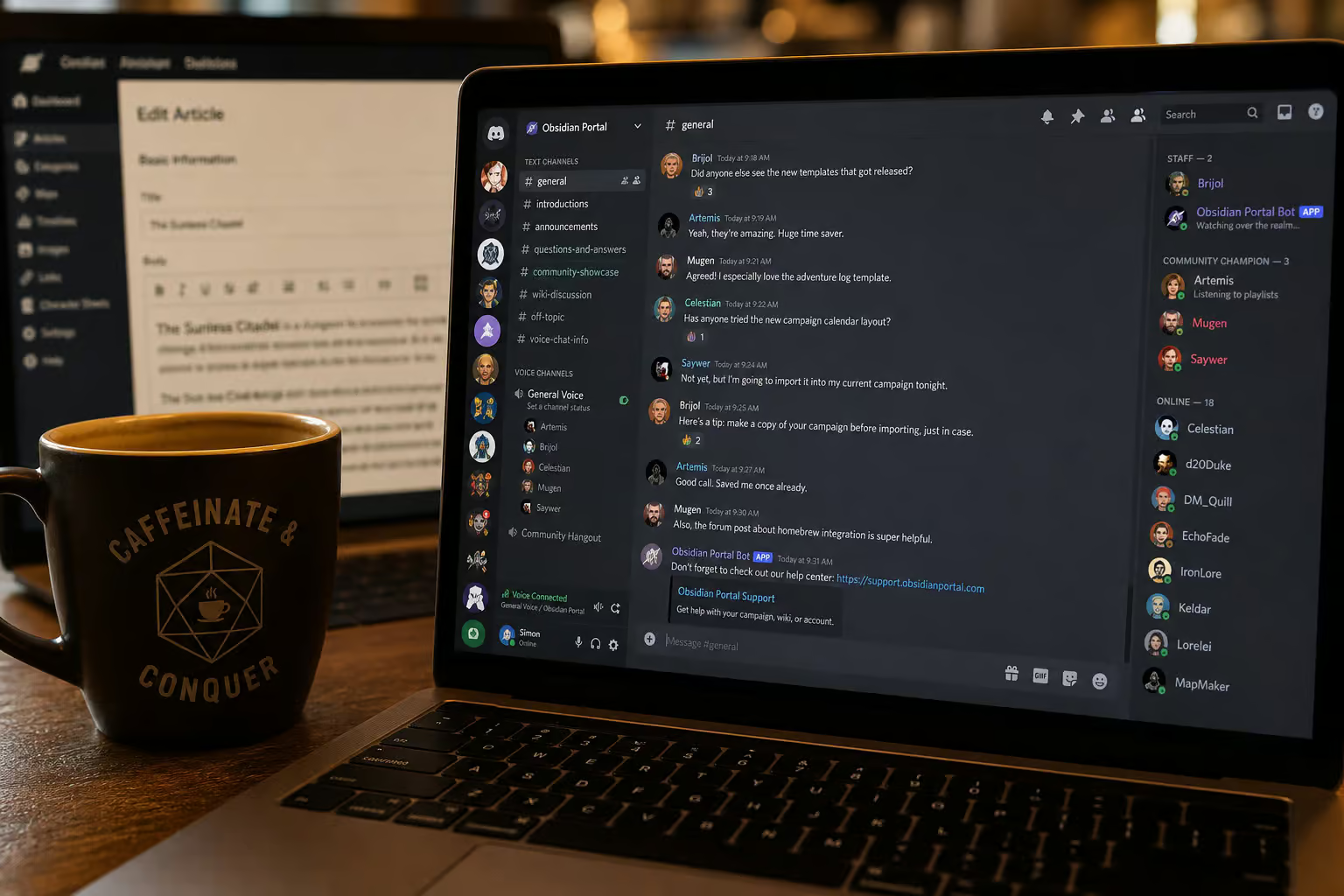
The best way to get help is to join the Discord at discord.gg/6SNQ4c6. That’s where the community hangs out, and you’ll get faster responses there than anywhere else. The wiki also provides editing tutorials, procedures, help pages, notability guidelines, and a FAQ in the “Editing Tutorial” section.
If what you want to contribute doesn’t meet notability guidelines, the User namespace is an option. You can create a personal page there. Just keep in mind it won’t be officially monitored or linked from the main wiki.
History and Data Lineage
Leaguepedia didn’t spring up from nothing. Its data has documented roots. Data from April 2014 to June 2016 was sourced from Esportspedia.com, and data from June 2016 to September 2017 came from EsportsWikis.com. All content is licensed under CC BY-SA 3.0 unless stated otherwise.

The wiki staff includes the editing base from old Leaguepedia and the earlier wikis. So there’s continuity—the people maintaining the data now were the same people building it years ago. That’s a decent confidence signal for anyone wondering about reliability.
Leaguepedia vs. Other LoL Wikis: Which One Should You Use?
If you need esports data—tournament results, player histories, contract archives, live match schedules—use Leaguepedia. It’s hosted on Fandom as a Fandom Games Community, and it’s the most comprehensive single source for competitive League of Legends information—with the 2023 World Championship reaching 6.4 million peak viewers, a testament to the spectacle of clicking and strategizing at the highest level.
If you need champion stats, item builds, lore, or game mechanics, use the official League of Legends Wiki, which is hosted by Weird Gloop and maintained by the player community. It covers the game itself, not the esports ecosystem around it.
If you need multi-game esports coverage, use Liquipedia. It covers League of Legends alongside dozens of other games, which makes it useful for cross-game comparisons or if you follow multiple esports.
They’re not competitors—they’re different tools for different jobs.
The Wiki as a Living Resource
What makes Leaguepedia interesting isn’t just the volume of data. It’s the community governance and editorial rigor behind it. The COB policy exists because nationality is a bad data point. The support staff notability guidelines exist because resources are limited and verification matters. The edit approval system exists because people have tried to game the wiki.
These aren’t arbitrary rules. They’re practical solutions to real problems that come up when you’re maintaining a crowdsourced database of competitive history. The wiki’s value comes from that thoughtfulness, not from having a lot of pages.
If you want to start exploring, the schedule page is the best entry point for live coverage. The GCD Archive is where you go for historical research. And the missing pages list is where you start if you want to contribute. Leaguepedia has 349 places that need work, and the community Discord is waiting for anyone who wants to help fill them in.