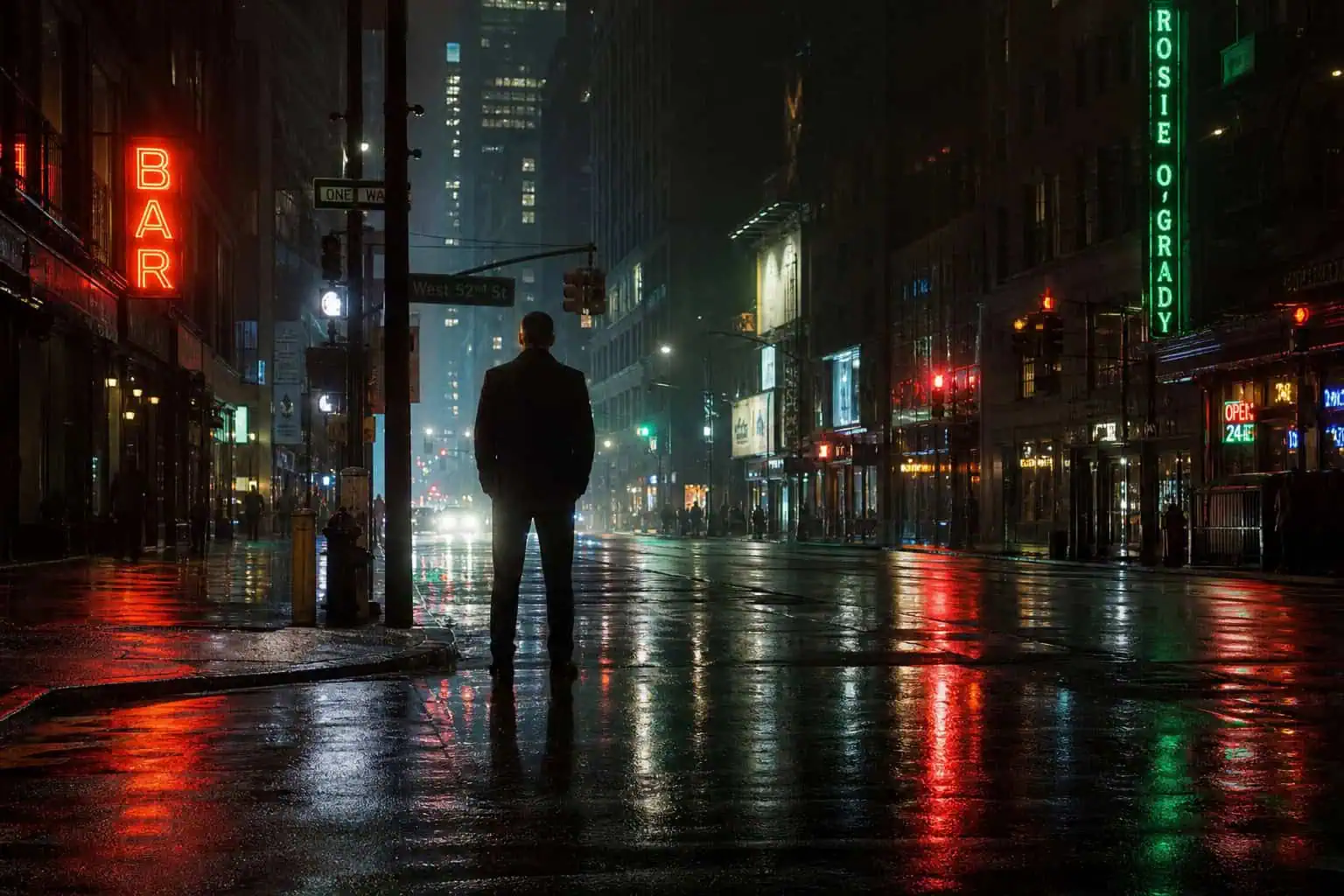
You’ve probably seen the headlines: Uwe Boll’s Citizen Vigilante is the movie The movie Hollywood doesn’t want you to see. A right-wing revenge fantasy starring Armie Hammer as a successful businessman who believes there is no other way to manage rampant crime. The online debate is predictably polarized — fans cheer it as a long-overdue takedown of a broken system, critics call it violent, incoherent, morally bankrupt slice of exploitation.
But here’s the thing: if you actually look at what the film does — not what its marketing says, not what the culture-war machine projects onto it, you find something much weirder and more interesting. The film’s protagonist, Sanders, is deliberately unsympathetic. Boll tracks Sanders like a predator in many scenes, denying him empathy or humanity. The violence isn’t cathartic; the film denies cathartic violence. And the movie’s own director has a career-long pattern of making violent B-movies about shooters that defy easy political labels.
So are vigilantes good or evil in Citizen Vigilante? The short answer: the film shows how anger, revenge, and power kill innocents, not just the guilty. But the long answer is where it gets fascinating.
Key Takeaways
Sanders executes a Syrian migrant family because the teenage son was part of a gang that raped a local girl and escaped punishment due to a sympathetic judge, and kills innocent civilians to make a point that makes little sense — the film never frames this as heroic.t that makes little sense, the film never frames this as heroic.
Director Uwe Boll films Sanders with a predator-like tracking shot, denying the audience empathy or identification, a technique that actively condemns the vigilante.
The film was originally titled The Dark Knight, a provocation rescinded after Warner Bros. objected, signaling Boll’s intent to subvert the vigilante genre rather than endorse it.
Table of Contents
Who Is Sanders? The Film’s Unsympathetic Protagonist
If you’ve only read the promotional copy, you might expect a righteous avenger cleaning up a lawless society. Instead, Citizen Vigilante gives us Sanders (Armie Hammer), a successful businessman who believes there is no other way to manage rampant crime. From the opening scenes, the film makes sure you don’t like him.
The Central Atrocity
Sanders executes a Syrian migrant family because the teenage son was part of a gang that raped a local girl and escaped punishment due to a sympathetic judge. That’s already morally complicated — but then Boll adds a line that makes Sanders’s ideology explicit. He tells the father, I don’t think it was the good ones that got out of your country—I think it was the bad ones.
This isn’t a hero delivering a cool one-liner. It’s a character revealing a worldview that’s cruel and irrational. The film doesn’t let you cheer this moment. It forces you to sit with the ugliness.
A Portrait of Irrationality
The execution isn’t an isolated lapse. The script piles on smaller details that paint Sanders as a disturbed control freak rather than a principled vigilante:
- He is a merciless landlord who would evict tenants after one month of nonpayment if legally possible.
- He lectures teenagers about not paying for bananas making everything more expensive — a bizarre, petty rant.
- He drives full-speed in the wrong lane toward another car, causing it to explode, arguing that most people are sheep who would rather die than break the law.
- He has killed innocent civilians to make a point that makes little sense.
Slate’s characterization nails it: Sanders is 25 percent canary in a coal mine, 75 percent cooked in the head. The film isn’t asking you to root for this guy. It’s asking you to watch a man unravel.
How Boll’s Camera Condemns Sanders
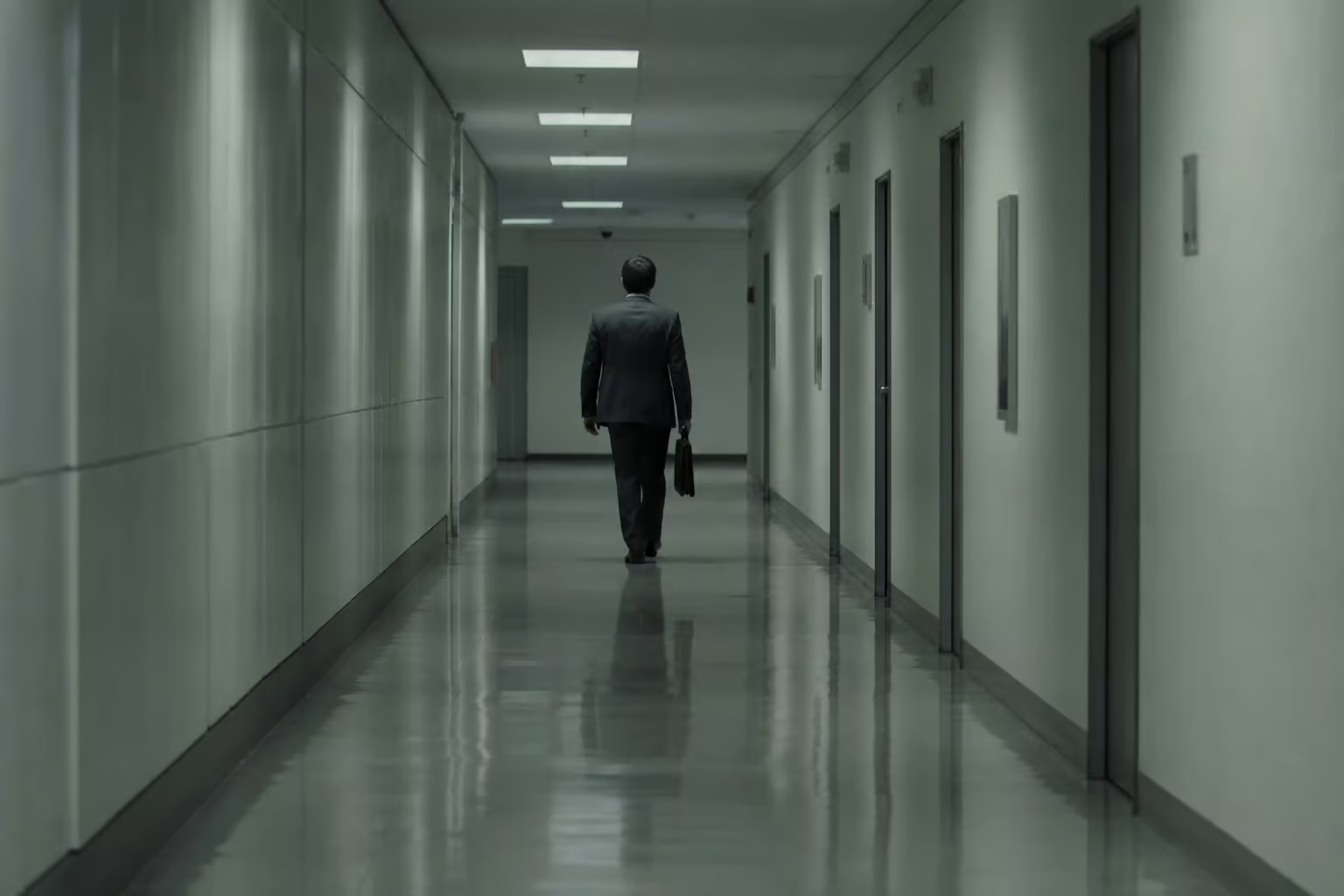
Plot alone can be ambiguous — a director can accidentally make a monster look cool. But Boll’s directorial choices leave no doubt about his stance. According to detailed reviews, Sanders is filmed by Boll with a predator-like tracking shot, not given much empathy or humanity.
Compare that to how vigilante films usually work. In Death Wish or The Punisher, the camera lingers on the protagonist’s pain, lets you feel their loss, and frames the violence as cathartic release. You’re inside their head. You want them to pull the trigger.
Boll does the opposite. The camera treats Sanders as a subject of surveillance, not a hero. We watch him from a distance — we see what he does, but we never enter his emotional world. The effect is critical distance. You’re not invited to identify with his rage; you’re invited to observe his descent.
This is a deliberate technique, not an accident. Boll knows how to make a sympathetic vigilante — he’s made plenty of violent movies. Here, he chooses to deny that sympathy.
Field note: Boll’s tracking shots deny the audience any interior access to Sanders — you watch a predator, not a protagonist.
Subverting the Vigilante Genre
Citizen Vigilante was originally titled The Dark Knight, a provocation rescinded after Warner Bros. objected, but the provocation tells you everything about his intent. For those considering whether to watch it, the question of Is Citizen Vigilante worth watching hinges on how you feel about this premise: he’s asking what if Batman was actually a psychopath? What if the fantasy of one righteous person cleaning up a broken system was taken to its logical, horrifying conclusion?
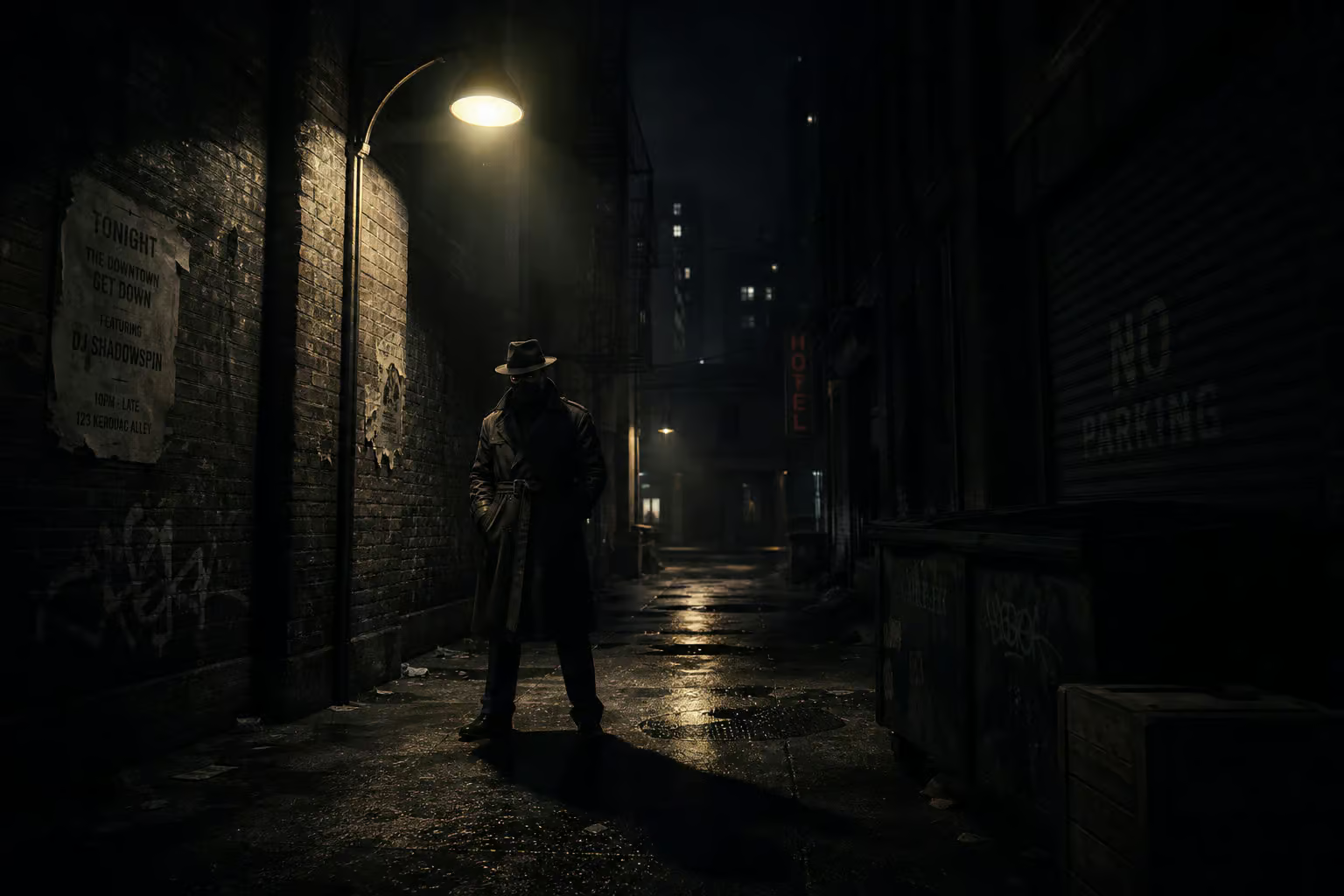
The film is compared to American Psycho, Taxi Driver, Dirty Harry, and Straw Dogs — but unlike those movies, Citizen Vigilante denies cathartic violence. A deep-dive, no-BS Citizen Vigilante review cuts through the hype to examine the plot, production quality, and performances, questioning whether it lives up to the buzz. Traditional vigilante films offer a fantasy: a righteous person uses violence to restore order, and the audience gets to feel the satisfaction of justice served. Boll subverts that by making his vigilante monstrous and the violence pointless.
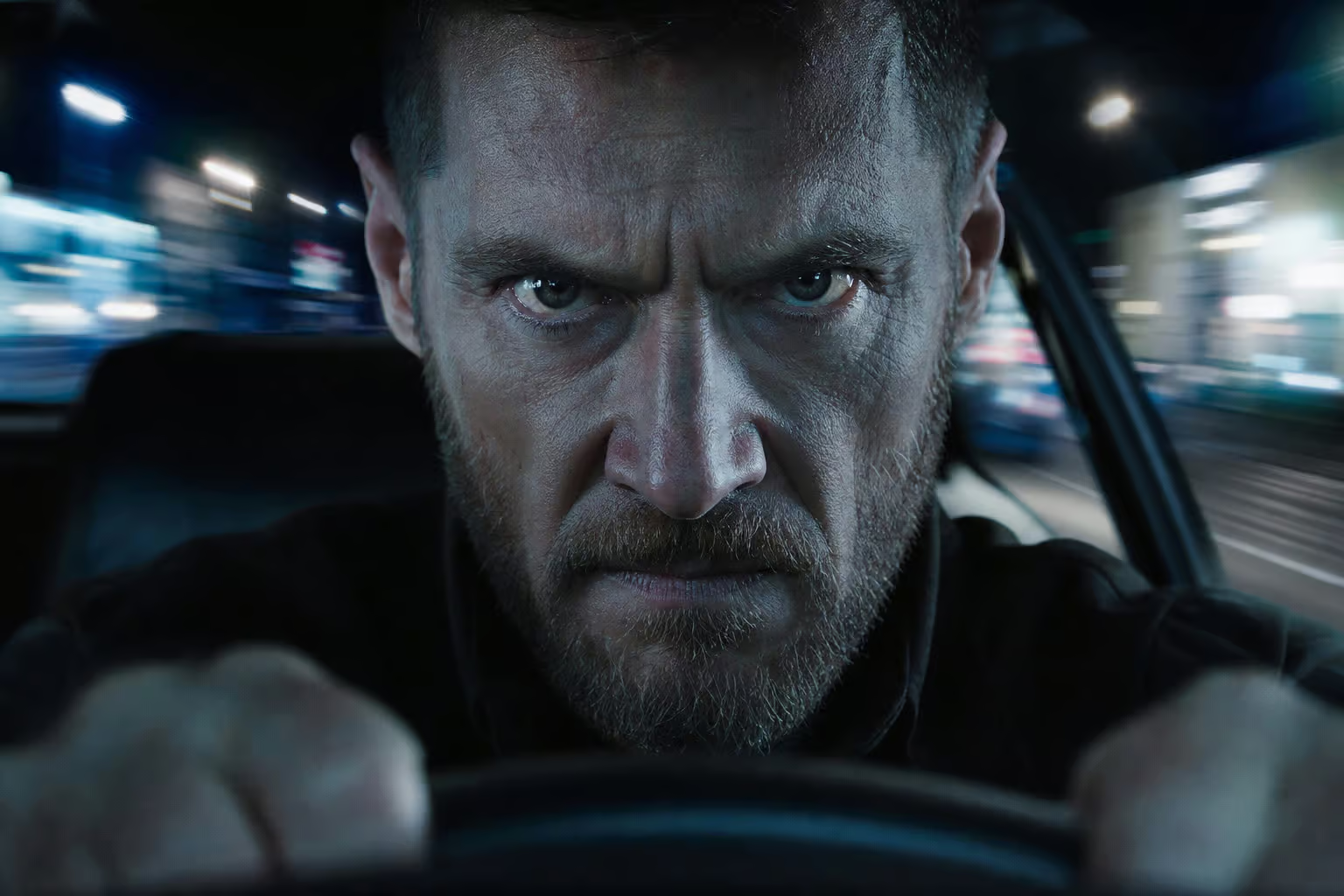
The result is a film that feels less like a power fantasy and more like a warning. It’s not saying “this is what we need.” It’s saying this is what happens when people decide they are the law.
Boll’s Career: Provocation Over Politics
If you’re tempted to read Citizen Vigilante as a straightforward right-wing manifesto, Boll’s filmography complicates that picture fast. The guy has been making violent B-movies about shooters for three decades, and his targets shift depending on the film—so where was Citizen Vigilante made? That production deep-dive into filming locations, studios, and country of origin reveals how the setting influences the story’s tone and authenticity.
- Amoklauf (1994): An unnamed man dreams of and then executes escalating violence until he stages a mass shooting.
- Heart of America (2002): A school shooting.
- Rampage (2009): A young man shooting up his town from inside a welded suit of armor.
- Assault on Wall Street (2013): A husband murders bankers after the financial crisis — Vicky Osterweil wrote an essay in the New Inquiry arguing for Boll as a kind of accidental vox populi after its release.
- Run (2025): Barkhad Abdi plays Ismael, a friendly and sincere migrant; Hannah Balogun plays Selena, a pregnant young woman; Amanda Plummer plays Anna, an American tourist. The climax involves misplaced vigilantism by three bitter, migrant-hating American expats, resulting in many deaths.
The through-line isn’t ideology. It’s an obsession with violence as a response to social breakdown. Boll’s politics shift depending on the target — he’ll attack bankers, migrants, or the system itself. Dave Foley told the New York Times in 2008 that he thought of Boll as a quintessential German intellectual artist who has taken film arbitrarily as his medium, and that the art form is almost in being hated. That’s the key: Boll is a provocateur, not a propagandist.
The Marketing vs. The Movie
Here’s where it gets really interesting. Boll released Citizen Vigilante for free on X with the text ‘The movie Hollywood doesn’t want you to see.’ Boll went on Jack Posobiec’s podcast for an interview that Elon Musk praised. The film was marketed directly to right-wing audiences.

But some of those audiences were underwhelmed. The number of asylum-seeker deaths is low; Sanders mostly kills cops. A self-described ‘former eurocrat turned proud patriot’ on X wrote that the film is sold as a white guy fantasy but actually paints Europeans as degenerate, delusional, hypocritical, cruel, and self-righteous psychopaths.
That’s the irony. The film that’s supposed to be a right-wing fantasy may actually make its target audience look bad. Boll is willing to work with that crowd for attention — Slate argues that Boll is not a right-wing hack but is willing to work with that crowd for attention — but the film itself doesn’t deliver the expected catharsis.
When the State Fails: Real Vigilantism
The film’s scenario isn’t purely fictional. Real people face this dilemma when institutions fail. Academic research on vigilantism links it to the neoliberal project of outsourcing security, manifesting in the growth of private security firms and gated communities, and to a longer history of porous boundaries between states and powerful elements in society — when the state can’t or won’t provide justice, people take matters into their own hands.

Consider the Akku Yadav case in India: after 15 years without justice for a serial rapist, a group of women lynched him. Or the Belfast riots in June 2024, where after a stabbing was caught on camera and shared on social media, rioters targeted immigrants’ homes and set fire to property — and Elon Musk cheered them on.
The film’s argument — that vigilante action creates more victims than it saves, has real-world weight. It’s not a theoretical debate. It’s happening.
So, Good or Evil? The Film’s Actual Argument
Citizen Vigilante’s answer is unambiguous: vigilantism is a disaster, not a solution. The film shows how anger, revenge, and power kill innocents, not just the guilty. That’s the core thesis. Sanders starts as a vigilante and escalates into a different kind of killer, killing innocents. The collateral damage isn’t an accident — it’s the point.
Morality is relative to goals and perspectives. The state claims a monopoly on violence; the individual claims a right to justice when the state fails. But Citizen Vigilante argues that the individual’s claim is catastrophic. Vigilantism is understandable — state failure is real, people are desperate, but it’s morally catastrophic.
The film’s final image — a vigilante who kills innocents, who lectures teenagers about not paying for bananas making everything more expensive, who drives full-speed in the wrong lane toward another car, causing it to explode, arguing that most people are sheep who would rather die than break the law, is a warning, not an endorsement. It’s a cautionary tale about the seduction of violence.
So are vigilantes good or evil in Citizen Vigilante? The film’s answer is clear: they’re a disaster. But the film itself is more interesting than either its fans or detractors describe. It’s a weird, uncomfortable, deliberately unsatisfying movie that refuses to give you the catharsis you came for. And that might be its most subversive move of all.
Frequently Asked Questions
Is being a vigilante actually illegal?
Yes, vigilantism is illegal because it involves individuals taking the law into their own hands, which violates the state’s monopoly on legitimate violence. When the state fails to deliver justice, people may feel justified in acting, but the film argues that this path is morally catastrophic and leads to more harm than good.
Why don’t people like vigilantes?
People often dislike vigilantes because their actions are irrational, cruel, and indiscriminate — they kill innocents alongside the guilty. The film’s protagonist is deliberately unsympathetic: he’s a merciless landlord, a petty ranter, and a predator filmed without empathy, making it impossible to root for him.
Is a vigilante a villain?
In this film, the vigilante is unequivocally a villain. The director frames him as a predator through tracking shots that deny the audience interior access to his emotions, and the violence is never cathartic. The film subverts the traditional vigilante genre by showing that the fantasy of one righteous person cleaning up a broken system leads to horrifying consequences.
What is Citizen Vigilante actually about?
The film follows Sanders, a successful businessman who turns to vigilantism after a teenage gang member escapes punishment for rape. But instead of a righteous avenger, the film portrays him as a disturbed control freak who kills innocent civilians and reveals a cruel, irrational worldview. It’s a warning about what happens when people decide they are the law.
How does the director show that the vigilante is not a hero?
Director Uwe Boll films Sanders with a predator-like tracking shot that denies the audience empathy or identification — you watch him from a distance without entering his emotional world. Unlike traditional vigilante films that frame violence as cathartic release, Boll deliberately makes the violence pointless and the protagonist monstrous.
Is Citizen Vigilante worth watching?
That depends on whether you’re open to a deliberately unsatisfying experience. The film denies the catharsis typical of vigilante movies and instead forces you to sit with the ugliness of a protagonist who kills innocents. It’s marketed as a right-wing fantasy but actually makes its target audience look bad, making it more interesting than either its fans or detractors describe.