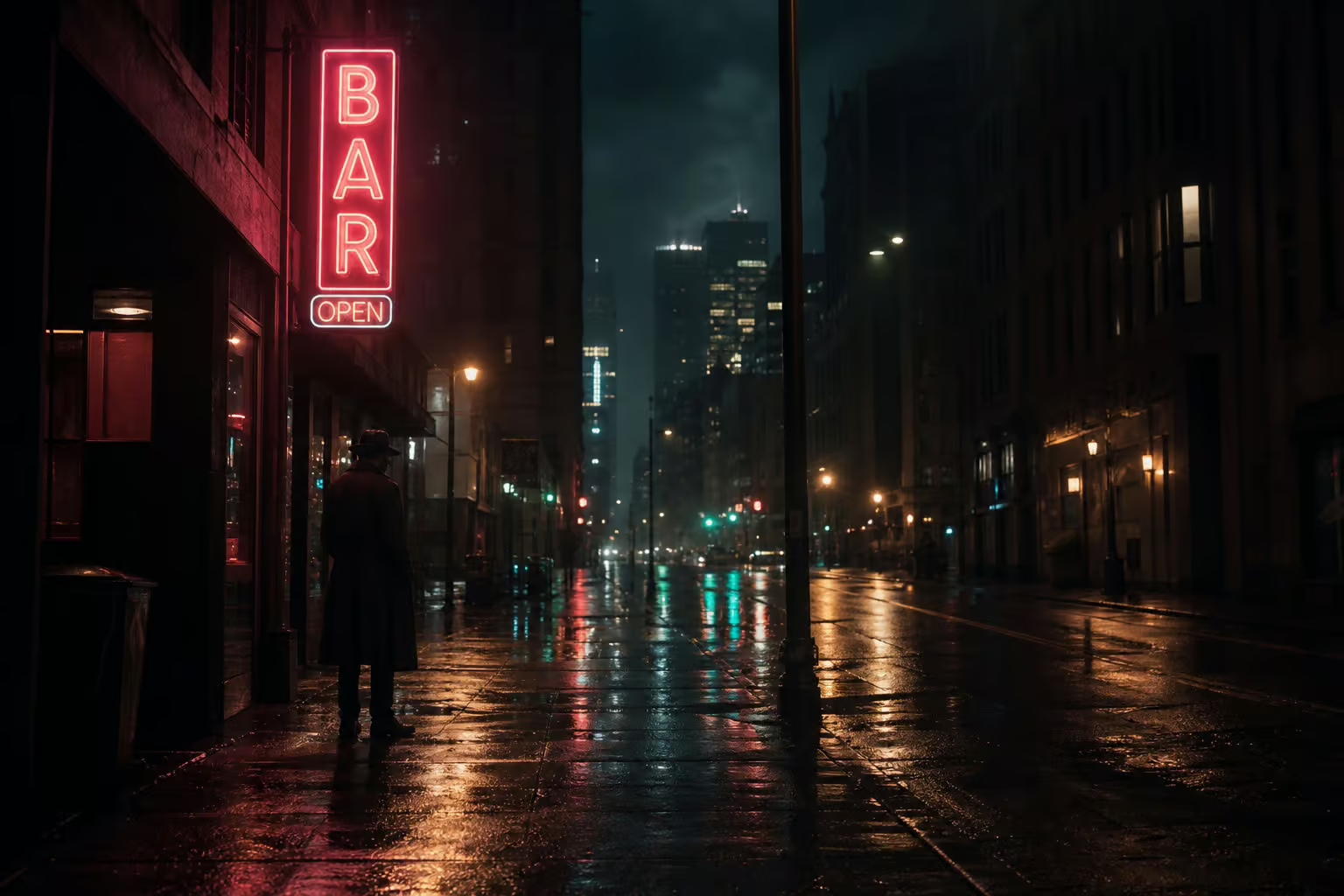
Is Citizen Vigilante worth watching? Not. But let me explain why I’m not giving you a thumbs-down and walking away.
I dig into vigilante media across films, games, anime, comics — I know what works in this genre and what doesn’t. And Citizen Vigilante is a 2026 Uwe Boll-directed thriller starring Armie Hammer that was originally going to be called The Dark Knight until lawyers got involved. That last bit tells you everything about the level of cheek we’re dealing with. It’s an 89-minute time investment that I want to help you decide whether to make or skip.
Release date: June 19, 2026 (limited theaters and streaming). Runtime: 1h 29m. Genre: Action, Mystery & Thriller, Crime. Distributor: Quiver Distribution. Production Co: Event Film Distribution.
Here’s the quick breakdown before we dive in.
Key Takeaways
Citizen Vigilante is not worth watching for most viewers due to its poor craftsmanship, exploitative content, and failed generic ambitions.
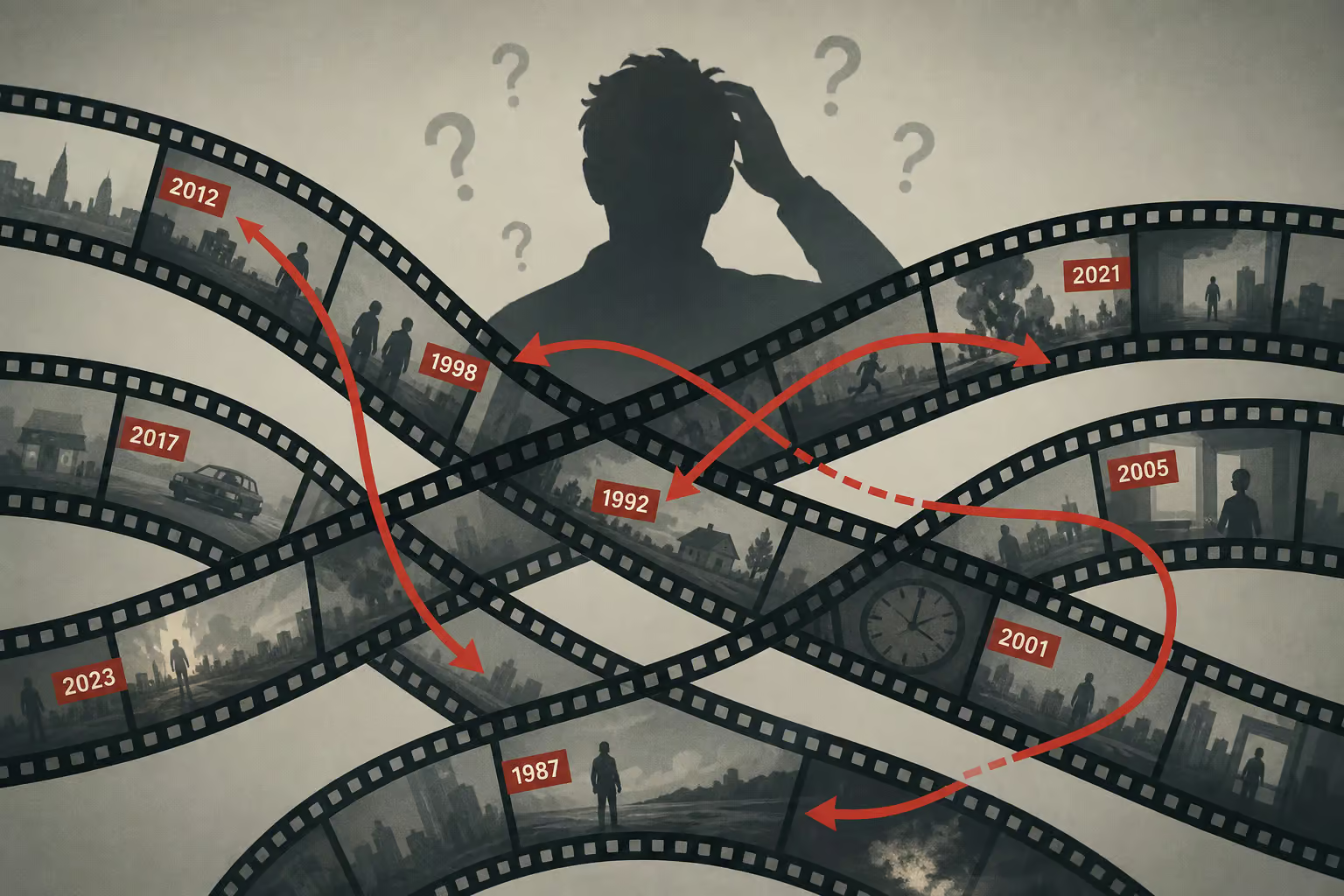
Citizen Vigilante uses a pointlessly nonlinear structure to hide a minimal plot — there’s almost no story beyond Sanders convincing victims to let him punish criminals
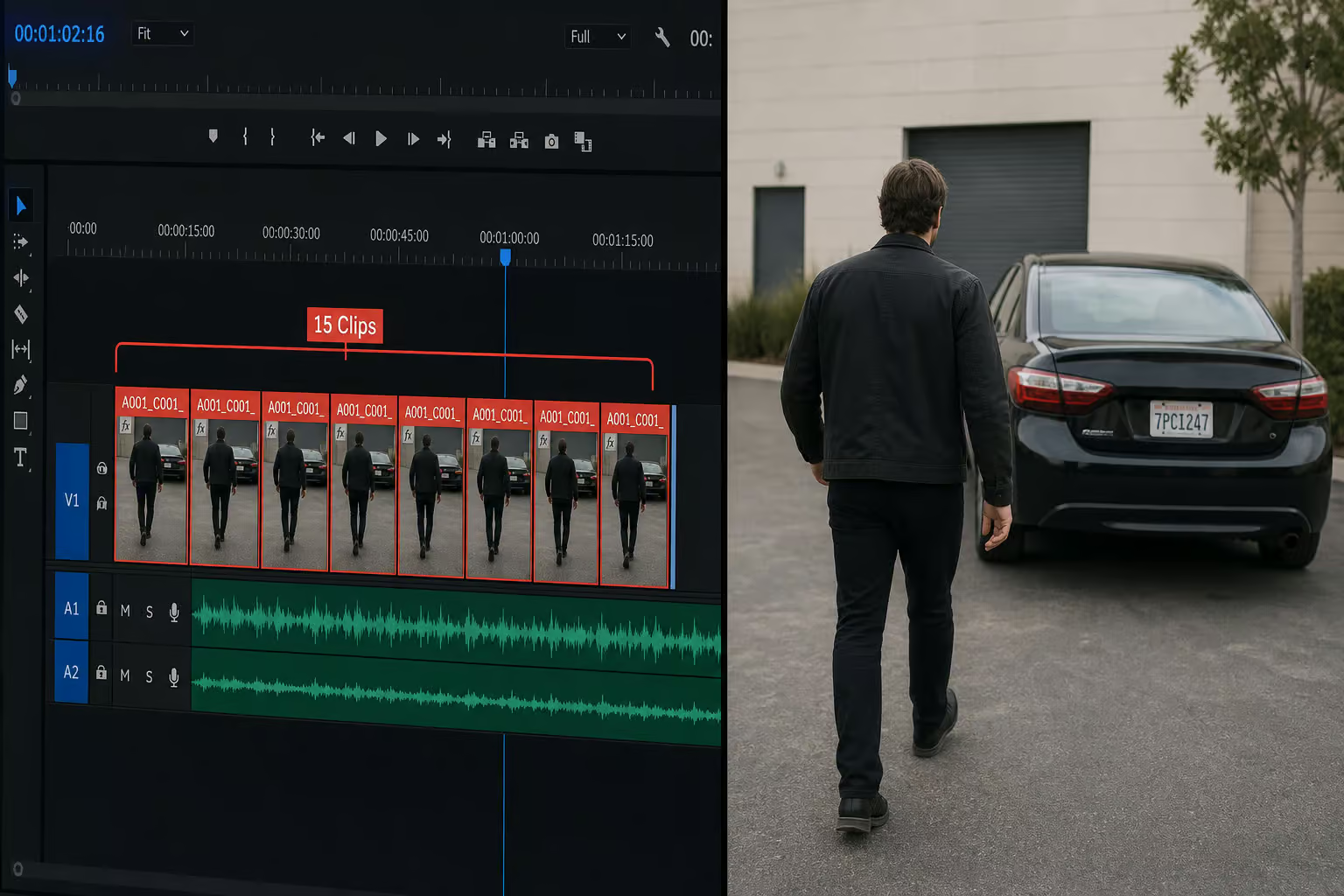
The film repeatedly reuses footage to pad its runtime, a craft-level failure that’s visible once you know what to look for
Despite marketing that frames it as exploring the dangerous consequences of xenophobia in a provocative manner, the actual content indulges in the xenophobic stereotypes it claims to critique
Table of Contents
What it’s actually about (and what it pretends to be)
So here’s the premise, and it’s weird enough to be interesting: an American named Sanders — played by Armie Hammer, lives in a country described as “overrun by criminal migrants.” He operates as a secret vigilante, funding his entire revenge spree with rent checks from properties he inherited from his dad. He’s a landlord vigilante. That’s the actual concept.
The marketing frames this as a serious exploration of vigilante justice and xenophobia. FandomWire frames it as exploring the dangerous consequences of xenophobia in a provocative manner, and lists it among ten films examining anti-immigrant extremism. But the Variety review tells a very different story — one where the film indulges in exactly the content it claims to critique.
A vigilante funded by rent money
Sanders isn’t Bruce Wayne with a fortune and a moral code. He’s an entitled, xenophobic American whose inherited properties give him just enough passive income to play Punisher in a country he clearly resents. The “plot” — and I use that term loosely, is pointlessly nonlinear and boils down to Sanders convincing victims to let him brutally punish criminals. Costas Mandylor plays Henry, an Interpol chief who’s so world-weary he shows zero urgency in chasing this guy. The chase subplot is flat because nobody involved seems to care.
There’s a scene that captures the whole bizarre energy: Sanders stops mid-thrust with a sex worker to scold her about mold on the ceiling. It’s awkward, it’s weird, and it tells you everything about the character’s priorities — and the film’s inability to handle tone.
The marketing vs. the reality
The gap between how this film presents itself and what it actually delivers is the real story here. FandomWire’s framing suggests a thoughtful critique of extremism. The Variety review calls it the opposite: indulgent, incurious, and exploitative.
The opening scene is a hooded black man killing a mother being killed in front of her son. That’s the first thing you see. Later, the parents of a rapist tell police they’re teaching him the values of the Quran. These aren’t provocations — they’re stereotypes played straight. The film wraps itself in the language of critique while delivering the kind of content it pretends to condemn.
Five specific failures that break the film
I’m not going to tell you the film is bad and leave it there. Here’s exactly what’s broken.
Repeated footage padding that’s painfully obvious
Here’s a tell in low-budget filmmaking: when the director is also the editor, and they reuse footage to stretch runtime, you can spot it. Boll uses every second of footage, often multiple times. You watch actors walk to cars, count money, unlock doors — mundane steps repeated as if repetition creates depth. For a production deep-dive on filming locations and how the setting influences tone, check out where Citizen Vigilante was made. The 89-minute runtime feels padded because it is.
A pointlessly nonlinear story hiding nothing
Nonlinear structure works — Memento, Pulp Fiction — when it serves a purpose. Here it serves one purpose only: hiding how little story exists. The timeline jumps around without revealing anything meaningful. It’s not clever, it’s not earned, and it certainly doesn’t help the viewer understand the characters or themes. It’s bad game-level design applied to film form.
Xenophobic and Islamophobic content dressed as commentary
The film’s approach to its subject matter is the core problem. It doesn’t seriously engage with vigilantism or its consequences. Instead, it leans into prejudiced content. The opening scene and the Quran scene aren’t isolated moments — they set the pattern.
The film pretends to critique extremism while indulging in the same stereotypes, and a deep-dive, no-BS Citizen Vigilante review confirms that same indulgent and incurious approach. The Variety review calls it “indulgent and incurious,” and that’s exactly right.
The exploitative dedication that’s the film’s shield
The final thing you see before the credits roll is a dedication: dedicated to rape victims in Europe who were failed by their legal systems. That’s a heavy, specific claim to slap on a movie like this. It’s the film’s shield — invoke real victims so criticism feels disrespectful. But the problem is that the film itself uses sexual violence for shock value without any ethical inquiry, which is why a serious analysis like Are vigilantes good or evil in Citizen Vigilante is needed to cut through the exploitation. It’s not a serious statement about justice systems. It’s exploitation using real trauma as cover.
Armie Hammer’s weak comeback performance
This was supposed to be Hammer’s return to acting. He was once a charismatic, skilled performer — that’s not an opinion, it’s observable in his earlier work. But none of that spark is visible here. He recites Boll’s prejudiced screeds without any of his former energy.
The review calls it “deliberate sabotage” of his comeback, and the effect is the same either way. This performance doesn’t revive a career; it buries it.
How it compares to vigilante films you actually like
The film was originally going to be called The Dark Knight, creating an ironic contrast worth exploring. Nolan’s Batman films, whatever you think of them, at least attempted moral complexity. Bruce Wayne’s wealth and resources were part of a larger examination of justice, privilege, and the limits of one man’s power.
Citizen Vigilante skips the reckoning entirely. Classic vigilante films like Dirty Harry, Taxi Driver, and Rolling Thunder — for all their flaws and dated elements, at least tried to engage with the moral weight of what their protagonists were doing. The protagonist’s reckoning was part of the story. This film doesn’t bother.

Desierto, which appears on the same FandomWire list of anti-immigrant extremism films, handles similar themes with actual intelligence. It follows a racist vigilante hunting migrants at the US-Mexico border and doesn’t pretend to be anything other than what it is. Jason Statham actioners are also mentioned as a comparison point for what this film wants to be, but they at least deliver on their promises.
If you want a vigilante film that has something to say, watch Taxi Driver or The Dark Knight or Desierto. They exist. This film isn’t that.
Who made it and why that matters
If you know Uwe Boll’s work, you already know where this is going. His filmography includes House of the Dead, Alone in the Dark, and BloodRayne — all critically panned video game adaptations. Citizen Vigilante is on the same qualitative level. It’s not an outlier in his career; it’s business as usual.
What’s more notable is what this film does to Armie Hammer’s intended comeback. He was supposed to return to acting with this role. Instead, the film gives him prejudiced rants to recite, and the result is a performance that’s a shadow of his former ability. Whether or not you believe the “deliberate sabotage” reading, the outcome is clear: this film doesn’t help anyone involved.
The verdict — who should watch, who should skip
Here’s the question you should ask yourself before hitting play on Fandango at Home (where it’s available from June 19, 2026): what are you actually looking for? Note: Reddit consensus is not yet available given the film’s recent release, but the critical and user feedback so far is not positive.
Who should consider it
- Film students studying exploitation tropes can find this instructive as a case study
- Uwe Boll completionists who need to see everything he’s directed
- So-bad-it’s-good enthusiasts with a high tolerance for offensive content
Who should absolutely skip
- Fans of serious vigilante dramas like Taxi Driver or The Dark Knight — this will only disappoint
- Anyone who’s offended by xenophobic content or exploitative treatment of sexual violence
- People hoping for Armie Hammer’s genuine comeback — this isn’t it
89 minutes of your life is worth more than what this film delivers. Watch something from the genre that actually earns its place.
Frequently Asked Questions
What is the film Citizen Vigilante about?
It follows Sanders, an American landlord played by Armie Hammer, who uses his inherited rental income to fund a vigilante crusade against criminals in a country described as ‘overrun by criminal migrants.’ The marketing frames it as a critique of xenophobia, but the film itself leans into the stereotypes it claims to condemn.
Is The vigilante a good movie?
Most critical consensus says no. The film has been called indulgent, incurious, and exploitative — it reuses footage to pad its runtime, structures the story pointlessly out of order to hide a thin plot, and delivers xenophobic content under the guise of social commentary.
Where is Citizen Vigilante filmed?
The film’s specific shooting locations haven’t been widely publicized in reviews, but the setting functions as a vaguely defined country that’s meant to feel lawless and overrun. The production’s low budget is visible in the repeated footage and minimal sets.
Is Citizen Vigilante based on a true story?
No, it’s a fictional thriller. The film ends with a dedication to actual rape victims in Europe, but that’s widely seen as an exploitative shield against criticism rather than a reflection of any true story being adapted on screen.
How does Citizen Vigilante compare to The Dark Knight?
The film was originally going to be called The Dark Knight until legal issues stopped it, but the comparison is ironic. Nolan’s Batman at least attempted to explore justice, privilege, and the limits of one man’s power. This film skips the moral reckoning entirely and just delivers revenge fantasy.
