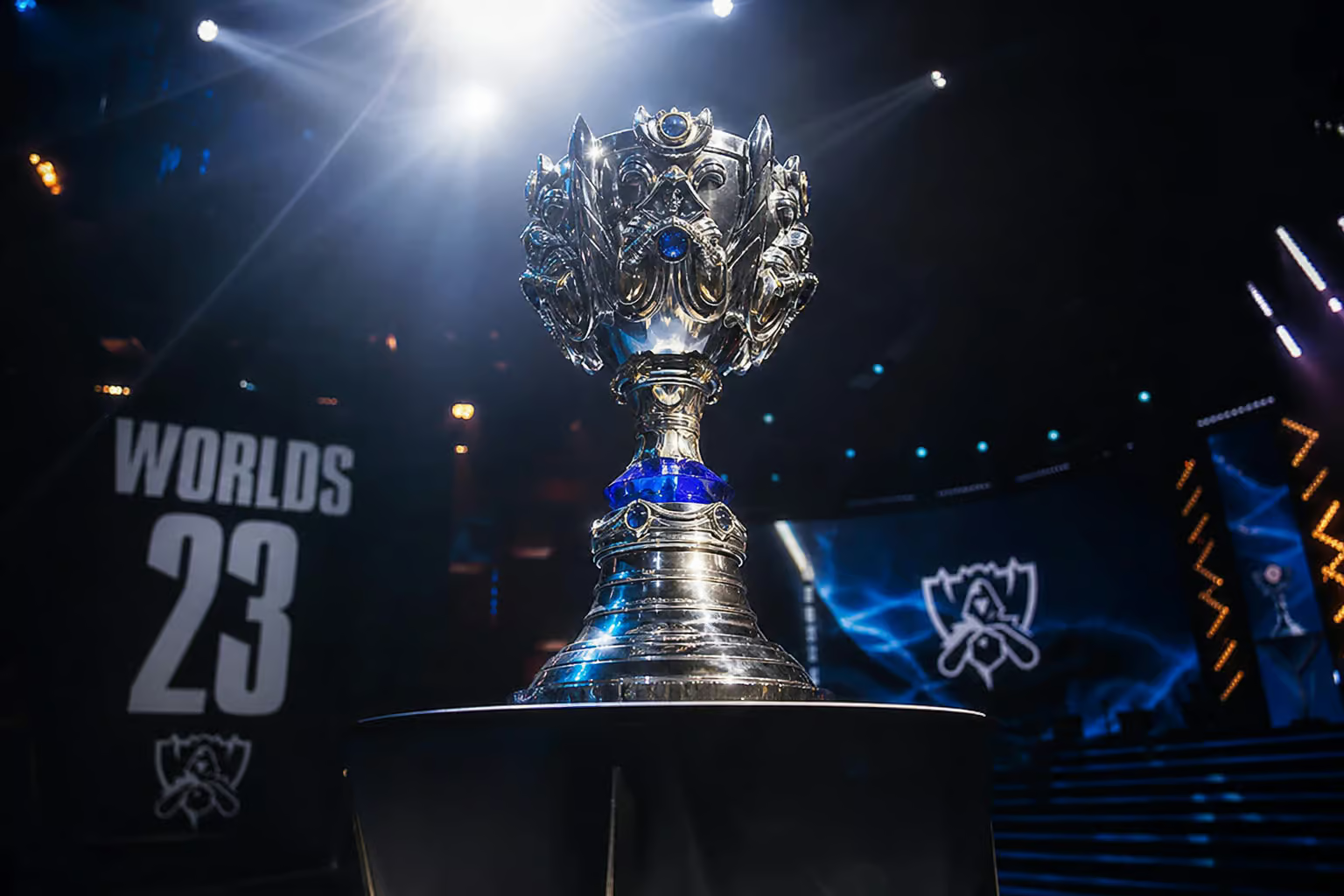
I spent much of December bouncing between tabs — Sheep Esports for the rumors, LoL Fandom for the raw data, Twitter for the official announcements that’d make or break a week of speculation. By the time the dust settled, I’d watched over 500 roster moves get documented across every major region. That’s not a normal shuffle. That’s a reset.
The 2025-2026 offseason wasn’t about big names changing jerseys. It was about why those moves happened, and what the mechanics behind them say about the state of competitive League. Buyout clauses acting as a talent funnel. Contract extensions as stability signals.
Veteran retirements creating vacuums that young players are rushing to fill. Two LCK teams taking completely opposite roster philosophies. And a quiet reversal that might reshape the global talent map.
Here’s what stood out while I was digging through the trackers.
Key Takeaways
Over 500 roster moves were documented across LEC, LCS, LCK, LPL, LCP, and CBLOL during the 2025-2026 offseason, with the bulk of announcements hitting in December 2025.
T1 locked in their core by extending Faker through 2029 and Oner through 2028, while Hanwha Life Esports pursued an aggressive rebuild by acquiring Gumayusi (after 7 years and 3 Worlds titles at T1) and Kanavi (returning from 6 seasons in the LPL).
Three legendary junglers — Karsa (12-year career), Peanut, and Levi (11-year career), retired in the same window, creating a generational shift that’s forcing teams to promote academy talent or import from other regions.
Table of Contents
The 2025-2026 Offseason — Over 500 Roster Moves and Counting
This wasn’t a couple of teams swapping midlaners. This was a series of changes. Watching the tracker refresh every few days was exhausting, but also fascinating — because the volume itself tells a story.
Over 500 documented roster moves across LEC, LCS, LCK, LPL, LCP, CBLOL, and a bunch of ERLs. Speculation started as early as September 2025, but the bulk of announcements landed in a compressed December window. Teams were making decisions simultaneously, without the luxury of seeing how the rest of the board would fall. That creates a cascade effect: one org signs a star, another org’s backup plan kicks in, and suddenly half the league has new pieces.
I’ve been following LoL esports long enough to know this churn isn’t normal. Usually you get a handful of headline moves per region, with most teams tweaking one or two positions. This offseason, nearly every team in every major region rebuilt at the same time. That synchronized chaos doesn’t happen by accident — it’s the result of contract cycles, expired extensions, and a competitive landscape where standing still feels like falling behind.
How Contracts Drive Roster Chaos
The chaos of this offseason is caused by a few specific mechanical rules that determine when and how players can move. Understanding those rules is the difference between seeing a bunch of names shuffle around and seeing the strategic logic behind each swap.
Buyout Clauses: The Talent Tax on Rising Stars
Here’s the deal: a buyout clause is a pre-set fee that lets a player leave their contract early. In theory, it protects the selling team from losing talent for nothing. In practice, it creates a bottleneck where only wealthy orgs can compete for the best young players.
Take Vladi’s move from Karmine Corp to Fnatic, announced December 17, 2025. The buyout was six figures — money for a midlaner who’s still proving himself at the top level. Karmine Corp did what mid-tier teams are supposed to do: they found a promising young player, developed him, and gave him stage time. But when Fnatic came calling, the buyout was high enough that only a top-spending org could afford it. Talent gets funnelled upward, and the teams that do the development work often can’t keep the player long enough to reap the rewards.
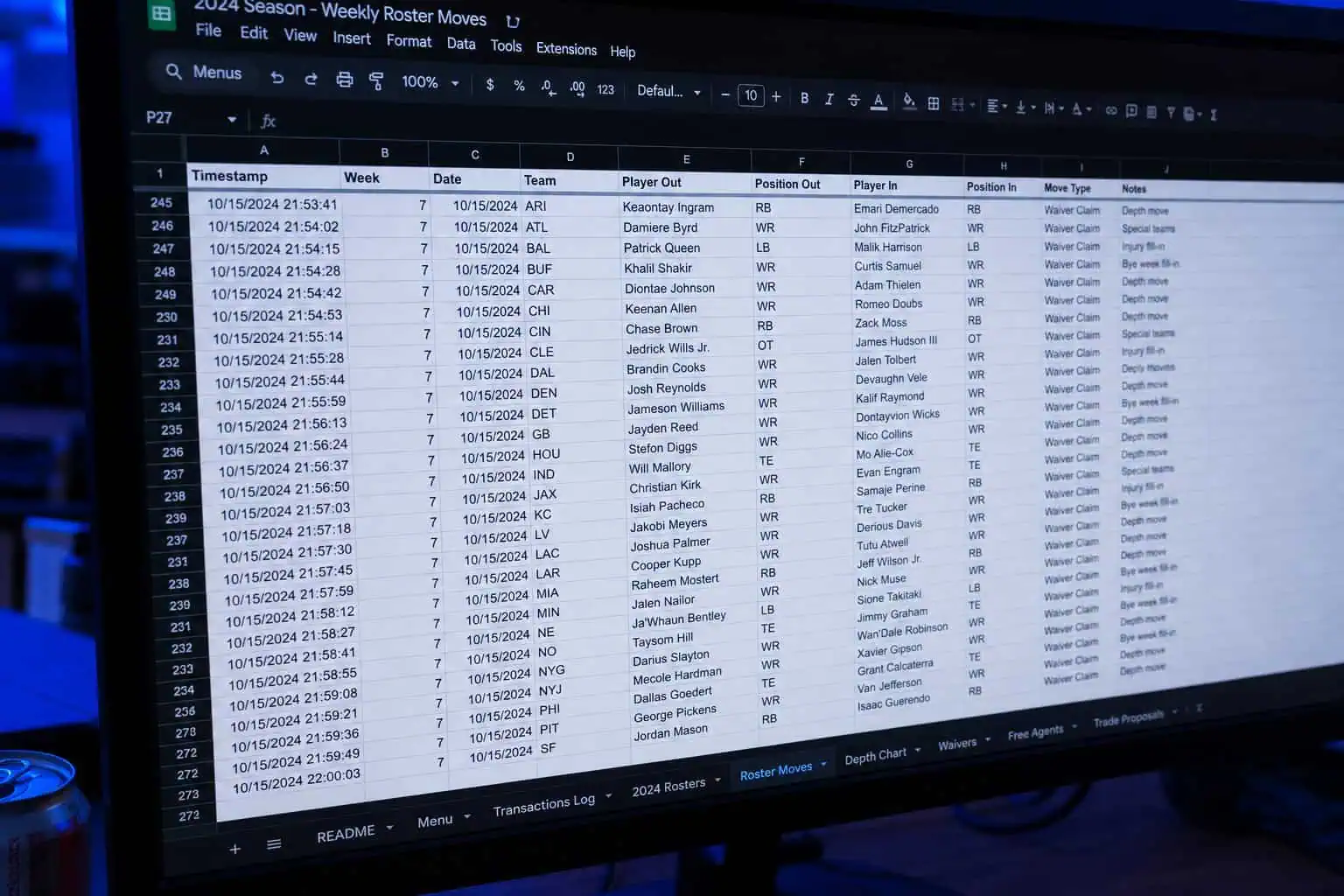
A common pattern during this offseason was a mid-tier team discovering a promising young player, only to have a wealthier org pay the buyout and scoop them up. It’s not a bug in the system — it’s a feature. But it does mean that roster construction is as much about budget as it is about scouting.
Field note: The buyout system rewards deep-pocketed orgs twice — they can skip the development phase and cherry-pick the finished product from smaller teams.
Contract Extensions: Betting on Stability
The opposite of a buyout-driven transfer is a long-term extension. When an org locks in a core player for multiple years, they’re signaling something specific: we know who we want to build around, and we’re willing to commit.
T1 made a statement of the offseason on December 23, 2025, when they announced Faker had signed through 2029 and Oner through 2028. That’s a long deal by pro esports standards. Faker is the GOAT, sure, but this isn’t just sentimentality — it’s a strategic bet on stability. By locking in their jungle-mid duo for years, T1 reduces the number of positions they need to fill each offseason. They can focus on surgical replacements rather than full rebuilds.
The logic: organizations that lock in core players for multiple years reduce the uncertainty that plagues one-year deal teams. They build chemistry, develop playstyle consistency, and avoid the scramble that happens when half the roster enters free agency simultaneously.
Roster Lock Windows: When Teams Can Actually Make Changes
This is the rule that casual viewers rarely think about, but it shapes the entire competitive year. Roster lock windows are the specific periods when teams are allowed to make roster changes. Miss the window, and you’re stuck with your lineup until the next split.

The LCK, for example, uses a Round 1-2 and Round 3-4 structure. If your team starts Round 1 poorly, you can’t just panic-buy a new jungler in week three. You have to wait until the next window opens. This means a team that drafts poorly or has chemistry issues early in the split is often stuck fighting through those problems instead of swapping pieces.
This constraint matters because it changes how teams approach the offseason. If you know you only get two windows to make changes all year, you’re going to be much more deliberate about your initial roster construction. You can’t rely on mid-season fixes to save a bad lineup.
The End of an Era — Veteran Retirements and the New Guard
The 2025-2026 offseason isn’t about who moved where. It’s about who left the stage. Three legendary junglers retired in the same window, and that’s a bigger deal than most casual fans realize.
Legendary Junglers Hang Up Their Gear
Karsa announced his retirement on December 28, 2025 after a 12-year career. Peanut retired on October 28, right after Hanwha Life got knocked out of Worlds 2025. Levi stepped away after 11 years. That’s three iconic players from the same role, all leaving in the same offseason.
The tell is when multiple legendary players from the same role retire in the same window, it creates a vacuum. These aren’t just players — they’re repositories of institutional knowledge. They’ve been in the game long enough to have played against multiple generations of talent, to have seen every meta shift, to have developed the kind of game sense that only comes from thousands of professional matches. When that experience walks out the door, teams have to replace it with something, and sites like League of Legends Esports Players profile the career stats, signature champions, and earnings of legends like Faker, Caps, and Deft alongside the rising stars coming through the scouting pipeline. Usually that something is either an untested academy player or an import from another region.
For the jungle role, this is a loss. The position requires constant macro decision-making, pathing adjustments, and split-second calls about objective prioritization. Replacing that kind of expertise isn’t something you do in a single split.

The New Blood: Peyz, Vladi, and the Academy Pipeline
The flip side of those retirements is opportunity. Young players are getting starting spots they wouldn’t have had otherwise, and orgs are betting big on unproven talent.
Peyz (Kim Su-hwan) joining T1 to replace Gumayusi is the highest-profile example. He’s stepping into the most famous org in League of Legends, replacing an ADC who won three Worlds titles. That’s pressure, but it’s a signal that T1 believes in their development pipeline. They’re not panicking and buying a veteran star — they’re promoting from within.
Vladi’s six-figure buyout tells a similar story from a different angle. Fnatic is paying serious money for a young midlaner who had a rough year with Karmine Corp. The buyout shows that orgs are willing to bet on potential, not just proven results. That’s good for the scene — the academy pipeline is working. But it’s also a high-risk gamble. Not every promising talent translates to the top level, and when you’re paying six figures for a midlaner, the expectations are immediate.
Team-Building Philosophy — Stability vs. Star Power in the LCK
If you want to understand the strategic debate of the 2026 season, look at the LCK, where two teams took completely opposite approaches to roster construction, and watching them face off this year will be an experiment in team-building philosophy that echoes throughout the entire League of Legends Esports ecosystem.
T1’s Core Retention Strategy
T1 kept their core intact. Faker through 2029, Oner through 2028 — that’s the foundation. Then they made one surgical replacement: Peyz for Gumayusi in the bot lane.
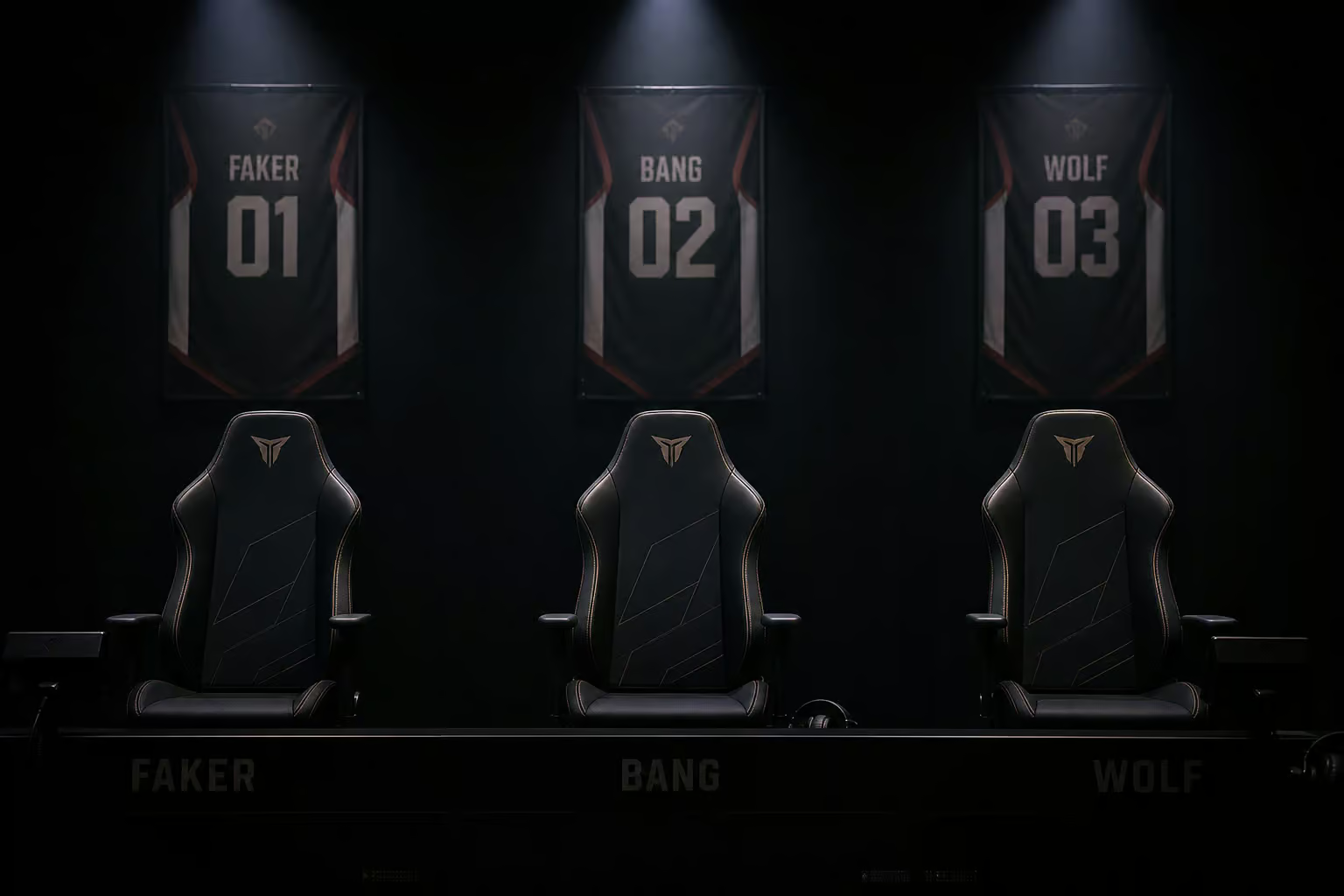
The logic: preserve communication, trust, and established playstyle. Faker and Oner have been playing together long enough to know each other’s habits without thinking. Adding a new ADC disrupts that rhythm less than a full rebuild would. T1 is betting that chemistry and continuity will beat raw talent.
There’s less risk of chemistry problems. You know what you’re getting from your core. But there’s less potential upside. If Peyz doesn’t mesh with the team or takes a full split to acclimate, T1 could find themselves in a hole early.
Hanwha Life’s Aggressive Rebuild
Hanwha Life went the other direction. They acquired Gumayusi — who’d spent 7 years at T1 and won 3 Worlds titles, and Kanavi, who returned to the LCK after 6 seasons in the LPL. That’s two massive pieces from different systems and regions, slotted into a roster that already had strong individual talent.
If it clicks, Hanwha Life is strong. Gumayusi is a top ADC in the world, and Kanavi has been a top jungler in the LPL for years. The ceiling is high.
But a failure pattern is that teams acquiring multiple stars from different regions in one window struggle with synergy. The pieces are individually strong, but they don’t know how to play together. Language barriers, playstyle differences, and communication habits take time. Hanwha Life might start slow, struggle in the early splits, and hit their stride when it’s too late.
Which Approach Wins? The 2026 Season as a Live Experiment
I’m not going to tell you which approach is better, because we don’t know yet. The 2026 season will test both philosophies. Historically, LCK teams that retained 3+ starters from the previous season have won the spring split in 4 of the last 5 years. What makes it interesting is that the LCK now has three superteams — T1, Hanwha Life, and Gen. G. That creates competitive pressure that could break either model.
If T1’s stability leads to a slow start against stacked rosters, they might regret not making aggressive moves. If Hanwha Life’s new pieces don’t gel, they could miss playoffs entirely.
The season is an experiment, and we get to watch it unfold.
Current Rosters by Region — Key Changes
Here’s where the 500+ moves shake out by region. I’m not going to list every team — that’s what the trackers are for. Instead, here’s the one or two moves in each region that change the competitive balance.
LCK: Three Superteams and a Power Shift
The LCK is an interesting region to watch this year, because it now has three legitimate superteams. T1 locked in their core and swapped ADC. Hanwha Life added Gumayusi and Kanavi. Gen. G is still Gen. G. The League of Legends World Championship 2023 had 6.4 million peak viewers, and that’s three rosters that could realistically win Worlds.
The gap between top and middle might be wide. Nongshim RedForce picking up Scout after his 9-year stint in the LPL is a move — it gives them a world-class midlaner, but the rest of the roster needs to catch up. Teams like Dplus Kia, KT Rolster, and Kiwoom DRX are in a tough spot: they’re solid, but they’re competing against three monsters.
LEC: Fragmented Top Tier and Midlane Musical Chairs
The LEC’s top tier is fragmented. Multiple orgs made significant moves, but no clear “team to beat” emerged.
Vladi to Fnatic is the headline, but Humanoid moving from Fnatic to Team Vitality (announced December 19, 2025) reshapes the midlane. That’s two LEC orgs swapping midlaners. Oscarinin left Fnatic after 3 years, so Fnatic’s top side is essentially rebuilt. Elyoya re-signed with Movistar KOI through 2027, giving them continuity in the jungle.
The LEC might be competitive as a result. Without a clear superteam, the region could see tighter races and upsets.
LPL: Rebuilding After Veteran Departures
The LPL lost players this offseason. Kanavi returned to the LCK after 6 seasons. Scout returned after 9 years. That’s two Korean stars in the LPL, gone in the same window.
Teams like Top Esports, BLG, JDG, and Weibo Gaming are adjusting, but the league’s depth took a step back. Doinb remains on LNG, which gives them a veteran presence, but the LPL might be in a rebuilding year. The talent drain is real, and it’ll take time to develop homegrown replacements at that level.
LCS/LTA: Measured Adjustments
The LCS saw less churn than other regions. Shopify Rebellion signing Damonte is a move, but there weren’t many transfers. FlyQuest, Team Liquid, and Cloud9 made adjustments rather than overhauls.
That could be a smart play — stability beats chaos in a league where the gap between top and bottom is wide. But it could mean the region is falling behind while other leagues get aggressive.
Minor Regions: Global Ripple Effects
The minor regions saw moves. Sofm rejoining MGN Vikings as a player after coaching them for two years is a coach-to-player transition. Levi’s retirement affects the LCP power balance — the LCP’s star is gone, and teams like CTBC Flying Oyster will have to adjust.
The regional leagues saw shifts, though they fly under the radar compared to the major regions.
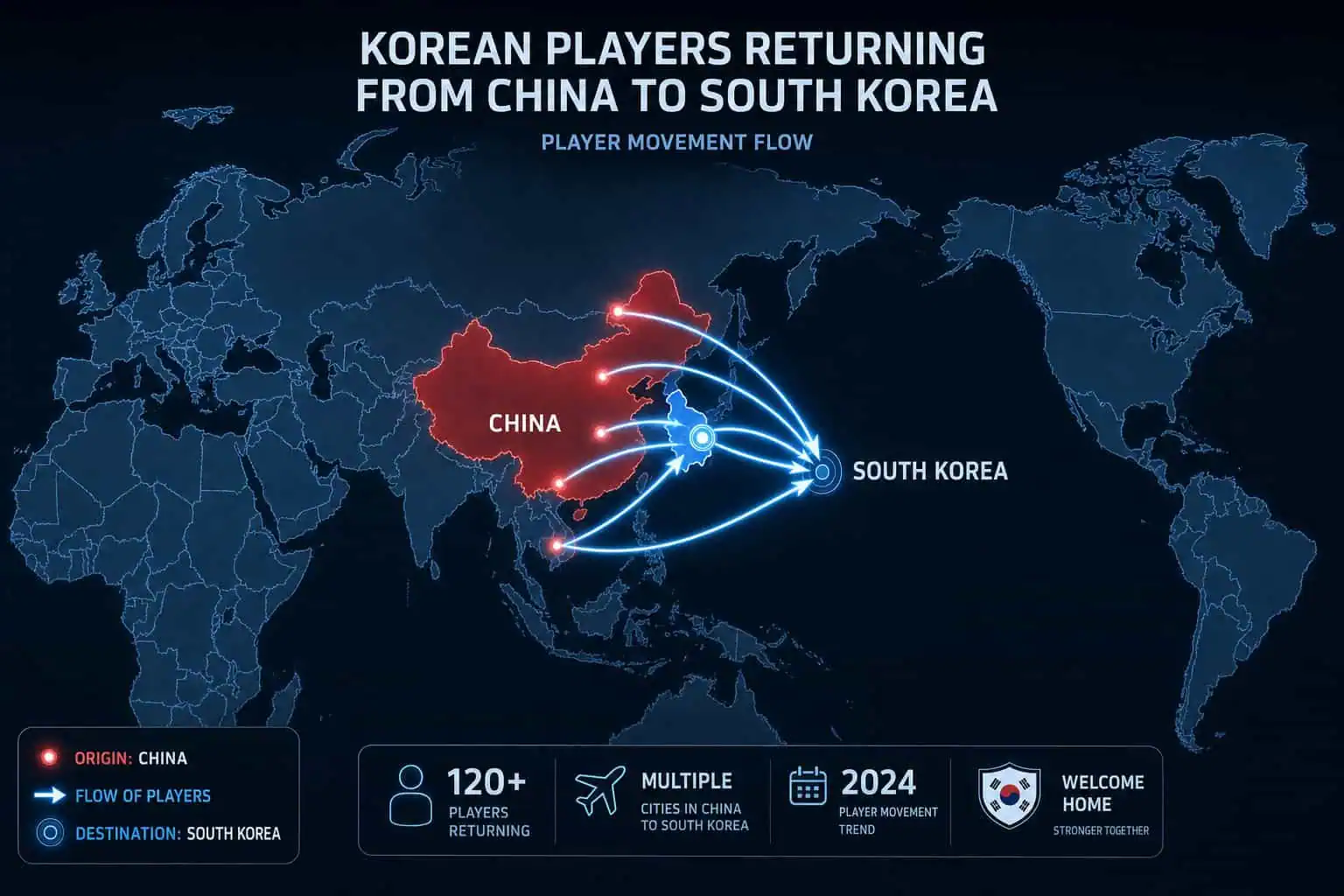
The Great Return — Why Korean Stars Are Coming Home
For a decade, the flow of Korean talent went from LCK to LPL. This offseason, two names came back. This offseason, two names came back.
Kanavi returned after 6 seasons in the LPL, joining Hanwha Life on November 23, 2025. Scout returned after 9 years abroad, signing with Nongshim RedForce. It suggests that the LCK’s competitiveness and salary structures have changed enough to make returning attractive.
The implications for the LPL are real. If more Korean players follow Kanavi and Scout, China’s talent pipeline weakens. The LPL has relied on Korean imports for years to fill top-tier roles, and losing that advantage could shake up the global power balance.
How to Track Roster Changes — Tools and Information Gaps
If you want to follow this chaos, here’s what I’ve been using. Roster news is fragmented, and there’s no single tracker that covers all regions equally.
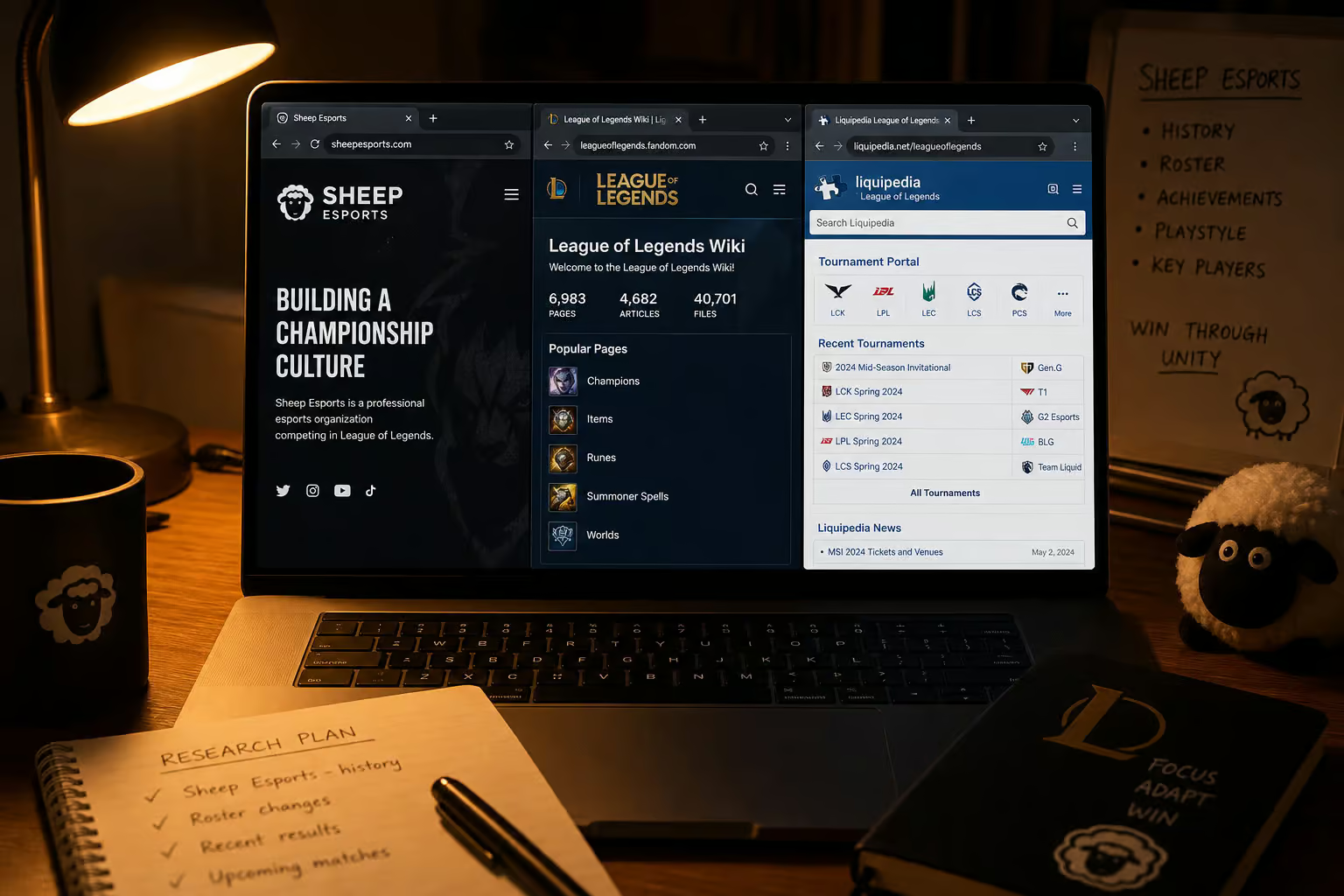
The Sheep Esports tracker is a source for narrative context and analysis. They break stories, provide context on why moves happen, and track rumors alongside confirmed announcements. Their coverage of the Elyoya re-signing leak on December 29, 2025 was ahead of the official announcement.
The LoL Fandom Roster Swaps page gives you region-organized data. It’s a wiki — no story, just moves. But if you want to see every swap in a given region, that’s the page. I spent time bouncing between tabs trying to confirm whether that Scout rumor was real, and LoL Fandom was where I finally found confirmation, but for the geek’s gold standard, you really want League of Legends Esports Liquipedia, which offers a more in-depth breakdown of coverage, transfer logs, and prize pools.
Official team announcements are the standard, but they’re scattered across Twitter, Discord, and team websites. There’s no aggregation that catches everything. The information asymmetry is real — some regions are better documented than others, and some moves slip through the cracks for days before getting confirmed.
The 2026 Season — What All This Chaos Means for Competition
So what does this mean for the games we’re about to watch?
Here’s what nobody’s talking about: the superteam model might be self-defeating. As teams stack talent, the pool of available stars dilutes. Balanced rosters with chemistry might outperform collections of individual superstars. In 2023, JDG’s superteam of kanavi, knight, Ruler, and 369 won MSI but collapsed at Worlds, while T1’s stable core finished second—supporting the idea that chemistry can beat raw talent.
T1’s stability approach could look smart if Hanwha Life’s new pieces clash. Or Hanwha Life could win if their talent clicks immediately.
The veteran retirements might improve competitive balance in the long run. When players leave, academy players get chances they wouldn’t have had. That forces development, creates stars, and prevents the scene from stagnating. It hurts in the short term — the quality of play might dip for a split or two, but the long-term health of the scene depends on that pipeline working.
The LCK has three superteams. The LEC is fragmented. The LPL is rebuilding. The 2026 season will test which philosophy wins, which regions are developing talent, and whether the old guard’s departure opens the door for something new.
I don’t know the answers yet. But I’m going to be watching every split, every round, every roster lock window, and every match that tests these rosters. That’s the part — the chaos is over, and now we get to see what it built.
Frequently Asked Questions
Why did T1 extend Faker through 2029 and Oner through 2028?
T1’s long-term extensions are a strategic bet on stability and chemistry. By locking in their jungle-mid duo for years, they reduce the number of positions they need to fill each offseason, build playstyle consistency, and avoid the scramble that happens when half the roster enters free agency simultaneously.
How do buyout clauses affect roster moves in LoL esports?
Buyout clauses create a bottleneck where only wealthy orgs can compete for the best young players. A mid-tier team might discover and develop a promising player, but a top-spending org can pay the buyout and scoop them up, effectively rewarding deep-pocketed teams twice by letting them skip the development phase.
Why did three legendary junglers retire in the same offseason?
Karsa, Peanut, and Levi all retired in the same window after careers spanning 11-12 years. Their departures create a vacuum of institutional knowledge and game sense that’s hard to replace, forcing teams to either promote untested academy players or import from other regions to fill the gap.