
I started this project the way most people do: I Googled “highest earning LoL player.” Simple, right? Pick the number off the top of the list, write the name, move on.
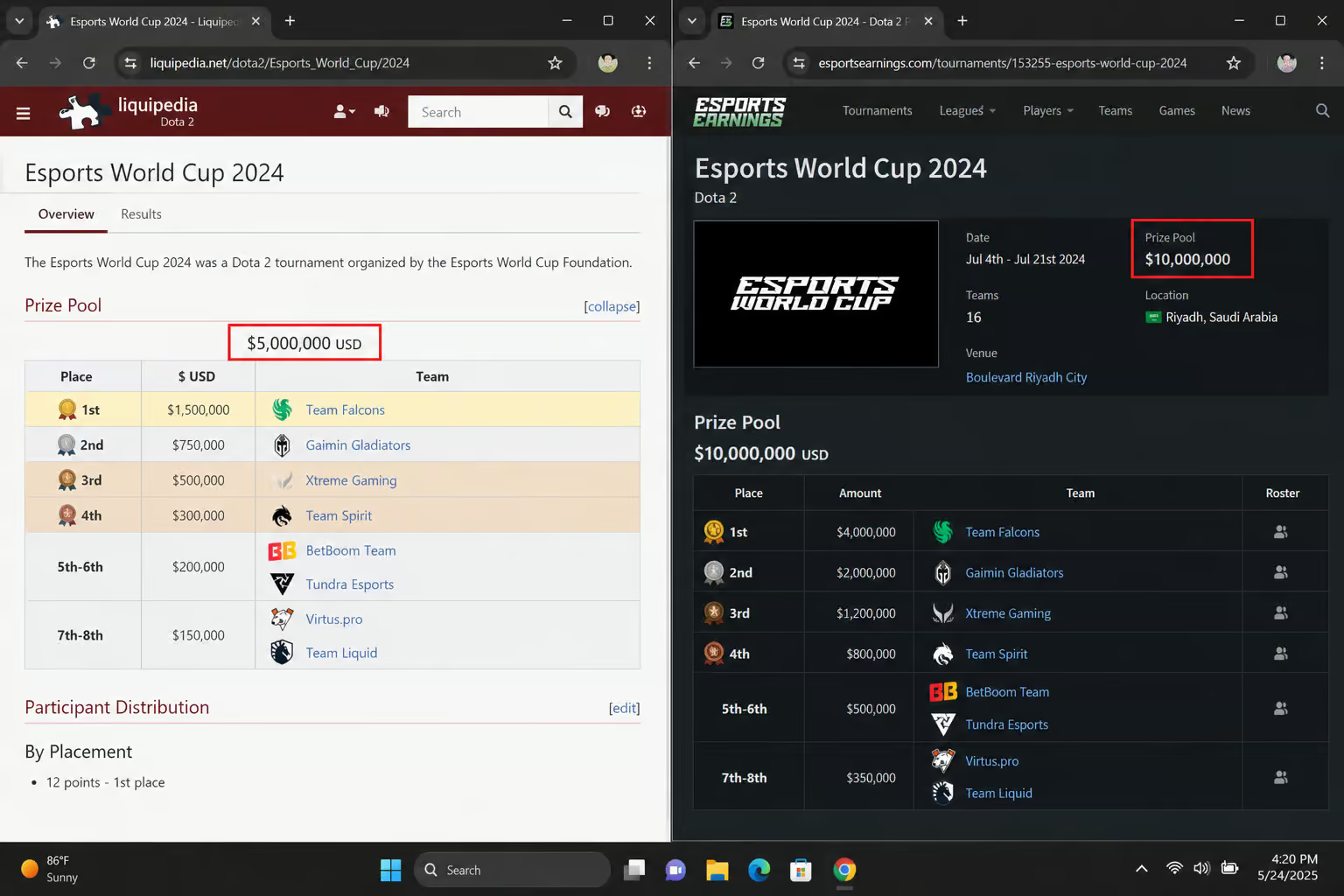
Then I opened Liquipedia and saw $2,136,648 for the top earner. Then I checked EsportsEarnings.com and saw $1,922,084.56 — for the same player. That’s a $214,000 gap. No missing decimal, no currency conversion quirk. Two authoritative sources, two different numbers, one question that suddenly didn’t have a single answer.
Turns out “richest League of Legends player” is a rabbit hole that runs through conflicting databases, off-stage empires, structural prize-pool design, and the difference between being the highest earner and the greatest player. Here’s what I found digging into it.
Key Takeaways
Liquipedia ranks the top League earner at $2,136,648, while EsportsEarnings.com reports Faker at $1,922,084.56 — a ~$214K discrepancy with no official tiebreaker.
Faker’s prize winnings are just 5–10% of his estimated $30–50 million net worth, thanks to T1 equity, a Seoul building (“Faker Tower”), and BMW/Nike sponsorships.
Dota 2’s top earner (N0tail, $7.18M) earns more than triple LoL’s top earner because of The International’s crowdfunded Battle Pass — a structural choice, not a sign of which esport is bigger.
Table of Contents
The $2 Million Club — League of Legends’ Highest Earners
Liquipedia’s career earnings table is the most-cited source for LoL prize money, so let’s start there. The top ten players range from $2,136,648 down to $864,694. The #1 player has earned more than double the #10 player. And the 100th player on the list sits at $269,043 — meaning you have to be in the top percentile just to cross a quarter million in tournament winnings.
The ~$214K gap between Liquipedia and EsportsEarnings.com likely stems from different update cycles and inclusion criteria. Liquipedia may count all historical earnings across a player’s career, while EsportsEarnings.com sometimes filters by game or omits certain regional events. Neither source is definitively correct; they simply measure different slices of the same pie.
That top spot belongs to Faker. Five World Championship titles (2013, 2015, 2016, 2023, 2024), first Hall of Legends inductee, the player against whom every midlaner is measured. But the next nine names are worth a look too:
- Caps — Europe’s prodigy, two Worlds finals appearances, known for his mechanical flexibility.
- Deft — The 2022 Worlds champion whose DRX Cinderella run is one of the sport’s greatest stories.
- Uzi — No Worlds title, but a legacy so large he was inducted into the Hall of Legends in 2025 anyway.
- Ruler, ShowMaker, Bang, Wolf — each with a Worlds ring and years of dominance.
Every figure here comes with a caveat: it’s prize money only. Salaries, streaming, endorsements, and ownership stakes aren’t captured. That’s where the real money lives — and Faker is the extreme example.
The Faker Factor: How the GOAT Built a $30–50 Million Fortune
Let’s do the math. Faker’s tournament winnings, depending on which database you trust, are somewhere between $1.9M and $2.14M. His estimated net worth in 2026 is $30–50 million. The prize money covers roughly 5–10% of that total.
So where does the other 90% come from?
- T1 ownership — Faker holds equity in the organization he plays for. That’s rare in esports, where most players are employees, not partners. It means he profits from the team’s growth, sponsorships, and merchandise, not just his salary.
- “Faker Tower” — A real-estate development in Seoul bearing his name. It’s a literal building with his brand on it.
- BMW and Nike sponsorships — The kind of global endorsement deals usually reserved for top-tier traditional athletes. You don’t get those without transcending your sport.
Prize money is the visible tip of a much larger wealth iceberg — and Faker’s iceberg is uniquely large because he’s been the face of LoL for over a decade. Most pros will never approach that level of off-stage income.
LoL vs. Dota 2: A Tale of Two Prize Economies
If you glance at the all-time esports earnings leaderboard, Dota 2 dominates the top spots. N0tail sits at $7,184,163.05, almost all from Dota 2. Seven of the top ten earners in esports history are Dota 2 players. LoL’s top earner doesn’t crack the top 200 worldwide.
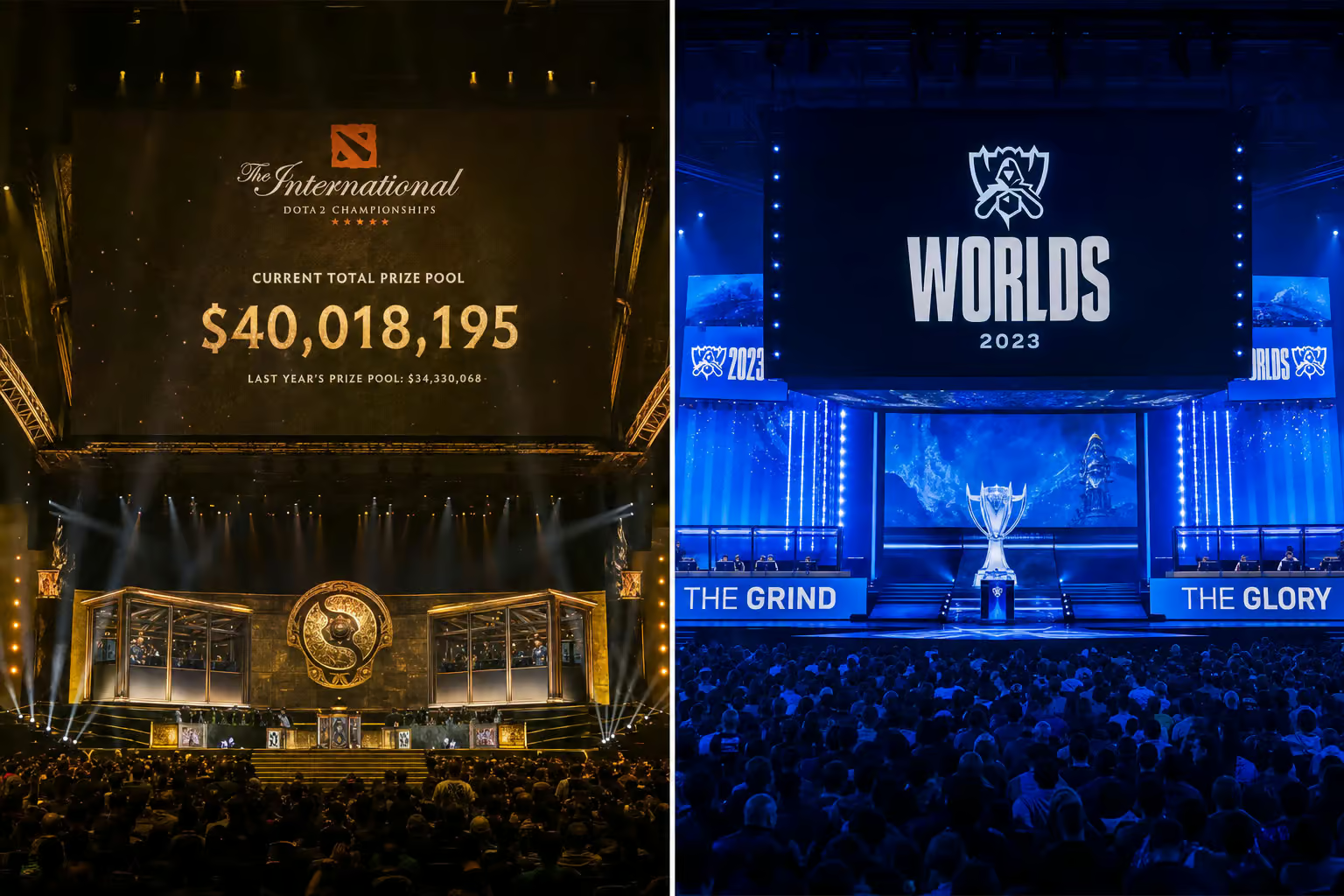
It’s a structural difference.

Dota 2’s model: The International’s prize pool is crowdfunded through the Battle Pass — players buy in-game content, and a quarter of the revenue goes into the tournament pot. This creates year-over-year growth and massive single-tournament payouts. OG’s back-to-back TI wins in 2018 and 2019 created a wealth gap where a handful of players earned millions while the rest of the scene earned far less.
Riot controls prize pools directly. They’re smaller per tournament — in June 2016, LoL’s total prize money across all competitions was $29.2 million, compared to Dota 2’s $64.4 million, but the trade-off is stability. LoL pros get reliable salaries, centralized league structures, and a broader distribution of earnings across more players. Tracking the chaos of how rosters form, shift, and break across the LCS, LEC, LCK, and LPL, including roster lock rules, buyout clauses, and the impact of the competitive ecosystem on team chemistry, the League of Legends Esports Roster landscape explains much of Dota 2’s ultra-high earners versus LoL’s larger middle class.
Neither model is “better.” They’re different design philosophies about where the money should go.

Beyond the Bank — Legacy, Championships, and the Hall of Legends
Prize money rankings tell you who won the most tournaments. The Hall of Legends tells you who mattered most.
Riot Games established the Hall of Legends in January 2024. The first inductee was Faker, unsurprisingly. The second, in 2025, was Uzi — a player who never won a World Championship, despite the League of Legends World Championship 2023 having 6.4 million peak viewers. That’s the point.

Uzi’s mechanical peak, his global fanbase, and his influence on the ADC role earned him the honor without a Worlds trophy. Legacy is not the same as bank balance.
Consider DRX’s 2022 run. They entered as the fourth seed from the play-in stage — the lowest possible entry. They beat T1 in a 3–2 finals thriller. The players on that team (Deft, Pyosik, Zeka, Kingen, BeryL) didn’t suddenly become the highest earners.
But their legacy is carved into the game’s history. The Hall of Legends exists precisely to recognize that kind of story alongside the statistical achievements.
The Path to Pro: How Solo Queue Grinders Become Stars (and Why Many Don’t)
I’ve watched enough tryout cycles to see a consistent failure pattern: a player hits rank 1 in solo queue, gets invited to a team trial, and crashes out because they can’t communicate, don’t understand macro rotations, or tilt their teammates after the first misplay. Solo queue rewards individual mechanics and selfish play. Pro League requires six-man coordination (including a coach), structured vision control, and emotional resilience.
Riot has tried to formalize the pipeline. The “First Selection” draft system, introduced in the 2025–2026 season, is designed to funnel top solo queue talent into organized competition with a more structured path. It’s early — we don’t know how well it works yet, but it acknowledges that the old method of hoping a scout notices you in ranked is inefficient.
The path is also getting weirder. Influencer-owned teams like Disguised (run by Disguised Toast) and Los Ratones (run by Caedrel) are entering the scene, bringing built-in audiences and alternative scouting networks. The LTA (merging LCS, CBLOL, LLA) and LCP (merging PCS, VCS, LJL, LCO) league consolidations are creating guest team spots that lower the barrier for new organizations. Despite these new avenues, academy teams remain the primary development path for most aspiring pros, offering structured coaching and competitive scrims that solo queue alone cannot provide. The pipeline is expanding, but the bottleneck — turning a ranked grinder into a team player, hasn’t changed.
The Future of Earnings: New Leagues, Formats, and What They Mean for Players
Three major structural changes took effect in 2025–2026, and each one could reshape how players earn money:
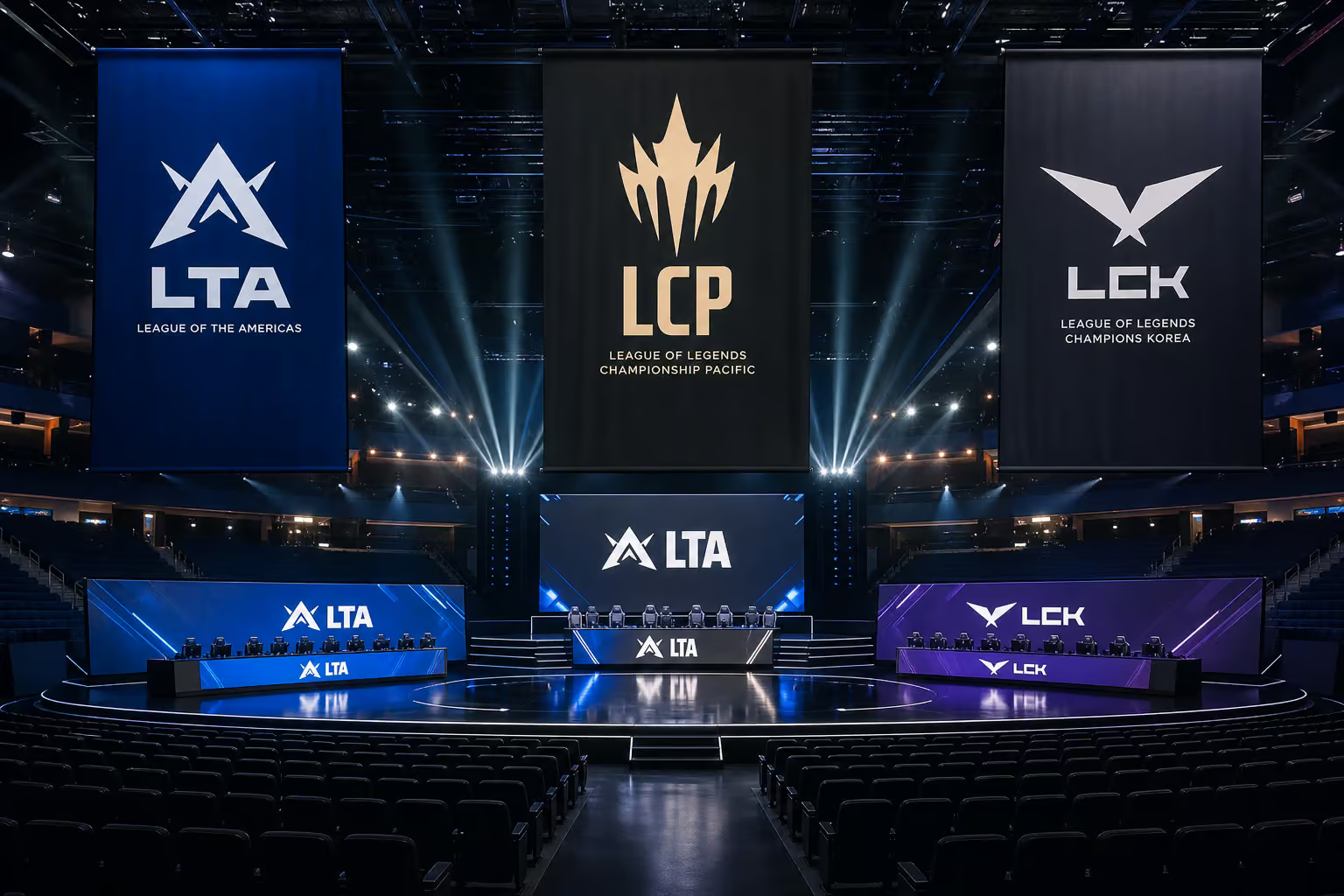
- League consolidations (LTA, LCP) — Fewer regional leagues, but each one is stronger and better funded. Top talent may command higher salaries because there are fewer teams competing for them. Guest team spots also mean that breakout squads, think DRX’s 2022 run writ large, can claim a share of the prize pool without needing a full franchise buy-in.
- First Stand Tournament (FST) — A third international event added to the calendar, joining MSI and Worlds. More tournaments mean more prize money distributed throughout the year, and more chances for non-LCK/LPL teams to prove themselves. Bilibili Gaming won FST in 2026, and that victory came with its own payout and prestige.
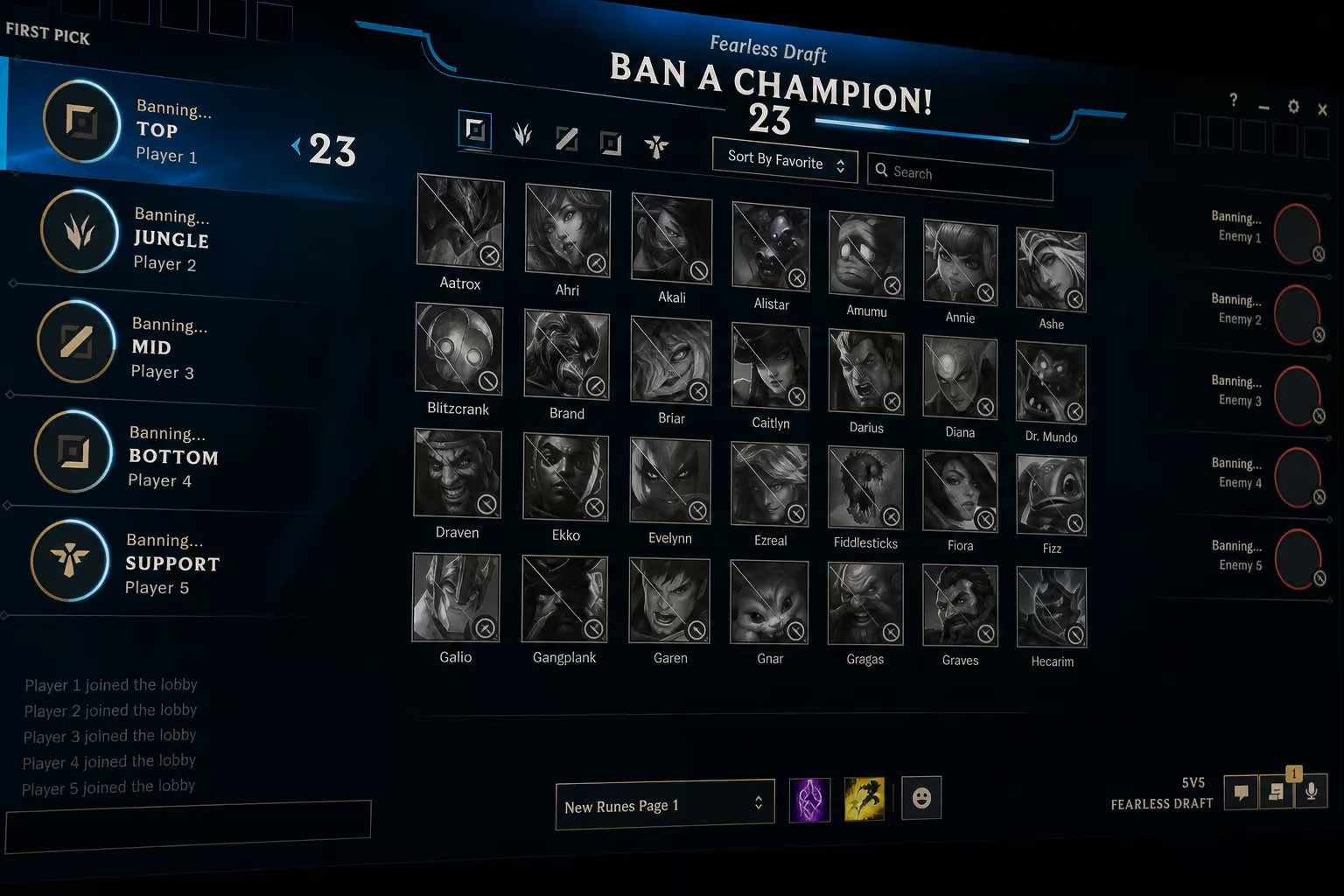
- Fearless Draft (permanent from 2026) — The ban system prevents teams from repeating champions in a best-of series. This changes how teams draft, how players practice, and potentially how valuable certain flexible players become. A midlaner who can play 15 champions at a pro level suddenly has more market leverage than one who’s elite on three.
These changes won’t make LoL’s top earners surpass Dota 2’s. But they could widen the pool of players who can make a solid living — more international slots, more stable leagues, more opportunities for the 100th-ranked player to earn more than $269,043.
The Full Picture of Player Wealth
The question — “who’s the richest LoL player”, has layers. Prize money data disagrees by ~$214K depending on the source. The actual top earner, Faker, has built a $30–50M fortune through ownership, real estate, and global sponsorships that no other pro can replicate. Dota 2’s top earners triple LoL’s figures because of structural design, not esport size. And legacy metrics like the Hall of Legends measure something different from wealth entirely.
The ecosystem itself is evolving: new leagues, a formalized scouting system, and more international tournaments are expanding the ways players can earn. But the fundamental tension remains — the data gives you a number, but it never tells the whole story. The richest player isn’t the one with the most tournament winnings. It’s the one who knows that prize money is just the starting point.
For a deeper dive into the leagues and stats behind these numbers, check out our complete guide to League of Legends esports and the advanced metrics used to evaluate players.
Frequently Asked Questions
How much money has Faker actually earned from tournaments?
The number depends on which source you trust. Liquipedia lists Faker’s career prize winnings at $2,136,648, while EsportsEarnings.com reports $1,922,084.56 — a roughly $214,000 gap with no official tiebreaker. Both figures are legitimate, held by authoritative databases using different counting methodologies.
What are the new league consolidations and do they mean more money for players?
The LTA (merging LCS, CBLOL, LLA) and LCP (merging PCS, VCS, LJL, LCO) launched in the 2025-2026 season, creating fewer but stronger regions. Fewer teams competing for top talent could drive salaries up, while guest team spots let breakout squads claim prize-pool shares without needing a full franchise buy-in. The pool of players earning a solid living should widen.