
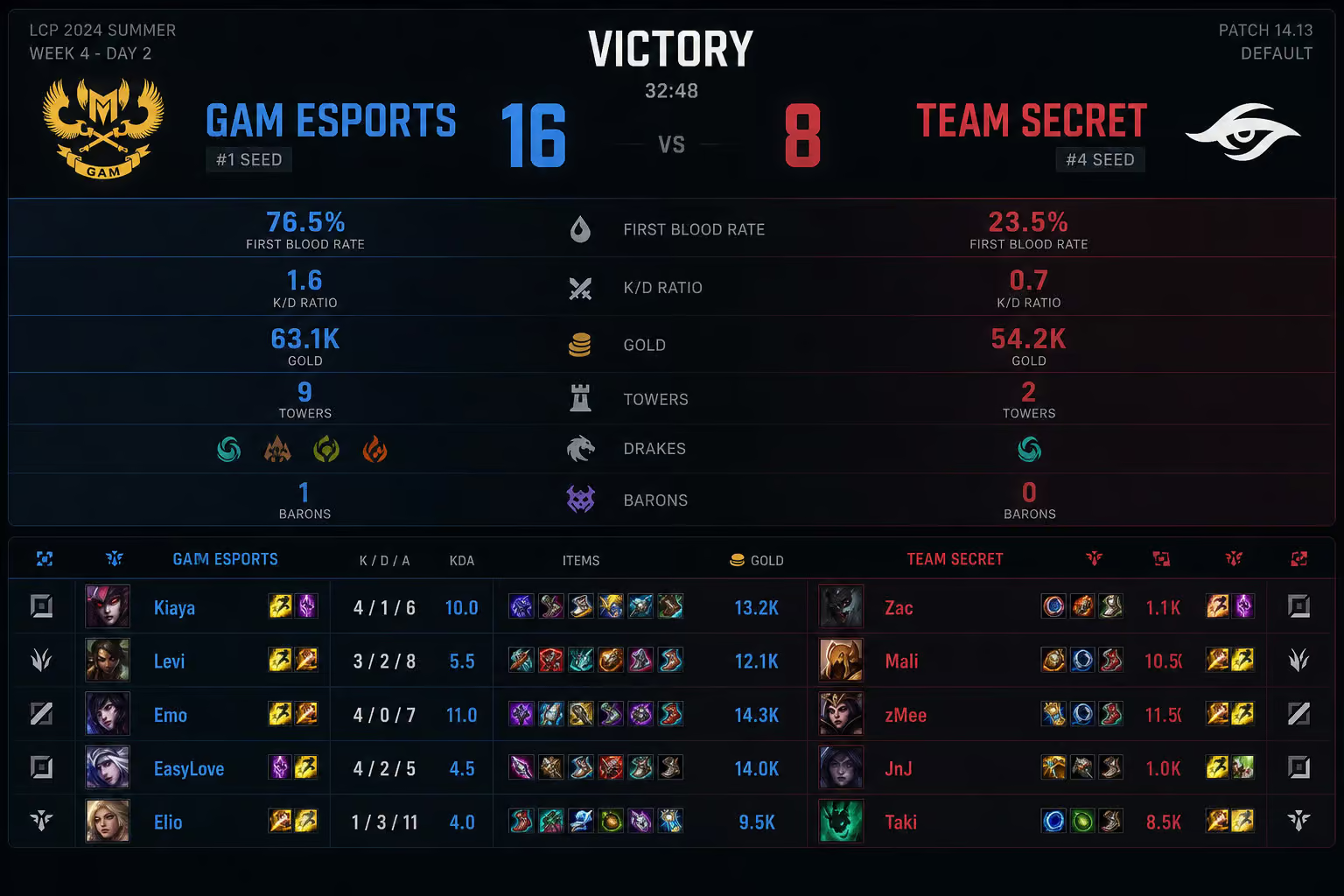
I’ve been digging into the numbers behind competitive League of Legends this season, and one stat jumped out immediately: GAM Esports has a 76.5% first blood rate but only a 1.6 K/D ratio. They’re getting first kills at an elite clip, yet they trade kills inefficiently after that. It’s the kind of split that makes you question what first blood actually tells you about a team.
This article is a data hub anchored on two running examples. I’ll use GAM Esports (VCS region, Season 15) as a benchmark to walk through economy, aggression, objectives, and vision stats — and then follow Player 13, an ADC who bounced between teams and tournaments, to show how individual numbers only make sense with team context. No surface-level KDA analysis here; we’re going layer by layer.
Key Takeaways
GAM Esports’ +355 gold differential at 15 minutes drives a 70% win rate, but their 1.6 K/D ratio and 11.5 deaths per game reveal inefficient aggression behind the early leads.
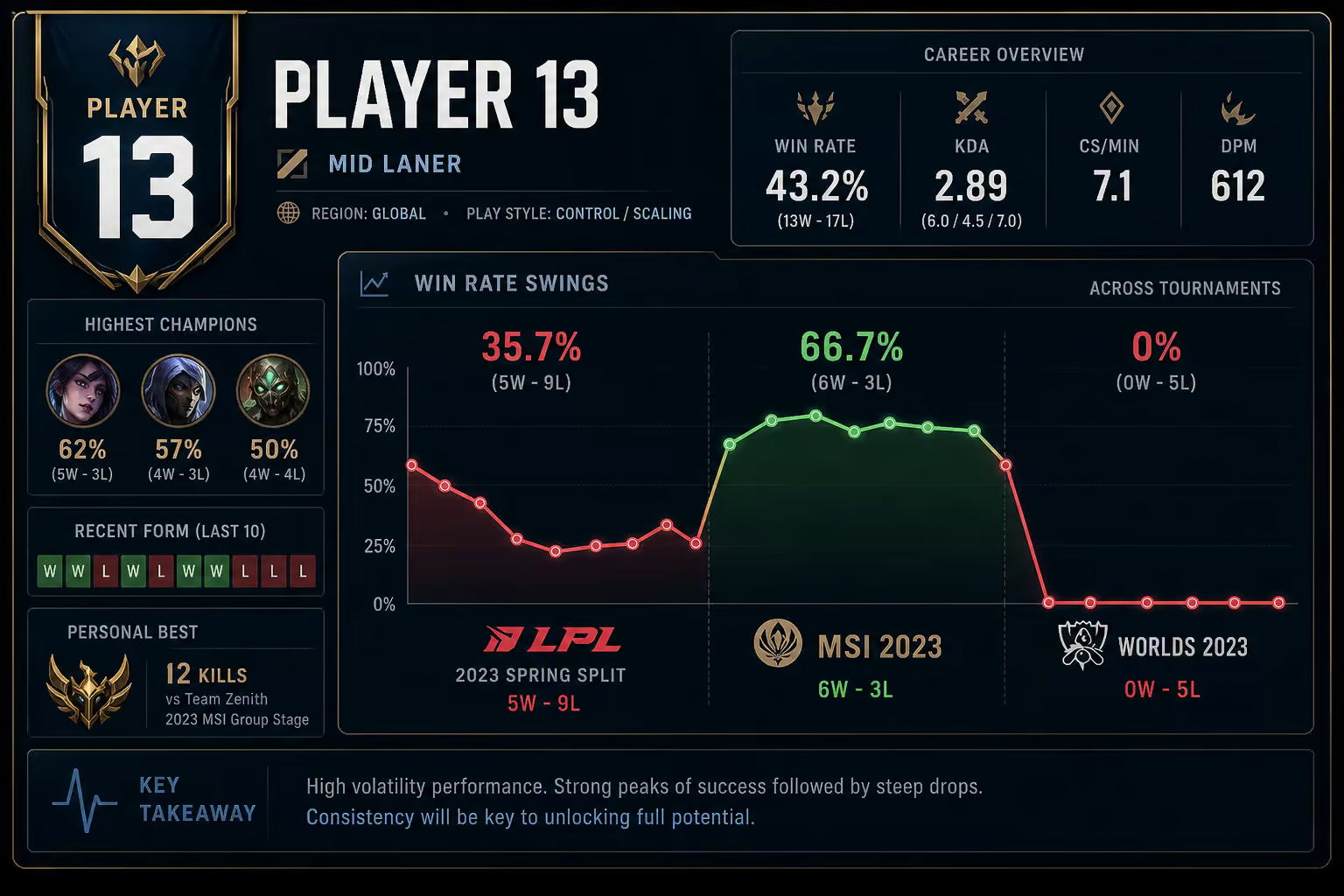
Player 13’s win rate swung from 35.7% to 66.7% to 0% across five tournaments in 2025 — same player, different team contexts, proving individual stats are meaningless without the full picture.
Oracle’s Elixir suffered a DNS takeover on April 13 (phishing page with trojan, now fixed), and a side-selection bug still affects 2026 game data — so choosing your stat platform matters more than ever.
Table of Contents
The Core Metric: Gold Differential at 15 Minutes and What It Tells You
GAM Esports sits at +355 gold at the 15-minute mark this season, and when they’re ahead at that point, they win 70% of their games. That is a signal.
GAM generates 1,873 gold per minute, which translates to a +81 gold differential per minute. Their CS per minute is 34.8, with a CS differential at 15 of +2.5. They also have a tower differential at 15 of +0.18 (not huge, but positive). Plate income feeds into that gold lead too.
Here’s the catch: a team with a strong early lead can still lose if they have a weak late-game scaling comp. That 30% loss rate when ahead at 15 is real — you can’t just look at gold and call it a day.
League of Legends stats like gold differential work best as a starting point, not a conclusion. When you see a team with a high GD@15, check their average game length. GAM’s average game is 32:11, which is on the longer side — suggesting they’re not always closing fast even when they’re ahead.
Aggression Metrics: First Blood, Damage, and KDA
GAM’s 76.5% first blood rate looks notable — until you pair it with their 1.6 K/D ratio and 11.5 deaths per game. They’re getting the first kill, but then they’re trading kills inefficiently. Their damage per minute is 2,336, which is respectable, and they average 12.8 kills per game. But they also die 11.5 times. The assists-per-kill ratio (2.4) suggests they’re sharing kills, but the deaths are high.
KDA alone can mislead you. Player 13 is a perfect example. During the Superliga Summer Split, he posted a 4.28 KDA — clean, efficient, team-oriented. Then in the same season’s Playoffs, that dropped to 1.78.
Same player, different team context and opponent strength. His kill participation (KPAR) went from 74.7% in the regular split to 59.3% in playoffs. The team couldn’t enable him.
So when you’re reading league of legends esports stats, don’t just glance at KDA. Look at damage per minute and kill share too. In Winter 2025, Player 13 had a 36.4% kill share and 2.91 KDA — high share for an ADC, but the team was losing (35.7% win rate). The kills weren’t translating.
Objective Control: Dragons, Voidgrubs, Heralds, and Nashors
GAM’s plate distribution tells a clear story: top lane gets 1.7 plates per game, mid gets 0.6, bot gets 1.4. That is a top-side funnel, and it aligns with their voidgrub count — 2.41 per game. They’re investing early resources into top lane and neutral objectives on that side of the map, much like many top-tier organizations do, from T1 and Gen. G to G2 and JDG, a granular look at the League of Legends Esports Teams reveals what separates a dynasty from a flash-in-the-pan roster.
- Dragons per game: 2.1 (47.8%)
- Rift Heralds per game: 0.53 (52.9% success)
- Nashors per game: 0.71 (68.8% win rate)
The voidgrub stat is relatively new to CSV exports (appears as GRB in team stats, after Rift Herald data). It’s worth tracking because voidgrubs reward tower damage and map control. GAM’s 2.41 per game isn’t elite, but combined with their plate distribution, it is a pattern.

If your top lane has high plate numbers, you’re probably seeing the jungler path top more often. That’s not something a simple dragon count tells you.
Vision Control: Wards, Vision Score, and Clearing Efficiency
GAM puts up 8.2 vision score per minute. But the real tell is how efficiently they deny enemy vision. Their wards cleared per minute is 1.4, and their percentage of wards cleared is 41.3%. Those numbers suggest they’re actively contesting vision but may be prioritizing defensive warding over aggressive clearing, which makes data analytics tools essential for tracking opponent patterns and ward placements.
- Wards per minute: 3.5
- Vision wards per minute: 1.3
That 41.3% clearance rate is decent, but not oppressive. For comparison, a team with a heavy support roaming style might clear at 50%+. GAM’s approach seems measured: they place enough vision to avoid ganks and set up picks, but they’re not diving deep to clear the enemy jungle.
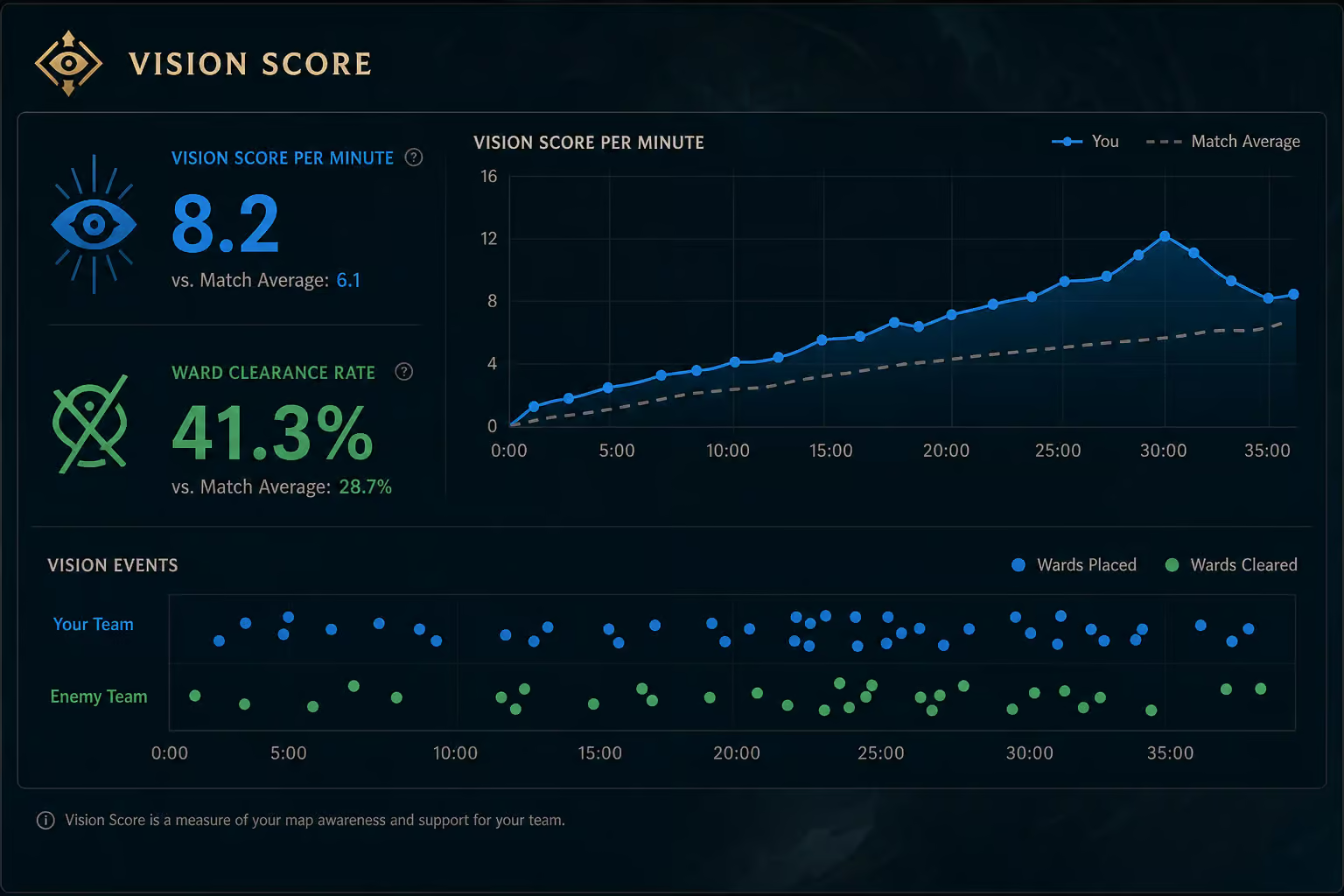
In league of legends stats live, you’ll often see vision score as a headline number, but the clearing efficiency tells you more about map dominance. If a team’s percentage cleared is low but their vision score is high, they might be flooding their own jungle with wards — safe, but not aggressive, a strategy that contrasts sharply with the playstyles of League of Legends Esports Players like Faker and Caps, who dominate by taking calculated risks.
Player Performance Variability: The Player 13 Case Study
Player 13’s 2025 season was a rollercoaster, and every swing is tied to team context, not individual skill.
| Tournament | Games | Win Rate | KDA | CS/M | DMG/M |
|---|---|---|---|---|---|
| Winter 2025 (Lille Esport) | 14 | 35.7% | 2.91 | 8.05 | 835 |
| Spring 2025 (Lille Esport) | 14 | 35.7% | 3.15 | 8.44 | 767 |
| Summer Split 2025 (KOI Fénix) | 9 | 55.6% | 4.28 | 8.52 | 782 |
| Summer Swiss 2025 (KOI Fénix) | 6 | 66.7% | 3.0 | 8.42 | 724 |
| Summer Playoffs 2025 (KOI Fénix) | 3 | 0% | 1.78 | 9.45 | 497 |
| Iberian Cup 2025 (KOI Fénix) | 4 | 50% | 3.06 | 8.67 | 851 |
Look at the playoff collapse: 0% win rate, 1.78 KDA, but the highest CS per minute of his entire year (9.45). He was farming well but couldn’t convert it into damage or kills — damage per minute dropped to 497. That is a team failure, not a player failure.

His champion pool also tells a story. On Movistar KOI Fénix, Xayah was his comfort pick (2-0, 100%). Kai’Sa was a trap (0-2 in Summer Split, though it worked once in Iberian Cup). In playoffs he even tried Yunara — a desperation pick that went 0-1.
Player 13 looked like a star in Swiss (66.7% WR) and a rookie in playoffs. Same ADC, wildly different outcomes.
Stat-Tracking Platforms Compared: Finding Reliable Data
Where do you actually get this data? Three platforms dominate, and each has trade-offs.
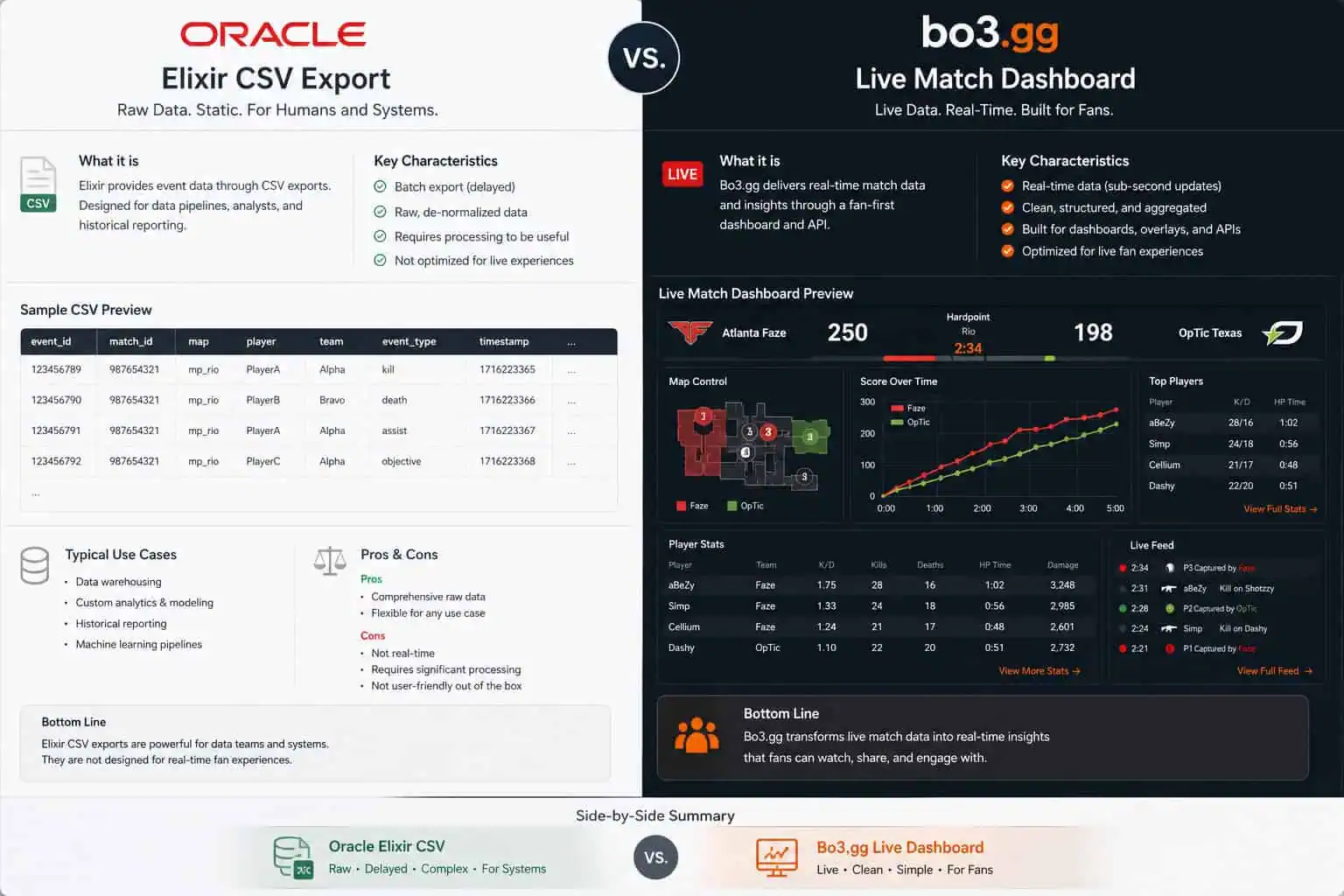
Oracle’s Elixir has served as the leading platform for advanced LoL esports analytics since 2015. CSV exports are great for deep historical analysis — they even added Void Grub data to the column layout. But the platform had a rough April: a DNS takeover on April 13 where hackers replaced the site with a phishing page containing a trojan. It’s fixed now, but it happened.
Also, there’s a side-selection bug affecting 2026 games because Riot changed the draft order (blue side no longer picks first), and OE hasn’t fully caught up. If you’re pulling 2026 data, the draft information might be wrong.
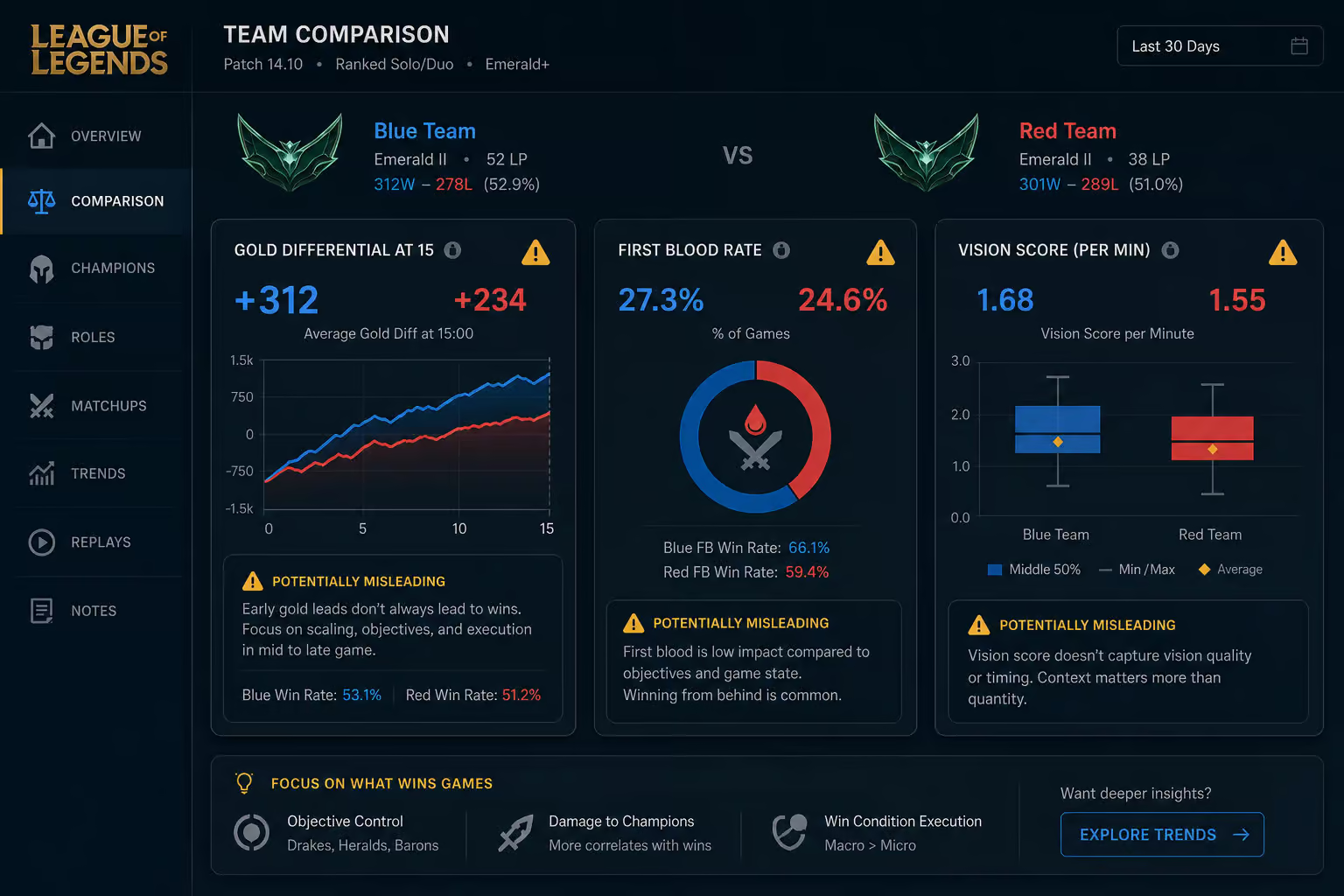
On the plus side, they’ve added new search boxes in the header (Player, Team, Blog — previously confusing), and they now cover VALORANT too.
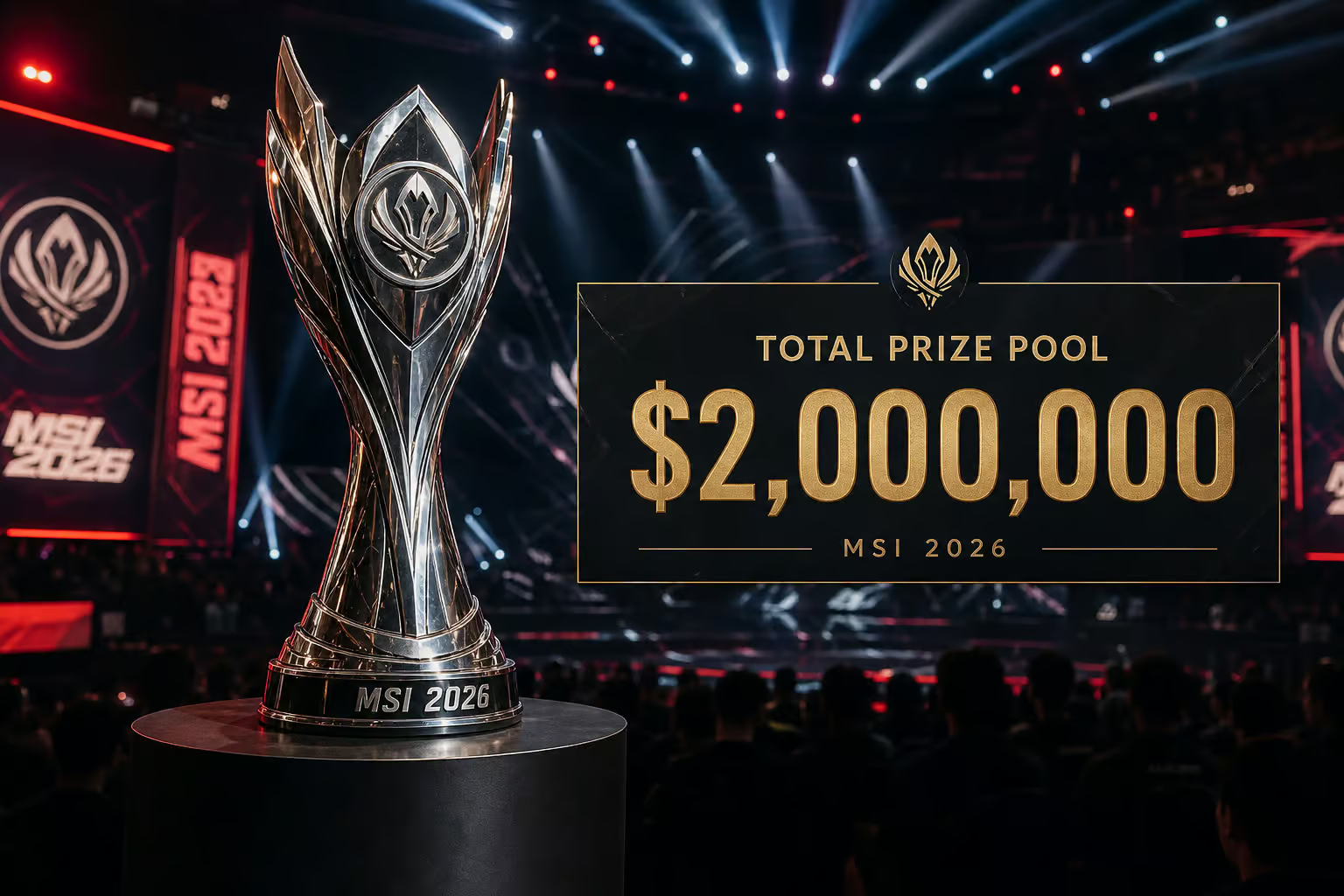
Bo3.gg is the newer, cleaner alternative. Real-time updates, advanced filters, and no paywalls for essential stats. They cover MSI 2026 (prize pool: $2M) and provide live match data that’s easy to scan. The interface is designed for fans who don’t want to wade through CSV exports — just pick a region, find a match, and see the numbers.
Leaguepedia (the Esports Wiki) is the place for per-player per-champion breakdowns. Player 13’s champion-by-champion win rates live there, and it’s the only source that breaks down stats by opponent and tournament stage at that granularity.
Your choice depends on what you need: historical depth (Oracle’s Elixir), real-time simplicity (Bo3.gg), or granular champion data (Leaguepedia). None is perfect. That’s fine — just know the caveats.
LoL live stats and live league of legends stats are easiest to find on Bo3.gg, but Oracle’s Elixir’s CSV exports are unbeatable for research.
Upcoming Matches and How to Apply the Stats
The upcoming schedule across multiple leagues:
- July 1, 11PM: MVG vs MAZ (Bo3, LRS) / 9ZG vs 7D (same time)
- July 2, 1PM: SPAR vs HELL (HLL)
- July 2, 3PM: TP vs VLR (HLL) / SGE vs ROSS (Bo1, PRM)
- July 2, 4PM: KHK vs EWI (Bo1, PRM)
- July 3: HLE vs TSW (Bo5, MSI) — this is the big one. MSI 2026 prize pool is $2M, and T1 just 3-0’d Team Liquid on July 1.
When you’re watching or analyzing, use the stat patterns from earlier sections. For example, GAM’s 76.5% first blood and 70.6% first tower rates can help you predict early-game dominance in matchups — but only if you account for patch changes and opponent strength. A team with high early aggression might get punished against a disciplined roster.
The LoL live esports ecosystem is full of these patterns.
The Limits of the Numbers: A Brief Conclusion
Gold differential at 15 is powerful but doesn’t account for scaling. First blood rate is impressive until you see the K/D ratio. Vision score can be inflated by passive warding. Player stats need team context.
Frequently Asked Questions
What does gold differential at 15 minutes tell you about a League team?
Gold differential at 15 minutes (GD@15) is a strong predictor of early-game success and correlates with win rate. For example, a team with +355 gold at 15 wins about 70% of games, but it doesn’t guarantee victory if they have weak late-game scaling or fail to close out quickly.
Why is first blood rate misleading as a standalone stat?
First blood rate can be misleading because a team with a high first blood rate, like 76.5%, may still have poor kill efficiency and a low K/D ratio. If they trade kills inefficiently and die frequently, the early advantage doesn’t translate into consistent wins.
How does team context affect individual player stats in League of Legends?
Individual player stats can vary wildly depending on team context. For instance, an ADC might have a 4.28 KDA in one tournament and 1.78 in another, with the same player but different team synergy, opponent strength, and kill participation. Stats like damage per minute and kill share provide more insight.
How do voidgrubs affect map control and tower damage?
Voidgrubs reward teams with tower damage and map control, especially when combined with a top-side funnel strategy. Teams that secure voidgrubs often have junglers pathing top more, leading to higher plate numbers in top lane and stronger neutral objective control.
Can a team with a high vision score still have poor map dominance?
Yes, a high vision score can be inflated by defensive warding in your own jungle. The key metric is clearing efficiency—the percentage of enemy wards cleared. A low clearance rate with high vision score suggests passive warding, not aggressive map control.
What does a high kill share but low win rate indicate for a player?
A high kill share with a low win rate suggests the player is getting kills but not translating them into team victories. This often points to team-level issues like poor macro play, weak objective control, or inability to close out games, rather than individual skill problems.