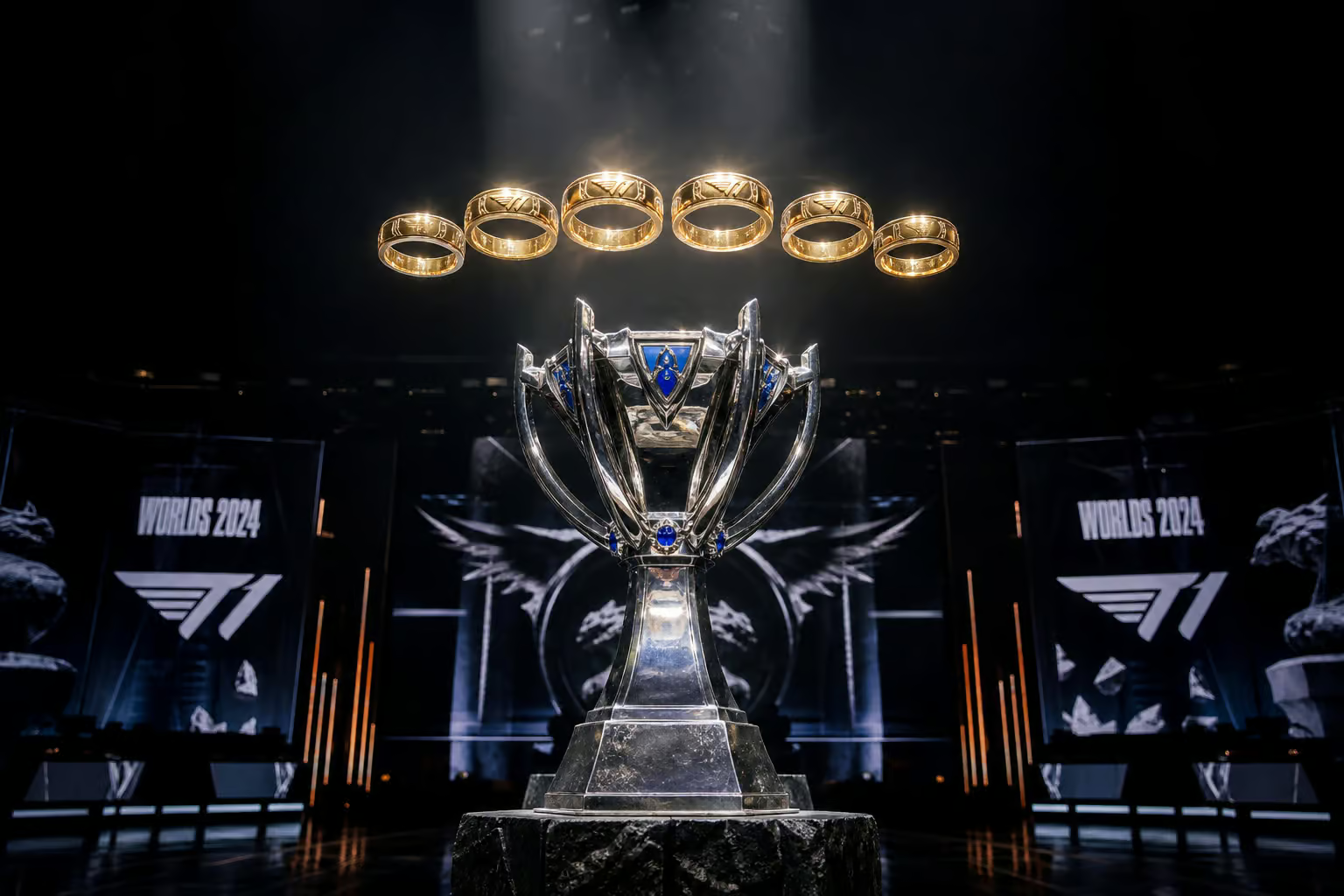
Here’s the article, written in the specified voice and structure, using the source dossier facts while avoiding direct copying or generic filler.
If you’ve looked at a League of Legends power ranking in 2026, you’ve probably noticed something weird: Gen. G sits at the top with 1525 points and a 25-6 record, but the bottom of some regions has teams like Dignitas (1-10) or DetonatioN FocusMe (0-14). That gap isn’t just a skill difference — it tells you everything about how the competitive ecosystem is structured right now.
As of 2026, there are exactly six regional professional leagues. Riot fixed the team counts: LCK (Korea) and LEC (Europe) each have 10 teams, LPL (China) has 14, and the remaining three — LCS (North America), LCP (Asia-Pacific), and CBLOL (Brazil), have 8 apiece. That’s 58 top-level teams total. And while some are global powerhouses with multiple Worlds titles, others are fighting just to stay in their league.
This directory goes through every active tier-1 team, region by region, with power scores and win/loss records that show the real competitive hierarchy. Power scores aren’t perfect, but they’re a live snapshot of current form. And when you see a team like Bilibili Gaming with a .816 win rate next to a team like DFM that’s 0-14, the difference isn’t luck — it’s system.
Key Takeaways
The global top tier is a two-horse race between Gen. G (1525 points, 25-6) and Bilibili Gaming (1522 points, 31-7), with T1 (1503 points, 22-7) right behind — the gap between these three and everyone else is substantial.
Dynasties like T1 (6 Worlds titles) and Gen. G (MSI 2025 + Esports World Cup 2024) are built on ownership stability and development pipelines, while teams like Griffin and Suning peaked once and collapsed within two splits.
International spot allocation creates a structural feedback loop: LCK and LPL each get 3 Worlds spots plus bonus slots, while CBLOL gets only 1 MSI spot — less international practice means it’s harder for Brazilian teams to close the gap.
Table of Contents
LCK (Korea) — the historical powerhouse
The LCK has the deepest talent pool in the world, and the numbers back it up. The gap between first and last in this 10-team league is 426 points — that’s massive, but even the bottom teams here are tougher than most wildcard rosters.
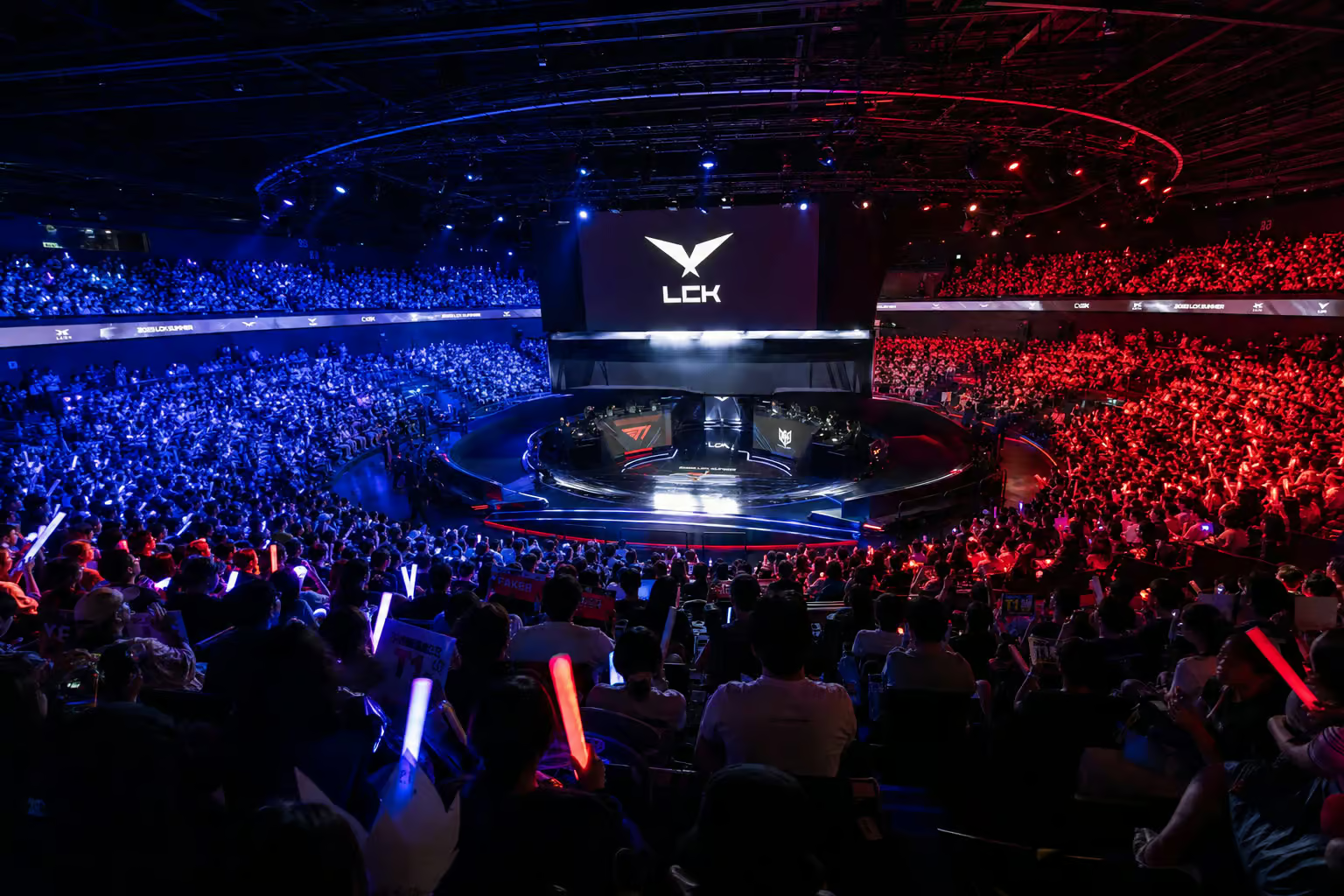
Gen. G — 1525 points, 25-6 (.806)
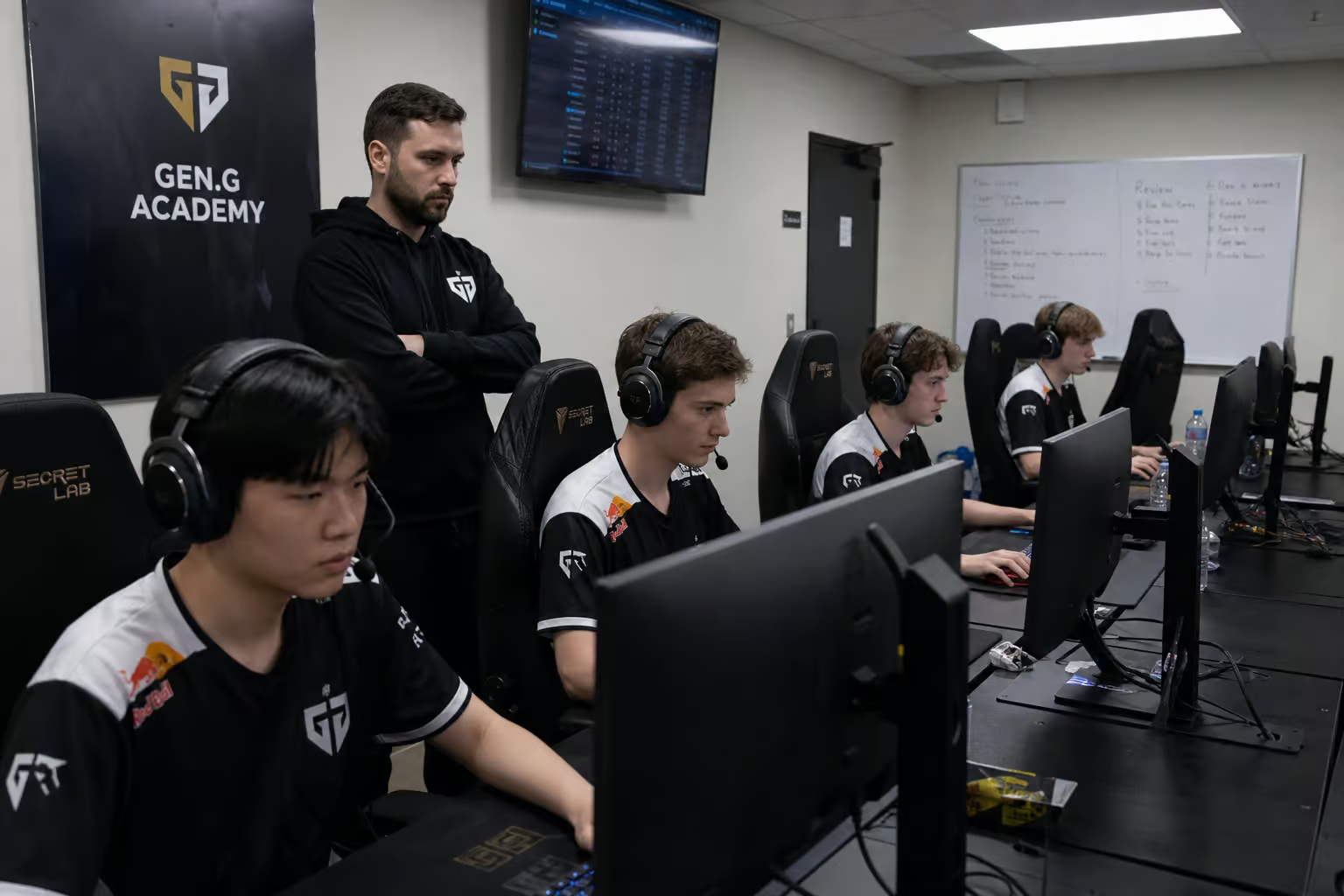
Gen. G is the final boss right now. They won MSI 2025 and the Esports World Cup 2024, and their .806 win rate in the LCK is absurd. They’re not just winning — they’re dominating consistently.
T1 — 1503 points, 22-7 (.759)
Six World Championship titles. Most recent: 2025. That’s not a legacy claim — they’re still elite. A step behind Gen. G in current form, but you never count them out.
Hanwha Life Esports — 1462 points, 18-6 (.750)
Won the First Stand Tournament in 2025. They’ve got the talent to upset anyone on a good day, and their record is rock solid.
kt Rolster — 1393 points, 16-10 (.615)
Classic LCK org, always competitive, rarely the absolute best. They’re a solid playoff team, not a title contender.
Dplus KIA — 1351 points, 19-12 (.613)
Former Worlds champion (2020 as DWG). Still a strong regular-season team, but haven’t reclaimed that peak.
BNK FEARX — 1279 points, 13-18 (.419)
Below .500 in the LCK, but they won the Asia Invitational — a reminder that records don’t always tell the full story.
KIWOOM DRX — 1223 points, 9-19 (.321)
They won Worlds in 2022. Now they’re near the bottom of the LCK. Sharp decline, but that single title is an incredible legacy.
HANJIN BRION — 1208 points, 6-19 (.240)
Bottom-tier LCK. They’re fighting to stay in the league.
NONGSHIM RED FORCE — 1207 points, 7-18 (.280)
Basically neck-and-neck with BRION for last. The LCK basement is crowded.
DN SOOPers — 1099 points, 5-23 (.179)
Lowest-ranked team in the LCK, and they’re actually in the Challengers league. They’re a developmental squad that’s struggling hard.
LPL (China) — the deepest talent pool, 14 teams
China’s league is the largest and arguably the most competitive. The LPL has more teams, more money, and a grinding baseline that produces relentless aggression. BLG and Gen. G are in a photo finish for global #1.

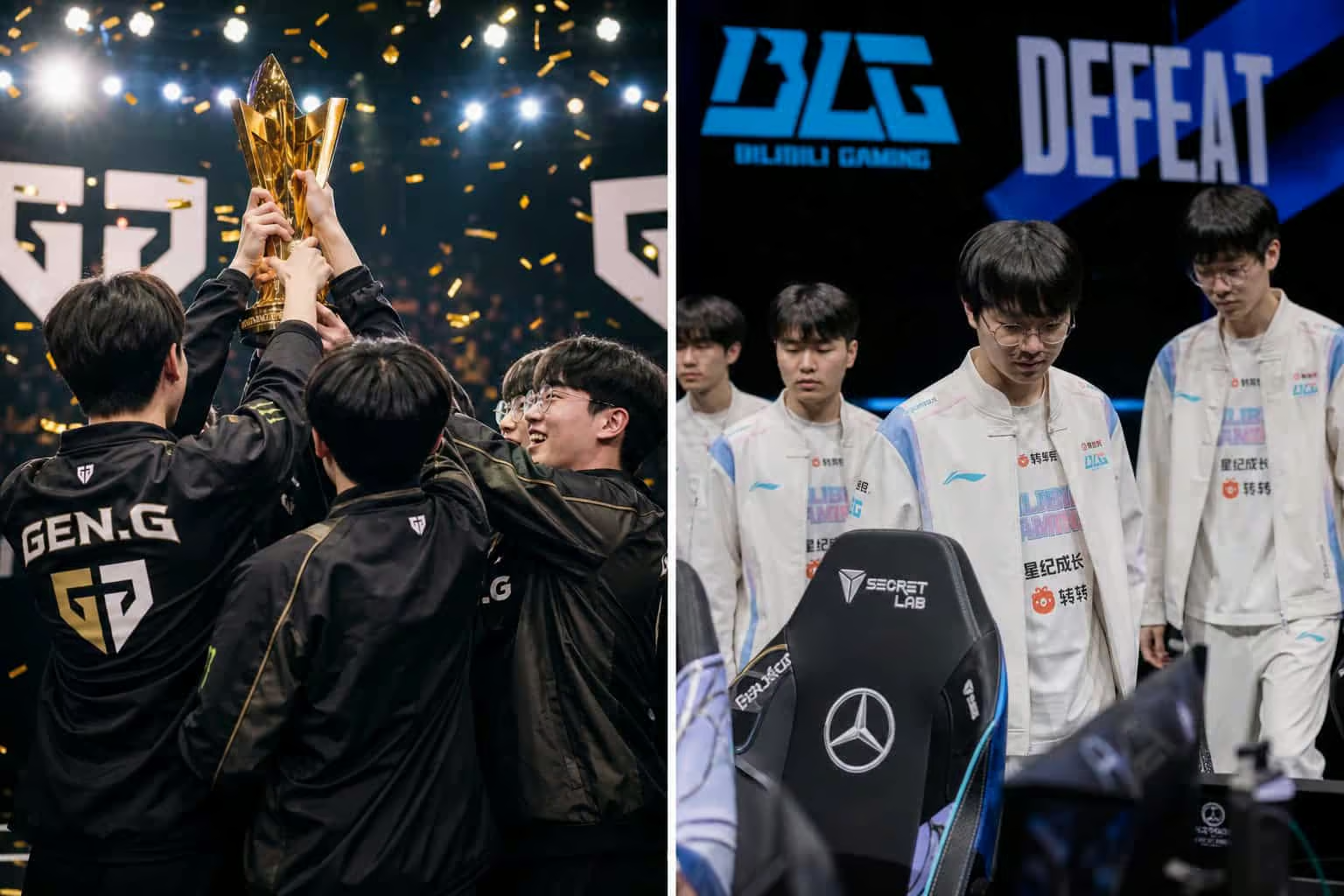
Bilibili Gaming — 1522 points, 31-7 (.816)
Best record in the LPL — 31 wins is absurd. They won the First Stand Tournament in 2026. They’re right on Gen. G’s heels.
Top Esports — 1417 points, 17-15 (.531)
Historic team that won the Mid-Season Cup in 2020. Still dangerous, but mid-table in a stacked LPL.
JD Gaming — 1385 points, 20-16 (.556)
Consistent contender. They’ve had monster rosters over the years and are the modern dynasty model — stable ownership, deep pockets, and a player pipeline.
Anyone’s Legend — 1383 points, 20-12 (.625)
Newer name in the LPL, but they’re making noise. Sitting right next to JDG in points.
Weibo Gaming — 1355 points, 14-16 (.467)
Huge fanbase, but below .500 right now. They’ve had deep runs in the past, but it’s a tough stretch.
NIP — 1309 points, 13-12 (.520)
Near .500. Solid gatekeeper team — they’ll beat the bottom but struggle against the elite.
Invictus Gaming — 1297 points, 9-21 (.300)
Rough record, but they won the Demacia Cup — showing that cup success doesn’t always translate to the regular season.
Team WE — 1293 points, 9-21 (.300)
OG LPL org. Been around forever, but haven’t been relevant in years.
LNG Esports — 1267 points, 11-3 (.786)
Best win percentage in the LPL (.786), but it’s a small sample size (only 14 games). Keep an eye on them.
Edward Gaming — 1203 points, 8-7 (.533)
Far from their 2021 Worlds peak. Mid-table now.
LGD Gaming — 1185 points, 7-8 (.467)
Known as a gatekeeper team. They invest in youth development, which keeps them competitive without breaking the bank.
Thunder Talk Gaming — 1185 points, 4-11 (.267)
Worst record among active LPL teams — they’ve played 15 games and only won 4.
Oh My God — 1145 points, 4-9 (.308)
Another legacy org that’s fallen on hard times. Fighting to stay relevant.
Ultra Prime — 1135 points, 3-8 (.273)
Lowest-ranked LPL team. The bottom of this league is brutal.
LEC (Europe) — the scrappy contender
Europe’s league has 10 teams, and while the top is strong (G2), there’s a sharp drop-off. The region’s international success has been inconsistent, but G2 always brings chaos.
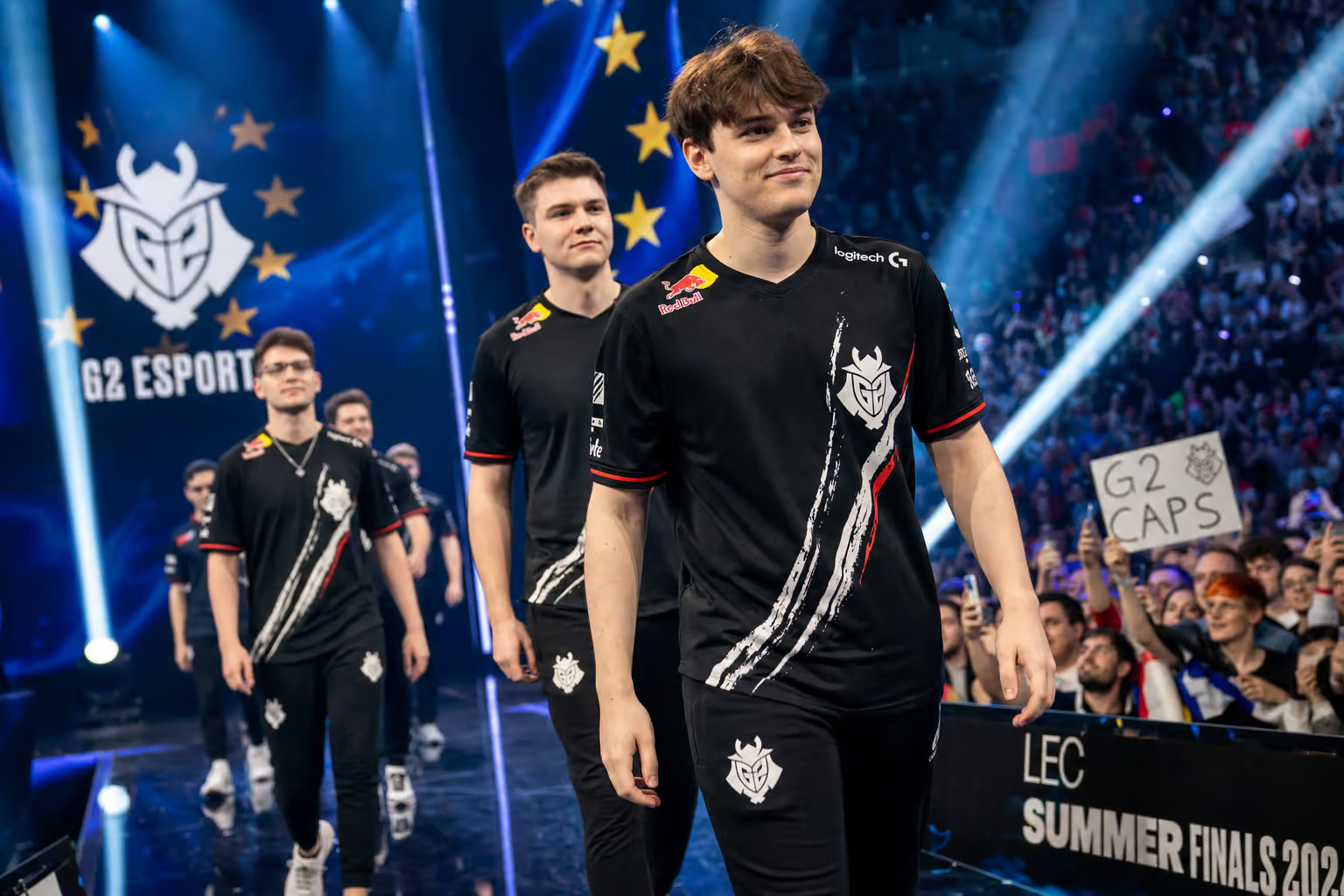
G2 Esports — 1467 points, 22-10 (.688)
Europe’s most successful org. They’re the perennial Western hope. The gap to LCK/LPL leaders is clear, but they’re the best of the rest.
Karmine Corp — 1373 points, 23-11 (.676)
French fan phenomenon — the “Blue Wall” brings incredible energy. They have the most wins in the LEC.
Movistar KOI — 1319 points, 15-12 (.556)
Spanish org that merged with MAD Lions. Solid playoff bubble team.
Team Vitality — 1240 points, 16-9 (.640)
Strong record (16-9) but lower strength of schedule. They’re a playoff team.
Fnatic — 1220 points, 8-14 (.364)
The OG European org. They’re struggling — this is a low point for a legendary name.
GIANTX — 1213 points, 14-12 (.538)
Competitive middle class. They’ll make playoffs but probably not a deep run.
Natus Vincere — 1177 points, 14-10 (.583)
Famous CS:GO brand entering LoL, where peak streaming viewers reached 6.4 million, has a decent record — they’re a playoff bubble team.
Shifters — 1166 points, 6-14 (.300)
Near the bottom. Rough record in a region that’s top-heavy.
SK Gaming — 1119 points, 5-15 (.250)
Veteran org that’s been around forever, but they haven’t found modern success.
Team Heretics — 1109 points, 7-15 (.318)
Wealthy new org backed by celebrities, but the results aren’t there yet.
LCS (North America) — the struggling region
NA has 8 teams, but the power scores are low overall. The region hasn’t been internationally competitive for a while, though a few orgs keep trying.
Cloud9 — 1293 points, 13-3 (.813)
Best record in the LCS (.813). Most successful NA org historically — they’re still the region’s best hope.
LYON — 1284 points, 14-6 (.700)
From Latin America (LLA) — they’re now in the LCS after restructuring. Most wins in the league.
FlyQuest — 1336 points, 7-8 (.467)
Highest power score in the LCS despite a losing record. That’s weird — it reflects strength of schedule and individual performance metrics, as tracked by League of Legends Esports Stats.
Team Liquid — 1313 points, 13-8 (.619)
Storied NA org. Decent record, but they’ve had stronger rosters in the past.
Sentinels — 1180 points, 6-8 (.429)
Better known for Valorant. Their LoL team is bottom-tier in the LCS.
Disguised — 1152 points, 4-8 (.333)
Content-creator-backed team. Fun concept, but the results aren’t there yet.
Shopify Rebellion — 1156 points, 2-9 (.182)
Struggling badly. They’re the worst team in the LCS.
Dignitas — 1108 points, 1-10 (.091)
Worst record across all tier-1 leagues. One win in 11 games is brutal.
LCP (Asia-Pacific) — the new consolidated league
The LCP is the restructured league that absorbed Vietnam, Japan, Oceania, and Taiwan. Teams here are competitive within their region but typically underdogs internationally.
Team Secret Whales — 1315 points, 19-3 (.864)
Best LCP record. They’re absolutely stomping their region.
CTBC Flying Oyster — 1323 points, 5-11 (.313)
High power score despite a losing record — a statistical anomaly. They can surprise.
Relove Deep Cross Gaming — 1264 points, 14-11 (.560)
Taiwanese talent, solid mid-tier team.
GAM Esports — 1273 points, 11-7 (.611)
Former VCS champion. The best team in Vietnam, capable of causing upsets at international events.
SoftBank HAWKS Gaming — 1185 points, 9-10 (.474)
Japanese team with corporate backing. Near .500.
MVK Esports — 1240 points, 8-9 (.471)
Newer team, hanging around in the middle.
Ground Zero Gaming — 1132 points, 6-11 (.353)
Oceania’s representative. Below .500.
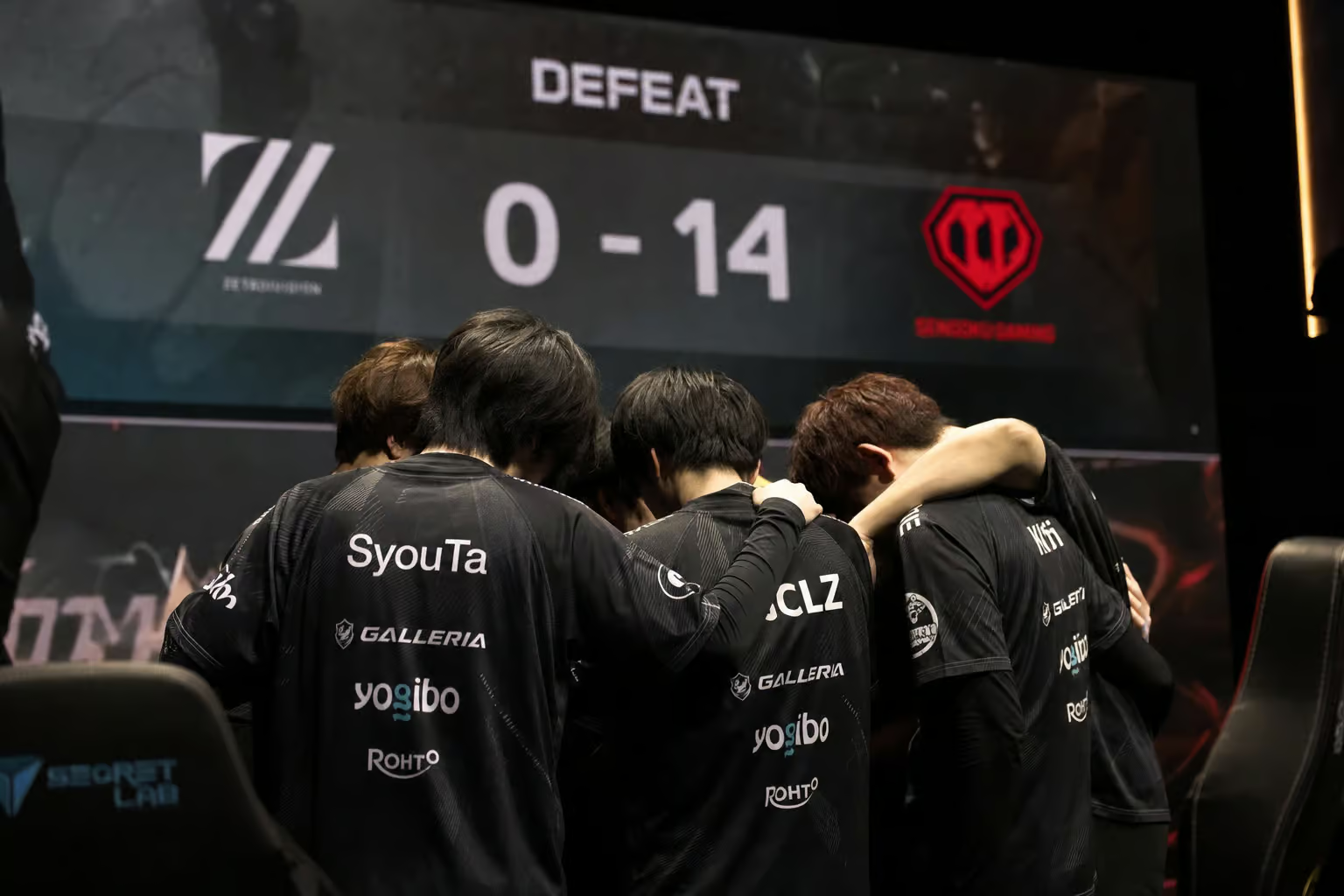
DetonatioN FocusMe — 1094 points, 0-14 (.000)
Winless. The only team across all tier-1 leagues that hasn’t won a single match. Brutal.
CBLOL (Brazil) — passionate but structurally disadvantaged
Brazil’s league has 8 teams, and the passion is real — FURIA has a massive fanbase. But with only 1 MSI spot, Brazilian teams get less international practice, making it harder to close the gap.
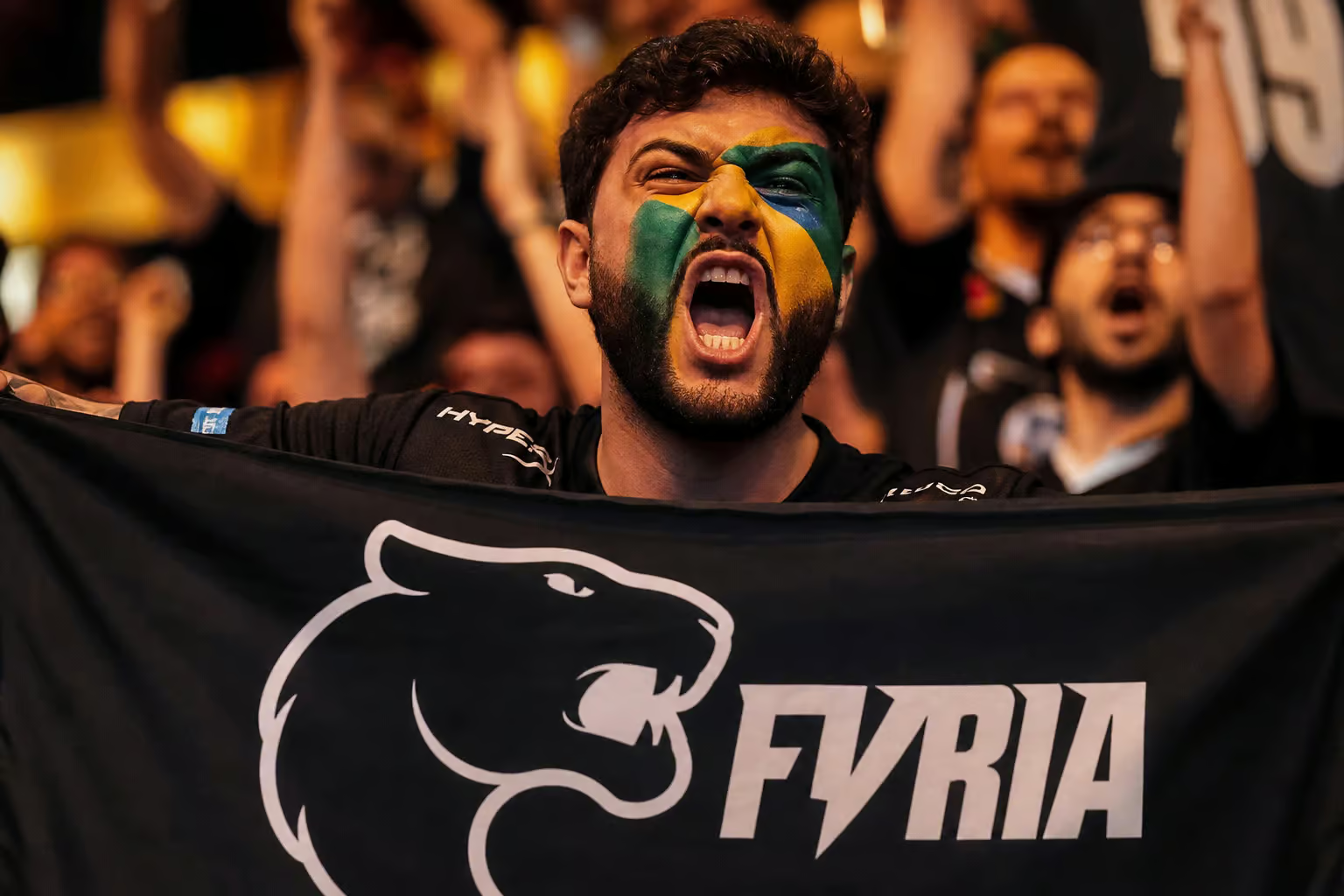
FURIA — 1215 points, 16-6 (.727)
League leader. They won the Americas Cup. Dominant in CBLOL.
RED Canids — 1184 points, 14-7 (.667)
Second place, challenging FURIA. Good record.
LOS — 1140 points, 14-8 (.636)
Third-best record in CBLOL. Decent.
LOUD — 1157 points, 11-12 (.478)
Popular Brazilian org. Slightly below .500.
Vivo Keyd Stars — 1170 points, 8-11 (.421)
Legacy org. They’ve been around forever, but the results are middling.
paiN Gaming — 1137 points, 3-13 (.188)
Rebuilding. That’s a tough record.
Fluxo — 1082 points, 7-11 (.389)
Near the bottom.
LEVIATÁN — 1073 points, 6-13 (.316)
Lowest-ranked CBLOL team, but still tier-1.
Dynasties vs. one-hit wonders: what separates the greats
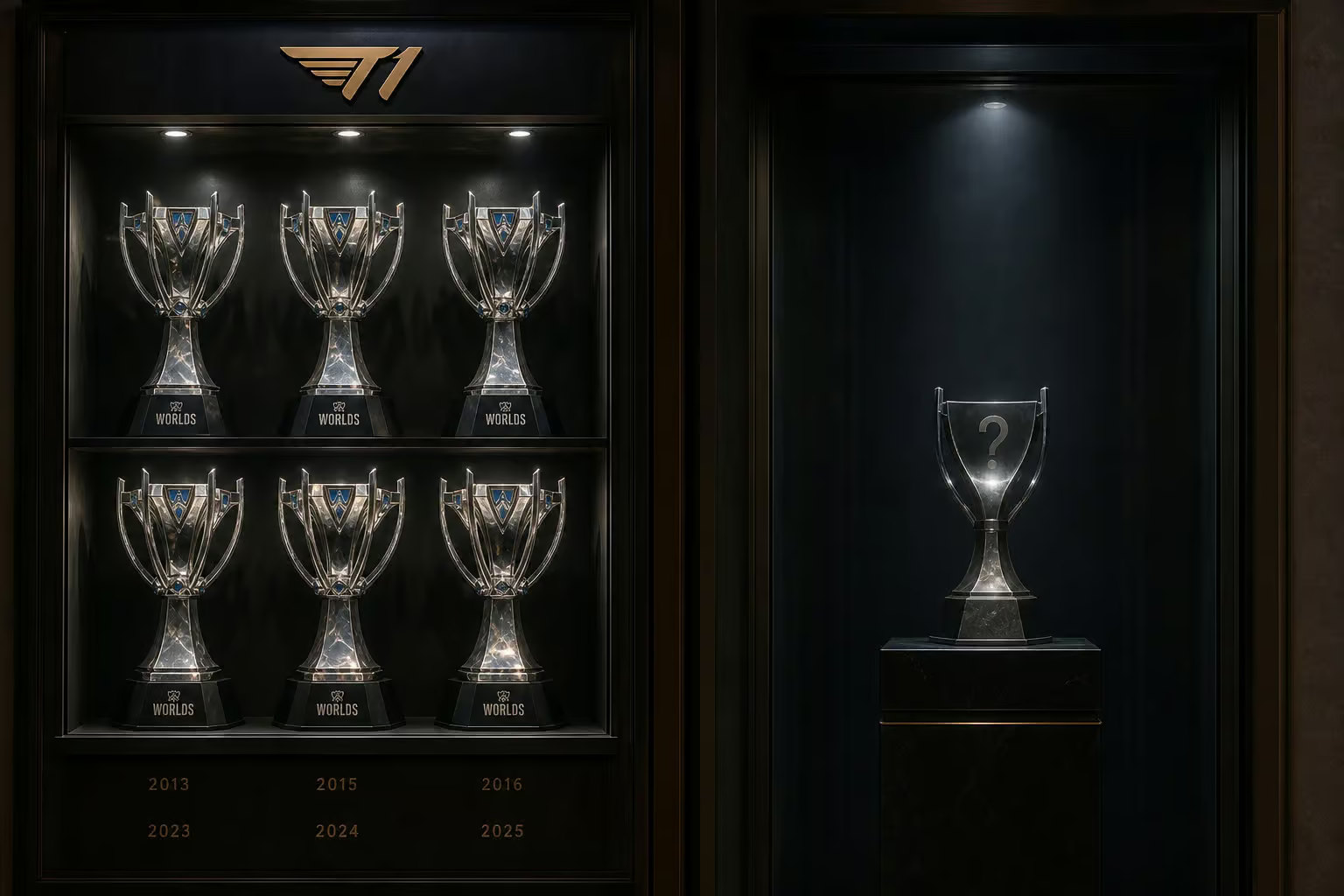
T1 has six Worlds titles, and their most recent was 2025. That’s not luck. That’s SK Telecom’s system: stable ownership, a player development pipeline, and roster continuity. They kept Faker through multiple eras, and they keep winning.
Gen. G followed the same playbook. They won MSI 2025 and the Esports World Cup 2024, and they’re sitting at 1525 points — a monster score. They have consistent deep runs because they build around a core of players and support staff, not chasing the hot free agent every split. JDG is another example: they’ve had multiple dominant rosters because their parent company (JD.com) provides financial stability that lets them weather a bad split.
Then there are the one-hit wonders — teams that peaked for one tournament and disappeared. Griffin dominated the 2019 LCK summer but collapsed when the meta shifted and internal issues surfaced. Suning made the 2020 Worlds final and then essentially disbanded as a tier-1 org. Victory Five had a top LPL finish and dissolved.
What went wrong? Single-sponsor dependency, no development pipeline, and frantic roster churn after one bad split. The tell is always the same: within six months of a peak, the roster is unrecognizable.
The graveyard: why hundreds of teams have disbanded
The most common reason teams disband is financial instability rooted in a single-sponsor dependency. North America alone has lost 23+ teams: TSM, CLG, Evil Geniuses, Echo Fox, OpTic Gaming — major brands that couldn’t sustain the financial model. Europe has lost 30+ teams, including legendary names like Moscow Five, Gambit, H2K, Origen, Unicorns of Love, and even FC Schalke 04.
Korea has lost 30+ teams, and they include Worlds champions Samsung White and Samsung Galaxy, ROX Tigers (2016 Worlds finalists), and the original SK Telecom T1 K and T1 S rosters. Even winners of the biggest tournament can’t survive without stable backing.
China has lost 10+ teams, including Suning (2020 Worlds finalist), Victory Five, Snake Esports, and Rare Atom. And the Pacific, Japan, and Latin America regions have lost 50+ teams combined — including Taipei Assassins (Season 2 Worlds champs) and Flash Wolves.
How teams qualify for international events
The math behind who gets global exposure is straightforward and creates a feedback loop:
- First Stand Tournament: 6 teams, 1 per region. Most exclusive qualification.
- Mid-Season Invitational (MSI): 11 teams — 2 per region except CBLOL, which gets 1. That’s a structural disadvantage for Brazil.
- Worlds: 19 spots minimum. 3 per region except CBLOL with 2. Plus bonus spots for the MSI champion’s region and the second-best region at MSI.
Why this matters: LCK and LPL get more teams into Worlds, which brings more prize money and experience, which makes them stronger. CBLOL’s single MSI spot means less international exposure, so the gap persists. It’s a classic rich-get-richer loop.
Regional cups: early signals of team strength
Pre-season and mid-season tournaments are useful data points, but they don’t always predict regular-season success.
- Demacia Cup (China): Latest winner — Invictus Gaming. Notable because IG won despite a 9-21 regular-season record. Shows that cup success can come from a hot meta adaptation rather than sustained strength.
- KeSPA Cup (Korea): Latest winner — T1. Reinforces their domestic dominance heading into the main splits.
Cups are where teams experiment with new rosters. A win can reveal which squads have integrated new players well, but don’t read too much into a single bracket.
The farm system: how tier-2 leagues feed the pros
If you’re an aspiring player wondering how to go pro, the path goes through the feeder system. Every major region has a dedicated development league:
- LCK Challengers (10 teams, South Korea)
- NA Challengers (10 teams, Los Angeles)
- EMEA Masters (60 teams across Europe, Middle East, Africa)
- LPL Development League (24 teams, China)
- Academy teams within major orgs: EDG Youth Team, Bilibili Gaming Junior, LNG Esports Academy, Top Esports Challenger, FunPlus Phoenix Blaze
There are also 30+ independent teams in secondary leagues — teams you’ve probably never heard of like Apex Mission Impossible, Blue Otter, or CCG Esports, all competing to produce the next big star. For an individual player, the path to going pro involves concrete steps:
- Reach Challenger or Grandmaster rank in solo queue.
- Attend open tryouts or perform well in amateur tournaments.
- Get scouted by a tier-2 team’s academy program.
- Impress in academy matches to earn a promotion to the main roster.
Former tier-1 leagues like VCS (Vietnam), PCS (Pacific), TCL (Turkey), LCO (Oceania), and LJL (Japan) were all downgraded as Riot consolidated the competitive structure. Now they act as domestic qualifiers for the LCP or EMEA Masters. This creates a fluid path: you start in a national league, win your way into the feeder system, and get picked up by an academy team.
The academy model is key. EDG, Bilibili, FunPlus, LNG, Team WE, Top Esports — these organizations run dedicated youth teams that develop talent and feed into the main roster. The path is straightforward: amateur ? academy team ? main roster (or transfer to another organization). It’s not easy, but the structure exists.
Ownership and organizational stability
If you want to know whether a team will last, look at the ownership structure, not the player roster. Stable teams are backed by diversified parent companies: T1 (SK Telecom, telecom giant), Gen. G (Korean conglomerate), JDG (JD.com, e-commerce), G2 (entertainment/VC backing). These organizations can survive bad splits because esports isn’t their only revenue stream.
How to navigate the League of Legends esports ecosystem
When evaluating any team — whether you’re looking for a favorite to follow, a team to join, or just trying to understand the competitive hierarchy, ask three questions:
- Ownership stability — Are they backed by a diversified parent company or a single sponsor?
- Roster continuity — Do they keep core players across splits, or rebuild every season?
- Development pipeline — Do they have an academy team or scouting system?
Dynasties like T1, Gen. G, JDG, and RNG (3 MSI titles) score high on all three. One-hit wonders score high on talent alone. The other 58 teams fall somewhere in between.
If you’re looking for competitive depth, watch LCK and LPL — they get the most international spots and the most investment. If you’re an aspiring player, tier-2 leagues like NA Challengers and EMEA Masters offer the most accessible entry points. The pathway exists, but it rewards patience and systems over short-term glory.
The ecosystem is more structured than ever, but the same forces that killed hundreds of teams are still in play. The ones that survive aren’t always the best on Summoner’s Rift — they’re the ones that built something that can outlast a single roster.
Frequently Asked Questions
What is a power score in League of Legends esports?
A power score is a live snapshot of a team’s current form, combining win/loss records with strength of schedule and individual performance metrics. It’s not a perfect ranking, but it gives a clearer picture of competitive hierarchy than raw win percentage alone.
Why does CBLOL only get one MSI spot while LCK and LPL get two?
Riot allocates international spots based on historical regional performance, and LCK and LPL have consistently outperformed other regions. That single MSI spot creates a structural disadvantage for Brazil — less international practice makes it harder for CBLOL teams to close the gap against top-tier regions.
What’s the difference between a dynasty team and a one-hit wonder in LoL esports?
Dynasties like T1 and Gen. G are built on stable ownership, player development pipelines, and roster continuity — they keep core players across splits. One-hit wonders like Griffin or Suning peaked for a single tournament, then collapsed within two splits due to single-sponsor dependency, no development system, and frantic roster churn.
Can a team with a losing record still have a high power score?
Yes — FlyQuest in the LCS has the highest power score in the region despite a 7-8 record, and CTBC Flying Oyster in the LCP has a high score with a 5-11 record. Power scores factor in strength of schedule and individual performance metrics, so a team that plays tough opponents closely can rank higher than its win-loss suggests.