
If you’ve ever seen a headline that says “Worlds prize pool hits $2,250,000” and wondered how that money flows to the players, you’re not alone. I spent a few hours tracing the economics of the 2024 League of Legends World Championship, and the mechanics of crowdfunding, org cuts, and tax splits start to make sense.
Let’s start with the biggest surprise: that $2.25 million figure isn’t a fixed number Riot picks. It’s a base prize pool that gets adjusted determined by event pass sales in the League of Legends store. The final total for 2024 Worlds came in at $2,225,000 USD — below the base because community participation through crowdfunding determines the final pot. Every time you bought a Worlds pass (costing about 1650 RP) in League, a portion of that purchase went directly into the prize pool.
But the story isn’t the $2,225,000 headline number. It’s what happens after T1 lifts the Summoner’s Cup, the orgs take their cut, the coaching staff gets paid, and taxes eat their share. By the end of this, you’ll see why the gap between a $445,000 team payout and the $30,000–$50,000 a T1 player might pocket is wider than most people realize.
Key Takeaways
The 2024 Worlds prize pool was $2,225,000, with the winning team (T1) taking 20% ($445,000) — but org cuts, coaching splits, and taxes mean each player sees less than $89,000.
The prize pool peaked at $6.45 million in 2018 due to uncapped crowdfunding, then stabilized around $2.23 million annually from 2019 onward — this was a deliberate design choice for predictability and sustainability, not a sign of esports decline.
Regional slot allocation (4 slots for LCK and LPL, 1 slot for CBLOL and LLA) creates a self-reinforcing economic feedback loop: more slots yield more prize money, funding better infrastructure, which strengthens teams and justifies future slots, making it difficult for smaller regions to catch up.
Table of Contents
How the League of Legends Esports Prize Pool Actually Works
The prize pool for Worlds isn’t one big pot of Riot’s money. It’s a hybrid model: a guaranteed base of $2.25 million plus whatever the player base chips in through the Worlds Event Pass. That pass — which costs about 1650 RP and includes missions, skins, and tokens, funnels a portion of sales directly into the prize pool. In 2024, community contributions brought the final number to ~$2,225,000, under the base.
That means the prize pool is partly crowdfunded by the people who watch the tournament. It’s a neat trick: the more engaged the community is, the bigger the pot gets. But Riot has capped how much that crowdfunding can inflate things compared to the early years — more on that later.
Every one of the 20 teams that qualified earned something. Even the teams that went 0-3 in the Swiss stage walked away with $56,250 — not life-changing money for a five-person roster, but not nothing.
Worlds Prize Pool Distribution: Who Gets What
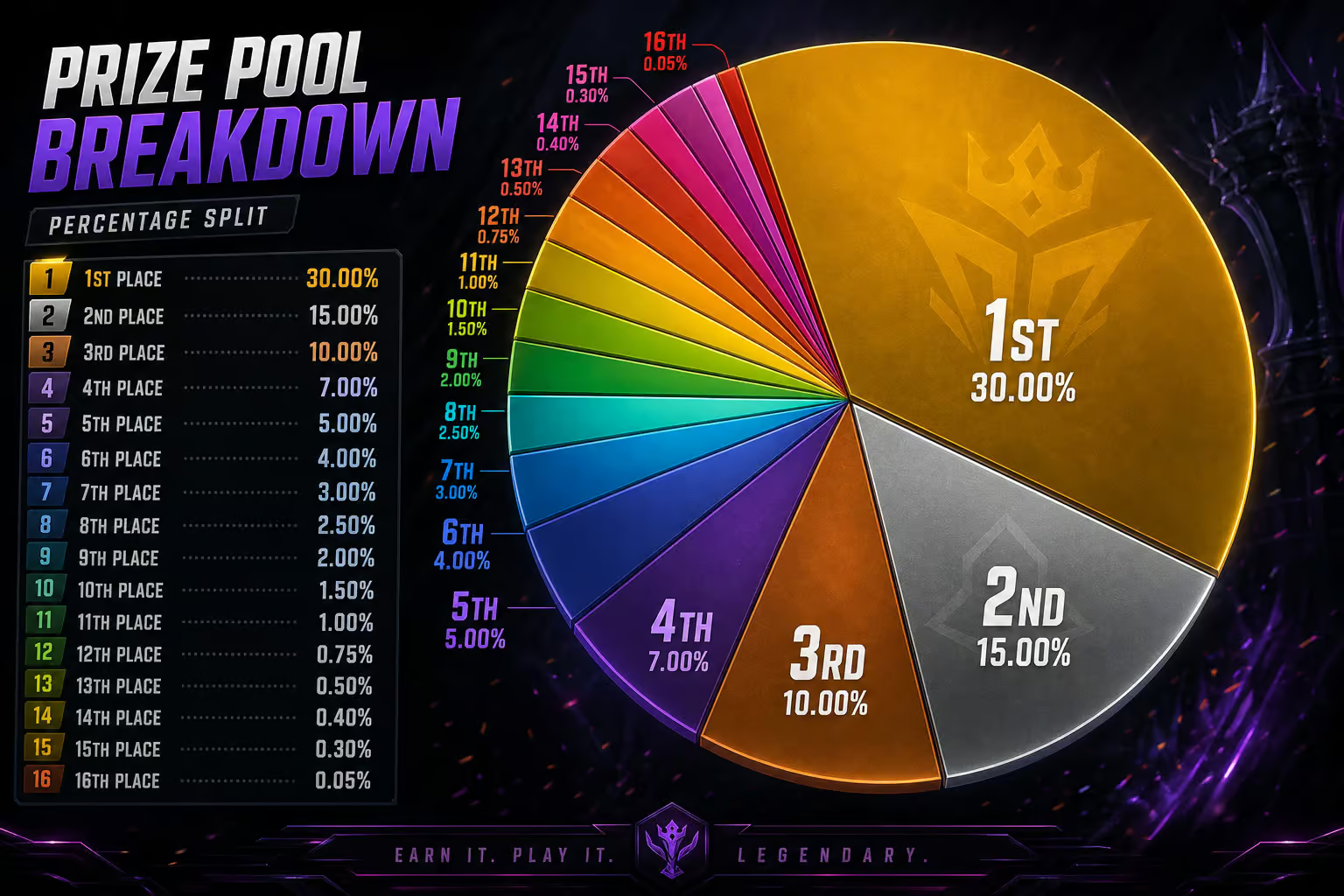
Here’s the full breakdown by placement, based on the final numbers from the 2024 tournament. These are the official payout percentages applied to the $2,225,000 total:
- 1st place (T1): 20% — $445,000
- 2nd place (Bilibili Gaming): 16% — $333,750
- 3rd-4th (Gen. G, Weibo Gaming): 8% each — $178,000
- 5th-8th (four teams): 4.5% each — $101,250
- 9th-11th (three teams): 3.5% each — $78,750
- 12th-14th (three teams): 3% each — $67,500
- 15th-16th (two teams): 2.5% each — $56,250
A few things jump out. First, the winning team (T1) takes a fifth of the entire pool, $445,000. Second, every placement tier gets money — even the bottom rung pays enough to cover a team’s flight and hotel for the tournament. Third, the gap between top and bottom isn’t as brutal as in some esports where only the top three get anything.
One case: Gen. G qualified for Worlds as the 2024 Mid-Season Invitational champion, which gave them the MSI Champion seed. That seed affected their path through the tournament — they got a better draw in the Swiss stage and avoided elimination longer, which influenced their final placement and prize money. Qualification routes matter more than you’d think.
Historical Prize Pool Trends: The 2018 Peak and What Happened After
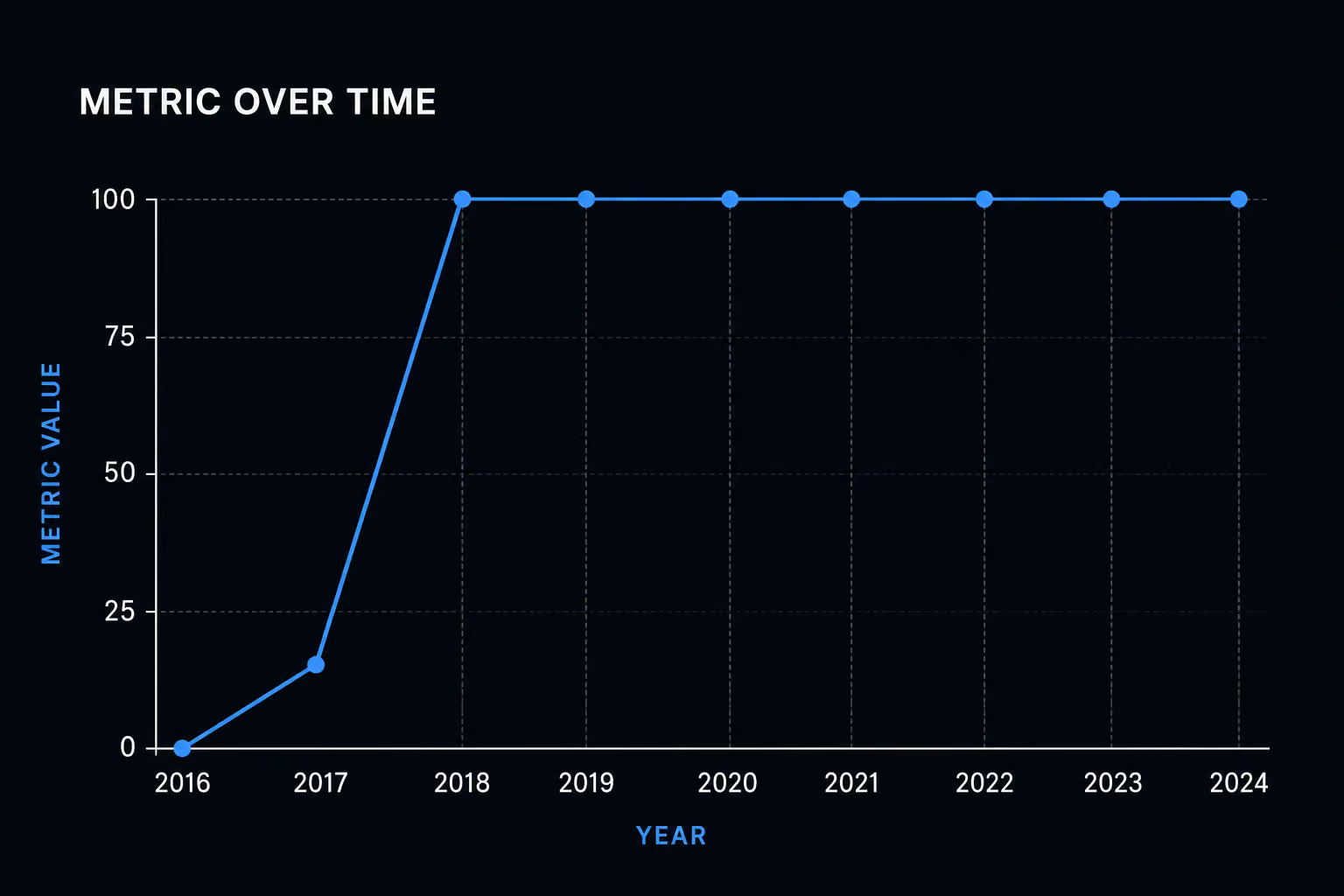
The Worlds prize pool peaked at $6.45 million in 2018 and has stabilized at approximately $2.23 million annually from 2019 to 2024. If you’ve seen the charts showing the prize pool plummet from $6.45 million in 2018 to around $2.23 million every year since, you might have thought “uh oh, LoL esports is dying.” I did too, until I dug into why by exploring the full ecosystem of League of Legends Esports, from regional leagues to its cultural impact.

What happened is that Riot changed the funding model. In 2018, the Worlds pass had an uncapped crowdfunding component — the more passes sold, the bigger the pool. And that year, players went all-in. The result was a one-off spike that distorted everyone’s expectations.
Starting in 2019, Riot switched to a base pool + capped crowdfunding model, much like the approach seen in franchised esports leagues. The base is fixed, and any community contributions are limited. The reason? Predictability. Pro players and organizations need to know what they’re competing for years in advance, and the uncapped model made that impossible.
The uncapped model created volatility — imagine training all year for a tournament where the prize pool could be $2M or $6M depending on how many skins people bought. That’s bad for business and bad for roster planning.
So the “decline” from 2018 isn’t a decline. It’s a stabilization. The prize pool has been sitting at a predictable ~$2.23 million every year since 2019, even as esports viewers grow globally. That’s good for the esport, even if it makes for less dramatic headlines.
Player Economics: What Pros Actually Take Home From Prize Money
Here’s where the gap between perception and reality is biggest. Let’s use the winning team as an example.

T1 won $445,000 for first place. If you split that five ways, each player gets $89,000. But that’s not how it works in practice. Most esports organizations take a cut of prize winnings — industry patterns suggest 20% to 50% goes to the org to cover operational costs, coaching salaries, facilities, and travel.
After the org’s share, the remaining money is split among players and coaching staff. Then taxes hit — South Korea tax rates, for instance, can eat a chunk of that.
So a T1 player might end up with something in the $30,000 to $50,000 range from the Worlds win. Not pocket change, but not the life-changing $445K the headline suggests.
Public data on average player salary is scarce across regions. However, known examples like Faker’s $1.8M career earnings highlight the top end, while median players likely earn far less. For context, Faker (Lee Sang-hyeok) is the highest-earning League of Legends player in history, with career prize money exceeding $1.8 million. But he’s an outlier — he’s been dominating for over a decade, won four Worlds titles, and has salary and sponsorship income on top.
Compare that to Caedrel, a retired pro turned streamer who isn’t competing anymore. In December 2024 alone, his Twitch channel pulled in more than 3.6 million hours of watch time. That kind of viewership translates to streaming income — the kind that can rival or exceed tournament prize winnings for active pros, driving at the deeper question of what is professional gaming? The economics of being a top LoL player aren’t just about prize pools; salary, sponsorships, and streaming are often the money.
The median pro — someone who qualifies for Worlds but doesn’t win, earns less from tournaments than the headline numbers suggest. The $56,250 that bottom-placed teams receive gets split the same way: org cut, coaching, taxes. A player from a 9th-16th place team might take home $5,000 to $10,000 from prize money alone. That’s why roster stability and salary contracts matter more than prize pool size for most players.
Regional Economics: How Slot Allocation Shapes Prize Money Distribution
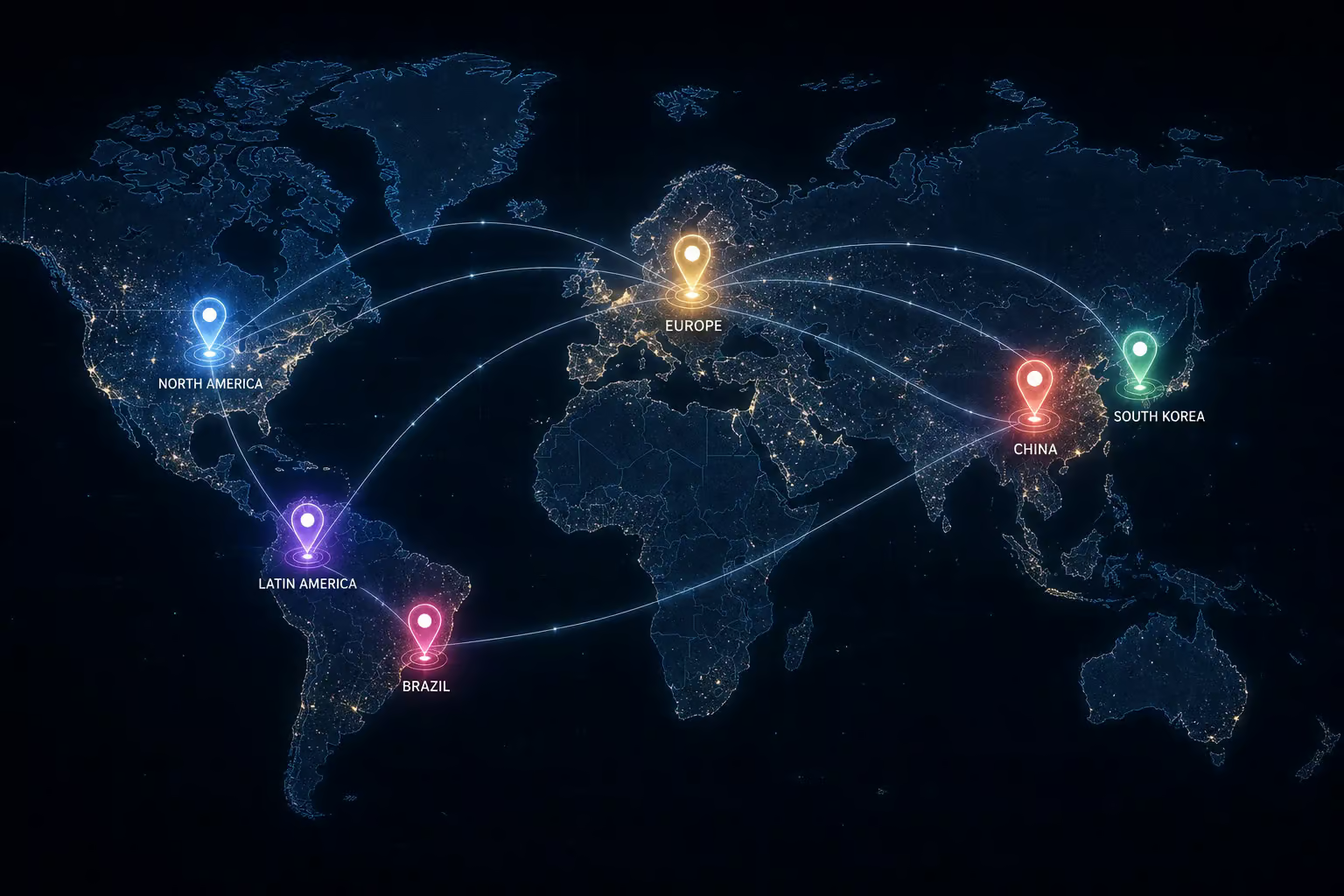
Now let’s zoom out and look at the global map. Not every region gets an equal shot at the $2,225,000 prize pool. Here’s how the 20 Worlds slots were allocated for 2024:
- LCK (South Korea): 4 slots
- LPL (China): 4 slots
- LEC (Europe): 3 slots
- LCS (North America): 3 slots
- PCS (Southeast Asia, Taiwan, Hong Kong, Macau, Oceania): 2 slots
- VCS (Vietnam): 2 slots
- CBLOL (Brazil): 1 slot
- LLA (Latin America): 1 slot
That’s not trivia. More slots mean more teams from a region get to compete, which means more opportunities to earn prize money from the $2,225,000 pool. The exact slot counts tell the story: LCK and LPL each have 4, LEC and LCS have 3, PCS and VCS have 2, CBLOL and LLA have 1. That creates a clear hierarchy of opportunity.
And here’s the feedback loop: more prize money flowing into a region funds better infrastructure, coaching, and player development. That leads to stronger teams, which leads to better international performance, which — in the long run, helps secure more slots for that region.
LCK and LPL are the beneficiaries. They have the most slots, their teams consistently place high, and they collect the bulk of the prize pool. Smaller regions like CBLOL and LLA get one slot each — a single shot. Even if a team from those regions plays well, they’re competing against a system that funnels money to the established powers.
It’s not a conspiracy. It’s the outcome of a competitive ecosystem where historical success determines future opportunity. But if you’re wondering why the same regions keep winning Worlds, the slot allocation is a part of the answer.
How LoL’s Prize Pool Compares to Other Esports
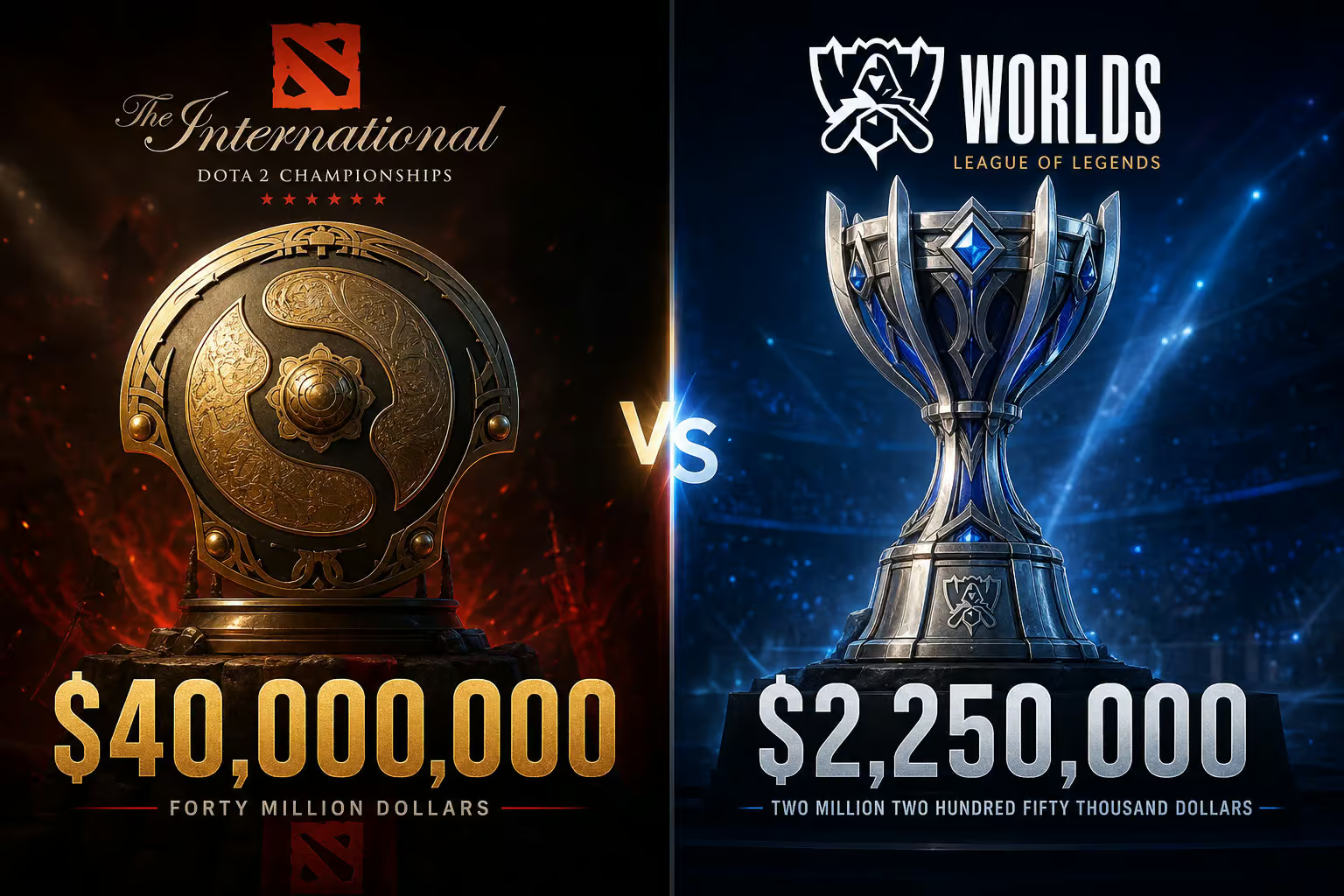
If you compare prize pool numbers alone, League of Legends looks small next to some other esports. Dota 2’s The International often exceeds $40 million, thanks to its Battle Pass crowdfunding system where a quarter of every Battle Pass purchase goes straight to the prize pool. That system is uncapped and has created some pots.
But bigger isn’t always better. Dota 2’s model is volatile — the prize pool fluctuates from year to year based on how many passes are sold. For players and organizations, that unpredictability makes it harder to plan. LoL’s base funding model gives everyone a stable, known number years in advance. You can build a budget around that.
Other mobile MOBAs show a different kind of economics. Honor of Kings generates revenue — over $161 million in quarterly revenue as of April 2024 — but its competitive prize pools don’t approach LoL’s. Mobile Legends: Bang Bang had ~6 million downloads in April 2024 but a prize pool structure that doesn’t rival Worlds. Their money flows differently: more in-app purchase revenue, less into tournament payouts.
The comparison that matters isn’t “which prize pool is bigger.” It’s which funding model works best for the health of the esport. Riot’s approach prioritizes stability over spectacle. Dota 2’s approach creates one-time events but carries more risk. Neither is wrong — they reflect different incentives.
The Future of LoL Esports Prize Pools: Regional Mergers and What’s Next
The 2024 Worlds was more than another tournament. It was the last Worlds for several regions as independent entities. Starting in 2025:
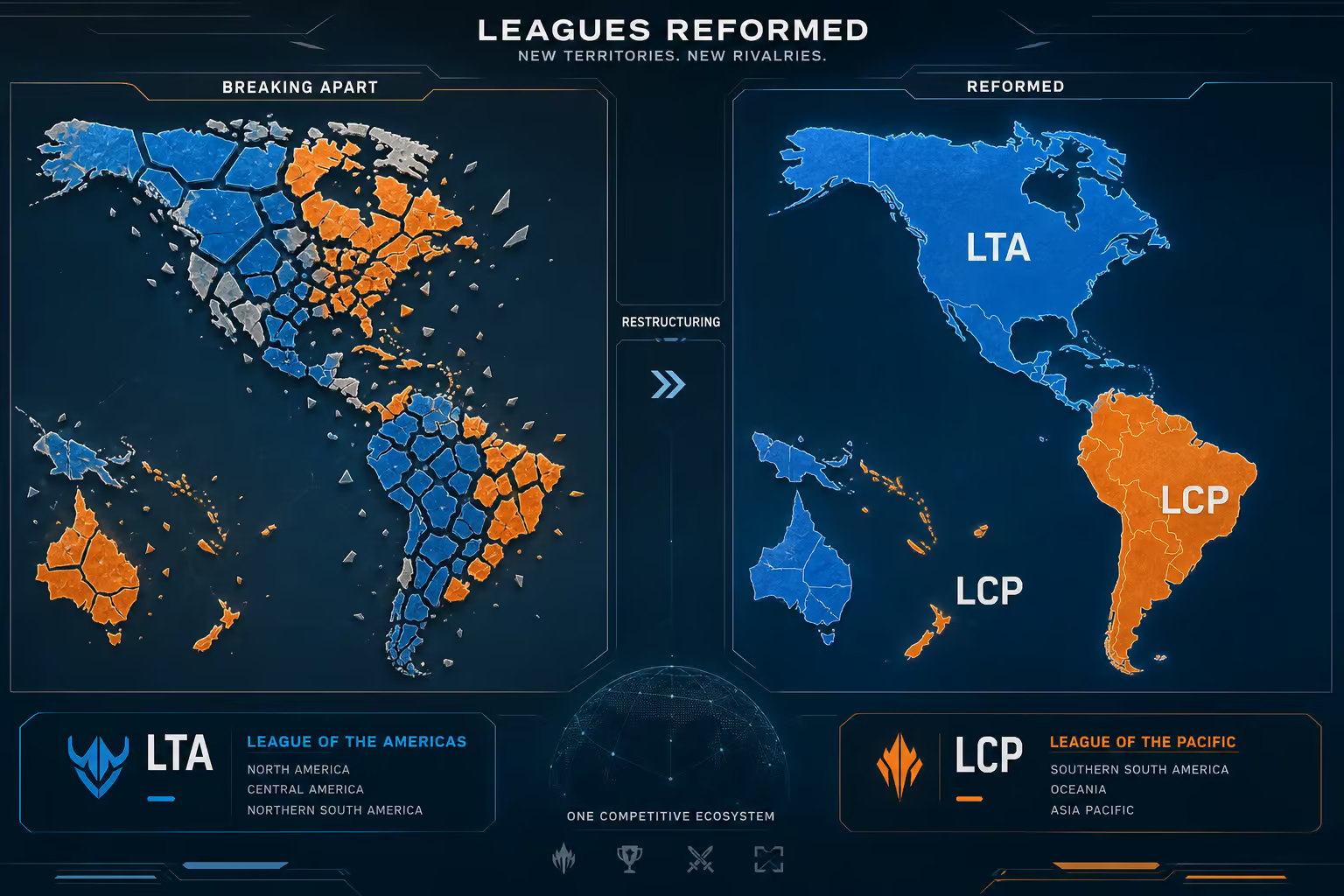
- PCS and VCS merge into a new league called LCP (League of Legends Championship Pacific).
- LCS, CBLOL, and LLA merge into LTA (League of Legends Championship Americas), split into North and South divisions.
That changes the slot distribution. Instead of separate slots for PCS, VCS, CBLOL, and LLA, the new combined leagues will compete for a consolidated set of Worlds slots. Fewer regions means fewer total slots, which means the competition for prize money gets more concentrated.
The upside? The remaining leagues will be stronger — merged talent pools mean higher quality teams. Per-team earnings may increase as the weaker regions disappear and the field tightens. But overall representation shrinks. Players from smaller regions will have fewer paths to compete on the global stage.
Will the crowdfunding model change? Riot hasn’t announced any shift, but the regional mergers suggest a strategy of consolidation and stability. I wouldn’t be surprised to see further tweaks to how the prize pool is funded — maybe region-specific pass contributions, or a performance-based bonus system that rewards regional league results.
One thing’s clear: the 2024 Worlds prize pool breakdown matters more than usual, because it’s the last snapshot of an era. Starting next year, the map is redrawn, and the money follows the map.
So there you have it. The next time you see a headline about the League of Legends Worlds prize pool, remember: that $2.225 million is real, but it’s the starting point of the story, not the ending. Crowdfunding, org cuts, regional slot disparities, and deliberate design choices all shape who benefits. The economics of being a pro LoL player are more complicated — and more interesting, than a single dollar figure suggests.
Frequently Asked Questions
How much is the prize money for League of Legends?
The 2024 League of Legends World Championship prize pool was $2,225,000. That total comes from a guaranteed base of $2.25 million, adjusted slightly by community crowdfunding through Worlds Event Pass sales. The winning team, T1, took home 20% — $445,000 — but players see far less after org cuts, coaching splits, and taxes.
What is the League of Legends prize pool?
The League of Legends Worlds prize pool is a hybrid model: a guaranteed base of $2.25 million plus a capped crowdfunding contribution from Event Pass purchases. For 2024, the final total was $2,225,000, distributed across all 20 qualifying teams, with the champion taking 20% ($445,000).
How much do LoL players get paid?
Prize money is just one piece. A T1 player from the winning 2024 Worlds team might pocket $30,000 to $50,000 after the organization takes 20–50%, coaching staff gets their share, and taxes are deducted. The median pro — someone who qualifies but doesn’t win — may take home $5,000 to $10,000 from prize money alone. Salary, sponsorships, and streaming income often dwarf tournament winnings.
Why did the League of Legends prize pool drop after 2018?
It didn’t drop — it stabilized. The 2018 spike to $6.45 million came from an uncapped crowdfunding model that created volatility. Starting in 2019, Riot switched to a base pool plus capped crowdfunding, giving teams and players a predictable number to budget around. The ~$2.23 million annual prize pool since then reflects a deliberate design choice, not esports decline.
How does the Worlds prize pool distribution work?
The $2,225,000 pool is split by placement: 1st place gets 20% ($445,000), 2nd gets 16%, 3rd-4th get 8% each, and all the way down to 15th-16th, who get 2.5% each ($56,250). Every team that qualifies earns something, but the money is further divided by org cuts, coaching staff, and taxes before players see it.
How do regional slot allocations affect prize money in LoL?
Regions with more Worlds slots — like LCK and LPL with 4 each — have more teams earning prize money, creating a feedback loop: more money funds better infrastructure, which produces stronger teams, which justifies future slots. Smaller regions like CBLOL and LLA get only 1 slot each, making it harder to break into the top tiers and capture a meaningful share of the $2,225,000 pool.