
It’s Saturday. You’ve got snacks stacked, your squad online, and a 12-hour session ahead. Maybe it’s a ranked grind in League of Legends, a Counter-Strike tournament push, or just a deep dive into a new RPG. And then that little voice creeps in: Is this too much?
I’ve been there. But I wanted hard data—not moral panic, not “everything in moderation” hand-waving. So I dug into a 2022 study that tracked nine real gamers through two consecutive 18-hour LAN sessions.
They strapped on Holter monitors, drew blood every six hours, logged every calorie. The researchers even set up the room to feel like a real LAN party—snacks, energy drinks, the works. It wasn’t a sterile lab.
The data gives us a specific framework to evaluate those sessions—not generic warnings.
Key Takeaways
Your heart’s natural nightly recovery (the nocturnal dip in blood pressure and heart rate) disappears during marathon gaming, and that’s a known long-term cardiovascular risk—though no acute cardiac damage appeared in the 18-hour sessions.
Over 42 hours, participants averaged 8,004.9 kcal and 1,354.4 mg of caffeine—double the sedentary energy need and more than triple the advised daily caffeine limit. That behavioral pattern started with sugary drinkss to black coffee while keeping the caffeine flowing.
Physical symptoms like wrist and hand pain jump after 6+ hours (and start appearing after 3 hours), while the diagnostic criteria for gaming disorder focus on impairment, not duration—meaning a 12-hour session can be fine or a red flag depending on context.
Table of Contents
The cardiovascular cost: your heart never gets to coast
The study’s first finding wasn’t about heart attacks. During normal sleep, blood pressure and heart rate drop by 10–20%. That’s the nocturnal dip—your cardiovascular system’s nightly reboot. In the study, after 18 hours of gaming, the participants rested but showed no dip at all. Their BP and HR stayed in awake mode the whole time.
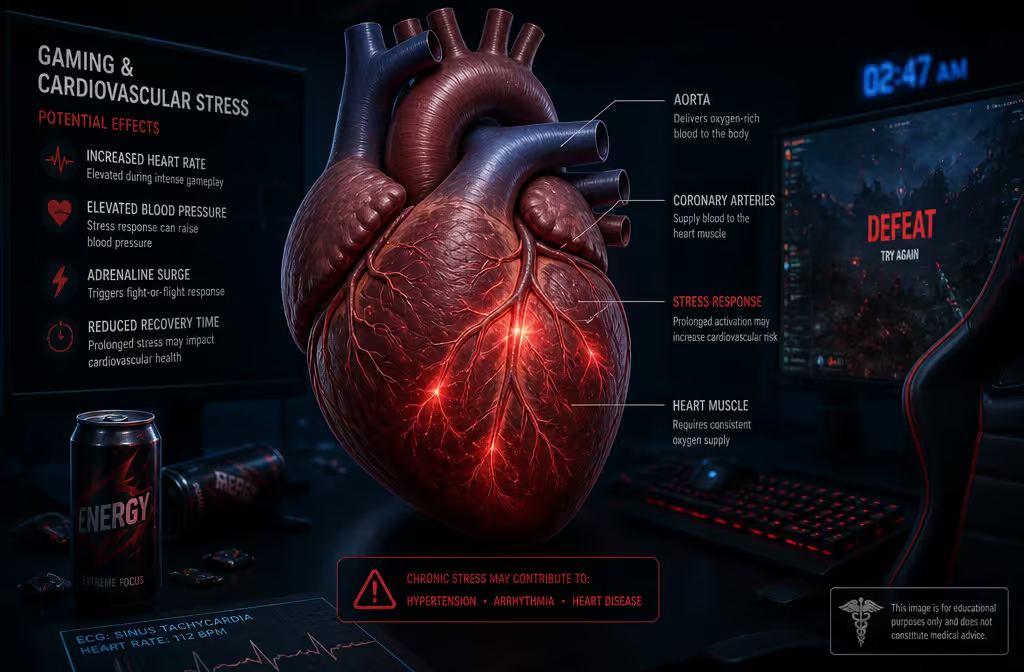
Non-dipping is a known predictor of long-term cardiovascular disease. It’s not going to kill you in one session, but if you’re pulling marathon sessions regularly, that cumulative stress adds up. The researchers cited Cuspidi et al. on this—non-dippers have worse outcomes over years.
Did anyone have a heart attack? No. The cardiac injury markers they measured—troponin T and CK-MB—showed no changes. Even after 18 straight hours, no acute cardiac damage appeared. The liver enzyme AST actually dropped, though the researchers called that not clinically relevant.
But the heart rate variability (HRV) metric RMSSD tanked. That means the sympathetic nervous system stayed cranked up the whole time. Your body was in a low-grade flight-or-fight state, never fully switching into rest-and-digest. That’s the mechanism behind the non-dipping.
So no, 12 hours won’t trigger a heart attack in a healthy person. But repeated sessions without allowing proper cardiovascular recovery? That’s where the risk lives.
What marathon gamers actually eat and drink
The food diaries are honestly kind of wild. Over the 42-hour study, participants averaged 8,004.9 kcal. For context, sedentary males in that age range need about 4,800 kcal over 48 hours. They were eating double the energy requirement.
Caffeine numbers are even more striking: 1,354.4 mg total. The FDA’s advised daily maximum is around 400 mg. That’s more than triple the limit, spread across roughly two days. But here’s the behavioral twist: participants started with sugary soft drinks and energy drinks, then switched to coffee and water as sessions went on.
The sugar tapered off—but the caffeine never dropped. They swapped the vehicle, kept the stimulant.
There’s also a paradox in the data: participants with higher BMI and larger waist circumference actually ate fewer calories during the first 18-hour session (a strong negative correlation, R = -0.84). The researchers hypothesized “white coat syndrome”—those participants may have felt self-conscious knowing their intake was being tracked. That means real-world marathon eating is probably even higher than what the study captured. The second session showed a significant drop of about 1,170 fewer kcal, suggesting your body eventually hits a physical limit on how much you can consume.
Cost check: In a 12-hour session matching the study’s pattern, expect roughly 2,200–2,400 kcal and 400–500 mg caffeine—a full day’s calories in half the waking time.
If you’re doing a 12-hour session, those numbers scale down roughly proportionally—call it ~2,200–2,400 kcal and ~400–500 mg caffeine in a 12-hour window if you follow the same pattern. That’s still a dietary load, especially the caffeine.
Beyond the heart: repetitive strain, eye fatigue, and sitting disease
You don’t need a study to know that 12 hours of sitting and gripping a controller can hurt. But the data makes it specific.
The injury list is real, not just “soreness”: carpal tunnel syndrome, gamer’s thumb (de Quervain’s tenosynovitis), trigger finger, tennis elbow. These are documented conditions with specific diagnostic criteria. In a survey of collegiate esports athletes, 56% reported eye fatigue, 42% neck/back pain, 36% wrist pain, and 32% hand pain.
A 2024 study found that 3+ hours in a single session is linked to negative physical symptoms. 6+ hours significantly increased wrist and hand pain risk. Twelve hours is well past both thresholds. And there’s a concrete example: Hai “Hai” Du Lam, who previously played for Cloud9, retired in 2015 citing worsening wrist pain. That’s not just soreness—it can playing video games actually be good for you — but even with the potential benefits, the risk of injury remains real for professional players.
Prolonged sitting also brings risks beyond musculoskeletal issues: chronic venous insufficiency and deep vein thrombosis are real physiological mechanisms, not just generic advice to stand up.
For eye strain, the American Optometric Association recommends the 20-20-20 rule: take a 20-second break every 20 minutes to focus on something at least 20 feet away. Simple, specific, and evidence-based. (We’ve got a full breakdown of how to make it stick that’s worth a read.)
The mental toll: brain thinks fight, body sits still
Your brain and body are in a mismatch during marathon gaming. Harvard Health describes the prefrontal cortex getting “a crazy workout” from the dopamine loop—gaming targets the reward center, creating sustained engagement that leads to cognitive fatigue. To offset this, choosing the right snacks can keep your energy up without hurting your health.
Researchers at Griffith University point out a fight-or-flight mismatch: intense gaming triggers the sympathetic nervous system—heart rate up, adrenaline released, glucose mobilized. But you’re sitting in a chair. Your body prepares for action that never comes, creating chronic low-grade internal stress. That connects directly to the non-dipping cardiovascular finding: the sympathetic activation never turns off, even during rest periods.
Numerous studies have found correlations between long gaming sessions and depression, anxiety, sleep disruption, and even aggression. The caveat: more research is needed, but the pattern is consistent. For teens, there’s an additional concern about violence desensitization, though it’s worth noting that adults need 7-8 hours of sleep per night to maintain optimal gaming performance and decision-making, which is a separate conversation.
The real issue isn’t that gaming is psychologically damaging—it’s that the mental state of intense, sustained engagement doesn’t match the physical state of complete stillness. Your brain thinks you’re in a firefight. Your body is in a desk chair. That gap is the problem.
The social cost: when gaming replaces real life
Look, I’m not going to pretend gaming is inherently isolating. A 12-hour session with friends—LAN party style, online co-op, whatever—can be social. The study was literally set up as a LAN party. Gaming communities are real communities.
Time is finite. A 12-hour session often displaces sleep, physical activity, and time with offline friends or family. The diagnostic framework for Internet Gaming Disorder includes social withdrawal and neglect of responsibilities as two of the nine criteria. Plenty of people search is 12 hours gaming too much in a relationship, and that’s a real concern people are trying to navigate.
The research on relationship impact is mostly anecdotal—forum posts, self-reports—but the displacement effect is logically sound. If you’re regularly trading dinner with your partner for ranked matches, that’s a tradeoff worth examining, especially when considering how many hours of gaming a day is healthy.
Is 12 hours a sign of gaming addiction?
Internet Gaming Disorder (IGD) is a recognized diagnosis by the American Psychological Association. The nine criteria are:
- Preoccupation with gaming
- Withdrawal symptoms when unable to play
- Tolerance (needing more time to satisfy the urge)
- Reduced interest in other hobbies or pursuits
- Downplaying how much you play
- Loss of a relationship, job, or educational opportunity
- Using gaming to escape negative moods
- Continuing despite problems
- Deceiving family or therapists about your gaming
The key word is impairment, not duration. Prevalence is 0.3% to 1.0% of Americans, according to the American Journal of Psychiatry. Most long-session gamers are not disordered. The real question: is the 12-hour session something you choose or something you feel compelled to do?
Is it causing problems with work, school, relationships, or health? Duration alone doesn’t diagnose.
If you’re checking multiple boxes and your life is suffering, cognitive behavioral therapy is the evidence-based first-line treatment. There are also support groups like Computer Gaming Addicts Anonymous and harm reduction approaches.
How to game safely: evidence-based strategies
If you’re going to do long sessions—and I’m not telling you not to—here’s what the data actually supports.
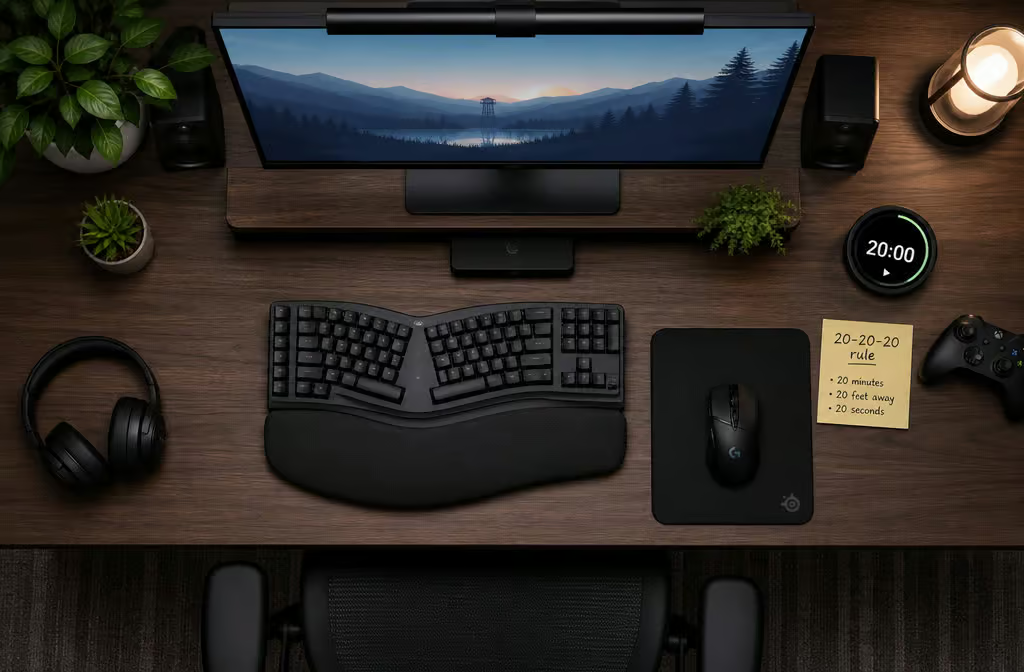
For eyes: 20-20-20 rule from the American Optometric Association. Every 20 minutes, shift your gaze to something 20 feet away for 20 seconds. Screen at least 20 inches from your face.
For cortisol and stress: 30-second break every 20 minutes. Stand up, look away from the screen. That’s the minimum dose to let your sympathetic nervous system reset. The 20-20-20 rule pairs perfectly with this—do both at the same time.
For ergonomics: Eyes level with the top of your monitor, forearms flat on desk or armrests, feet flat on the floor. This prevents the musculoskeletal cascade that leads to chronic pain. No slouching into “gamer lean.”
For exercise: The American College of Sports Medicine recommends 150 minutes of moderate exercise each week. That counters the sedentary effects of long sessions. You don’t have to run a marathon—walking counts.
For sleep: Stop gaming at least one hour before bed. The cognitive arousal from gaming plus blue light disrupts sleep quality. Give your brain time to wind down.
If you suspect disordered behavior: Cognitive behavioral therapy is the evidence-based treatment. Start with a conversation with your doctor, not a self-diagnosis.
The verdict: is 12 hours too much?
Here’s what the data actually says.
The 2024 study found that physical symptoms start appearing at 3+ hours. 6+ hours significantly increases wrist and hand pain risk. Twelve hours is past both thresholds.
Cardiovascular picture: no acute cardiac damage from a single session. That’s the good news. But the blood pressure and heart rate that stay high overnight suggest cumulative risk if you’re doing this regularly. The study’s conclusion is worth noting in their own words (paraphrased): the possibility of long-term negative health outcomes from gaming remains.
Diet and caffeine: if you follow the study’s pattern, expect to consume around 2,000–2,400 kcal and 400–500 mg caffeine in a 12-hour session. That’s a day’s worth of calories in half the waking time, plus double the caffeine guidelines.
Bottom line: 3+ hours triggers physical symptoms, 6+ hours raises injury risk, and the cardiovascular concern is about frequency—not a single session.
The real question isn’t “is 12 hours too much?” It’s “how often? With what sleep, diet, and consequences?”
One 12-hour session on a weekend with friends—where you sleep well the night before, eat reasonably, and go back to normal life—is different from daily 12-hour sessions that push out sleep, school, work, and relationships. The same duration, dramatically different outcomes.
So no, I’m not here to tell you “12 hours is bad” or “12 hours is fine.” I’m giving you the framework: 3+ hours triggers physical symptoms, 6+ hours raises injury risk, and the cardiovascular concern is about frequency, not a single session. Use those thresholds to make your own call. And if the session is wrecking your sleep, your body, or your relationships, that’s your answer—not from me, but from the data.
People Also Ask
Is gaming 12 hours a day bad?
It depends on frequency and context, not just duration. A single 12-hour session won’t cause acute cardiac damage, but physical symptoms like wrist pain start appearing after 3 hours and significantly increase after 6 hours. The real risk is cumulative: if you’re doing it regularly, your heart loses its nightly blood pressure dip, and you’re likely consuming double your daily calories and triple the caffeine limit.
How long is too long gaming?
Physical symptoms like hand and wrist pain start appearing after 3 hours in a single session, and the risk jumps significantly after 6 hours. But the diagnostic criteria for gaming disorder focus on impairment in your life—not a clock. If a session is wrecking your sleep, relationships, or responsibilities, that’s your threshold regardless of the hour count.
How much gaming is too much for adults?
There’s no universal hour limit for adults because the key factor is whether gaming causes impairment in work, relationships, or health. The data shows physical symptoms kick in after 3 hours and injury risk rises after 6 hours, but the cardiovascular concern is about frequency—regular marathon sessions that prevent your heart from getting its nightly recovery dip are riskier than occasional long sessions.
Can a 12-hour gaming session cause a heart attack?
In a healthy person, no—the study found no acute cardiac damage or changes in cardiac injury markers even after 18 straight hours. However, your heart rate and blood pressure stay elevated without the normal nightly dip, and heart rate variability drops significantly, meaning your sympathetic nervous system stays in fight-or-flight mode. That’s a long-term risk if you do it regularly, not a one-session danger.
What happens to your body during a 12-hour gaming session?
Your heart never gets its nightly recovery dip—blood pressure and heart rate stay in awake mode even when you rest. You’ll likely consume around 2,200–2,400 calories and 400–500 mg of caffeine, which is a full day’s calories in half the waking time plus double the FDA caffeine limit. Your wrist and hand pain risk jumps significantly after 6 hours, and your brain stays in a low-grade fight-or-flight state while your body sits completely still.
What’s the difference between a 12-hour gaming session and gaming addiction?
Duration alone doesn’t diagnose addiction. Internet Gaming Disorder is defined by nine criteria including withdrawal symptoms, loss of relationships or job, and continuing despite problems—the key word is impairment, not hours played. A 12-hour session with friends on a weekend where you sleep well and handle your responsibilities is very different from daily 12-hour sessions that push out sleep, work, and relationships.