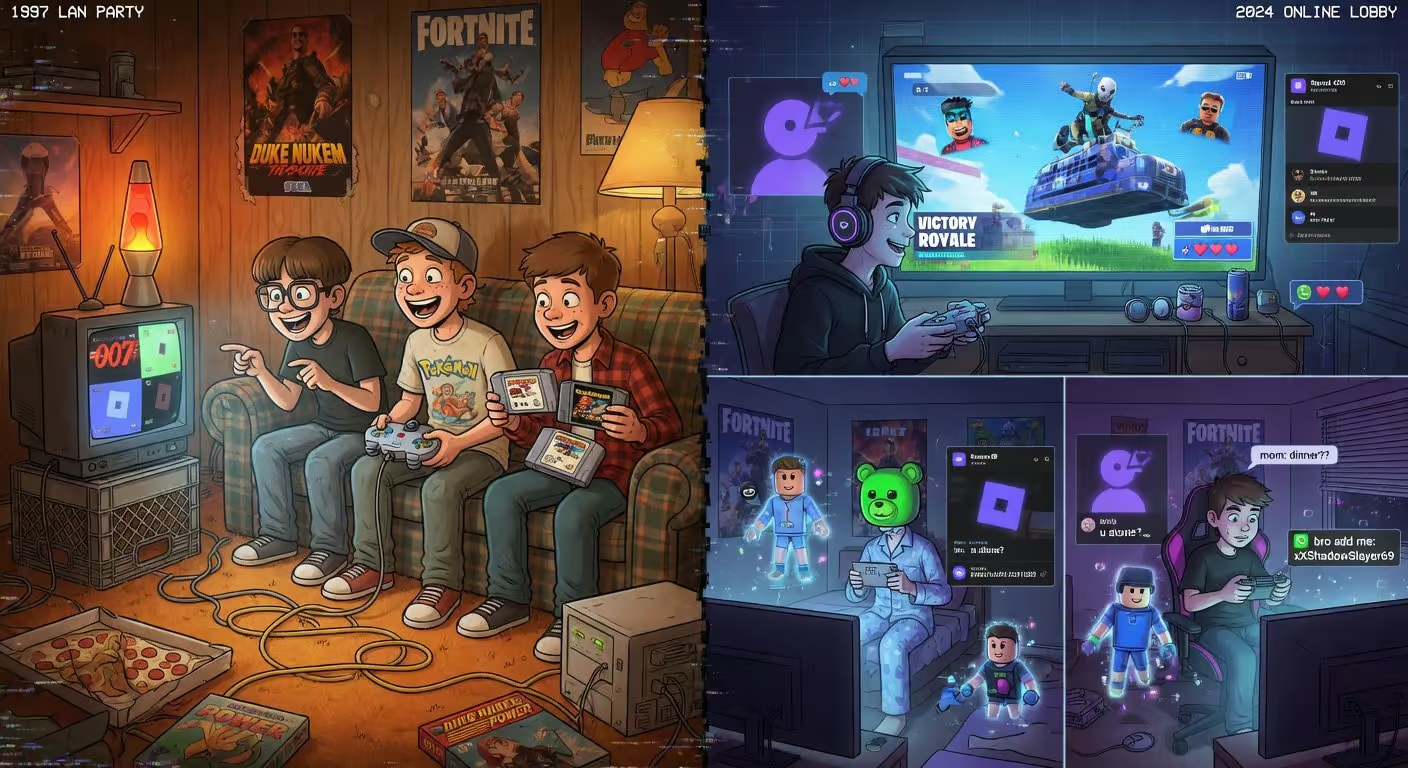
When I was 12 years old, gaming meant sitting on a basement couch with friends, trading physical plastic cartridges, and fighting over who had to use the worn-out controller while squinting at a tiny CRT television. If we wanted to play multiplayer games, we had to run direct LAN cables across the carpet or share a split-screen. Today, the landscape is unrecognizable. Modern online video games function primarily as digital social platforms, blurring the line between gaming and social media.
Today, multiplayer network systems link over 3.8 billion global gamers across the planet. Roughly 85% of US teens play video games, and 44% of children are starting their gaming journeys by age 5. Because these virtual spaces have become the default hangouts for the younger generation, many parents react with defensive anxiety. But blanket bans are highly counterproductive—they isolate kids from their peer groups.
Research highlighted in studies like Moral Combat demonstrates that youth violent crime rates fell during the decades of explosive gaming growth. The primary risks involve unauthorized location sharing, solicitation to move interactions to third-party apps, loot box gambling mechanics, and bundling of malware in free downloads.
Key Takeaways
Modern multiplayer game architectures often act as the initial step in a grooming pipeline, where malicious actors attempt to bypass strict platform safety filters by steering players onto unmonitored external messaging channels.
Enforcing account-level financial controls, such as deploying restricted digital gift cards instead of linking active credit cards, eliminates the risk of unauthorized microtransactions.
Active technical hygiene, like routing player communications through open living room speakers rather than closed headsets, dissolves the unmonitored voice loops where bullying and solicitation occur.
Table of Contents
Online grooming and stranger danger: The modern “social square”
Modern games like Fortnite and Roblox host massive, real-time shared environments. They are no longer isolated gaming sessions; they are the new digital malls where kids hang out, talk, and interact with millions of gamers across the globe.
Because of this, bad actors run highly structured funnel strategies. They rarely attempt overt solicitation within the public game lobbies since standard automatic filtering algorithms are trained to flag that activity. Instead, they operate a quiet transition pipeline: they initiate friendly contact in-game, build rapport over a shared match, and then immediately push to move the interaction onto unmonitored Discord channels or WhatsApp. This social media crossover allows them to bypass console-level text filters and parental safety sweeps. The most effective way to secure this vector is to disable raw public communication systems altogether before your child ever steps into a multiplayer match.
What information should children never share while playing online games?
When young players set up gaming profiles, they often leak sensitive metadata without realizing it. It is about shouting a physical home address over voice chat; it is the slow, casual assembly of jigsaw puzzles.
Malicious profiles track benign statements over multiple gaming sessions. A child mentioning the weather outside, talking about a local sports team jersey they wore to practice, or naming a nearby local landmark or amusement park they visited that morning gives away their location. A bad actor can quickly synthesize these casual patterns to geolocate a young player. You should audit your kid’s system profiles together: purge real names, clear location tags, and disable external platform link statuses so their profile does not broadcast other personal accounts.
In-game bullying: Handling toxic behavior and active aggression
We need to differentiate between normal, competitive trash-talk and systematic online abuse. Competitive banter is a common element of high-efficiency lobby play, but targeted harassment crosses the line into repeated insults, explicit team exclusion, targeted griefing, account blackmail, or offensive, customized nicknames.
Standard developer-level automation frameworks are great at tracking slurs in text chat, but they struggle with contextual abuse—like a group of players deliberately locking a teammate out of gameplay zones or refusing to heal them in a dungeon. Titles like League of Legends and Final Fantasy XIV have deployed automated sportsman incentives to reward positive community play, but administrative reporting still relies heavily on user-provided evidence.
Cybersecurity organizations like ESET warn that simply hitting “mute” is only a temporary fix if a player is actively targeting your child. If you want platform developers to take banning action, you need hard documentation. Teach your kid to focus on taking evidence-gathering screenshots of active harassment and carefully identifying user IDs (like the numeric player tag linked to the global account) rather than just documenting temporary in-game lobby aliases.
Unsuitable content exposure in modern user-generated worlds
I remember buying a physical game box and looking at the back panel for a clear content rating meant to guide different types of gamers. Today, those systems—like the Entertainment Software Rating Board (ESRB) in North America or PEGI ratings in Europe—only evaluate the core base game created directly by the primary studio. They cannot keep up with dynamic, real-time updates.
This regulatory gap is obvious in platforms that rely entirely on user-generated content. In games like Roblox or custom Minecraft worlds, users code and customize their own spaces, game modes, and textures. Despite the platform’s kid-friendly label, a child can log into a custom space and find adult themes, violent role-playing mods, or cursed Roblox images and other inappropriate graphics that have not yet been flagged by the host’s automated review system.
The takeaway here is straightforward: never rely solely on physical rating labels. You must enforce OS-level dynamic runtime restrictions that limit your kid’s access to trusted, moderated worlds.
Defining addiction: What’s habit vs. clinical disorder
Modern video games incorporate reward and leveling loops to keep players engaged, though the World Health Organization only classifies this as gaming disorder if symptoms impact self-care, school, and relationships for at least 12 months.
What is the World Health Organization’s definition of gaming disorder?
The World Health Organization (WHO) classifies “gaming disorder” as an addictive behavior pattern, putting it in the same family as alcohol or gambling dependency. However, they enforce a highly strict 12-month diagnostic threshold before this label can be used. It is not defined by deep focus on a new game or a weekend marathon.
A true clinical diagnosis requires a persistent, severe behavioral pattern over a full year where the child’s control over gaming is completely lost. This pattern must result in the total degradation of personal hygiene, physical self-care, schoolwork, and direct real-world relationships, leaving isolated youth more vulnerable to digital threats, such as predators on Roblox. A key psychological indicator to watch for is extreme, prolonged irritability or physical aggression when a parent forces a device to disconnect.
What are the signs that a child has a gaming addiction?
If you are trying to parse out whether your kid has a healthy, intense interest in a hobby versus a genuine issue, look for specific withdrawal markers: – Genuine physical shaking or long, uncontrollable aggressive panics during transition periods.
- Systematically skipping meals or ignoring basic daily hygiene to stay logged on.
- A total withdrawal from long-term real-life friend groups and a complete drop in school performance.
Economic exploitation: Navigating financial risks and “freemium” worlds
The monetization architecture of modern video games has changed how players purchase and experience software. The economic model of public titles means that financial vulnerability is built directly into gameplay design.
This is driven by the industry’s pivot toward the freemium model. Games like Fortnite are free to download and run, but they utilize loot box mechanics—essentially randomized digital blind boxes purchased with real cash—along with cosmetic status items to drive monetization. Because these luck-based transactions closely mirror actual gambling loops, countries like Belgium have outlawed loot box transactions entirely. In the US and UK, the rating systems have adapted by adding explicit labels to warn of in-game purchases.
The most robust way to manage this risk is to never store your physical credit cards on your kid’s device profile. Instead, load a fixed, prepaid balance on their account using restricted digital gift cards.
How do I prevent my child from accidentally spending money on microtransactions?
You do not have to resort to blocking the device entirely to manage spending. Step into your console or device’s account management settings and apply these two configuration rules: 1. Turn on the strict password-challenge authorization profile for every single transaction. 2. Route real-time purchase notification emails directly to a parent-monitored email address so you can flag unauthorized attempts immediately.
Data privacy and the hidden threat of malware
When checking on data safety, the real vulnerabilities rarely exist inside the secure, verified app stores of PlayStation, Xbox, or Apple. The vectors you need to worry about live on the unmoderated, third-party sites your child might browse to find cheats, custom skins, or game mods.
Young gamers looking for shortcuts are constantly targeted by free currency scams promising free Robux or V-Bucks. These websites host unauthorized third-party apps that claim to inject currency directly into the game profile, but they are actually packaging adware, tracking spyware, and desktop trojan horse malware into their executables. Once run on a shared home computer, these malicious packages run silent background scripts that harvest passwords and browser session tokens.
To keep your home network secure, run standard user-level profiles on shared family computers and configure them to block any download requests that require administrator privileges.
Physical health: Balance, lifestyle risks, and the sedentary myth
First, let’s clear up the health myth about epilepsy: flashing patterns or sudden layout transitions do not cause epilepsy. Under an exhaustive consumer study, we see that flashing visual assets merely act as a photosensitive epilepsy trigger for individuals who already have a pre-existing medical condition.
Furthermore, there is a risk of developing deep vein thrombosis (commonly known as DVT stationary risks) when sitting in place for hours. However, this risk is identical to any static, passive hobby, such as reading books or watching TV shows.
The practical fix is simple: enforce a hard 5-minute movement and eye rest break at every 45-60 minute breaks mark. You can also mix up their gaming library by highlighting physical, movement-based titles like Pokémon Go! or Just Dance to balance out sedentary play.
The protective parent’s toolkit: Strategic active hygiene
The gold standard mistake many parents make is relying on a set-it-and-forget-it configuration while ignoring the Headset Loophole. Setting up a console in family shared spaces like the kitchen or living room feels secure, but once your kid puts on a closed-ear headset, you have zero audio headset monitoring over what they are hearing. Strangers can communicate directly with them, and you will only hear silence.
To dissolve this loop, keep game audio and voice communication routed through open television or monitor speakers. Go into the platform settings to only allow connection to private lobbies with real-world friends, and take some time to co-play with your kid to keep a regular, open dialogue about their digital spaces.
Frequently Asked Questions
What are the risks of playing online games?
The primary risks involve unauthorized location sharing, exposure to unsolicited messaging from bad actors, loot box gambling mechanics, and the risk of downloading malware disguised as game mods or free currency. Additionally, unsupervised voice chat can expose children to bullying or grooming tactics that bypass standard in-game safety filters.
Is it okay for a 7 year old to play Roblox?
Platforms like Roblox allow user-generated content, which can fall outside the scope of standard ESRB or PEGI age ratings. While the platform has safety features, children can encounter inappropriate themes or violent mods created by other users, so it is crucial to use OS-level restrictions to limit access to moderated, trusted worlds.
How do I prevent my child from accidentally spending money on microtransactions?
The most effective strategy is to avoid linking your personal credit card to their gaming profile entirely. Instead, use restricted digital gift cards to fund their account, engage password-challenge settings for every transaction, and set up real-time purchase alerts sent directly to your own email.
What is the World Health Organization’s definition of gaming disorder?
The WHO defines gaming disorder as a severe behavioral pattern that must persist for at least 12 months to warrant a clinical diagnosis. It is characterized by a loss of control over gaming habits that results in the degradation of personal hygiene, school performance, and real-world relationships.
How can I monitor who my child is talking to while they play?
The best approach is to close the ‘headset loophole’ by routing all game and voice audio through open living room or kitchen speakers rather than closed-ear headsets. This allows you to naturally monitor incoming communications and ensures that the virtual social space remains part of the family environment.
Are games intentionally designed to be addictive for kids?
Modern games often utilize ‘reward and leveling loops’ that function similarly to gambling mechanics to maintain player engagement. While this design is intended to keep players interested in the software, it is only classified as a disorder when it causes a child to abandon essential life functions like sleep, hygiene, and social interaction.
What should I do if my child is being bullied in an online game?
Simply muting users is often ineffective against targeted, persistent harassment. You should teach your child to document the interaction by taking screenshots of the abuse and recording the specific numeric player IDs associated with the harassers, which can then be used for credible reports to the game’s administrative team.